 JAZZPROFILES lives in the music 1,572 Jazz Artists fully Profiled!
 Paul Chambers
Last updated September 7, 2026
Listen on Spotify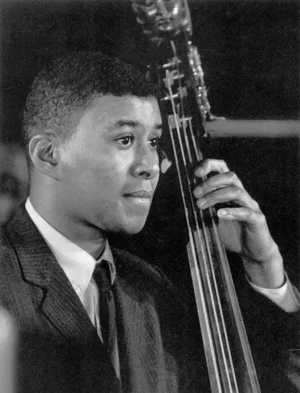
Paul Chambers at the double bass, undated black-and-white photograph of the bassist in performance (the only free-licensed photograph of Chambers on Wikimedia Commons) CC BY-SA 3.0 (Creative Commons Attribution-ShareAlike 3.0 Unported), credited on the file page to Wikimedia Commons user Intromusic11 — Wikimedia Commons - https://commons.wikimedia.org/wiki/File:Paulchambers.jpg (original file 300 x 393 px, 32 KB, saved unmodified as portrait.jpg)

Paul Laurence Dunbar Chambers Jr. was born in Pittsburgh on April 22, 1935, and named after the poet. After his mother's death in 1948 he moved to Detroit to live with his father, arriving in a city whose public school music program was about to produce a generation of major jazz musicians. He started on baritone horn, switched to tuba, and took up the double bass around 1949. Formal study began in 1952 with Gaston Brohan, principal bassist of the Detroit Symphony Orchestra, and Chambers enrolled at Cass Technical High School, playing in the school symphony while working the city's clubs at night. He sat in at the Blue Bird Inn, Klein's Show Bar, and the Rouge Lounge alongside Thad Jones and Kenny Burrell, and learned harmony and walking-line construction at after-hours sessions in the homes of pianists Barry Harris and Hugh Lawson. The bassists he studied were Oscar Pettiford, Ray Brown, Percy Heath, Milt Hinton, Wendell Marshall, Charles Mingus, and George Duvivier, with Duke Ellington's Jimmy Blanton his stated favorite. In 1952 he married Ann Williams, introduced to him by his close friend and fellow Detroit bassist Doug Watkins.
In 1955 Chambers left Detroit on the road with tenor saxophonist Paul "Vice Pres" Quinichette, then settled in New York, where he worked in quick succession with the two-trombone group of J.J. Johnson and Kai Winding, with Bennie Green's combo, and with pianist George Wallington's quintet at the Café Bohemia in Greenwich Village, a band that also held Jackie McLean, Donald Byrd, and Art Taylor. McLean pointed Miles Davis toward him, and in the fall of 1955, at twenty, Chambers took the bass chair in the quintet Davis was assembling with John Coltrane, Red Garland, and Philly Joe Jones. DownBeat gave him its New Star Award in 1956. The two marathon Prestige sessions of May 11 and October 26, 1956 produced Cookin', Relaxin', Workin', and Steamin'; the Columbia contract produced 'Round About Midnight, Milestones, and, on March 2 and April 22, 1959, Kind of Blue. Chambers also anchored the three orchestral collaborations with Gil Evans, Miles Ahead, Porgy and Bess, and Sketches of Spain. He stayed eight years, the longest continuous tenure of any musician in Davis's 1950s and early-1960s groups.
His own leader catalog runs to seven albums, all of them made inside that same eight-year window. Chambers' Music: A Jazz Delegation from the East came first, cut in Los Angeles on March 1 or 2, 1956 for the small Jazz West label with Coltrane, Kenny Drew, and Philly Joe Jones, and carrying the first Coltrane composition ever committed to record, "John Paul Jones." Blue Note then took him on for three: Whims of Chambers (September 21, 1956), a sextet with Coltrane, Donald Byrd, Kenny Burrell, and Horace Silver; Paul Chambers Quintet (May 19, 1957) with Byrd, Clifford Jordan, Tommy Flanagan, and Elvin Jones; and Bass on Top (July 14, 1957), a pianoless-frontline quartet with Burrell, Hank Jones, and Art Taylor that put the bass in the lead voice for the whole record. Two Vee-Jay dates followed, Go... (February 2 and 3, 1959, Chicago) with Freddie Hubbard and Cannonball Adderley sharing a front line for what was probably the only time in either man's career, and 1st Bassman (May 12, 1960), whose material was written entirely by Yusef Lateef and whose band included Tommy Turrentine and Curtis Fuller. The co-billed trio album We Three, recorded November 14, 1958 with Roy Haynes and Phineas Newborn Jr., rounds out the leader shelf.
Between 1956 and 1962 he was the most heavily booked bassist in New York, and the sideman list reads like a syllabus for hard bop. He is on Coltrane's Blue Train (September 15, 1957) and Giant Steps, whose blues "Mr. P.C." is named for him; on Thelonious Monk's Brilliant Corners, where he replaced Pettiford for the December 7, 1956 session that produced "Bemsha Swing"; on Sonny Rollins's Tenor Madness, which contains Rollins's tribute tune "Paul's Pal"; on Sonny Clark's Cool Struttin', Hank Mobley's Soul Station, Lee Morgan's The Cooker, Art Pepper Meets the Rhythm Section, and Oliver Nelson's The Blues and the Abstract Truth. The Detroit network kept reappearing: he cut Jazzmen: Detroit for Savoy on April 30 and May 9, 1956 with Pepper Adams, Kenny Burrell, Tommy Flanagan, and Kenny Clarke, joined Thad Jones's Motor City Scene in 1959, and played on the Adams/Byrd Bethlehem album that took the same title. He also recorded with Gene Ammons, Milt Jackson, Chet Baker, and Quincy Jones, and appeared on Adams's 1963 Motown-financed leader date Pepper Adams Plays the Compositions of Charlie Mingus.
Chambers and pianist Wynton Kelly left Davis in 1963, and drummer Jimmy Cobb followed them out; the three continued as the Wynton Kelly Trio, one of the most tightly drilled rhythm sections of the decade. They backed Wes Montgomery on Full House in 1962 and again on the live Smokin' at the Half Note in 1965, and in July 1964 Chambers and Cobb flew to Tokyo for the World Jazz Festival in a package under J.J. Johnson's leadership, staying on to record Jazz in Japan with Toshiko Akiyoshi's big band. He played on Herbie Hancock's Inventions and Dimensions on August 30, 1963. One of his last studio dates was Barry Harris's Bull's Eye!, recorded in New York on June 4, 1968 with Pepper Adams, Charles McPherson, Kenny Dorham, and Billy Higgins. By then a heroin habit had given way to heavy drinking, and colleagues' accounts from the mid-1960s describe missed calls and late arrivals. Hospitalized in New York late in 1968 for what was first taken to be influenza, he was found to have tuberculosis, slipped into a coma, and passed away on January 4, 1969 at the age of 33. He was buried after a funeral in Harlem. The tributes had started while he was still alive and kept coming: Coltrane's "Mr. P.C.," Rollins's "Paul's Pal," Red Garland's "The P.C. Blues," Tommy Flanagan's "Big Paul," and Max Roach's "Five for Paul."
Chambers combined a large, centered pizzicato tone with a rhythmic conception that made a walking line feel like forward motion rather than timekeeping, decorating quarter notes with triplet turns and choosing passing tones well away from the obvious root, a habit Ron Carter later extended and Pat Metheny summarized by calling him the all-time champion of groove and note choice. His conservatory training under a Detroit Symphony principal gave him something almost no bebop bassist had: a usable bow. Where Slam Stewart had made arco a novelty, Chambers improvised full choruses with it at tempo, on "Yesterdays" from Bass on Top, across his own Blue Note dates, and most famously in the brief bowed exchange with Bill Evans that opens "So What" on Kind of Blue. He was equally at home under Miles Davis's modal experiments, inside John Coltrane's dense harmonic cycles on Giant Steps, and in the blues-rooted organ-and-tenor settings of the Prestige and Blue Note catalogs, which is why he was booked constantly rather than exclusively. Christian McBride, Ben Williams, and Linda May Han Oh all cite him directly, and Charlie Haden named him the first bassist whose sound he could identify. Discogs lists him on 1,948 credited releases, only 79 of them under a leader or co-leader billing, a ratio that states his career plainly.
- Kind of Blue (1959, Columbia) - Miles Davis's modal landmark, recorded March 2 and April 22, 1959; Chambers plays the bass on every track and takes the bowed answering phrase that opens "So What." Spotify - Kind of Blue
- Bass on Top (1957, Blue Note) - His definitive leader statement, cut July 14, 1957 at Van Gelder Studio with Kenny Burrell, Hank Jones, and Art Taylor, opening with an arco reading of "Yesterdays." Spotify - Bass on Top Listen
- Whims of Chambers (1957, Blue Note) - A September 21, 1956 sextet with John Coltrane, Donald Byrd, Burrell, Horace Silver, and Philly Joe Jones, five of its seven tunes written by Chambers. Spotify - Whims of Chambers Listen
- Giant Steps (1960, Atlantic) - Coltrane's harmonic watershed, which closes with the minor blues "Mr. P.C.," written for and named after its bassist. Spotify - Giant Steps Listen
- Blue Train (1957, Blue Note) - Coltrane's only Blue Note leader date, recorded September 15, 1957 with Lee Morgan, Curtis Fuller, Kenny Drew, Philly Joe Jones, and Chambers. Spotify - Blue Train
- Chambers' Music: A Jazz Delegation from the East (1956, Jazz West) - His debut as a leader, recorded in Los Angeles on March 1 or 2, 1956, and the first record to carry a Coltrane composition. Spotify - Chambers' Music Listen
- Go... (1959, Vee-Jay) - A Chicago date of February 2 and 3, 1959 pairing Cannonball Adderley and Freddie Hubbard in a front line they never used again. Spotify - Go... Listen
- Smokin' at the Half Note (1965, Verve) - The Wynton Kelly Trio with Wes Montgomery, the group Chambers and Jimmy Cobb formed after leaving Davis. Spotify - Smokin' at the Half Note
Paul Chambers: Full Discography
Identity confirmed via the live Discogs API, artist ID 259778 ("Paul Chambers (3)," realname Paul Laurence Dunbar Chambers, Jr., born April 22, 1935 in Pittsburgh, died January 4, 1969 in New York City). The full release list was paged rather than trusted from page one: Discogs credits Chambers on 1,948 releases, broken down as 1,638 sideman "Appearance" credits, 120 unofficial releases, 110 track-level "TrackAppearance" credits, 79 "Main" credits, and 1 production credit. That "Main" figure is not a count of leader dates. It sweeps in compilations, co-billed all-star sessions and posthumous repackagings, and it simultaneously misses three of his four Blue Note leader albums, because Discogs files Whims of Chambers, Bass on Top and Paul Chambers Quintet under separate group-billing artists ("Paul Chambers Sextet" 572067, "Paul Chambers Quartet" 2132794, "Paul Chambers Quintet" 1618147) rather than under his personal ID.
The actual leader catalog is small and fully enumerable: seven albums, all recorded between March 1956 and May 1960. The first table below is complete for that catalog and adds the co-billed sessions and the archival releases drawn from Chambers-led tapes. The second table is a curated selection of roughly ninety of his most significant and historically important sideman credits. It is representative, not exhaustive: Discogs holds 335 distinct 1955-1972 sideman masters for him, and no attempt is made here to itemize all 1,638 appearance credits.
As Leader / Co-Leader
| Album Title | Recording Date(s) | Release Date | Label | Catalog Number | Format(s) | Personnel | Role | Reissue History | Spotify | Buy | Notes |
|---|---|---|---|---|---|---|---|---|---|---|---|
| Chambers' Music: A Jazz Delegation from the East | Recorded at United Western Recorders, Hollywood, March 1 or 2, 1956 | September 1956 | Jazz: West | JWLP-7 | Vinyl, LP, Album, Mono | Paul Chambers (bass), John Coltrane (tenor sax, 5 of 6 tracks), Kenny Drew (piano), Philly Joe Jones (drums); engineered by Don Blake, supervised by Herbert Kimmel, cover photography by William Claxton | Leader | Reissued on Score (SLP 4033, 1958), Imperial (LP-9182 and LP-12182, 1961), Blue Note CD (CDP 7 84437 2, 1989 and 1995, adding three bonus tracks from the Boston Transition session), Fresh Sound (2010), and repeatedly in Japan; 29 versions on Discogs | Spotify - Chambers' Music | — | His debut as a leader, cut in Los Angeles while the Miles Davis quintet was on the West Coast, with Kenny Drew in Red Garland's chair. Carries "John Paul Jones" (later retitled "Trane's Blues"), the first Coltrane composition committed to record. The exact day is unsettled: jazzdisco and Blue Note's own High Step notes both say "March 1 or 2," while Mosaic's session notes give March 2 alone |
| Jazzmen: Detroit | Recorded 1956, New York area | 1956 | Savoy | MG-12083 | Vinyl, LP, Mono | Kenny Burrell (guitar), Tommy Flanagan (piano), Pepper Adams (baritone sax), Paul Chambers (bass), Kenny Clarke (drums) | Co-billed (all five names on the sleeve) | Reissued in France as Jazzmen From Detroit (BYG 529 117, 1970), in the US as Kenny Clarke Meets the Detroit Jazzmen (Savoy SJL 1111, 1977), and on CD in Japan and Spain; 30 versions on Discogs | Spotify - Jazzmen: Detroit | — | The Detroit peer group on record as a unit. The widely cited session dates of April 30 and May 9, 1956 at Van Gelder Studio, Hackensack, are not confirmed anywhere in the Discogs data, which gives only "New York 1956" |
| Whims of Chambers | Recorded September 21, 1956, Van Gelder Studio, Hackensack NJ | 1957 | Blue Note | BLP 1534 | Vinyl, LP, Album, Mono | Paul Chambers Sextet: Chambers (bass), Donald Byrd (trumpet), John Coltrane (tenor sax), Kenny Burrell (guitar), Horace Silver (piano), Philly Joe Jones (drums); produced by Alfred Lion, recorded by Rudy Van Gelder, cover by Reid Miles and Francis Wolff, liner notes by Leonard Feather | Leader (billed to the Paul Chambers Sextet) | 46 versions on Discogs: electronically reprocessed stereo (BST 81534, 1966), CD (CDP 7243 8 37647 2 3, 1996), Analogue Productions 45 RPM (2009) and SACD (2010), plus numerous Japanese pressings | Spotify - Whims of Chambers | — | Five of the seven tunes are Chambers originals. Filed on Discogs under the group entity "Paul Chambers Sextet," not his personal artist ID |
| Bass on Top | Recorded July 14, 1957, Van Gelder Studio, Hackensack NJ | October 1957 | Blue Note | BLP 1569 | Vinyl, LP, Album, Mono | Paul Chambers Quartet: Chambers (bass), Kenny Burrell (guitar), Hank Jones (piano), Art Taylor (drums); produced by Alfred Lion, recorded by Rudy Van Gelder | Leader (billed to the Paul Chambers Quartet) | 65 versions on Discogs, the most-reissued record in his catalog: stereo (BST 81569, 1966), CD with the previously unissued "Chamber Mates" (CDP 7 46533 2, 1987), Rudy Van Gelder Edition (2007), plus Analogue Productions and Music Matters audiophile vinyl | Spotify - Bass on Top | — | The record that puts the bass in the lead voice throughout, opening with a bowed reading of "Yesterdays." Reviewed in Billboard on October 28, 1957 as a "Special Merit Jazz Album." Also filed under a group entity, "Paul Chambers Quartet" |
| Paul Chambers Quintet | Recorded May 19, 1957, Van Gelder Studio, Hackensack NJ | April 1958 | Blue Note | BLP 1564 | Vinyl, LP, Album, Mono | Chambers (bass), Donald Byrd (trumpet), Clifford Jordan (tenor sax), Tommy Flanagan (piano), Elvin Jones (drums); produced by Alfred Lion, recorded by Rudy Van Gelder | Leader | 23 versions on Discogs, including the 1996 CD (CDP 7243 8 52441 2 4) that adds an alternate take of "Four Strings," Music Matters 45 RPM vinyl (2010) and a Jazz Images LP (2020) | Spotify - Paul Chambers Quintet | — | Two Benny Golson tunes ("Minor Run-Down," "Four Strings") alongside three Chambers originals. Byrd and Jordan lay out on "Softly, as in a Morning Sunrise" |
| We Three | Recorded November 1958, Van Gelder Studio, Hackensack NJ | May 1959 | New Jazz | NJLP 8210 | Vinyl, LP, Album, Mono | Roy Haynes (drums), Phineas Newborn Jr. (piano), Paul Chambers (bass); recorded by Rudy Van Gelder, cover by Esmond Edwards, liner notes by Ira Gitler | Co-leader (equal three-name billing) | 46 versions on Discogs, including Original Jazz Classics and the 2007 Rudy Van Gelder Remaster | Spotify - We Three | — | Usually filed as a Roy Haynes album, but billed to all three men. The session is commonly dated November 14, 1958; Wikipedia gives only "November 1958," and the Discogs release carries no date at all |
| Go... | Recorded at Universal Recording, Chicago, February 2 and 3, 1959, plus an undated February 1959 quartet session | 1959 | Vee-Jay | VJLP 1014 (stereo VJSR 1014) | Vinyl, LP, Album, Mono | Chambers (bass), Freddie Hubbard (trumpet), Cannonball Adderley (alto sax), Wynton Kelly (piano), Jimmy Cobb (drums), with Philly Joe Jones (drums) on "Awful Mean"; recording supervised by Sid McCoy | Leader | 41 versions on Discogs. Expanded as Go + 1 and as a two-CD reissue in 1997-1998; the complete session material sits in the 2000 Mosaic box | Spotify - Go... | — | Hubbard and Adderley share a front line for what, on the recorded evidence, was the only time in either man's career. Hubbard was new on the scene; the rhythm section was Miles Davis's working trio |
| 1st Bassman | Recorded May 12, 1960, Bell Sound Studios, NYC | August 13, 1960 | Vee-Jay | VJLP 3012 (cover LP 3012; stereo VJSR 3012) | Vinyl, LP, Album, Mono | Chambers (bass), Tommy Turrentine (trumpet), Curtis Fuller (trombone), Yusef Lateef (tenor sax, flute, and composer of all five tunes), Wynton Kelly (piano), Lex Humphries (drums); recording supervised by Sid McCoy, liner notes by Barbara Gardner | Leader | 19 versions on Discogs; CD as Suite Beat SBCD 2015 (1986), and folded into the 2000 Mosaic box | Spotify - 1st Bassman | — | His last leader date, and the only one written end to end by a single outside composer. The rear-sleeve sticker credits Tommy Turrentine "through the courtesy of Time Records" and Curtis Fuller "through the courtesy of Savoy Records" |
| Motor City Scene | Recorded in New York City in 1960, per the Lone Hill Jazz reissue notes | 1961 | Bethlehem | BCP 6056 | Vinyl, LP, Album | Pepper Adams (baritone sax), Donald Byrd (trumpet), Kenny Burrell (guitar), Tommy Flanagan (piano), Louis Hayes (drums), Paul Chambers (bass) | Co-billed (all six names on the sleeve) | 28 versions on Discogs; remastered reissue 2013 | Spotify - Motor City Scene | — | The Detroit players regrouped four years on from Jazzmen: Detroit, with Louis Hayes in Kenny Clarke's chair and Donald Byrd added. Covered from the other side in Pepper Adams's discography. Not to be confused with the Thad Jones sextet album of the same title listed below |
| Gettin' Together (also issued as West Coast Conference) | Recorded at Audio Arts Studio, Hollywood, January 22 and 23, 1957 | 1974 (Gettin' Together); 1980 (West Coast Conference) | A World of Jazz / Vee-Jay International; Affinity (1980) | VJS 3062; AFF 56 (1980) | Vinyl, LP, Album | Jack Montrose (tenor sax), Bill Perkins (tenor and baritone sax), Paul Moer (piano), Paul Chambers (bass), Mel Lewis (drums, January 22) or Philly Joe Jones (drums, January 23); John Graas, arranger and composer | Co-billed (as "Mel Lewis & Friends" in 1974, as "Bill Perkins Meets Paul Chambers and Philly Joe Jones" in 1980) | Also issued in Japan (Vee-Jay 22YB-2024, 1987) and, for the John Graas material, on Fresh Sound FSR-CD 508 (2004) | Not found on Spotify | — | A West Coast date Chambers made while off the road, unissued for seventeen years. The tunes were renamed wholesale on the Xanadu issue below ("Mulliganesque" became "The Mouse Hop," "Westlake Bounce" became "Montrose," "Motif" became "Jazz City," "Canon Ball" became "Two Visitors"), which is why one January 1957 session looks like two different sessions across three LPs |
| The East/West Controversy | Side B recorded January 22 and 23, 1957 (side A is a 1951 Hampton Hawes trio date Chambers is not on) | 1975 | Xanadu | Xanadu 104 | Vinyl, LP, Album | Side B: Bill Perkins (tenor and baritone sax), Jack Montrose (tenor sax), Paul Moer (piano), Paul Chambers (bass), Mel Lewis or Philly Joe Jones (drums); reissue produced by Don Schlitten, liner notes by Mark Gardner | Co-billed with Hampton Hawes | None found; 3 versions on Discogs | Not found on Spotify | — | The sleeve claims "none of this music has ever been issued before," true of these particular takes but obscuring that they come from the same Hollywood sessions as Gettin' Together, retitled. Chambers plays on side B only |
| High Step | Compiles the March 1956 Jazz West session, the September 21, 1956 Blue Note session, and a previously unissued sextet date recorded in Boston (Cambridge, MA) on April 20, 1956 | 1975 | Blue Note | BN-LA451-H2 | Vinyl, 2xLP, Compilation, Mono | Across the three sessions: Paul Chambers (bass), John Coltrane (tenor sax), Philly Joe Jones (drums), Kenny Drew or Horace Silver or Roland Alexander (piano), Donald Byrd (trumpet), Kenny Burrell (guitar), Curtis Fuller (trombone), Pepper Adams (baritone sax); reissue produced by Michael Cuscuna, liner notes by Dan Morgenstern | Co-billed with John Coltrane | 4 versions on Discogs | Not found on Spotify | — | The Boston date was cut for Tom Wilson's Transition label; one track, "Trane's Strain," had already appeared on the Transition sampler Jazz in Transition (TRLP 30, 1956), while "High Step" and "Nixon, Dixon and Yates Blues" were new here. The Discogs release note dates that session to April 20, 1955; Mosaic's own notes and jazzdisco both give April 20, 1956, which is the date used here. Blue Note put Coltrane's name up front on sessions he played as a sideman |
| Go II | Alternate and unissued takes from the February 2 and 3, 1959 Chicago sessions | 1988 | Vee-Jay / Fun House (Japan) | 22YB-2088 (also 32YD-1083) | Vinyl, LP, Album, Remastered, Mono | Same personnel as Go... | Leader | 2 versions on Discogs | Not found on Spotify | — | A Japanese companion volume, not a separate session. All of its contents recur in the 2000 Mosaic box |
| The Complete Vee Jay Paul Chambers / Wynton Kelly Sessions 1959-61 | Compiles the Vee-Jay sessions of February 1959 through July 1961 | 2000 | Mosaic | MD6-205 | 6xCD, Box Set, Compilation, Limited Edition | Chambers and Wynton Kelly with, across sessions, Freddie Hubbard, Cannonball Adderley, Jimmy Cobb, Philly Joe Jones, Tommy Turrentine, Curtis Fuller, Yusef Lateef, Lex Humphries and others | Co-billed with Wynton Kelly | None found | Not found on Spotify | — | 74 tracks. Gathers Go..., 1st Bassman, Kelly Great, Kelly at Midnite, Wynton Kelly! and the Frank Strozier date, plus 39 previously unissued takes. The definitive source for the Vee-Jay period |
| Mosaic Select: Paul Chambers | Compiles the March 1956 Jazz West session, the April 20, 1956 Transition session, and the Blue Note sessions of September 21, 1956, May 19, 1957, July 14, 1957 and March 29, 1959 | 2003 | Mosaic | MS-005 | 3xCD, Box Set, Compilation, Limited Edition, Numbered | As per the constituent sessions; reissue produced by Michael Cuscuna, mastered by Ron McMaster | Leader | Limited to 5,000 sets | Not found on Spotify | — | The one place his Blue Note-era leader work sits together, and the only issue of a two-track Van Gelder session from March 29, 1959 ("I've Got My Love to Keep Me Warm" and "What Is This Thing Called Love?") that never became an album of its own |
As Sideman (selected major credits)
This table is a representative set, not a complete log. Catalog numbers and dates are taken from the Discogs masters/versions data for the earliest US pressing, cross-checked against jazzdisco.org session listings and Wikipedia album articles; fields that could not be confirmed are left blank rather than guessed.
| Year | Project (Leader) | Title | Label | Catalog | Role | Notes |
|---|---|---|---|---|---|---|
| 1956 | Miles Davis Quintet | Miles: The New Miles Davis Quintet | Prestige | PRLP 7014 | Double bass | Recorded November 16, 1955, weeks after Chambers took the chair at twenty. The labels misprint the band as "The New Miles Davis Quartet" |
| 1956 | Miles Davis | Collectors' Items | Prestige | PRLP 7044 | Double bass (side B only) | Side B recorded at Van Gelder Studio, March 16, 1956; side A predates him (January 30, 1953) |
| 1957-1961 | Miles Davis Quintet | Cookin' / Relaxin' / Workin' / Steamin' | Prestige | PRLP 7094, 7129, 7166, 7200 | Double bass | The two marathon sessions of May 11 and October 26, 1956, released across five years, with John Coltrane, Red Garland and Philly Joe Jones |
| 1957 | Miles Davis | 'Round About Midnight | Columbia | CL 949 | Double bass | Released March 4, 1957; the quintet's first Columbia album |
| 1957 | Miles Davis + 19 / Gil Evans | Miles Ahead | Columbia | CL 1041 | Double bass | First of the three Davis/Evans orchestral albums. The original sleeve lists no personnel |
| 1958 | Miles Davis | Milestones | Columbia | CL 1193 | Double bass | Recorded February 4 and March 4, 1958 at Columbia's 30th Street Studio, the sextet with Coltrane and Cannonball Adderley |
| 1959 | Miles Davis / Gil Evans | Porgy and Bess | Columbia | CL 1274 | Double bass | Four sessions, July 22 through August 18, 1958 |
| 1959 | Miles Davis | Kind of Blue | Columbia | CL 1355 | Double bass | Recorded March 2 and April 22, 1959 at Columbia's 30th Street Studio, released August 17, 1959. Chambers is on every track; Wynton Kelly replaces Bill Evans on "Freddie Freeloader" only, and Jimmy Cobb is the sole drummer. Chambers plays the bowed answering phrase that opens "So What" |
| 1960 | Miles Davis / Gil Evans | Sketches of Spain | Columbia | CL 1480 | Double bass | Released July 18, 1960 |
| 1961 | Miles Davis Sextet | Someday My Prince Will Come | Columbia | CL 1656 | Double bass | Recorded March 7, 20 and 21, 1961 |
| 1961 | Miles Davis | In Person Friday and Saturday Nights at the Blackhawk, San Francisco | Columbia | C2S 820 | Double bass | Recorded live April 21 and 22, 1961; later split into two single volumes |
| 1962 | Miles Davis | Miles Davis at Carnegie Hall | Columbia | CL 1812 | Double bass | The May 19, 1961 concert with Gil Evans's orchestra |
| 1958 | John Coltrane | Blue Train | Blue Note | BLP 1577 | Double bass | Recorded September 15, 1957. Coltrane's only Blue Note leader date, with Lee Morgan, Curtis Fuller, Kenny Drew and Philly Joe Jones |
| 1957 | John Coltrane | Coltrane | Prestige | PRLP 7105 | Double bass | Recorded May 31, 1957; Coltrane's first album under his own name |
| 1958 | John Coltrane with Red Garland | Soultrane | Prestige | PRLP 7142 | Double bass | Recorded February 7, 1958 |
| 1958-1965 | John Coltrane | Traneing In / Black Pearls / Lush Life / Standard Coltrane / Stardust / The Believer / The Last Trane / Settin' the Pace | Prestige | PRLP 7123, PR 7316, PRLP 7188 and successors | Double bass | Prestige spread the 1957-1958 Coltrane sessions across a decade of releases; Black Pearls (recorded May 23, 1958) did not appear until 1964 |
| 1960 | John Coltrane | Giant Steps | Atlantic | 1311 | Double bass | Coltrane's harmonic watershed, which closes with the minor blues "Mr. P.C.," written for and named after Chambers |
| 1961 | John Coltrane | Coltrane Jazz | Atlantic | SD 1354 | Double bass (most tracks) | The 1959 Atlantic sessions; one track uses the Kelly/Chambers/Cobb trio |
| 1961 | Milt Jackson and John Coltrane | Bags & Trane | Atlantic | 1368 | Double bass | With Hank Jones and Connie Kay |
| 1963 | Kenny Burrell and John Coltrane | Kenny Burrell & John Coltrane | New Jazz | NJLP 8276 | Double bass | Recorded March 7, 1958, issued five years later |
| 1957 | Thelonious Monk | Brilliant Corners | Riverside | RLP 12-226 | Double bass ("Bemsha Swing" only) | Chambers replaced Oscar Pettiford for the December 7, 1956 session at Reeves Sound Studios that produced the closing track |
| 1956 | Sonny Rollins Quartet | Tenor Madness | Prestige | PRLP 7047 | Double bass | Recorded May 24, 1956. Contains Rollins's tribute tune "Paul's Pal" and the only recorded meeting of Rollins and Coltrane |
| 1957 | Sonny Rollins | Sonny Rollins Vol. 2 | Blue Note | BLP 1558 | Double bass | Recorded April 14, 1957, with J.J. Johnson, Horace Silver and Thelonious Monk |
| 1957 | Sonny Rollins | The Sound of Sonny | Riverside | RLP 12-241 | Double bass (2 tracks) | |
| 1958 | Sonny Clark | Cool Struttin' | Blue Note | BLP 1588 | Double bass | Recorded January 5, 1958, with Art Farmer, Jackie McLean and Philly Joe Jones |
| 1958 | Sonny Clark | Sonny's Crib | Blue Note | BLP 1576 | Double bass | Recorded September 1, 1957, with Donald Byrd, Curtis Fuller and John Coltrane |
| 1958 | Sonny Clark Trio | Sonny Clark Trio | Blue Note | BLP 1579 | Double bass | Recorded October 13, 1957 |
| 1957 | Hank Mobley | Hank Mobley | Blue Note | BLP 1568 | Double bass | Recorded June 23, 1957 |
| 1959 | Hank Mobley and Lee Morgan | Peckin' Time | Blue Note | BLP 1574 | Double bass | Recorded February 9, 1958 |
| 1960 | Hank Mobley | Soul Station | Blue Note | BLP 4031 | Double bass | Recorded February 7, 1960, with Wynton Kelly and Art Blakey. The sleeve notes that Kelly and Chambers appear by courtesy of Vee-Jay |
| 1961 | Hank Mobley | Roll Call | Blue Note | BLP 4058 | Double bass | Recorded November 13, 1960, with Freddie Hubbard |
| 1962 | Hank Mobley | Workout | Blue Note | BLP 4080 | Double bass | Recorded March 26, 1961, with Grant Green |
| 1957 | Lee Morgan | Vol. 3 | Blue Note | BLP 1557 | Double bass | Recorded March 24, 1957 |
| 1958 | Lee Morgan | City Lights | Blue Note | BLP 1575 | Double bass | Recorded August 25, 1957, with Curtis Fuller and Pepper Adams |
| 1958 | Lee Morgan | The Cooker | Blue Note | BLP 1578 | Double bass | Recorded September 29, 1957 |
| 1960 | Lee Morgan | Here's Lee Morgan | Vee-Jay | LP 3007 | Double bass | Recorded at Bell Sound Studio B, NYC, February 8, 1960 |
| 1961 | Lee Morgan | Leeway | Blue Note | BLP 4034 | Double bass | Recorded April 28, 1960 |
| 1969 | Lee Morgan | Charisma | Blue Note | BST 84312 | Double bass | Recorded September 29, 1966 at Van Gelder Studio, Englewood Cliffs; released the year Chambers died |
| 1957 | Art Pepper | Art Pepper Meets the Rhythm Section | Contemporary | C 3532 | Double bass | Recorded January 19, 1957 in Los Angeles, Pepper fronting the Davis rhythm section of Garland, Chambers and Philly Joe Jones |
| 1960 | Art Pepper | Gettin' Together! | Contemporary | S 7573 | Double bass | Recorded February 29, 1960, a follow-up with Wynton Kelly in the piano chair |
| 1961 | Oliver Nelson | The Blues and the Abstract Truth | Impulse! | A-5 | Double bass | With Eric Dolphy, Freddie Hubbard, Bill Evans and Roy Haynes; the sleeve bills all six players |
| 1962 | Wes Montgomery | Full House | Riverside | RLP 434 | Double bass | Recorded live at Tsubo, Berkeley, June 25, 1962, with the Kelly/Chambers/Cobb trio and Johnny Griffin |
| 1965 | Wynton Kelly Trio with Wes Montgomery | Smokin' at the Half Note | Verve | V6-8633 | Double bass | Recorded at the Half Note in June 1965 and at Van Gelder Studio on September 22, 1965 |
| 1964-1965 | Wynton Kelly Trio | It's All Right! / Undiluted | Verve | V-8588, V-8622 | Double bass | The trio Chambers and Cobb carried on with after leaving Davis. It's All Right! recorded March 10, 11 and 19, 1964 at Webster Hall, NYC |
| 1959-1961 | Wynton Kelly | Kelly Blue / Kelly Great / Kelly at Midnite / Wynton Kelly! | Riverside, Vee-Jay | RLP 12-298; LP 1016, LP 3011, LP-3022 | Double bass | Four leader dates for the pianist he shared a rhythm section with for nine years |
| 1956 | Kenny Burrell | Introducing Kenny Burrell | Blue Note | BLP 1523 | Double bass | Recorded May 29 and 30, 1956 |
| 1956 | Elmo Hope Sextet | Informal Jazz | Prestige | PRLP 7043 | Double bass | Recorded May 7, 1956, with Donald Byrd, Hank Mobley, John Coltrane and Philly Joe Jones. Later reissued as Two Tenors |
| 1956 | Jackie McLean Quintet | Jackie's Pal | Prestige | PRLP 7068 | Double bass | Recorded August 31, 1956 |
| 1962 | Jackie McLean | Jackie's Bag | Blue Note | BLP 4051 | Double bass | The 1959 half of the album, with Donald Byrd and Sonny Clark |
| 1957 | Curtis Fuller | The Opener / Bone & Bari | Blue Note | BLP 1567, BLP 1572 | Double bass | Recorded June 16 and August 4, 1957 |
| 1957 | Johnny Griffin | A Blowing Session | Blue Note | BLP 1559 | Double bass | Recorded April 6, 1957, the three-tenor date with Coltrane and Hank Mobley |
| 1957 | Bud Powell | Bud! The Amazing Bud Powell, Vol. 3 | Blue Note | BLP 1571 | Double bass | Recorded August 3, 1957 |
| 1959 | Bud Powell | The Scene Changes | Blue Note | BLP 4009 | Double bass | Recorded December 29, 1958; Powell's last US studio album before he left for Paris |
| 1956-1957 | Red Garland Trio | A Garland of Red / Red Garland's Piano / Groovy | Prestige | PRLP 7064, PRLP 7086 | Double bass | A Garland of Red recorded August 17, 1956. Garland later wrote "The P.C. Blues" for him |
| 1957 | Art Taylor | Taylor's Wailers | Prestige | PRLP 7117 | Double bass (1 track) | Chambers is on the March 22, 1957 track only; Doug Watkins plays the rest |
| 1960 | Art Taylor | A.T.'s Delight | Blue Note | BLP 4047 | Double bass | Recorded August 6, 1960, with Dave Burns and Stanley Turrentine |
| 1955 | Cannonball Adderley | Presenting "Cannonball" | Savoy | MG 12018 | Double bass | Adderley's recording debut, from Chambers's first months in New York |
| 1959 | Cannonball Adderley Quartet | Cannonball Takes Charge | Riverside | RLP 12-303 | Double bass (4 tracks) | Recorded in New York, April and May 1959 |
| 1960 | Cannonball Adderley Quintet | Cannonball Adderley Quintet in Chicago | Mercury | MG 20449 | Double bass | The Davis band minus Davis: Adderley, Coltrane, Kelly, Chambers, Cobb. Later reissued as Cannonball & Coltrane |
| 1957 | Gene Ammons' All Stars | Jammin' in Hi Fi with Gene Ammons | Prestige | PRLP 7110 | Double bass | Recorded in Hackensack, April 12, 1957 |
| 1959 | Chet Baker | Chet | Riverside | RLP 12-299 | Double bass | Recorded December 30, 1958 and January 19, 1959, with Bill Evans, Pepper Adams and Herbie Mann |
| 1958 | Chet Baker | Chet Baker in New York | Riverside | RLP 12-281 | Double bass | Recorded September 1958, with Johnny Griffin and Philly Joe Jones |
| 1957 | Quincy Jones | This Is How I Feel About Jazz | ABC-Paramount | ABC-149 | Double bass (2 tracks) | Milt Jackson appears on the sleeve only as "Brother Soul," for contractual reasons |
| 1957 | Gil Evans | Gil Evans & Ten | Prestige | PRLP 7120 | Double bass | Recorded September 6 and 27 and October 10, 1957; Evans's first album under his own name |
| 1964 | Gil Evans | The Individualism of Gil Evans | Verve | V6-8555 | Double bass (September 1963 tracks) | |
| 1958 | Gil Evans Orchestra featuring Cannonball Adderley | New Bottle Old Wine | World Pacific | STEREO-1011 | Double bass | |
| 1964 | Herbie Hancock | Inventions and Dimensions | Blue Note | BLP 4147 | Double bass | Recorded August 30, 1963, with Willie Bobo and Osvaldo Martinez |
| 1961 | Freddie Hubbard | Goin' Up | Blue Note | BLP 4056 | Double bass | Recorded November 6, 1960, with Hank Mobley and McCoy Tyner |
| 1960 | Wayne Shorter | Introducing Wayne Shorter | Vee-Jay | VJLP 3006 | Double bass | Shorter's debut as a leader, with Lee Morgan and Wynton Kelly |
| 1960 | Kenny Dorham | Quiet Kenny | New Jazz | NJLP 8225 | Double bass | Recorded in Englewood Cliffs, November 13, 1959 |
| 1961 | Kenny Dorham | Whistle Stop | Blue Note | BLP 4063 | Double bass | Recorded January 15, 1961, with Hank Mobley and Kenny Drew |
| 1961 | Dexter Gordon | Dexter Calling... | Blue Note | BLP 4083 | Double bass | Recorded May 9, 1961, with Kenny Drew and Philly Joe Jones |
| 1959 | Dizzy Reece | Star Bright | Blue Note | BLP 4023 | Double bass | Recorded November 19, 1959, with Hank Mobley and Wynton Kelly |
| 1961 | Freddie Redd Quintet | Shades of Redd | Blue Note | BLP 4045 | Double bass | Recorded August 13, 1960, with Jackie McLean and Tina Brooks |
| 1958 | Louis Smith | Smithville | Blue Note | BLP 1594 | Double bass | Recorded March 30, 1958 |
| 1963 | Ike Quebec | Blue & Sentimental | Blue Note | BLP 4098 | Double bass | Recorded December 16 and 23, 1961, with Grant Green |
| 1960 | King Curtis | The New Scene of King Curtis | New Jazz | NJLP 8237 | Double bass | Recorded April 21, 1960, with Nat Adderley and Wynton Kelly |
| 1959 | Thad Jones Sextet | Motor City Scene | United Artists | UAS 5025 | Double bass | With Billy Mitchell, Al Grey, Tommy Flanagan and Elvin Jones; produced by Tom Wilson. Reissued alongside the Bethlehem album of the same title on Motor City Scene: Complete Recordings (Lone Hill Jazz, 2004) |
| 1959 | Milt Jackson | Bags' Opus | United Artists | UAL 4022 | Double bass | With Art Farmer, Benny Golson, Tommy Flanagan and Connie Kay |
| 1957-1959 | Benny Golson | Benny Golson's New York Scene / Groovin' with Golson | Contemporary, New Jazz | C 3552, NJLP 8220 | Double bass | Recorded October 14 and 17, 1957 and August 28, 1959 |
| 1957 | J.J. Johnson | First Place | Columbia | CL 1030 | Double bass | With Tommy Flanagan and Max Roach |
| 1961 | J.J. Johnson and Kai Winding | The Great Kai & J.J. | Impulse! | A-1 | Double bass (4 tracks) | Impulse!'s first release, with Bill Evans and Roy Haynes |
| 1960 | Jimmy Heath Sextet | The Thumper | Riverside | RLP 12-314 | Double bass | Heath's first album as a leader |
| 1959 | Blue Mitchell | Out of the Blue | Riverside | RLP 12-293 | Double bass (3 tracks) | Recorded at Reeves Sound Studios, January 5, 1959 |
| 1957 | Prestige All Stars | Interplay for 2 Trumpets and 2 Tenors / After Hours | Prestige | PRLP 7112, PRLP 7118 | Double bass | Recorded March 22 and June 21, 1957, with Coltrane, Idrees Sulieman, Bobby Jaspar, Mal Waldron, Kenny Burrell, Thad Jones and Frank Wess |
| 1956 | Kenny Drew Trio | Kenny Drew Trio | Riverside | RLP 12-224 | Double bass | Recorded in New York, September 20 and 26, 1956, with Philly Joe Jones |
| 1957 | Sahib Shihab | Jazz Sahib | Savoy | MG 12124 | Double bass (3 tracks) | |
| 1956 | The Toshiko Trio (Toshiko Akiyoshi) | George Wein Presents Toshiko | Storyville | STLP 912 | Double bass | |
| 1964 | Toshiko Mariano and her big band / Japan Jazz All Stars | Jazz in Japan Recorded in Tokyo (also issued as From Japan With Jazz) | Columbia (Japan) | PS 1126-N | Double bass | Cut in Tokyo in July 1964, while Chambers and Jimmy Cobb were there for the World Jazz Festival |
| 1964 | Pepper Adams | Plays the Compositions of Charlie Mingus | Workshop Jazz | 219 / 219 S | Double bass (6 of 8 tracks; Bob Cranshaw plays the rest) | Recorded September 9 and 12, 1963 for Motown's jazz subsidiary |
| 1965 | Hank Mobley | The Turnaround | Blue Note | BLP 4186 | Double bass (4 tracks) | The March 7, 1963 session; Butch Warren plays the 1965 material |
| 1966-1967 | Sonny Criss | This Is Criss! / Portrait of Sonny Criss | Prestige | PR 7511, PR 7526 | Double bass | Recorded October 21, 1966 and March 23, 1967 at Van Gelder Studio, with Barry Harris |
| 1968 | The Barry Harris Sextet | Bull's Eye! | Prestige | PR 7600 / PRST 7600 | Double bass | Recorded June 4, 1968 with Pepper Adams, Charles McPherson, Kenny Dorham and Billy Higgins. One of his last studio dates, six months before his death |
Chambers's Discogs log (1,638 "Appearance" credits plus 110 track-level credits, spanning 1955 to posthumous compilations still being issued) also documents work with Nat Adderley, Abbey Lincoln, Bennie Green, Paul Quinichette, George Wallington, Jimmy Cleveland, Clark Terry, Hal McKusick, Warne Marsh, Michel Legrand, John Jenkins, J.R. Monterose, Gigi Gryce, A.K. Salim, Les Jazz Modes, Ernie Henry, Don Elliott, King Pleasure, Harry Lookofsky, Frank Strozier, Walter Benton, Sonny Red, Philly Joe Jones, Bob Brookmeyer, Rocky Boyd, Dave "Fathead" Newman, The Three Sounds, Phineas Newborn Jr., Les McCann, Lorez Alexandria, Jaki Byard, Teddy Edwards, Houston Person and Richard "Groove" Holmes, among hundreds of others. That list is not itemized exhaustively here.
Buy column: all rows are —. No affiliate program is set up for this site yet.
- Miles Davis - the quintet and sextet bassist from the fall of 1955 to 1963, on the Prestige marathon albums, 'Round About Midnight, Milestones, Kind of Blue, Someday My Prince Will Come, the Blackhawk and Carnegie Hall live sets, and the Gil Evans orchestral albums.
- John Coltrane - bandmates in the Davis quintet and on roughly two dozen Coltrane-led or Coltrane-featuring sessions from 1956 to 1963, including Blue Train, Soultrane, Coltrane Jazz, Giant Steps, Bags and Trane, and Kenny Burrell and John Coltrane; Coltrane titled "Mr. P.C." for him.
- Wynton Kelly and Jimmy Cobb - the Davis rhythm section of 1959 to 1963 that carried on as the Wynton Kelly Trio, recording Smokin' at the Half Note with Wes Montgomery in 1965 and touring into 1968.
- Pepper Adams - a Detroit connection that ran the length of both careers: the Savoy quintet date Jazzmen: Detroit (April 30 and May 9, 1956), the unissued April 20, 1956 Boston sextet session later released on High Step, the Bethlehem album Motor City Scene, Adams's 1963 Workshop Jazz date Pepper Adams Plays the Compositions of Charlie Mingus, and Barry Harris's Bull's Eye! in June 1968.
- Kenny Burrell and Tommy Flanagan - Detroit contemporaries and the most frequent partners in his sideman work, from the 1956 Savoy and Blue Note dates through Bass on Top, the Paul Chambers Quintet, and Kenny Burrell and John Coltrane in 1958.
- Donald Byrd - another Cass Tech alumnus, on Whims of Chambers, the Paul Chambers Quintet, Motor City Scene, and a long run of Byrd-led Blue Note and Transition sessions.
- Blue Note's house rhythm section - with Philly Joe Jones, Art Taylor, and pianists Sonny Clark, Red Garland, and Kenny Drew, Chambers formed the default backing on dozens of label dates for Hank Mobley, Lee Morgan, Sonny Clark, Johnny Griffin, Jackie McLean, Curtis Fuller, and Louis Smith.
- Barry Harris - a teacher in Detroit in the early 1950s and an employer at the end, on the June 4, 1968 Prestige sextet album Bull's Eye! with Charles McPherson, Kenny Dorham, and Billy Higgins.
- Toshiko Akiyoshi - twice, on the Storyville trio album George Wein Presents Toshiko in 1956 and on Jazz in Japan, recorded in Tokyo in July 1964 during the World Jazz Festival tour.
- Thad Jones, Gene Ammons, Milt Jackson, and Chet Baker - representative of the freelance breadth: Motor City Scene (1959), Jammin' in Hi Fi with Gene Ammons (April 12, 1957), Bags and Trane (1961), and Baker's Riverside album Chet (1959).
More Hard Bop Artists
See all 304 Hard Bop artists →More American Jazz Artists
See all 567 American artists →- Spotify artist page
- Discogs
- Blue Note Records: Paul Chambers
- Discography of American Historical Recordings: Paul Chambers
- Wikipedia: Paul Chambers
- Discogs: Paul Chambers (artist 259778)
- AllMusic: Paul Chambers
- Encyclopedia.com: Chambers, Paul
- Rob Palmer, Mr. P.C.: The Life and Music of Paul Chambers (Equinox, 2012)
- CounterPunch: Bass on Top, the Genius of Paul Chambers
- New York Jazz Workshop: Celebrating the brilliance of bassist Paul Chambers
- Jazz from Detroit: Cello on Top
- Wikipedia: Bass on Top
- Wikipedia: Whims of Chambers
- Wikipedia: Chambers' Music
- Wikipedia: Paul Chambers Quintet
- Wikipedia: Go (Paul Chambers album)
- Wikipedia: 1st Bassman
- Wikipedia: We Three (Roy Haynes album)
- Wikipedia: High Step
- Wikipedia: Brilliant Corners
- Wikipedia: Bull's Eye!
- Wikipedia: Jammin' in Hi Fi with Gene Ammons
- Wikipedia: The Toshiko Trio
- Wikipedia: Smokin' at the Half Note