 JAZZPROFILES lives in the music 1,572 Jazz Artists fully Profiled!
 Nat Adderley
Last updated September 7, 2026
Listen on Spotify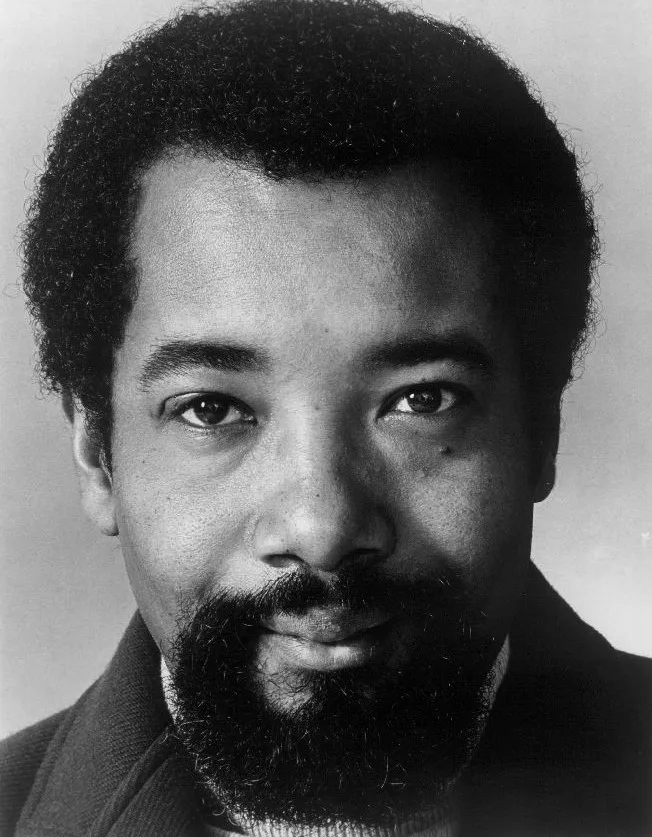
Nat Adderley, publicity photo issued by A&M Records, April 2, 1969 Public domain — Wikimedia Commons — https://commons.wikimedia.org/wiki/File:Nat_Adderley_1969.JPG

Nathaniel Carlyle Adderley was born November 25, 1931, in Tampa, Florida, the younger brother of alto saxophonist Julian "Cannonball" Adderley. Their father played trumpet professionally and passed the instrument down through the family, first to Cannonball and then to Nat. The family later moved to Tallahassee, where both brothers attended Florida A&M University and, as teenagers, played alongside a young Ray Charles in the local music scene. Nat started on trumpet in 1946 and switched permanently to cornet around 1950, drawn to the instrument's darker, more conical tone over the trumpet's brighter cylindrical sound; that dark, earthy cornet tone became his signature. He served in the U.S. Army from 1951 to 1953, playing in an Army band under his brother's direction and touring Korea, then returned to civilian music, working with trombonist J.J. Johnson and briefly with Woody Herman's band.
A 1955 sit-in at Café Bohemia in Greenwich Village, where Cannonball substituted for saxophonist Jerome Richardson, launched both brothers' New York careers almost overnight. That same year Nat cut his first date as a leader, Introducing Nat Adderley (recorded September 6, 1955, for Wing/EmArcy), featuring Cannonball, Horace Silver, Paul Chambers, and Roy Haynes. The brothers formed the first Cannonball Adderley Quintet in 1956, but it disbanded within a year for lack of commercial interest; Nat spent the interim freelancing, including a February 19, 1958 sideman date on Tommy Flanagan's piano chair for J.J. Johnson's J. J. in Person! (Columbia) and a 1959 session with Woody Herman's band, released as The Fourth Herd, alongside Zoot Sims.
The Adderleys reunited their quintet in 1959, and it quickly became one of the era's most commercially successful jazz groups, breaking through with Bobby Timmons's "This Here." Nat served as the group's cornetist, a key composer, and its road manager for the remainder of its run. In January 1960 he wrote "Work Song," inspired by a boyhood memory of hearing convict laborers sing on a Florida chain gang; he first recorded it, as a 16-bar minor blues, on his own Riverside album Work Song (recorded January 25 and 27, 1960, at Reeves Sound Studios, New York), built around an unusual frontline of cornet, Wes Montgomery's guitar, and Sam Jones's cello, with Bobby Timmons, Percy Heath, Keter Betts, and Louis Hayes rounding out the sessions. Days later, on February 1, 1960, the Cannonball Adderley Quintet cut its own version for Them Dirty Blues (Riverside, with pianists Barry Harris and Bobby Timmons, Sam Jones, and Louis Hayes), pairing it with Timmons's "Dat Dere." Oscar Brown Jr. added lyrics in 1961 for his album Sin & Soul, and "Work Song" became a jazz standard and a steady earner Nat later called his "Social Security song."
Through the 1960s Nat kept up a busy parallel career as a leader alongside the Quintet's own hit run (including "Mercy, Mercy, Mercy" in 1966, written by the group's pianist Joe Zawinul). His Riverside date That's Right! (1960) placed his cornet in front of a five-saxophone "Big Sax Section" including Yusef Lateef, Jimmy Heath, and Charlie Rouse. Naturally! (1961, Jazzland) split its two sessions between a group with Joe Zawinul, Sam Jones, and Louis Hayes, and one with Wynton Kelly, Paul Chambers, and Philly Joe Jones. Autobiography (recorded December 1964 to January 1965, Atlantic) again featured Zawinul on piano in a larger horn ensemble. Nat also ghost-played cornet for Sammy Davis Jr.'s trumpet-playing character in the 1966 film A Man Called Adam. By the late 1960s he moved toward a more commercial, funk-inflected sound on A&M releases You, Baby (1968) and Calling Out Loud (1969, produced by Creed Taylor for CTI).
Cannonball's sudden death in August 1975, four weeks after a stroke, ended the Quintet and interrupted a musical the brothers had been co-writing, Shout Up a Morning, based on the John Henry folk legend; Nat completed it, and it was staged nationally in 1986. He spent his remaining 25 years as a headlining leader, touring Europe and Japan, teaching briefly at Harvard, and forming a new quintet with bassist Walter Booker, drummer Jimmy Cobb, and, later, altoist Vincent Herring, as well as a larger touring group billed as the Adderley Brotherhood in 1980. He formed the Paris Reunion Band in the 1990s and led the Riverside Reunion Band at the 1993 Monterey Jazz Festival and on a 1994 European tour. In 1997 he joined the faculty of Florida Southern College in Lakeland as artist-in-residence, founded what became the school's long-running Child of the Sun Jazz Festival, and was inducted into the Jazz Hall of Fame in Kansas City. His playing range had narrowed by the late 1960s, but he kept performing into his final year. Nat Adderley died January 2, 2000, in Lakeland, Florida, of complications from diabetes, at age 68, and was buried at Southside Cemetery in Tallahassee near his brother.
Adderley built his identity around the cornet at a time when the trumpet dominated jazz brass, prizing its darker, more compact sound and its historical link to the earliest jazz cornetists; he was also unafraid to dip below the instrument's typical range for brief, guttural effects before snapping back to the normal register. Alongside his brother and pianist Bobby Timmons, he was a principal architect of soul jazz, a style built on simple, gospel-inflected harmony, a heavy blues feel, and catchy, riff-based themes, most fully realized in his own composition "Work Song." Roughly half his recorded output leaned toward straight hard bop rather than soul jazz. AllMusic's Scott Yanow, reviewing the Work Song album, called him "heard throughout in peak form, playing quite lyrically," and The Penguin Guide to Jazz praised the same record as "laced with a funky blues feel."
- Work Song (1960, Riverside) - His best-known leader date, built around the title composition and an unconventional cornet/guitar/cello frontline with Wes Montgomery.
- Introducing Nat Adderley (1955, Wing/EmArcy) - His debut as a leader, cut the year the Adderley brothers arrived in New York, with Horace Silver, Paul Chambers, and Roy Haynes.
- Them Dirty Blues (1960, Riverside, Cannonball Adderley Quintet) - The Quintet's own premiere of "Work Song," paired with Bobby Timmons's "Dat Dere."
- That's Right! (1960, Riverside) - A "Big Sax Section" date pairing his cornet against Yusef Lateef, Jimmy Heath, and Charlie Rouse.
- Naturally! (1961, Jazzland) - A two-session quartet date split between Joe Zawinul's trio and one with Wynton Kelly, Paul Chambers, and Philly Joe Jones.
- Autobiography (1964-1965, Atlantic) - A larger-ensemble leader date again featuring Joe Zawinul on piano.
- Somethin' Else (1958, Blue Note, Cannonball Adderley) - As composer only: his blues "One for Daddy-O," recorded by Miles Davis as a sideman on his brother's landmark album.
- We Remember Cannon (1989) - A quintet tribute recorded after his brother's death.
Nat Adderley: Full Discography
Identity confirmed via the live Discogs API — artist ID 160829 ("Nat Adderley," realname Nathaniel Carlyle Adderley, matching birth/death dates and the Cannonball Adderley / Nat Adderley Jr. family relationships stated in the Discogs profile text). Discogs credits his personal artist ID with 1,789 releases across 18 API pages. As with several other heavily-recorded musicians in this sweep, a share of his true leader catalog is hidden behind separate Discogs group-billing entities rather than filed under his personal ID: Nat Adderley Sextet (374022, holds the 1972 Soul Zodiac zodiac-themed singles and the 1991 Work Song - Live at Sweet Basil / Autumn Leaves - Live at Sweet Basil sides), Nat Adderley Quintet (857203, holds nearly all of his 1980s-90s leader output: On the Move, Blue Autumn, We Remember Cannon, Talkin' About You, A Night in Manhattan, The Old Country, Workin', Good Company, Branching Out, Mercy, Mercy, Mercy, Live on Planet Earth), Nat Adderley Septet (410455, holds Don't Look Back, 1976), and Nat Adderley And The Big Sax Section (2635603, holds That's Right!, 1960). All four were checked and folded into the table below. Given the size of the combined catalog, this is a curated set of his most significant and best-documented releases, not an exhaustive listing, following this sweep's standing practice for prolific bandleaders.
A large additional share of Nat Adderley's recorded work sits inside the Cannonball Adderley Quintet's own catalog, credited to his brother as leader with Nat as the group's regular cornetist and a frequent composer. That full catalog is documented in Cannonball Adderley's own JazzProfiles.com profile; this file lists only the handful of Quintet albums most directly tied to Nat's own compositions or featured writing.
As Leader / Co-Leader
| Album Title | Recording Date(s) | Release Date | Label | Catalog Number | Format(s) | Personnel | Role | Reissue History | Spotify | Buy | Notes |
|---|---|---|---|---|---|---|---|---|---|---|---|
| Introducing Nat Adderley | Recorded September 6, 1955, NYC | 1955 | Wing Records | Not confirmed in Discogs data | 7", EP, Mono | Nat Adderley (cornet), Cannonball Adderley (alto sax), Horace Silver (piano), Paul Chambers (bass), Roy Haynes (drums) | Leader | Reissued on EmArcy; later repackaged as Them Adderleys on Limelight | Not confirmed on Spotify | — | His debut as a leader, cut the year the Adderley brothers arrived in New York |
| J. J. in Person! | Recorded February 19, 1958, Columbia 30th Street Studio, NYC | 1958 | Columbia | CL 1161 / CS 8009 | Vinyl, LP, Album | J.J. Johnson (trombone, leader), Nat Adderley (cornet), Tommy Flanagan (piano), Wilbur Little (bass), Albert Heath (drums) | Sideman | None found | Not confirmed on Spotify | — | Billed to Johnson, not Adderley; listed here for its significance as an early post-Army sideman date |
| The Fourth Herd | Recorded July 31-August 1, 1959, NYC | 1960 | Jazzland | Not confirmed in Discogs data | Vinyl, LP, Mono | Woody Herman (clarinet, leader), Nat Adderley (cornet), Zoot Sims (tenor sax), Al Cohn, Don Lanphere (tenor sax), Eddie Costa (vibraphone), Bob Brookmeyer, Frank Rehak (trombone), Red Rodney and others (trumpets) | Featured soloist | Reissued as The Fourth Herd... And the New World of Woody Herman | Not confirmed on Spotify | — | Billed to Herman "Featuring Nat Adderley, Zoot Sims, Eddie Costa" on a later reissue |
| That's Right! | Recorded August 9 and September 15, 1960, NYC | 1961 | Riverside Records | Not confirmed in Discogs data | Vinyl, LP, Mono | Nat Adderley (cornet), Cannonball Adderley (alto sax), Yusef Lateef, Jimmy Heath, Charlie Rouse (tenor sax), Tate Houston (baritone sax), Wynton Kelly (piano), Jim Hall (guitar, tracks 2/3/5), Les Spann (guitar, tracks 1/4/6-8), Sam Jones (bass), Jimmy Cobb (drums) | Leader | None found | Not confirmed on Spotify | — | Filed under the group-billing entity "Nat Adderley And The Big Sax Section" on Discogs, not his personal artist ID; his cornet fronts a five-saxophone section |
| Work Song | Recorded January 25 and 27, 1960, Reeves Sound Studios, NYC | 1960 | Riverside Records | Not confirmed in Discogs data | Vinyl, LP, Album, Mono | Nat Adderley (cornet), Wes Montgomery (guitar), Bobby Timmons (piano, tracks 1/2/5/6/9), Percy Heath (bass, tracks 1/6/9), Keter Betts (bass, tracks 2/4/5; cello, track 7), Sam Jones (bass, tracks 3/7/8; cello, tracks 1/2/5/6/9), Louis Hayes (drums) | Leader | Widely reissued on CD; part of the Riverside "Keepnews Collection" series | Not confirmed on Spotify | — | Introduced the title composition, later covered with Oscar Brown Jr. lyrics on his 1961 album Sin & Soul |
| Naturally! | Recorded June 20 and July 19, 1961, NYC | 1961/1962 | Jazzland | Not confirmed in Discogs data | Vinyl, LP, Mono | Nat Adderley (cornet); Session A: Joe Zawinul (piano), Sam Jones (bass), Louis Hayes (drums); Session B: Wynton Kelly (piano), Paul Chambers (bass), Philly Joe Jones (drums) | Leader | None found | Not confirmed on Spotify | — | Two distinct rhythm sections across the album's two sessions |
| Autobiography | Recorded December 21, 1964-January 7, 1965, NYC | 1965 | Atlantic Records | Not confirmed in Discogs data | Vinyl, LP, Album | Nat Adderley (cornet), Ernie Royal (trumpet), Benny Powell (trombone), Don Butterfield (tuba), Seldon Powell (tenor sax, flute), Joe Zawinul (piano), Sam Jones (bass), Grady Tate (drums), Willie Bobo (percussion) | Leader | None found | Not confirmed on Spotify | — | Larger horn-ensemble session; AllMusic and Record Mirror both rated it 4 stars |
| Sayin' Somethin' | Recorded 1966 | 1966 | Atlantic Records | Not confirmed in Discogs data | Vinyl, LP | Not fully confirmed | Leader | Reissued on Collectables paired with Live at Memory Lane | Not confirmed on Spotify | — | |
| You, Baby | Recorded 1968 | 1968 | A&M Records | Not confirmed in Discogs data | Vinyl, LP, Album | Not fully confirmed | Leader | None found | Not confirmed on Spotify | — | Marks his turn toward a more commercial, funk-inflected sound |
| Calling Out Loud | Recorded 1969 | 1969 | A&M Records / CTI | Not confirmed in Discogs data | 7", Single, Promo | Not fully confirmed | Leader | None found | Not confirmed on Spotify | — | Produced by Creed Taylor |
| Soul Zodiac | Recorded 1972 | 1972 | Not confirmed in Discogs data | Not confirmed in Discogs data | Vinyl, LP | Not fully confirmed | Leader | Later anthologized on the 2008 compilation Walk Tall: The David Axelrod Years | Not confirmed on Spotify | — | Filed under the group-billing entity "Nat Adderley Sextet," not his personal artist ID; a concept album built around the signs of the zodiac, part of David Axelrod's Capitol production run |
| Hummin' | Recorded 1976 | 1976 | Not confirmed in Discogs data | Not confirmed in Discogs data | Vinyl, LP | Not fully confirmed | Leader | None found | Not confirmed on Spotify | — | |
| Don't Look Back | Recorded 1976 | 1976 | Not confirmed in Discogs data | Not confirmed in Discogs data | Vinyl, LP | Not fully confirmed | Leader | None found | Not confirmed on Spotify | — | Filed under the group-billing entity "Nat Adderley Septet," not his personal artist ID |
| On the Move | Recorded 1983 | 1983 | Not confirmed in Discogs data | Not confirmed in Discogs data | Vinyl, LP | Not fully confirmed | Leader | None found | Not confirmed on Spotify | — | Filed under the group-billing entity "Nat Adderley Quintet," not his personal artist ID |
| Blue Autumn | Recorded 1986 | 1986 | Not confirmed in Discogs data | Not confirmed in Discogs data | Vinyl, LP | Not fully confirmed | Leader | None found | Not confirmed on Spotify | — | Filed under the "Nat Adderley Quintet" group entity |
| We Remember Cannon | Recorded 1989 | 1989 | Not confirmed in Discogs data | Not confirmed in Discogs data | Not confirmed | Not fully confirmed | Leader | None found | Not confirmed on Spotify | — | Tribute album recorded after Cannonball's 1975 death; filed under the "Nat Adderley Quintet" group entity |
| Talkin' About You | Recorded 1991 | 1991 | Not confirmed in Discogs data | Not confirmed in Discogs data | Not confirmed | Not fully confirmed | Leader | None found | Not confirmed on Spotify | — | Filed under the "Nat Adderley Quintet" group entity |
| Workin' | Recorded 1993 | 1993 | Not confirmed in Discogs data | Not confirmed in Discogs data | Not confirmed | Not fully confirmed | Leader | None found | Not confirmed on Spotify | — | Filed under the "Nat Adderley Quintet" group entity |
As Co-Leader / Member: The Cannonball Adderley Quintet (selected)
The Quintet's records are credited to Cannonball as leader; Nat appears throughout as its regular cornetist and, on several of these, as composer. Full treatment of the Quintet's catalog is in Cannonball Adderley's profile.
| Album Title | Recording Date(s) | Release Date | Label | Catalog Number | Personnel | Notes |
|---|---|---|---|---|---|---|
| Them Dirty Blues | Recorded February 1, 1960 (NYC) and March 29, 1960 (Chicago) | 1960 | Riverside Records | RLP 12-322 | Cannonball Adderley (alto sax), Nat Adderley (cornet), Barry Harris (piano, tracks 1-4), Bobby Timmons (piano, tracks 5-9), Sam Jones (bass), Louis Hayes (drums) | Premieres the Quintet's own recording of Nat's "Work Song," paired with Timmons's "Dat Dere" |
As Sideman (selected major credits)
| Year | Project (Leader) | Title | Label | Catalog | Role | Notes |
|---|---|---|---|---|---|---|
| 1958 | J.J. Johnson | J. J. in Person! | Columbia (CL 1161/CS 8009) | Cornet | Recorded February 19, 1958 | |
| 1959 | Woody Herman | The Fourth Herd | Jazzland | Cornet (featured soloist) | Recorded July 31-August 1, 1959 | |
| 1958 | Cannonball Adderley | Somethin' Else | Blue Note (BLP 1595) | Composer only ("One for Daddy-O") | Nat wrote the track but does not perform on it; Miles Davis plays trumpet on the session as a sideman |
Nat Adderley's Discogs "Appearance" credits (the bulk of his 1,789 total releases) are overwhelmingly reissues, compilations, and singles drawn from a much smaller number of underlying Cannonball Adderley Quintet studio sessions from 1959 through 1975 - not itemized exhaustively here, since that full catalog belongs to Cannonball Adderley's own profile.
- Cannonball Adderley - his older brother; co-led the Cannonball Adderley Quintet from 1959 until Cannonball's death in 1975, and the two later co-wrote the musical Shout Up a Morning.
- Ray Charles - a fellow teenager in the Tallahassee/Florida A&M music scene both Adderley brothers came up in during the 1940s; no later recorded collaboration with Nat specifically is documented.
- Joe Zawinul - the Quintet's pianist and writer of "Mercy, Mercy, Mercy"; also appeared on Nat's own leader dates Naturally! (1961) and Autobiography (1964-65).
- Wes Montgomery - guitarist on the 1960 Work Song sessions, part of the album's unusual frontline.
- Miles Davis - recorded Nat's composition "One for Daddy-O" as a sideman on Cannonball's 1958 Blue Note album Somethin' Else; no other documented direct collaboration between Nat and Davis.
- Tommy Flanagan - pianist on J.J. Johnson's J. J. in Person! (1958), a sideman date shared with Nat.
- Zoot Sims - featured alongside Nat on Woody Herman's The Fourth Herd (recorded 1959).
- That's Right! (1960) personnel - Yusef Lateef, Jimmy Heath, Charlie Rouse (tenor saxophones), Jim Hall (guitar, tracks 2, 3, 5), Wynton Kelly (piano), Sam Jones (bass), and Jimmy Cobb (drums).
- Paul Chambers, Bobby Timmons, Barry Harris, Louis Hayes - documented sidemen on Nat's own 1955-1960 leader dates and the Cannonball Adderley Quintet's Them Dirty Blues.
More Hard Bop Artists
See all 304 Hard Bop artists →More American Jazz Artists
See all 567 American artists →- Wikipedia: Nat Adderley
- Wikipedia: Work Song (Nat Adderley album)
- Wikipedia: Work Song (Nat Adderley song)
- Wikipedia: Them Dirty Blues
- Wikipedia: That's Right!
- Wikipedia: J. J. in Person!
- Wikipedia: Somethin' Else (Cannonball Adderley album)
- Discogs: Nat Adderley (artist 160829)
- AllMusic: Nat Adderley