 JAZZPROFILES lives in the music 1,572 Jazz Artists fully Profiled!
 Curtis Fuller
Last updated September 27, 2026
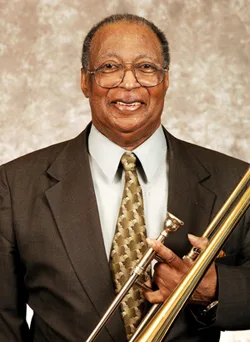
Curtis Fuller, official NEA Jazz Masters portrait, June 29, 2008. Public Domain (US federal government work, prepared by an NEA employee/contractor as part of official duties, 17 U.S.C. Section 105) — Wikimedia Commons, File:Curtis Fuller.jpg - https://commons.wikimedia.org/wiki/File:Curtis_Fuller.jpg (original: https://upload.wikimedia.org/wikipedia/commons/c/c6/Curtis_Fuller.jpg)


Curtis DuBois Fuller was born December 15, 1932, in Detroit, Michigan, to a father who had immigrated from Jamaica and worked at a Ford plant and a mother who had come north from Atlanta. His father died of tuberculosis before Curtis was born, and his mother died when he was nine, after which he spent several years in a Detroit Jesuit orphanage. He attended public school alongside a remarkable run of future jazz names, among them Paul Chambers, Donald Byrd, Tommy Flanagan, Thad Jones, and Milt Jackson, and came up in the informal teaching circle around pianist Barry Harris, later counted among Harris's earliest students alongside Byrd, Chambers, Pepper Adams, and Charles McPherson. Fuller took up trombone at sixteen after failing to get his hands on a violin or saxophone; accounts differ on who taught him next, with Discogs's own artist biography naming Detroit trombonist Frank Rosolino and Wikipedia naming J.J. Johnson and Elmer James, but every source agrees the turning point was hearing Johnson perform live alongside Illinois Jacquet, which fixed the instrument in Fuller's mind for good.
Fuller served in the U.S. Army from 1953 to 1955 during the Korean War era, playing in an Army band alongside bassist Paul Chambers and brothers Nat and Cannonball Adderley. On discharge he returned to Detroit and joined tenor saxophonist and multi-instrumentalist Yusef Lateef's quintet, appearing on Lateef's 1957 Savoy leader debut Jazz Mood alongside fellow Detroiter Hugh Lawson. When Lateef's group relocated to New York in April 1957, Fuller went with it, and what followed was the most productive stretch of his career: by his own account, and per Discogs's artist record, he led or co-led eight albums before the year was out for Prestige, Blue Note, and Savoy. The dated sessions include New Trombone (Prestige PRLP 7107, recorded May 11, 1957, with Sonny Red, Hank Jones, Doug Watkins, and Louis Hayes); Curtis Fuller with Red Garland (New Jazz NJLP 8277, May 14, 1957); a May 18, 1957 Van Gelder date pairing Fuller with pianists Hampton Hawes and Teddy Charles (who also supervised the session for Prestige), Julius Watkins and David Amram on French horn, and Sahib Shihab on alto, first issued as the French-horn half of Prestige's various-artists sampler Modern Jazz Survey 2: Baritones and French Horns and later reissued under Fuller and Hawes's own names as Curtis Fuller and Hampton Hawes with French Horns (Status ST 8305, 1965) - the sampler's other half, a baritone-saxophone date led separately by Pepper Adams and Cecil Payne with John Coltrane and Mal Waldron, was recorded nearly a month earlier, on April 20, and later reissued again under Coltrane's own name as Dakar, so Fuller shares billing with Adams, Payne, Coltrane, and Waldron on one release without having actually shared a bandstand with them that week; The Opener (Blue Note BLP 1567, June 16, 1957, with Hank Mobley and Bobby Timmons); Bone and Bari (Blue Note BLP 1572, August 4, 1957, with baritone saxophonist Tate Houston and pianist Sonny Clark); and Jazz...It's Magic! (Regent RMG 6055, September 5, 1957), co-billed with Sonny Red and Tommy Flanagan. In the middle of that run, on September 15, 1957, Fuller was the trombonist on Coltrane's only leader date for Blue Note, Blue Train, alongside Lee Morgan.
The turn of the decade brought Fuller's most enduring associations. On August 25, 1959, he recorded The Curtis Fuller Jazztet (Savoy MG-12143) with tenor saxophonist Benny Golson, trumpeter Lee Morgan, pianist Wynton Kelly, and bassist Paul Chambers, a trial run for the group Golson would soon co-found with trumpeter Art Farmer. Weeks earlier, on May 21, 1959, Fuller had cut Blues-ette (Savoy MG 12141) with Golson, Tommy Flanagan, Jimmy Garrison, and Al Harewood, the album that remains his best-known recording as a leader and the source of his original "Five Spot After Dark," a tune that entered the standard repertoire. He also led Sliding Easy (United Artists UAL 4041, 1959), a sextet date with Lee Morgan, Hank Mobley, Tommy Flanagan, Paul Chambers, and Elvin Jones arranged by Golson and Gigi Gryce, and Imagination (Savoy MG 12144, December 17, 1959) with Golson, Thad Jones, McCoy Tyner, Jimmy Garrison, and Dave Bailey. When Farmer and Golson formalized the Jazztet in late 1959, Fuller became its first trombonist, recording the group's landmark debut Meet the Jazztet (Argo LP-664, February 1960) with McCoy Tyner in the piano chair; he stayed with the group into 1961. Alongside the Jazztet work he kept his own leader dates going: Images of Curtis Fuller (Savoy MG 12164, June 6-7, 1960, with Yusef Lateef, McCoy Tyner, and Lee Morgan), Boss of the Soul-Stream Trombone (Warwick W 2038, December 1960, with Lateef and Freddie Hubbard), South American Cookin' (Epic LA 16020, 1961, with Zoot Sims and Tommy Flanagan), and Soul Trombone (Impulse! A-13, 1961, with Jimmy Heath, Freddie Hubbard, Cedar Walton, and Jimmy Cobb).
In 1961 Fuller left the Jazztet to join Art Blakey's Jazz Messengers, remaining through 1964 as part of the sextet expansion alongside Freddie Hubbard, Wayne Shorter, and pianist Cedar Walton, a frontline widely cited as the group's creative peak. The band cut Mosaic (Blue Note BLP 4090, recorded October 2, 1961), Caravan (Riverside RM 438, 1962, the group's first release after Blakey signed with the label), Buhaina's Delight (Blue Note BLP 4104, recorded November and December 1961, released 1963), and Free for All (Blue Note BLP 4170, recorded February 10, 1964, released 1965), often singled out as the hardest-driving studio session the Messengers ever made. After leaving Blakey, Fuller worked through the 1960s and 1970s as an in-demand section trombonist in big bands led by Dizzy Gillespie, Quincy Jones, Gil Evans, Lionel Hampton, and, from the mid-1970s, Count Basie, appearing on Basie Big Band (1975), I Told You So (1976), and Prime Time (1977). He kept leading his own dates too, among them Smokin' (Mainstream MRL 370, 1972, with Jimmy Heath, Cedar Walton, and Billy Higgins) and, in 1978, Four on the Outside (Timeless SJP 124), a quintet co-led with Pepper Adams, his most substantial studio reunion with Adams since the 1957 Prestige sampler, with pianist James Williams rounding out the band. Fuller became a mainstay of pianist Cedar Walton's Eastern Rebellion group across the 1970s and 1980s, recorded on Eastern Rebellion 3 (Timeless SJP 143, 1980) with tenor saxophonist Bob Berg, Sam Jones, and Billy Higgins.
Fuller married Catherine Rose Driscoll in 1980; she died of lung cancer in 2010, and he recorded The Story of Cathy and Me (Challenge Records, 2011) as a tribute, following I Will Tell Her (Capri, 2010) and preceding Down Home (Capri, 2012). He received an honorary doctorate of music from Berklee College of Music in 1999, was named an NEA Jazz Master in 2007, and taught at the New York State Summer School of the Arts' School of Jazz Studies. Curtis Fuller passed away May 8, 2021, in Detroit, at 88, survived by eight children, nine grandchildren, and thirteen great-grandchildren. For decades after his death was first reported, some obituaries and reference sources gave his birth year as 1934 and his age at death as 86; Discogs's own artist file notes the correction explicitly, and this profile uses the verified December 15, 1932 date.
Fuller belongs to the generation of hard-bop trombonists who translated J.J. Johnson's bebop vocabulary - fast, cleanly articulated lines on an instrument built for something slower - into a broader, darker, more blues-and-gospel-inflected voice; NPR's obituary headline called him simply "the leading trombonist of jazz's Detroit wave," grouping him with the same Detroit cohort of Barry Harris, Tommy Flanagan, Paul Chambers, Donald Byrd, and Pepper Adams that came through the same schools, bands, and mentors before scattering to New York in the mid-1950s. As a composer he contributed directly to the working book of the Jazztet and to his own record, most durably with "Five Spot After Dark" from Blues-ette. He was also one of the most reliable section trombonists of his era, holding chairs in big bands led by Dizzy Gillespie, Quincy Jones, Gil Evans, and Count Basie into the 1970s and 1980s, a versatility that kept him working steadily even as his own leader dates thinned out after the mid-1960s. His reputation rests less on innovation within the instrument's vocabulary than on consistency and centrality: few trombonists of his generation appear on as many acknowledged classic albums by other leaders, from Coltrane's Blue Train to Blakey's Mosaic, while still maintaining a personal, immediately identifiable sound.
- Blue Train (1958, Blue Note) - As a sideman: John Coltrane's only leader album for Blue Note, recorded September 15, 1957, with Lee Morgan and Fuller completing the front line. Spotify - Blue Train
- Blues-ette (1959, Savoy) - Fuller's best-known leader date, with Benny Golson and Tommy Flanagan, and the source of his standard "Five Spot After Dark."
- The Opener (1957, Blue Note) - His Blue Note leader debut, recorded June 16, 1957, with Hank Mobley and Bobby Timmons.
- Meet the Jazztet (1960, Argo) - The debut album of Art Farmer and Benny Golson's Jazztet, with Fuller as founding trombonist and McCoy Tyner on piano.
- Mosaic (1961, Blue Note) - As a sideman: Art Blakey's Jazz Messengers sextet debut, introducing the Shorter-Hubbard-Fuller-Walton frontline widely cited as the band's creative peak. Spotify - Mosaic
- Soul Trombone (1961, Impulse!) - A leader date with Jimmy Heath, Freddie Hubbard, Cedar Walton, and Jimmy Cobb.
- Four on the Outside (1978, Timeless) - Co-led with Pepper Adams, the two men's most substantial studio reunion since the 1957 Prestige sampler that first put their names on the same release.
- Eastern Rebellion 3 (1980, Timeless) - With Cedar Walton, Bob Berg, Sam Jones, and Billy Higgins, from Fuller's long-running association with Walton's group.
Curtis Fuller: Full Discography
Identity confirmed via the live Discogs API - artist ID 257250 (realname Curtis DuBois Fuller, born December 15, 1932, died May 8, 2021, both Detroit, Michigan - matching this profile's subject exactly). Discogs credits Fuller on 855 releases total (75 in a "Main"/leader role, 658 sideman "Appearance" credits, 97 track-level "TrackAppearance" credits, and 25 unofficial releases), but the great majority of the 75 "Main" entries are later compilations, box sets, and reissues of a much smaller body of original sessions, several of them retitled more than once across labels and decades. A number of genuine leader/co-leader albums are additionally filed under separate Discogs group-billing entities rather than Fuller's own artist page - "Curtis Fuller's Quintet" (2425331), "The Curtis Fuller Sextet" (1713827), "Curtis Fuller Quartet" (12569999), and two Benny Golson co-billings (8586690, 5508674) among them - and were checked individually for this build. The table below itemizes Fuller's confirmed leader/co-leader catalog plus a representative set of his most significant sideman dates; given the scale of his sideman work (nearly 700 combined Appearance and TrackAppearance credits across a 60-plus-year career), it does not attempt exhaustive sideman coverage.
As Leader / Co-Leader
| Album Title | Recording Date(s) | Release Date | Label | Catalog Number | Format(s) | Personnel | Role | Reissue History | Spotify | Buy | Notes |
|---|---|---|---|---|---|---|---|---|---|---|---|
| New Trombone | Recorded May 11, 1957, Van Gelder Studio, Hackensack NJ | 1957 | Prestige | PRLP 7107 | Vinyl, LP, Album, Mono | Curtis Fuller (trombone), Sonny Red (alto sax), Hank Jones (piano), Doug Watkins (bass), Louis Hayes (drums) | Leader | None found | Not confirmed via Spotify search this session (Spotify API quota exhausted) | — | Fuller's first date as a leader |
| Curtis Fuller with Red Garland | Recorded May 14, 1957, Van Gelder Studio, Hackensack NJ | 1962 | New Jazz | NJLP 8277 | Vinyl, LP, Album, Mono | Curtis Fuller (trombone), Sonny Red (alto sax), Red Garland (piano), Paul Chambers (bass), Louis Hayes (drums); supervised by Teddy Charles | Co-leader (with Red Garland) | First-edition textured-cover pressing documented on Discogs; later reissues exist | Not confirmed via Spotify search this session | — | Recorded in 1957 but held back by Prestige/New Jazz until 1962 |
| Curtis Fuller and Hampton Hawes with French Horns | Recorded May 18, 1957, Van Gelder Studio, Hackensack NJ | First issued 1958 as the French-horn half of the various-artists sampler Modern Jazz Survey 2: Baritones and French Horns (Prestige 6, 16⅔ RPM); reissued under this title 1965 | Status | ST 8305 | Vinyl, LP, Mono | Curtis Fuller (trombone), Julius Watkins and David Amram (French horn), Sahib Shihab (alto sax), Hampton Hawes and Teddy Charles (piano, on different tracks; Charles also supervised), Addison Farmer (bass), Jerry Segal (drums) | Co-leader (with Hampton Hawes) | Reissued at standard speed 1965 (Status ST 8305) after the original 16⅔ RPM sampler pressing | Not confirmed via Spotify search this session | — | This is the French-horn side of the same Prestige sampler that carries a separately recorded baritone-saxophone session led by Pepper Adams and Cecil Payne with John Coltrane and Mal Waldron, cut nearly a month earlier (April 20, 1957) and later reissued again under Coltrane's name as Dakar; the two halves share a release but not a session date or personnel |
| The Opener | Recorded June 16, 1957, Van Gelder Studio, Hackensack NJ | 1957 | Blue Note | BLP 1567 | Vinyl, LP, Album, Mono | Curtis Fuller (trombone), Hank Mobley (tenor sax), Bobby Timmons (piano), Paul Chambers (bass), Art Taylor (drums) | Leader | Standard Blue Note CD/LP reissue history | Not confirmed via Spotify search this session | — | Fuller's Blue Note leader debut |
| Bone and Bari | Recorded August 4, 1957, Van Gelder Studio, Hackensack NJ | 1957 | Blue Note | BLP 1572 | Vinyl, LP, Album, Mono | Curtis Fuller (trombone), Tate Houston (baritone sax), Sonny Clark (piano), Paul Chambers (bass), Art Taylor (drums) | Leader | Standard Blue Note CD/LP reissue history | Not confirmed via Spotify search this session | — | Unusual two-low-horn frontline pairing trombone and baritone sax |
| Jazz...It's Magic! | Recorded September 5, 1957, New York City | 1958 | Regent | RMG 6055 | Vinyl, LP, Album, Mono | Curtis Fuller (trombone), Sonny Red (alto sax), Tommy Flanagan (piano), George Tucker (bass), Louis Hayes (drums) | Co-leader (with Sonny Red, Tommy Flanagan, George Tucker, Louis Hayes) | Later reissued on Savoy | Not confirmed via Spotify search this session | — | |
| The Curtis Fuller Jazztet (with Benny Golson) | Recorded August 25, 1959, New York City | 1959 | Savoy | MG-12143 | Vinyl, LP, Album, Mono | Curtis Fuller (trombone), Benny Golson (tenor sax), Lee Morgan (trumpet), Wynton Kelly (piano), Paul Chambers (bass), Charlie Persip (drums) | Co-leader (with Benny Golson, billed as The Curtis Fuller Sextet) | Reissued repeatedly on Savoy through the 1990s and on Doxy (2013) | Not confirmed via Spotify search this session | — | A trial run for the Farmer/Golson Jazztet, recorded before that group's formal billing existed |
| Blues-ette | Recorded May 21, 1959, Van Gelder Studio, Englewood Cliffs NJ | 1959 | Savoy | MG 12141 | Vinyl, LP, Album, Mono | Curtis Fuller (trombone), Benny Golson (tenor sax), Tommy Flanagan (piano), Jimmy Garrison (bass), Al Harewood (drums) | Leader (Curtis Fuller's Quintet) | Reissued repeatedly; two later "Blues-ette" sequel albums (1992, 1993) are separate later recordings, not reissues of this one | Not confirmed via Spotify search this session | — | Fuller's best-known leader album; source of his original "Five Spot After Dark," which entered the standard repertoire |
| Sliding Easy | Recorded 1959 | 1959 | United Artists | UAL 4041 | Vinyl, LP, Album, Mono | Curtis Fuller (trombone), Lee Morgan (trumpet), Hank Mobley (tenor sax), Tommy Flanagan (piano), Paul Chambers (bass), Elvin Jones (drums); arranged by Benny Golson and Gigi Gryce | Leader (The Curtis Fuller Sextet) | None found | Not confirmed via Spotify search this session | — | |
| Imagination | Recorded December 17, 1959, Van Gelder Studio, Englewood Cliffs NJ | 1960 | Savoy | MG 12144 | Vinyl, LP, Album, Mono | Curtis Fuller (trombone, composer), Benny Golson (tenor sax), Thad Jones (trumpet), McCoy Tyner (piano), Jimmy Garrison (bass), Dave Bailey (drums) | Leader (The Curtis Fuller Sextet) | Sequel album Imagination Vol. 2 (1992) is a separate later recording | Not confirmed via Spotify search this session | — | Release year is Discogs's best estimate based on the recording date and secondary sources; no confirmed release-date documentation found |
| Meet the Jazztet | Recorded February 6, 9 and 10, 1960, Nola Studios, New York | 1960 | Argo | LP-664 | Vinyl, LP, Album, Mono/Stereo | Art Farmer (trumpet), Benny Golson (tenor sax), Curtis Fuller (trombone), McCoy Tyner (piano), Addison Farmer (bass), Lex Humphries (drums) | Co-leader (billed to Art Farmer, Benny Golson, and The Jazztet; Fuller was the group's founding trombonist) | Reissued repeatedly, most recently in The Complete Argo/Mercury Art Farmer/Benny Golson/Jazztet Sessions (2004) | Not confirmed via Spotify search this session | — | The Jazztet's official debut album; Fuller left the group in 1961 to join Art Blakey |
| Images of Curtis Fuller | Recorded June 6-7, 1960, New York City | 1975 | Savoy | MG 12164 | Vinyl, LP, Album | Curtis Fuller (trombone), Yusef Lateef (tenor sax, flute), Lee Morgan and Wilbur Harden (trumpet), McCoy Tyner (piano), Jimmy Garrison and Milt Hinton (bass), Bobby Donaldson and Clifford Jarvis (drums) | Leader | Held unissued by Savoy for 15 years before this 1975 release | Not confirmed via Spotify search this session | — | |
| Boss of the Soul-Stream Trombone | Recorded December 1960, New York City | 1961 | Warwick | W 2038 | Vinyl, LP, Mono | Curtis Fuller (trombone), Yusef Lateef (tenor sax, flute), Freddie Hubbard (trumpet), Walter Bishop Jr. (piano), Buddy Catlett (bass), Stu Martin (drums); produced by Teddy Charles | Leader | None found | Not confirmed via Spotify search this session | — | |
| South American Cookin' | Recorded 1961 | 1961 | Epic | LA 16020 | Vinyl, LP, Mono | Curtis Fuller (trombone), Zoot Sims (tenor sax), Tommy Flanagan (piano), Jymie Merritt (bass), Dave Bailey (drums) | Leader (Curtis Fuller's Quintet) | Reissued 2001 paired with The Magnificent Trombone of Curtis Fuller | Not confirmed via Spotify search this session | — | Filed on Discogs under the "Curtis Fuller's Quintet" group entity, not Fuller's personal artist page |
| Soul Trombone (Soul Trombone and the Jazz Clan) | Recorded 1961 | 1962 | Impulse! | A-13 | Vinyl, LP, Album, Mono (also issued in stereo as AS-13) | Curtis Fuller (trombone), Jimmy Heath (tenor sax), Freddie Hubbard (trumpet), Cedar Walton (piano), Jymie Merritt (bass), Jimmy Cobb (drums); produced by Bob Thiele | Leader | None found | Not confirmed via Spotify search this session | — | |
| Smokin' | Recorded 1972 | 1972 | Mainstream | MRL 370 | Vinyl, LP, Album | Curtis Fuller (trombone), Jimmy Heath (tenor/soprano sax), Bill Hardman (trumpet), Cedar Walton (electric piano, piano), Earl Dunbar (guitar), Mickey Bass (bass), Billy Higgins (drums); supervised by Ernie Wilkins | Leader | None found | Not confirmed via Spotify search this session | — | |
| Four on the Outside | Recorded 1978 | 1978 | Timeless | SJP 124 | Vinyl, LP, Album | Curtis Fuller (trombone), Pepper Adams (baritone sax), James Williams (piano), Dennis Irwin (bass), John Yarling (drums); produced by Wim Wigt | Co-leader (with Pepper Adams) | None found | Not confirmed via Spotify search this session | — | Fuller and Adams's most substantial studio reunion since the 1957 Prestige sampler; on Discogs this release is also filed under a "Curtis Fuller-Pepper Adams Quintet" group-billing entity |
| Eastern Rebellion 3 | Recorded 1980 | 1980 | Timeless | SJP 143 | Vinyl, LP, Album | Cedar Walton (piano, composer), Curtis Fuller (trombone), Bob Berg (tenor sax), Sam Jones (bass), Billy Higgins (drums) | Co-leader (Cedar Walton's Eastern Rebellion group) | Reissued in the 2021 box set Eastern Rebellion Vol. 1-4 | Not confirmed via Spotify search this session | — | Third of Walton's Eastern Rebellion series; Fuller's involvement with the group spanned the 1970s into the 1980s |
| I Will Tell Her | Recorded 2010 | 2010 | Capri Records | Not confirmed in this build | Not confirmed in this build | Not confirmed in this build | Leader | Not confirmed in this build | Not confirmed via Spotify search this session | — | Catalog number and personnel not independently verified against Discogs release-level data in this build; listed on Fuller's Main artist page |
| The Story of Cathy and Me | Recorded 2011 | 2011 | Challenge Records | Not confirmed in this build | Not confirmed in this build | Not confirmed in this build | Leader | Not confirmed in this build | Not confirmed via Spotify search this session | — | A tribute to Fuller's wife Catherine Rose Fuller, who died of lung cancer in 2010; catalog number and personnel not independently verified in this build |
| Down Home | Recorded 2012 | 2012 | Capri Records | Not confirmed in this build | Not confirmed in this build | Not confirmed in this build | Leader | Not confirmed in this build | Not confirmed via Spotify search this session | — | One of Fuller's last studio leader dates; catalog number and personnel not independently verified in this build |
As Sideman (selected major credits)
| Year | Project (Leader) | Title | Label | Catalog | Role | Notes |
|---|---|---|---|---|---|---|
| 1957 | Yusef Lateef | Jazz Mood | Savoy | Not confirmed in this build | Trombone | Lateef's leader debut, recorded with fellow Detroit-scene player Hugh Lawson |
| 1957 | John Coltrane | Blue Train | Blue Note (BLP 1577) | Trombone | Recorded September 15, 1957; Coltrane's only leader date for Blue Note, with Lee Morgan completing the front line | |
| 1960 | Art Farmer/Benny Golson/The Jazztet | Big City Sounds | Argo | Trombone | Second Jazztet album, recorded during Fuller's 1959-1961 tenure with the group | |
| 1961 | Art Blakey & the Jazz Messengers | Mosaic | Blue Note (BLP 4090) | Trombone | Recorded October 2, 1961; debut of the Shorter-Hubbard-Fuller-Walton sextet frontline | |
| 1962 | Art Blakey & the Jazz Messengers | Caravan | Riverside (RM 438) | Trombone | The group's first release after Blakey signed with Riverside in October 1962 | |
| 1963 | Art Blakey & the Jazz Messengers | Buhaina's Delight | Blue Note (BLP 4104) | Trombone | Recorded November 28 and December 18, 1961; released 1963 | |
| 1965 | Art Blakey & the Jazz Messengers | Free for All | Blue Note (BLP 4170) | Trombone | Recorded February 10, 1964; often cited as the hardest-driving studio session the Messengers ever cut | |
| 1975 | Count Basie Orchestra | Basie Big Band | Pablo | Trombone | Part of Fuller's mid-1970s run of big-band section work | |
| 1976 | Count Basie Orchestra | I Told You So | Pablo | Trombone | ||
| 1977 | Count Basie Orchestra | Prime Time | Pablo | Trombone |
Fuller's Discogs sideman log (658 "Appearance" credits plus 97 track-level credits, spanning 1955-2021 including posthumous compilation appearances) also includes further work in the original Farmer/Golson Jazztet (At Birdhouse, Here and Now, Another Git Together, all 1961-1962), Dizzy Gillespie's big bands, Quincy Jones's and Gil Evans's orchestras, Lionel Hampton's Giants of Jazz, and dozens of one-off sideman dates for Blue Note, Prestige, Savoy, and Riverside leaders across the late 1950s and 1960s - not itemized exhaustively here.
- Pepper Adams - fellow Detroit-bred hard-bop musician and Barry Harris student; shares billing with Fuller on the 1957/58 Prestige sampler Modern Jazz Survey 2 (recorded on different dates with different personnel) and co-led the 1978 quintet album Four on the Outside.
- John Coltrane - front-line partner, with Lee Morgan, on Coltrane's only Blue Note leader date, Blue Train (1957).
- Benny Golson - the Jazztet's tenor saxophonist and Fuller's most frequent writing partner and co-leader across Blues-ette, The Curtis Fuller Jazztet, Sliding Easy (arranger), Imagination, and Meet the Jazztet.
- Tommy Flanagan - Detroit schoolmate and the pianist on more Fuller leader dates than any other musician, including Jazz...It's Magic!, Blues-ette, Sliding Easy, and South American Cookin'.
- Yusef Lateef - the bandleader whose quintet brought Fuller from Detroit to New York in April 1957, and a recurring collaborator on Images of Curtis Fuller and Boss of the Soul-Stream Trombone.
- Art Blakey - led the Jazz Messengers sextet Fuller belonged to from 1961 to 1964, on Mosaic, Caravan, Buhaina's Delight, and Free for All.
- Cedar Walton - pianist alongside Fuller in the Jazz Messengers sextet, on Smokin', and as leader of the Eastern Rebellion group Fuller recorded and toured with into the 1980s.
- Barry Harris - part of the informal Detroit teaching circle that shaped Fuller alongside Paul Chambers, Donald Byrd, and Pepper Adams.
- Julius Watkins, Hampton Hawes, and Teddy Charles - co-participants (French horn, piano, and piano/session supervisor respectively) on the May 18, 1957 date later issued as Curtis Fuller and Hampton Hawes with French Horns.
- Marcello Tonolo (piano) - Together In Monaco (1997, Curtis Fuller/Paul Jeffrey Sextet), recorded through Tonolo's Duke University Jazz Studies teaching connection with Paul Jeffrey; Discogs-verified.
More Hard Bop Artists
See all 304 Hard Bop artists →More American Jazz Artists
See all 567 American artists →- Wikipedia: Curtis Fuller
- Discogs: Curtis Fuller (artist 257250)
- NPR: Curtis Fuller, Leading Trombonist Of Jazz's Detroit Wave, Dies At 88
- The New York Times: Curtis Fuller obituary
- JazzTimes: Curtis Fuller 1932-2021
- NEA: Curtis Fuller, NEA Jazz Master
- Discogs API release credits (labels, catalog numbers, formats, and personnel) for every album listed in
discography-full.md, cross-checked against the discography files of already-profiled collaborators on this site (John Coltrane, Art Blakey, Tommy Flanagan, Paul Chambers) for consistency on shared session dates.