 JAZZPROFILES lives in the music 1,146 Jazz Artists fully Profiled!
 Stanley Turrentine
Last updated September 7, 2026
Listen on Spotify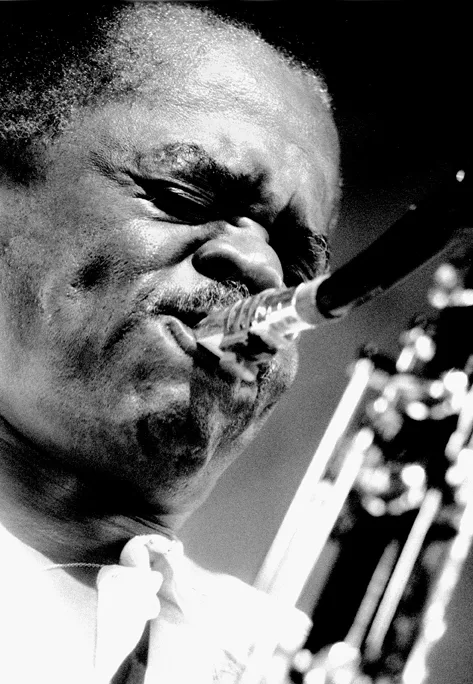
Stanley Turrentine performing at the Bach Dancing & Dynamite Society, Half Moon Bay, CA, August 13, 1989. (Photo: Brian McMillen) CC BY-SA 4.0 — Wikimedia Commons — https://commons.wikimedia.org/wiki/File:Stanley_Turrentine.jpg

Stanley William Turrentine grew up in Pittsburgh's Hill District in a family built around music. His father Thomas Sr. played saxophone in Al Cooper's Savoy Sultans, his mother played stride piano, and his older brother Tommy became a professional trumpeter Stanley would record alongside for years. Illinois Jacquet was an early, direct influence — the honking, big-toned tenor style Jacquet was known for reportedly had Turrentine sitting in with him while still a boy. By 17, in 1951, Turrentine was touring with Lowell Fulson's blues band, learning the saxophone on the bandstand in front of paying R&B crowds rather than in a classroom.
In 1953 he moved to Cleveland with Tommy to work in pianist Tadd Dameron's group. That same year, Earl Bostic hired the 19-year-old into his band to fill the chair just vacated by John Coltrane, who was about to spend the next decade pushing jazz improvisation outward. Turrentine's instinct ran the other way: fewer notes, a thicker tone, a blues player's sense of when to lay out. His only formal music training came during a military stint in the mid-1950s. He left the service in 1959 and went straight into drummer Max Roach's quintet alongside Tommy, recording Quiet as It's Kept and Moon Faced and Starry Eyed that year and drawing wider attention to both Turrentine brothers.
Turrentine signed with Blue Note in 1960, the same year he married organist Shirley Scott. His leader debut for the label, Look Out! (1960), was recorded that June with pianist Horace Parlan; Dearly Beloved (1961) brought Scott into the band as his own leader for the first time. Through the decade the two of them built a strain of soul-jazz that was warm and groove-first, made for dancing as much as listening, on records like That's Where It's At (1962) and Never Let Me Go (1963). Turrentine also stretched toward a harder-bop sound with McCoy Tyner, Grant Green, and Blue Mitchell on Rough 'n Tumble (1966) and The Spoiler (1967), both arranged by Duke Pearson, and closed out the decade with the big-band-flavored Always Something There (1968) and a joint-billed date with Scott, Common Touch (1968).
When producer Creed Taylor signed Turrentine to CTI in 1970, the label's first album under his own name, Sugar, became one of the biggest records of his career — Freddie Hubbard on trumpet, Ron Carter on bass, and, on guitar, a young George Benson three years before his own crossover breakthrough with Breezin'. Salt Song (1971) followed with Eumir Deodato arranging, and Cherry (1972), co-billed with vibraphonist Milt Jackson, brought in pianist Bob James for the first time. James returned the next year as arranger, conductor, and keyboardist on Don't Mess with Mister T. (1973), the record most associated with their partnership. Turrentine left CTI for Fantasy in 1974, releasing Pieces of Dreams and In the Pocket (1975) before Everybody Come On Out (1976) gave him his first Grammy nomination, for "Hope That We Can Be Together Soon," a Gamble and Huff song, at the 1977 ceremony. A move to Elektra produced Betcha (1979), which brought a second Grammy nomination, for Best Jazz Fusion Performance, in 1980.
Turrentine returned to Blue Note in the mid-1980s. Straight Ahead (1985) reunited him with George Benson, now on electric guitar, alongside organist Jimmy Smith. Wonderland (1987), a full album of Stevie Wonder covers recorded that December, brought Wonder himself into the studio to play harmonica on "Boogie on Reggae Woman" — the track that earned Turrentine his third and final Grammy nomination, in 1988. He closed out his recording career with a turn back toward straight-ahead acoustic jazz on More Than a Mood (1992), a quartet-plus-guest date with Freddie Hubbard, Cedar Walton, Ron Carter, and Billy Higgins.
He remarried, to vocalist Rita Da Costa, in 1984, and settled in Fort Washington, Maryland, continuing to perform through the 1990s. Stanley Turrentine died of a stroke in New York City on September 12, 2000, at 66, and was buried in Pittsburgh's Allegheny Cemetery. He was nominated for three Grammys across eleven years and won none of them. The records made the case anyway.
Turrentine came up in the lineage of big-toned tenor players running from Illinois Jacquet through Gene Ammons — saxophonists who treated the horn as a vocal instrument, built for blues phrasing and a thick, vibrato-heavy sound rather than harmonic exploration. AllMusic critic Steve Huey summed up the result as a tone "distinctively thick, rippling" and "an earthy grounding in the blues" — a description that has followed Turrentine's reputation ever since.
That grounding is what let him move across so many settings without ever sounding out of place. He was equally at home in Shirley Scott's organ-trio soul-jazz, in the harder postbop company of McCoy Tyner and Grant Green, in Creed Taylor's string-and-horn CTI arrangements, and in the R&B and fusion charts of his Fantasy and Elektra years. Where a contemporary like Coltrane kept asking how far a solo could go, Turrentine kept asking how much it could say with less — a blues player's economy applied to whatever genre the session called for.
- Look Out! (1960, Blue Note) - His Blue Note leader debut, recorded that June with Horace Parlan, George Tucker, and Al Harewood; the start of the catalog everything else builds on. Spotify - Look Out! Listen · Buy
- Sugar (1970/71, CTI) - His CTI breakthrough, with Freddie Hubbard, Ron Carter, and a young George Benson on guitar three years before Breezin'. Spotify - Sugar Listen · Buy
- Don't Mess with Mister T. (1973, CTI) - Arranged and played by Bob James, with Eric Gale, Idris Muhammad, and Randy Brecker; the fullest statement of their partnership. Spotify - Don't Mess with Mister T. Listen · Buy
- Wonderland (1987, Blue Note) - A full album of Stevie Wonder covers, with Wonder himself guesting on harmonica on the Grammy-nominated "Boogie on Reggae Woman." Spotify - Wonderland Listen
- More Than a Mood (1992, Limelight/MusicMasters Jazz) - His late-career return to straight-ahead acoustic jazz, with Freddie Hubbard, Cedar Walton, Ron Carter, and Billy Higgins. Spotify - More Than a Mood Listen · Buy
Stanley Turrentine: Full Discography (Discogs-Verified)
Discogs profile summary
- Real name: Stanley William Turrentine
- Discogs bio: "American jazz/soul-jazz saxophonist. Born 5 April 1934 in Pittsburgh, Pennsylvania, USA.. Married to jazz organist Shirley Scott for about a decade (divorced 1971)."
- Name variations on file: C. Turrentine, S Turrentine, S. Turntine, S. Turrentine, S. Turretine, St. Turrentine, Stan Turrentine, Stanley T, Stanley Tuirentine, Stanley Turentine, Stanley Turrentine / スタンレー・タレンタイン, Stanly Turrentine, Turrentine, スタンレー・タレンタイン
- Alias: Stan Turner (artist ID 2121222)
- Group affiliations on file: The Horace Silver Quintet, CTI All-Stars, The Gene Harris Trio Plus One, Max Roach Quintet, Max Roach Plus Four, Max Roach Sextet, Horace Parlan Quintet, Stanley Turrentine Quartet, Turrentine Brothers
- Flag: Discogs' own profile field lists his death date as "11 September 2000," one day off the September 12, 2000 date given by Wikipedia, AllMusic, and the Wikimedia Commons category metadata (all three independently agree on the 12th). The final-blog.md and discography-intro.md use September 12, 2000, following the 3-source majority. Flagging the 1-day Discogs discrepancy here rather than silently picking a side.
LEADER (solo): full detail
Personnel pulled directly from each release's Discogs extraartists credits. This is not every pressing/reissue of each album, one representative release per title/year was used.
| Album | Year | Label / Catalog | Personnel (selected) | Notes | Listen | Buy |
|---|---|---|---|---|---|---|
| Look Out! | 1960 | Blue Note, BLP 4039 | Horace Parlan (piano), George Tucker (bass), Al Harewood (drums); Alfred Lion (producer), Rudy Van Gelder (engineer) | Recorded June 18, 1960. His Blue Note debut as leader. | Spotify | Amazon |
| Dearly Beloved | 1961 | Blue Note, BLP 4081 | Shirley Scott (organ), Roy Brooks (drums) | Recorded June 8, 1961. First album with then-wife Shirley Scott as his own leader date. | Spotify | Amazon |
| That's Where It's At | 1962 | Blue Note, BLP 4096 | Les McCann (piano), Herbie Lewis (bass), Otis Finch (drums) | Spotify | Amazon | |
| Never Let Me Go | 1963 | Blue Note, BLP 4129 | Shirley Scott (organ), Sam Jones / Major Holley (bass), Al Harewood / Clarence Johnston (drums), Ray Barretto (congas) | Recorded Jan 18 and Feb 13, 1963. | Spotify | Amazon |
| The Soul Is Willing | 1963 | Prestige, PRST 7267 | Shirley Scott (organ), Major Holley (bass), Grassella Oliphant (drums) | On Prestige (Shirley Scott's home label at the time), not Blue Note. | Spotify | Amazon |
| Rough 'N Tumble | 1966 | Blue Note, BLP 4240 | McCoy Tyner (piano), Grant Green (guitar), Bob Cranshaw (bass), Mickey Roker (drums), Blue Mitchell (trumpet), James Spaulding (alto sax), Pepper Adams (baritone sax); Duke Pearson (arranger) | Recorded July 1, 1966. | Spotify | Amazon |
| Let It Go | 1966 | Impulse!, AS-9115 | Shirley Scott (organ), Ron Carter (bass), Mack Simpkins (drums); Bob Thiele (producer) | His only Impulse! leader date. | Spotify | Amazon |
| The Spoiler | 1967 | Blue Note, BLP 4256 | McCoy Tyner (piano), Blue Mitchell (trumpet), Julian Priester (trombone), James Spaulding (alto sax/flute), Pepper Adams (baritone sax), Bob Cranshaw (bass), Mickey Roker (drums); Duke Pearson (arranger) | Recorded Sept 22, 1966. | Spotify | Amazon |
| Always Something There | 1968 | Blue Note, BST 84298 | Herbie Hancock and Hank Jones (piano), Kenny Burrell and Barry Galbraith (guitar), Bob Cranshaw (bass), Mel Lewis / Mickey Roker (drums), Jerome Richardson and Jerry Dodgion (reeds); Thad Jones (arranger) | Big-band-flavored session. | Spotify | Amazon |
| Common Touch | 1968 | Blue Note, BST 84315 | Shirley Scott (organ), Jimmy Ponder (guitar), Bob Cranshaw (bass), Leo Morris (drums) | Billed jointly to Turrentine and Shirley Scott. | Spotify | Amazon |
| Sugar | 1970/71 | CTI Records, CTI 6005 | George Benson (guitar), Freddie Hubbard (trumpet), Ron Carter (bass), Lonnie Liston Smith (electric piano), Butch Cornell (organ), Billy Kaye (drums); Creed Taylor (producer) | His breakthrough CTI album. George Benson connection (per blog). | Spotify | Amazon |
| Salt Song | 1971 | CTI Records, CTI 6010 | Eumir Deodato (arranger/conductor/keys), Eric Gale (guitar), Ron Carter (bass), Airto Moreira and Billy Cobham (drums/percussion), Richard Tee and Horace Parlan (keys), plus a string/vocal section | Recorded July and Sept 1971 at Van Gelder Studio. | Spotify | Amazon |
| Cherry | 1972 | CTI Records, CTI 6017 | Co-billed with Milt Jackson (vibraphone). Bob James (piano/electric piano), Ron Carter (bass), Billy Cobham (drums), Cornell Dupree (guitar); Creed Taylor (producer) | Recorded May 1972. Second Bob James connection beyond "Don't Mess with Mister T." | Spotify | Amazon |
| Don't Mess With Mister T. | 1973 | CTI Records, CTI 6030 | Bob James (arranger/conductor/piano), Eric Gale (guitar), Idris Muhammad (drums), Ron Carter (bass), Joe Farrell (tenor sax), Randy Brecker (trumpet), plus a full horn/string section; Creed Taylor (producer) | Recorded June 1973. Central Bob James connection used in the blog post. | Spotify | Amazon |
| Pieces of Dreams | 1974 | Fantasy, F-9465 | Gene Page (keys/arranger/conductor/producer), David T. Walker, Dean Parks, and Ray Parker Jr. (guitar), Ron Brown (bass), Ed Greene (drums) | First Fantasy-label session, move away from CTI. | Spotify | Amazon |
| In the Pocket | 1975 | Fantasy, F-9478 | Gene Page (arranger/conductor), David T. Walker, Dean Parks, Melvin Ragin, and Ray Parker Jr. (guitar), Sylvester Rivers (keys); Turrentine himself credited as producer | Recorded Sound Factory, Hollywood, Jan 1975. | not found (no Spotify listing; the previous full-album YouTube upload has been taken down; only unrelated individual tracks — "Spaced," "Have It Your Way, Sandy" — were found live, not the title track or a full-album upload) | Amazon |
| Everybody Come On Out | 1976 | Fantasy, F-9508 | Wade Marcus (arranger/conductor), Harvey Mason (drums), Joe Sample (electric piano), Lee Ritenour (guitar), Dorothy Ashby (harp), full horn/string section; Orrin Keepnews and Turrentine (producers) | Contains "Hope That We Can Be Together Soon" (Gamble/Huff), his first Grammy-nominated track (1977 ceremony). | Spotify | Amazon |
| Nightwings | 1977 | Fantasy, F-9534 | Claus Ogerman (arranger/conductor), Ron Carter (bass), Eric Gale and Cornell Dupree (guitar), Hubert Laws (flute), large horn/string section | YouTube (title track only, not full album; not on Spotify) | Amazon | |
| New Time Shuffle | 1979 | Blue Note, LT-993 | McCoy Tyner and Kenny Barron (piano), Donald Byrd (trumpet), Joe Farrell (tenor sax/flute), Ron Carter and Bob Cranshaw (bass); Duke Pearson (original-session arranger), Michael Cuscuna (reissue producer) | Vault release: 1967 Blue Note sessions issued for the first time in 1979. | YouTube (title track only, not full album; not on Spotify) | Amazon |
| Betcha | 1979 | Elektra, 6E-217 | Gene Page (arranger), Lee Ritenour and David T. Walker (guitar), Jeff Porcaro and James Gadson (drums); Turrentine (producer) | Recorded May-June 1979. Grammy nomination, Best Jazz Fusion Performance (1980 ceremony). | Spotify | Amazon |
| Straight Ahead | 1985 | Blue Note, BT-85105 | George Benson (electric guitar), Jimmy Smith (organ), Les McCann (piano/Fender Rhodes), Ron Carter (acoustic bass); Turrentine (producer) | A second, later George Benson connection beyond "Sugar," recorded Dec 1984. | Spotify | Amazon |
| Wonderland (Stanley Turrentine Plays the Music of Stevie Wonder) | 1987 | Blue Note, BT-85140 | Stevie Wonder (harmonica, writer), Ronnie Foster (producer/arranger/multiple keys), Harvey Mason (drums), Abraham Laboriel (bass) | Contains "Boogie on Reggae Woman," his final Grammy nomination (1988 ceremony). | Spotify | Amazon |
| More Than a Mood | 1992 | Limelight/MusicMasters Jazz, 844 279-2 | Freddie Hubbard (trumpet/flugelhorn), Cedar Walton (piano), Ron Carter (bass), Billy Higgins (drums) | Straight-ahead quartet-plus-guest date, a return toward acoustic jazz late in his career. | Spotify | Amazon |
CO-LEADER / Collaborative billing
Albums where Discogs credits Turrentine as one of two (or more) equally billed named artists, not the sole leader.
| Album | Year | Co-billed with | Label | Notes | Listen | Buy |
|---|---|---|---|---|---|---|
| Blue Hour | 1961 | The Three Sounds | Blue Note | "Stanley Turrentine With The Three Sounds." | Spotify | Amazon |
| Cherry | 1972 | Milt Jackson | CTI Records | Also listed above under Leader detail since it's a genuine 50/50 co-lead with full Turrentine personnel context. | Spotify | Amazon |
| In Concert Volume One | 1974 | Freddie Hubbard | CTI/Kudu | With Ron Carter, Herbie Hancock, Jack DeJohnette, Eric Gale. | YouTube ("Povo" track; not found as full album on Spotify) | Amazon |
| In Concert Volume Two | 1974 | Freddie Hubbard, Herbie Hancock | CTI/Kudu | Same billing group as Volume One, sequential release. | YouTube ("Gibraltar" track; not found as full album on Spotify) | Amazon |
GUEST / featured on another artist's own album
These surfaced under Discogs' "Main" role tag for artist 29974 (because he is a named, prominently billed artist), but the release is properly someone else's leader album, not Turrentine's own. Reclassified here rather than left in the Leader table, to avoid overstating his own catalog.
| Album | Year | Actual leader | Notes | Listen | Buy |
|---|---|---|---|---|---|
| Midnight Blue | 1963 | Kenny Burrell | The famous Kenny Burrell guitar album; Turrentine guests on tenor sax on part of it. Confirmed via Discogs master billing, not a Turrentine leader date. | Spotify | Amazon |
| I Feel Alright | 1963 | Shirley Scott | "Shirley Scott With Stanley Turrentine." | Spotify (single track, not a standalone album on Spotify) | Amazon search |
| Gilberto With Turrentine | 1971 | Astrud Gilberto | "Astrud Gilberto With Stanley Turrentine." | Spotify | Amazon |
| Les McCann Ltd. in New York (Live at the Village Gate) | 1962 | Les McCann Ltd., multi-artist bill | Also features Blue Mitchell, Frank Haynes, Herbie Lewis, Ron Jefferson. | Spotify | Amazon |
| Fourmost (Recorded Live at Fat Tuesday's NYC) | 1991 | Jimmy Smith | Confirmed via master billing; "Fourmost Return" (2001) is presumably the same recording reissued, not independently re-verified in this pass. | Spotify | Amazon |
| A Tribute to Oscar Peterson (Live at the Town Hall) | 1997 | Oscar Peterson, all-star bill | Also features Ray Brown, Herb Ellis, Milt Jackson, Clark Terry, The Manhattan Transfer, and others. | Spotify | Amazon |
Additional solo-billed albums (Discogs-confirmed title/year, personnel not independently re-verified in this pass)
Discogs lists 104 distinct album-length "Main"-role masters for artist 29974 after removing 7" two-sided singles and the guest/co-billed items reclassified above. Full extraartists-level personnel was pulled for the 23 titles above (the historically significant run: the Blue Note 1960s classics, the complete CTI run, the Fantasy/Elektra 1970s run, and the Blue Note comeback). For the remaining ~72 titles, most are later-career studio dates, live archival releases, or posthumous/reissue compilations (marked with an asterisk where the title itself indicates a compilation). Genuinely flagging this as a scoping decision, not a guess: pulling full session personnel for every one of a 100+ title, 40-plus-year catalog was not completed in this pass. Titles and years below are Discogs-verified via the artist releases endpoint; anyone wanting session-level detail on a specific one of these should ask for a targeted follow-up pull.
Titles marked with an asterisk are, based on their naming pattern (Best Of / Anthology-style / mood-series titles, or explicit "previously released" notes on file), most likely compilations or reissue packages rather than newly recorded studio sessions; not individually confirmed track-by-track in this pass.
- 1961: Up At "Minton's", Vol. 1
- 1962: Up At "Minton's", Vol. 2
- 1963: Stan "The Man" Turrentine
- 1964: A Chip Off the Old Block, Blue Flames, Prayer Meetin', Soul Shoutin', The Funky Fox
- 1965: Hustlin', Joyride
- 1966: And Satisfy
- 1967: What Could I Do Without You
- 1968: Easy Walker, Serenade to a Soul Sister, The Look of Love
- 1970: Another Story, Flipped/Flipped Out
- 1971: Stanley Turrentine (self-titled)
- 1973: The Baddest Turrentine*
- 1975: Have You Ever Seen the Rain, Naked As the Day I Was Born, Stanley Turrentine (self-titled, 2LP)*, The Sugar Man
- 1976: Evil Ways, Hope That We Can Be Together Soon (single release of the "Everybody Come On Out" track), In Concert, The Man With the Sad Face, You'll Never Find Another Love Like Mine
- 1977: Love's Finally Found Me, Papa "T"
- 1978: Disco Dancing, Jubilee Shout!!!, Jubilee Shouts, The Great Live Sessions*, West Side Highway, What About You!
- 1979: Concentrate on You, Take Me Home
- 1980: Deja Vu, In Memory Of, Inflation, Mr. Natural, Use the Stairs
- 1981: After the Love Is Gone, Ain't No Way, Havin' Fun With Mr. T., Tender Togetherness, Yester Me Yester You
- 1982: Home Again, I'll Be There, Off the Top
- 1985: Z.T.'s Blues
- 1987: Comin' Your Way
- 1989: La Place, Select Live Saxophone Workshop 1989, The Best of Mr. T*, The Best of Stanley Turrentine*
- 1990: A Little Bit of Heaven, The Best of Stanley Turrentine (second, different compilation)*
- 1992: The Soulful Saxophone of Stanley Turrentine*
- 1993: Ballads*, If I Could
- 1994: Up At Minton's (compilation combining the 1961-62 Vols. 1-2)*
- 1995: T Time
- 1999: Do You Have Any Sugar?* (posthumous)
- 2001: Fourmost Return (see Guest table above; likely the Jimmy Smith date reissued)
- 2002: On a Misty Night* (posthumous, Blue Note "mood" series)
- 2005: Jazz Moods - Cool*, Music for Lovers* (both posthumous Blue Note mood-compilation series)
- 2007: A Bluish Bag*, Midnight Special* (posthumous)
- 2008: Return of the Prodigal Son* (posthumous)
Singles (7" two-sided releases, Main role, Blue Note early 1960s)
Discogs-verified title/year, excluded from the album count above since these are 45 rpm singles, not LPs: Gee Baby Ain't I Good to You (1960), Little Sheri / Minor Chant (1960), Look Out! (1960, single edition of the LP title track), Wee Hour Theme (1961), Twist Cha-Cha / A Little 3/4 for God & Co. (1961), Soft Pedal Blues (1962), We'll See Yaw'll After While, Ya Heah (1962), Yes Indeed Pt. 1 / Pt. 2 (1963), Trouble #2 (1964), Soul Shoutin' / Deep Down Soul (1964), River's Invitation (1965), I Told Jesus / Storm (1971), I'm in Love / Blanket on the Beach (1974), There Is a Place / All By Myself (1976), There's Always Something There to Remind Me / When I Look Into Your Eyes (1968), Spooky / Love Is Blue (1968), Walkin' / Ann, Wonderful One (1978).
Notable sideman / appearance credits (curated, chronological)
Discogs lists 945 raw "Appearance" + "TrackAppearance" credits for artist 29974 (854 after removing exact duplicates), overwhelmingly compilation, reissue, and various-artists sampler placements (dozens of "Best of Blue Note," "Jazz for Lovers"-style themed comps spanning 1969-2025). The genuine original-session sideman work, the credits that actually matter for tracing his career, are:
- Jimmy Smith — frequent organ-trio sideman work through the 1960s-70s: "Back at the Chicken Shack" (1960), "Midnight Special" (1961), "Prayer Meetin'" (1964), "Stay Loose" (1968), "Jimmy Smith" (1970, 1975), "Portrait of Jimmy Smith" (1971), and more.
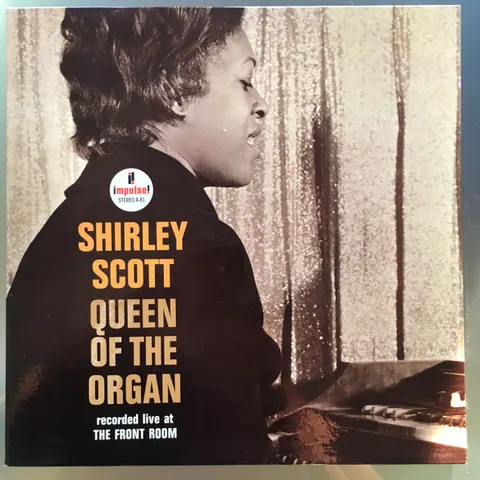
- Shirley Scott (his ex-wife) — "Hip Soul" (1961), "Hip Twist" (1962), "Everybody Loves a Lover" (1965), "Queen of the Organ" (1965), "Now's the Time" (1968), "Soul Song" (1969), among others, independent of their joint-billed leader albums above.
- Max Roach — his early-career bandleader: "Quiet as It's Kept" (1959), "Moon Faced and Starry Eyed" (1959), "Rich Versus Roach" with Buddy Rich (1959), "Max Roach Again" (1971), and multiple later reissues/compilations of this material.
- Kenny Burrell — "Chittlins Con Carne" (1963), plus his guest role on "Midnight Blue" (already listed under Guest table), "Freedom" (1979).
- Donald Byrd — "Brother Isaac" single (1965), "Up With Donald Byrd" (1965), "I'm Tryin' to Get Home" (1965).
- Hank Crawford — "After Hours" (1966), plus later Atlantic-years compilations.
- Freddie Hubbard — beyond the co-billed "In Concert" volumes, guest credits on his own Blue Note dates ("Battlescar Galorica," "Life Flight," 1987) and "The Best of Freddie Hubbard" (1990).
- Milt Jackson — beyond "Cherry" (co-lead, above).
- Astrud Gilberto — "Astrud Gilberto" (1980), beyond the earlier joint-billed "Gilberto With Turrentine."
- Ike Quebec, Horace Parlan, Duke Pearson, Grant Green, Lonnie Smith, Reuben Wilson, Mongo Santamaria, Bobbi Humphrey, Rahsaan Roland Kirk, Abbey Lincoln, Buddy Rich — additional original-session or archival-live credits scattered across the 1960s-1980s.
- David Sanborn — "Timeagain" (2003), a genuine connection to another already-covered r/CrossoverJazz artist, surfaced independently during this pull. Not used in the final-blog.md (the blog's own Bob James/George Benson connections were stronger and more directly verifiable), flagging it here for a future post that might want it.
- George Benson — "Anthology" (2000, compilation) and "It's Uptown With the George Benson Quartet" (2001 reissue of a mid-1960s date); Turrentine's original-session credit on the underlying 1966 recording could not be confirmed as genuine versus a later compilation-only pairing.
The complete raw list (854 unique lines after dedup) is available via https://api.discogs.com/artists/29974/releases for anyone who wants the exhaustive, unfiltered version; it was not reproduced here in full because the overwhelming majority are repackaged samplers of the same handful of original recordings, not new information.
- Shirley Scott - organist, his wife from 1960 to their 1971 divorce; the two recorded constantly through the 1960s, both on his own leader dates and hers.
- George Benson - guitarist on two separate CTI-era-and-beyond connections: Sugar (1970/71) and, over a decade later, Straight Ahead (1985).
- Bob James - pianist/arranger on Cherry (1972) and Don't Mess with Mister T. (1973).
- Freddie Hubbard - trumpeter on Sugar (1970/71), co-billed on In Concert Volume One and Volume Two (1974), and reunited with Turrentine on More Than a Mood (1992).
- Milt Jackson - vibraphonist, co-billed leader on Cherry (1972).
- Creed Taylor - CTI Records founder and producer who signed Turrentine in 1970 and built his 1970s crossover run.
- Jimmy Smith - organist and frequent collaborator across four decades, from 1960s sideman dates through Straight Ahead (1985) and the 1991 live date Fourmost.
- Stevie Wonder - guested on harmonica on "Boogie on Reggae Woman," from Turrentine's 1987 tribute album Wonderland.
- Max Roach - his bandleader in 1959, just after Turrentine's military service, on Quiet as It's Kept and Moon Faced and Starry Eyed.
- Tommy Turrentine - his older brother and a professional trumpeter; the two played together from Cleveland in 1953 through the 1959 Max Roach band and beyond.
More Crossover Jazz Artists
See all 118 Crossover Jazz artists →More American Jazz Artists
See all 567 American artists →- Wikipedia: Stanley Turrentine
- AllMusic: Stanley Turrentine
- Discogs: Stanley Turrentine
- Draft source:
final-blog.mdin this folder (existing r/CrossoverJazz post, used as a starting point and cross-checked against the sources above)