 JAZZPROFILES lives in the music 1,572 Jazz Artists fully Profiled!
 George Duvivier
Last updated September 7, 2026
Listen on Spotify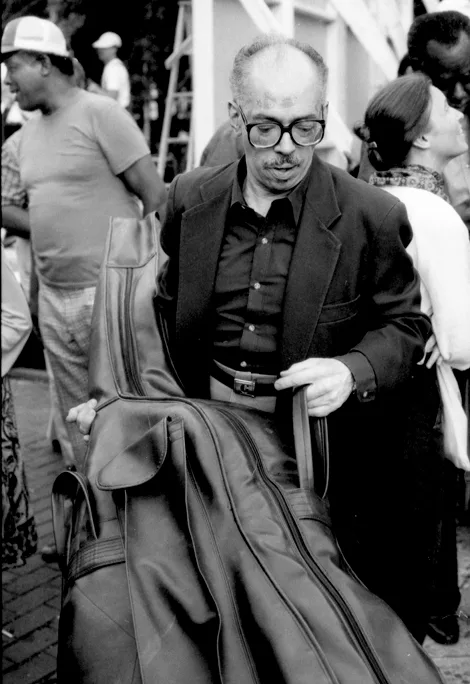
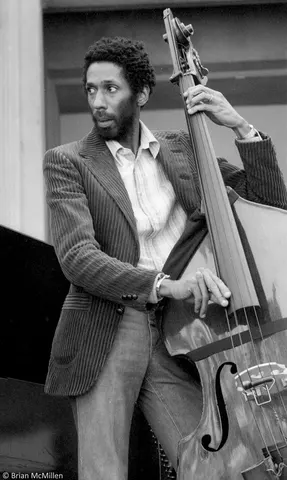
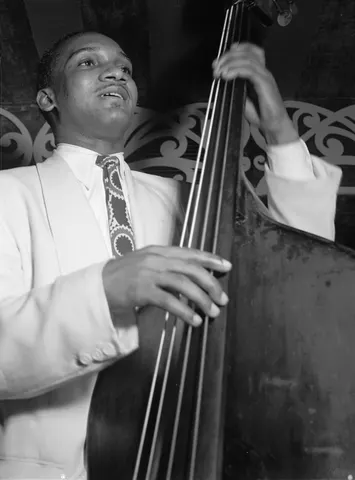
George Duvivier playing double bass at the Greenwich Village Jazz Festival, Washington Square Park, New York City, summer 1984, on a bill with Dizzy Gillespie, Benny Carter and Cecil Payne. Photo by Brian McMillen. CC BY-SA 4.0 — Wikimedia Commons — https://commons.wikimedia.org/wiki/File:George_Duvivier.jpg

George B. Duvivier was born in New York City on August 17, 1920, to Leon V. Duvivier and Ismay Blakely Duvivier, a dancer who would later become the custodian of her son's archive. He came up through formal classical training rather than the bandstand: he studied violin at the Conservatory of Music and Art, and at sixteen he was assistant concertmaster of the Central Manhattan Symphony Orchestra. He switched to double bass and went on to New York University, where he concentrated on composition. That double grounding, a string player's ear plus a writer's grasp of harmony and voicing, shaped everything he did afterward.
He turned professional in the early 1940s, working with Lucky Millinder's orchestra (he is on the 1942 coupling "Hey Huss!" / "Ride, Red, Ride" and the 1945 hit "Who Threw the Whiskey in the Well"), with Eddie Barefield, and with Coleman Hawkins. After a stretch in the U.S. Army he came back not as a bassist but as a writer, serving as staff arranger for Jimmie Lunceford from 1945 until Lunceford's death in 1947 and appearing on the band's 1946 Majestic sides "Sit Back and Ree-Lax" / "Jay Gee." He then joined Sy Oliver's big band, doubling as bassist and arranger, the only period in his life when the writing and the playing were formally the same job.
The 1950s turned him into one of the busiest musicians in New York. He toured Europe accompanying Lena Horne, worked with Nellie Lutcher, and moved deep into the commercial studios, cutting jingles, television dates, and film soundtracks alongside the jazz work. Beginning in 1953 he spent four years as Bud Powell's bassist; the August 14, 1953 Blue Note session that produced "Glass Enclosure," "Collard Greens and Black-Eye Peas," and "Audrey" is Duvivier with drummer Art Taylor. From 1957 to 1959 he held the bass chair in Eddie "Lockjaw" Davis's organ quartet with Shirley Scott, a run that generated the three-volume Prestige Cookbook series and the four-tenor summit Very Saxy, recorded April 29, 1959. On November 19, 1957, at Van Gelder Studio in Hackensack, he played bass on Pepper Adams's The Cool Sound of Pepper Adams, a quintet date with Bernard McKinney on euphonium, Hank Jones on piano, and Elvin Jones on drums.
The stretch from 1960 to 1962 is the densest and most adventurous in his catalog. He is the bassist on Eric Dolphy's Out There (August 15, 1960), where Ron Carter plays cello and Duvivier carries the bottom alone; on Randy Weston's Uhuru Afrika (Roulette, 1961), a large-ensemble suite with Langston Hughes lyrics, Yusef Lateef, Cecil Payne, Kenny Burrell, Freddie Hubbard, and Max Roach in the personnel; on Gunther Schuller's Third Stream landmark Jazz Abstractions, recorded December 19 and 20, 1960 with Ornette Coleman, Bill Evans, Jim Hall, and two other bassists; and on Ron Carter's leader debut Where? (June 20, 1961), where Carter again plays cello and Duvivier the bass. Time Records billed him equally on a March 23, 1960 piano trio date issued as Max Roach / Sonny Clark / George Duvivier, and Impulse! put him with Shelly Manne, Coleman Hawkins, and Eddie Costa on 2-3-4 in February 1962. The same years brought sessions with Oliver Nelson, John Lewis, Cal Tjader, Sarah Vaughan, Milt Jackson, and Aretha Franklin, whose 1964 Columbia album Unforgettable: A Tribute to Dinah Washington he played on.
From the late 1960s onward Duvivier's reputation as a reader and a tone made him first call well outside jazz. He is on John Lennon's Imagine (Apple, 1971), Janis Ian's Stars (1974) and Between the Lines (1975), Don McLean's Homeless Brother (1974), Frank Sinatra's Trilogy: Past Present Future (1980), and Barry Manilow's 2:00 AM Paradise Cafe (1984). He kept the jazz side going at the same time, joining Bob Wilber and Kenny Davern's Soprano Summit in the mid-1970s, touring and recording in Japan in 1979 with Hank Jones and Shelly Manne (the direct-to-disc Easy to Love), and backing George Benson on the Jazz on a Sunday Afternoon live volumes. One of his last engagements was the Town Hall Swing Reunion concerts of March 1 and 2, 1985, with Teddy Wilson, Benny Carter, Red Norvo, Louis Bellson, Remo Palmieri, and Freddie Green. He passed away in Manhattan of cancer on July 11, 1985, at 64. His mother donated a large collection of family and career papers to the Institute of Jazz Studies at Rutgers University, and in 1993 Edward Berger and David Chevan published Bassically Speaking: An Oral History of George Duvivier, built largely from Duvivier's own recollections and including solo transcriptions and a detailed discography.
Duvivier's reputation rests on tone and accuracy rather than on solo display: a large, woody, centered sound with intonation that came from the violin training, and walking lines built with an arranger's logic, so that the bass part reads like a countermelody rather than a series of chord roots. His conservatory background made him one of the few bassists of his generation equally credible reading a Gunther Schuller score, holding a bebop trio together behind Bud Powell, grooving under Shirley Scott's organ, and cutting a Barry Manilow ballad at a union session. Colleagues consistently framed him as a musician who supplied exactly what the music needed and nothing more, which is why he became the default choice on New York dates for four decades and why Discogs credits him on 1,604 releases, only 37 of them under any kind of leader or co-leader billing. He is one of the most heavily documented sidemen in the music, and the near-total absence of a leader catalog was a preference, not a limitation.
- Out There (1961, New Jazz) - Eric Dolphy's quartet with Ron Carter on cello and Roy Haynes on drums, recorded August 15, 1960; Duvivier is the only bass, holding an unusually spare and exposed frame. Spotify - Out There
- Jazz Abstractions (1961, Atlantic) - Gunther Schuller's Third Stream project, recorded December 19 and 20, 1960 with Ornette Coleman, Eric Dolphy, Bill Evans, and Jim Hall; Duvivier shares the bass parts with Scott LaFaro and Alvin Brehm across fully written string writing. Spotify - Jazz Abstractions
- Very Saxy (1959, Prestige) - Four tenors (Eddie "Lockjaw" Davis, Coleman Hawkins, Buddy Tate, Arnett Cobb) over the Davis organ rhythm section of Shirley Scott, Duvivier, and Arthur Edgehill, cut April 29, 1959 at Van Gelder Studio. Spotify - Very Saxy
- Uhuru Afrika (1961, Roulette) - Randy Weston's four-movement suite with Langston Hughes lyrics and Melba Liston arrangements, a large ensemble including Yusef Lateef, Freddie Hubbard, Kenny Burrell, and Max Roach. Spotify - Uhuru Afrika
- The Amazing Bud Powell, Vol. 2 (Blue Note, recorded 1953) - The August 14, 1953 trio session with Duvivier and Art Taylor, source of "Glass Enclosure," "Collard Greens and Black-Eye Peas," and "Audrey." Spotify - The Amazing Bud Powell (Vol. 2) Listen
- The Cool Sound of Pepper Adams (1958, Regent) - Pepper Adams's quintet date of November 19, 1957 at Van Gelder Studio, with Bernard McKinney on euphonium, Hank Jones on piano, and Elvin Jones on drums. Spotify - The Cool Sound of Pepper Adams
- Where? (1962, New Jazz) - Ron Carter's leader debut, recorded June 20, 1961 with Eric Dolphy and Mal Waldron; Carter plays cello throughout and Duvivier plays the bass. Spotify - Where?
- Max Roach / Sonny Clark / George Duvivier (1962, Time) - A March 23, 1960 piano trio session issued under all three names, the closest thing in his catalog to a leader credit on a straight jazz date. Not located on Spotify.
George Duvivier: Full Discography
Identity confirmed via the live Discogs API, artist ID 262160 ("George Duvivier," realname George B. Duvivier, born August 17, 1920 in New York City, died July 11, 1985 in Manhattan). Discogs credits Duvivier on 1,604 releases: 1,513 sideman "Appearance" credits, 37 "Main" (leader or co-billed) credits, 16 track-level "TrackAppearance" credits, and 38 unofficial releases. He is one of the most heavily recorded bassists in jazz, and exhaustive coverage is not practical here. The first table lists his co-billed dates, which stand in for a leader catalog he never really built; the second is a curated selection of his most significant and historically important sideman credits, not a complete log.
As Co-Leader / Co-Billed
Duvivier is not a bandleader in the ordinary sense: none of the 37 Discogs "Main" credits is a conventional leader date under his name alone. The rows below are the sessions on which his name appears in the billing.
| Album Title | Recording Date(s) | Release Date | Label | Catalog Number | Format(s) | Personnel | Role | Reissue History | Spotify | Buy | Notes |
|---|---|---|---|---|---|---|---|---|---|---|---|
| The Rodgers and Hart Song Book | Not specified in Discogs data | 1951 | Not listed in Discogs data | Not listed in Discogs data | Vinyl, LP | Jimmy Jones (piano), Jimmy Raney and Joe Puma (guitar), George Duvivier (bass), Jo Jones and Roy Haynes (drums) | Co-billed | None found | Not found on Spotify | — | Earliest co-billed credit in the Discogs data |
| Now Dig This! Jazz in 2 Keys | Not specified in Discogs data | 1959 | Music Minus One | Not listed in Discogs data | Vinyl, LP | Hank Jones (piano), Chuck Wayne (guitar), George Duvivier (bass), Charlie Persip (drums) | Co-billed | Companion volumes issued in the same Music Minus One series | Not found on Spotify | — | Play-along rhythm-section record; Duvivier cut several of these for Music Minus One |
| They Laughed When I Sat Down to Play... | Not specified in Discogs data | 1961 | Not listed in Discogs data | Not listed in Discogs data | Vinyl, LP | Tyree Glenn (trombone, vibes), Seldon Powell (reeds), Mal Waldron (piano), George Duvivier (bass), Roy Haynes (drums) | Co-billed | None found | Not found on Spotify | — | |
| Max Roach / Sonny Clark / George Duvivier | Recorded March 23, 1960, New York City | 1962 | Time Records | S/2101 | Vinyl, LP, Album, Stereo | Sonny Clark (piano, compositions), George Duvivier (bass), Max Roach (drums) | Co-billed (equal three-name billing) | Later reissued in Japan; also circulates as Sonny Clark Trio (Time) | Not found on Spotify | — | Produced by Bob Shad; the closest thing in his catalog to a straight-ahead leader date |
| Giants | Not specified in Discogs data | 1971 | Perception | Not listed in Discogs data | Vinyl, LP, Album | Dizzy Gillespie (trumpet), Bobby Hackett (cornet), Mary Lou Williams (piano), George Duvivier (bass), Grady Tate (drums) | Co-billed | None found | Not found on Spotify | — | Billed as "Dizzy Gillespie, Bobby Hackett, Mary Lou Williams, Grady Tate & George Duvivier" |
| Jazz on a Sunday Afternoon, Vols. I, II and III | Recorded 1973 | 1981 (Vols. I-II), 1982 (Vol. III) | Accord | Not listed in Discogs data | Vinyl, LP, Album | George Benson (guitar), Mickey Tucker (piano), George Duvivier (bass), Al Harewood (drums) | Co-billed (Benson quartet, all four named) | Later reissued as In Concert (1983) and San Francisco 1972 (1996) | Not found on Spotify | — | Discogs lists conflicting recording years for this material (1972 and 1973); not resolved here |
| Songs for New Lovers | Not specified in Discogs data | 1978 | Stash | Not listed in Discogs data | Vinyl, LP, Album | Dardanelle (vocals, piano, vibes), Bucky Pizzarelli (guitar), George Duvivier (bass), Grady Tate (drums) | Co-billed | None found | Not found on Spotify | — | |
| Midnight Slows Vol. 8 | Not specified in Discogs data | 1978 | Black & Blue | Not listed in Discogs data | Vinyl, LP, Album | Illinois Jacquet (tenor sax), Hank Jones and Sir Charles Thompson (piano), George Duvivier (bass), J.C. Heard (drums) | Co-billed | None found | Not found on Spotify | — | Part of the French Black & Blue Midnight Slows series |
| Easy to Love | Side A recorded direct-to-disc at Pioneer Studio, April 17, 1979; Side B digitally at Yubin Chokin Hall, April 20, 1979 | 1979 | Lob (Lobster Kikaku Co., Japan) | LDC-1017 | Vinyl, LP, Album | Hank Jones (piano), George Duvivier (bass), Shelly Manne (drums) | Co-leader (equal three-name billing) | CD reissue 2022 on Solid Records / Yubin Chokin Hall | Not found on Spotify | — | Audiophile Japanese trio date; the same trio's material also appears as In Japan (1991) and Trio 1979 Discoveries (2010) |
| I Giganti del Jazz Vol. 50 / Jazz Giants | Not specified in Discogs data | 1981 | Curcio | Not listed in Discogs data | Vinyl, LP (also 2xLP compilation) | Joe Newman (trumpet), Hank Jones (piano), George Duvivier (bass), Alan Dawson (drums); the 2xLP adds Stéphane Grappelli, Slam Stewart, Johnny Guarnieri, Jimmy Shirley | Co-billed | Two related Curcio issues | Not found on Spotify | — | Italian part-work jazz series |
| Loose Walk | Not specified in Discogs data | 1983 | Chonto | Not listed in Discogs data | Vinyl, LP | Louis Bellson (drums), George Duvivier (bass), Warren Parrish, Jack Scott | Co-billed | None found | Not found on Spotify | — | |
| Swing Reunion | Recorded live at Town Hall, New York City, March 1 and 2, 1985 | 1985 | Book-Of-The-Month Records | 71-7627 | Vinyl, 2xLP + booklet, Album, Stereo | Teddy Wilson and (on some tracks) Benny Carter (alto sax), Red Norvo (vibes), Remo Palmieri (guitar), Freddie Green (guitar), George Duvivier (bass), Louis Bellson (drums) | Co-billed (all seven names on the sleeve) | CD reissue on Book-Of-The-Month Records (30JD-130 / 31-761); Japanese LP issue 20PJ-18~20 | Not found on Spotify | — | 27 tracks across the two nights; among Duvivier's last recorded performances, four months before his death |
| Star Dust | Not specified in Discogs data | 1988 | Not listed in Discogs data | Not listed in Discogs data | Vinyl, LP | The Ray Turner Quartet featuring Derek Smith (piano), George Duvivier (bass), Bobby Rosengarden (drums) | Co-billed (featured) | None found | Not found on Spotify | — | Released posthumously |
| Jive at Five | Not specified in Discogs data | Not specified in Discogs data | Not listed in Discogs data | Not listed in Discogs data | Vinyl, LP | Buddy Tate (tenor sax), Doc Cheatham (trumpet), Vic Dickenson (trombone), Johnny Guarnieri (piano), George Duvivier (bass), Oliver Jackson (drums) | Co-billed | None found | Not found on Spotify | — | Mainstream/swing all-star session; release year not given in the Discogs data |
The disputed 1956 Coronet leader session. Wikipedia and AllMusic both state that Duvivier "recorded as a leader in 1956 with Martial Solal for Coronet." Collector discussion traces this to a Paris session dated May 22, 1956 (Michel Hausser on vibes, Martial Solal on piano, Charles Saudrais on drums, catalog numbers in the COR56-139 to COR56-144 range, titles including "Rue Dauphine" and "Fine and Dandy"). No such release appears anywhere in the Discogs database, and the discography in Edward Berger and David Chevan's Bassically Speaking is reported not to list it. Treated here as unverified rather than as a confirmed leader date.
As Sideman (selected major credits)
| Year | Project (Leader) | Title | Label | Catalog | Role | Notes |
|---|---|---|---|---|---|---|
| 1942 | Lucky Millinder and His Orchestra | Hey Huss! / Ride, Red, Ride | Decca | Double Bass | 78 rpm single; among his earliest documented recordings | |
| 1945 | Lucky Millinder and His Orchestra | Who Threw the Whiskey in the Well / Shipyard Social Function | Decca | Double Bass | "Who Threw the Whiskey in the Well" was a major R&B hit for the band | |
| 1946 | Jimmie Lunceford and His Orchestra | Sit Back and Ree-Lax / Jay Gee | Majestic | Arranger, Double Bass | Duvivier was Lunceford's staff arranger, 1945-1947 | |
| 1953 | Bud Powell | The Amazing Bud Powell, Vol. 2 | Blue Note | BLP 1504 (also 10" BLP 5041) | Double Bass | The August 14, 1953 session with Art Taylor: "Glass Enclosure," "Collard Greens and Black-Eye Peas," "Audrey," "Reets and I" |
| 1954 | Ben Webster | Music for Loving | Norgran | Double Bass | ||
| 1954 | Benny Carter | Benny Carter Plays Pretty / New Jazz Sounds | Norgran | Double Bass | ||
| 1956 | Bud Powell | Piano Interpretations by Bud Powell | Verve | Double Bass | From the four-year Powell association that began in 1953 | |
| 1956 | Chico Hamilton | Chico Hamilton Trio | Pacific Jazz | Double Bass | ||
| 1957 | Pepper Adams | The Cool Sound of Pepper Adams | Regent | RMG-6066 / MG 6066 | Double Bass | Recorded November 19, 1957, Van Gelder Studio, Hackensack NJ, with Bernard McKinney (euphonium), Hank Jones (piano), Elvin Jones (drums); later reissued on Savoy. The hub session for this profile |
| 1957 | Herbie Nichols | Love, Gloom, Cash, Love | Bethlehem | Double Bass | Nichols's final leader album | |
| 1958 | Eddie "Lockjaw" Davis with Shirley Scott | The Eddie "Lockjaw" Davis Cookbook, Vols. 1-3 | Prestige | PRLP 7141 and successors | Double Bass | With Jerome Richardson (tenor sax, flute) and Arthur Edgehill (drums); the core of Duvivier's 1957-1959 run in the Davis quartet |
| 1958 | Eddie "Lockjaw" Davis | Jaws / Smokin' | Prestige | Double Bass | Smokin' recorded 1958, issued 1964 | |
| 1959 | Eddie "Lockjaw" Davis, Coleman Hawkins, Buddy Tate, Arnett Cobb | Very Saxy | Prestige | PRLP 7167 | Double Bass | Recorded April 29, 1959, Van Gelder Studio; engineered by Rudy Van Gelder, sleeve notes by Ira Gitler |
| 1959 | Eddie "Lockjaw" Davis | Jaws in Orbit / Bacalao | Prestige | Double Bass | ||
| 1958-1967 | Shirley Scott | Great Scott!, Scottie, The Shirley Scott Trio, Scottie Plays the Duke, Soul Sister, Like Cozy, Shirley's Sounds, Great Scott!!, Roll 'Em, Soul Duo, Girl Talk, Now's the Time | Prestige, Moodsville, Impulse! | Double Bass | Twelve leader albums for the organist across a decade | |
| 1960 | Eric Dolphy | Out There | New Jazz | NJLP 8252 | Double Bass | Recorded August 15, 1960; Ron Carter on cello, Roy Haynes on drums, Rudy Van Gelder engineering, Esmond Edwards supervising |
| 1960 | Gunther Schuller / John Lewis | Jazz Abstractions | Atlantic | SD 1365 | Double Bass | Recorded December 19-20, 1960 with Ornette Coleman, Eric Dolphy, Bill Evans, Jim Hall, Scott LaFaro, Alvin Brehm and a string section; engineered by Phil Ramone |
| 1960 | Randy Weston | Uhuru Afrika | Roulette | R 65001 | Double Bass | Melba Liston arrangements, Langston Hughes lyrics; large ensemble with Yusef Lateef, Cecil Payne, Kenny Burrell, Freddie Hubbard, Clark Terry, Max Roach, Ron Carter |
| 1960 | Oliver Nelson | Soul Battle / Screamin' the Blues | Prestige, New Jazz | Double Bass | Soul Battle co-credited with Jimmy Forrest | |
| 1961 | Oliver Nelson | Straight Ahead | New Jazz | Double Bass | With Eric Dolphy | |
| 1961 | Ron Carter | Where? | New Jazz | NJ 8265 | Double Bass | Recorded June 20, 1961, Englewood Cliffs NJ; Carter on cello, Eric Dolphy on reeds, Mal Waldron on piano, Charlie Persip on drums |
| 1962 | Shelly Manne | 2-3-4 | Impulse! | A-20 / IL-30,899 | Double Bass | Recorded February 5 and 8, 1962 with Coleman Hawkins (tenor sax, and uncredited piano on one track), Hank Jones and Eddie Costa (piano/vibes); produced by Bob Thiele |
| 1960-1962 | John Lewis | The Golden Striker / The Wonderful World of Jazz / Essence | Atlantic | Double Bass | ||
| 1962 | Manny Albam | Jazz Goes to the Movies | Impulse! | Double Bass | ||
| 1962 | Anita O'Day | All the Sad Young Men | Verve | Double Bass | ||
| 1963-1964 | Cal Tjader | Several Shades of Jade, Breeze from the East, Warm Wave | Verve | Double Bass | El Sonido Nuevo (1966), Tjader's Verve album co-led with Eddie Palmieri, was listed here in error and has been removed: four Discogs pressings of it (releases 569837, 3841525, 10206415 and 13174245, catalogue V6-8651 and V-8651) all credit Bobby Rodriguez on bass and none names Duvivier | |
| 1960-1961 | Sarah Vaughan | Dreamy / After Hours | Roulette | Double Bass | After Hours is a voice-guitar-bass trio record with Mundell Lowe, and Duvivier shares the billing | |
| 1964 | Aretha Franklin | Unforgettable: A Tribute to Dinah Washington | Columbia | Double Bass | ||
| 1964 | Milt Jackson | Vibrations | Atlantic | Double Bass | ||
| 1966 | Wes Montgomery | Goin' Out of My Head | Verve | Double Bass | Grammy winner for Best Instrumental Jazz Performance, Large Group | |
| 1966 | Jimmy Smith | Got My Mojo Workin' | Verve | Double Bass | ||
| 1966-1967 | Clark Terry | Mumbles / It's What's Happenin' | Mainstream, Impulse! | Double Bass | ||
| 1967 | Oliver Nelson | The Kennedy Dream | Impulse! | Double Bass | ||
| 1967 | Mal Waldron | Sweet Love, Bitter | Impulse! | Double Bass | Film soundtrack | |
| 1971 | John Lennon | Imagine | Apple | Double Bass | ||
| 1971 | Bobbi Humphrey | Flute-In | Blue Note | Double Bass | ||
| 1974-1975 | Janis Ian | Stars / Between the Lines | Columbia | Double Bass | Between the Lines was a No. 1 US album | |
| 1974 | Don McLean | Homeless Brother | United Artists | Double Bass | ||
| 1977 | Bob Wilber and Kenny Davern | Soprano Summit | Chiaroscuro | Double Bass | ||
| 1976 | Gerry Mulligan | Idol Gossip | Chiaroscuro | Double Bass | ||
| 1977-1979 | Hank Jones | Bop Redux (Muse); I Remember You, Compassion, Bluesette (Black & Blue) | Muse, Black & Blue | Double Bass | ||
| 1980 | Frank Sinatra | Trilogy: Past Present Future | Reprise | Double Bass | ||
| 1982 | Joe Albany | Portrait of an Artist | Elektra | Double Bass | ||
| 1984 | Barry Manilow | 2:00 AM Paradise Cafe | Arista | Double Bass | Recorded live in the studio with Mel Tormé, Sarah Vaughan, Gerry Mulligan and Shelly Manne among the guests | |
| 1985 | Joe Williams | Having the Blues Under European Sky | Denon | Double Bass | One of his final sessions |
Duvivier's Discogs log (1,513 sideman "Appearance" credits plus 16 track-level credits, spanning 1942 to posthumous compilations) also documents extensive work with Gene Ammons, Louis Armstrong, Count Basie, Louis Bellson, Tony Bennett, Bob Brookmeyer, Ruth Brown, Kenny Burrell, Betty Carter, Arnett Cobb, Al Cohn, Sam Cooke, Buddy DeFranco, Art Farmer, Stan Getz, Dizzy Gillespie, Gigi Gryce, Barry Harris, Coleman Hawkins, Johnny Hodges, Lena Horne, Illinois Jacquet, Budd Johnson, Etta Jones, Ben E. King, Johnny Lytle, Junior Mance, Helen Merrill, Moondog, Mark Murphy, Phineas Newborn Jr., Chico O'Farrill, Houston Person, Esther Phillips, Bucky Pizzarelli, Red Rodney, Jimmy Rushing, Lalo Schifrin, Sonny Stitt, Buddy Tate, Billy Taylor, Stanley Turrentine, Eddie "Cleanhead" Vinson, Julius Watkins, Frank Wess, Joe Wilder, Lem Winchester, and Lester Young, among hundreds of others. That list is not itemized exhaustively here.
Buy column: all rows are —. No affiliate program is set up for this site yet.
- Pepper Adams - bass on The Cool Sound of Pepper Adams, recorded November 19, 1957 at Van Gelder Studio, Hackensack, alongside Bernard McKinney, Hank Jones, and Elvin Jones.
- Bud Powell - the pianist's working bassist for four years from 1953, including the August 14, 1953 Blue Note session and the 1956 Verve album Piano Interpretations by Bud Powell.
- Eddie "Lockjaw" Davis and Shirley Scott - the organ quartet's bassist roughly 1957 to 1959, on the Prestige Cookbook volumes, Jaws, Jaws in Orbit, Bacalao, Smokin', and Very Saxy; Duvivier also appears on a dozen of Scott's own Prestige, Moodsville, and Impulse! leader dates.
- Eric Dolphy - three dates in eighteen months: Out There (1960), Gunther Schuller's Jazz Abstractions (1960), and Ron Carter's Where? (1961).
- Jimmie Lunceford and Sy Oliver - staff arranger for Lunceford from 1945 to 1947, then arranger and bassist in Oliver's postwar big band.
- Hank Jones and Shelly Manne - a working trio documented in Japan in 1979 on Easy to Love (direct-to-disc and digital, Lob Records) and on later archival issues; Duvivier and Jones also worked together from the mid-1950s Music Minus One sessions through Jones's Black & Blue albums of 1977 to 1979.
- Oliver Nelson - seven albums between 1960 and 1967, from Screamin' the Blues and Straight Ahead to The Kennedy Dream.
- Coleman Hawkins - from early-1940s work through Coleman Hawkins and Confrères (1958), Hawk Eyes (1959), Very Saxy (1959), and the 1962 Shelly Manne date 2-3-4.
- Studio and pop work - John Lennon (Imagine, 1971), Janis Ian, Don McLean, Frank Sinatra, Barry Manilow, Aretha Franklin, Ben E. King, and Sam Cooke, alongside decades of jingles, television, and film dates in New York.
More Bebop Artists
See all 166 Bebop artists →More American Jazz Artists
See all 567 American artists →- Wikipedia: George Duvivier
- Discogs: George Duvivier (artist 262160)
- AllMusic: George Duvivier biography
- Edward Berger and David Chevan, Bassically Speaking: An Oral History of George Duvivier (Scarecrow Press, 1993)
- Institute of Jazz Studies, Rutgers: The Ismay and George Duvivier Papers, Artifacts, and Audiovisual Materials
- Rutgers RUcore: George Duvivier oral history interview
- jazzleadsheets.com: George Duvivier
- Wikipedia: Out There (Eric Dolphy album)
- Wikipedia: Where? (album)
- Wikipedia: Very Saxy
- Wikipedia: Uhuru Afrika
- Wikipedia: Jazz Abstractions
- Wikipedia: The Amazing Bud Powell, Vol. 2