 JAZZPROFILES lives in the music 1,572 Jazz Artists fully Profiled!
 Wes Montgomery
Last updated September 7, 2026
Listen on Spotify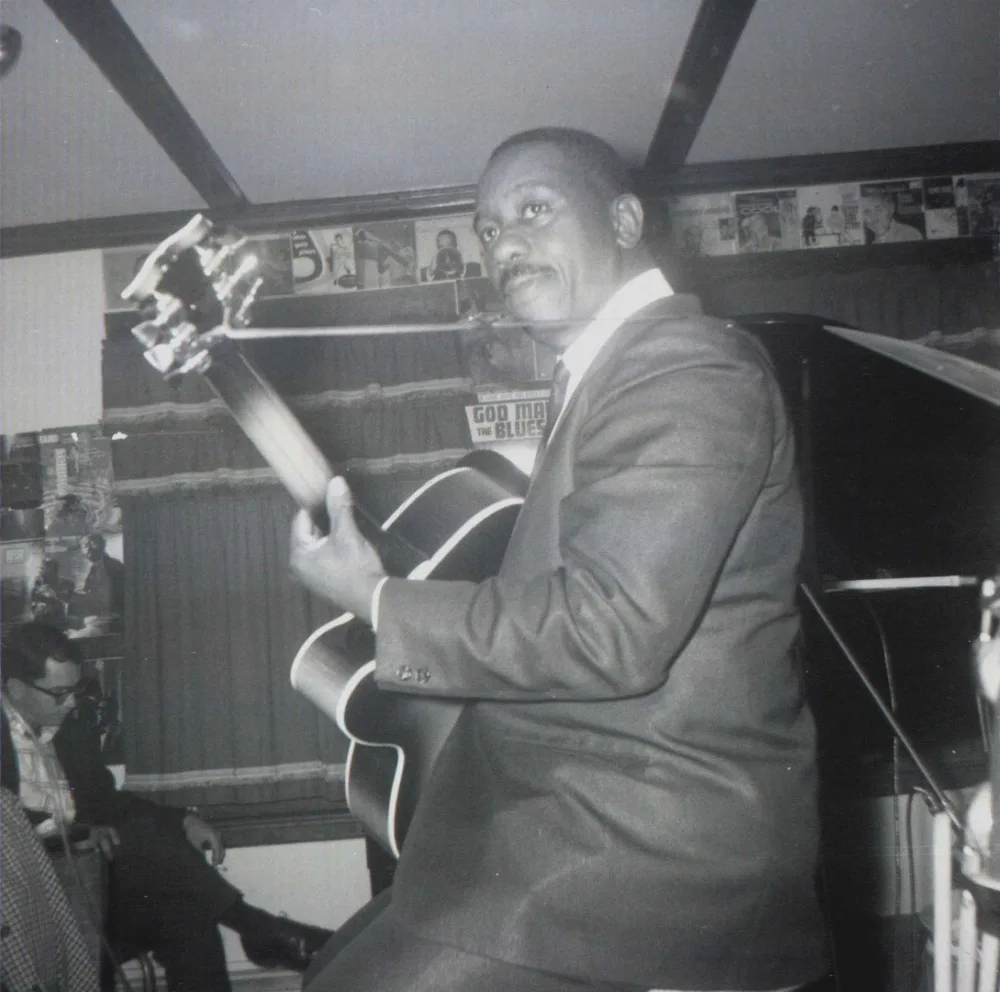
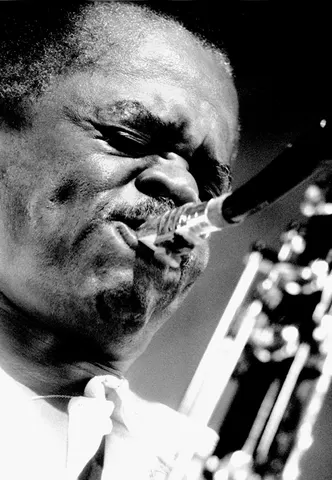
Wes Montgomery at Lennie's on the Turnpike, Peabody, Massachusetts, 1965. Creative Commons Attribution 4.0 International (CC BY 4.0). The Commons file page carries the CC BY 4.0 template, and the Flickr source licence was machine-verified by FlickreviewR 2 on 2025-08-14. The caption in final-blog.md names the specific licence per the 2026-07-20 standing rule. — Wikimedia Commons, File:Wes Montgomery, 1965.jpg, downloaded from https://upload.wikimedia.org/wikipedia/commons/2/20/Wes_Montgomery%2C_1965.jpg (189,912 bytes, 1815 x 1800, verified under the 20MB Reddit ceiling via an HTTP HEAD request returning content-length: 189912, roughly 0.19MB). Saved locally as portrait.jpg in this folder, not hotlinked. Commons file page: https://commons.wikimedia.org/wiki/File:Wes_Montgomery,_1965.jpg.
John Leslie Montgomery came to the guitar late and by accident. He was born on March 6, 1923, in the Haughville neighborhood on the west side of Indianapolis, one of three brothers who all became professional musicians. Monk played bass, Buddy played vibraphone and piano, and Wes did not play anything at all until he was 19 years old. In 1943 he heard a Charlie Christian record at a dance, bought a guitar and an amplifier, and spent the following year learning Christian's solos off the records by ear, note for note, with some informal help from a local guitarist named Alex Stevens.
Two decisions from that first year defined everything he played afterward. He practiced at night, in a house he shared with his wife Serene and a family that eventually included seven children, and a plectrum made too much noise. He started using the fleshy side of his thumb instead. He found the tone warmer and softer than a pick gave him, and he kept the technique for the rest of his life. The octave playing came from the same period of self-teaching: he would state a melodic line and double it an octave above, a physically demanding move he admitted gave him headaches until he got used to the strain. Layered together, single-note lines first, then octaves, then block chords, those three devices became the most closely studied solo architecture in jazz guitar.
For most of the 1940s and 1950s he was a working local musician with a day job. He welded, he worked for a milk company, and he played Indianapolis clubs at night. Lionel Hampton heard him during a 1948 stop in the city and hired him on the spot, largely because he could reproduce Charlie Christian so convincingly, and Montgomery toured with the Hampton orchestra until around 1950 before returning home to his family. He recorded on the West Coast with his brothers in the late 1950s, in the Montgomery Brothers and around the Mastersounds, but he remained essentially a regional figure well into his thirties.
That changed in 1959. Cannonball Adderley heard him playing in Indianapolis and pushed the producer Orrin Keepnews to sign him to Riverside Records. Montgomery was 36 when he made his first album as a leader, A Dynamic New Sound: The Wes Montgomery Trio, with organist Melvin Rhyne. The record that made his reputation followed in January 1960: The Incredible Jazz Guitar of Wes Montgomery, cut at Reeves Sound Studios with Tommy Flanagan on piano and the brothers Percy and Albert Heath on bass and drums, containing his two most durable compositions, "West Coast Blues" and "Four on Six." He won the DownBeat Critics' Poll for best jazz guitarist in 1960, 1961, 1962 and 1963.
The Riverside years produced Movin' Along, So Much Guitar!, Boss Guitar, the live Full House recorded at Tsubo in Berkeley in June 1962 with Johnny Griffin and the Wynton Kelly Trio, and two summit meetings with vibraphonist Milt Jackson. They also produced Fusion! Wes Montgomery with Strings in 1963, which is worth noting because the string-backed commercial direction usually blamed on his later labels actually began at Riverside, on Keepnews's watch. Riverside then collapsed financially following the death of its co-founder Bill Grauer, and Montgomery moved to Verve.
At Verve he began working with producer Creed Taylor, and the partnership reshaped both what he sold and how he was written about. Movin' Wes (1964), arranged by Johnny Pate, moved more than 100,000 copies, a figure jazz guitar records did not reach. Bumpin' followed in 1965 with arrangements by Don Sebesky. Goin' Out of My Head, released in February 1966 with Oliver Nelson arranging, was built around a Little Anthony and the Imperials hit that Taylor selected; it approached a million copies and won Best Instrumental Jazz Performance, Group or Soloist with Group, at the 9th Grammy Awards on March 2, 1967. Tequila and California Dreaming extended the same formula.
The same stretch produced Smokin' at the Half Note, recorded live at the Half Note in New York in June 1965 with a Van Gelder session that September, backed by the Wynton Kelly Trio, the rhythm section Miles Davis had used from 1959 to 1963. It is routinely named by professional guitarists, Pat Metheny and Peter Bernstein among them, as the record that shaped them most. Its existence in the middle of the Verve period complicates the tidy narrative in which Montgomery abandoned jazz for the charts in 1964.
Taylor moved to A&M in 1967 and brought Montgomery with him, and the three albums that followed became the working template for CTI Records and, through it, for the commercial jazz of the next fifteen years. A Day in the Life was recorded in June 1967 at Rudy Van Gelder's studio in Englewood Cliffs, arranged by Don Sebesky, with Herbie Hancock on piano, Ron Carter on bass and Grady Tate on drums. It reached No. 1 on the Billboard jazz chart, No. 2 on the R&B chart, and No. 13 on the Billboard Top LPs. "Windy," his reading of the Association's single, reached No. 44 on the Hot 100 and was the biggest pop record of his career. Down Here on the Ground and Road Song followed in 1968.
Critics divided sharply over this work, and largely still do, filing the Verve and A&M records as a commercial capitulation against a Riverside "before." The voting record makes that harder to sustain: the same critical body gave him the DownBeat Critics' Poll again in 1966 and 1967, while the orchestral records were in shops, and Record World named him Jazz Man of the Year in 1967. He also continued playing the material live in small rooms without the orchestration, at full length.
On the morning of June 15, 1968, at home in Indianapolis, Montgomery told his wife he did not feel very well, collapsed a few minutes later, and passed away of a heart attack. He was 45 years old, and roughly 2,400 people attended his funeral. He had been a recording bandleader for nine years, made more than twenty albums under his own name in that time, and left behind more than sixty original compositions.
Before he passed away he told Herb Alpert that George Benson would be the next great jazz guitarist and that A&M should sign him. Benson signed with A&M and CTI in 1968, shortly after Montgomery's death, brought in explicitly as the replacement for the label's departed star, and went on to take the commercial model further than Montgomery had lived to. In 1978, ten years after his death, A&M released a Montgomery retrospective titled Roots of Crossover Vol. 1, which is as direct a statement of his position in this music as the industry ever made.
Charlie Christian is the origin point, absorbed off records rather than in person, and Montgomery never disguised the debt. What he built on top of it was his own. The thumb produced a rounder, darker attack than any pick, with almost no transient click, and that tone is identifiable within a bar. Above it sat the three-tier solo structure that became his signature: an opening chorus or two of single-note lines, a rise into parallel octaves, and a final ascent into block chords, each tier raising the density and volume without raising the tempo. Guitarists have been copying that shape for sixty years, and most of them announce it more obviously than he did.
His harmonic language was hard bop, rooted in the blues, and his time was exceptionally relaxed even at speed. The compositions he left behind, "West Coast Blues" in 6/8, "Four on Six" with its repeating bass figure, "Road Song," "Jingles," reward that combination of blues logic and rhythmic ease.
The later orchestral records changed the setting rather than the vocabulary. Working with arrangers Don Sebesky, Oliver Nelson, Johnny Pate and Claus Ogerman, Montgomery mostly stated familiar melodies in octaves over strings and woodwinds and improvised sparingly. That restraint is what critics objected to and what made the records sell, and it is the specific move that CTI Records went on to build an entire catalog around.
- The Incredible Jazz Guitar of Wes Montgomery (1960, Riverside) - The record that made him, and still the standard introduction. Contains "West Coast Blues" and "Four on Six." Spotify - The Incredible Jazz Guitar Listen · Buy
- Full House (1962, Riverside) - Live at Tsubo in Berkeley with Johnny Griffin and the Wynton Kelly Trio. Spotify - The Complete Full House Recordings Listen · Buy
- Smokin' at the Half Note (1965, Verve) - Live with the Wynton Kelly Trio, and the single record most often named by professional jazz guitarists as their formative one. Spotify - Smokin' at the Half Note (Expanded Edition) Listen · Buy
- Bumpin' (1965, Verve) - Don Sebesky arrangements, and the most musically satisfying of the orchestral Verve dates. Spotify - Bumpin' Listen · Buy
- Goin' Out of My Head (1966, Verve) - The Grammy winner and the commercial breakthrough. Spotify - "Goin' Out of My Head" Listen · Buy
- California Dreaming (1966, Verve) - The pop-melody formula at its most fully realised. Spotify - California Dreaming Listen · Buy
- A Day in the Life (1967, A&M/CTI) - No. 1 on the Billboard jazz chart, and the direct blueprint for the CTI catalog. Spotify - A Day in the Life Listen · Buy
- Movin': The Complete Verve Recordings (2011, Hip-O Select) - The whole Verve period in one place. Spotify - Movin': The Complete Verve Recordings Listen
Wes Montgomery: Full Discography
Discogs artist ID 129805, real name John Leslie Montgomery, born March 6, 1923, Indianapolis, Indiana; passed away June 15, 1968, Indianapolis. Discogs credits this artist ID with 1,791 total releases across all roles: 265 as Main, 674 Appearance, 793 TrackAppearance, and 59 UnofficialRelease. Those 265 Main entries resolve to 218 distinct titles, of which 50 carry a date in his lifetime and the remainder are posthumous reissues, anthologies and archival discoveries.
As Leader: The Riverside Years (1959-1964)
Signed to Riverside in 1959 on Cannonball Adderley's recommendation, produced by Orrin Keepnews.
| Album | Year | Label | Personnel and notes | Listen | Buy |
|---|---|---|---|---|---|
| A Dynamic New Sound: The Wes Montgomery Trio | 1959 | Riverside | His first record as a leader, at 36. Melvin Rhyne (organ), Paul Parker (drums) | Spotify (in the four-album set) | Amazon |
| The Incredible Jazz Guitar of Wes Montgomery | 1960 | Riverside | Recorded January 1960, Reeves Sound Studios. Tommy Flanagan (piano), Percy Heath (bass), Albert Heath (drums). Contains "West Coast Blues" and "Four on Six" | Spotify | Amazon |
| Movin' Along | 1961 | Riverside | James Clay (tenor sax, flute), Victor Feldman (piano), Sam Jones (bass), Louis Hayes (drums) | Spotify (in the four-album set) | Amazon |
| So Much Guitar! | 1961 | Riverside | Hank Jones (piano), Ron Carter (bass), Lex Humphries (drums), Ray Barretto (congas) | Spotify (in the four-album set) | Amazon |
| Full House | 1962 | Riverside | Recorded live at Tsubo, Berkeley, June 25, 1962. Johnny Griffin (tenor sax) plus the Wynton Kelly Trio: Kelly (piano), Paul Chambers (bass), Jimmy Cobb (drums) | Spotify (Complete Full House Recordings) | Amazon |
| Boss Guitar | 1963 | Riverside | Organ trio. Melvin Rhyne (organ), Jimmy Cobb (drums) | YouTube search | Amazon |
| Fusion! Wes Montgomery with Strings | 1963 | Riverside | His first strings date, arranged by Jimmy Jones. The commercial direction Verve is usually blamed for starts here, on Riverside | YouTube search | Amazon |
| Portrait of Wes | 1963 | Riverside | Organ trio with Melvin Rhyne and Jimmy Cobb | YouTube search | Amazon |
| Guitar on the Go | 1966 | Riverside | Riverside session material issued after he had left the label | YouTube search | Amazon |
| Go! | 1964 | Riverside | Compiled from Riverside sessions | YouTube search | Amazon |
As Leader: The Verve Years with Creed Taylor (1964-1966)
| Album | Year | Label | Personnel and notes | Listen | Buy |
|---|---|---|---|---|---|
| Movin' Wes | 1964 | Verve | His first record with Creed Taylor. Arranged by Johnny Pate. Sold more than 100,000 copies | Spotify | Amazon |
| Bumpin' | 1965 | Verve | Arranged and conducted by Don Sebesky. Title track became a signature | Spotify | Amazon |
| Smokin' at the Half Note | 1965 | Verve | Credited to the Wynton Kelly Trio with Wes Montgomery. Live at the Half Note, New York, June 1965, plus a Van Gelder session September 22, 1965. Kelly (piano), Paul Chambers (bass), Jimmy Cobb (drums). Widely named by working guitarists as the most influential jazz guitar record made | Spotify (Expanded Edition) | Amazon |
| Goin' Out of My Head | 1966 | Verve | Released February 1966. Produced by Creed Taylor, arranged by Oliver Nelson. Title track was a 1964 Little Anthony and the Imperials hit chosen by Taylor. Approached one million copies. Won Best Instrumental Jazz Performance, Group or Soloist with Group, at the 9th Grammy Awards, March 2, 1967 | Spotify (title track) | Amazon |
| Tequila | 1966 | Verve | Strings arranged by Claus Ogerman | Spotify (title track) | Amazon |
| California Dreaming | 1966 | Verve | Title track after the Mamas and the Papas. Arranged by Don Sebesky | Spotify | Amazon |
| Jimmy & Wes: The Dynamic Duo | 1967 | Verve | Co-billed with organist Jimmy Smith, arranged by Oliver Nelson | Spotify ("James and Wes") | Amazon |
| Further Adventures of Jimmy and Wes | 1969 | Verve | Second Jimmy Smith collaboration, issued after Montgomery's death | YouTube search | Amazon |
| Movin': The Complete Verve Recordings | 2011 | Hip-O Select | The entire Verve run collected | Spotify | Amazon |
As Leader: The A&M and CTI Years (1967-1968)
Creed Taylor moved to A&M in 1967 and brought Montgomery with him. These three albums are the direct template for the CTI catalog that followed.
| Album | Year | Label | Personnel and notes | Listen | Buy |
|---|---|---|---|---|---|
| A Day in the Life | 1967 | A&M / CTI | Released September 1967, recorded June 1967 at Van Gelder Studio, Englewood Cliffs. Arranged by Don Sebesky, with Herbie Hancock (piano), Ron Carter (bass), Grady Tate (drums). No. 1 Billboard jazz chart, No. 2 R&B, No. 13 Billboard Top LPs. "Windy" reached No. 44 on the Hot 100, his highest-charting pop single | Spotify | Amazon |
| Down Here on the Ground | 1968 | A&M / CTI | Arranged by Don Sebesky. Includes "Eleanor Rigby" | Spotify (title track) | Amazon |
| Road Song | 1968 | A&M / CTI | The last album released in his lifetime | Spotify (title track) | Amazon |
| Willow Weep for Me | 1968 | Verve | Verve session material with orchestration overdubbed after his death | YouTube search | Amazon |
| With Strings | 2001 | A&M / CTI | The strings material collected | YouTube search | Amazon |
Co-Billed and Family Recordings
| Album | Year | Co-billed with | Notes | Listen | Buy |
|---|---|---|---|---|---|
| Montgomeryland | 1960 | Monk Montgomery, Buddy Montgomery, Harold Land, Pony Poindexter | Pacific Jazz sessions with both brothers, Louis Hayes and Tony Bazley | YouTube search | Amazon |
| The Montgomery Brothers | 1961 | Monk and Buddy Montgomery | Riverside | YouTube search | Amazon |
| Bags Meets Wes! | 1962 | Milt Jackson | Riverside. Wynton Kelly, Sam Jones, Philly Joe Jones. Produced "S.K.J." | YouTube search | Amazon |
| George Shearing and the Montgomery Brothers | 1964 | George Shearing | Jazzland | YouTube search | Amazon |
| Kismet | 1966 | The Mastersounds | The Mastersounds was Buddy and Monk Montgomery's group | YouTube search | Amazon |
| A Good Git-Together | 2006 | Jon Hendricks | Reissue of the 1959 World Pacific date | YouTube search | Amazon |
The Resonance Records Archival Series
The most significant posthumous work on this catalog. Resonance has issued previously unreleased Indianapolis-era and mid-1960s live material with full annotation.
| Album | Year | Notes | Listen | Buy |
|---|---|---|---|---|
| Echoes of Indiana Avenue | 2012 | Indianapolis club and studio recordings, late 1950s | YouTube search | Amazon |
| Wes Montgomery and the Montgomery-Johnson Quintet | 2014 | With the Johnson brothers, Indianapolis | YouTube search | Amazon |
| In the Beginning | 2015 | Early Indianapolis recordings, 1949-1958 | YouTube search | Amazon |
| One Night in Indy | 2015 | With the Eddie Higgins Trio, 1959 | YouTube search | Amazon |
| Smokin' in Seattle: Live at the Penthouse | 2017 | With the Wynton Kelly Trio, 1966 | YouTube search | Amazon |
| Back on Indiana Avenue: The Carroll DeCamp Recordings | 2019 | YouTube search | Amazon | |
| Wes's Best: The Best of Wes Montgomery on Resonance | 2019 | Series sampler | YouTube search | Amazon |
| Maximum Swing: The Unissued 1965 Half Note Recordings | 2023 | Further Half Note material beyond the 1965 album | YouTube search | Amazon |
Other Notable Archival and Live Releases
| Album | Year | Notes | Listen | Buy |
|---|---|---|---|---|
| Live at Jorgies | 1980 | St. Louis club date | YouTube search | Amazon |
| Smokin' at the Half Note Vol. 2 | 1988 | YouTube search | Amazon | |
| Body and Soul: Recorded Live at Ronnie Scott's Club | 1996 | London, 1965 | YouTube search | Amazon |
| Live in '65 (Jazz Icons DVD) | 2007 | European television performances | YouTube search | Amazon |
| The Unissued 1965 Half Note Broadcasts | 2013 | YouTube search | Amazon | |
| The NDR Hamburg Studio Recordings | 2021 | German radio sessions | YouTube search | Amazon |
| Live at the Turf Club | 2014 | Resonance / Indianapolis | YouTube search | Amazon |
Principal Anthologies and Box Sets
| Title | Year | Label | Notes | Listen | Buy |
|---|---|---|---|---|---|
| The Complete Riverside Recordings | 1992 | Riverside | Twelve-disc set covering 1959-1963 | YouTube search | Amazon |
| Anthology 1959-1968 | 1998 | Riverside / Verve / A&M | Spans all three labels | YouTube search | Amazon |
| Movin': The Complete Verve Recordings | 2011 | Hip-O Select | Spotify | Amazon | |
| The Small Group Recordings | 1976 | Verve | The Verve dates without orchestration | YouTube search | Amazon |
| Impressions: The Verve Jazz Sides | 1995 | Verve | YouTube search | Amazon | |
| Far Wes | 1990 | Pacific Jazz | The pre-Riverside West Coast material | Spotify | Amazon |
| Way Out Wes | 2010 | Spotify | Amazon | ||
| Three Classic Albums Plus | 2011 | Avid Jazz | Wes Montgomery Trio / Montgomeryland / Incredible Jazz Guitar | Spotify | Amazon |
| Roots of Crossover Vol. 1 | 1978 | A&M | A&M's own retrospective framing of this catalog, ten years after his death | YouTube search | Amazon |
| Talkin' Verve: Roots of Acid Jazz | 1996 | Verve | The Verve sides recontextualised for the acid jazz audience | YouTube search | Amazon |
As Sideman: Most Frequent Collaborators
Counted across the 1,467 Appearance and TrackAppearance credits on Discogs artist 129805, by number of shared releases.
| Artist | Shared releases | Notes |
|---|---|---|
| Cannonball Adderley | 11 | The man who got him signed to Riverside |
| Brian Auger | 10 | Almost entirely posthumous compilation pairings rather than shared sessions |
| Jimmy Smith | 10 | Two co-billed Verve albums plus compilation appearances |
| Lionel Hampton | 9 | His first national employer, from 1948 |
| Larry Coryell | 8 | Compilation pairings |
| Oscar Peterson | 6 | |
| Pat Martino | 6 | Martino later recorded Remember: A Tribute to Wes Montgomery (2006) |
| Lee Ritenour | 5 | Ritenour recorded Wes Bound (1993) in tribute |
| Harold Land | 3 | The Montgomeryland sessions and two co-billed quartet and quintet entities |
| Nat Adderley | 3 | |
| Nancy Wilson | 3 | |
| Claus Ogerman | 3 | Arranger on Tequila |
| Milt Jackson | 2 | Bags Meets Wes! and its singles |
| Stanley Turrentine | 2 |
Groups and Alternate Discogs Entities
Discogs files part of his catalog under separate group IDs rather than under 129805. These carry material that does not appear in the main artist's release list.
| Entity | Discogs ID | Carries |
|---|---|---|
| The Wes Montgomery Trio | 1030455 | Yesterdays (1959), The Wes Montgomery Trio, Portrait of Wes, Guitar on the Go, Canadian Sunset / Fried Pies |
| The Wes Montgomery Quartet | 317881 | Airegin, Summertime, Live at Newport '67, the BBC Jazz 625 1965 broadcast |
| Wes Montgomery Quintet | 7565180 | |
| The Montgomery Brothers | 647365 | The family group with Monk and Buddy |
| The Mastersounds | Buddy and Monk's group, which Wes guested with on Kismet | |
| Wes Montgomery-Harold Land Quartet / Quintet | 2996968 / 3526651 | |
| Wes Montgomery All-Stars | 4358989 | |
| The Montgomery-Johnson Quintet | The Indianapolis group documented by Resonance in 2014 | |
| Lionel Hampton and His Orchestra | His 1948-1950 employment |
As Composer
More than sixty original compositions. The ones that entered general circulation include "West Coast Blues," "Four on Six," "Road Song," "Jingles," "S.O.S.," "Full House," and "Bumpin' on Sunset."
- Monk Montgomery (bass) and Buddy Montgomery (vibraphone, piano) - his older and younger brothers, recorded with across the Montgomery Brothers, Montgomeryland, the Mastersounds' Kismet, and the George Shearing collaboration.
- Melvin Rhyne (organ) - the trio partner on his 1959 debut, Boss Guitar (1963) and Portrait of Wes.
- Wynton Kelly Trio - Wynton Kelly (piano), Paul Chambers (bass), Jimmy Cobb (drums), Miles Davis's rhythm section from 1959 to 1963. Backed him on Full House (1962), Smokin' at the Half Note (1965) and the 1966 Penthouse dates issued as Smokin' in Seattle.
- Creed Taylor (producer) - the Verve and A&M records, 1964 to 1968, and the architect of the commercial model those records established.
- Orrin Keepnews (producer) - the entire Riverside catalog, 1959 to 1963.
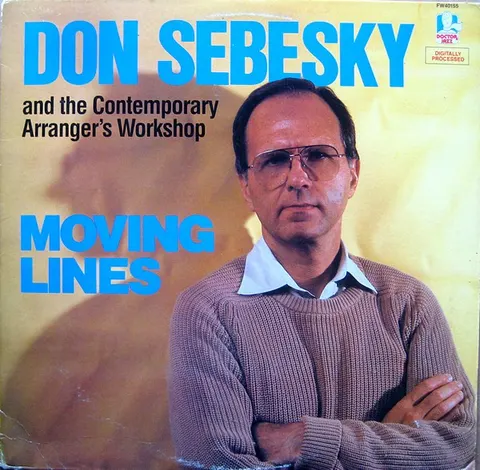
- Don Sebesky (arranger) - Bumpin', California Dreaming, A Day in the Life, Down Here on the Ground.
- Oliver Nelson (arranger) - Goin' Out of My Head, Jimmy & Wes: The Dynamic Duo.
- Claus Ogerman (arranger) - Tequila.
- Rudy Van Gelder (engineer) - the A&M/CTI sessions at Englewood Cliffs.
- Jimmy Smith (organ) - co-billed on Jimmy & Wes: The Dynamic Duo (1967) and Further Adventures of Jimmy and Wes (1969).
- Milt Jackson (vibraphone) - Bags Meets Wes! (1962) and its singles.
- Cannonball Adderley - the musician who brought him to Riverside's attention; eleven shared releases.
- Lionel Hampton - his employer from 1948 to roughly 1950, and his first national exposure.
- Herbie Hancock (piano), Ron Carter (bass), Grady Tate (drums) - the A Day in the Life rhythm section.
- Tommy Flanagan (piano), Percy Heath (bass), Albert Heath (drums) - The Incredible Jazz Guitar.
- Johnny Griffin (tenor saxophone) - Full House.
- Harold Land (tenor saxophone) - the Montgomeryland sessions and the co-billed quartet and quintet dates.
More Crossover Jazz Artists
See all 124 Crossover Jazz artists →More American Jazz Artists
See all 567 American artists →- Wikipedia: Wes Montgomery
- Britannica: Wes Montgomery
- AllMusic: Wes Montgomery
- All About Jazz: Wes Montgomery
- Wikipedia: Goin' Out of My Head (album)
- Wikipedia: A Day in the Life (Wes Montgomery album)
- Wikipedia: Smokin' at the Half Note
- Wikipedia: 9th Annual Grammy Awards
- JazzTimes: Wes Montgomery, The Softer Side of Genius
- Indianapolis Jazz Foundation: Wes Montgomery
- Creed Taylor Produced: On This Day, Wes Montgomery Wins Grammy Award, 1967