 JAZZPROFILES lives in the music 1,146 Jazz Artists fully Profiled!
 Herbie Hancock
Last updated September 5, 2026
Listen on Spotify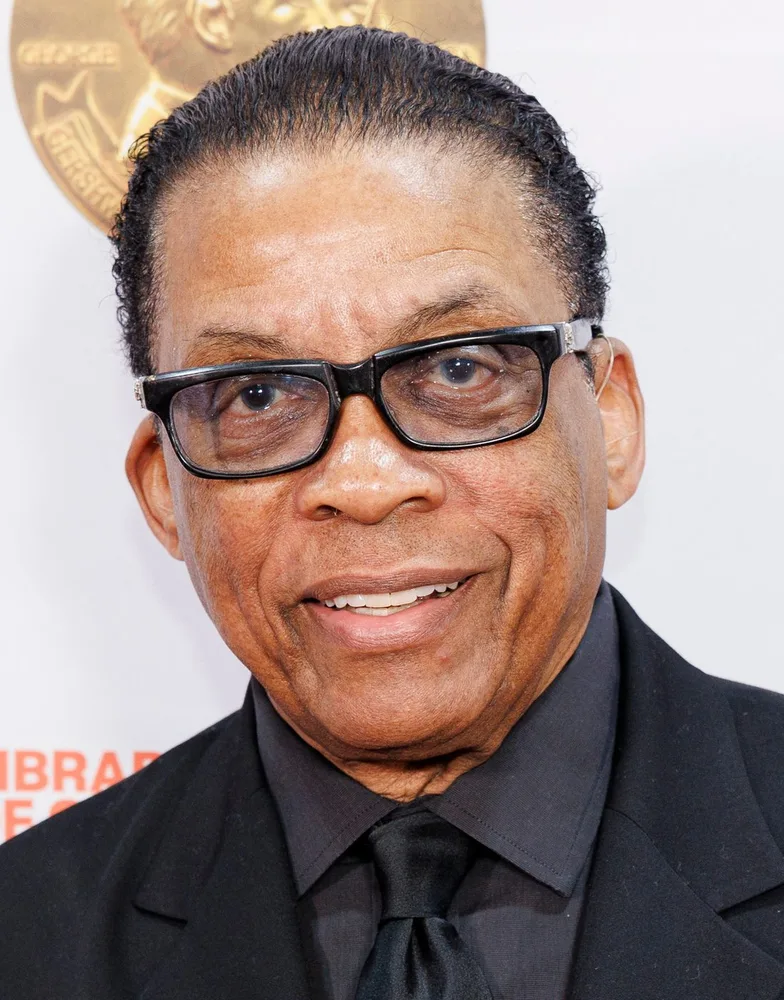
Herbie Hancock at the Library of Congress, 2023, photo via Wikimedia Commons, CC0 1.0 CC0 1.0 — Wikimedia Commons — https://upload.wikimedia.org/wikipedia/commons/6/6d/Herbie_Hancock_2023.jpg

Herbert Jeffrey Hancock was a classical prodigy before he was a jazz musician: he started piano at seven and, by eleven, performed a Mozart piano concerto with the Chicago Symphony Orchestra. He studied electrical engineering and music at Grinnell College, graduating in 1960, and later took composition classes with Vittorio Giannini at the Manhattan School of Music. Trumpeter Donald Byrd discovered him doing session work in the early 1960s and got him signed to Blue Note Records. His 1962 debut as a leader, Takin' Off, produced "Watermelon Man" — a hit for Hancock himself and, in Mongo Santamaria's cover version, an even bigger one on the pop charts.
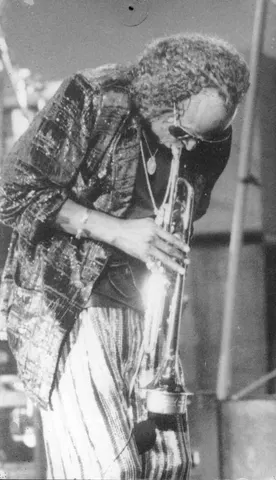
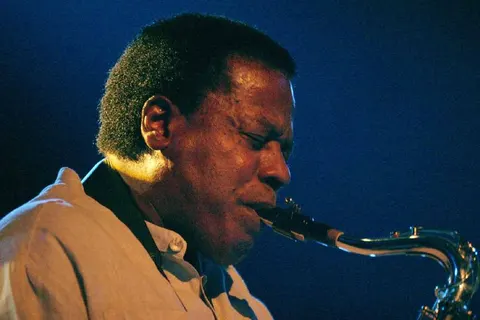
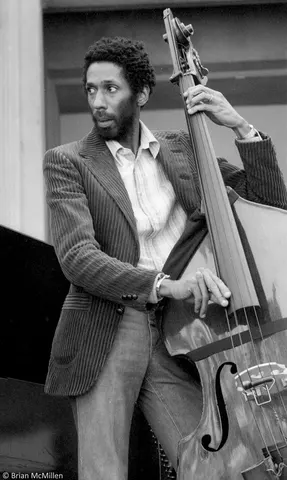
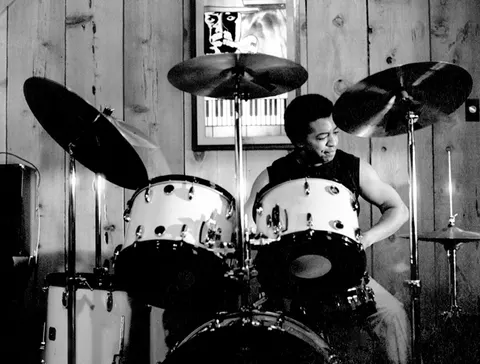
In May 1963, Miles Davis brought Hancock into what's now known as the Second Great Quintet, alongside Ron Carter (bass), Tony Williams (drums), and Wayne Shorter (saxophone). Hancock stayed five years, through 1968, in a rhythm section still regarded as one of the most influential in jazz history — the group that helped define post-bop's harmonic and rhythmic vocabulary.
Then came the run of records that made him a crossover figure as much as a jazz one. The Mwandishi trilogy (Mwandishi, 1971; Crossings, 1972; Sextant, 1973) pushed electric and electronic instrumentation into exploratory, almost avant-garde territory. Head Hunters (1973), made with his new band the Headhunters and led by the Sly Stone-influenced single "Chameleon," became the first jazz album ever certified platinum — a genuinely unprecedented commercial result for an instrumental jazz record. Ten years later, "Rockit," from 1983's Future Shock (produced with bassist Bill Laswell), is widely credited as the first jazz hip-hop song: it won the Grammy for Best R&B Instrumental Performance, and its scratch-driven, robotics-themed video picked up five MTV Video Music Awards. Across the 1970s, eleven of his albums charted on the Billboard pop charts, four of them simultaneously at his commercial peak.
He never really left the acoustic jazz side, even at his most electronic. VSOP, a mid-to-late-1970s reunion of the Davis quintet lineup (with Freddie Hubbard standing in for Davis), kept the post-bop thread alive through live albums. He won an Academy Award for Best Original Score for the film 'Round Midnight (1986), in which he also appeared and played. And in 2007, River: The Joni Letters — a tribute to his friend Joni Mitchell, featuring vocalists including Norah Jones, Tina Turner, Corinne Bailey Rae, and Mitchell herself — won the Grammy for Album of the Year at the 2008 ceremony, only the second time in Grammy history a jazz album had won that category, 43 years after Getz/Gilberto in 1965.
Hancock holds 14 Grammy Awards in total, plus his Academy Award. Recognition kept coming into his eighties: the Kennedy Center Honors in 2013, UNESCO Goodwill Ambassador for Intercultural Dialogue in 2011, the Charles Eliot Norton Professorship of Poetry at Harvard in 2014 (where he delivered a lecture series titled "The Ethics of Jazz"), a UCLA faculty position since 2012, the 2025 Polar Music Prize, and an honorary doctorate from Princeton in 2026. He remains chairman of the Herbie Hancock Institute of Jazz (renamed in 2019 from the Thelonious Monk Institute of Jazz), the organization he helped found to train the next generation of jazz musicians.
Hancock's playing is defined by harmonic sophistication carried over from his Davis Quintet years — extended, ambiguous chord voicings and a rhythmic flexibility that made the "time, no changes" and freely pulsed passages of that band possible — combined with a genuine, non-ironic embrace of whatever new technology the moment offered: the Rhodes and Clavinet of the Headhunters era, the vocoder and Fairlight/synth programming of Future Shock, turntablism on "Rockit." Few jazz musicians of his generation moved as fluidly between acoustic post-bop, electric jazz-funk, and outright electronic pop production without any one mode reading as a retreat from the others. His influences run from Bill Evans' harmonic language and the modal innovations of Miles Davis's mid-1960s bands, through the funk and soul of Sly Stone that shaped Head Hunters, to the early-1980s hip-hop and electro scene that "Rockit" helped bring into the jazz conversation.
- Head Hunters (1973, Columbia) — the first platinum-certified jazz album, and the record that redefined how far jazz-funk could reach commercially. Spotify Listen · Buy
- Maiden Voyage (1965, Blue Note) — his acoustic-era high-water mark, with Ron Carter, Tony Williams, Freddie Hubbard, and George Coleman. Spotify Listen · Buy
- Future Shock (1983, Columbia) — the "Rockit" album, widely credited as the first jazz hip-hop record. Spotify Listen · Buy
- River: The Joni Letters (2007, Verve) — the second jazz album ever to win the Grammy for Album of the Year. Spotify Listen · Buy
Herbie Hancock: Full Discography
As Leader / Co-Leader
| Album Title | Recording Date(s) | Release Date | Label | Catalog Number | Format(s) | Personnel | Role | Spotify | Notes | Listen | Buy |
|---|---|---|---|---|---|---|---|---|---|---|---|
| Takin' Off | Recorded May 28, 1962 | 1962 | Blue Note | BLP 4109 | Vinyl, LP, Album, Mono | Herbie Hancock (piano), Freddie Hubbard (trumpet), Dexter Gordon (tenor sax), Butch Warren (bass), Billy Higgins (drums); produced by Alfred Lion, recorded by Rudy Van Gelder | Leader | — | Debut leader album; produced "Watermelon Man" | Spotify | Amazon |
| My Point of View | Recorded March 19, 1963 | 1963-08 | Blue Note | BST 84126 | Vinyl, LP, Album, Stereo | Herbie Hancock (piano), Donald Byrd (trumpet), Grachan Moncur III (trombone), Hank Mobley (tenor sax), Grant Green (guitar), Chuck Israels (bass), Tony Williams [Anthony Williams] (drums); produced by Alfred Lion | Leader | — | Spotify | Amazon | |
| Empyrean Isles | Recorded June 17, 1964 | 1964-11 | Blue Note | BLP 4175 | Vinyl, LP, Album, Mono | Herbie Hancock (piano), Freddie Hubbard (cornet), Ron Carter (bass), Tony Williams [Anthony Williams] (drums); produced by Alfred Lion, recorded by Rudy Van Gelder | Leader | — | Spotify | Amazon | |
| Maiden Voyage | Recorded March 17, 1965 | 1965 | Blue Note | BLP 4195 | Vinyl, LP, Album, Mono | Herbie Hancock (piano), George Coleman (tenor sax), Freddie Hubbard (trumpet), Ron Carter (bass), Tony Williams [Anthony Williams] (drums); produced by Alfred Lion, recorded by Rudy Van Gelder | Leader | Spotify | His acoustic-era high-water mark | Spotify | Amazon |
| Blow-Up | — | 1966 | MGM | — | LP | Herbie Hancock (score) | Leader | — | Soundtrack, Antonioni film | Spotify | Amazon |
| Speak Like a Child | Recorded March 6 & 9, 1968 | 1968 | Blue Note | BST 84279 | Vinyl, LP, Album, Stereo | Herbie Hancock (piano), Thad Jones (flugelhorn), Jerry Dodgion (alto flute), Peter Phillips (bass trombone), Ron Carter (bass), Mickey Roker (drums); produced by Duke Pearson, recorded by Rudy Van Gelder | Leader | — | Spotify | Amazon | |
| The Prisoner | — | 1970 | Blue Note | BST 84321 | Vinyl, LP, Album, Stereo | Herbie Hancock (piano, electric piano), Joe Henderson (tenor sax, alto flute), Johnny Coles (flugelhorn), Hubert Laws & Jerome Richardson (flute), Garnett Brown (trombone), Buster Williams (bass), Albert Heath (drums); produced by Duke Pearson | Leader | — | Spotify | Amazon | |
| Fat Albert Rotunda | — | 1969 | Warner Bros. Records / Warner Bros.-Seven Arts | 1834 / ST-93172 | Vinyl, LP, Album, Club Edition, Stereo | Herbie Hancock (piano, electric piano, arranger, conductor, producer), Joe Henderson (tenor sax, alto flute), Joe Farrell (alto/tenor sax), Buster Williams (bass), Bernard Purdie & Albert Heath (drums), Eric Gale (guitar); recorded by Rudy Van Gelder | Leader | — | Written for the Bill Cosby Fat Albert cartoon | Spotify | Amazon |
| Mwandishi | — | 1971 | Warner Bros. Records | WS 1898 | Vinyl, LP, Album, Stereo | Herbie Hancock (electric piano/Rhodes, arranger), Bennie Maupin (bass clarinet, alto flute), Eddie Henderson (trumpet, flugelhorn), Julian Priester (trombone), Buster Williams (bass), Billy Hart (drums); produced by David Rubinson | Leader | — | First album of the Mwandishi sextet; recorded at Wally Heider Studios, San Francisco | Spotify | Amazon |
| Crossings | — | 1972-05 | Warner Bros. Records | BS 2617 | Vinyl, LP, Album | Herbie Hancock (electric piano, piano, Mellotron), Bennie Maupin (soprano/bass clarinet, flute), Eddie Henderson (trumpet, flugelhorn), Julian Priester (trombone), Buster Williams (bass), Billy Hart (drums), Victor Pantoja (congas), Patrick Gleeson (Moog synthesizer); produced by David Rubinson & Friends | Leader | — | Spotify | Amazon | |
| Sextant | — | 1973 | Columbia | KC 32212 | Vinyl, LP, Album, Stereo | Herbie Hancock (Rhodes, clavinet, Mellotron, Steinway piano — credited under his Swahili name "Mwandishi"), Bennie Maupin ("Mwile"), Eddie Henderson ("Mganga"), Julian Priester ("Pepo"), Buster Williams ("Mchezaji"), Billy Hart ("Jabali"), Patrick Gleeson (ARP 2600); produced by David Rubinson & Friends | Leader | — | First album on Columbia after the Warner Bros. years; band members credited under Swahili names | Spotify | Amazon |
| Head Hunters | — | 1973-10-26 | Columbia | KC 32731 | Vinyl, LP, Album, Stereo | Herbie Hancock (ARP synths, Fender Rhodes, Hohner clavinet, producer), Bennie Maupin (soprano/tenor sax, saxello, bass clarinet, alto flute), Paul Jackson (electric bass, marimbula), Harvey Mason (drums), Bill Summers (percussion); co-produced by David Rubinson | Leader | Spotify | First platinum-certified jazz album | Spotify | Amazon |
| Thrust | — | 1974 | Columbia | PC 32965 | Vinyl, LP, Album, Stereo | Herbie Hancock (Fender Rhodes, clavinet, ARP synths, producer), Bennie Maupin (soprano/tenor sax, bass clarinet, alto flute), Paul Jackson (electric bass), Mike Clark (drums), Bill Summers (percussion); co-produced by David Rubinson | Leader | — | Follow-up to Head Hunters; same core lineup minus Harvey Mason (Mike Clark replaces on drums) | Spotify | Amazon |
| Death Wish | — | 1974 | Columbia | — | LP | Herbie Hancock (score) | Leader | — | Soundtrack | Spotify | Amazon |
| Man-Child | — | 1975 | Columbia | PC 33812 | Vinyl, LP, Album | Herbie Hancock (acoustic/electric piano, ARP & Oberheim synths, clavinet, producer), Bennie Maupin (soprano/tenor sax, bass clarinet, flutes), Wayne Shorter (soprano sax), Stevie Wonder (harmonica), Paul Jackson/Louis Johnson/Henry Davis (bass), Harvey Mason/James Gadson/Mike Clark (drums); produced with David Rubinson & Friends | Leader | Spotify | Notable Wayne Shorter and Stevie Wonder guest credits | Spotify | Amazon |
| Secrets | — | 1976-08 | Columbia | PC 34280 | Vinyl, LP, Album, Stereo | Herbie Hancock (piano, Rhodes, ARP/Oberheim/Micro-Moog synths, clavinet, producer), Bennie Maupin (soprano/tenor sax, saxello, lyricon, bass clarinet), Melvin "Wah Wah" Watson (bass, guitar, lead vocals), Paul Jackson (bass), James Gadson/James Levi (drums); co-produced by David Rubinson & Friends | Leader | — | Spotify | Amazon | |
| V.S.O.P. | — | 1977-04-15 | Columbia | PG 34688 | Vinyl, 2xLP, Album, Stereo | Herbie Hancock (Rhodes, Yamaha electric grand, clavinet, synths), Freddie Hubbard (trumpet, standing in for Miles Davis), Wayne Shorter (tenor/soprano sax), Ron Carter (bass), Tony Williams [Anthony Williams] (drums); also features a separate quintet set with Buster Williams (bass) and Billy Hart (drums); produced by David Rubinson & Friends | Leader / co-leader | — | Davis Quintet reunion lineup with Hubbard in Davis's chair; 2-LP set combining acoustic and electric sets | Spotify | Amazon |
| Sunlight | — | 1978 | Columbia | — | LP | Herbie Hancock and band | Leader | — | — | Spotify | Amazon |
| Feets Don't Fail Me Now | — | 1979 | Columbia | — | LP | Herbie Hancock and band | Leader | — | — | Spotify | Amazon |
| Monster | — | 1980 | Columbia | — | LP | Herbie Hancock and band | Leader | — | — | Spotify | Amazon |
| Magic Windows | — | 1981 | Columbia | — | LP | Herbie Hancock and band | Leader | — | — | Spotify | Amazon |
| Lite Me Up | — | 1982 | Columbia | — | LP | Herbie Hancock and band | Leader | — | — | Spotify | Amazon |
| Future Shock | — | 1983 | Columbia | FC 38814 | Vinyl, LP, Album, Stereo | Herbie Hancock (producer, writer); Bill Laswell (writer, credited via his group "Material" as co-producer); Michael Beinhorn & Curtis Mayfield also credited Written-By | Leader | Spotify | "Rockit"; Grammy, Best R&B Instrumental Performance | Spotify | Amazon |
| Sound-System | — | 1984 | Columbia | — | LP | Herbie Hancock, Bill Laswell (co-producer) | Leader | — | — | Spotify | Amazon |
| Round Midnight | — | 1986-09 | Columbia | SC 40464 | Vinyl, LP, Album, Stereo | Herbie Hancock (piano, composer, conductor), plus featured performers Wayne Shorter (sax), Freddie Hubbard (trumpet), Ron Carter (bass), Tony Williams [Anthony Williams] (drums), Billy Higgins (drums), Dexter Gordon (tenor sax), Bobby McFerrin & Chet Baker (vocals) among others | Leader | — | Soundtrack; Academy Award, Best Original Score. Discogs main-artist field lists "Herbie Hancock, Various," reflecting the ensemble-soundtrack nature of the release | Spotify | Amazon |
| Perfect Machine | — | 1988 | Columbia | FC 40025 / C 40025 | Vinyl, LP, Album | Herbie Hancock (synths, sampler, vocoder, acoustic piano, producer), Bill Laswell (producer, credited via "Material"), Bootsy Collins (bass, vocoder, vocals), Grand Mixer D.St. (turntables), Leroy "Sugarfoot" Bonner (vocals) | Leader | — | This release's Discogs entry credits Grand Mixer D.St. individually on turntables | Spotify | Amazon |
| Dis Is Da Drum | — | 1994 | Mercury | — | CD | Herbie Hancock and band | Leader | — | — | Spotify | Amazon |
| The New Standard | — | 1996 | Verve | — | CD | Herbie Hancock and band | Leader | — | — | Spotify | Amazon |
| Gershwin's World | — | 1998 | Verve Records | 557 797-2 | CD, Album | Herbie Hancock (piano, arranger, executive producer), George Gershwin (composer), Robert Sadin (arranger, producer), plus the Orpheus Chamber Orchestra (~35 credited string/wind players) and guest vocalists/soloists | Leader | — | Personnel list abbreviated here — the full roster runs to roughly 60 names, mostly Orpheus Chamber Orchestra members; see the complete listing at discogs.com/release/13303590 | Spotify | Amazon |
| Future 2 Future | — | 2001 | Transparent Music | — | CD | Herbie Hancock and guests | Leader | — | — | YouTube | Amazon |
| Directions In Music - Live At Massey Hall | Recorded live at Massey Hall, Toronto, Oct 25, 2001 | 2002 | Verve Records | 314 589 654-2 | CD, Album | Herbie Hancock (piano, executive producer), Michael Brecker (tenor sax, producer), Roy Hargrove (trumpet, flugelhorn), John Patitucci (bass), Brian Blade (drums) | Co-leader (trio billing with Brecker and Hargrove) | — | Subtitled "Celebrating Miles Davis & John Coltrane" | Spotify | Amazon |
| Possibilities | — | 2005-08-30 | Hear Music / Hancock Music / Vector Recordings | 70013-2 | CD, Album | Herbie Hancock (piano, keyboards, producer), Michael Bearden (keyboards), Steve Jordan (drums), Cyro Baptista (percussion); guest artists per-track | Leader | — | Large guest roster (Sting, Christina Aguilera, Santana, John Mayer, etc.) is documented track-by-track rather than in this release's top-level credit list | Spotify | Amazon |
| River: The Joni Letters | — | 2007 | Verve Records | 0602517448261 | CD, Album | Herbie Hancock (piano, arranger, producer), Wayne Shorter (soprano/tenor sax), Dave Holland (bass), Vinnie Colaiuta (drums), Lionel Loueke (guitar), Larry Klein (arranger, producer); Joni Mitchell credited Lyrics/Music By | Leader | Spotify | Grammy, Album of the Year and Best Contemporary Jazz Album (2008). Vocalists include Norah Jones, Tina Turner, Corinne Bailey Rae, Joni Mitchell, and Leonard Cohen | Spotify | Amazon |
| The Imagine Project | — | 2010-06-22 | Hancock Records | HR 0001 | CD, Album | Herbie Hancock (producer, arranger), John Alagia, Derek Trucks, Juanes, Larry Klein, Marcus Miller (co-producers/arrangers) | Leader | — | Large international guest roster documented track-by-track rather than in this release's top-level credit list; won 2011 Grammys for Best Pop Collaboration with Vocals and Best Improvised Jazz Solo | Spotify | Amazon |
As Sideman / Guest (curated — Miles Davis Second Great Quintet + major Blue Note dates)
| Year | Leader/Project | Title | Label | Catalog Number | Hancock's Role | Discogs Link | Listen | Buy |
|---|---|---|---|---|---|---|---|---|
| 1965 | Miles Davis | E.S.P. | Columbia | CS 9150 | Piano | discogs.com/release/11302374 | Spotify | Amazon |
| 1967 | The Miles Davis Quintet | Miles Smiles | Columbia | CL 2601 | Piano | discogs.com/release/10406087 | Spotify | Amazon |
| 1967 | Miles Davis | Sorcerer | Columbia | CS 9532 | Piano | discogs.com/release/1980016 | Spotify | Amazon |
| 1968 | Miles Davis | Nefertiti | Columbia | CS 9594 | Piano | discogs.com/release/1882003 | Spotify | Amazon |
| 1968 | Miles Davis | Miles In The Sky | Columbia | CS 9628 | Piano, Electric Piano | discogs.com/release/1488165 | Spotify | Amazon |
| 1963 | Freddie Hubbard | Hub-Tones | Blue Note | BLP 4115 | Piano | discogs.com/release/1763491 | Spotify | Amazon |
| 1966 | Wayne Shorter | Speak No Evil | Blue Note | BST 84194 | Piano | discogs.com/release/382469 | Spotify | Amazon |
These five Miles Davis Quintet studio albums (with Ron Carter and Tony Williams also present on all five, Wayne Shorter on tenor sax) are the sideman work Hancock is most historically identified with outside his own catalog. Hub-Tones and Speak No Evil represent his Blue Note-era session work alongside Freddie Hubbard and Wayne Shorter respectively.
- Miles Davis — bandleader of the Second Great Quintet (1963–1968), the formative professional relationship of Hancock's career.
- Ron Carter and Tony Williams — his rhythm-section partners in the Davis Quintet and later in VSOP.
- Wayne Shorter — saxophonist in the same Davis Quintet lineup and a lifelong friend and collaborator across decades.
- Donald Byrd — the trumpeter who discovered Hancock and got him signed to Blue Note.
- Bill Laswell — bassist/producer who co-produced the electronic-era albums Future Shock, Sound-System, and Perfect Machine.
- Joni Mitchell — subject and guest vocalist on River: The Joni Letters (2007), a close friendship that produced Hancock's Album of the Year Grammy.
- Freddie Hubbard — trumpeter on Maiden Voyage and Davis's chair-filler in the VSOP reunion band.