 JAZZPROFILES lives in the music 1,572 Jazz Artists fully Profiled!
 Hampton Hawes
Last updated September 13, 2026
Listen on Spotify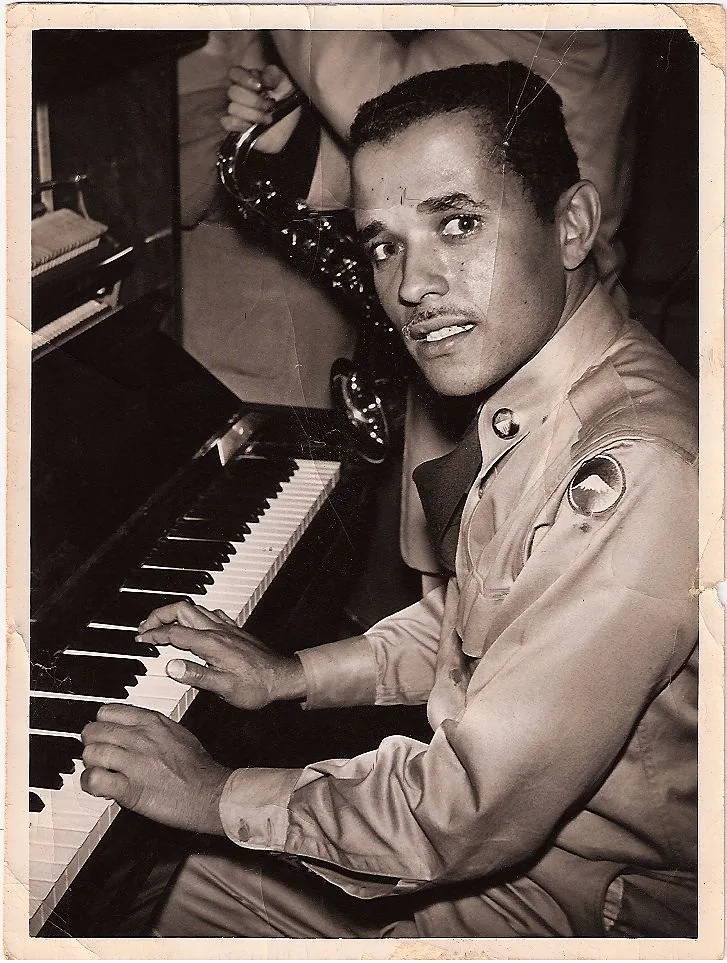
Hampton Hawes in Japan, 1953, during his Army posting near Tokyo CC BY-SA 4.0 — Wikimedia Commons — https://commons.wikimedia.org/wiki/File:Hampton_Hawes_in_Japan_1953.jpg

Hampton Barnett Hawes Jr. was born November 13, 1928, in Los Angeles, the son of Hampton Hawes Sr., minister of Westminster Presbyterian Church, and Gertrude Holman, the church's pianist. Despite that musical household he taught himself piano, and by his teens he was already working Los Angeles's Central Avenue scene alongside Dexter Gordon, Wardell Gray, Art Pepper, Sonny Criss, and Teddy Edwards. At eighteen he spent eight months in Howard McGhee's quintet at the Hi De Ho Club, sharing the stand with Charlie Parker. His first recordings date to 1947, and between 1948 and 1952 he worked steadily at clubs including The Haig, The Lighthouse, and the Surf Club (a February 12, 1952 double-header with Art Pepper later surfaced on Xanadu as The Early Show and The Late Show), cutting his first sessions as a leader for the Discovery label that same period.
Drafted into the Army in 1952, Hawes was stationed at Camp Drake near Tokyo, where he played officers'-club dates and sat in around the city's jazz venues, leaving a lasting impression on the emerging postwar Japanese jazz scene, including a young Toshiko Akiyoshi. Narcotics trouble caught up with him there: he was arrested, convicted, and imprisoned in Tokyo before being sent back to California in 1954 to finish his sentence.
Once free, Hawes formed a trio with bassist Red Mitchell and drummer Chuck Thompson, and their June 28, 1955 session for Contemporary Records began a run of albums, Hampton Hawes Trio, Vol. 1: The Trio (1955), This Is Hampton Hawes, Vol. 2 (1956), and Everybody Likes Hampton Hawes, Vol. 3 (1956), now regarded among the finest small-group records to come out of the West Coast. He added guitarist Jim Hall for the November 12, 1956 marathon that produced All Night Session!, issued across three LPs (Contemporary C-3543 through C-3545) as a single continuous overnight date with no retakes. The run of records won him Down Beat's "New Star of the Year" and Metronome's "Arrival of the Year" for 1956. In New York the following year he recorded July 9, 1957 as the ostensible co-leader, alongside drummer Dannie Richmond, of Charles Mingus's Mingus Three (Jubilee), and on May 18, 1957, at Van Gelder Studio, he sat in on piano for a Prestige date with trombonist Curtis Fuller, French horns David Amram and Julius Watkins, and alto saxophonist Sahib Shihab, issued as Curtis Fuller and Hampton Hawes With French Horns (Status ST 8305). That session was one half of Prestige's multi-date "Modern Jazz Survey" sampler project; the other half, a baritone-saxophone date pairing Pepper Adams and Cecil Payne with Mal Waldron on piano, was later folded into the 2023 John Coltrane compilation Dakar. Back in Los Angeles, Hawes cut Hampton Hawes!!!! - Four! (January 27, 1958, with Barney Kessel, Red Mitchell, and Shelly Manne) and For Real! (March 17, 1958, with Harold Land, Scott LaFaro, and Frank Butler), his first date built around a horn player.
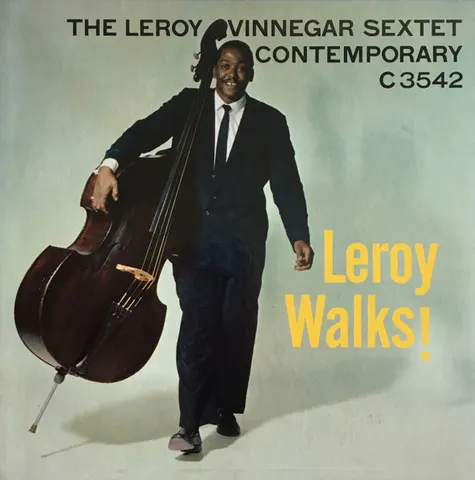
Arrested on his thirtieth birthday, November 13, 1958, on federal heroin charges, Hawes received a ten-year sentence. In the gap between trial and sentencing he recorded The Sermon (November 24 and 25, 1958, with bassist Leroy Vinnegar and drummer Stan Levey), a set of spirituals and gospel material dedicated to his father, who was then retiring from the pulpit. Imprisoned at the federal medical facility in Fort Worth, Hawes watched John F. Kennedy's 1961 inaugural address and became convinced the new president would eventually pardon him; he pursued executive clemency with help from friends and fellow musicians on the outside, and in August 1963 Kennedy granted it, one of only 43 such pardons issued in the final year of his presidency.
Hawes returned to recording with The Green Leaves of Summer (February 17, 1964) and Here and Now (May 12, 1965, with bassist Chuck Israels and drummer Donald Bailey), but the American jazz audience was shrinking fast in the wake of the Beatles, and work grew harder to find. A ten-month tour of Europe and Asia in 1967-68, undertaken while his wife Jacque was on a teaching sabbatical, showed him how large his reputation had grown overseas: he recorded almost continuously, cutting Hamp's Piano (November 8, 1967, in the Black Forest with bassist Eberhard Weber), the duo album Key for Two with pianist Martial Solal (Paris, January 1968), Spanish Steps (Paris, March 10, 1968, with Jimmy Woode and Arthur Taylor), and, in Tokyo that May, both the solo album The Challenge and the sextet date Jam Session with Japanese saxophonists Hidehiko Matsumoto and Akira Miyazawa.
The early 1970s found Hawes doubling on electric piano for a run of Prestige albums with a harder, funk-inflected edge, Universe (1972), Blues for Walls (January 1973, Berkeley), and Playin' in the Yard (recorded live at Montreux, July 7, 1973), alongside a return to straight-ahead piano trio work documented on Live at the Jazz Showcase in Chicago (June 1973, with Cecil McBee and Roy Haynes). His memoir, Raise Up Off Me, written with Don Asher and published in 1974, told the story of his addiction, his ambivalent friendship with Parker, and his years inside; it won the ASCAP Deems Taylor Award in 1975 and carried an introduction by critic Gary Giddins calling it a major contribution to jazz literature. Hawes's last studio work included the 1976 duo sessions with bassist Charlie Haden that became As Long as There's Music (Artists House, 1978) and Hampton Hawes at the Piano (August 14, 1976, with Ray Brown and Shelly Manne). He died suddenly of a cerebral hemorrhage on May 22, 1977, in Los Angeles, at 48.
Hawes came up inside the bebop language of Charlie Parker and Bud Powell, by his own account most affected by "Bird's conception of time," but he played with a cleaner articulation than Powell and folded in the boogie-woogie drive of Earl Hines, the gospel harmony he grew up hearing in his father's church, and touches of Nat King Cole; later in his career some Oscar Peterson and Bill Evans phrasing crept in as well. He became known for an assertive locked-hands block-chord style in which the top note of each voicing rang out clearly over the rest, and for percussive double-note blues figures and a rhythmically insistent comping approach that younger hard-bop pianists, Horace Silver among them, absorbed into their own playing. His stint stationed near Tokyo left a direct mark on the first generation of modern Japanese jazz musicians, and his own account of addiction and a decade lost to imprisonment, told in Raise Up Off Me, remains one of the most candid firsthand narratives in jazz literature, distinct from and often compared with Art Pepper's later memoir Straight Life.
- Hampton Hawes Trio, Vol. 1: The Trio (1955, Contemporary) - His debut trio recording with Red Mitchell and Chuck Thompson, cut June 28, 1955, and widely cited as a high point of West Coast small-group jazz. Spotify - Hampton Hawes, Vol. 1: The Trio Listen
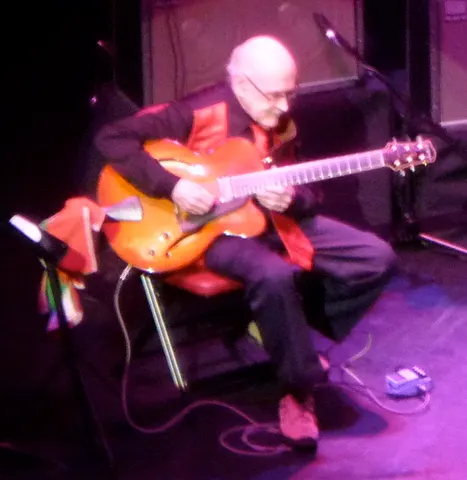
- All Night Session! Vols. 1-3 (1956/1958, Contemporary) - One continuous overnight date, November 12, 1956, with guitarist Jim Hall added to the working trio; issued across three LPs.
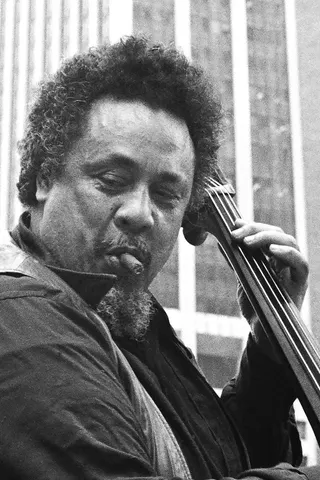
- Mingus Three (1957, Jubilee) - Recorded July 9, 1957 in New York with Charles Mingus on bass and Dannie Richmond on drums; Hawes is credited as an "ostensible co-leader" alongside Mingus himself.
- Curtis Fuller and Hampton Hawes With French Horns (1957, Status) - Hawes's piano chair on the May 18, 1957 Van Gelder Studio date that made up half of Prestige's "Modern Jazz Survey" project, whose companion baritone-sax half (with Mal Waldron on piano) was later reissued under John Coltrane's name as Dakar.
- For Real! (rec. 1958, rel. 1961, Contemporary) - Recorded March 17, 1958 with Harold Land, Scott LaFaro, and Frank Butler; his first leader date organized around a horn player. Spotify - For Real! Listen
- The Sermon (rec. 1958, rel. 1987, Contemporary) - A gospel-tinged session recorded November 24-25, 1958, in the window between his federal drug conviction and sentencing, dedicated to his retiring minister father. Spotify - Sermon Listen
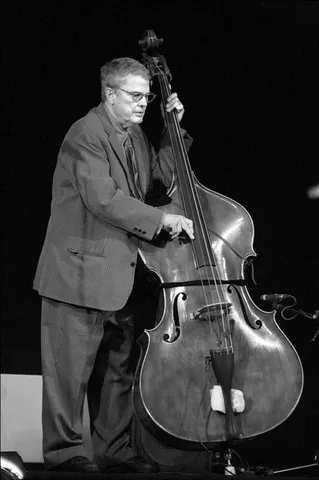
- As Long as There's Music (rec. 1976, rel. 1978, Artists House) - A late-career duo album with bassist Charlie Haden, recorded in two sessions in Burbank and Los Angeles. Spotify - As Long As There's Music Listen
Hampton Hawes: Full Discography
Identity confirmed via the live Discogs API — artist ID 59251 ("Hampton Hawes," realname Hampton Barnett Hawes Jr., born/died dates matching, 11 name variations including "Hamp Hawes" and Japanese-script transliterations). Discogs credits Hawes on 544 releases total under his personal artist ID (68 in a "Main"/leader role, 351 sideman "Appearance" credits, 111 track-level "TrackAppearance" credits, 13 unofficial releases, and 1 producer credit). As the ledger for this sweep has repeatedly found with other prolific leaders, a real share of his own catalog is filed under separate group-billing Discogs entities rather than his personal artist page: Hampton Hawes Trio (artist 1184088, 45 releases), Hampton Hawes Quartet (artist 1696064, 16 releases), and The Hampton Hawes All-Stars (artist 2596798, 2 releases) — the last of these holds Memory Lane Live (1977) and its 1991 reissue, which do not appear anywhere under his personal artist ID. Because Hawes was overwhelmingly a leader/co-leader after his earliest sideman years, and Discogs' 544-release total is inflated by dozens of overlapping reissues, retitles, and compilations of the same underlying sessions (a pattern documented repeatedly across this sweep), the table below curates roughly 30 of the most significant, distinct sessions rather than itemizing every pressing; it is not exhaustive.
As Leader / Co-Leader
| Album Title | Recording Date(s) | Release Date | Label | Catalog Number | Format(s) | Personnel | Role | Reissue History | Spotify | Buy | Notes |
|---|---|---|---|---|---|---|---|---|---|---|---|
| Hampton Hawes Trio, Vol. 1: The Trio | Recorded June 28, 1955, Los Angeles | 1955 | Contemporary Records | C3505 | Vinyl, LP, Mono | Hampton Hawes (piano), Red Mitchell (bass), Chuck Thompson (drums) | Leader | Reissued on Original Jazz Classics (OJC) | Spotify - Hampton Hawes, Vol. 1: The Trio | — | Debut trio recording; widely cited as a career and West Coast jazz high point |
| This Is Hampton Hawes, Vol. 2: The Trio | Recorded June 28 1955, Dec 3 1955 & Jan 25 1956, Los Angeles | 1956 | Contemporary Records | C3515 | Vinyl, LP, Mono | Hampton Hawes (piano), Red Mitchell (bass), Chuck Thompson (drums) | Leader | Reissued on OJC | Spotify - This Is Hampton Hawes, Vol. 2 | — | |
| Everybody Likes Hampton Hawes, Vol. 3: The Trio | Recorded January 25, 1956, Los Angeles | 1956 | Contemporary Records | C3523 | Vinyl, LP, Mono | Hampton Hawes (piano), Red Mitchell (bass), Chuck Thompson (drums) | Leader | Reissued on OJC | Spotify - Everybody Likes Hampton Hawes, Vol. 3 | — | |
| All Night Session!, Vol. 1 | Recorded November 12, 1956, Contemporary's studio, Los Angeles | 1958 | Contemporary Records | C-3543 | Vinyl, LP, Mono | Hampton Hawes (piano), Jim Hall (guitar), Red Mitchell (bass), Eldridge "Bruz" Freeman (drums) | Leader | Reissued on OJC and as multi-volume compilations | not confirmed on Spotify | — | One continuous overnight recording issued across three volumes; no retakes |
| All Night Session!, Vol. 2 | Recorded November 12, 1956, Contemporary's studio, Los Angeles | 1958 | Contemporary Records | C-3544 | Vinyl, LP, Mono | Hampton Hawes (piano), Jim Hall (guitar), Red Mitchell (bass), Eldridge Freeman (drums) | Leader | Reissued on OJC | not confirmed on Spotify | — | Same session as Vol. 1 |
| All Night Session!, Vol. 3 | Recorded November 12, 1956, Contemporary's studio, Los Angeles | 1958 | Contemporary Records | C-3545 | Vinyl, LP, Mono | Hampton Hawes (piano), Jim Hall (guitar), Red Mitchell (bass), Eldridge Freeman (drums) | Leader | Reissued on OJC | not confirmed on Spotify | — | Same session as Vols. 1-2 |
| Mingus Three | Recorded July 9, 1957, New York City | November 1957 | Jubilee Records | JLP 1054 | Vinyl, LP, Mono | Charles Mingus (bass), Hampton Hawes (piano), Dannie Richmond (drums, tambourine overdub) | Co-leader (billed to Mingus, described by AllMusic as "ostensible co-leaders" with Hawes) | Reissued on CD (Fresh Sound, Fantasy) | not confirmed on Spotify | — | Recorded during the same year as Hawes's Van Gelder date below |
| Curtis Fuller and Hampton Hawes With French Horns | Recorded May 18, 1957, Van Gelder Studio, Hackensack NJ | 1957 | Status Records | ST 8305 | Vinyl, LP, Mono | Curtis Fuller (trombone), David Amram & Julius Watkins (French horn), Sahib Shihab (alto sax), Hampton Hawes (piano), Addison Farmer (bass), Jerry Segal (drums) | Co-leader (shared billing with Curtis Fuller) | Also issued as the "French Horns" half of the various-artists sampler Prestige PRES 16-6, "Modern Jazz Survey 2 / Baritones & French Horns" (16⅔ RPM); the companion "Baritones" half (Pepper Adams, Cecil Payne, piano: Mal Waldron) was later folded into the 2023 Coltrane compilation Dakar | not confirmed on Spotify | — | The session connecting Hawes to Pepper Adams's hub profile; Hawes and Waldron are the two pianists across the survey's component dates |
| Hampton Hawes!!!! - Four! | Recorded January 27, 1958, Contemporary's studio, Los Angeles | 1958 | Contemporary Records | C3553 | Vinyl, LP, Mono | Hampton Hawes (piano), Barney Kessel (guitar), Red Mitchell (bass), Shelly Manne (drums) | Leader | Reissued on OJC | not confirmed on Spotify | — | |
| For Real! | Recorded March 17, 1958, Contemporary's studio, Los Angeles | 1961 | Contemporary Records | M3589 | Vinyl, LP, Mono | Harold Land (tenor sax), Hampton Hawes (piano), Scott LaFaro (bass), Frank Butler (drums) | Leader | Reissued on OJC; 2024 remaster (Craft Recordings, Acoustic Sounds Series) | Spotify - For Real! | — | Recorded three years before release; his first date built around a horn player |
| The Sermon | Recorded November 24-25, 1958, Contemporary's studio, Los Angeles | 1987 | Contemporary Records | C-7653 | Vinyl, LP | Hampton Hawes (piano), Leroy Vinnegar (bass), Stan Levey (drums) | Leader | None found beyond the 1987 first issue | Spotify - Sermon | — | Cut in the window between Hawes's federal drug conviction and sentencing; a spirituals/gospel program dedicated to his retiring minister father; unreleased for nearly three decades |
| The Green Leaves of Summer | Recorded February 17, 1964, Contemporary's studio, Los Angeles | 1964 | Contemporary Records | M3614 | Vinyl, LP | Hampton Hawes (piano), Monk Montgomery (bass), Steve Ellington (drums) | Leader | Reissued on OJC | not confirmed on Spotify | — | First studio leader date after his 1963 pardon |
| Here and Now | Recorded May 12, 1965, Contemporary's studio, Los Angeles | 1966 | Contemporary Records | M3616 | Vinyl, LP | Hampton Hawes (piano), Chuck Israels (bass), Donald Bailey (drums) | Leader | Reissued on OJC | not confirmed on Spotify | — | |
| The Seance | Recorded April 30-May 1, 1966, Mitchell's Studio Club, Los Angeles | 1969 | Contemporary Records | S7621 | Vinyl, LP | Hampton Hawes (piano), Red Mitchell (bass), Donald Bailey (drums) | Leader | Reissued on OJC | not confirmed on Spotify | — | Live trio recording |
| I'm All Smiles | Recorded April 30-May 1, 1966, Mitchell's Studio Club, Los Angeles | 1973 | Contemporary Records | S7631 | Vinyl, LP | Hampton Hawes (piano), Red Mitchell (bass), Donald Bailey (drums) | Leader | Reissued on OJC | not confirmed on Spotify | — | Same live date as The Seance, different track selection |
| Hamp's Piano | Recorded November 8, 1967, SABA-Tonstudio, Villingen, West Germany | 1968 | SABA | SB 15 149 ST | Vinyl, LP | Hampton Hawes (piano), Eberhard Weber (bass), Claus Weiss (drums) | Leader | None found | not confirmed on Spotify | — | Recorded during the 1967-68 European/Asian tour |
| Key for Two | Recorded early January 1968, Paris | 1968 | BYG | 529.125 | Vinyl, LP | Hampton Hawes & Martial Solal (piano), Pierre Michelot (bass), Kenny Clarke (drums) | Co-leader (with Martial Solal) | None found | not confirmed on Spotify | — | Two-piano duo date |
| Spanish Steps | Recorded March 10, 1968, Polydor Studios, Paris | 1971 | Black Lion Records | BLP 30111 | Vinyl, LP | Hampton Hawes (piano), Jimmy Woode (bass), Arthur Taylor (drums) | Leader | Companion material issued separately as Blues for Bud (1989, Black Lion) | not confirmed on Spotify | — | Same session yielded the later Blues for Bud release |
| The Challenge | Recorded May 7, 9 & 12, 1968, Tokyo | 1968 | Victor (Japan) | SMJ-7488 | Vinyl, LP | Hampton Hawes (solo piano) | Leader | None found | not confirmed on Spotify | — | Solo piano recital, recorded during the Japan leg of the 1967-68 tour |
| Jam Session | Recorded May 15, 1968, Nippon Columbia Studio, Tokyo | 1968 | Nippon Columbia | YS-10035 | Vinyl, LP | Hidehiko Matsumoto & Akira Miyazawa (tenor sax), Hampton Hawes (piano), Shungo Sawada (guitar), Isao Suzuki (bass), George Otsuka (drums) | Leader | None found | not confirmed on Spotify | — | With leading Japanese musicians of the postwar scene Hawes had influenced during his early-1950s Army posting |
| High in the Sky | Recorded 1970, Vault Recording Studios, Hollywood | 1970 | Vault Records | SLP-9010 | Vinyl, LP | Hampton Hawes (piano), Leroy Vinnegar (bass), Donald Bailey (drums) | Leader | None found; filed under the Hampton Hawes Trio group entity on Discogs, not his personal artist page | not confirmed on Spotify | — | |
| At Montreux | Recorded live June 1971, Montreux Jazz Festival, Switzerland | 1976 | JAS | JAS-4002 | Vinyl, LP | Hampton Hawes (piano), Henry Franklin (bass), Mike Carvin (drums) | Leader | None found | not confirmed on Spotify | — | |
| Universe | Recorded 1972 | 1972 | Prestige | PRST-10046 | Vinyl, LP | Oscar Brashear (trumpet), Harold Land (tenor sax), Hampton Hawes (electric piano, keyboards), Arthur Adams (guitar), Chuck Rainey (electric bass), Leon "Ndugu" Chancler (drums) | Leader | None found | not confirmed on Spotify | — | First of Hawes's early-1970s electric-piano, funk-inflected Prestige dates |
| Blues for Walls | Recorded January 16-18, 1973, Fantasy Studios, Berkeley | 1973 | Prestige | PRST-10060 | Vinyl, LP | Oscar Brashear (trumpet, flugelhorn), Hadley Caliman (soprano/tenor sax), Hampton Hawes (piano, electric piano, ARP synthesizer), George Walker (guitar), Henry Franklin (bass, electric bass), Leon "Ndugu" Chancler (drums) | Leader | None found | not confirmed on Spotify | — | |
| Playin' in the Yard | Recorded live July 7, 1973, Montreux Jazz Festival, Switzerland | 1973 | Prestige | P-10077 | Vinyl, LP | Hampton Hawes (electric/acoustic piano), Bob Cranshaw (electric bass), Kenny Clarke (drums) | Leader | None found | not confirmed on Spotify | — | |
| Live at the Jazz Showcase in Chicago, Vol. I | Recorded live June 1973, The Jazz Showcase, Chicago | Not confirmed | Enja | 3099 | Vinyl, LP | Hampton Hawes (piano), Cecil McBee (bass), Roy Haynes (drums) | Leader | Vol. II drawn from the same club engagement | not confirmed on Spotify | — | |
| Live at the Jazz Showcase in Chicago, Vol. II | Recorded live June 10, 1973, The Jazz Showcase, Chicago | Not confirmed | Enja | 6028 | Vinyl, LP | Hampton Hawes (piano), Cecil McBee (bass), Roy Haynes (drums) | Leader | Companion to Vol. I | not confirmed on Spotify | — | |
| As Long as There's Music | Recorded January 25 & August 21, 1976, Burbank & Los Angeles | 1978 | Artists House | AH 4 | Vinyl, LP | Hampton Hawes (piano), Charlie Haden (bass) | Co-leader (with Charlie Haden) | Reissued on CD | Spotify - As Long As There's Music | — | Two duo sessions, seven months apart |
| Hampton Hawes at the Piano | Recorded August 14, 1976, Contemporary's studio, Los Angeles | 1978 | Contemporary Records | S7637 | Vinyl, LP | Hampton Hawes (piano), Ray Brown (bass), Shelly Manne (drums) | Leader | Reissued on OJC | not confirmed on Spotify | — | One of Hawes's last studio sessions |
As Sideman (selected major credits)
Hawes worked as a leader or co-leader for nearly all of his mature career; documented sideman dates under another leader's name are comparatively few. A representative set:
| Year | Project (Leader) | Title | Label | Catalog | Role | Notes |
|---|---|---|---|---|---|---|
| 1958 | Sonny Rollins | Sonny Rollins and the Contemporary Leaders | Contemporary (M3562) | Piano | Recorded October 20-22, 1958 | |
| 1965 | Sonny Criss | The Sonny Criss Memorial Album | Xanadu (200) | Piano | Recorded June 15, 1965; issued posthumously (for both Criss and, eventually, Hawes) in 1984 | |
| 1976 | Irving Ashby Quintet | (session, RCA) | RCA | Piano | Recorded November 23, 1976; among the last documented sessions of Hawes's life, per jazzdisco.org's chronological listing |
Discogs' broader "Appearance"/"TrackAppearance" log for artist 59251 (462 combined credits) is overwhelmingly compilation and reissue activity built from the leader sessions listed above, not additional distinct sideman dates; it is not itemized further here.
- Red Mitchell - bassist in Hawes's foundational 1955-58 trio (the three Contemporary "Trio" volumes, All Night Session!, Four!) and again on The Seance and I'm All Smiles (1966).
- Charlie Haden - duo partner on As Long as There's Music, recorded 1976 and released 1978 on Artists House.
- Jim Hall - added on guitar for the November 1956 All Night Session! marathon.
- Charles Mingus - co-billed with Hawes and Dannie Richmond on Mingus Three (1957, Jubilee).
- Curtis Fuller, David Amram, Julius Watkins - co-billed with Hawes on the May 18, 1957 Prestige date issued as Curtis Fuller and Hampton Hawes With French Horns, one half of the multi-session "Modern Jazz Survey" project that also produced Pepper Adams and Cecil Payne's baritone-sax half (with Mal Waldron on piano), later reissued as John Coltrane's Dakar.
- Leroy Vinnegar - bassist on The Sermon (1958) and later on High in the Sky (1970) and Something Special (1976).
- Ray Brown - bassist, alongside drummer Shelly Manne, on Hampton Hawes at the Piano (1976, Contemporary).
- Harold Land, Scott LaFaro, Frank Butler - the working band on For Real! (1958).
- Don Asher - co-author of Hawes's 1974 memoir, Raise Up Off Me.
More Bebop Artists
See all 166 Bebop artists →More American Jazz Artists
See all 567 American artists →- Wikipedia: Hampton Hawes
- Discogs: Hampton Hawes (artist 59251)
- AllMusic: Hampton Hawes biography
- jazzdisco.org: Hampton Hawes discography
- jazzdisco.org: Hampton Hawes catalog
- Wikipedia: All Night Session! Vol. 1
- Wikipedia: Mingus Three
- Wikipedia: For Real! (Hampton Hawes album)
- Wikipedia: As Long as There's Music (Charlie Haden and Hampton Hawes album)