 JAZZPROFILES lives in the music 1,572 Jazz Artists fully Profiled!
 John Coltrane
Last updated September 5, 2026
Listen on Spotify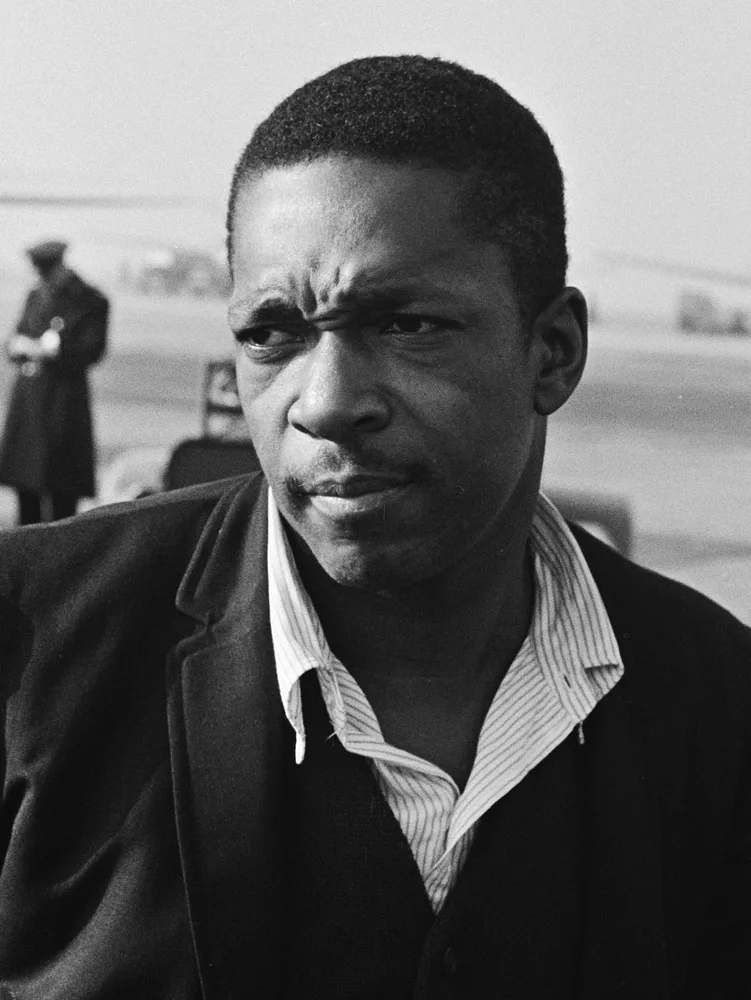
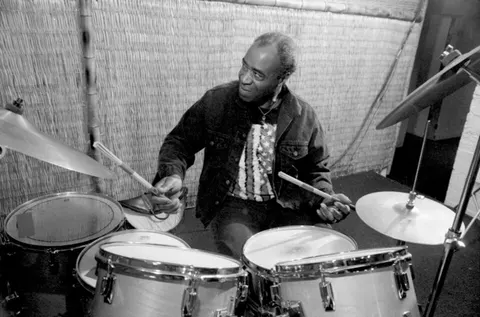
John Coltrane photographed on arrival at Schiphol Airport, Amsterdam, October 26, 1963 CC0 1.0 Universal (Public Domain Dedication) — Wikimedia Commons — https://commons.wikimedia.org/wiki/File:John_Coltrane_1963_cropped_ver2.jpg (photograph by Hugo van Gelderen for Anefo; Nationaal Archief, The Hague, Fotocollectie Anefo, item 915-6748)

John William Coltrane was born September 23, 1926, in Hamlet, North Carolina, and raised in nearby High Point in a household anchored by the African Methodist Episcopal Zion church, where both of his grandfathers served as ministers. Between December 1938 and early 1939 his father, his aunt, and both grandparents all passed away within a few months, and his mother Alice was left to hold the family together. He played clarinet and alto horn at William Penn High School, absorbing Lester Young and Johnny Hodges from records, then moved to Philadelphia in June 1943 and received his first alto saxophone that September as a seventeenth-birthday present. He studied with Mike Guerra at the Ornstein School of Music in 1944 and 1945, heard Charlie Parker in person for the first time on June 5, 1945 (he later said that hearing Bird "hit me right between the eyes"), and enlisted in the U.S. Navy that August. Stationed in Hawaii, he played with the base swing band the Melody Masters and made his first recordings, an informal alto-saxophone session with fellow Navy musicians on July 13, 1946, a month before his discharge.
Back in Philadelphia, Coltrane used the G.I. Bill to study theory with Dennis Sandole at the Granoff School of Music, work that shaped his lifelong habit of treating harmony as a set of problems to be practiced through. He toured with King Kolax, played in Jimmy Heath's band, and in 1947, while working with Eddie Vinson, switched permanently from alto to tenor saxophone. The early 1950s took him through Dizzy Gillespie's big band and then Gillespie's smaller group, Earl Bostic's rhythm-and-blues unit in 1952, and Johnny Hodges's band in 1953 and 1954. Heroin addiction, which began in the late 1940s, cost him work repeatedly through this period.
In October 1955 Miles Davis hired the still relatively obscure Coltrane into a new quintet with Red Garland, Paul Chambers, and Philly Joe Jones, the group later known as the first great quintet. Two marathon Prestige sessions on May 11 and October 26, 1956, produced Cookin', Relaxin', Workin', and Steamin', alongside the Columbia album 'Round About Midnight, but Coltrane's addiction and unreliability led Davis to fire him in April 1957. What followed was the pivotal year of his life. On April 20, 1957, at Van Gelder Studio in Hackensack, New Jersey, he played tenor on a Prestige date led by baritone saxophonists Cecil Payne and Pepper Adams with Mal Waldron on piano, material first issued in 1958 on the 16 2/3 rpm sampler Baritones and French Horns and reissued in November 1963 under Coltrane's own name as Dakar. On May 31 he cut his first album as a leader, Coltrane (Prestige PRLP 7105). That spring he also quit heroin and alcohol, crediting what he later described in the liner notes to A Love Supreme as "a spiritual awakening which was to lead me to a richer, fuller, more productive life." From July through December 1957 he held the tenor chair in Thelonious Monk's quartet during the celebrated Five Spot Café residency, an apprenticeship that reshaped his harmonic thinking but which competing record contracts left almost entirely undocumented in the studio at the time. On September 15, 1957, he recorded Blue Train for Blue Note with Lee Morgan and Curtis Fuller, his only leader date for that label and the first album built substantially on his own compositions.
Coltrane rejoined Davis in December 1957, this time in an expanded sextet with Cannonball Adderley, and stayed until April 1960. That run produced Milestones (1958) and Kind of Blue, recorded March 2 and April 22, 1959, the album that put modal improvisation at the center of jazz. Writing the liner notes for Coltrane's own 1958 Prestige album Soultrane, critic Ira Gitler coined the phrase "sheets of sound" for the dense cascades of notes Coltrane was then pouring through chord changes. Prestige kept issuing the backlog of leader dates he had cut in 1957 and 1958, among them Traneing In, Lush Life, and Black Pearls, while Coltrane also recorded Bags & Trane with Milt Jackson in January 1959 and a quintet date with guitarist Kenny Burrell in March 1958.
Signed to Atlantic, Coltrane recorded Giant Steps across sessions in May and December 1959, released in February 1960 with Tommy Flanagan on piano for most of the album. Every tune was his own, and the title track's cycle of key centers a major third apart became known as "Coltrane changes," still one of the hardest progressions in the repertoire. My Favorite Things, recorded that October and released in March 1961, introduced his soprano saxophone and turned a Rodgers and Hammerstein waltz into a modal vehicle that became his signature performance. He built a working quartet in 1960 around pianist McCoy Tyner, bassist Steve Davis, and drummer Elvin Jones, and closed out his Atlantic contract in May 1961 with Olé Coltrane, on which Eric Dolphy appeared under the contractual pseudonym "George Lane" alongside trumpeter Freddie Hubbard. His contract passed to Impulse! that same month, reuniting him with engineer Rudy Van Gelder, who recorded nearly everything that followed at his studio in Englewood Cliffs, New Jersey.
The Impulse! years divide cleanly. The first stretch brought the brass-and-reeds experiment Africa/Brass (1961), a November 1961 Village Vanguard residency with Dolphy and bassist Reggie Workman that yielded the fifteen-minute "Chasin' the Trane" and prompted a DownBeat review labeling the music "anti-jazz," and then, once Jimmy Garrison took over the bass chair in 1962, the settled classic quartet of Coltrane, Tyner, Garrison, and Jones. That group alternated deliberately accessible records, among them Ballads, Duke Ellington & John Coltrane (recorded September 26, 1962), and John Coltrane and Johnny Hartman (March 7, 1963), with the searching live playing of Impressions and Live at Birdland. It peaked on Crescent (1964) and on A Love Supreme, a four-part suite recorded in a single session on December 9, 1964, and released the following month. Coltrane wrote it at his home in Dix Hills, Long Island, set his own poem as the melody of the closing "Psalm," and performed the complete suite in public only three times.
From mid-1965 Coltrane moved past the quartet's language altogether. On June 28, 1965, he recorded Ascension, a thirty-eight-minute collective improvisation for eleven players including Pharoah Sanders, Archie Shepp, Marion Brown, John Tchicai, and Hubbard. Sanders joined the working band that September and Rashied Ali came in as a second drummer soon after. Tyner left following the November 23, 1965, Meditations session, saying he could no longer hear himself; Jones followed in early 1966. Coltrane rebuilt the group around pianist Alice McLeod, whom he married in 1966 after separating from his first wife Naima in 1963, with Sanders, Garrison, and Ali, a band documented on Live at the Village Vanguard Again! (1966) and on the July 1966 Japanese tour. His last studio work included Expression, Stellar Regions, and Interstellar Space, six saxophone-and-drums duets with Ali recorded February 22, 1967. He played in public for the last time on April 23, 1967, at a benefit for the Olatunji Center of African Culture in Harlem, and died of liver cancer on July 17, 1967, at Huntington Hospital on Long Island, aged 40. His funeral at St. Peter's Lutheran Church in Manhattan opened with the Albert Ayler Quartet and closed with the Ornette Coleman Quartet.
Coltrane worked through three distinct musical languages in twelve recording years, and each one changed what saxophonists after him believed was possible. The hard-bop Coltrane of the Miles Davis quintet and Blue Train built the "sheets of sound," packing notes into uneven groups of fives and sevens to run every available substitution through a chord, an approach he pushed to its logical endpoint on Giant Steps. From 1960 he inverted the problem, using the static modal harmony of My Favorite Things and Impressions to let rhythm, motif, and sheer duration carry the improvisation, and taking up the soprano saxophone, which he played with a reedy, keening tone that had no real precedent in bebop. The final phase brought multiphonics, altissimo shrieks, unmeasured free rhythm, and an explicitly devotional purpose, drawing on Indian raga, African drumming, and a reading list that ran from the Bhagavad Gita to Krishnamurti. Critics split hard over it: DownBeat ran the "anti-jazz" charge in 1961, and French audiences booed during the 1960 Davis tour. His influence on later players is close to universal, with Wayne Shorter and Pharoah Sanders among the first generation and Kenny Garrett, whose 1996 album Pursuance: The Music of John Coltrane is one of hundreds of tributes, among the later ones. Coltrane won an Edison Award in Amsterdam in 1961 for Giant Steps, entered the DownBeat Jazz Hall of Fame in 1965, received a posthumous Grammy in 1982 and a Grammy Lifetime Achievement Award in 1997, and was given a special Pulitzer Prize citation in 2007 for "masterful improvisation, supreme musicianship and iconic centrality to the history of jazz." In 1982 the African Orthodox Church in San Francisco canonized him.
- A Love Supreme (1965, Impulse!) - A four-part devotional suite cut in one session on December 9, 1964, by the classic quartet, and the best-selling record of his career. Spotify - A Love Supreme Listen
- Giant Steps (1960, Atlantic) - His first all-original album, whose title track's third-related key cycle became the standard test piece of modern jazz harmony. Spotify - Giant Steps Listen
- My Favorite Things (1961, Atlantic) - The soprano saxophone debut, and the modal reworking of the Rodgers and Hammerstein waltz that became his signature performance. Spotify - My Favorite Things Listen
- Blue Train (1958, Blue Note) - His only leader date for Blue Note, recorded September 15, 1957, with Lee Morgan and Curtis Fuller; "Moment's Notice" and "Lazy Bird" entered the standard repertoire. Spotify - Blue Train Listen
- Crescent (1964, Impulse!) - The classic quartet at its most inward and controlled, recorded weeks before A Love Supreme and frequently named the best of the quartet's studio albums. Spotify - Crescent Listen
- Ascension (1966, Impulse!) - Thirty-eight minutes of collective improvisation for eleven players, the record that committed him publicly to free jazz. Spotify - Ascension Listen
- "Live" at the Village Vanguard (1962, Impulse!) - The November 1961 residency with Eric Dolphy, including the fifteen-minute "Chasin' the Trane." Spotify - Live At The Village Vanguard Listen
- Kind of Blue (1959, Columbia) - As a sideman: Miles Davis's modal landmark, with Coltrane's solos on "So What" and "All Blues" among the most closely studied in jazz. Spotify - Kind Of Blue
John Coltrane: Curated Discography
Identity confirmed via the live Discogs API: artist ID 97545 ("John Coltrane," realname John William Coltrane, born September 23, 1926, Hamlet, North Carolina, died July 17, 1967, Huntington, New York). Discogs credits him on 6,388 releases, the overwhelming majority of them compilations, repressings, and territorial editions drawn from a comparatively small body of sessions recorded between 1955 and 1967.
This is a curated list, not an exhaustive one. Coltrane is among the most heavily documented and most heavily reissued musicians in jazz, and an itemized discography of all 6,388 credited releases would be unreadable and unmaintainable. The table below covers 32 of the most significant, acclaimed, and historically important leader and co-leader albums, followed by a representative set of major sideman credits. Labels, catalog numbers, formats, and personnel were pulled from the Discogs API release records for the original pressings wherever possible; where a detail came from elsewhere or could not be confirmed, the row says so.
As Leader / Co-Leader
| Album Title | Recording Date(s) | Release Date | Label | Catalog Number | Format(s) | Personnel | Role | Reissue History | Spotify | Buy | Notes |
|---|---|---|---|---|---|---|---|---|---|---|---|
| Dakar | Recorded April 20, 1957, Van Gelder Studio, Hackensack NJ | November 1963 | Prestige | PRLP 7280 | Vinyl, LP, Album, Mono | John Coltrane (tenor sax), Cecil Payne and Pepper Adams (baritone sax), Mal Waldron (piano), Doug Watkins (bass), Art Taylor (drums) | Billed as leader on this reissue; the session itself was led by Payne and Adams | Originally issued in 1958 as one side of the Prestige 16 2/3 rpm sampler Baritones and French Horns; reissued 1981 in the Prestige 24000 twofer series (P 24104) | Spotify - Dakar | — | The Pepper Adams connection that produced this profile; Prestige repackaged the 1957 date under Coltrane's name in 1963 to capitalize on his new fame |
| Coltrane | Recorded May 31, 1957, Van Gelder Studio, Hackensack NJ | September 1957 | Prestige | PRLP 7105 | Vinyl, LP, Album, Mono | John Coltrane (tenor sax), Johnny Splawn (trumpet), Sahib Shihab (baritone sax), Red Garland and Mal Waldron (piano), Paul Chambers (bass), Albert Heath (drums) | Leader | Extensive later CD reissue history, not itemized here | Not confirmed | — | His first album as a leader, sometimes referred to as First Trane to distinguish it from the 1962 Impulse! album of the same name |
| Traneing In | Recorded August 23, 1957, Van Gelder Studio, Hackensack NJ | 1958 | Prestige | PRLP 7123 | Vinyl, LP, Album, Mono | John Coltrane (tenor sax), Red Garland (piano), Paul Chambers (bass), Art Taylor (drums) | Leader | Originally issued as John Coltrane with the Red Garland Trio; reissued 1969 under the Traneing In title as Prestige PR 7651 | Spotify - Traneing In | — | |
| Blue Train | Recorded September 15, 1957, Van Gelder Studio, Hackensack NJ | January 1958 | Blue Note | BLP 1577 | Vinyl, LP, Album, Mono | John Coltrane (tenor sax), Lee Morgan (trumpet), Curtis Fuller (trombone), Kenny Drew (piano), Paul Chambers (bass), Philly Joe Jones (drums) | Leader | The Ultimate Blue Train (1997), DVD-Audio (1999), SACD and remaster (2003), Blu-ray audio with bonus tracks (2015), Blue Train: The Complete Masters (2022) | Spotify - Blue Train | — | His only leader date for Blue Note; four of the five tunes are Coltrane originals, and "Moment's Notice" and "Lazy Bird" became standards |
| Soultrane | Recorded February 7, 1958, Van Gelder Studio, Hackensack NJ | October 1958 | Prestige | PRLP 7142 | Vinyl, LP, Album, Mono | John Coltrane (tenor sax), Red Garland (piano), Paul Chambers (bass), Art Taylor (drums) | Leader | Collected in Coltrane '58: The Prestige Recordings (Craft, 2019) | Spotify - Soultrane | — | Ira Gitler coined the phrase "sheets of sound" in this album's liner notes |
| Lush Life | Recorded May 31 and August 16, 1957, and January 10, 1958, Van Gelder Studio, Hackensack NJ | January 1961 | Prestige | PRLP 7188 | Vinyl, LP, Album, Mono | John Coltrane (tenor sax), Donald Byrd (trumpet, January 1958 session only), Red Garland (piano), Earl May and Paul Chambers (bass), Albert Heath, Art Taylor, and Louis Hayes (drums) | Leader | Extensive CD reissue history, not itemized here | Spotify - Lush Life | — | Assembled from three separate sessions and held back by Prestige until 1961; the August 1957 tracks are a piano-less trio |
| Giant Steps | Recorded May 4-5 and December 2, 1959, Atlantic Studios, NYC | February 1960 | Atlantic | 1311 (mono) / SD 1311 (stereo) | Vinyl, LP, Album, Mono and Stereo | John Coltrane (tenor sax), Tommy Flanagan (piano, May sessions), Wynton Kelly (piano, December session), Paul Chambers (bass), Art Taylor (drums, May), Jimmy Cobb (drums, December) | Leader | 60th Anniversary Super Deluxe Edition (2020); mono and 2020 remaster editions | Spotify - Giant Steps | — | All original compositions; the title track's third-related key cycle is the origin of the term "Coltrane changes." Added to the Library of Congress National Recording Registry in 2004 |
| Coltrane Jazz | Recorded between March 26, 1959 and October 21, 1960 | 1961 | Atlantic | 1354 (mono) / SD 1354 (stereo) | Vinyl, LP, Album, Mono and Stereo | John Coltrane (tenor sax), Wynton Kelly and McCoy Tyner (piano), Paul Chambers and Steve Davis (bass), Jimmy Cobb and Elvin Jones (drums) | Leader | Later CD reissues | Spotify - Coltrane Jazz | — | Bridges the Miles Davis rhythm section of 1959 and the first version of Coltrane's own quartet; the linked Spotify edition is expanded beyond the original LP program |
| My Favorite Things | Recorded October 21, 24, and 26, 1960, Atlantic Studios, NYC | March 1961 | Atlantic | 1361 (mono) / SD 1361 (stereo) | Vinyl, LP, Album, Mono and Stereo | John Coltrane (soprano and tenor sax), McCoy Tyner (piano), Steve Davis (bass), Elvin Jones (drums) | Leader | 2022 remaster; multiple anniversary and deluxe editions | Spotify - My Favorite Things | — | His first recorded soprano saxophone playing and his most widely recognized performance |
| Coltrane's Sound | Recorded October 24 and 26, 1960, Atlantic Studios, NYC | 1964 | Atlantic | SD 1419 | Vinyl, LP, Album, Stereo | John Coltrane (soprano and tenor sax), McCoy Tyner (piano), Steve Davis (bass), Elvin Jones (drums) | Leader | Later CD reissues with bonus material | Spotify - Coltrane's Sound | — | Drawn from the same October 1960 sessions as My Favorite Things but held back by Atlantic until 1964; includes "Central Park West" and "Body and Soul" |
| Olé Coltrane | Recorded May 25, 1961, Atlantic Studios, NYC | 1961 | Atlantic | SD 1373 | Vinyl, LP, Album, Stereo | John Coltrane (soprano and tenor sax), Eric Dolphy credited as "George Lane" (alto sax, flute), Freddie Hubbard (trumpet), McCoy Tyner (piano), Art Davis and Reggie Workman (bass), Elvin Jones (drums) | Leader | Deluxe Edition adds "To Her Ladyship" | Spotify - Olé Coltrane (Deluxe Edition) | — | His final Atlantic session, cut two days before his first Impulse! date; Dolphy is disguised on the sleeve because he was under contract elsewhere |
| Africa/Brass | Recorded May 23 and June 7, 1961, Van Gelder Studio, Englewood Cliffs NJ | September 1961 | Impulse! | A-6 (mono) / A-6-S (stereo) | Vinyl, LP, Album, Mono and Stereo | John Coltrane (soprano and tenor sax), McCoy Tyner (piano), Elvin Jones (drums), plus a large brass and reed ensemble; arrangements by Eric Dolphy and McCoy Tyner. Full ensemble personnel not itemized here | Leader (billed to The John Coltrane Quartet) | The Complete Africa / Brass Sessions (1995) | Spotify - Africa/Brass | — | His first Impulse! album and his only large-ensemble studio project |
| "Live" at the Village Vanguard | Recorded November 2-3, 1961, Village Vanguard, NYC | 1962 | Impulse! | A-10 (mono) / A-10-S (stereo) | Vinyl, LP, Album, Mono and Stereo | John Coltrane (soprano and tenor sax), Eric Dolphy (bass clarinet), McCoy Tyner (piano), Reggie Workman (bass), Elvin Jones (drums) | Leader | The Complete 1961 Village Vanguard Recordings (1997); The Master Takes (1998) | Spotify - Live At The Village Vanguard | — | Includes the fifteen-minute "Chasin' the Trane," the track that drew DownBeat's "anti-jazz" charge |
| Coltrane | Recorded April 11 to June 29, 1962, Van Gelder Studio, Englewood Cliffs NJ | 1962 | Impulse! | A-21 (mono) / A-21-S (stereo) | Vinyl, LP, Album, Mono and Stereo | John Coltrane (tenor and soprano sax), McCoy Tyner (piano), Jimmy Garrison (bass), Elvin Jones (drums) | Leader (billed to The John Coltrane Quartette) | Deluxe Edition, Rudy Van Gelder remaster | Spotify - Coltrane | — | The first studio album by the settled classic quartet; includes "Out of This World" and "Tunji" |
| Duke Ellington & John Coltrane | Recorded September 26, 1962, Van Gelder Studio, Englewood Cliffs NJ | January 1963 | Impulse! | A-30 (mono) / AS-30 (stereo) | Vinyl, LP, Album, Mono and Stereo | Duke Ellington (piano), John Coltrane (tenor and soprano sax), Aaron Bell and Jimmy Garrison (bass), Sam Woodyard and Elvin Jones (drums). Personnel per Wikipedia; the Discogs record for the original pressing carries no itemized musician credits | Co-leader | Later CD and vinyl reissues | Spotify - Duke Ellington & John Coltrane | — | A single-session summit between two generations, with the two men's rhythm sections alternating track by track; includes "In a Sentimental Mood" |
| Ballads | Recorded December 21, 1961 to November 13, 1962, Van Gelder Studio, Englewood Cliffs NJ | 1963 | Impulse! | A-32 (mono) / AS-32 (stereo) | Vinyl, LP, Album, Mono and Stereo | John Coltrane (tenor sax), McCoy Tyner (piano), Jimmy Garrison (bass), Elvin Jones (drums) | Leader (billed to The John Coltrane Quartet) | Deluxe Edition, Rudy Van Gelder remaster | Spotify - Ballads | — | Eight standards played straight, issued partly in answer to critics who called his live playing formless |
| John Coltrane and Johnny Hartman | Recorded March 7, 1963, Van Gelder Studio, Englewood Cliffs NJ | 1963 | Impulse! | A-40 (mono) / AS-40 (stereo) | Vinyl, LP, Album, Mono and Stereo | Johnny Hartman (vocals), John Coltrane (tenor sax), McCoy Tyner (piano), Jimmy Garrison (bass), Elvin Jones (drums) | Co-leader | Later CD and vinyl reissues | Spotify - John Coltrane And Johnny Hartman | — | Coltrane's only album with a singer, cut in a single session |
| Impressions | Recorded November 3, 1961 to April 29, 1963 | 1963 | Impulse! | A-42 (mono) / AS-42 (stereo) | Vinyl, LP, Album, Mono and Stereo | John Coltrane (tenor and soprano sax), Eric Dolphy (bass clarinet), McCoy Tyner (piano), Reggie Workman and Jimmy Garrison (bass), Elvin Jones and Roy Haynes (drums) | Leader | Later CD reissues | Spotify - Impressions | — | Mixes 1961 Village Vanguard live material with 1962-63 studio tracks; the title tune became a permanent part of the book |
| Live at Birdland | Recorded October 8 and November 18, 1963 | January 1964 | Impulse! | A-50 (mono) / AS-50 (stereo) | Vinyl, LP, Album, Mono and Stereo | John Coltrane (tenor and soprano sax), McCoy Tyner (piano), Jimmy Garrison (bass), Elvin Jones (drums) | Leader | Later CD reissues | Spotify - Live At Birdland | — | Three tracks recorded live at Birdland, two in the studio; includes "Alabama," written after the Birmingham church bombing |
| Crescent | Recorded April 27 and June 1, 1964, Van Gelder Studio, Englewood Cliffs NJ | July 1964 | Impulse! | A-66 (mono) / AS-66 (stereo) | Vinyl, LP, Album, Mono and Stereo | John Coltrane (tenor sax), McCoy Tyner (piano), Jimmy Garrison (bass), Elvin Jones (drums) | Leader (billed to John Coltrane Quartet) | Later CD and vinyl reissues | Spotify - Crescent | — | All-original quartet album often cited as the group's finest studio work; "The Drum Thing" is built around an Elvin Jones feature |
| A Love Supreme | Recorded December 9, 1964, Van Gelder Studio, Englewood Cliffs NJ | January 1965 | Impulse! | A-77 (mono) / AS-77 (stereo) | Vinyl, LP, Album, Mono and Stereo | John Coltrane (tenor sax, vocal chant), McCoy Tyner (piano), Jimmy Garrison (bass), Elvin Jones (drums) | Leader | Deluxe Edition (2002) adding the July 1965 Antibes performance; The Complete Masters (2015); A Love Supreme: Live in Seattle (2021) | Spotify - A Love Supreme | — | Four-part suite, his best-selling album, performed complete in public only three times. Certified gold in Japan in 1972 |
| The John Coltrane Quartet Plays | Recorded February 18 and May 17, 1965 | August 1965 | Impulse! | A-85 (mono) / AS-85 (stereo) | Vinyl, LP, Album, Mono and Stereo | John Coltrane (tenor and soprano sax), McCoy Tyner (piano), Jimmy Garrison (bass), Elvin Jones (drums) | Leader | Expanded Edition on CD | Spotify - The John Coltrane Quartet Plays | — | Includes a long reading of "Chim Chim Cheree"; the last quartet album before the free-jazz turn |
| Ascension | Recorded June 28, 1965, Van Gelder Studio, Englewood Cliffs NJ | February 1966 | Impulse! | A-95 (mono) / AS-95 (stereo) | Vinyl, LP, Album, Mono and Stereo | John Coltrane, Pharoah Sanders, Archie Shepp (tenor sax), Marion Brown, John Tchicai (alto sax), Freddie Hubbard, Dewey Johnson (trumpet), McCoy Tyner (piano), Art Davis and Jimmy Garrison (bass), Elvin Jones (drums) | Leader | Issued in two different takes, catalogued as Edition I and Edition II under the same number; The Major Works of John Coltrane (1992) and The Complete Ascension collect both | Spotify - Ascension | — | Thirty-eight minutes of large-ensemble collective improvisation; the record that publicly aligned him with free jazz |
| Meditations | Recorded November 23, 1965, Van Gelder Studio, Englewood Cliffs NJ | September 1966 | Impulse! | A-9110 (mono) / AS-9110 (stereo) | Vinyl, LP, Album, Mono and Stereo | John Coltrane and Pharoah Sanders (tenor sax), McCoy Tyner (piano), Jimmy Garrison (bass), Elvin Jones and Rashied Ali (drums) | Leader | An earlier quartet-only version of the same suite was issued in 1977 as First Meditations (For Quartet), Impulse! AS-9332 | Spotify - Meditations | — | The session after which McCoy Tyner left the band, saying he could no longer hear himself over two drummers |
| Kulu Sé Mama | Recorded June 10 and October 14, 1965 | January 1967 | Impulse! | A-9106 (mono) / AS-9106 (stereo) | Vinyl, LP, Album, Mono and Stereo | Personnel not itemized on the Discogs record for the original pressing; per Wikipedia the title track adds vocalist and percussionist Juno Lewis, Pharoah Sanders, Donald Garrett, and Frank Butler to the quartet | Leader | Expanded Edition on CD | Spotify - Kulu Sé Mama | — | The title piece sets Juno Lewis's Afro-Creole text; the remaining tracks come from the quartet's 1965 sessions |
| Live at the Village Vanguard Again! | Recorded May 28, 1966, Village Vanguard, NYC | October 1966 | Impulse! | A-9124 (mono) / AS-9124 (stereo) | Vinyl, LP, Album, Mono and Stereo | John Coltrane (tenor and soprano sax, bass clarinet), Pharoah Sanders (tenor sax, flute), Alice Coltrane (piano), Jimmy Garrison (bass), Rashied Ali (drums) | Leader | Later CD reissues | Spotify - Live At The Village Vanguard Again! | — | The first commercially issued document of the second quintet, with Alice Coltrane and Rashied Ali in place of Tyner and Jones |
| Expression | Recorded February 15 and March 7, 1967, Van Gelder Studio, Englewood Cliffs NJ | August 1967 | Impulse! | A-9120 (mono) / AS-9120 (stereo) | Vinyl, LP, Album, Mono and Stereo | John Coltrane (tenor sax, flute), Alice Coltrane (piano), Jimmy Garrison (bass), Rashied Ali (drums), with Pharoah Sanders on part of the material | Leader | Expanded Edition on CD | Spotify - Expression | — | The last album Coltrane himself sequenced and approved; issued a month after his death |
| Transition | Recorded May 26 and June 10, 1965 | August 1970 | Impulse! / ABC Records | AS-9195 | Vinyl, LP, Album | John Coltrane (tenor sax), McCoy Tyner (piano), Jimmy Garrison (bass), Elvin Jones (drums) | Leader, released posthumously | Later CD reissues | Spotify - Transition | — | Recorded between A Love Supreme and Ascension and shelved; released by Impulse! three years after Coltrane's death |
| Sun Ship | Recorded August 26, 1965 | 1971 | Impulse! / ABC Records | AS-9211 | Vinyl, LP, Album, Stereo | John Coltrane (tenor sax), McCoy Tyner (piano), Jimmy Garrison (bass), Elvin Jones (drums) | Leader, released posthumously | Sun Ship: The Complete Session (2013) | Spotify - Sun Ship | — | One of the last studio dates by the classic quartet, and among its most abrasive |
| Interstellar Space | Recorded February 22, 1967, Van Gelder Studio, Englewood Cliffs NJ | 1974 | ABC Impulse! | ASD-9277 | Vinyl, LP, Album, Stereo, Quadraphonic | John Coltrane (tenor sax), Rashied Ali (drums) | Leader, released posthumously | Expanded Edition on CD adds two further duets | Spotify - Interstellar Space (Expanded Edition) | — | Six saxophone-and-drums duets named for planets; among the most influential free-jazz records of the 1970s despite being recorded in 1967 |
| Both Directions at Once: The Lost Album | Recorded March 6, 1963, Van Gelder Studio, Englewood Cliffs NJ | June 29, 2018 | Impulse! / Verve | B0028228-02 | CD, Album, Deluxe Edition; also vinyl | John Coltrane (tenor and soprano sax), McCoy Tyner (piano), Jimmy Garrison (bass), Elvin Jones (drums) | Leader, released posthumously | Deluxe edition adds alternate takes | Spotify - Both Directions At Once: The Lost Album (Deluxe) | — | Impulse! destroyed the session master to reclaim tape storage; the album was reconstructed from Coltrane's own reference copy |
| Blue World | Recorded June 24, 1964, Van Gelder Studio, Englewood Cliffs NJ | September 27, 2019 | Impulse! / Verve | B0030158-01 | Vinyl, LP, Album, Mono, Remastered; also CD | John Coltrane (tenor and soprano sax), McCoy Tyner (piano), Jimmy Garrison (bass), Elvin Jones (drums) | Leader, released posthumously | First release of this session | Spotify - Blue World | — | Soundtrack music recorded for the National Film Board of Canada feature Le chat dans le sac, unreleased as an album for 55 years |
Other significant leader releases not itemized above include Black Pearls (Prestige, recorded 1958), Om (Impulse! AS-9140, recorded October 1, 1965, released 1968), Stellar Regions (Impulse!, recorded February 15, 1967, released 1995), Live in Seattle (recorded 1965, released 1971), A Love Supreme: Live in Seattle (recorded October 1965, released 2021), The Olatunji Concert: The Last Live Recording (recorded April 23, 1967, released 2001), and the co-led Savoy dates with trumpeter Wilbur Harden, Tanganyika Strut and Jazz Way Out (both 1958).
As Sideman (selected major credits)
| Year | Project (Leader) | Title | Label | Catalog | Role | Notes |
|---|---|---|---|---|---|---|
| 1957 | Miles Davis | 'Round About Midnight | Columbia | CL 949 | Tenor saxophone | Recorded October 1955 to September 1956; the first great quintet's Columbia debut. Spotify - 'Round About Midnight (Mono) |
| 1957 | Miles Davis Quintet | Cookin' with the Miles Davis Quintet | Prestige | PRLP 7094 | Tenor saxophone | From the marathon sessions of May 11 and October 26, 1956. Spotify - Cookin' |
| 1957 | Thelonious Monk | Monk's Music | Riverside | RLP 12-242 (catalog number per Wikipedia; not confirmed via Discogs in this build) | Tenor saxophone | Recorded June 26, 1957; septet date with Coleman Hawkins in the other tenor chair. Spotify - Monk's Music |
| 1958 | Miles Davis Quintet | Relaxin' with the Miles Davis Quintet | Prestige | PRLP 7129 | Tenor saxophone | Same 1956 sessions. Spotify - Relaxin' |
| 1958 | Miles Davis | Milestones | Columbia | CL 1193 | Tenor saxophone | Recorded February and March 1958 by the sextet with Cannonball Adderley. Spotify - Milestones |
| 1959 | Miles Davis | Kind of Blue | Columbia | CL 1355 (mono) / CS 8163 (stereo) | Tenor saxophone | Recorded March 2 and April 22, 1959; the most influential modal jazz record ever made. Spotify - Kind Of Blue |
| 1959 | Miles Davis Quintet | Workin' with the Miles Davis Quintet | Prestige | PRLP 7166 | Tenor saxophone | Same 1956 sessions. Spotify - Workin' |
| 1959 | John Coltrane and Paul Quinichette | Cattin' with Coltrane and Quinichette | Prestige | PRLP 7158 | Tenor saxophone (co-billed) | Recorded May 17, 1957; two-tenor date with Mal Waldron on piano |
| 1961 | Miles Davis Quintet | Steamin' with the Miles Davis Quintet | Prestige | PRLP 7200 | Tenor saxophone | The last of the four Prestige albums drawn from the 1956 marathons. Spotify - Steamin' |
| 1961 | Milt Jackson | Bags & Trane | Atlantic | 1368 | Tenor saxophone (co-billed) | Recorded January 15, 1959, with Hank Jones, Paul Chambers, and Connie Kay. Spotify - Bags & Trane |
| 1961 | Thelonious Monk | Thelonious Monk with John Coltrane | Jazzland | JLP-46 | Tenor saxophone | Assembled from 1957 Riverside session material, including tracks with Coleman Hawkins, Ray Copeland, Gigi Gryce, Wilbur Ware, and Art Blakey. Spotify - Thelonious Monk with John Coltrane |
| 1963 | Kenny Burrell | Kenny Burrell & John Coltrane | New Jazz | NJ 8276 | Tenor saxophone (co-billed) | Recorded March 7, 1958, with Tommy Flanagan, Paul Chambers, and Jimmy Cobb. Spotify - Kenny Burrell & John Coltrane |
| 1958 | Wilbur Harden | Tanganyika Strut | Savoy | MG-12136 | Tenor saxophone (co-billed) | One of several 1958 Savoy dates co-led with trumpeter Wilbur Harden |
Coltrane's remaining sideman credits, including further Prestige all-star dates of 1957 and 1958 and the many posthumous compilations and box sets built from this material, are not itemized here. The Discogs artist record (97545) is the fullest available index.
- Miles Davis - sideman in the first great quintet, October 1955 to April 1957, and in the expanded sextet, December 1957 to April 1960; the association that made Coltrane's reputation and produced 'Round About Midnight, Milestones, and Kind of Blue.
- Thelonious Monk - tenor chair in Monk's quartet during the Five Spot Café residency, July to December 1957, plus the June 1957 Riverside session Monk's Music and the studio tracks collected on Thelonious Monk with John Coltrane.
- McCoy Tyner, Jimmy Garrison, and Elvin Jones - the classic quartet, settled by 1962 and intact through late 1965; Tyner left after the Meditations session in November 1965, Jones in early 1966.
- Pharoah Sanders and Rashied Ali - the late group, from September 1965; Ali is Coltrane's only partner on the 1967 duo album Interstellar Space.
- Alice Coltrane - pianist in the final band from January 1966 and his second wife from 1966; she oversaw the posthumous releases Transition, Sun Ship, Interstellar Space, and Stellar Regions.
- Eric Dolphy - second horn in the band through 1961 and into 1962, on Olé Coltrane (credited as "George Lane"), Africa/Brass, and the Village Vanguard recordings; Coltrane inherited Dolphy's flute and bass clarinet after Dolphy's death in June 1964.
- Duke Ellington - co-leader of the September 26, 1962, Impulse! summit Duke Ellington & John Coltrane, recorded with players drawn from both men's rhythm sections.
- Cecil Payne, Pepper Adams, and Mal Waldron - the April 20, 1957, Prestige session later reissued under Coltrane's name as Dakar.
- Milt Jackson, Kenny Burrell, Johnny Hartman, Wilbur Harden, and Paul Quinichette - co-billed partners on one-off dates recorded between 1957 and 1963.
- Rudy Van Gelder - recording engineer across the Prestige, Blue Note, and Impulse! catalogs, first at Hackensack and from 1959 at Englewood Cliffs.
More Hard Bop Artists
See all 304 Hard Bop artists →More American Jazz Artists
See all 567 American artists →- Wikipedia: John Coltrane
- Wikipedia: John Coltrane discography
- Wikipedia: Blue Train (album)
- Wikipedia: Giant Steps
- Wikipedia: Lush Life (John Coltrane album)
- Wikipedia: Dakar (album)
- Wikipedia: Sheets of sound
- Wikipedia: Soultrane
- Discogs: John Coltrane (artist 97545)
- AllMusic: John Coltrane biography
- Discogs API release credits (labels, catalog numbers, formats, and personnel) for every album listed in
discography-full.md, and the Spotify Web API for artist and album link matching.