 JAZZPROFILES lives in the music 1,572 Jazz Artists fully Profiled!
 Chet Baker
Last updated September 28, 2026
Listen on Spotify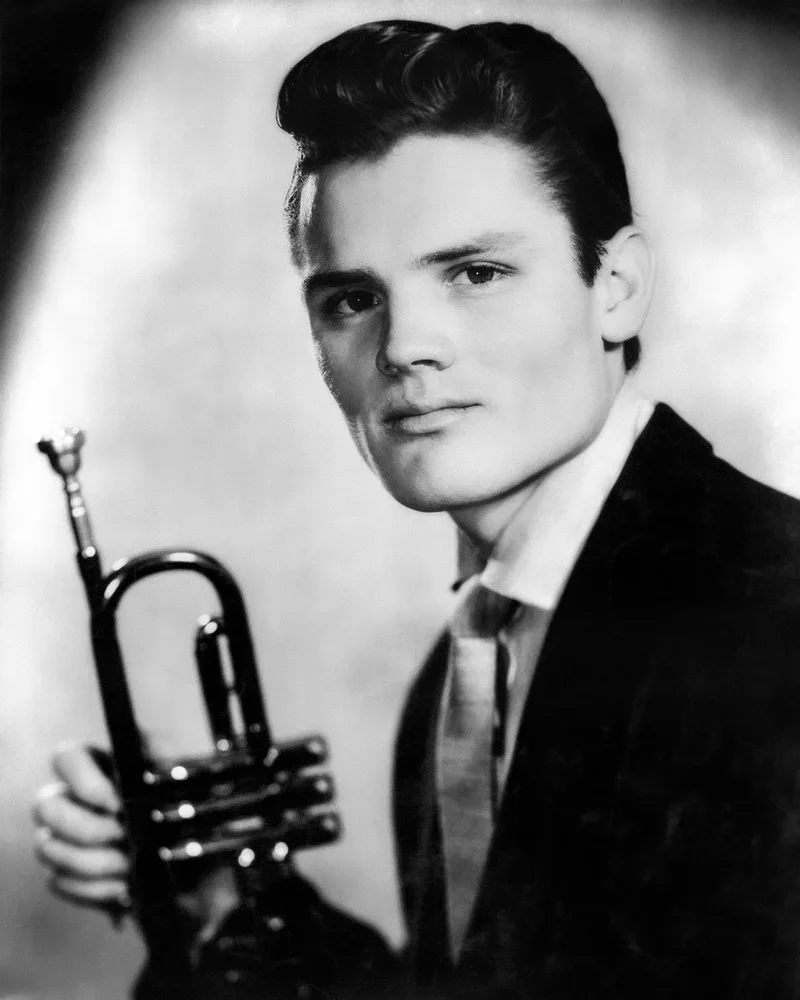
Chet Baker, publicity portrait, 1955, distributed by Joe Glaser's Associated Booking Corporation. Public domain — Wikimedia Commons — https://commons.wikimedia.org/wiki/File:Chet_Baker_(1955_portrait).jpg
.jpg)
Chesney Henry "Chet" Baker Jr. was born December 23, 1929, in Yale, Oklahoma, to Chesney Baker Sr., a professional Western swing guitarist, and Vera Moser, a pianist who worked in a perfume factory. The Great Depression pushed his father out of music and into regular work, and in 1940 the family relocated to Glendale, California. Baker sang in his church choir before taking up trombone at his father's suggestion; at thirteen, finding the trombone too large, he switched to trumpet and progressed quickly. He left Glendale High School at sixteen and joined the United States Army in 1946, landing in Berlin with the 298th Army Band, where he first encountered modern jazz through V-Discs of Dizzy Gillespie and Stan Kenton. After his 1948 discharge he studied briefly at El Camino College before re-enlisting and joining the Sixth Army Band at San Francisco's Presidio, gigging at clubs like Bop City and the Black Hawk. He left the Army for good in 1951.
Baker's break came almost immediately. He worked with Vido Musso and Stan Getz before Charlie Parker himself picked the young, largely self-taught trumpeter for a series of 1952 West Coast engagements. That same year Baker joined baritone saxophonist Gerry Mulligan's pianoless quartet, a group built on close, spontaneous counterpoint rather than the harmonic density of East Coast bebop. The pairing was an immediate sensation: Baker and Mulligan traded and anticipated each other's lines in a way no rhythm-section-less horn group had before, and Baker's solo on "My Funny Valentine" became a signature so enduring that a 1953 quartet recording of the tune was inducted into the Library of Congress's National Recording Registry in 2015. In 1954, Baker topped both the Metronome and DownBeat readers' polls for trumpet, ahead of Miles Davis and Clifford Brown, and was named the year's top jazz vocalist as well - a reflection of how fast his profile had grown beyond the Mulligan association, playing regularly at Los Angeles rooms like The Haig with his own group.
Pacific Jazz released Chet Baker Sings in 1954, over the doubts of producer Dick Bock, who wasn't sure a trumpet star should also be presented as a singer. The album's hushed, unschooled vocal delivery on standards like "But Not for Me" and "My Funny Valentine" turned out to be exactly what widened his audience past the jazz-only crowd. Between his boyish, William Claxton-photographed looks and his measured, unbothered stage presence, Baker became something close to a matinee idol - jazz historian Dave Gelly's line that he embodied "James Dean, Sinatra, and Bix, rolled into one" captures the moment. Hollywood noticed too: Baker made his film debut in Hell's Horizon (1955) but turned down a studio contract to stay on the road. In September 1955 he left for an eight-month European tour, recording for the Barclay label in Paris that October. A month in, pianist Dick Twardzik - the young player who'd brought composer Bob Zieff's tunes into Baker's book - died of a heroin overdose; Baker finished the tour with local replacements. The Paris sessions were later issued in the U.S. as Chet Baker in Europe.
Back in Los Angeles, Baker cut further Pacific Jazz sides, including Chet Baker & Crew and, with Art Pepper, Playboys (its cover, a near-parody of Playboy magazine's wordmark and pinup style, reportedly drew a legal threat from Hugh Hefner). He then moved to New York, reuniting briefly with Mulligan for December 1957 sessions issued as Reunion with Chet Baker, rejoining Stan Getz for Stan Meets Chet in 1958, and signing to Riverside for (Chet Baker Sings) It Could Happen to You, Chet Baker in New York, and 1959's instrumental Chet - the latter notable for pairing him with pianist Bill Evans, bassist Paul Chambers, and drummer Philly Joe Jones, all closely associated with Miles Davis's bands of the period. Baker later dated the start of his heroin use to 1957, though his biographer Jeroen de Valk and pianist Russ Freeman both place it earlier, in the early 1950s. Soon after the Riverside signing he was arrested twice, spending time at a Lexington, Kentucky treatment hospital and four months at Rikers Island on drug charges.
The addiction followed him to Europe. Recording in Italy in late 1959 and through 1960 (the "Milano sessions," with arranger Ezio Leoni), Baker drew tabloid attacks over his drug use and personal life, and in August 1960 was imprisoned in Lucca for importing narcotics and forging prescriptions - nearly a year and a half behind bars. Further arrests and deportations moved him through West Germany, Switzerland, France, and England before he was sent back to the United States. His first post-Italy release, 1962's Chet Is Back!, was recorded in Rome for RCA with a sextet of rising European players (Bobby Jaspar, René Thomas, Amedeo Tommasi) and, unusually, paired with orchestral pop sessions he cut around the same time with the young composer Ennio Morricone.
The 1960s wore Baker down. He recorded prolifically but unevenly - five albums for Prestige inside a single week in 1964, Baby Breeze for Limelight in 1965, and a run of Pacific releases he later dismissed as work done strictly to pay the rent for his wife and three children. In summer 1966, after a gig in Sausalito, he was beaten while reportedly attempting to buy drugs, sustaining cuts and several broken teeth; by the end of the decade he needed dentures, which effectively destroyed his embouchure. It took years of relearning to get his trumpet playing back, and from 1968 to 1973 he largely disappeared from public performance, living at his mother's San Jose home, on welfare, arrested at one point for forging heroin prescriptions and placed on a seven-year methadone order by a judge.
Baker's comeback began in 1973. Driving to New York to work his way back into straight-ahead jazz, he cut a 1974 live album with Lee Konitz and, that same year, the CTI session She Was Too Good to Me - his acknowledged comeback record, arranged by Don Sebesky with strings and a cast including Ron Carter, Hubert Laws, and Paul Desmond. In November 1974 he and Mulligan reunited one final time on record for a Carnegie Hall concert (released as a CTI double LP the following year) with a young guitarist named John Scofield in the band - the beginning of a working relationship Baker and Scofield would continue on 1977's You Can't Go Home Again, before Scofield's own career took off with Miles Davis and as a leader. Baker also cut Once Upon a Summertime in 1977. That November he toured Europe and, meeting renewed demand in France, Italy, Germany, and Denmark that the U.S. scene no longer offered him, chose to stay.
From 1977 until his death, Baker worked almost exclusively in Europe, returning to the States about once a year. The pace of his recording became extraordinary - by his biographers' count, eleven albums in 1979 alone and ten more in 1980 - for small European jazz labels including Circle, SteepleChase, and Enja. He gravitated toward a regular circle of European collaborators: guitarist Philip Catherine, bassist Niels-Henning Ørsted Pedersen, pianist Michel Graillier, and later pianist Paul Bley, with whom he recorded the 1985 duo album Diane. He increasingly preferred small, drummerless settings, put off by loud rooms and inattentive audiences. In 1983, Elvis Costello - a longtime admirer - brought him in to play the trumpet solo on "Shipbuilding," introducing Baker to a new, non-jazz audience; Baker began closing sets with Costello's "Almost Blue" in return. A 1985 trip to Rio de Janeiro's Free Jazz Festival led to a duet album with Brazilian pianist Rique Pantoja, and in 1986 he appeared alongside Costello and Van Morrison in the concert film Chet Baker: Live at Ronnie Scott's London, speaking candidly on camera about his addiction and his childhood. His 1987 quartet date with pianist Harold Danko, bassist Hein Van de Geyn, and drummer John Engels, released as Chet Baker in Tokyo, appeared eleven months before his death and was singled out by critic John Vinocur as one of the finest recordings of his late period.
In winter 1986, fashion photographer Bruce Weber met Baker at a New York club and proposed a short film; by the time shooting began in January 1987 it had grown into the feature-length documentary Let's Get Lost, which set Baker's youthful glamour against his ravaged later appearance and earned an Academy Award nomination. It was released in September 1988, four months after Baker didn't live to see it in theaters. Early on May 13, 1988, he was found dead on the street below his room at Amsterdam's Hotel Prins Hendrik, having fallen from a window with no sign of a struggle; heroin and cocaine were found in his system. Dutch police called it an accident, likely drug-related, though the ambiguity of the scene left the question open, and Baker's widow was among those who suspected he had been pushed. He is buried at Inglewood Park Cemetery in Inglewood, California, next to his father.
Baker's playing was the defining instrumental voice of West Coast cool: a light, vibrato-light tone, phrases built around melodic economy rather than harmonic density, and a preference for space and restraint over the volume and speed then dominating East Coast hard bop. He was largely self-taught and played by ear rather than by rigorous theory, which contributed to a sound critics described as intuitive and unguarded rather than virtuosic - closer to a singer's phrasing than a technician's. That carried directly into his vocal work: on Chet Baker Sings and after, he sang in a hushed, almost breathy near-whisper with none of the theatrical projection of contemporary jazz vocalists, an approach some critics found affecting and others found thin, but which became as recognizable as his horn. The 1966 beating and its damage to his embouchure forced a harder-won, more weathered tone in his later trumpet playing - still lyrical, but with an audibly different, more fragile edge that many listeners came to prize in its own right. In his final decade in Europe, Baker leaned increasingly toward small, often drummerless combinations built around close listening, working repeatedly with players like Philip Catherine and Paul Bley in settings that let his tone, rather than the rhythm section, set the terms of a performance.
- Gerry Mulligan Quartet: Original Sessions 1952-1953 (Pacific Jazz) - The pianoless-quartet recordings, including the celebrated "My Funny Valentine," that made Baker's reputation almost overnight. Spotify - Original Sessions... Listen
- Chet Baker Sings (1954/1956, Pacific Jazz) - His landmark vocal debut, the hushed, unschooled singing style that made him a crossover star. Spotify - Chet Baker Sings Listen · Buy
- Reunion with Chet Baker (Gerry Mulligan Quartet, rec. 1957, World Pacific) - His first New York session after leaving the West Coast, and the last time he and Mulligan recorded as a working quartet. Spotify - Reunion With Chet... Listen · Buy
- Chet (1959, Riverside) - An all-instrumental session with Bill Evans, Paul Chambers, and Philly Joe Jones; reissued as Chet: The Lyrical Trumpet of Chet Baker. Spotify - Chet: The Lyrical... Listen · Buy
- She Was Too Good to Me (1974, CTI) - The Don Sebesky-arranged session widely regarded as his comeback record after the lost years of the late 1960s. Spotify - She Was Too... Listen · Buy
- Diane (1985, SteepleChase) - A duo album with pianist Paul Bley, recorded in Copenhagen, representative of the intimate small-group work of his final European decade. Spotify - Diane Listen · Buy
- Chet Baker Sings and Plays from the Film "Let's Get Lost" (1989, Novus/RCA) - Recorded not long before his death and released posthumously alongside Bruce Weber's Oscar-nominated documentary. Spotify - Chet Baker Sings And... Listen · Buy
Chet Baker: Full Discography
Identity confirmed via the live Discogs API (artist ID 31617, real name Chesney Henry Baker Jr.). Baker's catalog is one of the most prolific and heavily bootlegged in jazz - the Discogs API alone returns over 3,100 credited releases once reissues, compilations, singles, and unofficial pressings are included. This table itemizes his major, well-documented studio and live leader albums (plus the Gerry Mulligan Quartet years, where he was billed as co-leader), verified individually against Discogs master/release data. It is not an exhaustive pressing-by-pressing listing of every reissue or territory variant.
Spotify links were checked by opening each page directly and cross-referencing the credited artist, album title, and track listing against the Discogs data below - the Spotify API used elsewhere in this project was hitting a quota wall during this research pass. Where a listing below plays under a reissue title rather than the original title, that is noted; where no reliably matching Spotify page could be confirmed, it is marked "Not confirmed" rather than guessed.
As Leader / Co-Leader
| Album Title | Recording Date(s) | Release Date | Label | Catalog Number | Format(s) | Personnel | Role | Reissue History | Spotify | Buy | Notes |
|---|---|---|---|---|---|---|---|---|---|---|---|
| Gerry Mulligan Quartet | April 27, 29 & 30, 1953, Radio Recorders, Hollywood | 1953-12 | Pacific Jazz | PJLP-5 | Vinyl, 10", LP, Album | Gerry Mulligan (baritone sax), Chet Baker (trumpet), Carson Smith (bass), Larry Bunker (drums); Richard Bock (producer) | Co-leader | Combined many times since with the separate Aug/Oct 1952 "Volume 1" session on CD compilations | Spotify - Original Sessions... (2008 compilation covering the 1952-53 sessions) | Discogs | The pianoless-quartet session that made Baker's reputation almost overnight; includes the quartet's celebrated "My Funny Valentine" |
| Chet Baker Sings | Feb 15, 1954 (Forum Theatre & Capitol Studios) + July 1956 additions | 1956 (12" reissue; original 10" LP was 1954) | Pacific Jazz / World Pacific | PJ-1222 | Vinyl, LP, Album, Reissue | Chet Baker (trumpet, vocals), Russ Freeman (piano), Carson Smith / Jimmy Bond (bass), Bob Neel / Lawrence Marable / Peter Littman (drums); Richard Bock (producer) | Leader | Blue Note Tone Poet vinyl series (2020s); numerous CD reissues since | Spotify - Chet Baker Sings (1998 Blue Note CD edition, 14 tracks) | Discogs | Debut vocal album; added to the Grammy Hall of Fame in 2001 |
| Chet Baker & Strings | Late 1953 / early 1954 | 1954-04-14 | Columbia | CL 549 | Vinyl, LP, Album | Chet Baker (trumpet), Russ Freeman (piano), Bud Shank (sax), Zoot Sims (tenor sax), Jack Montrose (tenor sax), Joe Mondragon (bass), Shelly Manne (drums), 9-piece string section (Eudice Shapiro, Felix Slatkin, et al.); Richard Bock (producer) | Leader | 1991 Sony CD reissue | Spotify - Chet Baker & Strings (marked "Originally Released 1954, 1991") | Discogs | Unusual for the period in being released on Columbia rather than Pacific Jazz |
| Chet Baker Sings and Plays | 1955 | 1955 | Pacific Jazz | EP4-33 | Vinyl, 7", 45 RPM, EP | Not itemized in Discogs extraartists for this release | Leader | Frequently paired with Chet Baker & Strings material on later CD reissues | Not confirmed | Discogs | Originally a 10" EP, distinct from the 1989 Let's Get Lost soundtrack that reuses this title |
| Chet Baker in Europe: A Jazz Tour of the NATO Countries | Oct 11 & 24, 1955, Paris | 1956 | Pacific Jazz | PJ-1218 | Vinyl, LP, Compilation, Mono | Chet Baker (trumpet), Dick Twardzik / Gérard Gustin (piano), Jimmy Bond (bass), Nils-Bertil Dahlander / Peter Littman (drums); Richard Bock (producer) | Leader | Reissued as "In Europe, 1955 (Live)" (2018, Chet Baker Estate LLC) | Spotify - In Europe, 1955... (reissue title) | Discogs | First American issue of the Paris/Barclay sessions; pianist Dick Twardzik died of a heroin overdose one month into this tour |
| Chet Baker & Crew | July 24, 25 & 31, 1956, Forum Theatre, Los Angeles | 1956 | Pacific Jazz | PJ-1224 | Vinyl, LP, Album, Mono | Chet Baker (trumpet), Phil Urso (tenor sax), Bobby Timmons (piano), Jimmy Bond (bass), Peter Littman (drums), Bill Loughborough (chromatic timpani); Richard Bock (producer) | Leader | Expanded CD Edition (2003) | Spotify - Chet Baker & Crew (2009 compilation edition) | Discogs | - |
| Playboys | Oct 31, 1956, Radio Recorders, Los Angeles | 1958 | World Pacific | PJ-1234 | Vinyl, LP, Album, Mono | Chet Baker (trumpet), Art Pepper (alto sax), Phil Urso (tenor sax), Carl Perkins (piano), Curtis Counce (bass), Lawrence Marable (drums); Richard Bock (producer) | Co-leader | Reissued in various "Complete Playboys Sessions" and Baker/Pepper compilations | Spotify - Playboys (artist/title match confirmed; exact pressing year not shown on page) | Discogs | Cover format echoed Playboy magazine's wordmark and pinup style closely enough to reportedly draw a threatened lawsuit from Hugh Hefner |
| Reunion with Chet Baker | Dec 3, 11 & 17, 1957, New York City | 1958 | World Pacific | STEREO-1241 | Vinyl, LP, Album | Gerry Mulligan (baritone sax), Chet Baker (trumpet), Henry Grimes (bass), Dave Bailey (drums) | Co-leader (billed Gerry Mulligan Quartet) | - | Spotify - Reunion With Chet... | Discogs | Baker's first New York session after relocating east; last time he and Mulligan recorded together as a working quartet |
| (Chet Baker Sings) It Could Happen to You | August 1958, New York City | 1958-11-03 | Riverside | RLP-12-278 | Vinyl, LP, Album, Mono | Chet Baker (trumpet, vocals), Kenny Drew (piano), Sam Jones / George Morrow (bass), "Philly" Joe Jones / Dannie Richmond (drums); Bill Grauer (producer) | Leader | Original Jazz Classics CD remaster (2010) added two previously unissued takes | Spotify - Chet Baker Sings... (1987 Fantasy/OJC reissue edition) | Discogs | Several tracks feature Baker scatting rather than soloing on trumpet |
| Chet Baker in New York | September 1958, New York City | 1958/1959 | Riverside | RLP 12-281 | Vinyl, LP, Album, Mono | Chet Baker (trumpet), Johnny Griffin (tenor sax), Al Haig (piano), Paul Chambers (bass), "Philly" Joe Jones (drums); Orrin Keepnews (producer) | Leader | - | Spotify - Chet Baker In New York (1988 Fantasy edition) | Discogs | All-instrumental; atypically hard-bop-adjacent NY personnel for Baker |
| Chet | Dec 30, 1958 & Jan 19, 1959, Reeves Sound Studios, New York City | 1959 | Riverside | RLP 12-299 | Vinyl, LP, Album, Mono | Chet Baker (trumpet), Bill Evans (piano), Herbie Mann (flute), Pepper Adams (baritone sax), Kenny Burrell (guitar), Paul Chambers (bass), "Philly" Joe Jones / Connie Kay (drums); Orrin Keepnews (producer) | Leader | Reissued as "Chet: The Lyrical Trumpet of Chet Baker (feat. Bill Evans)" (2010, Jazz Plaza Music) | Spotify - Chet: The Lyrical... (reissue title; tracklist confirmed as matching, incl. "Alone Together" and "It Never Entered My Mind") | Discogs | All-instrumental; his last Riverside studio album before returning to Europe |
| Chet Is Back! | Jan 5, 1962, RCA Italiana Studios, Rome | 1962-03 | RCA Victor | PML-10307 | Vinyl, LP, Album, Mono | Chet Baker (trumpet), Bobby Jaspar (tenor sax, flute), René Thomas (guitar), Amedeo Tommasi (piano), Benoit Quersin (bass), Daniel Humair (drums) | Leader (Chet Baker Sextet) | 2003 CD reissue adds four orchestral-pop bonus tracks Baker recorded around the same time with Ennio Morricone | Spotify - Chet Is Back! (2015 Revolver Records reissue) | Discogs | First release after his roughly year-and-a-half imprisonment in Lucca, Italy on narcotics charges |
| Baby Breeze | Jan 20 & Nov 14, 1964, A&R Studios, New York City | 1965-02 | Limelight | LM 82003 | Vinyl, LP, Album, Mono | Chet Baker (flugelhorn, vocals), Frank Strozier (alto sax, flute), Phil Urso (tenor sax), Bob James / Bobby Scott / Hal Galper (piano), Kenny Burrell (guitar), Michael Fleming (bass), Charlie Rice (drums); Bobby Scott (producer), Phil Ramone (engineer) | Leader | 1999 Verve CD reissue | Spotify - Baby Breeze (1999 Verve edition) | Discogs | Baker plays flugelhorn throughout, predating his 1966 embouchure injury by two years |
| She Was Too Good to Me | July, Oct & Nov 1974 | 1974 | CTI Records | CTI 6050 S1 | Vinyl, LP, Album, Stereo | Chet Baker (trumpet, vocals), Paul Desmond (alto sax), Hubert Laws (flute), Bob James (electric piano), Ron Carter (bass), Jack DeJohnette / Steve Gadd (drums), David Friedman (vibraphone); Don Sebesky (arranger, conductor), Creed Taylor (producer), Rudy Van Gelder (engineer) | Leader | CTI Records 40th Anniversary Edition | Spotify - She Was Too Good... | Discogs | Widely cited as Baker's comeback album after the "lost years" of the late 1960s and early 1970s |
| Carnegie Hall Concert | Nov 24, 1974, Carnegie Hall, New York | 1975 | CTI Records | 500 127/28 S | Vinyl, 2×LP, Album | Gerry Mulligan (baritone sax), Chet Baker (trumpet), Bob James (piano, electric piano), John Scofield (guitar), Ron Carter (bass), Harvey Mason (drums), Dave Samuels (vibraphone, percussion), Ed Byrne (trombone) | Co-leader | - | Spotify - Carnegie Hall Concert | Discogs | Final Baker/Mulligan reunion; features a young John Scofield on guitar, early in Scofield's own career |
| Once Upon a Summertime | Feb 20, 1977, Sound Ideas Studios, New York | 1978 (Discogs; some later sources cite 1980) | Artists House | GP-3175 | Vinyl, LP, Album, Stereo | Chet Baker (trumpet), Harold Danko (piano), Gregory Herbert (tenor sax), Ron Carter (bass), Mel Lewis (drums) | Leader | - | Spotify - Once Upon A Summertime | Discogs | - |
| You Can't Go Home Again | Feb 16, 21, 22 & May 13, 1977, Sound Ideas Studios, New York | 1977 | A&M Records / Horizon | SP 726 | Vinyl, LP, Album | Chet Baker (trumpet), Michael Brecker (tenor sax), Paul Desmond (alto sax), John Scofield (guitar), Hubert Laws (flute), Ron Carter / Alphonso Johnson (bass), Anthony (Tony) Williams (drums); Don Sebesky (arranger, conductor, producer) | Leader | 2000 double-CD reissue adds tracks from The Best Thing for You (1989) plus alternates | Spotify - You Can't Go Home Again (2000 expanded reissue) | Discogs | Features John Scofield on guitar; AllMusic calls it "one of Baker's most important latter-day albums" |
| Peace | Feb 23, 1982, Vanguard Studios, New York | 1982 | Enja Records | enja 4016 | Vinyl, LP, Album | Chet Baker (trumpet), David Friedman (vibraphone, marimba), Buster Williams (bass), Joe Chambers (drums) | Co-leader | - | Spotify - Baker, Chet: Peace | Discogs | - |
| Diane | Feb 27, 1985, Sound Track Studios, Copenhagen | 1985 | SteepleChase | SCS 1207 | Vinyl, LP, Album, Stereo | Chet Baker (trumpet, vocals), Paul Bley (piano) | Co-leader (duo) | - | Spotify - Diane (page shows 1986 copyright) | Discogs | Digital recording; duo format typical of Baker's late-period preference for small, drummerless settings |
| Chet Baker Sings and Plays from the Film "Let's Get Lost" | 1988 (per session/recording credits) | 1989 | Novus / RCA / BMG | 3054-2-N | CD, Album | Chet Baker (trumpet, vocals), Nicola Stilo (guitar, flute), Frank Strazzeri (piano), John Leftwich (bass), Ralph Penland (drums, percussion); Bruce Weber (executive producer, photography) | Leader | - | Spotify - Chet Baker Sings And... | Discogs | Recorded not long before his death; released posthumously to accompany Bruce Weber's Academy Award-nominated documentary Let's Get Lost |
Related film/documentary release (not a studio album - excluded from the table above)
- Let's Get Lost (1988, Columbia, VHS COVM-5300) - the Bruce Weber documentary film itself, distinct from the 1989 Novus/RCA soundtrack album listed above. Confirmed via Discogs as a VHS video release, not an audio album.
Notes on scope
Given the scale of Baker's discography (3,100+ Discogs entries), this table deliberately excludes: the many individual-territory reissues and pressing variants of the albums above; standalone singles and EPs beyond Chet Baker Sings and Plays; the large number of live European recordings from 1977-88 released on small labels (SteepleChase, Circle, Timeless, Sandra, West Wind, and others) during his most prolific recording years, when he is documented as having made roughly ten albums a year; and sideman/guest credits on other artists' records. Readers looking for a complete pressing-level listing should consult the Discogs artist page directly.
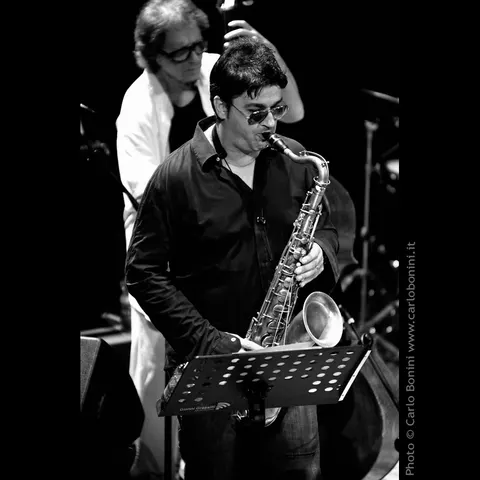
Maurizio Giammarco (tenor saxophone) - co-billed together on Soft Journey (1980, "Chet Baker Meets Enrico Pieranunzi"), Discogs-confirmed.
Gerry Mulligan - co-leader of the pianoless quartet that launched Baker's career in 1952, and his partner on 1957's Reunion with Chet Baker and the 1974 Carnegie Hall reunion.
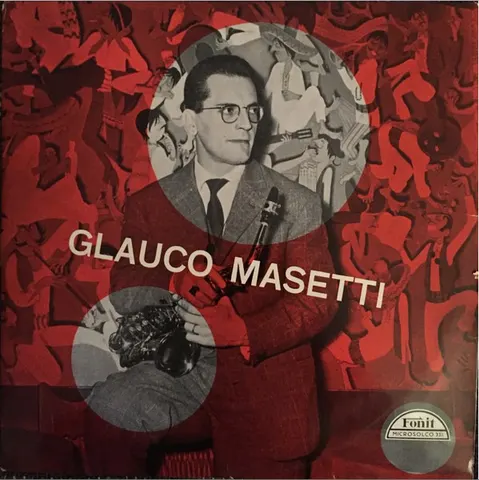
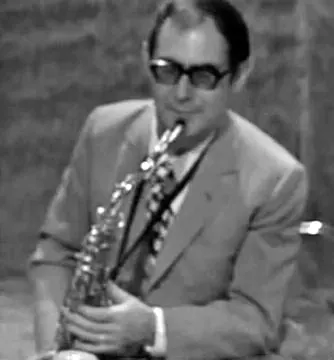
Glauco Masetti (alto saxophone) - alto saxophonist on Chet Baker in Milan (Jazzland; recorded in Milan on September 25 and 26 and October 6, 1959, on every track but the last two, per Wikipedia) and on Chet Baker with Fifty Italian Strings (Milan, September 28 and 29 and October 5, 1959), on the RAI broadcast from Turin's Teatro Alfieri on November 8, 1959 (tracks 5 to 7 of Live In Bologna 1962) and on the 1964 Rome session issued as Stella by Starlight; Discogs credits him on reissues and compilations of the Milan sessions from 1960 through 2022. Profiled on JazzProfiles.com
Richard "Dick" Twardzik - pianist in Baker's 1955 European touring quartet; died of a heroin overdose one month into the tour.
Bill Evans - piano on 1959's Chet (Riverside), alongside Paul Chambers and Philly Joe Jones.
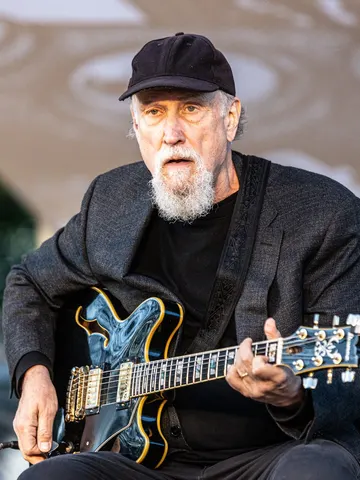
John Scofield - guitarist on the 1974 Carnegie Hall Concert with Gerry Mulligan and on 1977's You Can't Go Home Again, early in Scofield's own career; profiled separately on JazzProfiles.com.
Elvis Costello - hired Baker for the trumpet solo on "Shipbuilding" (1983); Baker later performed Costello's "Almost Blue" regularly in concert.
Paul Bley - piano on the 1985 duo album Diane, part of Baker's late-period preference for small, drummerless settings.
Philip Catherine, Niels-Henning Ørsted Pedersen, Michel Graillier - core circle of European collaborators through the prolific 1977-1988 period.
Bruce Weber - director of the 1988 documentary Let's Get Lost, which followed Baker through the final years of his life and career.
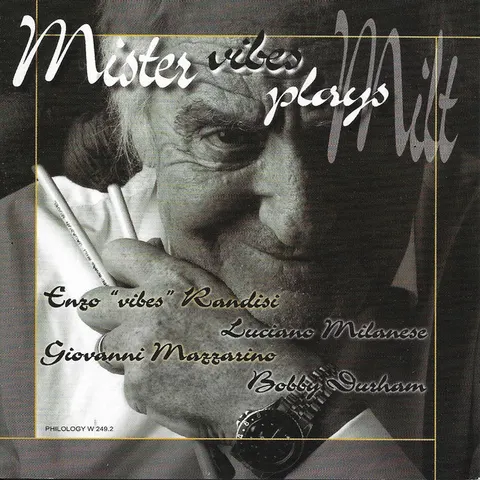
Enzo Randisi - Palermo vibraphonist who played piano in Baker's quartet, with bassist Giovanni Tommaso and drummer Gianni Cavallaro, at the Brass Club in Palermo on January 16, 1976; released as I Can't Get Started: Live in Palermo 1976 (Gambit, 2011) and Blue 'N' Boogie (Survival Research, 2022).
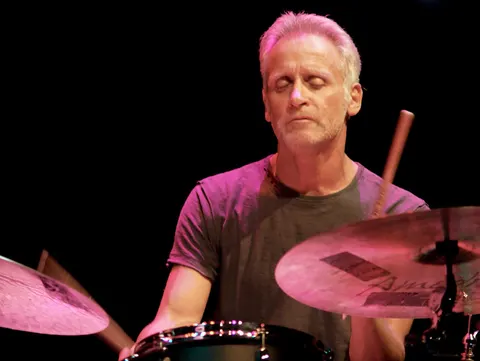
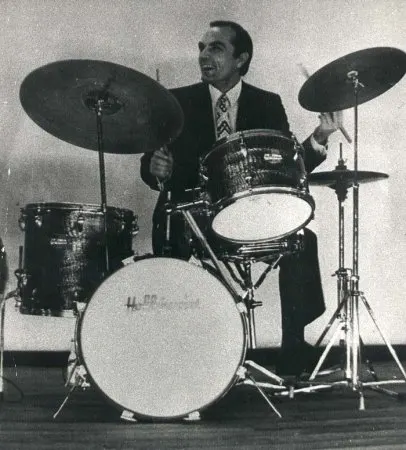
Fabrizio Sferra (drums) - drummer on Little Girl Blue (1988, Philology), on which Baker is billed with the Space Jazz Trio of Enrico Pieranunzi and Enzo Pietropaoli; Discogs-confirmed. Profiled on JazzProfiles.com.
Franco Manzecchi (drums) - Italian drummer in Baker's 1964 Belgian quintet (May 2, 1964, Brussels, with Jacques Pelzer, René Urtreger and Luigi Trussardi, issued as Brussels 1964 and on the DVD Live in '64 & '79) and on three Baker tracks recorded at Pescara, Italy, on July 13, 1975 (The Fabulous Pescara Jam Sessions (1970-1975)); Discogs-credited. Profiled on JazzProfiles.com.
Giampaolo Ascolese - drummer on Symphonically (Soul Note, 1986), Mike Melillo's project with the Orchestra Filarmonica Marchigiana, recorded July 8, 1985, at the Arena Gigli, Porto Recanati, with Massimo Moriconi on bass; Discogs-confirmed.
Giancarlo Barigozzi (recording engineer) - credited as recording engineer on Symphonically (Soul Note SN 1134, 1986), per Discogs.
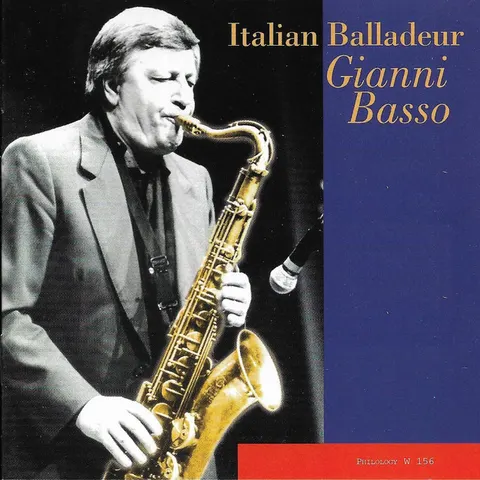
Gianni Basso (tenor saxophone) - tenor saxophonist on Baker's Sextet & Quartet (Music, LPM 2094), recorded in Milan on September 25, 26 and October 6, 1959, per Discogs; profiled separately on this site.
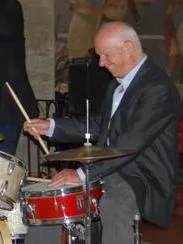
Gianni Cazzola (drums) - Discogs credits him on drums on the 1964 Rome session issued in 1989 as Stella by Starlight (West Wind), with Franco Cerri on bass, Glauco Masetti on alto saxophone and René Thomas on guitar; profiled separately on this site.
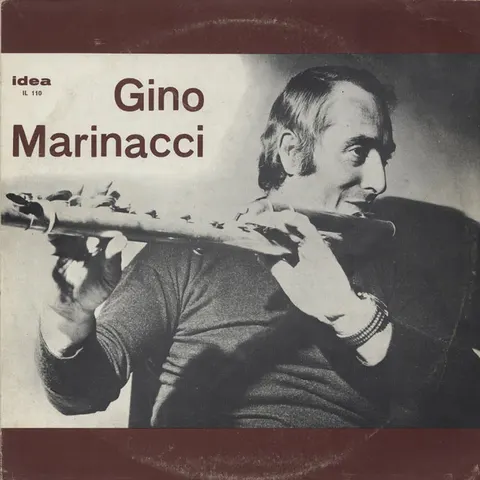
Gino Marinacci (baritone saxophone) - baritone saxophonist on the five Baker tracks of Italian Movies (Liuto, 1990; Piero Umiliani's Rome film-score octet) and on "Lyda" (Rome, 1959) in Musica Jazz's Jazz & Noir, where Baker is itemized on trumpet, per Discogs at the track-credit level; profiled separately on this site.
Livio Cerveglieri (tenor saxophone) - Roman studio saxophonist on the same October 1959 Rome session, Piero Umiliani's film score Audace Colpo Dei Soliti Ignoti, and on the same named tracks of Italian Movies (1990); Discogs-confirmed. Profiled on JazzProfiles.com.
Luca Flores (piano) - the credited pianist, alongside Furio Di Castri (bass) and Nicola Stilo (flute), on Baker's live album A Night at the Shalimar Club (Philology, 1991, recorded Senigallia, May 23, 1987); Discogs-confirmed. Profiled on JazzProfiles.com.
Lucio Terzano (bass) - bassist in the Chet Baker Sextet on The Incredible Chet Baker Plays and Sings (1977, recorded in Milan), and on two further Baker releases (Stella by Starlight, 1992; Isn't It Romantic?, 1993); Discogs-confirmed.
Mario Pezzotta (trombone) - trombonist on Chet Baker with Fifty Italian Strings, recorded in Milan on September 28 and 29 and October 5, 1959; Discogs credits him on trombone on tracks 5 to 14 of The Complete Chet Baker 1959 Milano Sessions (1994) and its later reissues. Profiled on JazzProfiles.com
More Cool Jazz Artists
See all 63 Cool Jazz artists →More American Jazz Artists
See all 567 American artists →- Wikipedia: Chet Baker
- Wikipedia: Chet Baker discography
- Britannica: Chet Baker
- Discogs: Chet Baker (artist ID 31617)
- uDiscover Music: Chet Baker - The Life and Legacy of 'The James Dean of Jazz'
- Grunge: The Tragic 1988 Death of Chet Baker
- Far Out Magazine: How Chet Baker defied the odds to become a jazz great