 JAZZPROFILES lives in the music 1,572 Jazz Artists fully Profiled!
 Frank Wess
Last updated September 8, 2026
Listen on Spotify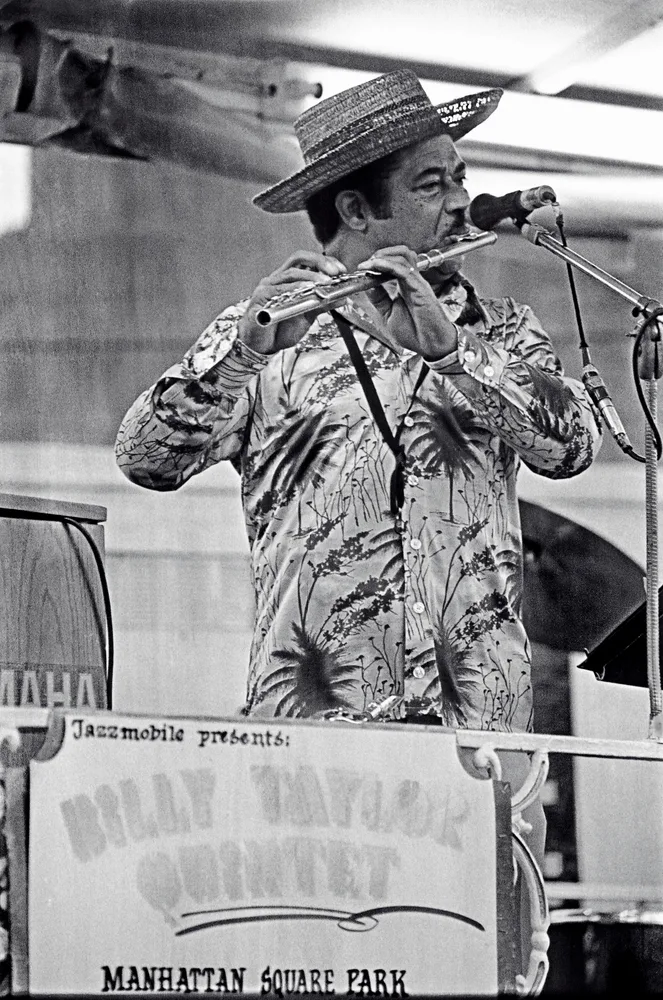
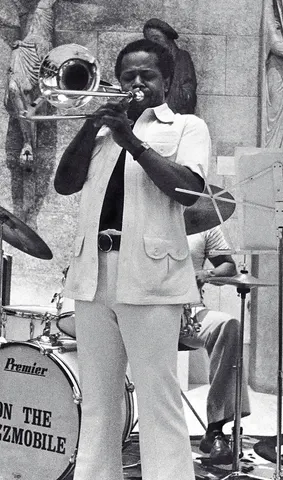
Frank Wess performing with Jazzmobile, 1977, photographed by Tom Marcello in upstate New York CC BY-SA 2.0 (Creative Commons Attribution-ShareAlike 2.0 Generic; attribution: Tom Marcello, Webster, New York) — Wikimedia Commons - https://commons.wikimedia.org/wiki/File:Frank_Wess.jpg (originally https://www.flickr.com/photos/tommarcello/480923945/)

Frank Wellington Wess was born January 4, 1922 in Kansas City, Missouri, to two schoolteachers. The family moved to Sapulpa, Oklahoma in 1932, where he took up alto saxophone at ten and played in his father's amateur band, and settled in Washington, D.C. in 1935 when he was thirteen. He went to Dunbar High School, graduating in 1937, and studied theory and composition there with Henry Grant, the same teacher who had coached the young Duke Ellington. He enrolled at Howard University intending to study dentistry, switched to the music conservatory, and stayed a year. Hearing Lester Young pushed him from alto to tenor, and he worked his way through Washington's dance bands and the Howard Theatre house band, then went on the road with vocalist Blanche Calloway.
Wess was in the U.S. Army from 1941 to 1945, serving as assistant bandleader and clarinet soloist. His unit was posted to North Africa, playing Dakar, Casablanca, Monrovia, Tlemcen and Algiers, and he led a 17-piece band that backed Josephine Baker on concert tours for Allied troops. After the war he joined Billy Eckstine's orchestra on tenor, the band that had introduced bebop to the big-band format and that at various points carried Miles Davis, Fats Navarro, Dexter Gordon and Art Blakey. The Eckstine band folded in 1947. Short stints with Eddie Heywood, Lucky Millinder and Bull Moose Jackson followed, and by 1949 Wess had had enough of one-nighters and Jim Crow touring. He went home to Washington and enrolled at the Modern School of Music as a flute major, taking a Bachelor of Music degree in 1953. That degree, not the saxophone, is what reshaped his career.
Count Basie had been trying to hire him for years on Eckstine's recommendation, and in 1953 Wess finally accepted. He stayed eleven years, until 1964, and became one of the architects of the so-called "New Testament" band: he personally brought in Thad Jones, Bill Hughes, Eddie Jones, Al Aarons and Eric Dixon, and he wrote for the book, including "Segue in C," "Blue on Blue" and "Swingin' at the Waldorf." His arrival also created the front line the band was sold on: the two-tenor pairing with Frank Foster that Basie billed as the Two Franks, Wess the rounder and more lyrical of the pair, Foster the harder driver. When Eddie "Lockjaw" Davis joined the reed section in 1957, Wess moved over to alto, and he went on doubling all three horns for the rest of his tenure. "Segue in C" is his composition and his flute feature on First Time! The Count Meets the Duke, the one studio meeting of the Basie and Ellington orchestras, cut July 6, 1961 and issued by Columbia in 1962.
The flute is why he matters most. Jazz flute before Wess was largely a doubler's novelty, a color a saxophonist reached for on a ballad. Wess treated it as a primary horn, soloed on it night after night in front of the loudest band in the country, and made it carry through a full brass section. Neal Hefti wrote for that sound directly: "Cute," from 1958's Basie Plays Hefti, is a flute-and-brushes feature that became one of the band's most requested numbers. Away from Basie he recorded flute-led dates for Savoy, including the all-flute Opus in Swing (1956), and he made three albums with harpist Dorothy Ashby between 1957 and 1958 that are among the odder and more durable small-group records of the decade. From 1959 through 1964 he won the DownBeat critics' poll on flute six years running.
Leaving Basie in 1964, Wess settled into a New York freelance life that lasted almost fifty years. He played Broadway pits (Golden Boy, Chicago, Annie, Sugar Babies), worked as a staff musician for ABC Television, and sat in the bands for The David Frost Show from 1969 to 1972, The Dick Cavett Show and Saturday Night Live, all while cutting jingles and records. He was in Clark Terry's Big Bad Band from 1967 to 1970, held the first tenor chair in the Carnegie Hall Jazz Band for ten years, and turned up in the Toshiko Akiyoshi Jazz Orchestra alongside Lew Tabackin, in Philly Joe Jones's Tadd Dameron repertory band Dameronia, in the Dizzy Gillespie All-Star Big Band, in the Lincoln Center Jazz Orchestra and in Jaco Pastorius's Word of Mouth Big Band. His sideman list between 1964 and 2011 runs to roughly 150 different leaders and ensembles. From the mid-1970s he co-led the New York Jazz Quartet with pianist Roland Hanna, a co-op group that recorded six albums for Salvation, Enja, Sonet and Bee Hive with Ron Carter and later George Mraz on bass.
He kept making leader records into his nineties. The 1980s brought two reunions with Frank Foster, Two for the Blues (Pablo, 1984) and Frankly Speaking (Concord, 1985); the turn of the 1990s brought two Basie-alumni big bands under his own name, Dear Mr. Basie (1990, co-fronted with trumpeter Harry "Sweets" Edison) and Entre Nous (1991). He recorded two albums with Hank Jones, Hank and Frank (2006) and Hank & Frank II (2009), and led a nonet on Once Is Not Enough (2009). The National Endowment for the Arts named him a Jazz Master in 2007. At 89 he cut the sessions that became Magic 101 and Magic 201 with pianist Kenny Barron, bassist Kenny Davis and drummer Winard Harper, both issued in 2013. His last public concert was in April 2013 at 54 Below in New York. Frank Wess passed away on October 30, 2013, at 91.
Wess built his tenor sound on Lester Young: light-footed, behind the beat, more interested in a shapely line than in volume, which is exactly what made him the foil rather than the mirror of Frank Foster in Basie's two-tenor set pieces. His alto, which he played from 1957 on, was drier and more clipped. But the flute is the instrument that changed because of him. He refused to treat it as a doubler's toy, gave it a broad centered tone with almost no vibrato, and phrased on it like a saxophonist rather than a classical player, which is what let it survive inside a shouting big band instead of being confined to ballad features. The New Grove Dictionary of Jazz credits him with establishing the flute as a legitimate jazz instrument, and the six consecutive DownBeat critics' poll wins from 1959 to 1964 show how fast the profession agreed. Herbie Mann, Yusef Lateef and Eric Dolphy took the instrument in other directions, but Wess got there first inside the mainstream, and every big-band reed player asked to pick up a flute since is working in a space he opened.
- Opus in Swing (1956, Savoy) - An all-flute date cut at Van Gelder's Hackensack studio with Kenny Burrell on solo guitar, Freddie Green on rhythm guitar, Eddie Jones and Kenny Clarke: the clearest early statement of what Wess thought the flute could do in a jazz rhythm section. Spotify - Opus in Swing Listen
- North, South, East.....Wess (1956, Savoy) - The Two Franks off the Basie clock, recorded March 5 and 7, 1956 with Frank Foster, Henry Coker and Benny Powell on trombones and Kenny Burrell on guitar. Spotify - North, South, East…Wess Listen
- Wheelin' & Dealin' (rec. 1957, rel. 1958, Prestige) - A three-tenor Prestige All Stars blowing date with John Coltrane and Paul Quinichette, Mal Waldron, Doug Watkins and Art Taylor; Wess is the one who also plays flute on it. Spotify - Wheelin' & Dealin' Listen
- The Frank Wess Quartet (1960, Moodsville) - Recorded May 9, 1960 with Tommy Flanagan, Eddie Jones and Bobby Donaldson, a ballad program that shows how much weight his flute could carry with no horn section behind it. Spotify - Moodsville Volume 8: But Beautiful Listen
- Basie Plays Hefti (1958, Roulette) - As sideman: the Count Basie Orchestra album carrying "Cute," Neal Hefti's flute-and-brushes feature written for Wess and the single most-heard piece of jazz flute of its era. Spotify - Basie Plays Hefti
- Count Basie and the Kansas City 7 (1962, Impulse!) - As sideman: Basie's small-group record, cut March 21 and 22, 1962 with Wess on flute, Eric Dixon on tenor and flute, Frank Foster on tenor and Thad Jones on trumpet. Spotify - Count Basie and the Kansas City 7
- Two for the Blues (rec. 1983, rel. 1984, Pablo) - The Two Franks reunited twenty years after Basie, with Kenny Barron, Rufus Reid and Marvin "Smitty" Smith, closing on Wess's own "Bay Street." Spotify - Two for the Blues Listen
- Magic 101 (rec. 2011, rel. 2013, IPO) - A tenor-and-rhythm ballad album made at 89 with Kenny Barron, Kenny Davis and Winard Harper, issued the year he died. Spotify - Magic 101 Listen
Frank Wess: Full Discography
Identity confirmed via the live Discogs API. Frank Wess is artist ID 10096 (realname "Frank Wellington Wess", born January 4, 1922 in Kansas City, Missouri, died October 30, 2013 in Manhattan). Discogs credits him on 1,144 releases under that ID (85 in a "Main"/leader role, 972 sideman "Appearance" credits, 60 track-level appearances, 26 unofficial pressings and 1 production credit), plus a further 35 under the separate group entities The Frank Wess Quartet (1930393), The Frank Wess Quintet (2984263), The Frank Wess Sextet (3437934), The Frank Wess Orchestra (2072750), The Frank Wess Septet (4425070), The Frank Wess - Harry Edison Orchestra (2118125), Frank Wess Nonet (11535569), Frank Wess Johnny Coles Quintet (16693714) and Frank Foster + Frank Wess (6495432), and the co-op catalog under New York Jazz Quartet (862747).
That is far too large to itemize, so this file is curated rather than exhaustive.
Selection criterion for the leader table: every album that is (a) a first-issue leader or co-leader release billed to Wess, to one of his own group entities, or to the New York Jazz Quartet co-op he anchored, and (b) not a reissue, retitling, anthology, box set, single or EP extract. Two exceptions are kept and flagged in the Notes column because sources routinely list them as leader albums: The Award Winner, which is a 1964 compilation of 1954 material rather than a new session, and Opus de Blues, recorded in 1959 but first pressed in 1984. That yields 39 entries. Every row's label, catalog number, format, recording date and personnel was read off the specific Discogs release record, not the artist index, and every conflict with Wikipedia's dating is named in the Notes column.
Selection criterion for the sideman table: a representative set drawn from roughly 970 sideman credits, weighted toward (1) the Count Basie Orchestra years 1953-1964, which alone account for well over a hundred entries, (2) the leaders he recorded with repeatedly (Sarah Vaughan, Thad Jones, Milt Jackson, Dorothy Ashby, Joe Newman, Quincy Jones, Ray Charles, Elvin Jones), and (3) the historically notable one-off dates. It is not exhaustive and is not meant to be.
As Leader / Co-Leader
| Album Title | Recording Date(s) | Release Date | Label | Catalog Number | Format(s) | Personnel | Role | Reissue History | Spotify | Buy | Notes |
|---|---|---|---|---|---|---|---|---|---|---|---|
| The Frank Wess Quintet | Recorded May 8, 1954 | 1954 | Commodore | FL 20,031 | Vinyl, 10" LP | Frank Wess (tenor sax, flute), Henry Coker and Benny Powell (trombone), Jimmy Jones (piano), Oscar Pettiford (bass), Osie Johnson (drums) | Leader | Material folded into The Award Winner (Mainstream, 1964) and Wess Point: The Commodore Recordings (Fresh Sound, 2007) | Not found on Spotify | — | His first date as a leader. Not listed in Wikipedia's leader discography at all |
| The Frank Wess Sextet | Recorded August 12, 1954 | 1954 | Commodore | FL 20,032 | Vinyl, 10" LP, Album | Frank Wess (tenor sax, flute), Henry Coker and Urbie Green (trombone), Joe Wilder (trumpet), Jimmy Jones (piano), Oscar Pettiford (bass), Osie Johnson (drums); liner notes and cover photo by Leonard Feather | Leader | Same as above | Not found on Spotify | — | Second Commodore date, three months after the first. Also missing from Wikipedia's list |
| Flutes & Reeds | Recorded Van Gelder Studio, Hackensack, NJ, August 2, 1955 | 1955 | Savoy Records | MG 12022 | Vinyl, LP, Album, Mono | Frank Wess and Jerome Richardson (tenor sax, flute), Ernie Wilkins (alto sax), Hank Jones (piano), Eddie Jones (bass), Kenny Clarke (drums); engineered by Rudy Van Gelder | Co-leader (billed with Wilkins and Richardson) | Included in the 2019 Enlightenment 4xCD Savoy and Prestige Collection | Not found on Spotify | — | Wikipedia calls this a Wess leader date "with Ernie Wilkins"; the pressing bills all six players. Recording date is not printed on the sleeve and comes from the Discogs release notes |
| Opus de Jazz | Recorded 1955 | 1955 | Savoy Records | MG 12036 | Vinyl, LP, Album, Mono | Milt Jackson (vibraphone), Frank Wess (flute), Hank Jones (piano), Eddie Jones (bass), Kenny Clarke (drums); recorded by Rudy Van Gelder, supervised by Ozzie Cadena | Co-leader (billed to Jackson with Wess) | Repackaged repeatedly by Savoy Jazz; a 7" excerpt was issued as Savoy 45-4500 | Not found on Spotify as a standalone Wess release | — | Discogs indexes Wess as a "Main" artist. The LP's cover reads "Milt Jackson, Frank Wess, Kenny Clarke, Hank Jones, Eddie Jones" |
| North, South, East.....Wess | Recorded Van Gelder Studio, Hackensack, NJ, March 5 and 7, 1956 | 1956 | Savoy Records | MG 12072 | Vinyl, LP, Album, Mono | Frank Wess (tenor sax, flute), Frank Foster (tenor sax), Henry Coker and Benny Powell (trombone), Kenny Burrell (guitar), Eddie Jones (bass), Kenny Clarke (drums); supervised by Ozzie Cadena, recorded by Rudy Van Gelder | Leader | 2012 Fresh Sound 2xCD twofer with Foster's No 'Count; 2018 HD remaster | Spotify - North, South, East…Wess | — | Recording dates verified from other pressings; not printed on the first US pressing |
| Trombones | Not stated on the release | 1956 | Savoy Records | MG 12086 | Vinyl, LP, Album, Mono | Frank Wess (flute only), Henry Coker, Bill Hughes, Jimmy Cleveland and Benny Powell (trombone), Ronnell Bright (piano), Freddie Green (guitar), Eddie Jones (bass), Kenny Clarke (drums); arranged by Frank Foster, produced by Ozzie Cadena | Leader | Later CD issues title it Trombones and Flute | Spotify - Trombones & Flute / Opus De Blues / Yo Ho!, Poor You, Little Me (3-album set) | — | Wess plays flute exclusively against a four-trombone choir. Absent from Wikipedia's leader list. Spotify has it only inside a three-album package |
| Opus in Swing | Not stated on the release | 1956 | Savoy Records | MG 12085 (sleeve) / MG-12085 (label) | Vinyl, LP, Mono | Frank Wess (flute), Kenny Burrell (solo guitar), Freddie Green (rhythm guitar), Eddie Jones (bass), Kenny Clarke (drums); produced by Ozzie Cadena, engineered by Rudy Van Gelder | Leader | 2000 and 2001 Savoy Jazz CDs; 2014 remaster; in the 2014 Avid Four Classic Albums 2xCD | Spotify - Opus in Swing | — | All-flute session. Two tracks were also lifted onto the 45 Savoy 8651689 |
| Jazz for Playboys | Recorded New York City, December 26, 1956 (three tracks) and January 5, 1957 (three tracks) | 1957 | Savoy Records | MG 12095 | Vinyl, LP, Album, Mono | Frank Wess (tenor sax, flute), Joe Newman (trumpet), Kenny Burrell (solo guitar), Freddie Green (rhythm guitar), Eddie Jones (bass), Ed Thigpen and Gus Johnson (drums) | Leader | 2000 Savoy Jazz CD | Spotify - Jazz for Playboys | — | Two drummers split the date across the two sessions. A separate Kenny Burrell-billed edition of the same music exists on Spotify with 7 tracks |
| Wheelin' & Dealin' | Recorded September 20, 1957 | April 1958 | Prestige | PRLP 7131 | Vinyl, LP, Album, Mono | Frank Wess (tenor sax, flute), John Coltrane and Paul Quinichette (tenor sax), Mal Waldron (piano), Doug Watkins (bass), Art Taylor (drums); supervised by Bob Weinstock, recorded by Rudy Van Gelder, liner notes by Ira Gitler | Leader (Prestige All Stars billing) | Reissued under Coltrane's name as an Expanded Edition (6 tracks); 2000 Prestige CD; in the 2014 Avid Four Classic Albums | Spotify - Wheelin' & Dealin' | — | Wikipedia files this as a Wess leader date "with John Coltrane," which matches the first pressing's billing |
| Opus de Blues | Recorded Van Gelder Studio, Englewood Cliffs, NJ, December 8, 1959 | 1984 | Savoy Records / Savoy Jazz | MG-12142 (assigned) / K18P 9347 (1984 Japan LP) | Vinyl, LP, Album | Frank Wess (tenor sax, alto sax, flute), Thad Jones (trumpet), Curtis Fuller (trombone), Charlie Fowlkes (baritone sax), Hank Jones (piano), Eddie Jones (bass), Gus Johnson (drums); engineered by Rudy Van Gelder | Leader (Frank Wess Septet) | Issued the same year in the US as I Hear Ya Talkin' (Savoy Jazz SJL 1136); 1993 Japan LP; 2012 Fresh Sound CD paired with a Thad Jones septet date | Spotify - Opus de Blues | — | Recorded in 1959, shelved, first pressed in 1984. The Spotify edition carries 9 tracks against the LP's 5, so it is an expanded program, not a straight transfer |
| The Frank Wess Quartet | Recorded Van Gelder Studio, Englewood Cliffs, NJ, May 9, 1960 | 1960 | Moodsville | MVLP 8 | Vinyl, LP, Album, Mono | Frank Wess (flute, tenor sax), Tommy Flanagan (piano), Eddie Jones (bass), Bobby Donaldson (drums); recorded by Rudy Van Gelder | Leader (Frank Wess Quartet) | 2014 digital reissue | Spotify - Moodsville Volume 8: But Beautiful | — | Spotify retitles it Moodsville Volume 8: But Beautiful; the 7-track program matches the LP exactly |
| Southern Comfort | Recorded March 22, 1962 | 1962 | Prestige | PRLP 7231 | Vinyl, LP, Album, Mono | Frank Wess (tenor sax, flute, alto flute), Oliver Nelson (tenor sax, arrangements), Al Aarons (trumpet), George Barrow (baritone sax), Tommy Flanagan (piano), George Duvivier (bass), Osie Johnson (drums), Ray Barretto (congas); supervised by Esmond Edwards, recorded by Rudy Van Gelder, liner notes by Nat Hentoff | Leader | 2000 Prestige CD; 2018 HD remaster; in the 2014 Avid Four Classic Albums | Spotify - Southern Comfort | — | Oliver Nelson wrote all the charts, five months after The Blues and the Abstract Truth |
| Yo Ho! Poor You, Little Me | Recorded Van Gelder Studio, Englewood Cliffs, NJ, January 24, 1963 | 1963 | Prestige | PR 7266 | Vinyl, LP, Album, Mono | Frank Wess (flute, tenor sax), Thad Jones (trumpet), Gildo Mahones (piano), Buddy Catlett (bass), Roy Haynes (drums); supervised by Ozzie Cadena, recorded by Rudy Van Gelder | Leader | 2018 HD remaster; in the 3-album Spotify package with Trombones and Opus de Blues | Spotify - Yo Ho Poor You, Little Me (HD Remastered) | — | His last Prestige leader date and the last before he left Basie |
| The Award Winner | Recorded May 8 and August 12, 1954 | 1964 | Mainstream Records | 56033 (mono) / S/6033 (stereo) | Vinyl, LP, Album, Compilation, Mono | Frank Wess (tenor sax, flute), Henry Coker, Benny Powell and Urbie Green (trombone), Joe Wilder (trumpet), Jimmy Jones (piano), Oscar Pettiford (bass), Osie Johnson (drums) | Leader (compilation) | Superseded by Wess Point: The Commodore Recordings (Fresh Sound, 2007) | Not found on Spotify | — | Not a new leader date. Wikipedia lists it as a 1964 leader album; the release itself states it is a compilation of the two 1954 Commodore sessions, issued to capitalize on his DownBeat poll wins |
| Wess to Memphis | Not stated on the release | 1971 | Enterprise (Stax) | ENS-5001 | Vinyl, LP, Album | Frank Wess with a Memphis studio band; produced by Don Davis, co-produced by Rudy Robinson and Eli Fontaine; individual sidemen not credited on the sleeve | Leader | None found | Not found on Spotify | — | Wikipedia dates this 1970. The Enterprise pressing is 1971. A soul-jazz crossover record built on Stevie Wonder, Beatles and Five Stairsteps covers |
| Flute of the Loom | Not stated on the release | 1973 | Enterprise (Stax) | ENS-5006 | Vinyl, LP, Album, Stereo | Frank Wess (flute) with studio orchestra; arranged by Chico O'Farrill and Rudy Robinson (also Jimmy Roach); produced by Don Davis and Rudy Robinson; individual sidemen not credited | Leader | None found | Not found on Spotify | — | The second and last Stax/Enterprise record. Chico O'Farrill's presence is the jazz anchor on an otherwise pop-covers program |
| In Concert in Japan | Recorded live at Yubin-Chokin-Kaikan Hall, Tokyo, April 2, 1975 | July 1975 | Salvation (Creed Taylor) | SAL 703 | Vinyl, LP, Album, Stereo | Frank Wess (flute, soprano sax), Roland Hanna (piano), Ron Carter (bass, producer), Ben Riley (drums); mixed and lacquer-cut by Rudy Van Gelder | Co-leader (New York Jazz Quartet) | 1988 Japanese issue as In Concert in Japan Volume One | Spotify - In Concert In Japan | — | The New York Jazz Quartet's debut, and the only one with Ron Carter on bass |
| Surge | Recorded Sound Ideas, New York City, February 19, 1977 | 1977 | Enja Records | enja 2094 | Vinyl, LP, Album (Germany) | Frank Wess (flute, saxophone), Roland Hanna (piano), George Mraz (bass), Richard Pratt (drums) | Co-leader (New York Jazz Quartet) | Licensed to East Germany's AMIGA in 1980 and reissued there, retitled Frank Wess • Roland Hanna (AMIGA 8 55 718) | Spotify - Surge | — | Discogs files the AMIGA reissue under the same master (399630); it is the same six-track program, not a separate album |
| Song of the Black Knight | Recorded CI Studios, New York City, October 29 and 31, 1977 | 1978 | Sonet | SNTF 753 | Vinyl, LP, Album (UK) | Frank Wess (flute, saxes), Roland Hanna (piano, compositions), George Mraz (bass), Richard Pratt (drums, percussion); produced with sleeve notes by Samuel B. Charters | Co-leader (New York Jazz Quartet) | None found | Not found on Spotify | — | Wikipedia dates this 1977, which is the recording year; the Sonet pressing and its copyright line are 1978 |
| Blues for Sarka | Recorded live at Jazzclub Domicile, Munich, May 17, 1978 | 1978 | Enja Records | enja 3025 | Vinyl, LP, Album, Stereo (Germany) | Frank Wess (flute, tenor sax), Roland Hanna (piano), George Mraz (bass), Grady Tate (drums) | Co-leader (New York Jazz Quartet) | 1998 CD | Spotify - Blues for Sarka | — | The only NYJQ record with Grady Tate on drums. Opens with a reading of "All Blues" |
| Oasis | Recorded February 13, 1981 | 1981 | Enja Records | enja 3083 | Vinyl, LP, Album (Germany) | Frank Wess (flute, tenor sax), Roland Hanna (piano), George Mraz (bass), Ben Riley (drums) | Co-leader (New York Jazz Quartet) | None found | Not found on Spotify | — | Ben Riley returns from the 1975 debut |
| Flute Juice | Recorded April 8, 1981 | 1981 | Progressive Records | PRO 7057 | Vinyl, LP | Frank Wess (flute), Tommy Flanagan (piano), Chuck Wayne (guitar), George Mraz (bass), Ben Riley (drums); produced with liner notes by Gus P. Statiras | Leader | None found | Not found on Spotify | — | An all-flute quintet date, twenty-five years after Opus in Swing did the same thing |
| The New York Jazz Quartet in Chicago | Recorded Chicago, July 27, 1981 | 1983 | Bee Hive | BH 7013 | Vinyl, LP, Album | Frank Wess (tenor sax, flute), Roland Hanna (piano), George Mraz (bass), Ben Riley (drums); produced by Jim and Susan Neumann | Co-leader (New York Jazz Quartet, billed to Roland Hanna) | None found | Not found on Spotify | — | Wikipedia dates this 1981, which is the recording year; the Bee Hive pressing and both copyright lines are 1983. Discogs bills it to Hanna with the quartet as ensemble |
| Two at the Top | Recorded Van Gelder Recording Studio, Englewood Cliffs, NJ, June 8 and 9, 1983 | 1983 | Uptown Records | UP 27.14 | Vinyl, LP, Album | Frank Wess (alto sax, tenor sax), Johnny Coles (flugelhorn), Kenny Barron (piano), Reggie Johnson (bass), Kenny Washington (drums); arranged by Don Sickler, engineered and mastered by Rudy Van Gelder | Co-leader (with Johnny Coles) | None found | Not found on Spotify | — | Program of Kenny Dorham, Benny Golson and Gigi Gryce tunes |
| Two for the Blues | Recorded Don Elliott Studios, Weston, Connecticut, October 11 and 12, 1983 | 1984 | Pablo Records | 2310-905 | Vinyl, LP, Album, Stereo | Frank Wess (tenor sax, alto sax, flute), Frank Foster (tenor sax, soprano sax), Kenny Barron (piano), Rufus Reid (bass), Marvin "Smitty" Smith (drums); layout by Norman Granz | Co-leader (with Frank Foster) | Later CD issues | Spotify - Two for the Blues | — | First Two Franks album in twenty-eight years. Wikipedia's 1984 date is the release year; the sessions are October 1983 |
| Frankly Speaking | Recorded and remixed at Skyline Studios, New York City, December 1984 | 1985 | Concord Jazz | CJ-276 | Vinyl, LP, Album | Frank Wess (flute, tenor sax), Frank Foster (tenor sax, soprano sax), Kenny Barron (piano), Rufus Reid (bass), Marvin "Smitty" Smith (drums); cover photography by Joe Wilder | Co-leader (with Frank Foster) | Concord CD | Not found on Spotify | — | Same quintet as Two for the Blues, fourteen months later. Includes the tune "Two Franks" |
| Dear Mr. Basie | Not stated on the release | 1990 | Concord Jazz | CCD-4420 | CD, Album | Frank Wess (tenor sax, flute), Harry "Sweets" Edison, Joe Newman, Snooky Young, Al Aarons and Ray Brown (trumpet), Al Grey, Benny Powell, Grover Mitchell and Michael Grey (trombone), Marshall Royal and Curtis Peagler (alto sax), Billy Mitchell (tenor sax), Bill Ramsey (baritone sax), Ronnell Bright (piano), Ted Dunbar (guitar), Eddie Jones (bass), Gregg Field (drums) | Co-leader (Frank Wess - Harry Edison Orchestra) | None found | Not found on Spotify | — | A Basie-alumni big band playing the Basie book, six years after Basie's death. Program includes "Blue on Blue," Wess's own chart from the Basie years |
| Entre Nous | Recorded live at Kan-i Hoken Hall, Tokyo, November 11, 1990 | 1991 | Concord Jazz | CCD-4456 | CD, Album | Frank Wess (tenor sax, flute), Joe Newman (trumpet, vocals), Snooky Young and Ron Tooley (trumpet), Pete Minger (trumpet, flugelhorn), Grover Mitchell, Dennis Wilson, Art Baron and Doug Purviance (trombone), Curtis Peagler and Bill Ramsey (alto sax), Billy Mitchell (tenor sax), Arthur Clarke (baritone sax), Donald T. Carson (piano), Ted Dunbar (guitar), Eddie Jones (bass), Dennis Mackrel (drums) | Leader (Frank Wess Orchestra) | None found | Not found on Spotify | — | Wikipedia dates this 1990, which is the recording year; the Concord CD is 1991. Includes Frank Foster's "Shiny Stockings" |
| Opus de Funk | Recorded live at the Good Day Club, Roppongi, Tokyo, April 27, 1991 | 1992 | Lob Inc. | LFA-1066 | CD, Album (Japan) | Junior Mance (piano), Frank Wess (tenor sax, flute), Martin Rivera (bass), Alvin Queen (drums) | Co-leader (with Junior Mance) | 2002 All Art Promotion CD; 2003 Absord CD | Spotify - Opus De Funk | — | Absent from Wikipedia's Wess discography entirely; it appears in Mance's |
| Going Wess | Recorded September 20 and 21, 1993 | 1993 | Town Crier Recordings | TCD 518 | CD, Album | Frank Wess (flute, tenor sax), Bobby Forrester (organ), Clarence "Tootsie" Bean (drums); produced by Claudia Marx, liner notes by Stuart Troup | Leader | None found | Spotify - Going Wess | — | An organ-trio record, an unusual format for him |
| Surprise! Surprise! | Recorded August 7, 1993 | 1994 | Gemini Records | GMCD 84 | CD, Album (Norway) | Frank Wess (flute, tenor sax), Joe Cohn (guitar), Norman Simmons (piano), Lynn Seaton (bass), Jackie Williams (drums); recorded and remixed by Jan Erik Kongshaug, liner notes by Alun Morgan | Leader (Frank Wess Quintet) | None found | Not found on Spotify | — | Not the same album as the 1998 Chiaroscuro record of a near-identical name. See the entry below and the notes file |
| Tryin' to Make My Blues Turn Green | Not stated on the release | 1994 | Concord Jazz | CCD-4592 | CD, Album | Frank Wess (tenor sax, alto sax, flute, bass flute, arrangements), Scott Robinson (tenor sax, baritone sax, alto clarinet, arrangements), Steve Turre (trombone, conch), Cecil Bridgewater and Greg Gisbert (trumpet), Richard Wyands (piano), Lynn Seaton (bass) | Leader | None found | Not found on Spotify | — | A drummerless nonet with Wess writing most of the charts |
| Surprise, Surprise! Live at the 1996 Floating Jazz Festival | Recorded aboard the S/S Norway, Caribbean Sea, November 3, 4, 5 and 7, 1996 | 1998 | Chiaroscuro Records | CR(D)350 | 2xCD, Album | Frank Wess (tenor sax, flute), Frank Foster, Jimmy Heath and Flip Phillips (tenor sax), Richard Wyands (piano), Lynn Seaton (bass), Winard Harper (drums); liner notes by Frank Foster | Leader (Frank Wess Quartet plus guests) | None found | Not found on Spotify | — | Wikipedia lists this as "Surprise, Surprise (Chiaroscuro, 1995)," which is wrong on both counts: the sessions are November 1996 and the release is 1998. Wikipedia also appears to have merged it with the 1994 Gemini album above |
| Without a Doubt | Not stated on the release | 2000 | Koch Jazz | KOC CD-7896 | CD, Album | Frank Vignola (guitar), Frank Wess, Mark Egan (bass), Joe Ascione (drums) | Co-leader (four-way billing) | None found | Not found on Spotify | — | Discogs's credit sheet for this release is empty; instrumentation is taken from the artist billing on the cover |
| Body and Soul | Recorded New York, December 12, 2004 | 2005 | M&I Jazz | MYCJ-30346 | CD, Album (Japan) | Frank Wess (tenor sax, flute), Terell Stafford (trumpet), Michael Weiss (piano), François Moutin (bass), Carl Allen (drums) | Leader | None found | Not found on Spotify | — | A Japan-only leader date, absent from Wikipedia's list |
| Hank and Frank | Recorded to 2-track analog at Nola Recording Studios, New York City, November 29, 2003 | June 13, 2006 | Lineage Records | LIN-103 | CD, Album, Stereo | Hank Jones (piano), Frank Wess (tenor sax, flute), Ilya Lushtak (guitar), John Webber (bass, producer), Mickey Roker (drums); recorded by Jim Czak | Co-leader (with Hank Jones) | 2023 digital reissue billed to Ilya Lushtak | Spotify - Hank and Frank | — | Wikipedia dates this 2002. The recording is November 2003 and the Lineage CD carries a June 13, 2006 release date. The Spotify edition's 9 tracks match the CD exactly, but it is billed to the guitarist |
| Hank & Frank II | Recorded to two-track analog, New York City | March 17, 2009 | Lineage Records | 854559 | CD, Album | Hank Jones (piano), Frank Wess (tenor sax, flute), Ilya Lushtak (guitar), John Webber (bass, producer), Mickey Roker (drums), Marion Cowings (vocals) | Co-leader (with Hank Jones) | None found | Not found on Spotify | — | Fifteen tracks including a vocal feature; no recording date is printed on the release |
| Once Is Not Enough | Recorded New York, June 10, 2008 | 2009 | Labeth Music | 101 | CD, Album | Frank Wess (tenor sax, flute, producer), Terell Stafford and Frank Greene (trumpet), Steve Turre (trombone), Ted Nash (alto sax, flute), Scott Robinson (baritone sax, bass sax, flute), Gerald Clayton and Michael Weiss (piano), Peter Washington and Rufus Reid (bass), Winard Harper (drums) | Leader (Frank Wess Nonet) | None found | Spotify - Once Is Not Enough | — | Absent from Wikipedia's leader list. Revisits "Sara's Song," "You Made a Good Move" and "Tryin' to Make My Blues Turn Green" |
| Magic 101 | Recorded Avatar Studios, New York City, June 2 and 8, 2011 | 2013 | IPO Recordings | IPOC1023 | CD, Album, Stereo | Frank Wess (tenor sax), Kenny Barron (piano), Kenny Davis (bass), Winard Harper (drums); produced by William F. Sorin | Leader | None found | Spotify - Magic 101 | — | Recorded at 89, released the year he died. Tenor only, no flute |
| Magic 201 | Recorded September 26 and 27, 2011 | 2013 | IPO Recordings | IPOC1025 | CD, Album | Frank Wess (tenor sax, flute), Kenny Barron (piano), Russell Malone (guitar), Rufus Reid (bass), Winard Harper (drums) | Leader | None found | Spotify - Magic 201 | — | Companion volume from three months after Magic 101. Not listed in Wikipedia's discography. Includes Roland Hanna's "After Paris" |
As Sideman (selected major credits)
| Year | Project (Leader) | Title | Label | Catalog | Role | Notes |
|---|---|---|---|---|---|---|
| 1954 | Thad Jones | The Fabulous Thad Jones | Debut | DLP-12 | Tenor sax, flute | Recorded during Wess's first year with Basie; Charles Mingus and Kenny Clarke in the rhythm section |
| 1955 | Count Basie Orchestra | Count Basie Swings, Joe Williams Sings | Clef | MG C-678 | Reeds | The record that made Joe Williams a national name and established the New Testament band's commercial footing |
| 1955 | Kenny Clarke | Telefunken Blues | Savoy | MG 12006 | Tenor sax, flute | Basie-section personnel under Clarke's name |
| 1956 | Buddy Rich | The Wailing Buddy Rich | Norgran | MGN-1078 | Tenor sax, flute | Wikipedia dates this 1955; the Norgran LP is 1956 |
| 1957 | Count Basie Orchestra | April in Paris | Verve | MG V-8012 | Reeds, flute | Wikipedia dates this 1956; the US Verve pressing is 1957 |
| 1956 | Frank Foster | No 'Count | Savoy | MG 12078 | Tenor sax, flute | Foster's counterpart to North, South, East.....Wess, cut with the same circle |
| 1957 | Dorothy Ashby | The Jazz Harpist | Regent | MG-6039 | Flute | The first of three Ashby albums; a harp-and-flute front line with essentially no precedent |
| 1957 | Thad Jones | Olio | Prestige | PRLP 7084 | Tenor sax, flute | Recorded February 16, 1957 with Teddy Charles, Mal Waldron, Doug Watkins and Elvin Jones |
| 1957 | Thad Jones (Prestige All Stars) | After Hours | Prestige | PRLP 7118 | Tenor sax, flute | Recorded June 21, 1957 with Kenny Burrell, Mal Waldron, Paul Chambers and Art Taylor |
| 1957 | A.K. Salim | Flute Suite | Savoy | MG 12102 | Flute | Two-flute date with Herbie Mann |
| 1958 | Dorothy Ashby | Hip Harp | Prestige | PRLP 7140 | Flute | Billed on the sleeve as "Dorothy Ashby, Frank Wess" |
| 1958 | Dorothy Ashby | In a Minor Groove | New Jazz | PRLP 8209 | Flute | Also co-billed to Wess |
| 1958 | Coleman Hawkins | The Saxophone Section | World Wide | MGS-20001 | Alto sax | The whole Basie reed section with Hawkins added. Reissued by Savoy as Coleman Hawkins Meets the Big Sax Section |
| 1958 | Count Basie Orchestra | Basie (later retitled The Atomic Mr. Basie) | Roulette | R-52003 | Saxophone | Recorded October 1957. Wikipedia lists this as "(Roulette, 1957)"; the Roulette LP is a March 1958 release, and the original US title was Basie, not The Atomic Mr. Basie. Wess is credited simply as "Saxophone"; Foster and Eddie "Lockjaw" Davis take the tenor chairs |
| 1958 | Count Basie Orchestra | Basie Plays Hefti | Roulette | R 52011 | Reeds, flute | Carries "Cute," Neal Hefti's flute feature for Wess |
| 1959 | Sarah Vaughan | No Count Sarah | Mercury | SR 60116 | Saxophone | Vaughan in front of the full Basie band, with Basie himself contractually absent. Arrangements by Frank Foster, Thad Jones and Johnny Mandel |
| 1959 | Quincy Jones | The Birth of a Band! | Mercury | MG 20444 | Reeds | |
| 1959 | Count Basie Orchestra | Breakfast Dance and Barbecue | Roulette | R 52028 | Reeds, flute | Live from the 1959 Disc Jockeys' convention in Miami |
| 1959 | Milt Jackson | Bags & Flutes | Atlantic | 1294 (mono) / SD 1294 (stereo) | Flute | Recorded in New York on May 21, June 10 and June 17, 1957, but not issued until 1959. Wikipedia dates it 1957, which is the recording year. Two-flute front line with Bobby Jaspar |
| 1960 | Count Basie Orchestra | Kansas City Suite: The Music of Benny Carter | Roulette | SR 52056 | Reeds | Recorded Los Angeles, September 6 and 7, 1960 |
| 1961 | Ray Charles | Genius + Soul = Jazz | Impulse! | A-2 | Alto sax | Recorded December 26 and 27, 1960 with most of the Basie band and Quincy Jones and Ralph Burns charts |
| 1962 | Count Basie Orchestra and Duke Ellington Orchestra | First Time! The Count Meets the Duke | Columbia | CL 1715 | Reeds, flute | Recorded July 6, 1961; Columbia issued it in 1962, though Wikipedia's Wess article dates it 1961. Includes "Segue in C," Wess's composition and flute feature |
| 1962 | Count Basie | Count Basie and the Kansas City 7 | Impulse! | A-15 | Flute | Recorded March 21 and 22, 1962; septet with Thad Jones, Frank Foster, Eric Dixon, Freddie Green, Eddie Jones and Sonny Payne |
| 1962 | Elvin Jones | Elvin! | Riverside | RLP-409 | Tenor sax, flute | Recorded across July 1961, December 1961 and January 1962 |
| 1963 | Ella Fitzgerald and Count Basie | Ella and Basie! | Verve | V6-4061 | Reeds | Quincy Jones arrangements. The Discogs credit sheet lists only "Count Basie Orchestra" and no individual sidemen, so Wess's presence here rests on the standard band roster, not on the release record |
| 1965 | Elvin Jones | And Then Again | Atlantic | 1443 | Tenor sax, flute | |
| 1968 | Junior Mance | I Believe to My Soul | Atlantic | SD 1496 | Tenor sax | Arif Mardin charts, Joel Dorn production; Wess shares the tenor chair with David "Fathead" Newman |
| 1968 | Aretha Franklin | Lady Soul | Atlantic | SD 8176 | Reeds | One of eight Franklin releases Discogs credits him on, including Soul '69 (1969) |
| 1974 | Yusef Lateef | Part of the Search | Atlantic | SD 1650 | Reeds, flute | Wikipedia dates this 1973; the Atlantic pressing is 1974 |
| 1976 | Clark Terry's Big Bad Band | Live! At Buddy's Place | Vanguard | VSD 23027 | Reeds | Recorded live in New York; Wess was in the band from 1967 |
| 1977 | Elvin Jones | Time Capsule | Vanguard | VSD 23031 | Reeds, flute | |
| 1978 | Woody Shaw | Rosewood | Columbia | JC 35309 | Flute, reeds | Wikipedia dates this 1977; the Columbia LP is 1978. Grammy-nominated, and Shaw's commercial breakthrough |
| 1979 | Bobby Hutcherson | Conception: The Gift of Love | Columbia | JC 35814 | Flute, reeds | |
| 1983 | Philly Joe Jones / Dameronia | To Tadd with Love | Uptown | UP 27.11 | Tenor sax | Recorded at Nola, New York, June 28, 1982. Wikipedia dates it 1982, which is the recording year |
| 1984 | Toshiko Akiyoshi Jazz Orchestra featuring Lew Tabackin | Ten Gallon Shuffle | Baystate | RJL-8098 | Reeds | Recorded at Mad Hatter Studio, Los Angeles, May 24 and 25, 1984 |
| 1986 | Toshiko Akiyoshi Jazz Orchestra | Wishing Peace | Ken Music | 660·56·001 | Reeds | A separate Japanese issue bills the record "featuring Lew Tabackin and Frank Wess" |
| 1989 | Benny Carter All-Star Sax Ensemble | Over the Rainbow | MusicMasters | CIJD 60196Y | Tenor sax | Reissued 1992 as MusicMasters 5015-2-C |
| 2005 | Various (Thad Jones tribute) | One More: Music of Thad Jones | IPO Recordings | IPOC1007 | Tenor sax, flute | With Bob Brookmeyer, Benny Golson, Hank Jones, James Moody, Jimmy Owens, Richard Davis, Roland Hanna and Mickey Roker. A second volume, One More: The Summary, Music of Thad Jones, Vol 2 (IPOC1011), followed in 2006 |
| 2017 | Jaco Pastorius Word of Mouth Big Band | Truth, Liberty & Soul: Live in NYC, The Complete 1982 NPR Jazz Alive! Recordings | Resonance | HLP-9027 | Reeds | Recorded June 27, 1982 at Avery Fisher Hall; not released until 2017 |
Credits excluded as Discogs index errors or misfiled entries
Three items appear in the Discogs artist index or in Wikipedia's discography for Frank Wess but do not survive a check against the underlying release, and are excluded from the tables above:
- Frank Wess, The Award Winner (Fontana, 1966), Discogs release 36761449. The listing's own title field describes it as a "Triple-Mismatched Factory Error: Erroneous Matrix/Audio/Label Configuration." It is a defective pressing catalogued as a distinct release, not an album.
- Frank Wess • Roland Hanna (AMIGA 8 55 718, GDR, 1980). Indexed as a separate leader album; it is the East German licensed reissue of the New York Jazz Quartet's Surge, sharing Discogs master 399630, the same February 19, 1977 session and the same six tracks. Counting it as a distinct album would double-count Surge.
- Frank Wess, Wess of the Moon (Commodore, 1984), Discogs release 10411935, and Wess Point: The Commodore Recordings (Fresh Sound, 2007). Both are repackagings of the two 1954 Commodore sessions already listed as The Frank Wess Quintet and The Frank Wess Sextet.
Separately, Wikipedia's leader discography for Frank Wess omits his two 1954 Commodore albums, which are his actual first leader dates, along with Trombones (Savoy, 1956), Opus de Funk (Lob, 1992), Body and Soul (M&I, 2005), Once Is Not Enough (Labeth, 2009) and Magic 201 (IPO, 2013). Those omissions, and the dating errors flagged row by row above, are catalogued in frank-wess_notes.md.
- Frank Foster - the Two Franks. Tenor partner in the Basie reed section from 1953, co-leader on North, South, East.....Wess (1956) and on Foster's No 'Count (1956), and again on Two for the Blues (1984) and Frankly Speaking (1985) three decades later.
- Count Basie - employer, bandleader and the reason most people heard him. Eleven years in the Count Basie Orchestra, 1953 to 1964, as section tenor, then alto, flute soloist, staff arranger and unofficial talent scout.
- Roland Hanna - co-leader of the New York Jazz Quartet from the mid-1970s, six albums across Salvation, Enja, Sonet and Bee Hive, with Ron Carter and later George Mraz on bass.
- Hank Jones - pianist on Flutes & Reeds (1955), Opus de Jazz (1955) and Opus de Blues (1959), and his partner on the two late Lineage albums Hank and Frank (2006) and Hank & Frank II (2009), a working relationship spanning more than fifty years.
- Thad Jones - Basie section-mate whom Wess recruited into the band, and a recording partner from the 1954 Debut sessions through Olio and After Hours (both Prestige, 1957) to the 1959 Opus de Blues septet.
- Toshiko Akiyoshi and Lew Tabackin - reed chair in the Toshiko Akiyoshi Jazz Orchestra through the 1980s and early 1990s, including Ten Gallon Shuffle (1984) and Wishing Peace (1986), the latter billing Wess in the title credit.
- Milt Jackson - the flute-and-vibes pairing of Opus de Jazz (Savoy, 1955) and Bags & Flutes, plus Meet Milt Jackson (1956).
- Dorothy Ashby - three albums with the harpist between 1957 and 1958 (The Jazz Harpist, Hip Harp, In a Minor Groove), a flute-and-harp front line with no real precedent in jazz.
- Sarah Vaughan - roughly thirty credited releases, most consequentially No Count Sarah (Mercury, 1959), where Vaughan sang in front of the Basie band with Basie himself absent.
- Ray Charles, Aretha Franklin and Quincy Jones - the soul and studio side of his New York freelance years, from Genius + Soul = Jazz (1961) and The Birth of a Band! (1959) through Lady Soul (1968) and Soul '69.
- Clark Terry - the Big Bad Band, 1967 to 1970, and again on 1995's Big Band Basie with the DePaul University Jazz Ensemble.
- Elvin Jones - drummer on Olio (1957), and a leader Wess recorded for on Elvin! (1962), And Then Again (1965) and Time Capsule (1977).
More Big Band Artists
See all 202 Big Band artists →More American Jazz Artists
See all 567 American artists →- Wikipedia: Frank Wess
- Discogs: Frank Wess (artist 10096)
- National Endowment for the Arts: Frank Wess, 2007 NEA Jazz Master
- Noal Cohen's Jazz History Website: Frank Wess
- Noal Cohen's Jazz History Website: Compositions of Frank Wess
- JazzProfiles: Remembering Frank Wess, 1922-2013
- NPR A Blog Supreme: Frank Wess, Basie Woodwind Specialist, Dies
- JazzTimes: Frank Wess, Saxophonist and Flutist, Dies at 91
- Wikipedia: First Time! The Count Meets the Duke
- Wikipedia: Opus de Blues
- New Jersey Jazz Society: Celebrating Frank Wess