 JAZZPROFILES lives in the music 1,572 Jazz Artists fully Profiled!
 Toshiko Akiyoshi
Last updated August 29, 2026
Listen on Spotify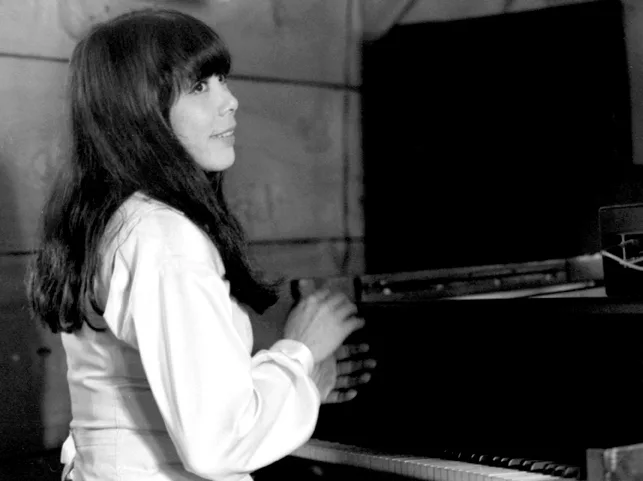
Toshiko Akiyoshi in 1978. (Photo: Brian McMillen / contact: brianmcmillen@hotmail.com) CC BY-SA 3.0 — Wikimedia Commons — https://commons.wikimedia.org/wiki/File:Toshiko_Akiyoshi.jpg

Toshiko Akiyoshi was born in 1929 in Liaoyang, Manchuria, one of four daughters in a Japanese family that lost everything when Japan surrendered at the end of World War II. The Akiyoshis made it back to Japan itself only in 1946, settling in Beppu with nothing. She started classical piano at seven, back when the family could still afford lessons in Manchuria, but the record that actually turned her toward jazz arrived at sixteen: a Teddy Wilson recording of "Sweet Lorraine," played over and over until she'd absorbed it by ear. Bud Powell's records came next, harder to find in postwar Japan but more decisive — she taught herself his bebop vocabulary well enough that it became her ticket into Tokyo's best working bands. In the early 1950s she led her own quartet around Tokyo with an eighteen-year-old alto and soprano saxophonist named Sadao Watanabe in the group; when Akiyoshi left for the United States a few years later, Watanabe inherited the band.
The break that got her there was specific and traceable. Oscar Peterson caught her playing during a 1953 Jazz at the Philharmonic stop in Japan and told producer Norman Granz to record her. Granz did: Toshiko's Piano (1954, Norgran), cut in Tokyo with Peterson's own touring rhythm section — Ray Brown on bass, Herb Ellis on guitar, J.C. Heard on drums — became her debut LP and the first real evidence, on record, that American jazz musicians took her seriously as a peer rather than a novelty. In 1955 she wrote to Lawrence Berk, founder of the new Berklee School of Music in Boston, asking for a chance to study there. Berk said yes and offered a full scholarship, but it took another year of wrangling with the U.S. State Department and Japanese officials before she had a plane ticket. She arrived in Boston in January 1956 as Berklee's first Japanese student and graduated in 1959.
She moved straight to New York and built a reputation fast as a serious bebop player in a scene that wasn't used to seeing one who looked like her. In 1959 she married alto saxophonist Charlie Mariano; the two co-led the Toshiko-Mariano Quartet through the early 1960s and had a daughter, Michiru, who later became known as singer Monday Michiru. In October 1962, Akiyoshi sat in as guest pianist in Charles Mingus's ensemble at his Town Hall Concert in New York, alongside Jaki Byard — a booking that tells you where her reputation stood by that point. She and Mariano divorced in 1967. Two years earlier, in 1964, Akiyoshi had led a big band session in Japan, Toshiko Mariano and Her Big Band, that turned out to matter more in hindsight than it did at the time: the trumpet section included a young Terumasa Hino, and the trombone section a young Hiroshi Suzuki, both years before either built his own name in Japanese jazz.
Everything changed shape in 1973. Akiyoshi, now married to saxophonist and flutist Lew Tabackin, formed the Toshiko Akiyoshi–Lew Tabackin Big Band in Los Angeles — she wrote and arranged the entire book, he was the lead soloist. When Duke Ellington died in 1974, The Village Voice ran a piece arguing that Ellington's music carried his African heritage inside it. Akiyoshi read it and started asking what her own Japanese heritage might sound like inside a big band chart. The answer arrived that same year on Kogun (1974), whose title track set the true story of a Japanese soldier who'd spent thirty years alone in the jungle still fighting World War II to music built from medieval Noh theater — a first for American big band writing, and a Japanese Swing Journal Silver Disk winner that went on to a 1979 Grammy nomination. It wasn't a one-off experiment. Long Yellow Road (1975) was named Stereo Review's Best Jazz Album of the year and drew its own 1976 Grammy nomination; Insights (1976), built around the "Minamata" suite and featuring Akiyoshi's own daughter Michiru on vocals, took Down Beat's 1978 critics' poll Jazz Album of the Year and a third Grammy nomination. Through the rest of the decade the band kept working at pace — Tales of a Courtesan (Oirantan), Road Time, two Newport Jazz Festival live records, March of the Tadpoles, Salted Gingko Nuts, Sumi-E, Farewell (to Mingus) — written for Charles Mingus on his death, closing the circle back to that 1962 Town Hall night — and European Memoirs (1982), the last album cut before Akiyoshi and Tabackin relocated the operation to New York.
In New York the two formed a new group, the Toshiko Akiyoshi Jazz Orchestra featuring Lew Tabackin, which released nine more albums and kept working until 2003, when Akiyoshi finally stepped back from big-band leading to concentrate on solo and small-group piano — Toshiko Akiyoshi at Maybeck (1995, Concord's Maybeck Recital Hall Series Vol. 36) and Toshiko Plays Toshiko: Time Stream (1997, a quartet reunion with Tabackin, George Mraz, and Lewis Nash revisiting her own compositions) both predate that formal shift and show she'd never really stopped. She picked up 14 Grammy nominations across her career, more DownBeat Readers' and Critics' Poll wins than almost anyone in the instrument, and was the first woman ever to win both Best Arranger and Best Composer in DownBeat's Readers Poll. Japan recognized her with the Shijuhosho commendation (1999) and the Order of the Rising Sun, Gold Rays with Rosette (2004); the U.S. named her an NEA Jazz Master in 2007 and gave her the BNY Mellon Jazz Living Legacy Award at the Kennedy Center in 2018.
Toshiko Akiyoshi is 96 years old and lives in New York with Lew Tabackin. Where most of the artists in this project's catalog are reissue-crate stories — bodies of work that are finished and can only be rediscovered — hers is, at least in principle, still adding to itself.
Akiyoshi's foundation is bebop piano, learned by ear from Teddy Wilson and then built out on Bud Powell's vocabulary — the sound that got her steady work in Tokyo before she'd ever set foot in the United States. That foundation never left her playing, even decades later on solo records like Toshiko Akiyoshi at Maybeck.
Her real distinction, though, is as a big-band composer and arranger, and there she's most often placed alongside Duke Ellington, Eddie Sauter, and Gil Evans — writers who built a band's sound around specific personalities rather than generic sections. What sets her apart from that lineage is the deliberate turn, sparked directly by Ellington's 1974 death and the argument that his music carried his heritage inside it, toward her own Japanese musical inheritance: Noh theater chant and medieval melody on Kogun, traditional Japanese percussion worked into a jazz rhythm section on Insights, brush-painting aesthetics translated into big-band voicing on Sumi-E. It's a fusion built from the inside, by someone with real standing in both traditions, rather than an exoticized borrowing from outside either one — which is a large part of why it kept winning Grammy nominations and critics' polls through the late 1970s and into the 1980s rather than reading as a novelty.
- Toshiko's Piano (1954, Norgran) - Her debut LP, cut in Tokyo with Oscar Peterson's own touring rhythm section (Ray Brown, Herb Ellis, J.C. Heard) after Peterson told Norman Granz to record her. The first proof on record that she belonged in that company. Spotify - Toshiko's Piano Listen · Buy
- Kogun (1974, RCA) - The Noh-theater title track is the clearest single entry point into what made the Akiyoshi–Tabackin Big Band's sound genuinely new; Swing Journal Silver Disk winner and 1979 Grammy nominee. Spotify - Kogun Listen · Buy
- Long Yellow Road (1975, RCA) - Stereo Review's Best Jazz Album of the year and a 1976 Grammy nominee; the second stop for anyone starting with Kogun. Spotify - Long Yellow Road Listen · Buy
- Insights (1976, RCA) - Built around the "Minamata" suite, featuring her daughter Michiru (later Monday Michiru) on vocals; Down Beat's 1978 critics' poll Jazz Album of the Year. Spotify - Insights Listen · Buy
- Toshiko Plays Toshiko: Time Stream (1997, Nippon Crown) - A later-career quartet reunion with Lew Tabackin, George Mraz, and Lewis Nash, revisiting her own compositions across four decades — including "Kogun" and "Farewell to Mingus" — as a working band rather than a nostalgia act. Spotify - Time Stream Listen · Buy
Toshiko Akiyoshi — Full Discography
Leader — Toshiko Akiyoshi-Lew Tabackin Big Band (complete, full detail)
| Album | Year | Label | Personnel | Notes | Listen | Buy |
|---|---|---|---|---|---|---|
| Kogun | 1974 | RCA (RCA-6246) | Toshiko Akiyoshi (piano, composer, arranger), Lew Tabackin (tenor sax), Dick Spencer / Gary Foster (alto sax), Bill Perkins (baritone sax), Tom Peterson (tenor sax), Gene Cherico (bass), Peter Donald (drums), Bobby Shew / Don Rader / John Madrid / Mike Price (trumpets), Britt Woodman / Charles Loper / Jim Sawyer (trombones), Phil Teele (bass trombone) | Title track adapts medieval Noh theater music; won Swing Journal's Silver Disk (Japan); 1979 Grammy nomination, Best Jazz Instrumental Performance, Big Band | Spotify | Amazon |
| Long Yellow Road | 1975 | RCA (RCA-6296 / JPL1-0468) | Toshiko Akiyoshi (piano), Lew Tabackin (tenor sax, flute), Joe Roccisano / Dick Spencer / Gary Foster (alto sax), Bill Perkins (baritone sax), Tom Peterson (tenor sax), Gene Cherico (bass), Chuck Flores / Peter Donald (drums), Tokuko Kaga (vocals), full brass section including Bobby Shew, Don Rader | Stereo Review's Best Jazz Album of the year; 1976 Grammy nomination, Best Jazz Performance by a Big Band | Spotify | Amazon |
| Insights | 1976 | RCA (RVP-6106 / JPL1-0918) | Toshiko Akiyoshi (piano, composer, arranger), Lew Tabackin (tenor sax, flute), Dick Spencer / Gary Foster (alto sax), Bill Perkins (baritone sax), Don Baldwin (bass), Peter Donald (drums), Michiru Mariano (vocals), Hisao Kanze (vocals, utai — Noh chant), Hiromitsu Katada / Hayao Uzawa / Tadao Kamei (traditional Japanese percussion) | Built around the "Minamata" suite; Down Beat critics' Jazz Album of the Year (1978 poll); Swing Journal Gold Disk; 1978 Grammy nomination, Best Jazz Instrumental Performance, Big Band. Notably features Akiyoshi's own daughter, Michiru Mariano (later Monday Michiru), on vocals | Spotify | Amazon |
| Tales of a Courtesan (Oirantan) | 1976 | RCA Victor (JPL1-0723) | Toshiko Akiyoshi (piano, composer, arranger), Lew Tabackin / Bill Perkins / Dick Spencer / Gary Foster / Tom Peterson (reeds, doubling flute/clarinet), Don Baldwin (bass), Peter Donald (drums), King Errisson (congas) | Recorded Dec 1975, LA | Spotify | Amazon |
| Road Time | 1976 | RCA (RCA-9115~16 / JP2-0798) | Toshiko Akiyoshi (piano), Lew Tabackin (tenor sax, flute), Dick Spencer / Gary Foster (alto sax), Bill Byrne (baritone sax), Don Baldwin (bass), Peter Donald (drums), Kisaku Katada / Yutaka Yazaki (traditional percussion) | First live big band recording, recorded Jan-Feb 1976 in Osaka and Tokyo; double LP | Spotify (reissued as "Road Time (Live)") | Amazon |
| Live at Newport '77 | 1977 | RCA (RVJ-6005) | Toshiko Akiyoshi (piano), Lew Tabackin (tenor sax, flute), Dick Spencer / Gary Foster (alto sax), Beverly Darke (baritone sax), Gary Herbig (tenor sax), Don Baldwin (bass), Peter Donald (drums) | Recorded live June 29, 1977, Newport Jazz Festival, New York | YouTube (fan playlist covering the 1977 Newport concert, including this album's tracks "Strive for Jive," "A-10-205932," "Hangin' Loose," "Since Perry"/"Yet Another Tear") | Amazon |
| March of the Tadpoles | 1977 | RCA (RVP-6178) | Toshiko Akiyoshi (piano, composer, arranger), Lew Tabackin (tenor sax, flute), Dick Spencer / Gary Foster (alto sax), Bill Perkins (baritone sax), Don Baldwin (bass), Peter Donald (drums), Emil Richards (percussion) | Fifth studio release; later drew two further Grammy nominations (Best Jazz Instrumental Performance, Big Band and Best Arrangement on an Instrumental) in the 1985 cycle per a reissue-era resubmission | Spotify | Amazon |
| Salted Gingko Nuts | 1979 | Insights (RVJ-6031) | Toshiko Akiyoshi (piano, composer, arranger), Lew Tabackin (tenor sax), Dick Spencer / Gary Foster (alto sax), Bill Byrne (baritone sax), Mike Richmond (bass), Peter Donald (drums) | Recorded Nov 1978; 1979 Swing Journal Silver Disk | YouTube (full-album upload, matching tracklist and 41-minute runtime; not on Spotify) | Amazon |
| Sumi-E | 1979 | Insights (RVJ-6061) | Toshiko Akiyoshi (piano, composer, arranger), Lew Tabackin (tenor sax, flute), Dick Spencer / Gary Foster (alto sax), Bill Byrne (baritone sax), John Heard (bass), Peter Donald (drums), Kisaku Katada (percussion) | Recorded Feb 1979, Iruma City Auditorium, Saitama | not found | Amazon |
| Farewell (To Mingus) | 1980 | Ascent Records (ASC 1000) | Toshiko Akiyoshi (piano, arranger, composer), Lew Tabackin (tenor sax, flute), Gary Foster / Dan Higgins (alto sax), Bill Byrne (baritone sax), Bob Bowman (bass), Steve Houghton (drums) | Suite written on the occasion of Charles Mingus's death, with whom Akiyoshi had performed at his 1962 Town Hall Concert | YouTube (not on Spotify; full-album upload) | Amazon |
| Live at Newport II | 1980 | RCA (RVJ-6088) | Toshiko Akiyoshi (piano, arranger, composer), Lew Tabackin (tenor sax, flute), Dick Spencer / Gary Foster (alto sax), Beverly Darke (baritone sax), Gary Herbig (tenor sax), Don Baldwin (bass), Peter Donald (drums) | Second Newport Jazz Festival live recording (same June 29, 1977 concert as the 1977 release, different track selection) | YouTube (same fan playlist of the 1977 Newport concert, including this album's tracks "March of the Tadpoles," "Warning Success May Be Hazardous To Your Health," "Road Time Shuffle," "Minamata") | Amazon |
| From Toshiko with Love | 1981 | Baystate (RJL-8016) | Toshiko Akiyoshi (piano, arranger), Lew Tabackin (tenor sax, flute, composer), Bob Sheppard / Dan Higgins / Gary Foster (reeds), Bill Byrne (baritone sax), Ed Bennett (bass), Steve Houghton (drums) | Japan-market release | not found | Amazon |
| Tanuki's Night Out | 1981 | Jam (JAM 006) | Toshiko Akiyoshi (piano, arranger, producer), Lew Tabackin (tenor sax, flute, composer, producer), Bob Sheppard / Dan Higgins / Gary Foster (alto sax), Bill Byrne (baritone sax), Ed Bennett (bass), Steve Houghton (drums) | US-market release; recorded March 24-25, 1981, Devonshire Recording Studio, LA | not found | Amazon |
| European Memoirs | 1982 | Baystate (RJL-8036) | Toshiko Akiyoshi (piano, arranger, composer), Lew Tabackin (tenor sax, flute), Bob Sheppard (soprano sax, flute), John Gross (tenor sax), Bill Byrne (baritone sax), Bob Bowman (bass), Joey Baron (drums) | Recorded Sept 1982, LA | not found | Amazon |
| The Toshiko Akiyoshi-Lew Tabackin Big Band | 1991 | Novus / RCA (3106-2-N) | Compilation, tracks drawn from Insights, Kogun, and Long Yellow Road masters | CD compilation reissue; liner notes by Leonard Feather | not found | Amazon |
Leader — Solo / Trio (personal artist page, selected full detail)
| Album | Year | Label | Personnel | Notes | Listen | Buy |
|---|---|---|---|---|---|---|
| Toshiko's Piano | 1954 | Norgran (MGN-22) | Toshiko Akiyoshi (piano), Ray Brown (bass), Herb Ellis (guitar), J.C. Heard (drums); supervised by Norman Granz | Her debut LP; recorded Nov 13-14, 1953, Radio Tokyo Studio 2, with Oscar Peterson's touring rhythm section. Japan-market issue titled The Amazing Toshiko Akiyoshi | Spotify (1958 reissue listing) | Amazon |
| Her Trio, Her Quartet | 1957 | Storyville (STLP 918) | Toshiko Akiyoshi (piano), Oscar Pettiford / Wyatt Ruther (bass), Roy Haynes / Ed Thigpen (drums), Boots Mussulli (alto sax) | Recorded New York, 1956; cover art from Joan Miro's "Black and Red" series | Spotify | Amazon |
| Long Yellow Road (Trio) | 1961 | Tam (YX-4056) | Toshiko Akiyoshi (piano), Gene Cherico (bass), Eddie Marshall (drums) | Not to be confused with the 1975 Big Band album of the same title. Trio session from Feb 1961, originally released as a flexidisc | YouTube ("Akiyoshi Toshiko Trio / Asahi Sonorama" upload, opens with "Long Yellow Road") | Amazon |
| Toshiko Plays Toshiko / Notorious Tourist from the East | 1979 | Discomate (DSP-5014) | Toshiko Akiyoshi (piano), Gene Cherico (bass), Billy Higgins (drums), Steve Huffsteter (trumpet) | Recorded Dec 1978. Released under two titles: Toshiko Plays Toshiko (Japan) and Notorious Tourist from the East (US/alternate) | YouTube ("[1979] Toshiko Akiyoshi – Notorious Tourist From The East [Full Album]"; not on Spotify) | Amazon |
| Toshiko Akiyoshi at Maybeck | 1995 | Concord Jazz (CCD-4635) | Toshiko Akiyoshi (solo piano) | Maybeck Recital Hall Series Vol. 36; recorded live, Berkeley, CA, March 1993 (Discogs credits session date as July 10, 1994) | Spotify (listed as "The Maybeck Recital Series, Vol. 36") | Amazon |
| Toshiko Plays Toshiko: Time Stream | 1997 | Ninety-One (CRCJ-9137) | Toshiko Akiyoshi (piano, composer), Lew Tabackin (tenor sax, flute), Gary Foster (alto sax, flute), George Mraz (bass), Lewis Nash (drums), Bobby Shew / Joe Magnarelli / Mike Ponella / John Eckert (trumpets) | Recorded Oct 1996, New York | Spotify | Amazon |
Remaining Solo/Trio Main Releases (chronological)
- 1954 - Toshiko's Piano #1 (Discogs)
- 1958 - The Many Sides of Toshiko (Discogs)
- 1958 - Toshiko & Leon Sash at Newport (Discogs)
- 1961 - Toshiko Meets Her Old Pals (Discogs)
- 1963 - The Country & Western Sound of Jazz Pianos (Discogs)
- 1971 - Jazz the Personal Dimension (Discogs)
- 1971 - The Personal Aspect in Jazz (Discogs)
- 1975 - Solo Piano (Discogs)
- 1976 - Toshiko at Mocambo - The Historic Mocambo Session '54 Vol. 3 (Discogs)
- 1977 - Toshiko and Modern Jazz (Discogs)
- 1977 - East & West (Discogs)
- 1978 - Finesse (Discogs)
- 1983 - Sublime in Time (Discogs)
- 1983 - Toshiko Akiyoshi Trio (Discogs)
- 1987 - Interlude (Discogs)
- 1990 - Remembering Bud: Cleopatra's Dream (Discogs)
- 1990 - Four Seasons (Discogs)
- 1992 - Chic Lady (Discogs)
- 1993 - Dig (Discogs)
- 1994 - Night and Dream (Discogs)
- 1997 - East & West (reissue) (Discogs)
- 1997 - With Brazilian Friends - "Yes, I Have No 4 Beat Today" (Discogs)
- 1998 - Best Gold ['89-'96] (Discogs)
Guest / Appearance / Compilation credits
Discogs lists 122 "Appearance"-role and 33 "TrackAppearance"-role credits on Akiyoshi's personal artist page, spanning her entire career from 1950s sideman dates through later-career tribute compilations. Selected highlights:
- 1962 - The Complete Town Hall Concert (Charles Mingus) — Akiyoshi as guest pianist alongside Jaki Byard, recorded live Oct 12, 1962, Town Hall, New York City (Discogs — credited "Toshiko Akiyoshi, Piano" on the 1994 Blue Note reissue, "The Complete Town Hall Concert")
- Multiple "Jazz at the Philharmonic"-era compilation appearances from her Norgran/Verve years (1953-1954), reflecting the Oscar Peterson / Norman Granz connection that launched her US career
- Sadao Watanabe - the eighteen-year-old alto/soprano saxophonist in Akiyoshi's own Tokyo quartet in the early 1950s; inherited the group when she left for the U.S. in 1956. The two reunited on record on Toshiko Meets Her Old Pals (1961) when she returned to Japan for the first time in five years.
- Charlie Mariano - alto saxophonist, her husband from 1959 to 1967; co-led the Toshiko-Mariano Quartet and, on Toshiko Mariano and Her Big Band (1964), a big band session recorded in Japan. Father of their daughter, Michiru (Monday Michiru).
- Terumasa Hino and Hiroshi Suzuki - both credited in the trumpet and trombone sections, respectively, of Toshiko Mariano and Her Big Band (recorded July 16, 1964), years before either built an independent name in Japanese jazz.
- Charles Mingus - guest pianist alongside Jaki Byard at Mingus's Town Hall Concert, October 1962; Akiyoshi later wrote the suite Farewell (to Mingus) (1980) on the occasion of his death.
- Lew Tabackin - tenor saxophonist and flutist, her husband and co-leader of the Toshiko Akiyoshi–Lew Tabackin Big Band (1973–1982, Los Angeles) and its New York successor, the Toshiko Akiyoshi Jazz Orchestra featuring Lew Tabackin (1982–2003); also her working quartet partner on later small-group records including Time Stream (1997).
- Michiru Mariano (Monday Michiru) - her daughter with Charlie Mariano; guest vocalist on Insights (1976).
- Big band personnel across the RCA/Baystate/Ascent years included a rotating cast of West Coast studio players — Bill Perkins, Gary Foster, Dick Spencer, Bobby Shew, Peter Donald, Don Baldwin, among many others — documented release-by-release in
discography-full.md.
More Bebop Artists
See all 166 Bebop artists →More Japanese Jazz Artists
See all 70 Japanese artists →- Spotify artist page
- NEA Jazz Masters: Toshiko Akiyoshi
- Discogs: Toshiko Akiyoshi
- Discogs: Toshiko Akiyoshi-Lew Tabackin Big Band
- Wikipedia: Toshiko Akiyoshi
- Wikipedia: Toshiko Akiyoshi discography
- Wikipedia: Toshiko Mariano and Her Big Band
- Wikipedia: Insights (album)
- Wikipedia: Kogun
- National Endowment for the Arts: Toshiko Akiyoshi, NEA Jazz Master
- National Women's History Museum: Toshiko Akiyoshi
- KNKX Public Radio: Jazz piano struck the right chord for composer Toshiko Akiyoshi
- JazzTimes: Toshiko Akiyoshi Receives 2018 Living Legacy Award
- Discogs: Toshiko Akiyoshi
- Discogs: Toshiko Akiyoshi-Lew Tabackin Big Band
final-blog.mdanddiscography-full.md, this project folder