 JAZZPROFILES lives in the music 1,572 Jazz Artists fully Profiled!
 Jimmy Heath
Last updated September 26, 2026
Listen on Spotify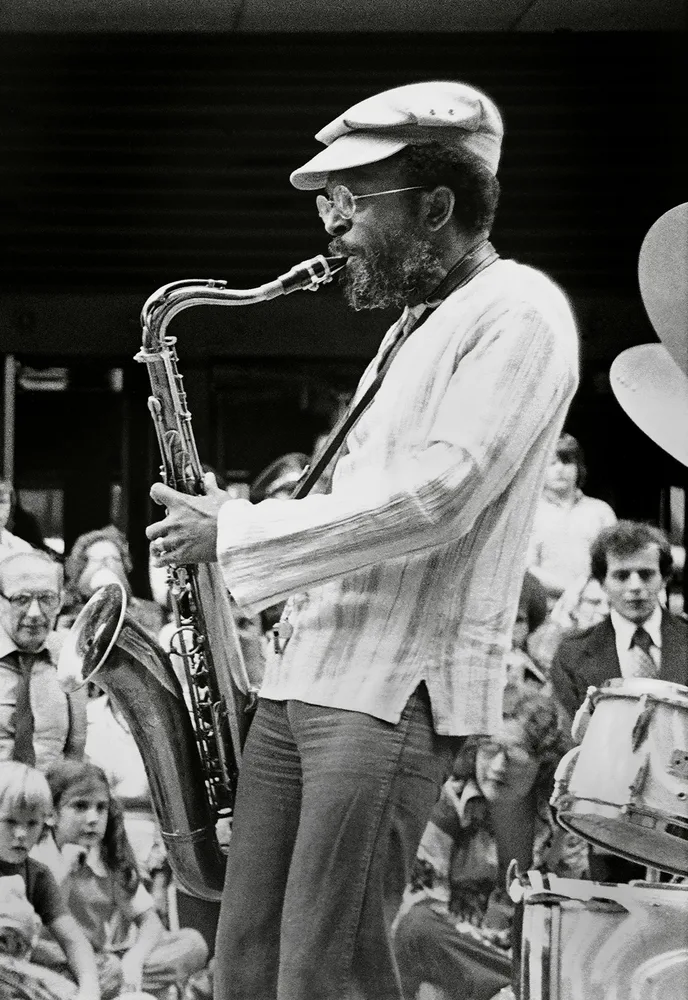
Jimmy Heath playing tenor saxophone in front of a street audience at Rockefeller Center, New York City, 1977, during a Heath Brothers concert. Photograph by Tom Marcello. Cropped from a wide frame to a portrait format; nothing else was altered. CC BY-SA 2.0 (Creative Commons Attribution-ShareAlike 2.0 Generic) — Wikimedia Commons - https://commons.wikimedia.org/wiki/File:Jimmy_Heath_with_audience_at_Rockerfeller_Center_-_Flickr_-_Tom_Marcello.jpg

James Edward Heath was born in Philadelphia on October 25, 1926, the middle of three musical brothers. His father was an auto mechanic who played clarinet on weekends, his mother sang in a church choir, and his sister played piano. The older brother, Percy, became one of the most recorded bassists in jazz and spent four decades in the Modern Jazz Quartet; the youngest, Albert "Tootie" Heath, became a first-call drummer. Jimmy grew up in South Philadelphia and got his first alto saxophone at Christmas 1941. He was rejected for the wartime draft for falling under the minimum weight, which left him free to work: from late 1945 through most of 1946 he toured with the Nat Towles band out of Omaha, his first professional job.
Back in Philadelphia in 1946 he put together a big band that held the city's scene for three years and turned out to be one of the great uncredited proving grounds of postwar jazz. The saxophone section included John Coltrane on second alto and Benny Golson; the rest of the band drew on Cal Massey, Johnny Coles, Ray Bryant, Nelson Boyd and drummer Specs Wright. Charlie Parker and Max Roach sat in with it on one occasion, and the band played rooms as far afield as the Apollo Theater in Harlem. Almost nothing survives of it: Heath recalled cutting a few acetate demos that were never released, and the book of arrangements was lost at a Chicago train station. In 1948 he worked with trumpeter Howard McGhee, including an appearance at the first International Jazz Festival in Paris at the Salle Pleyel on a bill that also carried Coleman Hawkins and Erroll Garner. It was in the McGhee and Dizzy Gillespie bands that his Parker-saturated alto playing earned him the nickname "Little Bird," a tag that fit his five-foot-three frame as neatly as his phrasing. He broke up the Philadelphia band in 1949 to join Gillespie's orchestra, and stayed on into the smaller group Gillespie kept working when the big band folded, alongside Coltrane, Milt Jackson and his own brother Percy.
Heath moved to tenor saxophone in the early 1950s, partly to get out from under the Parker comparison, and the horn suited him. In 1953 he turned up on two sessions that still get played: Miles Davis's April 20 Blue Note date with J.J. Johnson, Gil Coggins, Percy Heath and Art Blakey, which produced the first recording of Heath's tune "C.T.A.," and a June session under Johnson's name with Clifford Brown, John Lewis, Percy Heath and Kenny Clarke. Then the career stopped. Heath was a heroin addict, and he was arrested and convicted twice for selling. The first arrest, in the spring of 1954, sent him to the Federal Medical Center at Lexington, Kentucky. Arrested again in early 1955, he was sentenced to six years and served most of it at Lewisburg Penitentiary in Pennsylvania. He came off heroin there for good, took up the flute, ran the prison big band and wrote steadily, sending scores out through his brother Tootie. Five of the pieces on Chet Baker and Art Pepper's Playboys were written by Heath while he was inside. He was released early, on May 21, 1959, and stayed clean for the rest of his life.
The comeback was immediate but hemmed in. Miles Davis hired him in 1959 to replace Coltrane, but the terms of Heath's parole restricted his travel and the job could not last. What did last was a contract with Riverside and a producer, Orrin Keepnews, who let him write. Between September 1959 and the spring of 1964 Heath cut six albums for the label, and their most striking feature is how little they sound like blowing dates. The Thumper (1959) is a straight sextet with Nat Adderley, Curtis Fuller, Wynton Kelly, Paul Chambers and Albert Heath. After that he kept enlarging and recoloring the ensemble: Really Big! (1960) is a ten-piece with French horn, baritone saxophone and both Adderley brothers; The Quota (1961) and Triple Threat (1962) build a sextet around Freddie Hubbard, Julius Watkins's French horn and Cedar Walton, with Percy and Albert as the rhythm section; Swamp Seed (1963) adds tuba, a second French horn and two pianists, Herbie Hancock and Harold Mabern. Alongside the leader dates he became one of the most heavily used tenor players in New York, working with Milt Jackson and Art Farmer through most of the 1960s and recording with Kenny Dorham, Blue Mitchell, Sam Jones, Elmo Hope, Julian Priester, Donald Byrd and Gil Evans.
The 1970s pushed him in two directions at once. He started teaching, first through Billy Taylor's Jazzmobile in Harlem, and he began writing long form: the multi-movement Afro-American Suite of Evolution, commissioned by Jazzmobile and scored for a thirty-piece orchestra, premiered at New York's Town Hall. His own records got looser and more electric, from The Gap Sealer (Cobblestone, 1972, with his son James Mtume on percussion) through Love and Understanding (Muse, 1973) to the acoustic quartet date Picture of Heath (Xanadu, 1975) with Barry Harris, Sam Jones and Billy Higgins, which collected five of his best-known originals on one record. In 1975 the three brothers finally formed a permanent band. The Heath Brothers, with pianist Stanley Cowell as the fourth member, recorded Marchin' On! for Strata-East, moved to Columbia for four albums between 1978 and 1981, and then to Antilles. Percy stepped back from the group in the early 1980s, Tony Purrone's guitar became a fixture, and the band worked on and off for the next thirty years.
Heath's later career was as much about the classroom as the bandstand. He joined the faculty of the Aaron Copland School of Music at Queens College, City University of New York, in 1987 to help build a new master's program in jazz, and taught there until 1998, drawing Donald Byrd and others to the campus and serving on the board of the Louis Armstrong Archives. He also kept recording: two more albums for Orrin Keepnews at Landmark, New Picture (1985) and Peer Pleasure (1987); two quartet dates for SteepleChase; and Little Man Big Band (Verve, 1992), which put his own arrangements in front of an eighteen-piece band with Roland Hanna and Lewis Nash. From there the Jimmy Heath Big Band became his main large-ensemble outlet, documented on Turn Up the Heath (2004 and 2006 sessions, with Slide Hampton, Antonio Hart, Peter Washington and Lewis Nash) and on Togetherness, recorded live at the Blue Note in October 2011. He was named an NEA Jazz Master in 2003, the year after Percy received the same honor, and published his autobiography, I Walked With Giants, written with Joseph McLaren, in 2010. His last record was made in two sessions in late 2019, at Sear Sound in New York and 800 East Studios in Atlanta: Love Letter, a ballad program with Kenny Barron, Russell Malone, David Wong and Lewis Nash, plus guest appearances by Cécile McLorin Salvant, Gregory Porter and Wynton Marsalis. Heath passed away of natural causes in Loganville, Georgia, on January 19, 2020, at 93. Verve released Love Letter six months later.
Heath started as one of the most convincing Charlie Parker disciples on alto and spent the rest of his life proving he was more than that. On tenor he settled into a dry, compact, hard-swinging sound with none of the vibrato-heavy weight of the Coleman Hawkins line and none of the sheets of sound his old sectionmate John Coltrane was building at the same time. He played short, and he wrote long. The writing is where his influence actually sits: "C.T.A.," first cut by Miles Davis in 1953, and "Gingerbread Boy," which Davis recorded again on Miles Smiles in 1966, both entered the standard repertoire, and "For Minors Only," "Big P," "Mona's Mood" and "The Voice of the Saxophone" have been taken up by players from Art Farmer and Chet Baker to Cannonball Adderley, Clark Terry, James Moody, Milt Jackson, Ray Charles, Dizzy Gillespie and Dexter Gordon. As an arranger he had a specific and unusual taste in ensemble color, reaching repeatedly for French horn, tuba and baritone saxophone to thicken a small group into something orchestral without turning it into a big band: Really Big!, The Quota and Swamp Seed are all built that way. He wrote more than 125 pieces and appeared on well over a hundred albums, and by the end of his life the students who came through Queens College and Jazzmobile were as much a part of the legacy as the records.
- Really Big! (1960, Riverside) - His first large-ensemble statement, a ten-piece with Cannonball Adderley, Nat Adderley, Clark Terry, Tom McIntosh and Pat Patrick, and the first recording of "Big P" and "Mona's Mood." Spotify - Really Big! Listen
- The Thumper (rec. 1959, rel. 1960, Riverside) - His leader debut, cut four months after his release from Lewisburg, with Nat Adderley, Curtis Fuller, Wynton Kelly, Paul Chambers and Albert Heath. Spotify - The Thumper Listen
- The Quota (1961, Riverside) - A sextet with Freddie Hubbard, Julius Watkins, Cedar Walton and both Heath brothers, and the clearest example of his French-horn-and-tenor ensemble writing. Spotify - The Quota Listen
- Swamp Seed (1963, Riverside) - The most ambitious of the Riverside dates, adding tuba, two French horns and two pianists, Herbie Hancock and Harold Mabern. Spotify - Swamp Seed Listen
- Picture of Heath (1975, Xanadu) - A stripped-down quartet with Barry Harris, Sam Jones and Billy Higgins that gathers "For Minors Only," "Picture of Heath," "Bruh' Slim," "All Members" and "CTA" on one record. Spotify - Picture Of Heath Listen
- Marchin' On! (rec. 1975, rel. 1976, Strata-East) - The first Heath Brothers album, recorded in Oslo with Percy, Albert and Stanley Cowell, and titled by their older sister Betty in honor of their parents. Spotify - Marchin' On! Listen
- Little Man Big Band (1992, Verve) - Heath's own charts for an eighteen-piece band, including "Gingerbread Boy," "CTA" and "The Voice of the Saxophone," with Roland Hanna and Lewis Nash. Grammy-nominated.
- Love Letter (2020, Verve) - His last record, a ballad session with Kenny Barron, Russell Malone, David Wong and Lewis Nash, released six months after his death. Spotify - Love Letter Listen
Jimmy Heath: Full Discography
Identity confirmed via the live Discogs API, artist ID 264872 ("Jimmy Heath," realname James Edward Heath, born October 25, 1926 in Philadelphia, died January 19, 2020 in Loganville, Georgia). Discogs credits him on 864 releases under that ID alone: 40 in a "Main"/leader role, 760 sideman "Appearance" credits, 31 track-level credits, 9 producer or co-producer credits and 24 unofficial releases. Further leader credits are filed under the separate Discogs entities Jimmy Heath Sextet (3601655), Jimmy Heath Quintet (2512457), Jimmy Heath And His Orchestra (2562759), Jimmy Heath And Brass (4126630), Jimmy Heath Quartet (5689228) and Jimmy Heath Big Band (3809567), and the group catalog under The Heath Brothers (781170).
Selection criterion. The leader table below is the complete run of studio and live albums issued under Heath's own name or his own bands' names, from The Thumper (1959) to Love Letter (2020), plus the two co-led dates that are usually filed with his leader catalog. The Heath Brothers albums get their own table. The sideman table is explicitly not exhaustive: 791 sideman and track-level credits cannot be itemized, so it carries roughly fifty rows chosen to cover (a) every recording that is historically significant in its own right, (b) his longest-running sideman relationships (Milt Jackson, Art Farmer, Sam Jones, the Riverside house circle), and (c) the dates where he arranged as well as played. Straight compilations, samplers and reissue-only appearances are excluded from both tables. Every catalog number below was re-checked against an actual Discogs release record rather than carried over from a secondary discography; where a source disagrees, the Notes column says so. Buy links are — throughout: no affiliate program is set up for this site yet, so no Amazon links have been invented.
As Leader / Co-Leader
| Album Title | Recording Date(s) | Release Date | Label | Catalog Number | Format(s) | Personnel | Role | Reissue History | Spotify | Buy | Notes |
|---|---|---|---|---|---|---|---|---|---|---|---|
| The Thumper | Recorded September 1959, Reeves Sound Studios, New York | 1960 | Riverside | RLP 12-314 (mono) / RLP 1160 (stereo) | Vinyl, LP, Album | Jimmy Heath (tenor sax), Nat Adderley (cornet), Curtis Fuller (trombone), Wynton Kelly (piano), Paul Chambers (bass), Albert Heath (drums); produced by Orrin Keepnews | Leader (Jimmy Heath Sextet) | OJC CD reissue OJCCD-1828-2 (1994); Victor Japan VICJ-23763 (1992); Jazz Workshop LP JW-052 (2015) | Spotify - The Thumper | — | His leader debut, cut four months after his release from Lewisburg. Wikipedia dates the sessions 1959 and the LP 1960, which matches the Discogs pressing and jazzdisco.org's September 1959 session date |
| Really Big! | Recorded June 24 and 28, 1960, Plaza Sound Studios, New York | 1960 | Riverside | RLP 333 (mono) / RLP 1188 (stereo) | Vinyl, LP, Album | Jimmy Heath (tenor sax, arranger), Cannonball Adderley (alto sax), Nat Adderley (cornet), Clark Terry (trumpet), Tom McIntosh (trombone), Dick Berg (French horn), Pat Patrick (baritone sax), Tommy Flanagan and Cedar Walton (piano), Percy Heath (bass), Albert Heath (drums) | Leader (The Jimmy Heath Orchestra) | OJCCD-1799-2 (1992); Riverside RCD-30185 (2007) | Spotify - Really Big! | — | Session dates printed on the sleeve. Source of "Big 'P'" and "Mona's Mood"; Riverside also pulled a 7" single, "Big 'P'" b/w "On Green Dolphin Street" |
| The Quota | Recorded April 14 and 20, 1961, Plaza Sound Studios, New York | 1961 | Riverside | RLP 372 (mono) / RLP 9372 (stereo) | Vinyl, LP, Album | Jimmy Heath (tenor sax, arranger), Freddie Hubbard (trumpet), Julius Watkins (French horn), Cedar Walton (piano), Percy Heath (bass), Albert Heath (drums); produced by Orrin Keepnews | Leader | OJCCD-1871-2 (1995); Victor Japan VIJJ-30019 (1993) | Spotify - The Quota | — | Session dates printed on the sleeve. Riverside pulled the 7" single "Funny Time" (R-45470) from this LP |
| Triple Threat | Recorded January 4 and 17, 1962, New York | 1962 | Riverside | RLP 400 (mono) / RLP 9400 (stereo) | Vinyl, LP, Album | Jimmy Heath (tenor sax, arranger), Freddie Hubbard (trumpet), Julius Watkins (French horn), Cedar Walton (piano), Percy Heath (bass), Albert Heath (drums); produced by Orrin Keepnews, liner notes by Ira Gitler | Leader | OJCCD-1909-2 (1998); Wave Jazz Japan WWLJ-7064 (1992) | Spotify - Triple Threat | — | The sleeve splits the sessions: most tracks January 4, two tracks January 17 |
| Swamp Seed | Recorded March and May 1963, Plaza Sound Studios, New York | 1963 | Riverside | RM 465 (mono) / RS 9465 (stereo) | Vinyl, LP, Album | Jimmy Heath (tenor sax, arranger), Donald Byrd (trumpet), Julius Watkins and Jim Buffington (French horn), Don Butterfield (tuba), Herbie Hancock and Harold Mabern (piano), Percy Heath (bass), Albert Heath and Connie Kay (drums) | Leader (Jimmy Heath And Brass) | OJCCD-1904-2 (1997); Victor Japan VICJ-23793 (1992); Seven Seas SMJ-6060 (1974) | Spotify - Swamp Seed | — | Two pianists and two drummers split across the sessions. Exact session dates not printed on the LP; jazzdisco.org gives "March and May, 1963" |
| On the Trail | Recorded spring 1964, Plaza Sound Studios, New York | 1964-65 (stereo RS 9486 dated 1965; mono RM 486 dated 1966 on the pressings) | Riverside | RS 9486 (stereo) / RM 486 (mono) | Vinyl, LP, Album | Jimmy Heath (tenor sax), Kenny Burrell (guitar), Wynton Kelly (piano), Paul Chambers (bass), Albert Heath (drums); liner notes by Dan Morgenstern | Leader (Jimmy Heath Quintet featuring Kenny Burrell and Wynton Kelly) | OJCCD-1854-2 (1994); Wave Jazz Japan WWLJ-7033 (1991) | Spotify - On The Trail | — | Date conflict: Wikipedia lists this as Riverside 1964, jazzdisco.org gives a spring 1964 recording, and the Discogs pressings are dated 1965 (stereo) and 1966 (mono, "teal era" label). Recorded 1964, issued no earlier than 1965 |
| Jam Gems: Live at the Left Bank | Recorded live June 13, 1965, Famous Ballroom, Baltimore, Maryland | 2000 | Label M | 495719 | CD, Album | Freddie Hubbard (trumpet), Jimmy Heath (tenor sax), Gus Simms (piano), Wilbur Little (bass), Bertell Knox (drums); produced by Joel Dorn, liner notes by Doc Pomus | Co-leader (with Freddie Hubbard) | None found | No confirmed album match | — | Previously unreleased tape from the Left Bank Jazz Society series, held 35 years. Wikipedia dates the release 2001; the Discogs CD carries 2000 |
| The Gap Sealer | Recorded March 1, 1972 | 1972 | Cobblestone | CST 9012 | Vinyl, LP, Album | Jimmy Heath (tenor sax, soprano sax, flute), Kenny Barron (piano), Bob Cranshaw (bass), Albert Heath (drums), James Mtume (percussion); produced by Don Schlitten | Leader | Reissued in 1979 by Muse as Jimmy (MR 5138), which the Muse sleeve itself acknowledges | No confirmed album match | — | Wikipedia dates the LP 1973; the Cobblestone pressing is dated 1972 with a March 1, 1972 session |
| Love and Understanding | Recorded June 11, 1973 | 1973 | Muse | MR 5028 | Vinyl, LP, Album | Jimmy Heath (tenor sax, soprano sax, flute), Curtis Fuller (trombone), Stanley Cowell (piano, electric piano), Bob Cranshaw (electric bass), Billy Higgins (drums), Bernard Fennell (cello); produced by Don Schlitten, liner notes by Gary Giddins | Leader | Japanese reissues on Nippon Columbia (YQ-7019-MR) and Seven Seas (K18P-9164, 1983) | No confirmed album match | — | Session date printed on the sleeve |
| The Time and the Place | Recorded 1974 | 1994 (CD, Landmark) | Muse (shelved) / Landmark | Muse 5050 (acetate, unissued) | Acetate LP (1974); CD, Album (1994) | Jimmy Heath (tenor, alto and soprano sax, flute, vocals), Curtis Fuller (trombone, vocals), Stanley Cowell (piano, mbira), Pat Martino (guitar), Bob Cranshaw (bass), Billy Higgins (drums), James Mtume (congas, percussion); produced by Don Schlitten | Leader | First issued 1994 on Landmark CD | No confirmed album match | — | A Muse session recorded in 1974 and shelved; the only 1974 artifact Discogs holds is a dated acetate (June 24, 1974). Not to be confused with the Art Farmer album of the same title that Heath also plays on |
| Picture of Heath | Recorded September 22, 1975 | 1975 | Xanadu | Xanadu 118 | Vinyl, LP, Album, Stereo | Jimmy Heath (tenor sax, soprano sax), Barry Harris (piano), Sam Jones (bass), Billy Higgins (drums); produced by Don Schlitten, liner notes by Mark Gardner | Leader | Included in the Xanadu anthology Four Decades of Jazz (1978) | Spotify - Picture Of Heath | — | Session date printed on the sleeve. Programme is five Heath originals ("For Minors Only," "Picture of Heath," "Bruh' Slim," "All Members," "CTA") plus "Body and Soul" |
| Fast Company | Compiled from Riverside sessions recorded 1959 to 1964 | 1975 | Milestone | M-47025 | 2 x Vinyl, LP, Compilation | Assembled from The Thumper, Really Big!, The Quota, Triple Threat, Swamp Seed and On the Trail personnel; reissue produced by Orrin Keepnews, liner notes by Peter Keepnews | Leader (compilation) | Fantasy distribution; superseded by the individual OJC CDs | No confirmed album match | — | Correction to Wikipedia: its leader discography lists this under "1964," implying a 1964 session. Discogs and the sleeve both make it a Milestone twofer compiling the 1959 to 1964 Riverside albums, not a new date |
| New Picture | Recorded June 18 and 20, 1985, Van Gelder Studio, Englewood Cliffs, New Jersey | 1985 | Landmark | LLP-1506 (LP) / LCD-1506-2 (CD) | Vinyl, LP, Album; CD, Album | Jimmy Heath (tenor sax, soprano sax, arranger, co-producer), Tommy Flanagan (piano, Rhodes), Tony Purrone (guitar), Rufus Reid (bass), Al Foster (drums), Benny Powell (trombone), Howard Johnson (tuba), John Clark and Bobby Routch (French horn); produced with Orrin Keepnews, engineered by Rudy Van Gelder | Leader | Japanese LP VIJ-28064 (1985); Swiss pressing 1986 | No confirmed album match | — | The sleeve is unusually specific: the horn tracks were cut multitrack on June 18 and mixed to two-track digital, the rest recorded direct to two-track digital on June 20 |
| Peer Pleasure | Recorded February 17 and 18, 1987, Van Gelder Studio | 1987 | Landmark | LLP-1514 (LP) / LCD-1514-2 (CD) | Vinyl, LP, Album; CD, Album | Jimmy Heath (tenor, alto and soprano sax), Tom Williams (trumpet, flugelhorn), Larry Willis (piano), Tony Purrone (guitar), Stafford James (bass), Akira Tana (drums); produced by Orrin Keepnews, engineered by Rudy Van Gelder | Leader | Japanese promo CD VDJ-1157 (1988) | No confirmed album match | — | Session dates printed on the sleeve |
| You've Changed | Recorded August 1991 | 1991 | SteepleChase | SCCD 31292 | CD, Album | Jimmy Heath (tenor sax, soprano sax), Tony Purrone (guitar), Ben Brown (bass), Albert Heath (drums); produced by Nils Winther | Leader (Jimmy Heath Quartet) | None found | Spotify - You've Changed | — | Wikipedia dates the release 1992; the Danish CD carries 1991 with an August 1991 session |
| Little Man Big Band | Recorded January 30 and 31 and March 3, 1992, BMG Studios, New York | 1992 | Verve | 513 956-2 | CD, Album | Jimmy Heath (tenor sax, arranger, co-producer) with an 18-piece band: Jerome Richardson and Ted Nash (alto), Bill Easley, Billy Mitchell and Loren Schoenberg (tenor), Danny Bank (baritone), Claudio Roditi, Lew Soloff, John Eckert, Robert Millikan and Virgil Jones (trumpet), Benny Powell, Eddie Bert, Jack Jeffers and John Mosca (trombone), Roland Hanna (piano), Tony Purrone (guitar), Lewis Nash (drums), Steve Kroon (percussion) | Leader | None found | No confirmed album match | — | Grammy-nominated. Internal Wikipedia conflict: its awards section dates this "Verve, 1994," its discography "Verve, 1992"; the Discogs CD is 1992 with 1992 sessions |
| You or Me | Recorded April 1995 | December 12, 1995 | SteepleChase | SCCD 31370 | CD, Album | Jimmy Heath (tenor sax), Tony Purrone (guitar), Kiyoshi Kitagawa (bass), Albert Heath (drums); produced by Nils Winther, liner notes by Mark Gardner | Leader | None found | Spotify - You Or Me | — | Session month printed on the sleeve |
| Turn Up the Heath | Recorded January 13, 2004 and April 10, 2006, Bennett Studios | 2006 | Planet Arts Recordings | 100560 | CD, Album | Jimmy Heath (arranger, executive producer) with the Jimmy Heath Big Band: Mark Gross and Antonio Hart (alto), Charles Davis, Bobby LaVell and Andres Boiarsky (tenor), Gary Smulyan and Jay Brandford (baritone), Frank Greene, Greg Gisbert, Michael Philip Mossman, Nick Marchione, Sean Jones and Terell Stafford (trumpet), Slide Hampton, Benny Powell, Jason Jackson, Steve Davis and John Mosca (trombone), Doug Purviance (bass trombone), Jeb Patton (piano), Peter Washington (bass), Lewis Nash (drums); guests Lew Tabackin (flute) and Joe Gonzalez (congas); produced by Doug Purviance and James Mtume | Leader (Jimmy Heath Big Band) | None found | Spotify - Turn up the Heath | — | Session dates printed on the sleeve; the two dates are two years apart. Programme includes a Kenny Dorham composition alongside Heath's own charts |
| Togetherness (Live at the Blue Note) | Recorded live October 30 and 31, 2011, Blue Note, New York | 2013 | Jazz Legacy Productions | JLP 1201022 | CD, Album | Jimmy Heath (tenor sax, soprano sax, arranger) with the Jimmy Heath Big Band: Antonio Hart and Mark Gross (alto), Charles Davis and Bobby LaVell (tenor), Frank Basile (baritone), Frank Greene, Greg Gisbert, Diego Urcola, Michael Philip Mossman and Roy Hargrove (trumpet), Jason Jackson, John Mosca and Steve Davis (trombone), Jeff Nelson (bass trombone), Jeb Patton (piano), Peter Washington (bass), Lewis Nash (drums); produced by John Lee | Leader (Jimmy Heath Big Band) | None found | Spotify - Togetherness | — | Session dates printed on the sleeve. Spotify dates its edition 2014-01-06; the Discogs CD is 2013 |
| Love Letter | Recorded late 2019, Sear Sound (New York) and 800 East Studios (Atlanta) | July 17, 2020 | Verve | B0032217-01 (LP) / B0032225-02 (CD) | Vinyl, LP, Album, Gatefold; CD, Album | Jimmy Heath (tenor sax, soprano sax, arranger), Kenny Barron (piano), Russell Malone (guitar), David Wong (bass), Lewis Nash (drums), Monte Croft (vibraphone); guests Cécile McLorin Salvant and Gregory Porter (vocals) and Wynton Marsalis (trumpet); produced by Brian Bacchus and Carol Friedman, liner notes by Gary Giddins | Leader | Still in print on Verve | Spotify - Love Letter | — | Correction to Wikipedia: its discography credits this to Impulse!. Both the LP and the CD are Verve releases (UMG). Correction to Discogs: the CD release record (15771652) credits "Herb Wong" on bass; the bassist is David Wong, per Verve's own announcement and the album reviews. Released six months after Heath's death |
| Nice People: The Riverside Collection | Compiled from Riverside sessions 1959 to 1964 | 1988 | Original Jazz Classics / Riverside | (compilation) | Vinyl, LP; CD | Drawn from the six Riverside leader albums | Leader (compilation) | Various CD editions | Spotify - Nice People | — | The standard single-disc survey of the Riverside years; titled after the closing track of The Thumper |
With the Heath Brothers
| Album Title | Recording Date(s) | Release Date | Label | Catalog Number | Format(s) | Personnel | Role | Reissue History | Spotify | Buy | Notes |
|---|---|---|---|---|---|---|---|---|---|---|---|
| Marchin' On! | Recorded October 22, 1975, Talent Studios, Oslo | 1976 | Strata-East | SES 19766 | Vinyl, LP, Album, Stereo | Jimmy Heath (tenor sax, soprano sax, flute), Percy Heath (bass, baby bass), Albert Heath (drums), Stanley Cowell (piano, mbira); engineered by Jan Erik Kongshaug | Co-leader (The Heath Brothers) | Japanese LP JC-7513 (1976); French pressing 33.780 (1984); Strata-East deluxe reissue SES-19766-25LP (2025) | Spotify - Marchin' On! | — | Session date and studio printed on the sleeve. Wikipedia dates it 1975 (the recording year); the LP was issued 1976. The sleeve credits the title to the brothers' older sister Betty, who "named this album 'Marchin' On' in honor of our parents" |
| Passin' Thru... | Recorded at A&R Recording Studios, New York; date not printed | 1978 | Columbia | JC 35573 | Vinyl, LP, Album, Stereo | Jimmy Heath (soprano and tenor sax, flute, producer), Percy Heath (acoustic and baby bass, producer), Albert Heath (drums), Stanley Cowell (keyboards, kalimba), Tony Purrone (guitar), James Mtume (percussion), Jim Buffington and Joe De Angelis (French horn), Wayne Andre (trombone), Howard Johnson (tuba); produced by George Butler | Co-leader | None found | No confirmed album match | — | Their Columbia debut. The sleeve spells it Passin' Thru...; Wikipedia writes Passin' Thru |
| In Motion | Not printed on the release | 1979 | Columbia | JC 35816 | Vinyl, LP, Album | Jimmy Heath (tenor and soprano sax, flute, arranger, producer), Percy Heath (bass, baby bass, producer), Stanley Cowell (piano), Keith Copeland (drums), Tony Purrone (guitar), Jon Faddis, Lew Soloff, James Sedlar and Marky Markowitz (trumpet), Wayne Andre (trombone), Paul Faulise (bass trombone), Jim Buffington and Joe De Angelis (French horn), Howard Johnson (tuba), Rubens Bassini (percussion) | Co-leader (with brass choir) | Paired with Expressions of Life on a Collectables CD (2001) | No confirmed album match | — | Albert Heath is absent; Keith Copeland is the drummer on this one |
| Live at the Public Theater | Not printed on the release | 1980 | Columbia | FC 36374 | Vinyl, LP, Album | Jimmy Heath (tenor and soprano sax, arranger), Percy Heath (acoustic and baby bass), Stanley Cowell (keyboards, kalimba), Akira Tana (drums), Tony Purrone (guitar), Alex Acuña and Rubens Bassini (percussion); produced by George Butler, liner notes by Gary Giddins | Co-leader | None found | No confirmed album match | — | Grammy-nominated. Wikipedia dates it 1979; the Columbia LP carries 1980 |
| Expressions of Life | Recorded at CBS Recording Studios, New York, and Sigma Sound Studios | 1981 | Columbia | FC 37126 | Vinyl, LP, Album, Stereo | Jimmy Heath (tenor and soprano sax), Percy Heath (acoustic bass, cello), Stanley Cowell (keyboards), Akira Tana and Howard King (drums), Tony Purrone and Edward Moore (guitar), Ed Walsh (synthesizer), James Mtume and Tawatha (backing vocals); produced by Bert DeCoteaux, James Mtume and the Heath Brothers | Co-leader | Paired with In Motion on a Collectables CD (2001) | No confirmed album match | — | The most overtly commercial of the Columbia records. Wikipedia dates it 1980; the LP carries 1981 |
| Brotherly Love | Recorded December 29 and 30, 1981 | March 25, 1982 | Antilles | AN 1003 | Vinyl, LP, Album, Stereo | Jimmy Heath (tenor and soprano sax, arranger, producer), Percy Heath (bass, baby bass, producer), Akira Tana (drums), Stanley Cowell (piano, Rhodes, Oberheim synthesizer), Tony Purrone (guitar), Rubens Bassini (percussion) | Co-leader | None found | Spotify - Brotherly Love | — | Session dates and a precise release date both printed on the sleeve. Wikipedia dates it 1981 (the recording year) |
| Brothers and Others | Not printed on the release | 1984 | Antilles | AN 1016 | Vinyl, LP, Album; also CD 422-848 815-2 and cassette | Not itemized in the Discogs data for this release | Co-leader | CD and cassette editions issued alongside the LP | No confirmed album match | — | Correction to Wikipedia: its discography dates this 1981. Every Discogs pressing, in all three formats, is dated 1984 |
| As We Were Saying... | Not printed on the release | 1997 | Concord Jazz | CCD-4777-2 | CD, Album, Stereo | Jimmy Heath (tenor and soprano sax, co-producer), Percy Heath (acoustic bass, jazz cello, co-producer), Albert Heath (drums, percussion, co-producer), Stanley Cowell (piano, kalimba), Roland Hanna (piano), Mark Elf (guitar), James Mtume (percussion), Slide Hampton (trombone), Jon Faddis (trumpet, flugelhorn); produced by John Burk | Co-leader | None found | Spotify - As We Were Saying... | — | The reunion record, 13 years after Brothers and Others |
| Jazz Family | Recorded May 29 to 31, 1998, Sound On Sound, New York | 1998 | Concord Jazz | CCD-4846-2 | CD, Album | Jimmy Heath (tenor and soprano sax, co-producer), Percy Heath (acoustic bass, jazz cello), Albert Heath (drums, percussion), Jeb Patton (piano), Tony Purrone (guitar), Benny Powell (trombone), Earl Gardner, Joe Wilder and Tom Williams (trumpet, flugelhorn), John Clark (French horn), Bob Stewart (tuba); produced by John Burk, liner notes by Gene Seymour | Co-leader | None found | No confirmed album match | — | Session dates printed on the sleeve. The brass-choir writing here is Heath's Riverside palette revisited thirty-five years on |
| Endurance | Not printed on the release | 2009 | Jazz Legacy Productions | 0901004 | CD, Album | Jimmy Heath, Albert Heath, Jeb Patton and others; personnel not itemized in the Discogs data | Co-leader | None found | Spotify - Endurance | — | Made after Percy Heath's death in 2005, with the group continuing under the same name |
As Sideman and Arranger (selected major credits)
| Year | Project (Leader) | Title | Label | Catalog | Role | Notes |
|---|---|---|---|---|---|---|
| 1954 (rec. Dec 1953) | Kenny Dorham | Kenny Dorham Quintet | Debut | DLP-9 | Tenor and baritone saxophone | 10" LP on the Mingus/Roach label, with Percy Heath on bass. Wikipedia dates it 1953 (recording year); the Debut pressing is 1954. Reissued as OJC-113 |
| 1955 (rec. June 1953) | J.J. Johnson | The Eminent Jay Jay Johnson Volume 1 | Blue Note | BLP 1505 | Tenor and baritone saxophone | The June 22, 1953 sextet date with Clifford Brown, John Lewis, Percy Heath and Kenny Clarke. Wikipedia files this under "All Stars with Clifford Brown, Blue Note, 1953," which is the session year, not the LP |
| 1956 (rec. April 1953) | Miles Davis | Volume 2 | Blue Note | BLP 1502 | Tenor saxophone | The April 20, 1953 session with J.J. Johnson, Gil Coggins, Percy Heath and Art Blakey. First recording of Heath's "C.T.A." |
| 1958 (rec. Oct 1956) | Chet Baker and Art Pepper | Playboys | World Pacific | PJ-1234 | Composer (does not play) | Five of the compositions were written by Heath in Lewisburg and sent out. Wikipedia gives 1956, which is the recording year; the World Pacific LP is dated 1958 |
| 1959 | Blue Mitchell | Blue Soul | Riverside | RLP 12-309 (mono) / RLP 1155 (stereo) | Tenor saxophone | Sextet date |
| 1960 | Nat Adderley | That's Right! | Riverside | RLP 330 (mono) / RLP 9330 (stereo) | Tenor saxophone | Billed as Nat Adderley And The Big Sax Section |
| 1960 | Julian Priester | Keep Swingin' | Riverside | RLP 12-316 (mono) / RLP 1163 (stereo) | Tenor saxophone | |
| 1960 | Sam Jones | The Soul Society | Riverside | RLP 12-324 (mono) / RLP 1172 (stereo) | Tenor saxophone | With Nat Adderley, Blue Mitchell and Bobby Timmons |
| 1961 | Freddie Hubbard | Hub Cap | Blue Note | BLP 4073 / BST 84073 | Tenor saxophone | Hubbard's third Blue Note leader date |
| 1961 | Sam Jones | The Chant | Riverside | RLP 358 (mono) / RLP 9358 (stereo) | Tenor saxophone | Billed as Sam Jones Plus 10 |
| 1961 | Elmo Hope | Homecoming! | Riverside | RLP 381 (mono) / RLP 9381 (stereo) | Tenor saxophone | Sextet and trio date |
| 1961 | Kenny Dorham | Jerome Kern Showboat | Time | S/2024 | Tenor saxophone | Wikipedia lists this as "Showboat (Time, 1960)"; the Time pressing is titled Jerome Kern Showboat and dated 1961 |
| 1962 | Pony Poindexter | Pony's Express | Epic | LA 16035 | Tenor saxophone | Saxophone-heavy date, one of Heath's few Epic appearances |
| 1962 | Milt Jackson | Big Bags | Riverside | RLP 429 | Tenor saxophone | Billed as the Milt Jackson Orchestra |
| 1962 | Blue Mitchell | A Sure Thing | Riverside | RLP 9414 | Tenor saxophone, arranger | Heath wrote the charts as well as playing, with Albert Heath on drums and Pepper Adams in the reeds |
| 1962 | Sam Jones | Down Home | Riverside | RLP 432 (mono) / RLP 9432 (stereo) | Tenor saxophone | Billed as Sam Jones & Co. |
| 1962 | Curtis Fuller | Soul Trombone and the Jazz Clan | Impulse! | A-13 (mono) / AS-13 (stereo) | Tenor saxophone | Wikipedia shortens the title to Soul Trombone |
| 1962 | Milt Jackson | Statements | Impulse! | A-14 (mono) / AS-14 (stereo) | Tenor saxophone | |
| 1963 | Milt Jackson | Invitation | Riverside | RM 446 | Tenor saxophone | Wikipedia dates it 1962 (the August 1962 sessions); the Riverside LP is 1963 |
| 1964 | Milt Jackson | In a New Setting | Limelight | LS 86006 | Tenor saxophone | |
| 1964 | Milt Jackson | Vibrations | Atlantic | 1417 (mono) / SD 1417 (stereo) | Tenor saxophone | Wikipedia dates it 1961; every Atlantic pressing on Discogs is 1964 |
| 1965 | Milt Jackson | Jazz 'n' Samba | Impulse! | AS-70 | Tenor saxophone | Wikipedia dates it 1964; the Impulse! LP is 1965 |
| 1965 | Donald Byrd | Up with Donald Byrd | Verve | V-8609 (mono) / V6-8609 (stereo) | Tenor saxophone | |
| 1965 | Carmell Jones | Jay Hawk Talk | Prestige | PR 7401 / PRST 7401 | Tenor saxophone | Later reissued jointly with Barry Harris and Heath in the billing |
| 1965 | Herbie Mann | Latin Mann (Afro to Bossa to Blues) | Columbia | CL 2388 | Saxophone | |
| 1965 | Cal Tjader | Soul Sauce | Verve | V-8614 (mono) / V6-8614 (stereo) | Tenor saxophone | Tjader's best-selling record |
| 1966 | Bunky Green | My Babe | Exodus | EXS-6001 | Tenor saxophone | Correction to Wikipedia: it lists this as "Vee-Jay, 1965." The pressing is on Exodus, a Vee-Jay subsidiary, and dated 1966 |
| 1967 | Milt Jackson | 'Live' at the Village Gate | Riverside | RS-9495 | Tenor saxophone | With Albert Heath on drums. Wikipedia dates it 1962; the Riverside catalog number and pressing both point to 1967. The recording date is not printed |
| 1967 | Milt Jackson | Born Free | Limelight | LM 82045 | Tenor saxophone, arranger | Wikipedia dates it 1966; the Limelight LP is 1967 |
| 1967 | Art Farmer | The Time and the Place | Columbia | CL 2649 (mono) / CS 9449 (stereo) | Tenor saxophone | The Art Farmer Quintet with Heath as the front-line partner. A separate 1966 concert tape from the same band was issued by Mosaic in 2007 as The Time and the Place: The Lost Concert |
| 1967 | Art Farmer | Plays the Great Jazz Hits | Columbia | CS 9546 | Saxophone | |
| 1970 | Charles Earland | Black Drops | Prestige | PR 7815 / PRST 7815 | Tenor and soprano saxophone | Organ-group soul jazz, credited on the sleeve to "Charlie Earland" |
| 1971 | Charles Tolliver / Music Inc. | Music Inc. | Strata-East | SES-1971 | Flute, reeds | Wikipedia dates this 1970; the Strata-East LP is 1971 |
| 1971 | Art Farmer | Homecoming | Mainstream | MRL 332 | Tenor saxophone | |
| 1972 | Curtis Fuller | Smokin' | Mainstream | MRL 370 | Tenor and soprano saxophone | |
| 1973 | Johnny Hartman | I've Been There | Perception | PLP 41 | Tenor saxophone, flute | |
| 1974 | Albert Heath | Kwanza (The First) | Muse | MR 5031 | Flute, tenor and soprano saxophone | Recorded June 4, 1973, with all three brothers plus Curtis Fuller, Kenny Barron and Ted Dunbar. Wikipedia dates it 1973 (recording year); the Muse LP is 1974 |
| 1974 | Don Patterson | These Are Soulful Days | Muse | MR 5032 | Tenor saxophone | With Albert Heath on drums. Wikipedia dates it 1972; the Muse LP is 1974 |
| 1974 | Milt Jackson | Olinga | CTI | CTI 6046 S1 | Tenor saxophone | The last of the long Milt Jackson association |
| 1976 | Stanley Cowell | Regeneration | Strata-East | SES-19765 | Saxophone | Cut with the same Strata-East circle as Marchin' On! |
| 1977 | Dexter Gordon | Homecoming: Live at the Village Vanguard | Columbia | PG 34650 | Composer (does not play) | Gordon's return-to-America album includes Heath's "Gingerbread Boy." Listed here because it is one of the tune's most-heard recordings, not as a playing credit |
| 1983 | Continuum (co-led with Slide Hampton) | Mad About Tadd | Palo Alto | PA 8029-N | Saxophone, co-leader | The Tadd Dameron repertory group, recorded at Van Gelder Studio. Correction to Wikipedia: its Jimmy Heath page dates this "Palo Alto, 1980." Every Palo Alto pressing is 1983 |
| 1989 | The Benny Carter All-Star Sax Ensemble | Over the Rainbow | MusicMasters | CIJD 60196Y | Tenor saxophone | Reissued 1992 as MusicMasters 5015-2-C |
| 1990 | Arnett Cobb / Jimmy Heath / Joe Henderson | Tenor Tribute | Soul Note | 121 184-1 | Tenor and soprano saxophone, flute, co-leader | Three-tenor date; a Tenor Tribute Vol. 2 followed on Soul Note in 1993 |
| 1993 | Slide Hampton and the Jazzmasters | Dedicated to Diz | Telarc Jazz | CD-83323 | Tenor saxophone, featured soloist | Recorded live at the Village Vanguard in February 1993, weeks after Dizzy Gillespie's death. Heath and Jon Faddis share the "featuring" billing |
| 1994 | The Modern Jazz Quartet | MJQ & Friends: A 40th Anniversary Celebration | Atlantic Jazz | 82538-2 | Tenor saxophone | With Percy Heath in the MJQ bass chair, as he had been since 1952 |
| 1998 | The Frank Wess Quartet | Surprise, Surprise! Live at the 1996 Floating Jazz Festival | Chiaroscuro | CR(D)350 | Tenor saxophone | |
| 2003 | Gerald Wilson Orchestra | New York, New Sound | Mack Avenue | MAC 1009 | Tenor saxophone | |
| 2006 | Nancy Wilson | Turned to Blue | MCG Jazz | MCGJ1022 | Tenor saxophone | The album won the 2007 Grammy for Best Jazz Vocal Album |
Credits deliberately left out
- The 760 Discogs "Appearance" credits include a very large number of various-artists compilations, label samplers, Ken Burns-era anthologies and European festival LPs. None of those are in the tables above.
- Endless Search (Origin Records 82565, 2010) appears in Wikipedia's list of Heath leader albums. It is not one: the Discogs release is credited to the Seattle Repertory Jazz Orchestra, titled Jimmy Heath: The Endless Search, an orchestra playing his music. It is left out of the leader table for that reason.
- Live at Midem / Luminescence: Kool Jazz at Midem and the several Heath Brothers compilations on West Wind, TKO Magnum and Collectables are reissue or festival-anthology packages rather than distinct albums.
- Heath is credited as producer or co-producer on nine Discogs releases; those are folded into the Personnel column above rather than given their own table.
- John Coltrane - second alto in Heath's Philadelphia big band, 1946 to 1949, then a bandmate again in Dizzy Gillespie's groups at the turn of the 1950s. Heath later wrote the liner notes for the Rhino box set The Heavyweight Champion: The Complete Atlantic Recordings, which brought him a Grammy nomination.
- Percy Heath and Albert "Tootie" Heath - his brothers, the rhythm section on most of the Riverside albums and his partners in the Heath Brothers from 1975. Percy was named an NEA Jazz Master in 2002, Jimmy in 2003.
- Dizzy Gillespie - employer from 1949 into the early 1950s, in both the big band and the small group that followed it, and a lifelong point of reference; Love Letter closes the circle with Heath's arrangement of Gillespie's "Con Alma."
- Milt Jackson - the most frequent single employer of his 1960s sideman years, across Riverside, Impulse!, Atlantic, Limelight and CTI dates between 1961 and 1974.
- Art Farmer - his other steady 1960s association, including the Columbia quintet album The Time and the Place (1967) and Homecoming (Mainstream, 1971).
- Orrin Keepnews - producer of all six Riverside albums, 1959 to 1964, and of the two Landmark albums, New Picture (1985) and Peer Pleasure (1987), a quarter century later.
- Stanley Cowell - pianist and fourth member of the Heath Brothers from 1975 through the Columbia and Antilles years.
- Slide Hampton - co-leader with Heath of the Tadd Dameron repertory group Continuum (Mad About Tadd, Palo Alto, 1983), featured soloist alongside him on Hampton's Dedicated to Diz (Telarc, 1993), a guest on the Heath Brothers' As We Were Saying... (1997), and a trombonist in the Jimmy Heath Big Band on Turn Up the Heath.
- Miles Davis - recorded with him in April 1953, the session that introduced "C.T.A.," and briefly joined his working group in 1959 as Coltrane's replacement; Davis also recorded "Gingerbread Boy" on Miles Smiles in 1966.
- James Mtume - his son, who played percussion on The Gap Sealer (1972), The Time and the Place (1974), the Heath Brothers' Columbia albums and As We Were Saying..., and later produced Turn Up the Heath.
- Tony Purrone - guitarist with the Heath Brothers from the late 1970s and a regular in Heath's own quartets and on the Landmark albums into the 1990s.
- Giancarlo Barigozzi (recording engineer) - credited as recording engineer on Tenor Tribute (Soul Note 121 184-1, 1990), per Discogs.
More Bebop Artists
See all 166 Bebop artists →More American Jazz Artists
See all 567 American artists →- Wikipedia: Jimmy Heath
- Discogs: Jimmy Heath (artist 264872)
- National Endowment for the Arts: Jimmy Heath, 2003 NEA Jazz Master
- WBGO: Jimmy Heath, legendary saxophonist, composer and jazz educator, dies at 93
- The Philadelphia Inquirer: Jimmy Heath, influential Philadelphia sax player and jazz giant, has died at 93
- Jazz Journal: Obituary, Jimmy Heath
- JazzDisco.org: Jimmy Heath discography, session dates and personnel
- uDiscover Music: Verve readies Love Letter, final album by tenor sax great Jimmy Heath
- DownBeat: Verve announces posthumous Jimmy Heath album, Love Letter
- Vandoren: Jimmy Heath artist biography