 JAZZPROFILES lives in the music 1,572 Jazz Artists fully Profiled!
 Paul Motian
Last updated October 1, 2026
Listen on Spotify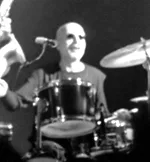
Paul Motian (cropped from a photo of Bill Frisell, Joe Lovano, and Paul Motian performing in concert in Rome) CC BY-SA 3.0 — Wikimedia Commons — https://commons.wikimedia.org/wiki/File:Paul_Motian_by_MT.jpg

Stephen Paul Motian was born March 25, 1931, in Philadelphia and raised in Providence, Rhode Island, in an Armenian-American family. He started on guitar as a child before switching to drums at twelve, touring New England in swing bands while still in his teens. When the Korean War came, he joined the U.S. Navy and studied at the United States Naval School of Music in Washington, D.C., staying in uniform until 1954. He rounded out his training at the Manhattan School of Music and turned fully professional that same year, working briefly with Thelonious Monk before the gig that would define the first phase of his career.
In 1959, pianist Bill Evans hired Motian for a trio alongside a young bassist named Scott LaFaro. What the three of them built over the next two years reshaped what a jazz rhythm section could do: instead of the drummer keeping time underneath, all three players improvised in constant conversation, trading pulse and pushing tempo back and forth rather than laying down a fixed beat and soloing over it. The trio's defining document came from a single day at the Village Vanguard, June 25, 1961, when they recorded what would become two albums, Sunday at the Village Vanguard and Waltz for Debby. Eleven days later, LaFaro was killed in a car accident. Motian stayed with Evans a while longer, into 1964, but the trio that had just redefined the format was gone in an instant.
Motian spent the back half of the 1960s and into the mid-1970s as the drummer in Keith Jarrett's "American Quartet," alongside bassist Charlie Haden and saxophonist Dewey Redman, a stretch that ran roughly from 1967 to 1976. It was Jarrett's most explicitly American band, playing loose, freely structured original material rooted in gospel, blues, and free jazz rather than the more classical-inflected sound of Jarrett's parallel "European Quartet." Live and studio dates from the period — Fort Yawuh (1973), Treasure Island (1974), Backhand (1975), and the ECM release The Survivors' Suite (1977) — captured a group that gave Motian wide latitude to color and suggest rather than simply keep time, the same instinct Evans had drawn out of him a decade earlier.
He started leading his own sessions in the early 1970s while still working steadily as a sideman. His debut as a leader, Conception Vessel (1973, ECM), paired him with Jarrett and Haden again, and Tribute followed in 1975. Both were ECM dates, produced by Manfred Eicher, and they set the tone for a run of leader albums across the late 1970s and into the 1980s, moving between ECM, Soul Note, and Black Saint as he built a catalog under his own name for the first time.
The group most associated with Motian's mature sound formed in the early 1980s: a trio with guitarist Bill Frisell and saxophonist Joe Lovano, a lineup with no chordal instrument or walking bass to anchor it, built instead on space, implication, and Motian's spare, coloristic drumming. Working for the JMT label through the late 1980s and 1990s, the trio recorded a run of albums that includes Monk in Motian (1988), a Thelonious Monk tribute session that paired Frisell and Lovano with a second saxophonist, Dewey Redman, and pianist Geri Allen. In 1991, Motian formed a second, very different working band, the Electric Bebop Band — a rotating cast of younger musicians playing two electric guitars, two saxophones, electric bass, and drums, tackling bebop and hard-bop repertoire by Monk, Bud Powell, and Charlie Parker with a modern, amplified edge. Its self-titled 1993 debut featured a young Joshua Redman and Kurt Rosenwinkel; later editions of the band became a proving ground for a generation of guitarists and saxophonists passing through New York, including Steve Cardenas and Chris Cheek.
Motian kept working steadily into his final years. He returned to ECM in the mid-2000s, recorded a co-billed trio session with Frisell and bassist Ron Carter for Nonesuch (2006), and across 1994, 2004, and 2005 led three separate trio dates with the same Italian pianist, Enrico Pieranunzi, each with a different bassist and saxophonist — Untold Story (1994, with Marc Johnson), Doorways (2004, with Chris Potter), and Special Encounter (2005, with Charlie Haden). In 2004, in Brooklyn, he also recorded with a young Israeli pianist named Anat Fort, a session that became A Long Story (ECM, 2007) — Fort's first album for the label and, by extension, the first ECM release by an Israeli artist. She had pursued the connection for years, chasing down his gigs after moving to New York, before he agreed to record with her.
In 2011, at eighty years old, Motian won the drummer category in the DownBeat Critics Poll for the first time — recognition that arrived the same year he died. He passed away on November 22, 2011, at Mount Sinai Hospital in Manhattan, from complications of myelodysplastic syndrome. Further Explorations, a trio session with Chick Corea and bassist Eddie Gomez recorded live at the Blue Note in 2010 and built explicitly around the Bill Evans repertoire he'd helped originate half a century earlier, was released two months after his death.
Critics reached for the word "anti-drummer" to describe what Motian did, and it stuck because it was accurate: rather than keeping strict time, he suggested the pulse in fragments, breaking it up between a sizzling ride cymbal and a spare, unpredictable kit vocabulary, so that the beat was implied rather than stated outright and the music still swung. AllMusic called him "one of the most subtle, spontaneous, and interactive drummers in jazz" and "a masterfully subtle drummer and a superb colorist." Jazz critic Kevin Whitehead's description of him as an "anti-drummer" captured the same idea from a different angle — with slow tempos, loose timing, and a self-effacing touch, "a little rustle of brushes and the faint boom of a bass drum" was often enough to keep a piece moving.
That approach was forged directly in the two bands that bracket his career's first two decades: Bill Evans's trio, where he, Evans, and Scott LaFaro treated timekeeping as a three-way conversation rather than a fixed job, and Keith Jarrett's American Quartet, which gave him room to work in open, loosely structured forms rooted as much in gospel and free jazz as in the standard-song tradition. Both experiences pushed him toward composing and bandleading on his own terms, first on ECM in the 1970s and then, most distinctively, in the drummerless-chords trio with Bill Frisell and Joe Lovano — a format built entirely on space and implication — and in the electric, two-guitar attack of the Electric Bebop Band, which let him revisit the bebop and hard-bop tradition through younger players without ever playing it straight.
- Sunday at the Village Vanguard (1961, Bill Evans Trio, Riverside) - Recorded eleven days before bassist Scott LaFaro's death, this is the definitive document of the interactive, conversational trio playing that first made Motian's name. Spotify - Sunday At The Village Vanguard
- The Survivors' Suite (1977, Keith Jarrett, ECM) - A continuous, two-part studio suite from Jarrett's American Quartet, the group Motian anchored for roughly a decade. Spotify - The Survivors' Suite Listen
- Conception Vessel (1973, ECM) - Motian's debut as a leader, produced by Manfred Eicher and featuring Keith Jarrett and Charlie Haden. Spotify - Conception Vessel
- Monk in Motian (1988, JMT) - A Thelonious Monk tribute session pairing his longtime trio partners Bill Frisell and Joe Lovano with a second saxophonist, Dewey Redman, and pianist Geri Allen.
Paul Motian: Full Discography
Discogs profile summary
- Full name: Stephen Paul Motian
- Born March 25, 1931, Philadelphia, Pennsylvania; died November 22, 2011, Manhattan, New York
- Discogs bio: "American jazz drummer and percussionist... Motian played an important role in freeing jazz drummers from strict time-keeping duties. He first came to prominence in the late 1950s in the piano trio of [Bill Evans], and later was a regular in pianist [Keith Jarrett]'s band for about a decade (c. 1967-1976)."
- Verified against the Discogs API (artist ID 255882), identity confirmed via the Sunday At The Village Vanguard (Bill Evans Trio, Riverside RLP 376, 1961) release credits, which list "Paul Motian - Drums" alongside Scott LaFaro (bass) and Bill Evans (piano) — a release already independently known to be his.
Scope of this discography
Discogs holds 840 release credits for artist ID 255882 across a 60-plus-year career: 97 Main (leader/co-leader), 599 Appearance (sideman/guest), 72 TrackAppearance, 3 Producer/Co-producer, and 69 UnofficialRelease (bootlegs, excluded here). This file goes deep — full session/personnel detail, individually re-verified against the Discogs API at the release level — on six landmark titles where Motian is billed as leader or co-leader, and five landmark titles where he appears as a credited sideman on records that defined the first half of his career (the Bill Evans Trio and Keith Jarrett's American Quartet). The remaining ~90 Main-role titles are organized as a chronological list by era and label, drawn from the Discogs artist releases endpoint (title, year, label) without individual release-level re-verification of each one's personnel. The 599 Appearance-role sideman credits are not itemized track-by-track here; the small number that are genuinely load-bearing for this profile (connections to Anat Fort and Enrico Pieranunzi, both profiled elsewhere in this system) are covered in final-profile.md's Personnel & Collaborations section instead of being duplicated in this file.
LANDMARK RECORDINGS AS LEADER / CO-LEADER: full session/personnel detail (Discogs-verified)
Conception Vessel (1973, ECM)
| Field | Detail |
|---|---|
| Release | Conception Vessel, ECM Records, ECM 1028 ST |
| Recorded | November 25-26, 1972, at Butterfly and Sound Ideas Studios, New York City |
| Personnel (Discogs extraartists) | Paul Motian (percussion, composed by), Keith Jarrett (piano, flute), Charlie Haden (bass), Sam Brown (guitar), Leroy Jenkins (violin), Becky Friend (flute); produced by Manfred Eicher |
| Notes | Motian's debut as a leader, and his first ECM release. Opened a run of ECM leader dates through the early 1980s. |
| Listen | Spotify - Conception Vessel (verified) |
| Buy | Amazon search |
Tribute (1975, ECM)
| Field | Detail |
|---|---|
| Release | Tribute, ECM Records, ECM 1048 ST |
| Recorded | May 1974, at Generation Sound Studios, New York City |
| Personnel (Discogs extraartists) | Paul Motian (percussion), Charlie Haden (bass), Sam Brown (acoustic/electric guitar), Paul Metzke (electric guitar), Carlos Ward (alto saxophone); produced by Manfred Eicher |
| Notes | Motian's second ECM leader date, expanding the working group to a two-guitar frontline — an early version of the multi-guitar configuration he'd return to nearly two decades later with the Electric Bebop Band. |
| Listen | Spotify - Tribute (verified) |
| Buy | Amazon search |
Monk In Motian (1988, JMT)
| Field | Detail |
|---|---|
| Release | Monk In Motian, JMT, 834 421-2 |
| Recorded | Live to digital 2-track, March 1988, A&R Recording Studios, New York City |
| Personnel (Discogs extraartists) | Paul Motian (drums), Bill Frisell (electric guitar), Joe Lovano (tenor saxophone), Dewey Redman (tenor saxophone), Geri Allen (piano); produced by Stefan Winter |
| Notes | A Thelonious Monk tribute date pairing the two saxophonists (Lovano and Redman) with Frisell — the guitarist and saxophonist who, alongside Motian, formed the long-running Paul Motian Trio through the 1980s and beyond. |
| Listen | Not found on Spotify (searched under artist and title; this JMT-era title does not appear to have been licensed to streaming) |
| Buy | Amazon search |
Paul Motian And The Electric Bebop Band (1993, JMT)
| Field | Detail |
|---|---|
| Release | Paul Motian And The Electric Bebop Band, JMT, 514 004-2 |
| Recorded | Power Station, New York City, April 1992 |
| Personnel (Discogs extraartists) | Paul Motian (drums, co-producer), Joshua Redman (tenor saxophone), Kurt Rosenwinkel (electric guitar), Brad Schoeppach (electric guitar), Stomu Takeishi (electric bass); produced by Stefan Winter |
| Notes | Self-titled debut of the Electric Bebop Band, a group built around bebop and hard-bop repertoire reworked for two electric guitars, two saxophones, and electric bass — a deliberately young lineup that became a recurring vehicle for emerging players over the following two decades. |
| Listen | Not found on Spotify (searched under artist and title; not currently available on the service) |
| Buy | Amazon search |
Bill Frisell, Ron Carter, Paul Motian (2006, Nonesuch)
| Field | Detail |
|---|---|
| Release | Bill Frisell, Ron Carter, Paul Motian, Nonesuch, 7559-79897-2 |
| Recorded | February 14-15, 2005, Avatar Studios, New York City |
| Personnel (Discogs extraartists) | Bill Frisell (guitar), Ron Carter (bass), Paul Motian (drums); produced by Lee Townsend |
| Notes | A co-billed trio session pairing Motian's longtime guitar partner Frisell with the bassist best known for Miles Davis's Second Great Quintet. |
| Listen | Spotify - Bill Frisell, Ron Carter, Paul Motian (verified) |
| Buy | Amazon search |
Further Explorations (2012, Concord Jazz)
| Field | Detail |
|---|---|
| Release | Further Explorations, credited to Chick Corea, Eddie Gomez, Paul Motian, Concord Jazz, CJA-33364-02 |
| Recorded | Live at the Blue Note Jazz Club, New York City, May 4-17, 2010 |
| Personnel (Discogs extraartists) | Chick Corea (piano, producer), Eddie Gomez (bass), Paul Motian (drums) |
| Notes | A trio date explicitly conceived as an exploration of the Bill Evans Trio repertoire and legacy — Corea and Motian revisiting the tradition Motian himself helped originate with Evans and Scott LaFaro half a century earlier. Released January 17, 2012, roughly two months after Motian's death. |
| Listen | Spotify - Further Explorations (verified) |
| Buy | Amazon search |
LANDMARK RECORDINGS AS SIDEMAN: full session/personnel detail (Discogs-verified)
Sunday At The Village Vanguard (Bill Evans Trio, 1961)
| Field | Detail |
|---|---|
| Release | Sunday At The Village Vanguard, credited to the Bill Evans Trio, Riverside Records, RLP 376 |
| Recorded | Live, Village Vanguard, New York City, June 25, 1961 |
| Personnel (Discogs extraartists) | Bill Evans (piano), Scott LaFaro (bass), Paul Motian (drums); produced by Orrin Keepnews |
| Notes | The trio's final performance with Scott LaFaro, who died in a car accident eleven days later, on July 6, 1961. Along with its companion release Waltz for Debby (Riverside, 1962, drawn from the same June 25, 1961 sets and also carrying a Main-role Discogs credit for Motian), it's regarded as one of the foundational documents of interactive, conversational jazz-trio playing — the context in which Motian's own reputation as an "anti-timekeeper" first took shape. |
| Listen | Spotify - Sunday At The Village Vanguard (verified) |
| Buy | Amazon search |
Fort Yawuh (Keith Jarrett, 1973)
| Field | Detail |
|---|---|
| Release | Fort Yawuh, credited to Keith Jarrett, Impulse!/ABC Records, AS-9240 |
| Recorded | Live at the Village Vanguard, New York City, February 24, 1973 |
| Personnel (Discogs extraartists) | Keith Jarrett (piano, tambourine, soprano saxophone), Charlie Haden (double bass), Paul Motian (drums, percussion), Dewey Redman (tenor saxophone, musette, maracas); produced by Ed Michel |
| Notes | An early studio-adjacent live document of Jarrett's "American Quartet" (Jarrett, Haden, Redman, Motian), the core working band Motian anchored for roughly a decade. |
| Listen | Not found on Spotify (searched under Keith Jarrett's own artist catalog; not currently available on the service) |
| Buy | Amazon search |
Treasure Island (Keith Jarrett, 1974)
| Field | Detail |
|---|---|
| Release | Treasure Island, credited to Keith Jarrett, Impulse!/ABC Records, AS-9274 |
| Recorded | February 27-28, 1974, Generation Sound Studios, New York City |
| Personnel (Discogs extraartists) | Keith Jarrett (piano, drum, written-by), Charlie Haden (bass), Paul Motian (drums, percussion), Dewey Redman (tenor saxophone, tambourine), Guilherme Franco (percussion) |
| Notes | American Quartet studio date, expanded with Brazilian percussionist Guilherme Franco. |
| Listen | Spotify - Treasure Island (verified) |
| Buy | Amazon search |
Backhand (Keith Jarrett, 1975)
| Field | Detail |
|---|---|
| Release | Backhand, credited to Keith Jarrett, ABC Impulse!, ASD-9305 |
| Recorded | October 9-10, 1974, Generation Sound Studios, New York City |
| Personnel (Discogs extraartists) | Keith Jarrett (piano, wood flute, percussion, written-by), Charlie Haden (bass), Paul Motian (drums, percussion), Dewey Redman (tenor saxophone, musette, maracas); produced by Ed Michel |
| Notes | Studio session from the same American Quartet working period as Fort Yawuh and Treasure Island. |
| Listen | Spotify - Back Hand (verified; listed on Spotify as "Back Hand," two words) |
| Buy | Amazon search |
The Survivors' Suite (Keith Jarrett, 1977, ECM)
| Field | Detail |
|---|---|
| Release | The Survivors' Suite, credited to Keith Jarrett, ECM Records, ECM 1085 |
| Recorded | April 1976, Tonstudio Bauer, Ludwigsburg, Germany |
| Personnel (Discogs extraartists) | Keith Jarrett (piano, soprano saxophone, bass recorder, celeste, percussion, composed by), Charlie Haden (bass), Paul Motian (drums, percussion), Dewey Redman (tenor saxophone, percussion); produced by Manfred Eicher |
| Notes | The American Quartet's move to ECM, and one of the group's most acclaimed studio statements — a continuous, two-part suite rather than a set of discrete tunes. |
| Listen | Spotify - The Survivors' Suite (verified) |
| Buy | Amazon search |
FULL LEADER / CO-LEADER CATALOG: chronological list by era and label
The titles below are Motian's remaining ~90 Main-role (leader/co-leader) credits on Discogs, organized by era and label as a factual chronological reference. Years and labels are drawn from the Discogs artist releases endpoint rather than individually re-verified release-by-release, consistent with the scoping approach used elsewhere in this system for large catalogs (e.g. the Miles Davis and Chick Corea profiles).
Soul Note / Black Saint years (1982-1986): Conspiracy (1982) · The Ballad Of The Fallen (1983) · Amber Skies (1984) · The Story Of Maryam (1984) · Mutant Variations (1984) · Sung Heroes (1986) — reissued in full as The Complete Remastered Recordings On Black Saint & Soul Note (2010, Cam Jazz box set).
JMT years — the Paul Motian Trio and Electric Bebop Band (1987-1999): Etudes (1988, with Geri Allen and Charlie Haden) · Notes (1988) · Circle The Line (1988, GM Recordings) · The Paul Bley Quartet (1988) · Monk In Motian (1988, full detail above) · Segments (1989) · In The Year Of The Dragon (1989) · Motian In Tokyo (1991) · Live At The Village Vanguard (1991) · Memoirs (1992) · Paul Motian And The Electric Bebop Band (1993, full detail above) · Reincarnation Of A Love Bird (1994) · The Montreal Tapes (1994) · Play Kurt Weill (1995, as Tethered Moon with Masabumi Kikuchi and Gary Peacock) · Nothing Ever Was, Anyway. Music Of Annette Peacock (1997, Tethered Moon) · Flight Of The Blue Jay (1997, Electric Bebop Band) · Not Two, Not One (1999) · Play Monk & Powell (1999, Electric Bebop Band, recorded Nov 1998).
Winter & Winter years (1997-2003): Europe (2001) · Holiday For Strings (2002) · Fantasm - The Music Of Paul Motian (2000) · Takiya! Tokaya! (1997) — Winter & Winter, founded by Stefan Winter after JMT, continued the working relationship with much of the same personnel pool.
"On Broadway" standards series (1988-2012): Paul Motian On Broadway - Vol. 1 (1989) · Vol. 2 (1990) · Vol. III (1992) · later volumes compiled as On Broadway Vol. 1,2,3,4,5 (2012 box set).
Return to ECM and late-period leader dates (2004-2011): Doorways (2004, with Enrico Pieranunzi and Chris Potter — see Personnel & Collaborations in final-profile.md) · I Have The Room Above Her (2005) · Special Encounter (2005, with Enrico Pieranunzi and Charlie Haden) · Time And Time Again (2007) · Live At The Half Note (2008) · Lost In A Dream (2010) · Live At Birdland (2011) · The Windmills Of Your Mind (2011).
Small-label and archival leader/co-leader dates, various years: Free Blown Jazz (1959) · Turning Point (1975) · Unexpected (1978, Kharma) · Muthspiel • Peacock • Muthspiel • Motian (1993, Amadeo) · Miles Mode (1993, Sony) · At The Deer Head Inn (1994, ECM, with Keith Jarrett, Gary Peacock; also issued paired with Bridge Of Light as a two-fer) · Untold Story (1994, with Enrico Pieranunzi and Marc Johnson — see Personnel & Collaborations) · Flux And Change (1995, Soul Note) · Paul Motian (New York) (1998, Fabbri Editori) · Around (1999, Stunt Records) · Three Guys (1999) · Dreamer (2000, Double-Time Records) · Birth (2001) · Amaryllis (2001) · The Mourning Of A Star (2001) · Intérieur Nuit (2001) · Bill McHenry Quartet Featuring Paul Motian (2003, Fresh Sound New Talent) · Fellini Jazz (2003) · As It Grows (2004, hatOLOGY) · Selected Recordings (2004, ECM Records) · Goodbye (2005) · Think Like The Waves (2006, Songlines) · Bill Frisell, Ron Carter, Paul Motian EP (2006, Nonesuch, companion release to the full trio album above) · Voices - New York Trio Recordings Vol. 2 (2007, Pirouet) · Two Miles A Day (2007) · Your Songs (The Music Of Elton John) (2007) · Songs (2008, JV Records) · Dear Someone (2009, Stunt Records) · Songs From The Last Century (2009) · Owls Talk (2010).
Posthumous archival releases (2013-2025): Paul Motian (2013, ECM) · Complete Recordings (2013, Essential Jazz Classics) · Live At The Village Vanguard (2013) · Hamburg '72 (2014, live) · Standards Plus One (2015, Winter & Winter) · Drum Music (2016, Musica Jazz) · When Will The Blues Leave (2019) · The Copenhagen Concert December 2 - 1996 (2020, Storyville) · New York Reflections (Live At Birdland) (2012, C.A.M. Jazz) · Live At The Village Vanguard - Unissued Tracks (2022) · Complete Trio Recordings (2023, Fingerpoppin' Records) · Duo In Concert (2023) · The Old Country (More From The Deer Head Inn) (2024) · Balladeering (2024) · At The Deer Head Inn (The Complete Recordings) (2025, ECM) · Haunted Heart: The Legendary Riverside Studio Recordings (2025).
Selected sideman appearances beyond the landmark titles above
Motian's Appearance-role sideman credits on Discogs run to 599 entries across a 60-plus-year career and are not itemized individually in this file. One is load-bearing for this system's cross-referencing and is documented in final-profile.md's Personnel & Collaborations section rather than duplicated here:
- Anat Fort — A Long Story (ECM, 2007), Fort's ECM debut, recorded 2004; profiled elsewhere in this system.
Note: the three Enrico Pieranunzi trio records (Untold Story, Doorways, Special Encounter) are Main-role (leader/co-leader) credits for Motian on Discogs, not sideman appearances — Motian led those dates himself, choosing Pieranunzi as his trio partner. They're listed in the chronological catalog above, not here.
Discogs note on Amazon listings
Every "Buy" link above is a plain, non-affiliate Amazon.com search-results link, matching the precedent set by this project's Miles Davis, Chick Corea, and George Duke discographies for large catalogs.
Pietro Tonolo (tenor/soprano saxophone) - Electric Bebop Band (Europe, 2001; Holiday for Strings, 2002), and Tonolo's own leader dates Portrait of Duke (2000), Your Songs (The Music of Elton John) (2007) and Oltremare (2004).
Bill Evans - the pianist who hired Motian for his trio in 1959, launching the phase of his career built on interactive, non-timekeeping trio playing.
Scott LaFaro - the trio's bassist until his death in July 1961, eleven days after their landmark Village Vanguard sessions.
Keith Jarrett - bandleader of the American Quartet, which Motian anchored for roughly a decade (c. 1967-1976); Jarrett also appeared as a sideman on Motian's own leader debut, Conception Vessel (1973).
Charlie Haden - bassist alongside Motian in Jarrett's American Quartet, and a recurring collaborator on Motian's own leader dates, including Conception Vessel (1973), Tribute (1975), and Special Encounter (2005, with Enrico Pieranunzi).
Bill Frisell - guitarist in Motian's long-running trio (with Joe Lovano) from the early 1980s onward, and co-billed with Motian and Ron Carter on a 2006 Nonesuch trio record.
Joe Lovano - saxophonist in the same long-running Motian trio alongside Frisell.
Enrico Pieranunzi - the Italian pianist Motian chose as a trio partner three separate times with three different lineups: Untold Story (1994, with Marc Johnson), Doorways (2004, with Chris Potter), and Special Encounter (2005, with Charlie Haden); Pieranunzi is profiled separately on this system at jazzprofiles.com/profile/it-enrico-pieranunzi.
Anat Fort - pianist he recorded with in Brooklyn in 2004, resulting in her ECM debut A Long Story (2007); Fort is profiled separately on this system at jazzprofiles.com/profile/il-anat-fort.
Joshua Redman and Kurt Rosenwinkel - saxophonist and guitarist on the self-titled 1993 debut of Motian's Electric Bebop Band.
Giancarlo Barigozzi (recording engineer) - credited as recording engineer on Mutant Variations (Soul Note SN 1091, 1984), per Discogs.
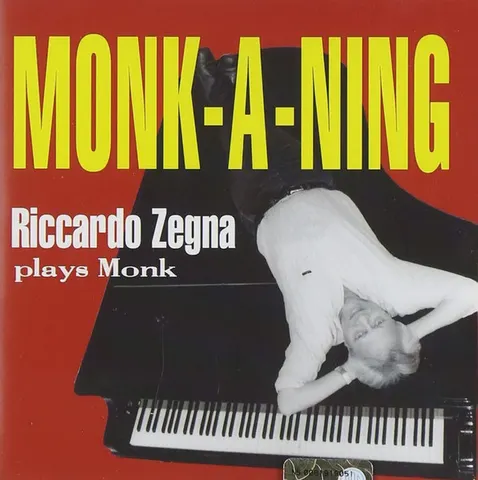
Riccardo Zegna (piano) - fellow sideman with Motian on Pietro Tonolo's Oltremare (2004, EGEA), alongside bassist Piero Leveratto. Profiled on the ItalianJazz vault.