 JAZZPROFILES lives in the music 1,572 Jazz Artists fully Profiled!
 Freddie Hubbard
Last updated September 7, 2026
Listen on Spotify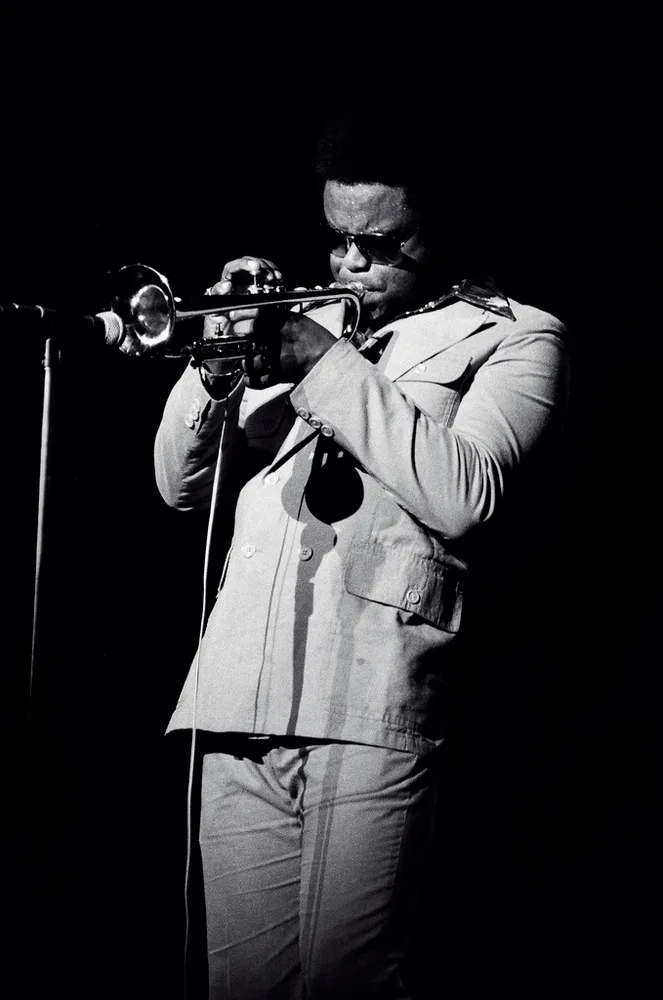
Freddie Hubbard performing in Rochester, New York, 1976 CC BY-SA 2.0 — Wikimedia Commons — https://commons.wikimedia.org/wiki/File:Freddie_Hubbard_1976.jpg
Frederick Dewayne Hubbard was born April 7, 1938, in Indianapolis, and started working with local jazz musicians, including guitarist Wes Montgomery, while still in his hometown's scene. He moved to New York at twenty in 1958, and by twenty-two had recorded his first solo album for Blue Note. Through the early 1960s he became one of the brashest, most urgent trumpet voices to emerge in the wake of Clifford Brown, playing bebop, hard bop, and post-bop with the era's defining bandleaders.
His greatest commercial success came in the 1970s with a run of crossover albums for Atlantic and, especially, Creed Taylor's CTI Records: Red Clay (1970), Straight Life (1970), and First Light (1971), the last of which won a Grammy for Best Instrumental Jazz Performance. Creed Taylor's own career is covered in full in his JazzProfiles.com profile. Red Clay in particular pushed him to the frontier of jazz-rock at the start of the decade, a genuinely new sound for a musician who had made his name in straight-ahead bebop only a few years earlier.
Later in the decade Hubbard returned to acoustic hard bop with the V.S.O.P. quintet, reuniting him with members of Miles Davis's 1960s Second Great Quintet: Herbie Hancock, Wayne Shorter, Tony Williams, and Ron Carter.
He suffered a heart attack in late November 2008 in Sherman Oaks, California, and died a few weeks later, on December 29, 2008, at age 70.
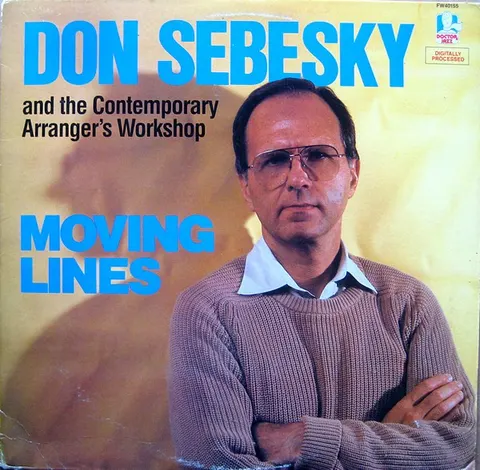
Hubbard's playing spanned an unusually wide arc within jazz history: the fire and urgency of 1960s hard bop, the jazz-rock frontier he helped define on Red Clay, and a late-career return to acoustic post-bop with V.S.O.P. His CTI-era records, arranged by Don Sebesky and engineered by Rudy Van Gelder, remain touchstone examples of how crossover jazz could stay musically serious while reaching for a broader audience.
- Red Clay (1970, CTI Records) - His genre-defining jazz-rock crossover landmark.
- First Light (1971, CTI Records) - Grammy winner, Best Instrumental Jazz Performance; arranged by Don Sebesky.
- Straight Life (1970, CTI Records) - Part of his early-1970s CTI run.
Freddie Hubbard: Discography (Leader, Selected)
Identity confirmed via Discogs artist ID 55745 ("Freddie Hubbard").
| Album | Year | Label | Notes |
|---|---|---|---|
| Open Sesame | 1960 | Blue Note | Debut as leader. |
| Ready for Freddie | 1962 | Blue Note | |
| Hub-Tones | 1963 | Blue Note | |
| Backlash | 1967 | Atlantic Records | |
| Red Clay | 1970 | CTI Records | Genre-defining jazz-rock crossover landmark. |
| Straight Life | 1970 | CTI Records | |
| First Light | 1971 | CTI Records | Grammy winner, Best Instrumental Jazz Performance; arranged by Don Sebesky. |
| Sky Dive | 1972 | CTI Records | |
| Keep Your Soul Together | 1973 | CTI Records | |
| V.S.O.P. (with Herbie Hancock, Wayne Shorter, Tony Williams, Ron Carter) | 1977 | Columbia Records |
His extensive 1960s Blue Note catalog and later career are not itemized exhaustively here. Creed Taylor's own CTI catalog is covered in Creed Taylor's own profile.
- Creed Taylor - produced his defining CTI-era records; profiled separately on JazzProfiles.com.
- Don Sebesky - arranged First Light (1971); profiled separately on JazzProfiles.com.
- V.S.O.P. - reunited him with Herbie Hancock, Wayne Shorter, Tony Williams, and Ron Carter in the late 1970s.