 JAZZPROFILES lives in the music 1,572 Jazz Artists fully Profiled!
 Lee Morgan
Last updated September 7, 2026
Listen on Spotify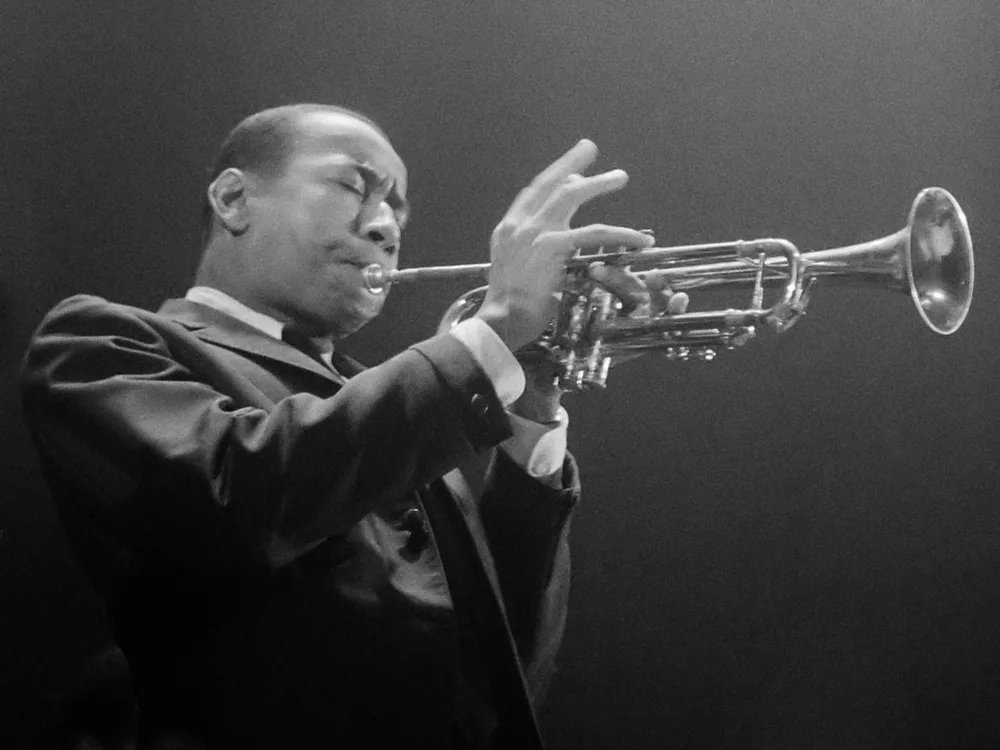
Lee Morgan on stage with Art Blakey's Jazz Messengers at the Concertgebouw, Amsterdam, November 15, 1959 CC BY-SA 3.0 NL — Wikimedia Commons — https://commons.wikimedia.org/wiki/File:Lee_Morgan_(1959).jpg (photograph by Herbert Behrens / Anefo, from the Dutch Nationaal Archief collection; this file is the published crop extracted from the original Anefo negative scan, Bestanddeelnr 910-8265)
.jpg)
Edward Lee Morgan was born July 10, 1938 in Philadelphia, the youngest of four children of Otto Ricardo and Nettie Beatrice Morgan. He was drawn first to the vibraphone, but his sister Ernestine gave him a trumpet for his thirteenth birthday and that settled it. He attended the Jules Mastbaum vocational school, led a bebop group at Philadelphia's Music City club, and by fifteen was working weekends professionally in a band co-led with bassist Spanky DeBrest. His decisive influence was fellow Philadelphian Clifford Brown, who gave him lessons and let him sit in. Brown was killed in a car crash on June 26, 1956, weeks after Morgan finished school, and a good part of the jazz press spent the next decade describing Morgan as the player most likely to carry Brown's line forward.
He did not wait long. In November 1956, at eighteen, he cut two leader albums inside a month: Introducing Lee Morgan for Savoy and Lee Morgan Indeed! for Blue Note (recorded November 4, 1956, with Horace Silver, Wilbur Ware and Philly Joe Jones). That same year he joined Dizzy Gillespie's big band, staying roughly eighteen months until economic pressure forced Gillespie to fold the orchestra in 1958. Blue Note kept him working at a startling clip through those months: Lee Morgan Vol. 3 (March 24, 1957), City Lights (August 25, 1957), The Cooker (September 29, 1957, with Pepper Adams on baritone) and Candy. On September 15, 1957 he took the trumpet chair on John Coltrane's Blue Train, playing an instrument with an upswept bell that Gillespie had given him.
When Gillespie's band broke up, Morgan went straight into Art Blakey's Jazz Messengers, the finishing school for a generation of hard bop players. He is on Moanin' (1958), the album that made that edition of the band famous, and when Benny Golson left it was Morgan who talked Blakey into hiring Wayne Shorter. The Morgan/Shorter/Bobby Timmons/Jymie Merritt Messengers recorded The Big Beat (1960), A Night in Tunisia (1960) and The Freedom Rider (1960-1961), and Morgan contributed originals including "The Midget," "Haina," "Kozo's Waltz" and "Blue Lace." He also kept a leader career running alongside it, cutting Here's Lee Morgan and Expoobident for Vee-Jay in 1960 with Blakey on drums. Heroin, which by his biographer Tom Perchard's account Blakey introduced him to, ended the run: Morgan left the Messengers in 1961 and went home to Philadelphia, where he worked only sporadically for close to two years.
He came back to New York in 1963 and on December 21 recorded The Sidewinder at Rudy Van Gelder's studio in Englewood Cliffs, with Joe Henderson, Barry Harris, Bob Cranshaw and Billy Higgins. Released in July 1964, it became the best-selling record Blue Note had ever had, climbing to No. 25 on the Billboard album chart by January 1965 while the title track reached No. 81 on the Hot 100, and it stabilized a label that had been close to insolvent. Drummer Billy Hart has said Morgan cut the tune as album filler and never understood the reaction; Morgan himself thought his playing had advanced further on Grachan Moncur III's Evolution, recorded a month earlier on November 21, 1963. The tune was picked up as the music for a Chrysler television spot that ran during the World Series without his permission, and he threatened legal action until Chrysler pulled the ad and settled. Blue Note then spent years asking its roster for more of the same boogaloo feel, and Morgan supplied some of it himself with "Cornbread" and "Yes I Can, No You Can't." He also filled the trumpet chair with the Messengers again in the mid-1960s after Freddie Hubbard left, appearing with John Gilmore, John Hicks and Victor Sproles in a lineup filmed for the BBC series Jazz 625. Between 1964 and 1968 he recorded roughly twenty more leader dates, several of which Blue Note shelved and did not issue until the late 1970s and 1980s.
The band he led at the end was his most personal: Bennie Maupin or Billy Harper on reeds, Harold Mabern on piano, Jymie Merritt on bass, Mickey Roker or Freddie Waits on drums. It is the group heard on Live at the Lighthouse, taped July 10 to 12, 1970 at the Lighthouse Café in Hermosa Beach during an engagement that opened on his 32nd birthday, and the only live album issued in his lifetime. In those last two years he also became an organizer, helping lead the Jazz and People's Movement, which disrupted the taping of network talk and variety shows through 1970 and 1971 to protest the near-total absence of jazz musicians from their guest slots and house bands. His final studio session, on September 17 and 18, 1971, was released in 1972 as Lee Morgan, commonly called The Last Session. Early on February 19, 1972, during a break between sets at Slugs' Saloon in the East Village, Morgan was shot by his common-law wife, Helen Moore, following an argument. The wound was not immediately fatal, but heavy snow across the city delayed the ambulance badly and he bled to death before reaching hospital. He was 33. Moore served a short prison term, was paroled, and returned to North Carolina, where she died of a heart condition in March 1996. The 2016 documentary I Called Him Morgan, directed by Kasper Collin, tells both their stories.
Morgan built directly on Clifford Brown's foundation, the same rounded, unforced tone and the same command at fast tempos, but he added a needling, vocal quality that Brown never used: half-valve smears, bent notes, sudden squeezed high notes, phrases that stop a beat early and dare the rhythm section to fill the hole. Where Miles Davis pared away and Freddie Hubbard went for brilliance and volume, Morgan played with an almost conversational wit, and he was among the very few trumpeters of the period whose sound is identifiable within two bars. He was also a real composer: "Ceora," "Search for the New Land," "The Sidewinder" and "Totem Pole" all entered the repertoire. Critics have generally split his catalog into the crowd-pleasing boogaloo dates that followed The Sidewinder and the more exploratory sessions, several unissued in his lifetime, on which he worked with modal and free-leaning material; Search for the New Land and the 1967 sextet half of The Procrastinator are the usual evidence for the second category. He is treated today as one of the two or three musicians most central to Blue Note's identity, and The Sidewinder was added to the Library of Congress National Recording Registry in 2024.
- The Sidewinder (1964, Blue Note) - The commercial breakthrough that rescued Blue Note financially, recorded December 21, 1963 with Joe Henderson, Barry Harris, Bob Cranshaw and Billy Higgins. Spotify - The Sidewinder Listen
- Search for the New Land (1966, Blue Note) - Cut eight weeks after The Sidewinder and held back two years, with Wayne Shorter, Herbie Hancock, Grant Green and Reggie Workman; the most ambitious writing of his career. Spotify - Search for the New Land Listen
- Cornbread (1967, Blue Note) - A September 1965 sextet date with Jackie McLean, Hank Mobley and Herbie Hancock, and the source of "Ceora," his most covered ballad. Spotify - Cornbread Listen
- Candy (1958, Blue Note) - His only quartet album, with Sonny Clark, Doug Watkins and Art Taylor, and the clearest recording of what he could do with nothing to hide behind. Spotify - Candy Listen
- The Cooker (1958, Blue Note) - A September 1957 quintet blowing date with Pepper Adams, Bobby Timmons, Paul Chambers and Philly Joe Jones, cut when Morgan was 19. Spotify - The Cooker Listen
- Live at the Lighthouse (1971, Blue Note) - Three nights in Hermosa Beach in July 1970 with Bennie Maupin, Harold Mabern, Jymie Merritt and Mickey Roker; the only live document released while he was alive, and much longer in its 1996 and 2021 expansions. Spotify - Live at the Lighthouse Listen
- Blue Train (1958, Blue Note) - As a sideman: John Coltrane's only leader album for Blue Note, recorded September 15, 1957, with Morgan and Curtis Fuller completing the front line. Spotify - Blue Train
- Moanin' (1959, Blue Note) - As a sideman: the Art Blakey and the Jazz Messengers album that made the Morgan/Golson/Timmons/Merritt edition of the band famous. Spotify - Moanin' (Expanded Edition)
Lee Morgan: Full Discography
Identity confirmed via the live Discogs API: artist ID 29976 ("Lee Morgan," realname Edward Lee Morgan, born July 10, 1938 in Philadelphia, died February 19, 1972 in New York City). Discogs credits Morgan on 1,706 releases in total: 141 in a "Main" leader role, 1,024 sideman "Appearance" credits, 494 track-level "TrackAppearance" credits, 46 unofficial releases and 1 production credit. The great majority of those entries are reissues, national pressings, and compilations of the same underlying records, so this file is curated rather than exhaustive. The first table lists his original albums as leader or co-leader (31 titles, including the sessions Blue Note shelved and issued only after his death). The second table is a representative selection of his most significant sideman dates, not a full itemization of the 1,000-plus sideman credits.
Recording dates, catalog numbers and personnel below come from the Discogs release records for first pressings wherever the API returned them, cross-checked against Wikipedia. Where the two sources disagree on a release year (a common problem with late-1950s and late-1960s Blue Note pressings), the discrepancy is flagged in the Notes column.
As Leader / Co-Leader
| Album Title | Recording Date(s) | Release Date | Label | Catalog Number | Format(s) | Personnel | Role | Reissue History | Spotify | Buy | Notes |
|---|---|---|---|---|---|---|---|---|---|---|---|
| Introducing Lee Morgan | November 1956 | 1956 | Savoy | MG 12091 | Vinyl, LP, Album, Mono | Lee Morgan (trumpet), Hank Mobley (tenor sax), Hank Jones (piano), Doug Watkins (bass), Art Taylor (drums) | Leader | Reissued on CD; remastered edition 2026 | Spotify - Introducing Lee Morgan | — | Morgan's first date as a leader, cut at 18. Discogs gives the session as November 7, 1956; Wikipedia gives November 5. Not resolved here |
| Lee Morgan Indeed! | November 4, 1956 | 1957 | Blue Note | BLP 1538 | Vinyl, LP, Album, Mono | Lee Morgan (trumpet), Clarence Sharpe (alto sax), Horace Silver (piano), Wilbur Ware (bass), Philly Joe Jones (drums) | Leader | Multiple Blue Note and Japanese reissues | Spotify - Indeed! | — | The first of 25 Blue Note leader albums |
| Lee Morgan Sextet (Volume 2) | December 2, 1956 | 1957 | Blue Note | BLP 1541 | Vinyl, LP, Album, Mono | Lee Morgan (trumpet), Hank Mobley (tenor sax), Kenny Rodgers (alto sax), Horace Silver (piano), Paul Chambers (bass), Charlie Persip (drums) | Leader | Blue Note limited LP reissue 1978 | Spotify - Lee Morgan Sextet | — | |
| Dizzy Atmosphere | February 18, 1957, Master Recorders, Hollywood | 1957 | Specialty | SP-2110 / SP-5001 | Vinyl, LP, Album, Mono | Lee Morgan (trumpet), Al Grey (trombone), Billy Mitchell (tenor sax), Billy Root (baritone sax), Wynton Kelly (piano), Paul West (bass), Charlie Persip (drums); arrangements by Benny Golson and Roger Hamilton Spotts | Leader | Reissued on Specialty and Fantasy CD | Spotify - Dizzy Atmosphere | — | Cut with Dizzy Gillespie big-band colleagues while that band was on the West Coast |
| Lee Morgan Vol. 3 | March 24, 1957 | 1957 | Blue Note | BLP 1557 | Vinyl, LP, Album, Mono | Lee Morgan (trumpet), Gigi Gryce (alto sax, flute), Benny Golson (tenor sax), Wynton Kelly (piano), Paul Chambers (bass), Charlie Persip (drums) | Leader | Reissued on CD, including a Rudy Van Gelder Edition | Spotify - Volume 3 | — | All six pieces written and arranged by Benny Golson |
| City Lights | August 25, 1957 | 1957 | Blue Note | BLP 1575 | Vinyl, LP, Album, Mono | Lee Morgan (trumpet), Curtis Fuller (trombone), George Coleman (tenor sax), Ray Bryant (piano), Paul Chambers (bass), Art Taylor (drums) | Leader | Reissued on CD | Spotify - City Lights | — | Discogs dates the first pressing to 1958; Wikipedia gives 1957 |
| The Cooker | September 29, 1957 | 1958 | Blue Note | BLP 1578 | Vinyl, LP, Album, Mono | Lee Morgan (trumpet), Pepper Adams (baritone sax), Bobby Timmons (piano), Paul Chambers (bass), Philly Joe Jones (drums) | Leader | Reissued on CD, including a Rudy Van Gelder Edition | Spotify - The Cooker | — | The session that links this profile to Pepper Adams, from whose profile it was spun off |
| Candy | November 18, 1957 and February 2, 1958 | 1958 | Blue Note | BLP 1590 | Vinyl, LP, Album, Mono | Lee Morgan (trumpet), Sonny Clark (piano), Doug Watkins (bass), Art Taylor (drums) | Leader | Reissued on CD, remastered | Spotify - Candy (Remastered) | — | His only quartet album, trumpet with rhythm section alone |
| Peckin' Time | February 9, 1958 | 1959 | Blue Note | BLP 1574 | Vinyl, LP, Album, Mono | Hank Mobley (tenor sax), Lee Morgan (trumpet), Wynton Kelly (piano), Paul Chambers (bass), Charlie Persip (drums) | Co-leader (billed to Hank Mobley) | Reissued on CD | Not confirmed on Spotify under Morgan's artist page | — | Issued under Mobley's name with Morgan co-billed on the sleeve |
| Here's Lee Morgan | February 8, 1960, Bell Sound Studio B, NYC | 1960 | Vee-Jay | VJLP 3007 | Vinyl, LP, Album | Lee Morgan (trumpet), Clifford Jordan (tenor sax), Wynton Kelly (piano), Paul Chambers (bass), Art Blakey (drums) | Leader | Original Jazz Classics Series remaster, 2025 | Spotify - Here's Lee Morgan (OJC Series) | — | The first of two Vee-Jay leader dates cut while Morgan was in the Jazz Messengers |
| Lee-Way | April 28, 1960 | 1961 | Blue Note | BLP 4034 | Vinyl, LP, Album, Mono | Lee Morgan (trumpet), Jackie McLean (alto sax), Bobby Timmons (piano), Paul Chambers (bass), Art Blakey (drums) | Leader | CD reissue as a Rudy Van Gelder Edition, 2002 | Spotify - Lee-Way (RVG Edition) | — | Four long tracks, two of them Cal Massey compositions |
| Expoobident | October 14, 1960, Universal Recorders, Chicago | 1961 | Vee-Jay | VJLP 3015 | Vinyl, LP, Album | Lee Morgan (trumpet), Clifford Jordan (tenor sax), Eddie Higgins (piano), Art Davis (bass), Art Blakey (drums) | Leader | Reissued on CD | Spotify - Expoobident | — | |
| Take Twelve | January 24, 1962, Plaza Sound Studios, NYC | 1962 | Jazzland | JLP 80 / JLP 980 | Vinyl, LP, Album | Lee Morgan (trumpet), Clifford Jordan (tenor sax), Barry Harris (piano), Bob Cranshaw (bass), Louis Hayes (drums) | Leader | Reissued on Original Jazz Classics and on CD in 1987 | Spotify - Take Twelve | — | His only album for Riverside's Jazzland subsidiary, cut during the Philadelphia years |
| The Sidewinder | December 21, 1963, Van Gelder Studio, Englewood Cliffs NJ | July 1964 | Blue Note | BLP 4157 / BST 84157 | Vinyl, LP, Album | Lee Morgan (trumpet), Joe Henderson (tenor sax), Barry Harris (piano), Bob Cranshaw (bass), Billy Higgins (drums) | Leader | Reissued many times, including a Rudy Van Gelder Edition CD | Spotify - The Sidewinder (RVG Edition) | — | Blue Note's best-selling album to that point. Reached No. 25 on the Billboard album chart in January 1965, with the title track at No. 81 on the Hot 100. Added to the National Recording Registry in 2024 |
| Search for the New Land | February 15, 1964, Van Gelder Studio | 1966 | Blue Note | BLP 4169 / BST 84169 | Vinyl, LP, Album | Lee Morgan (trumpet), Wayne Shorter (tenor sax), Herbie Hancock (piano), Grant Green (guitar), Reggie Workman (bass), Billy Higgins (drums) | Leader | Multiple CD and audiophile vinyl reissues | Spotify - Search for the New Land (RVG Edition) | — | Recorded eight weeks after The Sidewinder but held back until 1966. His most harmonically searching leader date |
| Tom Cat | August 11, 1964, Van Gelder Studio | 1980 | Blue Note | LT-1058 | Vinyl, LP, Album | Lee Morgan (trumpet), Curtis Fuller (trombone), Jackie McLean (alto sax), McCoy Tyner (piano), Bob Cranshaw (bass), Art Blakey (drums) | Leader | First issued 1980 in Blue Note's Liberty/United "LT" series of unreleased sessions | Spotify - Tom Cat | — | Shelved for 16 years and released eight years after Morgan's death |
| The Rumproller | April 21, 1965 | 1966 | Blue Note | BLP 4199 / BST 84199 | Vinyl, LP, Album | Lee Morgan (trumpet), Joe Henderson (tenor sax), Ronnie Mathews (piano), Victor Sproles (bass), Billy Higgins (drums) | Leader | Reissued on CD | Spotify - The Rumproller | — | Title track written by Andrew Hill to the boogaloo template Blue Note wanted after The Sidewinder |
| The Gigolo | June and July 1965 | 1968 | Blue Note | BLP 4212 / BST 84212 | Vinyl, LP, Album | Lee Morgan (trumpet), Wayne Shorter (tenor sax), Harold Mabern (piano), Bob Cranshaw (bass), Billy Higgins (drums) | Leader | Reissued on CD | Spotify - The Gigolo | — | Includes "Yes I Can, No You Can't," another of Morgan's boogaloo pieces |
| Cornbread | September 18, 1965 | 1967 | Blue Note | BLP 4222 / BST 84222 | Vinyl, LP, Album | Lee Morgan (trumpet), Jackie McLean (alto sax), Hank Mobley (tenor sax), Herbie Hancock (piano), Larry Ridley (bass), Billy Higgins (drums) | Leader | Reissued on CD and on Blue Note 75 vinyl | Spotify - Cornbread | — | Contains "Ceora," his most widely covered ballad |
| Infinity | November 16, 1965, Van Gelder Studio | 1981 | Blue Note | LT-1091 | Vinyl, LP, Album | Lee Morgan (trumpet), Jackie McLean (alto sax), Larry Willis (piano), Reggie Workman (bass), Billy Higgins (drums) | Leader | First issued 1981 in the "LT" unreleased-sessions series | Spotify - Infinity | — | Unissued for 16 years |
| Delightfulee | April 8 and May 27, 1966 | 1967 | Blue Note | BLP 4243 / BST 84243 | Vinyl, LP, Album | Quintet: Lee Morgan (trumpet), Joe Henderson (tenor sax), McCoy Tyner (piano), Bob Cranshaw (bass), Philly Joe Jones (drums). Oliver Nelson-arranged ensemble on two tracks adds Ernie Royal (trumpet), Wayne Shorter (tenor sax), Phil Woods (alto sax, flute), Danny Bank (baritone sax, bass clarinet), Tom McIntosh (trombone), Jim Buffington (French horn), Billy Higgins (drums) | Leader | Reissued on CD | Spotify - Delightfulee | — | Splices a working quintet date with an arranged large-ensemble session |
| Charisma | September 29, 1966, Van Gelder Studio | 1969 | Blue Note | BST 84312 | Vinyl, LP, Album, Stereo | Lee Morgan (trumpet), Jackie McLean (alto sax), Hank Mobley (tenor sax), Cedar Walton (piano), Paul Chambers (bass), Billy Higgins (drums) | Leader | Reissued on CD | Spotify - Charisma | — | Among the last recordings Paul Chambers made before his death in 1969 |
| The Rajah | November 29, 1966, Van Gelder Studio | 1985 | Blue Note | BST 84426 | Vinyl, LP, Album | Lee Morgan (trumpet), Hank Mobley (tenor sax), Cedar Walton (piano), Paul Chambers (bass), Billy Higgins (drums) | Leader | Previously unissued material prepared for release by Michael Cuscuna, 1985 | Spotify - The Rajah | — | Original session produced by Alfred Lion, shelved for 19 years |
| Standards | January 13, 1967, Van Gelder Studio | 1998 | Blue Note | CDP 7243 8 23213 2 3 | CD, Album | Lee Morgan (trumpet), James Spaulding (alto sax, flute), Wayne Shorter (tenor sax), Pepper Adams (baritone sax), Herbie Hancock (piano), Ron Carter (bass), Mickey Roker (drums); arrangements by Duke Pearson | Leader | Released for the first time in 1998 | Spotify - Standards | — | An all-standards septet date, unissued for 31 years. Pepper Adams and Duke Pearson both appear |
| Sonic Boom | April 14 and April 28, 1967 | 1979 | Blue Note | LT-987 | Vinyl, LP, Album | Lee Morgan (trumpet), David "Fathead" Newman (tenor sax), Cedar Walton (piano), Ron Carter (bass), Billy Higgins (drums) | Leader | First issued 1979 in the "LT" series | Spotify - Sonic Boom | — | |
| The Sixth Sense | November 10, 1967 | 1969 | Blue Note | BST 84335 | Vinyl, LP, Album, Stereo | Lee Morgan (trumpet), Jackie McLean (alto sax), Frank Mitchell (tenor sax), Cedar Walton (piano), Victor Sproles (bass), Billy Higgins (drums) | Leader | Reissued on CD | Spotify - The Sixth Sense | — | Discogs dates the first pressing to 1969; Wikipedia gives 1970 |
| Taru | February 15, 1968, Van Gelder Studio | 1980 | Blue Note | LT-1031 | Vinyl, LP, Album | Lee Morgan (trumpet), Bennie Maupin (tenor sax), John Hicks (piano), George Benson (guitar), Reggie Workman (bass), Billy Higgins (drums) | Leader | First issued 1980 in the "LT" series | Spotify - Taru | — | Original session produced by Duke Pearson and Francis Wolff |
| Caramba! | May 1968 | 1968 | Blue Note | BST 84289 | Vinyl, LP, Album, Stereo | Lee Morgan (trumpet), Bennie Maupin (tenor sax), Cedar Walton (piano), Reggie Workman (bass), Billy Higgins (drums) | Leader | Reissued on CD | Spotify - Caramba | — | All compositions by Morgan |
| The Procrastinator | July 14, 1967 and September and October 1969 | 1978 | Blue Note | BN-LA582-J2 | 2 x Vinyl, LP, Compilation | 1967 sextet: Lee Morgan (trumpet), Wayne Shorter (tenor sax), Bobby Hutcherson (vibes), Herbie Hancock (piano), Ron Carter (bass), Billy Higgins (drums). 1969 sessions add Julian Priester (trombone), George Coleman (tenor sax), Harold Mabern (piano), Walter Booker (bass), Mickey Roker (drums) | Leader | Two previously unissued sessions compiled by Michael Cuscuna for this 1978 double LP | Spotify - The Procrastinator | — | The 1967 sextet is frequently cited as the strongest band Morgan ever led in a studio |
| Live at the Lighthouse | July 10-12, 1970, The Lighthouse Café, Hermosa Beach CA | April 1971 | Blue Note | BST 89906 | 2 x Vinyl, LP, Album, Stereo | Lee Morgan (trumpet, flugelhorn), Bennie Maupin (tenor sax, flute, bass clarinet), Harold Mabern (piano), Jymie Merritt (bass), Mickey Roker (drums); Jack DeJohnette on one track | Leader | Expanded 3-CD edition 1996 (roughly 184 minutes); 8-CD and 12-LP complete box set, August 2021 | Spotify - Live at the Lighthouse | — | The only live album released in his lifetime. The engagement opened on his 32nd birthday. Produced by Francis Wolff |
| Lee Morgan (widely known as The Last Session) | September 17-18, 1971, Van Gelder Studio | 1972 | Blue Note | BST 84901 | 2 x Vinyl, LP, Album, Stereo | Lee Morgan (trumpet, flugelhorn), Billy Harper (tenor sax, alto flute), Bobbi Humphrey (flute), Grachan Moncur III (trombone), Harold Mabern (piano, electric piano), Jymie Merritt (electric bass), Reggie Workman (acoustic bass, percussion), Freddie Waits (drums, recorder) | Leader | Reissued on CD | Spotify - The Last Sessions | — | Titled simply Lee Morgan on the sleeve. His final studio date, produced by George Butler and engineered by Rudy Van Gelder |
As Sideman (selected major credits)
| Year | Project (Leader) | Title | Label | Catalog | Role | Notes |
|---|---|---|---|---|---|---|
| 1956-1957 | Dizzy Gillespie Big Band | Dizzy in Greece | Verve | Trumpet | Drawn from the State Department tour band Morgan joined at 18 | |
| 1957 | Dizzy Gillespie Big Band | Birks' Works | Verve | MG V-8222 | Trumpet | Morgan takes several of the featured trumpet solos |
| 1957 | Dizzy Gillespie | Dizzy Gillespie at Newport | Verve | Trumpet | ||
| 1957 | John Coltrane | Blue Train | Blue Note | BLP 1577 | Trumpet | Recorded September 15, 1957. Coltrane's only leader date for Blue Note |
| 1957-1958 | Jimmy Smith | The Sermon! | Blue Note | BLP 4011 | Trumpet | |
| 1957-1958 | Jimmy Smith | House Party | Blue Note | BLP 4002 | Trumpet | |
| 1958 | Art Blakey and the Jazz Messengers | Moanin' | Blue Note | BLP 4003 | Trumpet | The record that defined the Blakey/Morgan/Golson/Timmons/Merritt band |
| 1958 | Hank Mobley | Monday Night at Birdland | Roulette | Trumpet | Live at Birdland; a companion volume followed | |
| 1959 | Wayne Shorter | Introducing Wayne Shorter | Vee-Jay | VJLP 3006 | Trumpet | Shorter's leader debut, made soon after Morgan brought him into the Messengers |
| 1959 | Curtis Fuller | Sliding Easy | United Artists | Trumpet | ||
| 1960 | Art Blakey and the Jazz Messengers | The Big Beat | Blue Note | BLP 4029 | Trumpet | First Messengers studio album with Wayne Shorter |
| 1960 | Art Blakey and the Jazz Messengers | A Night in Tunisia | Blue Note | BLP 4049 | Trumpet | Morgan's solo on the title track is among his best known |
| 1960-1961 | Art Blakey and the Jazz Messengers | The Freedom Rider | Blue Note | BLP 4156 | Trumpet | Recorded across two dates; released after Morgan left the band |
| 1963 | Grachan Moncur III | Evolution | Blue Note | BLP 4153 | Trumpet | Recorded November 21, 1963, one month before The Sidewinder. Morgan considered his playing here the more advanced of the two |
| 1963 | Hank Mobley | No Room for Squares | Blue Note | BLP 4149 | Trumpet | |
| 1964 | Wayne Shorter | Night Dreamer | Blue Note | BLP 4173 | Trumpet | |
| 1964 | Stanley Turrentine | Mr. Natural | Blue Note | LT-1075 | Trumpet | Recorded 1964, unissued until 1980 |
| 1965 | Freddie Hubbard | The Night of the Cookers | Blue Note | BLP 4207 / BLP 4208 | Trumpet | Two-volume live two-trumpet meeting recorded at Club La Marchal, Brooklyn |
| 1965 | Hank Mobley | Dippin' | Blue Note | BLP 4209 | Trumpet | |
| 1965 | Hank Mobley | A Caddy for Daddy | Blue Note | BST 84230 | Trumpet | |
| 1965-1966 | Jackie McLean | Jacknife | Blue Note | BN-LA457-H2 | Trumpet | Recorded 1965 and 1966, first issued 1975 |
| 1966 | Joe Henderson | Mode for Joe | Blue Note | BLP 4227 | Trumpet | |
| 1966 | Hank Mobley | A Slice of the Top | Blue Note | Trumpet | Scored for an expanded brass section by Duke Pearson | |
| 1967 | McCoy Tyner | Tender Moments | Blue Note | BST 84275 | Trumpet | Tyner's first Blue Note large-ensemble date |
| 1968 | Andrew Hill | Grass Roots | Blue Note | BST 84303 | Trumpet | |
| 1968-1969 | Lonnie Smith | Think! and Turning Point | Blue Note | Trumpet | Two organ soul-jazz dates | |
| 1971-1973 | Charles Earland | Intensity, Charles III, Funk Fantastique | Prestige / Muse | Trumpet | Among the last sessions Morgan recorded |
Beyond these, Morgan's Discogs sideman log runs to more than 1,000 "Appearance" credits plus 494 track-level credits, the bulk of them Blue Note dates for Hank Mobley, Jackie McLean, Wayne Shorter, Jimmy Smith, Clifford Jordan, Curtis Fuller, Andrew Hill, Lonnie Smith and Art Blakey, plus a long tail of compilations and posthumous anthologies. They are not itemized exhaustively here.
- Art Blakey - Jazz Messengers trumpet chair from 1958 to 1961 and again in the mid-1960s; Blakey also played drums on Morgan's own Vee-Jay dates Here's Lee Morgan and Expoobident (1960) and on the shelved Tom Cat (1964).
- Wayne Shorter - Morgan persuaded Blakey to hire him in 1959, and the two recorded together for more than a decade: the Messengers albums, Shorter's Introducing Wayne Shorter (1959) and Night Dreamer (1964), and Morgan's Search for the New Land, The Gigolo, Delightfulee, Standards and The Procrastinator.
- Billy Higgins - his most frequent drummer, on at least a dozen Blue Note leader dates from The Sidewinder (1963) through Taru (1968).
- Hank Mobley - a partnership that ran from Morgan's 1956 Savoy debut through the co-billed Peckin' Time (1958) to Cornbread, Charisma and The Rajah, plus Morgan's sideman work on Dippin', A Caddy for Daddy and A Slice of the Top.
- Jackie McLean - on Lee-Way (1960), Tom Cat, Cornbread, Infinity, Charisma and The Sixth Sense; Morgan returned the favor on McLean's Jacknife and Consequence.
- John Coltrane - front-line partner on Blue Train, recorded September 15, 1957.
- Pepper Adams - baritone saxophone on The Cooker (September 29, 1957) and again on the Duke Pearson-arranged septet date Standards (recorded January 13, 1967, unissued until 1998).
- Herbie Hancock and Ron Carter - the rhythm core of Search for the New Land, Cornbread, Standards and the 1967 sextet session on The Procrastinator, which also featured Bobby Hutcherson on vibes.
- ****Cedar Walton** - pianist on Charisma, The Rajah, Sonic Boom, The Sixth Sense and Caramba! across 1966 to 1968.
- Harold Mabern, Jymie Merritt, Bennie Maupin, Mickey Roker, Billy Harper - the working band of his last years, documented on Live at the Lighthouse (1970) and the September 1971 final session.
- Freddie Hubbard, Joe Henderson, Stanley Turrentine, Jimmy Smith, Larry Ridley, McCoy Tyner, Andrew Hill, Grachan Moncur III - among the leaders and colleagues Morgan recorded with across more than a thousand documented sideman credits.
More Hard Bop Artists
See all 304 Hard Bop artists →More American Jazz Artists
See all 567 American artists →- Wikipedia: Lee Morgan
- Wikipedia: Lee Morgan discography
- Wikipedia: The Sidewinder
- Wikipedia: Live at the Lighthouse (Lee Morgan album)
- Wikipedia: Blue Train (album)
- Discogs: Lee Morgan (artist 29976) - release records queried directly via the Discogs API for recording dates, catalog numbers and personnel
- Blue Note Records: Lee Morgan artist page
- Jazzfuel: Lee Morgan, life and music of a Blue Note trumpet legend
- Wikimedia Commons: File:Lee Morgan (1959).jpg