 JAZZPROFILES lives in the music 1,572 Jazz Artists fully Profiled!
 Dizzy Gillespie
Last updated September 26, 2026
Listen on Spotify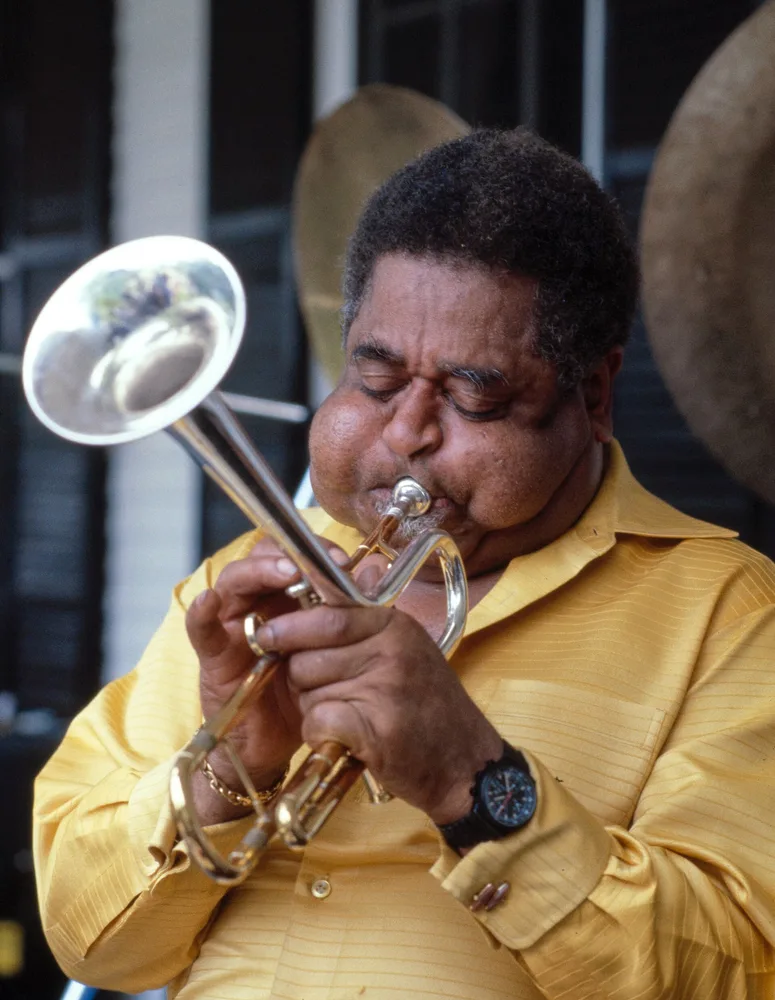
Dizzy Gillespie playing trumpet, photographed by Bernard Gotfryd, circa 1979 Public Domain (Library of Congress, "no known copyright restrictions on the use of this work") — Wikimedia Commons - https://commons.wikimedia.org/wiki/File:Dizzy_Gillespie_playing_trumpet.jpg (original held by the Library of Congress Prints and Photographs Division, Bernard Gotfryd collection, LC-DIG-gtfy-01381)

John Birks "Dizzy" Gillespie was born October 21, 1917, in Cheraw, South Carolina, the youngest of nine children of James Gillespie, a bricklayer who led a local band on weekends and kept instruments in the house, and Lottie Gillespie. His father died when Gillespie was ten. He began teaching himself piano at four, picked up trombone and then trumpet by twelve, and won a scholarship to the Laurinburg Institute in North Carolina, where he studied for two years before the family moved to Philadelphia in 1935. His first professional work came that year with the Frank Fairfax Orchestra, followed by a stint in Edgar Hayes's band; in May 1937 he replaced Frankie Newton in trumpeter Teddy Hill's orchestra, making his first recording ("King Porter Stomp") that August. In 1939 dancer Lorraine Willis, whom he had met in Washington, D.C., helped him land a chair in Cab Calloway's prominent orchestra, where he sat in the trumpet section alongside players Calloway would later call some of the best he ever employed. The association ended badly in late 1941: after a backstage spitball incident during a Hartford, Connecticut show, an angry confrontation escalated and Gillespie stabbed Calloway in the leg; Calloway fired him on the spot. Gillespie married Lorraine on May 9, 1940, in Boston, and the marriage lasted the rest of his life.
Freelancing through the early 1940s, Gillespie wrote big-band arrangements for Woody Herman and Jimmy Dorsey and worked briefly with Charlie Barnet and Benny Carter. In 1943 he joined pianist Earl Hines's band, later described as "the incubator of bop," where he first worked alongside alto saxophonist Charlie Parker; the two reunited the following year in vocalist Billy Eckstine's band, a proving ground for the emerging modern-jazz style. Gillespie left big bands in 1944 to concentrate on small combos, playing alongside Parker at Harlem's Minton's Playhouse and Monroe's Uptown House, where a loose community of musicians was working out bebop's harmonic and rhythmic vocabulary in after-hours jam sessions. On February 16, 1944, he took part in "Woody 'n' You," a session led by Coleman Hawkins for Apollo Records often cited as the first formal bebop recording, and on May 11, 1945, he and Parker cut "Shaw 'Nuff" and "Lover Man" for the tiny Guild label (Guild 1002) with Al Haig, Curly Russell, and Sidney Catlett, among the definitive early documents of the new music. A June 22, 1945, concert at New York's Town Hall introduced bebop to a wider audience, and Gillespie began organizing his own big bands later that year; a December 1945 residency with a sextet featuring Parker at Billy Berg's club in Los Angeles met a mixed reception from an audience unprepared for the style, and the group broke up shortly after. Signing with RCA Victor's Bluebird subsidiary in February 1946, Gillespie built a full big band that, with arrangements from Tadd Dameron, Gil Fuller, and George Russell, became one of the most advanced ensembles in jazz.
In 1947, bandleader and fellow trumpeter Mario Bauzá introduced Gillespie to Cuban conga player and singer Chano Pozo, and the pairing opened a second major chapter in Gillespie's career. Pozo joined Gillespie's orchestra and co-wrote "Manteca" and "Tin Tin Deo" with him; "Manteca," recorded for RCA Victor on December 30, 1947 (released as RCA Victor 20-3023, backed with "Cool Breeze"), fused big-band bebop with Afro-Cuban rhythm and became one of the most influential recordings in the merger of the two traditions. Gillespie also commissioned George Russell's "Cubano Be, Cubano Bop," featuring Pozo, cementing his and Bauzá's role as pioneers of what came to be called Afro-Cuban or Latin jazz. Pozo was shot and killed in a Harlem bar in December 1948, only a year into the collaboration. Gillespie's late-1940s big band, whose sides for RCA Victor between 1937 and 1949 were later collected on the 1995 compilation The Complete RCA Victor Recordings, broke up in 1950 amid the declining economics of big-band touring, though he continued leading orchestras intermittently through the 1950s. On June 6, 1950, Gillespie reunited in the studio with Parker, pianist Thelonious Monk, bassist Curly Russell, and drummer Buddy Rich for the session issued in 1952 as Bird and Diz (Clef/Mercury MGC-512), the only record to feature Parker, Gillespie, and Monk together, and one of their last studio meetings. A more informal reunion followed on May 15, 1953, when Gillespie, Parker, Monk's fellow pianist Bud Powell, bassist Charles Mingus, and drummer Max Roach played a single Toronto concert, released on Mingus's own Debut label as Jazz at Massey Hall, billed only as "The Quintet" because Parker, under contract elsewhere, was credited as "Charlie Chan."
Through the mid-to-late 1950s Gillespie led a series of acclaimed big bands and small groups, cementing a stage persona built around a beret, horn-rimmed glasses, balloon cheeks when he played, and comic scat singing that made him one of jazz's most recognizable public figures. His trumpet's signature upturned bell dates to January 6, 1953, when dancers Stump and Stumpy accidentally knocked his horn off its stand at a party for Lorraine's birthday, bending the bell 45 degrees; Gillespie liked the altered sound and had the Martin Band Instrument Company build him a custom horn to the same angle. In 1956 the U.S. State Department sponsored a Gillespie big band's tour of the Middle East and Latin America, earning him the nickname "the Ambassador of Jazz" and yielding the album World Statesman (Norgran, 1956), with a band that included Quincy Jones, Melba Liston, and Phil Woods. His later 1950s Verve output includes Dizzy Gillespie at Newport (1957), For Musicians Only (1957, with Stan Getz and Sonny Stitt), Birks' Works (1958), and Sonny Side Up (1959, pairing tenor saxophonists Sonny Rollins and Sonny Stitt). His early-1950s septet and octet also gave a young John Coltrane some of his first recorded solos; Coltrane played alto and then tenor in Gillespie's band from the fall of 1949 into the spring of 1951, taking his first documented recorded solo on "We Love to Boogie" on March 1, 1951. Gillespie continued exploring orchestral settings into the 1960s, commissioning Lalo Schifrin's Gillespiana suite (1960) and J.J. Johnson's Perceptions (1961), and recording A Portrait of Duke Ellington (1960) and Something Old, Something New (1963, Philips), the latter featuring his signature original "Con Alma."
Gillespie remained a prolific recording and touring artist into his final years, much of it for Norman Granz's Pablo label, including Dizzy Gillespie's Big 4 (1975, with Joe Pass and Ray Brown), the electric, Schifrin-arranged Free Ride (1977), and Digital at Montreux, 1980 (1981, with Toots Thielemans). Politically outspoken throughout his career, he ran a mock write-in campaign for U.S. president in 1964, proposing a cabinet that included Duke Ellington, Miles Davis, Max Roach, and Thelonious Monk, with comedian Phyllis Diller as his running mate, donating proceeds from campaign merchandise to civil rights organizations. He converted to the Baháʼí Faith in 1968 following the assassination of Martin Luther King Jr. In the 1980s he formed the United Nation Orchestra, a large ensemble built to showcase Latin, Caribbean, and American jazz musicians together; a concert filmed June 10, 1989, at London's Royal Festival Hall was released as Live at the Royal Festival Hall (Enja, 1990) and won the 1991 Grammy Award for Best Large Jazz Ensemble Album, one of Gillespie's last major performances. He was diagnosed with pancreatic cancer in 1991, led his final recording session in January 1992, and gave his last public performance that February in Seattle. Dizzy Gillespie passed away on January 6, 1993, in Englewood, New Jersey, at age 75; singer Roberta Flack performed "Amazing Grace" at his funeral, and he was buried in an unmarked grave at Flushing Cemetery, Queens.
Where Louis Armstrong and Roy Eldridge, Gillespie's own early idol, had defined the trumpet's role in swing-era jazz through melodic drive and range, Gillespie pushed the instrument into bebop's harmonically dense, rhythmically unpredictable new language, developing an instantly identifiable style built on wide interval leaps, dazzling double-time runs, and a sly, playful sense of harmonic substitution that could turn a familiar standard's chord changes inside out. Alongside Charlie Parker, he is credited as bebop's co-founder, and critics of the era dubbed his unpredictable, exploratory phrasing "the sound of surprise." His second major legacy, developed with Cuban musicians Mario Bauzá and Chano Pozo, was Afro-Cuban jazz: fusing bebop's harmonic sophistication with Cuban clave rhythm on records like "Manteca" and Afro, he opened a pathway that generations of Latin jazz musicians followed. Gillespie was also a gifted composer and bandleader whose original tunes, among them "A Night in Tunisia," "Groovin' High," "Salt Peanuts," and "Con Alma," became jazz standards, and a natural showman whose beret, glasses, bent trumpet, and scat vocals made him one of jazz's most publicly recognizable figures without ever undercutting the seriousness of his musicianship. He mentored or profoundly influenced generations of trumpeters, including Miles Davis, Fats Navarro, Clifford Brown, Freddie Hubbard, Jon Faddis, Arturo Sandoval, and Wynton Marsalis, and received a Grammy Lifetime Achievement Award (1989), Kennedy Center Honors (1990), and NEA Jazz Master recognition among numerous other honors.
- Shaw 'Nuff / Lover Man (1945, Guild) - Recorded May 11, 1945, with Charlie Parker, Al Haig, Curly Russell, and Sidney Catlett; among the founding studio documents of bebop.
- Manteca / Cool Breeze (1947/1948, RCA Victor) - Co-written with conga player Chano Pozo and recorded December 30, 1947; the landmark fusion of bebop and Afro-Cuban rhythm.
- Jazz at Massey Hall (1953, Debut) - The only recorded reunion of Gillespie, Charlie Parker, Bud Powell, Charles Mingus, and Max Roach as a unit, taped live in Toronto on May 15, 1953. Spotify - Jazz At Massey Hall Listen
- Afro (1954, Norgran) - An expanded-orchestra Afro-Cuban jazz suite arranged and co-led with Chico O'Farrill, featuring Quincy Jones, Ernie Royal, and Mongo Santamaria. Spotify - Afro Listen
- World Statesman (1956, Norgran) - The big band from Gillespie's 1956 U.S. State Department goodwill tour, with Quincy Jones, Melba Liston, and Phil Woods. Spotify - World Statesman Listen
- Sonny Side Up (1959, Verve) - A three-way tenor and trumpet summit with Sonny Rollins and Sonny Stitt, recorded December 19, 1957. Spotify - Sonny Side Up Listen
- Gillespiana (1960, Verve) - An extended orchestral suite composed and arranged by pianist Lalo Schifrin, recorded November 1960.
- Live at the Royal Festival Hall (1990, Enja) - The United Nation Orchestra's June 10, 1989, London concert, one of Gillespie's final major performances and winner of the 1991 Grammy Award for Best Large Jazz Ensemble Album. Spotify - Live at the Royal Festival Hall Listen
Dizzy Gillespie: Full Discography
Dizzy Gillespie recorded prolifically across nearly five decades, first as a sideman in the swing and early-bebop eras and then almost continuously as a leader or co-leader. Identity confirmed via the live Discogs API, artist ID 64694. Discogs credits him with hundreds of releases when sideman appearances, reissues, and compilations are included; a full itemization is not attempted here. The table below curates 20 of his most significant, historically important, or widely acclaimed leader/co-leader albums, in chronological order, plus a short set of landmark sideman credits from before he was reliably leading his own dates. Catalog numbers are taken from the specific pressings identified via Discogs search and are not always the original first-country-of-release pressing; this is noted where relevant.
As Leader / Co-Leader
| Album Title | Recording Date(s) | Release Date | Label | Catalog Number | Format(s) | Personnel | Role | Reissue History | Spotify | Buy | Notes |
|---|---|---|---|---|---|---|---|---|---|---|---|
| Bird and Diz | Recorded June 6, 1950, NYC | 1952 | Mercury/Clef | MGC-512 | Vinyl, LP, 10", Album, Mono | Charlie Parker (alto sax), Dizzy Gillespie (trumpet), Thelonious Monk (piano), Curly Russell (bass), Buddy Rich (drums) | Co-leader (shared billing) | Widely reissued on CD and LP by Verve/Polygram | Spotify - Bird & Diz | — | The only studio record to feature Parker, Gillespie, and Monk together |
| Jazz at Massey Hall | Recorded live May 15, 1953, Massey Hall, Toronto | 1953 | Debut | DLP-2 (1953 LP); this pressing Fantasy/Debut Series 86003 (1962 reissue) | Vinyl, LP, Album | Charlie Parker (alto sax, credited "Charlie Chan"), Dizzy Gillespie (trumpet), Bud Powell (piano), Charles Mingus (bass), Max Roach (drums) | Co-leader, billed as "The Quintet" | Reissued repeatedly by Debut/Fantasy/OJC and Prestige; Mingus overdubbed his own bass part after the original tapes were found too quiet | Spotify - Jazz At Massey Hall | — | The only time Parker, Gillespie, Powell, Mingus, and Roach recorded together as a unit |
| Afro | Recorded 1954 | 1954 | Norgran | MG N-1003 | Vinyl, LP, Mono | Dizzy Gillespie (trumpet), Chico O'Farrill (arranger/conductor), large orchestra including Quincy Jones, Ernie Royal, and percussionists Mongo Santamaria and Candido Camero | Leader (co-arranged/co-led with Chico O'Farrill) | Reissued on Verve/Polygram CD | Spotify - Afro | — | Extended Afro-Cuban jazz suite built around O'Farrill's arrangements |
| World Statesman | Recorded 1956 | 1956 | Norgran | MG V-8174 | Vinyl, LP, Album, Mono | Dizzy Gillespie big band featuring Quincy Jones, Melba Liston, and Phil Woods | Leader | Reissued on Verve CD | Spotify - World Statesman | — | Drawn from the band assembled for Gillespie's 1956 U.S. State Department tour |
| For Musicians Only | Recorded October 1956 | 1957 | Verve | MGV 8198 | Vinyl, LP, Album, Mono | Dizzy Gillespie (trumpet), Stan Getz (tenor sax), Sonny Stitt (alto sax), plus rhythm section | Co-leader (with Stan Getz and Sonny Stitt) | Reissued on Verve CD | Spotify - For Musicians Only | — | A three-horn bebop summit meeting |
| Dizzy Gillespie at Newport | Recorded live July 6, 1957, Newport Jazz Festival | 1957 | Verve | MGV 8242 | Vinyl, LP, Album, Mono | Dizzy Gillespie big band, personnel not itemized here | Leader | Reissued on Verve CD | Not confirmed on Spotify under this exact title | — | Live big-band document from the Newport festival's fourth year |
| Birks' Works | Recorded 1956-1957 | 1958 | Verve | MG V-8222 | Vinyl, LP, Album, Mono | Dizzy Gillespie Big Band, personnel not itemized here | Leader | Reissued on Verve CD | Not confirmed on Spotify under this exact title | — | Studio big-band set named for Gillespie's given name |
| Sonny Side Up | Recorded December 19, 1957 | 1959 | Verve | MGV 8262 | Vinyl, LP, Album, Mono | Dizzy Gillespie (trumpet), Sonny Rollins (tenor sax), Sonny Stitt (alto/tenor sax), Ray Bryant (piano), Tommy Bryant (bass), Charlie Persip (drums) | Co-leader (with Sonny Rollins and Sonny Stitt) | Reissued on Verve CD | Spotify - Sonny Side Up | — | Includes the marathon tenor battle "The Eternal Triangle" |
| A Portrait of Duke Ellington | Recorded 1960 | 1960 | Verve | MGV 8397 (US); this pressing HMV CLP 1431 (UK) | Vinyl, LP, Mono | Dizzy Gillespie and his orchestra, personnel not itemized here | Leader | Reissued on Verve CD | Not confirmed on Spotify under this exact title | — | Big-band renditions of Ellington and Billy Strayhorn compositions |
| Gillespiana | Recorded November 1960 | 1960 | Verve | MG V-8394 (US); this pressing HMV CSD 1392 (UK) | Vinyl, LP, Album, Stereo | Dizzy Gillespie (trumpet) with an orchestra composed, arranged, and conducted by Lalo Schifrin | Leader | Reissued on Verve CD | Not confirmed on Spotify under this exact title | — | Five-movement suite, Schifrin's first major work for Gillespie |
| Perceptions | Recorded 1961 | 1961 | Verve | V-8411 (US); this pressing HMV CLP 1536/CSD 1426 (UK) | Vinyl, LP, Album, Stereo | Dizzy Gillespie (trumpet) with a large orchestra composed, arranged, and conducted by J.J. Johnson | Leader | Reissued on Verve CD | Not confirmed on Spotify under this exact title | — | Ambitious orchestral suite commissioned from trombonist/composer J.J. Johnson |
| Something Old, Something New | Recorded 1963 | 1963 | Philips | PHS 600-091 | Vinyl, LP, Album | Dizzy Gillespie small group, personnel not itemized here | Leader | Reissued on CD | Spotify - Something Old, Something New | — | Features Gillespie's original "Con Alma" |
| Swing Low, Sweet Cadillac | Recorded live 1967, Memory Lane club, Los Angeles | 1967 | Impulse! | AS-9128 (US); this pressing SMAS-91255 (Capitol Record Club edition) | Vinyl, LP, Album, Stereo | Dizzy Gillespie quintet featuring James Moody (tenor sax/flute), Mike Longo (piano), Chris White (bass), Rudy Collins (drums) | Leader | Reissued on Impulse!/GRP CD | Not confirmed on Spotify under this exact title | — | Live small-group set, one of Gillespie's few Impulse! recordings |
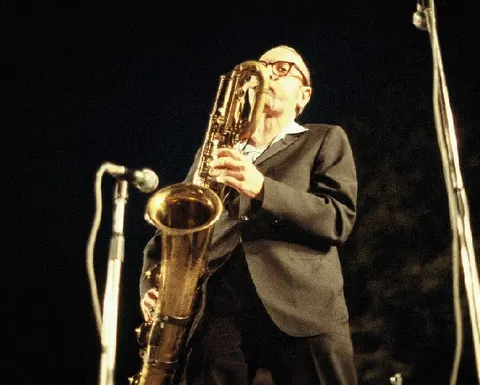
| Live at the Village Vanguard | Recorded live October 1, 1967, Village Vanguard, NYC | 1968 | Solid State | SR-3018 | Vinyl, LP, Album, Stereo | Dizzy Gillespie (trumpet) and Pepper Adams (baritone sax) with Ray Nance (violin), Chick Corea (piano), Richard Davis (bass), and either Mel Lewis or Elvin Jones (drums), plus Garnett Brown (trombone) on one set | Leader (various-artists billing) | Edited sides originally issued as two Solid State volumes titled Jazz for a Sunday Afternoon; reissued complete by Blue Note in 1992 as Live at the Village Vanguard | Not confirmed on Spotify under this exact title | — | The session that paired Gillespie with baritone saxophonist Pepper Adams, profiled separately on JazzProfiles.com |
| Dizzy Gillespie's Big 4 | Recorded June 6, 1974 | 1975 | Pablo | 2310-719 | Vinyl, LP, Album, Stereo | Dizzy Gillespie (trumpet), Joe Pass (guitar), Ray Brown (bass), Mickey Roker (drums) | Leader | Reissued on CD as Original Jazz Classics OJC-443 (1990) | Not confirmed on Spotify under this exact title | — | Small-group session for Norman Granz's Pablo label, part of Gillespie's prolific 1970s output for Granz |
| Free Ride | Recorded 1976-1977 | 1977 | Pablo | 2310 794 | Vinyl, LP, Album | Dizzy Gillespie with an electric band arranged by Lalo Schifrin | Leader | Reissued on CD | Not confirmed on Spotify under this exact title | — | An electric, Schifrin-arranged departure from Gillespie's usual acoustic Pablo dates |
| Digital at Montreux, 1980 | Recorded live July 1980, Casino de Montreux, Montreux Jazz Festival | 1981 | Pablo Live | D2308226 | Vinyl, LP, Album | Dizzy Gillespie with Toots Thielemans (harmonica) and Bernard Purdie (drums), among others | Leader | Reissued on CD | Spotify - Digital At Montreux 1980 | — | One of the early digitally recorded live albums on the Pablo Live imprint |
| To a Finland Station | Recorded 1982 | 1983 | Pablo | 2310-889 (German LP pressing; US Discogs listing found is cassette-only, K10-889) | Vinyl, LP, Album | Dizzy Gillespie small group, personnel not itemized here | Leader | Reissued on CD as Original Jazz Classics OJCCD-733-2 (1992) | Not confirmed on Spotify under this exact title | — | Late-career Pablo studio date |
| Live at the Royal Festival Hall | Recorded live June 10, 1989, Royal Festival Hall, London | 1990 | Enja | R2 79658 | CD, Album | The United Nation Orchestra, Gillespie's large ensemble for Latin, Caribbean, and American jazz musicians | Leader | Reissued on CD | Spotify - Live at the Royal Festival Hall | — | Winner of the 1991 Grammy Award for Best Large Jazz Ensemble Album; one of Gillespie's last major performances |
| To Bird with Love | Recorded live 1991, Blue Note club, NYC | 1992 | Telarc | CD-83316 | CD, Album | Dizzy Gillespie with an all-star band assembled as a tribute to Charlie Parker | Leader | None found | Not confirmed on Spotify under this exact title | — | A late tribute date to Gillespie's closest musical partner, released around the time of Gillespie's death |
As Sideman (before his own leader catalog was established)
| Year | Project (Leader) | Title | Label | Catalog | Role | Notes |
|---|---|---|---|---|---|---|
| 1944 | Coleman Hawkins | "Woody 'n' You" (single) | Apollo | 754 | Trumpet, co-composer | Recorded February 16, 1944; often cited as the first formal bebop recording |
| 1945 | Charlie Parker | "Ko-Ko" (single, from the Savoy session also yielding "Billie's Bounce" and "Now's the Time") | Savoy | 573 | Trumpet, piano | Recorded November 26, 1945; Gillespie played piano on most of the date and switched to trumpet for "Ko-Ko" itself after Miles Davis, the session's regular trumpeter, found the tune's tempo too demanding |
Gillespie's other 1940s work as a section player and arranger for the Cab Calloway, Earl Hines, and Billy Eckstine big bands, and for freelance arranging clients including Woody Herman and Jimmy Dorsey, is documented in the Biography above rather than itemized here, since it predates any individually catalogable Gillespie recording as such.
- Cab Calloway - trumpeter in Calloway's orchestra, late 1930s to 1941, until Calloway fired him after a backstage altercation.
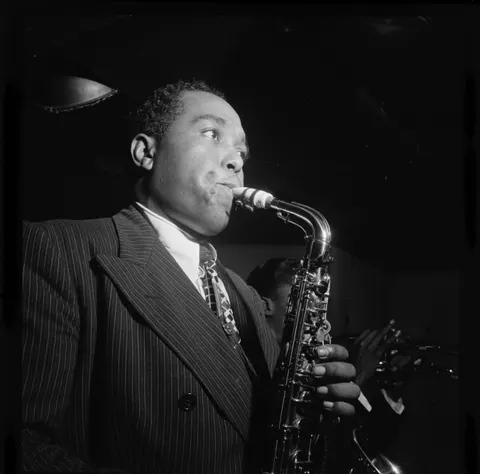
- Charlie Parker - closest musical partner and bebop's other co-founder, from Earl Hines's and Billy Eckstine's bands in the early-to-mid 1940s through Bird and Diz (1950) and Jazz at Massey Hall (1953).
- Chano Pozo and Mario Bauzá - collaborators in the development of Afro-Cuban jazz, 1947-1948, including "Manteca" and "Tin Tin Deo," cut short by Pozo's murder in December 1948.
- Thelonious Monk - pianist on the 1950 Bird and Diz session, one of only a handful of recordings pairing Monk with both Parker and Gillespie; Gillespie also recorded and toured with Monk on other occasions across the 1950s-60s (not exhaustively documented here).
- Charles Mingus and Max Roach - co-participants, with Parker and Bud Powell, in the single-concert Jazz at Massey Hall (May 1953); Mingus's and Roach's fuller careers are profiled separately on JazzProfiles.com.
- John Coltrane - alto and then tenor saxophonist in Gillespie's septet/octet, fall 1949 to spring 1951, taking his first documented recorded solo on "We Love to Boogie" (March 1, 1951).
- Lalo Schifrin - pianist, composer, and arranger for Gillespiana (1960) and Free Ride (1977), among other collaborations spanning two decades.
- Pepper Adams - baritone saxophonist alongside Gillespie on live sets recorded October 1, 1967, at New York's Village Vanguard, issued in edited form as two Solid State various-artists volumes titled Jazz for a Sunday Afternoon and reissued complete by Blue Note in 1992 as Live at the Village Vanguard; Gillespie and Adams appear together with Ray Nance, Chick Corea, Richard Davis, and either Mel Lewis or Elvin Jones on drums, plus Garnett Brown on one set. Adams's fuller career is profiled separately on JazzProfiles.com.
- Giancarlo Barigozzi (recording engineer) - credited as recording engineer on Oo-Shoo-Be-Doo-Be ...Oo, Oo ...Oo, Oo (Soul Note SN 1147, 1985), per Discogs.
More Afro-Cuban Jazz Artists
See all 35 Afro-Cuban Jazz artists →More American Jazz Artists
See all 567 American artists →- Wikipedia: Dizzy Gillespie
- Discogs: Dizzy Gillespie (artist 64694)
- AllMusic: Dizzy Gillespie biography
- Wikipedia: Jazz at Massey Hall
- Wikipedia: Bird and Diz
- Wikipedia: Afro (album)
- Wikipedia: World Statesman
- Wikipedia: Gillespiana
- Wikipedia: Live at the Royal Festival Hall (Dizzy Gillespie album)
- National Endowment for the Arts: John Birks "Dizzy" Gillespie