 JAZZPROFILES lives in the music 1,572 Jazz Artists fully Profiled!
 Sarah Vaughan
Last updated September 26, 2026
Listen on Spotify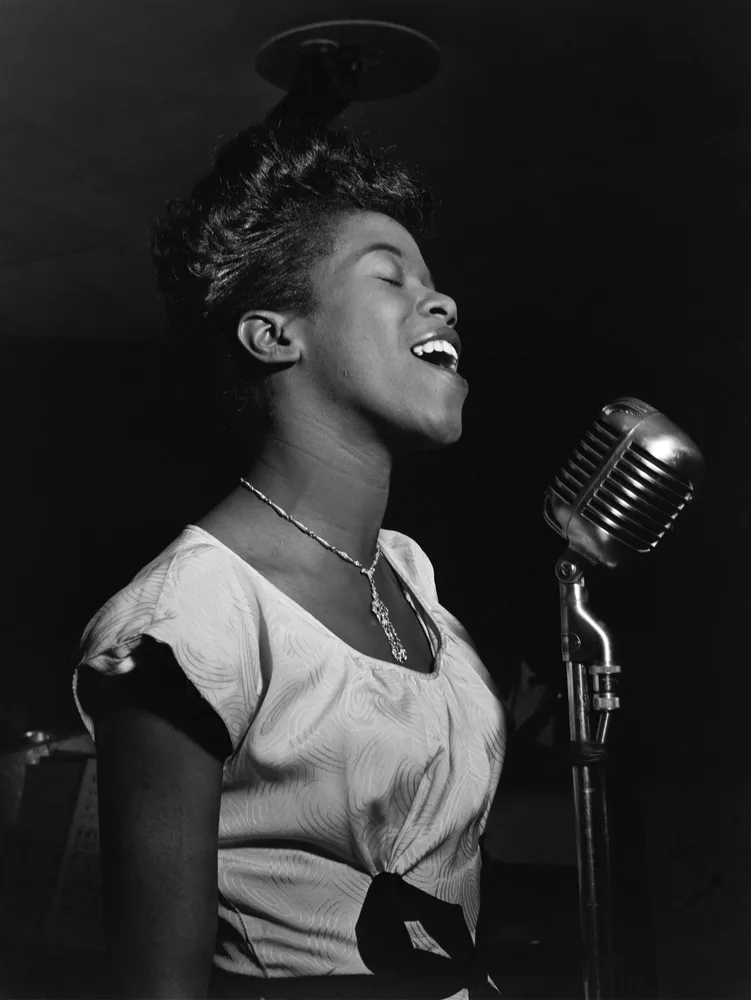
Sarah Vaughan, c. 1946, photographed by William P. Gottlieb Public domain — Wikimedia Commons — https://commons.wikimedia.org/wiki/File:Sarah_Vaughan_-_William_P._Gottlieb_-_No._1.jpg
Sarah Lois Vaughan was born March 27, 1924, in Newark, New Jersey, to Asbury "Jake" Vaughan, a carpenter who played guitar, and Ada Vaughan, who sang in the choir at New Mount Zion Baptist Church. Sarah began piano lessons at seven and grew up steeped in the church's music. By her mid-teens she was already working Newark's nightclubs as a pianist and singer, and she dropped out of Newark Arts High School during her junior year to pursue music full-time.
The turn that made her a professional came in the fall of 1942. At eighteen, on a dare, she entered Amateur Night at Harlem's Apollo Theatre and won singing "Body and Soul." The prize was ten dollars and a week's engagement; that engagement, opening for Ella Fitzgerald on November 20, 1942, put her in front of bandleader Earl Hines. Hines hired her on April 4, 1943 — officially as a pianist, a workaround that let him sign her under the musicians' union rather than the more restrictive singers' union. The Hines orchestra she joined has been called an incubator of bebop: trumpeter Dizzy Gillespie and saxophonist Charlie Parker were both in the band, and a recording ban of the period means almost none of this pivotal stretch was ever committed to record.
When Billy Eckstine broke away from Hines in late 1943 to front his own big band, again with Gillespie in the section, he brought Vaughan with him in 1944. She cut her first side that December, and pianist John Malachi hung the nickname "Sassy" on her during this run — it stuck for the rest of her life. She left Eckstine's band by the end of 1944 to go out on her own, freelancing on 52nd Street at the Three Deuces, the Famous Door, and the Onyx Club. It was there, on May 11, 1945, that she recorded "Lover Man" with Gillespie and Parker — a document, rare for the era, of Vaughan singing directly inside the bebop vocabulary the two men were inventing in real time. At Café Society Downtown she met trumpeter George Treadwell, who became her manager, reworked her public image, and married her on September 16, 1946.
Treadwell steered her to Musicraft Records, where her sessions beginning in May 1946 produced "If You Could See Me Now" (arranged by Tadd Dameron), "Don't Blame Me," and "Body and Soul." "Tenderly," cut that year, turned into an unlikely pop hit in late 1947 — she was proud to have been first to record what became a standard. "It's Magic" (December 1947) and "Nature Boy" (April 1948, recorded a cappella because of a second union recording ban) extended the streak. When Musicraft went under, Treadwell moved her to Columbia, where the material tilted toward commercial pop ballads rather than jazz — "Black Coffee" was the big one, in the summer of 1949 — even as critics kept naming her their favorite: Down Beat's poll winner every year from 1947 to 1952, Metronome's from 1948 to 1953. Chicago disc jockey Dave Garroway coined the other nickname that stuck, "The Divine One," during these years.
In 1953, Treadwell negotiated a Mercury Records deal structured to give both sides of her career a home: commercial singles for Mercury proper, jazz-oriented sessions for its subsidiary EmArcy. It is the EmArcy years, working with producer Bob Shad, that jazz history remembers best. The December 1954 session with trumpeter Clifford Brown — released as Sarah Vaughan and later reissued to foreground Brown's name — became, by Vaughan's own account, her favorite record she ever made. At the same time the commercial side kept delivering: "Make Yourself Comfortable" (1954), "Whatever Lola Wants," "The Banana Boat Song," "Misty," and 1959's "Broken Hearted Melody," a song she considered corny but which became her first gold record and a concert staple for the rest of her career. She sang the first Newport Jazz Festival in the summer of 1954 and that fall appeared at Carnegie Hall alongside Count Basie's orchestra, Billie Holiday, Charlie Parker, Lester Young, and the Modern Jazz Quartet.
Her personal life through this stretch and the one that followed was harder than the record sales suggest. She divorced Treadwell in 1958 after discovering that despite a decade of substantial earnings, only $16,000 remained to split. When her Mercury contract lapsed at the end of 1959, she signed with Morris Levy's Roulette Records and, in September 1958, had already married Clyde "C.B." Atkins, a man with no music-industry background whom she made her manager. They adopted a daughter, Deborah — later known professionally as Paris Vaughan — in 1961, but the marriage was, by later accounts, difficult and at times violent; she filed for divorce in November 1963 and discovered Atkins' gambling and spending had left her roughly $150,000 in debt, with the IRS seizing their New Jersey house over unpaid taxes. Clyde "Pumpkin" Golden Jr. helped sort out the wreckage and became her manager for the rest of the decade. Musically, the Roulette years still produced real work — big-ensemble albums arranged by Billy May, Quincy Jones, and Benny Carter among others — and when her contract reverted to Mercury in 1963, she traveled to Denmark that summer with Quincy Jones to record what became one of her most celebrated live albums, Sassy Swings the Tivoli. She played the White House for President Johnson in 1964. But by the back half of the decade her audience and her recorded output were both shrinking, and when her second Mercury contract ended in 1967, she went the rest of the decade without a label.
The comeback arrived in 1971, when producer Bob Shad — her old EmArcy hand, now running Mainstream Records — brought her back into the studio for A Time in My Life, a set built from recent pop material by Bob Dylan, John Lennon, and Marvin Gaye and arranged by Ernie Wilkins. The Mainstream years also gave her, almost by accident, the song that became her signature: Stephen Sondheim's "Send in the Clowns," which she initially resisted (she sued Shad over the 1974 album's cover art) before growing to love it, learning it at the piano with Carl Schroeder's help. In 1974 she performed George Gershwin's music with the Los Angeles Philharmonic at the Hollywood Bowl under conductor Michael Tilson Thomas, a fan who would become a recurring collaborator; the pairing expanded over the following years and eventually produced Gershwin Live! After a rejected Beatles-songbook project sank her Atlantic Records deal, she self-produced I Love Brazil!, drawing on the country's music after a 1977 tour there that she called "the greatest place I think I've ever been on earth."
That record led her, without a label, to Norman Granz's Pablo Records — Granz had managed Ella Fitzgerald and run Verve, and had known Vaughan since 1948 through the Jazz at the Philharmonic tours. The Pablo years, 1977 to 1982, were arguably her most consistent late-career stretch: How Long Has This Been Going On? (1978) with an Oscar Peterson-led quartet of Joe Pass, Ray Brown, and Louis Bellson; the two-volume Duke Ellington Songbook (1979–80); Copacabana (1981), returning to Brazilian material; a second, big-band Send in the Clowns with the Count Basie Orchestra (1981); and Crazy and Mixed Up (1982). In 1982 she also reunited with Tilson Thomas for Gershwin Live!, recorded with the Los Angeles Philharmonic — it won her the Grammy for Best Jazz Vocal Performance, Female, her first competitive Grammy after nine career nominations.
Recording slowed after Pablo folded in 1982, but she kept working: a 1985 Paris concert later released posthumously as In the City of Lights; a 1987 Brazilian collaboration with Sérgio Mendes and Milton Nascimento, Brazilian Romance, her final studio album under her own name; and, in 1989, a scatting cameo alongside Ella Fitzgerald on Quincy Jones' Back on the Block — the only studio recording the two women, whose careers had run in parallel since that November night at the Apollo in 1942, ever made together. That same year she received the NEA Jazz Masters Award and the Grammy Lifetime Achievement Award. Her health failed fast after that: diagnosed with lung cancer during a 1989 run at New York's Blue Note, she was too ill to finish the engagement. She died April 3, 1990, at her home in Hidden Hills, California, at age 66. She is buried at Glendale Cemetery in Bloomfield, New Jersey, following a funeral at Newark's Mount Zion Baptist Church.
What set Vaughan apart, from the bebop-era recordings with Parker and Gillespie onward, was the sheer scale of the instrument itself: a four-octave range running from a rich, near-baritone chest voice up through a soprano register she deployed with operatic control, all of it wrapped in a vibrato critics described as uniquely flexible in size and duration. She didn't just have range — she used it as a compositional tool, bending pitch at the extremes of her register, dropping into sudden low-register asides mid-phrase, and treating melody the way a bebop horn player treats a chord change: as a starting point for improvisation rather than a fixed target. Mel Tormé called her simply "the single best vocal instrument of any singer working in the popular field"; Betty Carter said that with classical training Vaughan could have "gone as far as Leontyne Price"; Frank Sinatra, only half joking, said listening to her made him want to "cut my wrists with a dull razor." Vaughan herself resisted the "jazz singer" label even as critics like Gary Giddins called her voice one that "happens once in a lifetime, perhaps once in several lifetimes" — in a 1982 interview she said, "I can't sing a right-out blues but I can put the blues in whatever I sing," a fair summary of an artist who moved just as comfortably through pop ballads, Brazilian songbooks, and full orchestral programs as she did through straight-ahead jazz. That range of material, more than any single genre label, is the throughline of her catalog — and her direct vocal-line influence runs forward through singers as different as Anita Baker, Dianne Reeves, and Amy Winehouse.
- Sarah Vaughan (1954/55, EmArcy, with Clifford Brown) - Recorded December 16 and 18, 1954, and by Vaughan's own account her favorite of everything she made; her only studio collaboration with Clifford Brown, inducted into the Grammy Hall of Fame in 1999. Spotify - Sarah Vaughan With...
- Swingin' Easy (1957, EmArcy) - The stripped-down trio session (with Jimmy Jones or John Malachi on piano, Roy Haynes on drums) most often cited as the clearest showcase of her mid-1950s jazz singing, unencumbered by orchestral arrangements. Spotify - Swingin' Easy Listen
- Sassy Swings the Tivoli (1963, Mercury, live) - Recorded in Copenhagen with Quincy Jones over four nights with her working trio (Kirk Stuart, Charles Williams, George Hughes); still regarded as one of the great live jazz vocal albums. Spotify - Sassy Swings The... (expanded 1987 reissue edition; original 1963 pressing not separately located on Spotify) Listen
- How Long Has This Been Going On? (1978, Pablo) - Her Norman Granz-era breakthrough: a quartet date with Oscar Peterson, Joe Pass, Ray Brown, and Louis Bellson, and a Grammy nominee. Spotify - How Long Has... Listen
- The Duke Ellington Songbook, Vol. 1 (1979/80, Pablo Today) - The first of a two-volume Ellington songbook project, backed by an all-star band including Joe Pass, Zoot Sims, Frank Foster, and J.J. Johnson. Spotify - Duke Ellington Songbook 1
- Gershwin Live! (1982, CBS) - Recorded with the Los Angeles Philharmonic under Michael Tilson Thomas; won Vaughan her first competitive Grammy (Best Jazz Vocal Performance, Female) after nine nominations across her career. No confirmed Spotify link found under this exact title as of this writing — several differently-billed Gershwin compilations exist on the platform, but none could be verified as this specific 1982 CBS recording; flagged unconfirmed rather than guessed.
Sarah Vaughan: Full Discography
Identity confirmed via Discogs artist ID 8284 ("Sarah Vaughan"). Her catalog spans nearly five decades (Discogs logs 5,700+ associated releases across studio albums, live albums, singles, and reissues/compilations). This table covers her major, well-documented studio and live leader albums across labels and eras, each verified against the live Discogs API — catalog numbers, formats, and personnel below are pulled directly from Discogs release data, not reconstructed from memory. It intentionally excludes the bulk of singles, various-artists compilations, and later repackagings; a note on the Musicraft era (which produced no contemporaneous studio LP) follows the table.
As Leader
| Album Title | Recording Date(s) | Release Date | Label | Catalog Number | Format(s) | Personnel | Role | Reissue History | Spotify | Buy | Notes |
|---|---|---|---|---|---|---|---|---|---|---|---|
| Sarah Vaughan | Not specified in Discogs data | 1950-10 | Columbia | CL 6133 | Vinyl, 10", LP, Album, Mono | Billed to "Sarah Vaughan With George Treadwell And His All Stars." Sarah Vaughan (vocals), Budd Johnson (tenor sax), Bennie Green (trombone), Tony Scott (clarinet), Jimmy Jones (piano), Freddie Green/Mundell Lowe (guitar), Billy Taylor Sr. (bass), J.C. Heard (drums) | Leader | None found | Spotify - Sarah Vaughan In Hi-Fi | — | Columbia-era commercial pop-ballad period under manager/husband George Treadwell; Spotify link is the expanded 1955 12" reissue (Sarah Vaughan In Hi-Fi, Columbia CL 745) that absorbed this 1950 10" LP's 8 tracks — the original 10" pressing is not separately available on Spotify |
| Sarah Vaughan (with Clifford Brown) | Dec 16 & 18, 1954, New York | 1955-04 | EmArcy | MG-36004 | Vinyl, LP, Album, Mono | Sarah Vaughan (vocals), Clifford Brown (trumpet), Herbie Mann (flute), Paul Quinichette (tenor sax), Jimmy Jones (piano), Joe Benjamin (bass), Roy Haynes (drums) | Leader | Widely reissued, including under the retitled billing "Sarah Vaughan With Clifford Brown" to foreground Brown's name; inducted into the Grammy Hall of Fame, 1999 | Spotify - Sarah Vaughan With... | — | Her only studio collaboration with Clifford Brown; by her own account, her favorite record she ever made |
| In the Land of Hi-Fi | Not specified in Discogs data | 1956-03 | EmArcy | MG-36058 | Vinyl, LP, Album, Mono | Sarah Vaughan (vocals), Cannonball Adderley (alto sax), Ernie Royal (trumpet), Jimmy Jones (piano), Joe Benjamin (bass), Roy Haynes (drums), Ernie Wilkins (arranger/conductor) | Leader | None found | Spotify - In The Land Of Hi-Fi | — | |
| Sassy | Not specified in Discogs data | 1956-11 | EmArcy | MG 36089 | Vinyl, LP, Album, Mono | Sarah Vaughan (vocals), Hal Mooney and His Orchestra (arranged/conducted by Hal Mooney) | Leader | None found | Spotify - Sassy | — | |
| Swingin' Easy | Not specified in Discogs data | 1957-11 | EmArcy | MG 36109 | Vinyl, LP, Album, Mono | Billed to "Sarah Vaughan And Her Trio." Sarah Vaughan (vocals), John Malachi/Jimmy Jones (piano), Joe Benjamin/Richard Davis (bass), Roy Haynes (drums) | Leader | None found | Spotify - Swingin' Easy | — | Trio session widely cited as the clearest showcase of her mid-1950s straight-ahead jazz singing |
| No Count Sarah | Not specified in Discogs data | 1959 | Mercury | SR 60116 | Vinyl, LP, Album, Stereo | Sarah Vaughan (vocals) with the Count Basie Orchestra (Basie's rhythm section absent — hence "No Count"): Thad Jones, Snooky Young, Joe Newman, Wendell Culley (trumpets), Henry Coker, Al Grey, Benny Powell (trombones), Marshall Royal, Frank Wess, Frank Foster, Billy Mitchell, Charlie Fowlkes (saxes), Freddie Green (guitar), Richard Davis (bass), Sonny Payne (drums), Ronnell Bright (piano); arranged by Thad Jones, Frank Foster, Johnny Mandel | Leader | None found | Spotify - No Count Sarah | — | Recorded with Basie's touring band personnel rather than Basie himself at the piano |
| Vaughan and Violins | Not specified in Discogs data | 1959 | Mercury | MG 20370 | Vinyl, LP, Album, Mono | Quincy Jones (conductor); full session personnel not itemized in Discogs extraartists beyond Jones | Leader | None found | Spotify - Vaughan And Violins | — | |
| Close to You | Not specified in Discogs data | 1960 | Mercury | SR 60240 | Vinyl, LP, Album, Stereo | Sarah Vaughan (vocals), Fred Norman's Orchestra and Belford Hendricks and His Orchestra (arranged/directed by Fred Norman and Belford Hendricks); Clyde Otis (recording supervisor) | Leader | None found | Spotify - Close To You | — | |
| The Divine One | Not specified in Discogs data | 1961 | Roulette | SR 52060 | Vinyl, LP, Album, Stereo | Sarah Vaughan (vocals), Harry Edison (muted trumpet); arranged by Jimmy Jones; produced by Teddy Reig | Leader | None found | Spotify - The Divine One | — | Spotify link is a later remastered digital reissue (12 tracks) of this Roulette recording |
| After Hours | Not specified in Discogs data | 1962 | Roulette | R-52070 | Vinyl, LP, Album, Mono | Sarah Vaughan (vocals), Mundell Lowe (guitar), George Duvivier (bass) | Leader | None found | Spotify - After Hours | — | Small-group, intimate late-night program distinct from the big-orchestra Roulette albums; Spotify link is the 1997 Blue Note/Parlophone 11-track reissue matching the original program |
| Sassy Swings the Tivoli | Recorded live, Tivoli Gardens, Copenhagen, summer 1963 | 1963 | Mercury | 125 347 MCY | Vinyl, LP, Album | Billed to "Sarah Vaughan, The Kirk Stuart Trio." Sarah Vaughan (vocals), Kirk Stuart (piano), Buster Williams (bass), George Hughes (drums); produced by Quincy Jones | Leader | Reissued and expanded multiple times, including a 1987 "Complete Version" (28+ tracks vs. the original LP's shorter program) | Spotify - Sassy Swings The... | — | Linked Spotify edition is the expanded 1987 reissue; original 1963 single-LP pressing not separately located on Spotify |
| A Time in My Life | Recorded Nov 16-26, 1971 | 1971-12 | Mainstream Records | MRL-340 | Vinyl, LP, Album, Stereo | Sarah Vaughan (vocals) with a large studio band incl. Joe Pass (guitar), Bill Mays (piano), Bob Magnusson (bass), Earl Palmer (drums); arranged/conducted by Ernie Wilkins; produced by Bob Shad | Leader | Reissued 1991 (12-track edition) | Spotify - A Time In My... | — | Her comeback album after a four-year recording gap (1967-1971); Spotify link is the 1991 reissue edition |
| How Long Has This Been Going On? | Recorded April 25, 1978 | 1978-10 | Pablo Records | 2310-821 | Vinyl, LP, Album, Stereo | Sarah Vaughan (vocals), Oscar Peterson (piano), Joe Pass (guitar), Ray Brown (bass), Louis Bellson (drums); produced by Norman Granz | Leader | None found | Spotify - How Long Has... | — | Grammy-nominated; her breakthrough Pablo-era session |
| I Love Brazil! | Not specified in Discogs data | 1979 | Pablo Today | 2312-101 | Vinyl, LP, Album, Stereo | Sarah Vaughan (vocals) with Milton Nascimento (vocals/guitar), Antonio Carlos Jobim (piano), Danilo Caymmi (flute/vocals), Sergio Barroso (bass), Wilson Das Neves (drums); produced by Aloysio de Oliveira | Leader | None found | Spotify - I Love Brazil! (Remastered) | — | Self-produced after Atlantic Records rejected her planned Beatles songbook; drew on a 1977 Brazil tour she called "the greatest place I think I've ever been on earth"; Spotify link is the Fantasy remastered reissue |
| The Duke Ellington Songbook, Vol. 1 | Not specified in Discogs data | 1980 | Pablo Today | 2312 111 | Vinyl, LP, Album, Stereo | Sarah Vaughan (lead vocals), Joe Pass/Bucky Pizzarelli (guitar), Jimmy Rowles/Mike Wofford (piano), Frank Wess/Frank Foster/Zoot Sims (sax), J.J. Johnson (trombone), Waymon Reed (trumpet), Andrew Simpkins (bass), Grady Tate (drums); arranged/conducted by Billy Byers | Leader | None found | Spotify - Duke Ellington Songbook 1 | — | Waymon Reed, her fourth husband (married 1978, divorced 1981), plays trumpet on this session |
| The Duke Ellington Songbook, Vol. 2 | Not specified in Discogs data | 1980-09 | Pablo Today | 2312-116 | Vinyl, LP, Album, Stereo | Sarah Vaughan (vocals), Eddie "Cleanhead" Vinson (alto sax/vocals), Joe Pass/Bucky Pizzarelli/Pee Wee Crayton (guitar), Jimmy Rowles (piano), Frank Wess (flute), Andrew Simpkins/William Walker (bass), Grady Tate/Roy McCurdy/Charles Randall (drums) | Leader | None found | Spotify - Duke Ellington Songbook 2 | — | Companion volume to Vol. 1, same sessions/era |
| Copacabana | Not specified in Discogs data | 1981 | Pablo Today | 2312 125 | Vinyl, LP, Album, Stereo | Sarah Vaughan (vocals); arranged by Edson Frederico; produced by Aloysio de Oliveira | Leader | None found | Spotify - Copacabana | — | Return to Brazilian material, produced by the same team as I Love Brazil! |
| Send in the Clowns | Not specified in Discogs data | 1981 | Pablo Today | 2312-130 | Vinyl, LP, Album, Stereo | Sarah Vaughan (vocals) with the Count Basie Orchestra: Freddie Green (guitar), Andrew Simpkins (bass), Harold Jones (drums), George Gaffney (piano), full Basie horn section; arranged by Allyn Ferguson, conducted by Sammy Nestico; produced by Norman Granz | Leader | None found | Spotify - Send In The Clowns | — | Big-band remake of her Mainstream-era signature song, this time with the Basie band |
| Crazy and Mixed Up | Not specified in Discogs data | 1982 | Pablo Records | 2312 137 | Vinyl, LP, Album | Sarah Vaughan (vocals/producer), Roland Hanna (piano), Joe Pass (guitar), Andrew Simpkins (bass), Harold Jones (drums) | Leader | None found | Spotify - Crazy And Mixed Up | — | Her final Pablo Records studio album |
| Gershwin Live! | Recorded Feb 1-2, 1982, Dorothy Chandler Pavilion, Los Angeles | 1982 | CBS | FM 37277 | Vinyl, LP, Album, Stereo | Sarah Vaughan (vocals), Los Angeles Philharmonic Orchestra, Michael Tilson Thomas (conductor/piano/arranger), Marty Paich (arranger), George Gaffney (piano), Andrew Simpkins (bass), Harold Jones (drums); produced by Steve Epstein | Leader | None found | Unconfirmed — no Spotify page verified as matching this exact 1982 CBS recording; several differently billed Gershwin compilations exist under her name but none could be confirmed as this release | — | Won the Grammy for Best Jazz Vocal Performance, Female (1983) — her first competitive Grammy win after nine nominations |
| Brazilian Romance | Recorded primarily early 1987, New York/Detroit | 1987 | CBS | FM 42519 | Vinyl, LP, Album | Sarah Vaughan (lead vocals), George Duke (keyboards), Dori Caymmi (guitar, arranger), Dann Huff (guitar), Alphonso Johnson (bass), Carlos Vega (drums), Paulinho Da Costa (percussion); produced by Sergio Mendes | Leader | None found | Spotify - Brazilian Romance | — | Her final studio album under her own name; songs by Milton Nascimento and Dori Caymmi; Spotify link is a licensed European reissue (Jazzwerkstatt) with matching personnel |
Musicraft era (1946-1948) — not itemized above
Vaughan's earliest commercial recordings, cut for Musicraft Records beginning May 7, 1946, were 78rpm singles rather than a contemporaneous studio LP (the long-playing album format was not yet standard). Key sides include "If You Could See Me Now" (arranged by Tadd Dameron), "Don't Blame Me," "Tenderly," "It's Magic," and "Nature Boy" (recorded a cappella due to a musicians' union recording ban). These sides have been repackaged onto numerous later compilation LPs and CDs (e.g., The Divine Sarah and other reissue titles); none is treated here as an original leader album since none existed as a unified release during the era itself.
Compilations, box sets & posthumous live releases (excluded from the leader table above)
- Sassy Swings Again (1967, Mercury) and other mid-1960s Mercury-era studio albums (The Lonely Hours, ¡Viva! Vaughan, Sarah Vaughan Sings the Mancini Songbook, etc.) exist but were not individually re-verified against Discogs for this pass; flagged for a future research cycle rather than included with unconfirmed catalog data.
- In the City of Lights (1985 concert, released posthumously on Justin Time) — recorded live at the Chatelet Theater, Paris; a posthumous release, not verified against Discogs catalog data in this pass.
- The Pablo Years (1984, Pablo Today, box set) — a compilation box gathering Pablo-era material, not new recordings.
As Sideman / Guest Appearance (selected, not exhaustive)
| Year | Project (Leader/Artist) | Title | Role | Notes |
|---|---|---|---|---|
| 1945 | Dizzy Gillespie / Charlie Parker | "Lover Man" (single) | Vocals | Recorded May 11, 1945; a rare studio document of Vaughan singing alongside both bebop pioneers |
| 1989 | Quincy Jones | Back on the Block | Vocals (scat duet with Ella Fitzgerald) | Her final studio recording; the only studio collaboration between Vaughan and Fitzgerald since they first crossed paths at the Apollo in 1942 |
This sideman list is intentionally minimal — Vaughan's guest and duet appearances across five decades (with Billy Eckstine, Count Basie, Barry Manilow's 2:00 AM Paradise Cafe, the Mormon Tabernacle Choir, and others) are extensive and were not exhaustively re-verified against Discogs in this remediation pass; the two entries above are the ones independently confirmed via biographical sourcing (Wikipedia) during this pass.
- Earl Hines - her first major bandleader, hired her in April 1943; the Hines orchestra of that year, with Dizzy Gillespie and Charlie Parker in the ranks, is often described as an incubator of bebop.
- Billy Eckstine - spotted her at the Apollo and brought her into Hines' band; she followed him into his own big band in 1944 and reunited with him for duet recordings in 1957, including the hit "Passing Strangers."
- Dizzy Gillespie and Charlie Parker - bandmates in the Hines and Eckstine orchestras; she recorded "Lover Man" with both of them on May 11, 1945, one of the few documents of her singing directly alongside bebop's founding figures.
- George Treadwell - trumpeter, her first husband (married 1946, divorced 1958) and manager through the Musicraft, Columbia, and Mercury/EmArcy years.
- Clifford Brown - trumpeter on her December 1954 EmArcy session, their only studio collaboration and, per Vaughan, her favorite record of her career.
- Quincy Jones - arranger/conductor on multiple Roulette- and Mercury-era projects, and producer of the 1963 Copenhagen sessions that became Sassy Swings the Tivoli; later reunited with her as a guest vocalist on his 1989 album Back on the Block.
- Count Basie and his Orchestra - collaborators on 1959's No Count Sarah and again on the 1981 Pablo album Send in the Clowns.
- Norman Granz - founder of Pablo Records, her label home from 1977 to 1982 after they'd known each other since 1948 through the Jazz at the Philharmonic tours.
- Oscar Peterson, Joe Pass, Ray Brown, Louis Bellson - the quartet behind 1978's How Long Has This Been Going On?, one of her most acclaimed Pablo-era sessions.
- Michael Tilson Thomas - conductor and recurring collaborator from 1974 onward on her Gershwin orchestral programs, culminating in 1982's Grammy-winning Gershwin Live!
- Ella Fitzgerald - a contemporary since Vaughan opened for her at the Apollo in November 1942; the two didn't record together in a studio again until a brief scatting duet on Quincy Jones' Back on the Block in 1989, months before Vaughan's death.
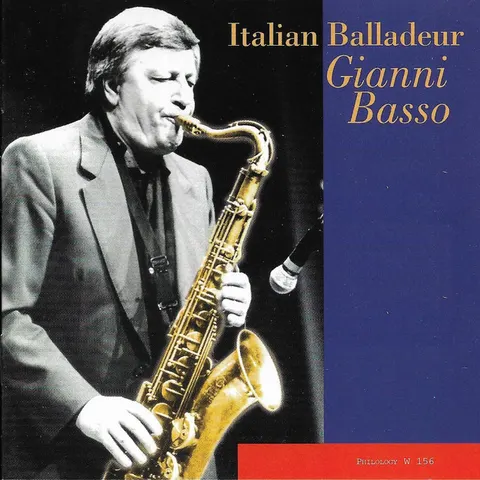
- Gianni Basso (tenor saxophone) - tenor saxophonist credited on Let It Live (1984), recorded at the Tonhalle in Düsseldorf under Lalo Schifrin, per Discogs; profiled separately on this site.

More Bebop Artists
See all 166 Bebop artists →More American Jazz Artists
See all 567 American artists →- Discogs
- Spotify - discography (no single unambiguous main Spotify artist page found for pre-1970s catalog, which Spotify splits across many era- and collaborator-specific billings; this discography link is the best available reference rather than a guessed single artist ID)