 JAZZPROFILES lives in the music 1,572 Jazz Artists fully Profiled!
 Teddy Charles
Last updated September 7, 2026
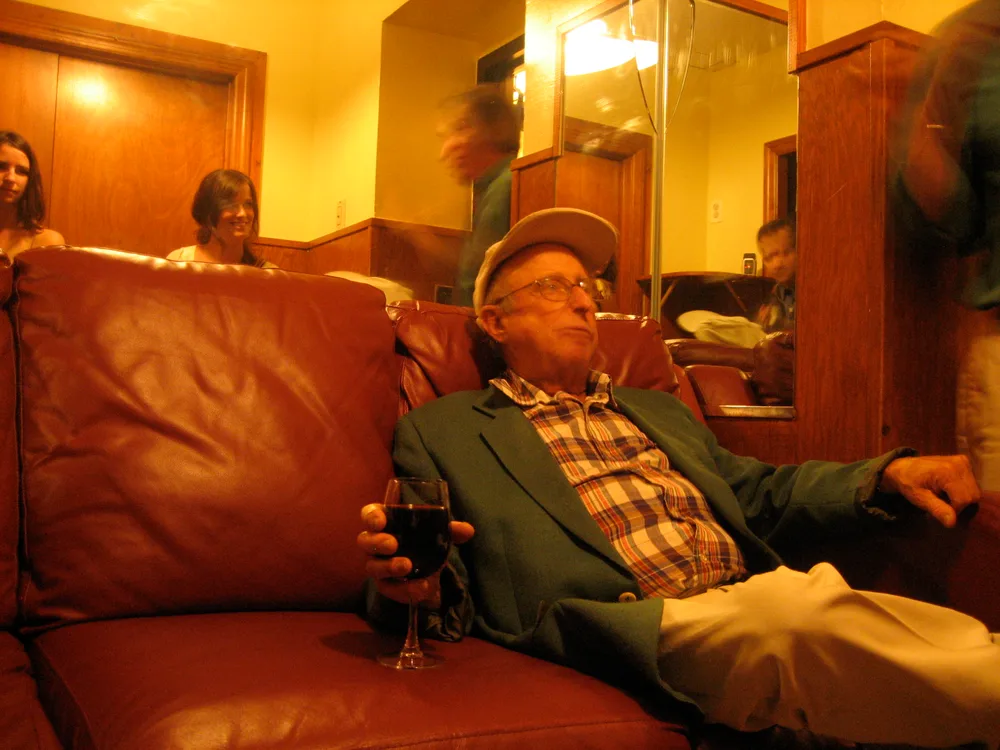
Teddy Charles performing at the Iridium Jazz Club, New York City, August 2008. Public domain (released by the photographer; Wikimedia Commons "PD-user" tag, no attribution required). — Wikimedia Commons, https://commons.wikimedia.org/wiki/File:Teddy_Charles.JPG

Teddy Charles was born Theodore Charles Cohen on April 13, 1928, in Chicopee Falls, Massachusetts. He studied percussion at the Juilliard School of Music in New York in the mid-1940s, and by his own account got his real start on a fluke: asked to sit in on piano with a Coleman Hawkins band, deputizing for Thelonious Monk. Through the late 1940s he worked as a vibraphonist, billed as "Teddy Cohen," in the big bands of Randy Brooks, Benny Goodman, Artie Shaw, Buddy DeFranco, and Chubby Jackson. He shortened his name to Teddy Charles in 1951.
Settled in New York, Charles fell in with the circle of musicians who hung around 821 Sixth Avenue, the loft building rented by photographer David X. Young and known as the Jazz Loft, where pianist Hall Overton (a subletting tenant) became his mentor. He began leading his own record dates in 1953, cutting the West Coasters EP and the first two volumes of the New Directions series for Prestige, all in a polytonal, chamber-scaled style that drew as much on Bartok and Stravinsky as on bebop. Around the same time he joined Charles Mingus's Jazz Composers' Workshop, and the two musicians' overlapping ambitions toward long-form, classically inflected jazz produced two key records: Evolution (Prestige, sessions of August 1953 and January 6, 1955, with Mingus on bass) and, on July 9, 1955, Blue Moods, a pianoless quintet for Mingus's own Debut label pairing Charles's vibraphone with trumpeter Miles Davis, trombonist Britt Woodman, Mingus, and drummer Elvin Jones.
His most celebrated recording as a leader followed on January 6, 1956: The Teddy Charles Tentet for Atlantic, a ten-piece date with charts by Charles himself alongside Gil Evans and George Russell, and a band that included Art Farmer, Gigi Gryce, Mal Waldron, and tubist Don Butterfield. The record is still cited as a landmark of what critics were starting to call Third Stream, the fusion of jazz improvisation with modern classical composition, and it sits in The Penguin Guide to Jazz's "Core Collection." He followed it with the nonet date Word from Bird (Atlantic, October and November 1956), a set of Charlie Parker tunes rearranged for an unusual brass-and-reed frontline, and in 1957 co-led the short-lived Prestige Jazz Quartet with Mal Waldron, bassist Addison Farmer, and drummer Jerry Segal.
That same year, working as a staff producer and A&R man for Prestige, Charles supervised a two-session project that would later become significant far beyond its modest original release. On April 20, 1957, he assembled a baritone-saxophone-heavy septet at Van Gelder Studio: John Coltrane on tenor, Cecil Payne and Pepper Adams on baritones, Waldron on piano, Doug Watkins on bass, and Art Taylor on drums. Charles wrote three of the session's six tunes, including the title track, but did not perform on it. On May 18 he supervised a companion date built around French horns: Julius Watkins, David Amram, trombonist Curtis Fuller, Sahib Shihab on alto, and pianist Hampton Hawes (except for one tune, on which Charles himself sat in on piano). Prestige issued the two dates together in 1958 as a 16⅔ rpm sampler, Modern Jazz Survey 2 / Baritones and French Horns (Prestige 6); the baritone side was reissued twice on LP and twice more on CD as Dakar, credited to Coltrane, and Charles produced several of those later reissues himself. He also produced Waldron's own Billie Holiday tribute Left Alone (Bethlehem, 1960) around this time.
From the late 1950s Charles worked increasingly as a producer rather than a performer, a role in which his fingerprints turn up on records that far outnumber his own leader catalog. He produced Curtis Fuller's Boss of the Soul-Stream Trombone (1961), Booker Ervin's The Book Cooks (1961), Booker Little's Booker Little and Friend (1962), and, on March 2, 1961, the Warwick label session that reunited him with Pepper Adams: Out of This World, the Donald Byrd/Pepper Adams Quintet date that gave pianist Herbie Hancock his recording debut. Charles produced the record and also stepped in as a guest on vibraphone for one track, "It's a Beautiful Evening." He continued to lead occasional dates of his own through the turn of the decade, among them Coolin' (recorded 1957, issued on New Jazz in 1959), the Lionel Hampton tribute Salute to Hamp (Bethlehem, 1959, with Zoot Sims, Hank Jones, Art Farmer, and Bob Brookmeyer sitting in across its two sessions), and a concert recording made at the Museum of Modern Art, Jazz in the Garden (Warwick, 1960).
Charles largely stepped back from full-time music in the early 1960s, redirecting his energy toward a second career as a charter-boat captain in the Caribbean and, later, on Long Island. He surfaced occasionally on record, including the novelty date Russia Goes Jazz (United Artists, 1964), but did not lead another studio album until Live at the Verona Jazz Festival 1988 (Soul Note, 1989), a quartet comeback recorded in Italy. He settled in Greenport, on Long Island's North Fork, where he restored and captained the 1906 schooner Mary E starting in 1973 and later ran the boat Pilgrim, earning the nickname "Captain Ted" while still performing locally. The Long Island Music and Entertainment Hall of Fame inducted him in 2010. In his final years he worked with saxophonist Chris Byars, recording Dances with Bulls (Smalls, 2008) and appearing on Byars's Bop-ography (2010); his last recorded performance was a 2011 collaboration with singer Wily Bo Walker on "You Don't Know What Love Is." Teddy Charles died of heart failure on April 16, 2012, in Riverhead, New York, three days after turning 84.
Charles came to the vibraphone as a boy after hearing Lionel Hampton on Benny Goodman's quartet records, and critics group him with Milt Jackson and Terry Gibbs as the generation of players who took the instrument's vocabulary beyond Hampton and Red Norvo into the harmonic language of bebop and beyond. What set Charles apart was his second life as a composer-arranger steeped in 20th-century concert music: Bartok, Stravinsky, and Prokofiev shaped his polytonal writing as much as Charlie Parker did, and his best-known dates, especially The Teddy Charles Tentet and Evolution, are frequently cited as founding documents of the Third Stream movement, alongside collaborators like Gil Evans, George Russell, and Charles Mingus who shared his interest in extended jazz composition. That same intellectual restlessness made him, in practice, more consequential as a producer and A&R man than as a performer for much of his career; from the late 1950s on he shaped other musicians' definitive recordings, including Mal Waldron's Left Alone, the Byrd-Adams Warwick sessions that introduced Herbie Hancock, and several posthumous John Coltrane reissue packages, at least as often as he stepped in front of a microphone himself.
- The Teddy Charles Tentet (1956, Atlantic) - His best-known leader date, with arrangements by Charles, Gil Evans, and George Russell for a ten-piece band including Art Farmer, Gigi Gryce, and Mal Waldron; a Third Stream landmark and a Penguin Guide "Core Collection" pick. Spotify - The Teddy Charles Tentet Listen
- Evolution (1957, Prestige) - Sessions from August 1953 and January 1955 pairing Charles with Charles Mingus, Shorty Rogers, and Jimmy Giuffre; AllMusic calls it one of the finest recorded showcases for his vibraphone playing. Spotify - Evolution Listen
- Blue Moods (1955, Debut) - As a sideman: a pianoless quintet led by Miles Davis with Mingus, Britt Woodman, and Elvin Jones, arranged mostly by Charles; recorded July 9, 1955 for Mingus's own label. Spotify - Blue Moods
- Word from Bird (1957, Atlantic) - A nonet reworking of Charlie Parker compositions, recorded October-November 1956 with Art Farmer, Eddie Bert, and Mingus on several tracks. Spotify - Word from Bird Listen
- The Prestige Jazz Quartet (1957, Prestige) - Co-led with Mal Waldron, Addison Farmer, and Jerry Segal; AllMusic called it "as fine a jazz record as you are likely to come by from 1957."
- Modern Jazz Survey 2 / Baritones and French Horns (1958, Prestige) - As producer, A&R man, and composer of three of its six baritone-side tunes: the two-session project he supervised for Pepper Adams, Cecil Payne, John Coltrane, and Mal Waldron (baritones) and Curtis Fuller, Julius Watkins, and David Amram (French horns); the baritone side was later reissued as Coltrane's Dakar. Listen
- Out of This World (1961, Warwick) - As producer, with a guest vibraphone cameo on one track: the Donald Byrd/Pepper Adams Quintet session that gave pianist Herbie Hancock his recording debut.
- Salute to Hamp (1959, Bethlehem) - His tribute to Lionel Hampton, the vibraphonist who first drew him to the instrument, with Zoot Sims, Hank Jones, Art Farmer, and Bob Brookmeyer across its two sessions.
Teddy Charles: Full Discography
Verified against the live Discogs API (artist ID 300566, realname Theodore Charles Cohen, alias Theodore Cohen/artist 274977). Charles's personal artist page carries 254 credited releases (25 "Main"/leader-or-co-leader role, 35 "Producer," 172 "Appearance," 18 "TrackAppearance," 4 unofficial), but several of his own leader albums are filed under separate Discogs group-billing entities rather than his personal ID: The Teddy Charles Tentet (1104336), Teddy Charles's West Coasters (7707734), Teddy Charles Quartet (1904598), Teddy Charles New Directions Quartet (1974610), Teddy Charles Trio (2008647), Teddy Charles Quintet (2679370), Teddy Charles And The All Stars (1904599), and The Prestige Jazz Quartet (1615561) among them, all checked individually for this discography. His leader catalog is modest enough (roughly 18 distinct titles across a nearly 60-year span) that it is presented here close to complete, rather than curated down as with more prolific bandleaders. The As Producer table is likewise close to complete for his significant, well-documented production work; the As Sideman table is a representative selection of his most significant credits, not the full 172-entry Appearance list (a large share of which are 1980s-2020s compilation reissues of the same handful of 1950s sessions).
As Leader / Co-Leader
| Album Title | Recording Date(s) | Release Date | Label | Catalog Number | Format(s) | Personnel | Role | Reissue History | Spotify | Buy | Notes |
|---|---|---|---|---|---|---|---|---|---|---|---|
| Teddy Charles And His Trio | Not specified in Discogs data | 1952 | Discovery Records | — | Vinyl, 10" | Teddy Charles (vibraphone, piano) with trio, personnel not specified in Discogs data | Leader | — | — | — | Earliest known leader date on Discogs; exact personnel and recording date not confirmed |
| Teddy Charles' West Coasters | 1953, Los Angeles | 1953 | Prestige | prEP 1307 | Vinyl, 7", EP | Teddy Charles (vibraphone) with a West Coast group including Wardell Gray (tenor sax) | Leader | Reissued 2006 on Adventures in California (Fresh Sound), paired with New Directions 4 | — | — | Filed under the separate "Teddy Charles' West Coasters" Discogs entity, not his personal artist ID |
| New Directions (Vol. 3) | 1953-1954, New York | 1954 | Prestige | PRLP 150 | Vinyl, 10" LP | Teddy Charles (vibraphone, piano), Hall Overton, Ed Shaughnessy | Leader | Reissued on the 1999 New Directions CD compilation | — | — | First of two "New Directions" 10" volumes; the polytonal, classically-inflected style that defined his early leader work |
| New Directions (Vol. 4) | 1954 | 1954 | Prestige | — | Vinyl, 10" LP | Teddy Charles Quintet: Teddy Charles (vibraphone), Curtis Counce (bass), Shelly Manne (drums), with "Jolly Roger" (pseudonymous credit) | Leader | Reissued 2006 on Adventures in California (Fresh Sound), paired with the West Coasters EP | — | — | Filed under the "Teddy Charles Quintet" Discogs entity |
| Collaboration West | December 23, 1952 (NYC) and August 21 & 31, 1953 (Los Angeles) | 1956 | Prestige | PRLP 7028 | Vinyl, LP | Teddy Charles (vibraphone, piano), Shorty Rogers (trumpet), Jimmy Giuffre (clarinet, sax), Curtis Counce/Dick Nivison (bass), Shelly Manne/Ed Shaughnessy (drums), Jimmy Raney (guitar) | Leader | Compiles three earlier sessions | Spotify - Collaboration West / Evolution | — | Combines a 1952 New York quartet date with two 1953 Los Angeles sessions |
| The Teddy Charles Tentet | January 6, 1956, New York | 1956 | Atlantic | Atlantic 1229 | Vinyl, LP | Teddy Charles (vibraphone), Art Farmer (trumpet), Don Butterfield (tuba), Gigi Gryce (alto sax), J.R. Monterose (tenor sax), George Barrow (baritone sax), Mal Waldron (piano), Jimmy Raney (guitar), Teddy Kotick (bass), Joe Harris (drums); arrangements by Charles, Gil Evans, and George Russell | Leader | Reissued on CD as Tentet; excerpted on the Nontet & Tentet Complete Recordings compilation (Jazz Collectables, 2001) | Spotify - The Teddy Charles Tentet | — | Penguin Guide to Jazz "Core Collection" title; filed under the separate "The Teddy Charles Tentet" Discogs entity |
| Word From Bird | October 23 & November 12, 1956, New York | 1957 | Atlantic | Atlantic LP 1274 | Vinyl, LP | Teddy Charles (vibraphone), Art Farmer (trumpet), Eddie Bert (trombone), Jim Buffington (French horn), Don Butterfield (tuba), Hal Stein (alto sax), Bob Newman (tenor sax), George Barrow (baritone sax), Hall Overton (piano), Jimmy Raney (guitar), Addison Farmer/Charles Mingus (bass, different tracks), Ed Shaughnessy (drums) | Leader | — | Spotify - Word From Bird | — | A nonet reworking of Charlie Parker tunes for an unusual brass/reed frontline; produced by Nesuhi Ertegun |
| 3 For Duke | Not specified in Discogs data | 1957 | Jubilee | — | Vinyl, LP | Teddy Charles Trio: Teddy Charles (vibraphone) with trio, full personnel not specified in Discogs data | Leader | — | — | — | A Duke Ellington-themed trio date; filed under the "Teddy Charles Trio" Discogs entity |
| The Prestige Jazz Quartet | June 22 & 28, 1957, Van Gelder Studio, Hackensack NJ | 1957 | Prestige | PRLP 7108 | Vinyl, LP | Teddy Charles (vibraphone), Mal Waldron (piano), Addison Farmer (bass), Jerry Segal (drums) | Co-leader | — | — | — | AllMusic: "as fine a jazz record as you are likely to come by from 1957"; filed under the separate "The Prestige Jazz Quartet" Discogs entity |
| Evolution | August 31, 1953 (Los Angeles) and January 6, 1955 (Van Gelder Studio, Hackensack NJ) | 1957 | Prestige | PRLP 7078 | Vinyl, LP | Teddy Charles (vibraphone, piano), J.R. Monterose (tenor sax), Charles Mingus (bass), Gerry Segal (drums) [tracks 1-6]; Shorty Rogers (trumpet), Jimmy Giuffre (tenor/baritone sax), Curtis Counce (bass), Shelly Manne (drums) [tracks 7-8] | Leader | — | Spotify - Evolution | — | AllMusic 4/5 stars; produced by Bob Weinstock (tracks 1-6) and Charles himself (tracks 7-8) |
| Vibe-Rant | Not specified in Discogs data | 1957 | Elektra | — | Vinyl, LP | Teddy Charles (vibraphone), full personnel not specified in Discogs data | Leader | — | — | — | Thinly documented; one of two Elektra jazz sides from this period |
| Modern Jazz Survey 2 / Baritones and French Horns | April 20, 1957 (baritones) and May 18, 1957 (French horns), Van Gelder Studio, Hackensack NJ | 1958 | Prestige | Prestige 6 | Vinyl, LP, 16⅔ RPM, Mono | Baritones: John Coltrane (tenor sax), Cecil Payne & Pepper Adams (baritone sax), Mal Waldron (piano), Doug Watkins (bass), Art Taylor (drums). French Horns: Julius Watkins & David Amram (French horn), Curtis Fuller (trombone), Sahib Shihab (alto sax), Hampton Hawes (piano, all but one track), Teddy Charles (piano, one track only), Addison Farmer (bass), Jerry Segal (drums) | Producer, A&R, composer (3 of 6 baritone-side tunes); performer on one French-horns-side track only | The baritone side was reissued twice on LP and twice more on CD as Dakar, credited to John Coltrane; Charles produced several of those reissues (Prestige PRLP 7280, 1963, and later CD editions) | YouTube - Modern Jazz Survey: Baritones & French Horns, Prestige 6 | — | See notes file: Charles did not play on the baritone side that includes Pepper Adams and Mal Waldron; his only instrumental contribution to the whole two-session release is a piano credit on one French-horns-side track, confirmed against Discogs release credits and Wikipedia's session-by-session personnel breakdown |
| Coolin' | April 14, 1957, Van Gelder Studio, Hackensack NJ | 1959 | New Jazz (Prestige) | NJLP 8216 | Vinyl, LP | Teddy Charles (vibraphone), Idrees Sulieman (trumpet), John Jenkins (alto sax, most tracks), Mal Waldron (piano), Addison Farmer (bass), Jerry Segal (drums) | Leader | — | Spotify - Coolin' | — | AllMusic 4/5 stars: "this obscure session is an excellent outing" |
| Salute to Hamp | February 1959 (some sources: late 1958), Hollywood | 1959 | Bethlehem | — | Vinyl, LP | Sextet session: Teddy Charles (vibraphone, piano), Art Farmer (trumpet), Bob Brookmeyer (valve trombone, piano), Zoot Sims (tenor sax), Addison Farmer (bass), Ed Thigpen (drums). Quartet session: Teddy Charles (vibraphone), Hank Jones (piano), Addison Farmer (bass), Charlie Smith (drums) | Leader | Reissued as The Vibraphone Players of Bethlehem, Vol. 1 and Flyin' Home | — | — | A tribute to Lionel Hampton, whose Benny Goodman-era vibraphone records first drew Charles to the instrument as a boy; filed under the "Teddy Charles And His Sextet" Discogs entity |
| Jazz in the Garden at the Museum of Modern Art | Not specified in Discogs data | 1960 | Warwick | — | Vinyl, LP | Teddy Charles New Directions Quartet: Teddy Charles (vibraphone) with quartet, full personnel not specified in Discogs data | Leader | — | — | — | A concert recording; filed under the "Teddy Charles New Directions Quartet" Discogs entity |
| On Campus: Ivy League Jazz Concert | Not specified in Discogs data | 1960 | Bethlehem | — | Vinyl, LP | Not specified in Discogs data | Leader | — | — | — | Not located under Charles's personal Discogs ID or any checked group entity; sourced from Wikipedia's discography list only, unconfirmed independently |
| Russia Goes Jazz: Swinging Themes From the Great Russian Composers | Not specified in Discogs data | 1964 | United Artists | — | Vinyl, LP | Teddy Charles And The All Stars: Teddy Charles (vibraphone) with ensemble, full personnel not specified in Discogs data | Leader | — | — | — | Jazz arrangements of Russian classical themes; filed under the "Teddy Charles And The All Stars" Discogs entity |
| Live at the Verona Jazz Festival 1988 | 1988, Verona, Italy | 1989 | Soul Note | — | Vinyl, LP | Teddy Charles Quartet, full personnel not specified in Discogs data | Leader | — | — | — | Comeback recording after a roughly two-decade recording gap; filed under the "Teddy Charles Quartet" Discogs entity |
| Dances with Bulls | Not specified in Discogs data | 2008 or 2009 (sources disagree) | Smalls Records | — | CD | Teddy Charles with Chris Byars and others, full personnel not specified in Discogs data | Leader | — | — | — | His final studio album as leader, made in collaboration with saxophonist Chris Byars |
As Producer / A&R (selected, non-performing credits)
Teddy Charles's 35 Discogs "Producer" credits are, by most measures, the larger part of his recorded legacy. This table lists his most historically significant production work on other artists' sessions; it is not exhaustive.
| Year | Artist (Album) | Label | Notes |
|---|---|---|---|
| 1957/1958 | John Coltrane / Pepper Adams et al. (Modern Jazz Survey 2 / Baritones and French Horns, Prestige 6) | Prestige | Original production and A&R; see the As Leader table above |
| 1960 | Mal Waldron (Left Alone) | Bethlehem | Waldron's tribute to Billie Holiday, built around a song the two co-wrote |
| 1961 | Booker Ervin (The Book Cooks) | Prestige/New Jazz | Ervin's debut as leader |
| 1961 | Curtis Fuller (Boss of the Soul-Stream Trombone) | Warwick | — |
| 1961 | Howard McGhee (Dusty Blue) | Bethlehem | — |
| 1961 | Bennie Green (Hornful of Soul) | Enrica/Bethlehem | — |
| 1961 | Charles Persip and the Jazz Statesmen (self-titled) | Bethlehem | — |
| 1961 | Harold Ousley (Tenor Sax) | Bethlehem | — |
| 1961 | Donald Byrd / Pepper Adams Quintet (Out of This World) | Warwick | Herbie Hancock's recording debut; Charles also guests on vibraphone on "It's a Beautiful Evening" |
| 1962 | Booker Little (Booker Little and Friend) | Bethlehem | — |
| 1963/1981/2016 | John Coltrane (Dakar, various reissues) | Prestige | Reissue production of the 1957 baritone session Charles originally supervised |
| 1991 | Pepper Adams (Plays Charlie Mingus, reissue) | Original Jazz Classics | Reissue production credit only |
As Sideman (selected major credits)
| Year | Project (Leader) | Title | Label | Catalog | Role | Notes |
|---|---|---|---|---|---|---|
| 1955 | Miles Davis | Blue Moods | Debut | DEB-120 | Vibraphone, arranger (all but "Alone Together") | Pianoless quintet with Miles Davis, Britt Woodman, Charles Mingus, and Elvin Jones; recorded July 9, 1955 |
| 1956 | Bob Brookmeyer | The Dual Role of Bob Brookmeyer | Prestige | PRLP 7066 | Vibraphone | Recorded 1954-1955 |
| 1956 | Metronome All-Stars | Metronome All-Stars 1956 | Clef | — | Vibraphone | Annual critics'-poll all-star date |
| 1957 | Charles Mingus | East Coasting | Bethlehem | BCP 6019 | Vibraphone (bonus track only) | Main session (rec. August 16, 1957) is Mingus/Bill Evans/Clarence Shaw/Jimmy Knepper/Shafi Hadi/Dannie Richmond; Charles appears on one additional larger-ensemble track only |
| 1957 | Thad Jones | Olio | Prestige | PRLP 7084 | Vibraphone | Co-billed with Thad Jones, Frank Wess, Mal Waldron, Doug Watkins, Elvin Jones |
| 1957 | Teo Macero | Teo | Prestige | PRLP 7104 | Vibraphone | Billed as "Teo Macero With The Prestige Jazz Quartet" |
| 1955 (reissued 1964) | Jimmy Raney | Two Jims and Zoot | — | — | Vibraphone | Reissue compiling earlier sessions with Jimmy Raney and Zoot Sims |
| 1951/1953 (reissued as 1964 New Jazz LP) | Lee Konitz / Miles Davis / Teddy Charles | Ezz-thetic | New Jazz | — | Vibraphone (Charles/Raney side only) | A New Jazz repackaging pairing a 1951 Konitz/Davis session with an unrelated Charles/Jimmy Raney session on one LP; not a genuine three-way collaboration |
| 1968 | Harold Vick | Watch What Happens | RCA Victor | — | Vibraphone | — |
| 1967 | Eric Kloss | Grits & Gravy | Prestige | PRLP 7517 | Vibraphone | — |
| 1958 | Australian Jazz Quintet | Modern Jazz Performance of Kurt Weill's Three Penny Opera | Bethlehem | — | Vibraphone | — |
| 1957 (reissued 1965) | Curtis Fuller & Hampton Hawes | Curtis Fuller and Hampton Hawes with French Horns | Status | — | Piano (one track), producer | The "French Horns" half of the Modern Jazz Survey 2 project, reissued separately under Fuller and Hawes's names |
| 1953/1955 (reissued 1955) | Wardell Gray | Memorial Volume One | Prestige | — | Vibraphone | Reissue of earlier Gray sessions Charles played on |
| 1960 | Charles Mingus | Mingus Dynasty | Columbia | CL 1440 | Vibraphone | — |
| 1959 (reissued 1979) | Charles Mingus | Nostalgia in Times Square / The Immortal 1959 Sessions | Columbia | — | Vibraphone | — |
| 1962 | Charles Mingus | Town Hall Concert | United Artists | — | Vibraphone | — |
| 1964 | Aretha Franklin | Unforgettable: A Tribute to Dinah Washington | Columbia | — | Vibraphone (credited per Wikipedia; specific track not independently confirmed) | — |
- Charles Mingus - fellow member of the Jazz Composers' Workshop, mid-1950s; bassist on Evolution (1955) and Blue Moods (1955), and on several tracks of Word from Bird (1956); Charles later recorded as a sideman on Mingus's East Coasting (1957), Mingus Dynasty (1960), and Town Hall Concert (1962).
- Miles Davis - featured on Blue Moods (1955), the pianoless Debut Records quintet Charles largely arranged.
- Mal Waldron - pianist on Evolution (1958 reissue billing), the Prestige Jazz Quartet (1957), Coolin' (1957/1959), and the April 1957 baritone-saxophone session that became Dakar; Charles produced Waldron's own leader date Left Alone (Bethlehem, 1960).
- Elvin Jones - drummer on Blue Moods (1955) and on the Thad Jones-led Olio (Prestige, 1957), on which Charles also played.
- Thad Jones - shared billing with Charles, Mal Waldron, Doug Watkins, and Elvin Jones on Olio (Prestige, 1957).
- Pepper Adams - baritone saxophonist on the 1957 Prestige sessions Charles produced and partly composed, later reissued as Dakar; more directly, Charles produced (and cameoed on vibes for) Adams's 1961 Warwick session Out of This World with Donald Byrd.
- Lionel Hampton - the vibraphonist whose Benny Goodman-era records first drew Charles to the instrument at age nine; subject of Charles's 1959 tribute album Salute to Hamp.
- Zoot Sims - sideman on the Salute to Hamp sextet session (1959); Charles later produced a reissue of Sims's Down Home.
- Jimmy Knepper - fellow sideman on a bonus track from Mingus's East Coasting sessions (1957).
- Curtis Fuller, Hampton Hawes, Julius Watkins, and Doug Watkins - all featured on the two 1957 Prestige sessions Charles produced (the "French Horns" date and the future Dakar/Olio sessions); Charles also produced Fuller's own Boss of the Soul-Stream Trombone (1961).
- Hall Overton - pianist, arranger, and Charles's mentor from the Jazz Loft scene in the 1950s.
- Bob Brookmeyer, J.R. Monterose, Jimmy Raney, Addison Farmer, and Jerry Segal - recurring collaborators across the New Directions, Prestige Jazz Quartet, and Salute to Hamp dates.
More Third Stream Artists
See all 114 Third Stream artists →More American Jazz Artists
See all 567 American artists →Note: Spotify's search API returned a quota-exhaustion error (HTTP 429) for the entirety of this session, so no Spotify artist page is linked here; the individual album links above were confirmed instead via web search cross-checked against Discogs track counts and personnel. See teddy-charles_notes.md for detail.
- Wikipedia: Teddy Charles
- Wikipedia: Baritones and French Horns
- Wikipedia: Dakar (album)
- Wikipedia: Blue Moods
- Wikipedia: Evolution (Teddy Charles album)
- Wikipedia: Word from Bird
- Wikipedia: The Teddy Charles Tentet
- Wikipedia: The Prestige Jazz Quartet
- Wikipedia: Collaboration West
- Wikipedia: Coolin'
- Wikipedia: Out of This World (Pepper Adams Donald Byrd Quintet album)
- Discogs: Teddy Charles (artist 300566)
- Discogs: Modern Jazz Survey 2 / Baritones and French Horns, Prestige 6
- AllMusic: Teddy Charles (biography page returns HTTP 403 to automated fetches; cited from search-result snippets)
- Long Island Music and Entertainment Hall of Fame: Teddy Charles
- NPR: Remembering Teddy Charles: Composer, Vibraphonist, Sailboat Captain (April 20, 2012)