 JAZZPROFILES lives in the music 1,572 Jazz Artists fully Profiled!
 Frank Foster
Last updated September 8, 2026
Listen on Spotify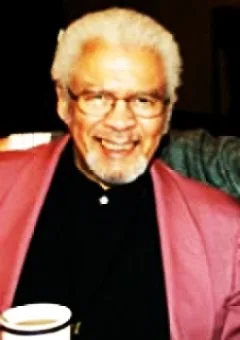
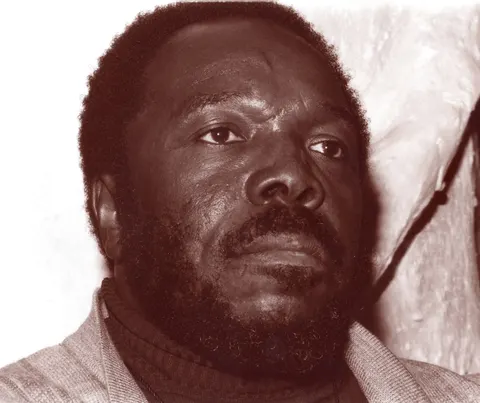
Frank Foster at the NEA Jazz Masters reunion luncheon, 2008 (cropped from a photo with fellow honoree Dan Morgenstern) CC BY-SA 4.0 — Wikimedia Commons — https://commons.wikimedia.org/wiki/File:Frank_Foster.jpg
Frank Benjamin Foster III was born September 23, 1928, in Cincinnati, Ohio. He developed an ear for music by age five, listening to classical broadcasts and hearing opera with his mother at the Cincinnati Zoo pavilion. He began clarinet lessons at eleven and switched to saxophone at thirteen after a teacher pointed out that the horn had more work in dance bands. By his senior year of high school he was organizing and writing for his own 12-piece band with no formal training in arranging. He enrolled at Wilberforce University but left before graduating in 1949, when trumpeter Snooky Young invited him to Detroit for a seven-week engagement; the Detroit scene he found there, including Barry Harris and Kenny Burrell, convinced him to stay rather than finish his degree.
In Detroit, Foster worked the Blue Bird Inn alongside Wardell Gray and Milt Jackson, and crossed paths early with drummer Elvin Jones and with Thelonious Monk. The Army drafted him in 1951, and he served in Korea with the 7th Infantry Division, at one point going AWOL to San Francisco to sit in with Dexter Gordon. Discharged in 1953, he came across a Down Beat article on Count Basie's orchestra while still stationed overseas, and a chance meeting after his return home led directly to a chair in the band. He joined that July and stayed until 1964, a decade that made his reputation as both a tenor soloist and, increasingly, as one of the orchestra's key composer-arrangers.
Foster's writing shaped what became known as Basie's "New Testament" band. In 1955, at a rehearsal in Philadelphia's Pep's Bar, he introduced a chart that by his own account sounded at first "like a 43-car pile-up"; worked into shape, it became "Shiny Stockings," first recorded for Verve on January 4, 1956, and eventually one of the most widely played big-band charts in the jazz repertoire, later fitted with lyrics by Jon Hendricks. Alongside arrangers Neal Hefti and Ernie Wilkins, Foster helped build the book behind the Count Basie Orchestra's signature 1950s records, while his own bebop-inflected tenor, paired opposite the cooler-toned Frank Wess in the reed section, gave the band a running "Two Franks" contrast that became one of its signatures. He also led his own Basie-sideman dates on the side: Here Comes Frank Foster (1954, Blue Note), drawing on Basie personnel, and No 'Count (recorded March 1956, Savoy), a sextet session built around Frank Wess, trombonists Henry Coker and Benny Powell, Kenny Burrell, bassist Eddie Jones, and drummer Kenny Clarke.
After leaving Basie in 1964, Foster worked briefly with Woody Herman's band, freelanced widely, and moved increasingly into teaching, including a 1971 artist residency at the New England Conservatory, ongoing work as a music consultant in New York City's public schools from 1971 on, and a full-time assistant professorship in Black Studies at SUNY Buffalo from 1972 to 1976. He played with Illinois Jacquet and with Duke Pearson's big band in 1968, toured and recorded with the Thad Jones/Mel Lewis Orchestra in 1972 and 1975, and served two stints, 1970-1972, in Elvin Jones's working quartet and quintet. In this period he organized his own groups, most durably The Loud Minority, an 18-piece "concert jazz orchestra" that recorded its debut album for Mainstream in 1972 and toured Europe and Japan; he also led Living Color, the Non-Electric Company, and Swing Plus at various points, and recorded the Blue Note session Manhattan Fever (1968) and the Prestige albums Fearless Frank Foster (1965) and Soul Outing! (1966). His writing reached beyond his own bands, too: he orchestrated Dizzy Gillespie's "Con Alma" for the London Philharmonic Orchestra and composed the "Lake Placid Suite" for the 1980 Winter Olympics.
The 1980s brought a run of reunions and new leadership. Beginning in 1983 he re-teamed with Frank Wess in a co-led quintet, documented on Two for the Blues (recorded October 1983, released 1984, Pablo) and Frankly Speaking (recorded December 1984, released 1985, Concord Jazz). In January 1985 he and baritone saxophonist Pepper Adams co-led the Muse Records session Generations, a quintet date rounded out by pianist Noreen Grey, bassist Earl Sauls, and drummer Glenn Davis; that September, Foster was among the musicians, alongside Dizzy Gillespie, Kenny Burrell, and Tommy Flanagan, who turned out for a benefit concert for Adams as he underwent treatment for the lung cancer that killed him days later, on September 10, 1986. Weeks after that concert, Foster succeeded Thad Jones, who had led the post-Basie ghost band since 1985, as musical director of the Count Basie Orchestra, a post he held from 1986 to 1995. He balanced preserving Basie's book with adding his own new charts, winning Grammy Awards for his arrangements of "Deedles' Blues" (1987) and "Basie's Bag" (1988) along the way.
After stepping down from the Basie band in 1995, Foster returned full-time to his own groups and kept recording into the 2000s, including Leo Rising (1996, Arabesque), We Do It Diff'rent (2003, Mapleshade), and Endless Fingers (2005, Arabesque). He received an honorary doctorate from Central State University in 1987, the Benny Golson Jazz Master Award from Howard University in 1998, and the National Endowment for the Arts' NEA Jazz Masters Award in 2002. A stroke in 2001 left him unable to play saxophone, and he handed leadership of The Loud Minority to Cecil Bridgewater, but he kept composing and arranging at home using notation software with playback, work he said gave him the same creative satisfaction as performing because a score could be revised where a live solo could not. In 2010 and 2011, with help from a Rutgers School of Law legal team, he recovered full songwriting royalties on "Shiny Stockings" and his other Basie-era compositions, decades after signing away his publishing rights as a young sideman who, in his own telling, simply didn't know better. He had been married to his wife and longtime personal manager, Cecilia Foster, for nearly 45 years. Frank Foster died of kidney failure on July 26, 2011, in Chesapeake, Virginia, at age 82.
Foster came into the Basie band as a bebop-schooled tenor player in a swing institution, and the tension never entirely resolved. By his own account, Basie's musicians thought his early charts and solos sounded strange next to the older "Old Testament" book, but Basie encouraged the new sound anyway, and it became a defining color of the "New Testament" band. His tenor drew on the muscular, harmonically busy vocabulary of the boppers (Sonny Stitt above all) rather than the airier lyricism of Basie's earlier stars Lester Young and Herschel Evans, and his pairing with the cooler, Websterish Frank Wess, the "Two Franks," gave the Basie reed section a contrast audiences and critics came to recognize instantly. As a writer he was equally comfortable inside the compact, riff-driven Basie formula ("Shiny Stockings" remains one of the most-recorded big-band charts in the repertoire) and in more expansive, soul-jazz and modal settings on his own dates with The Loud Minority. His two Grammy-winning arrangements for the Basie ghost band in the late 1980s, along with a body of composition that ranged from Olympic ceremonial music to an orchestration of a Dizzy Gillespie standard for a symphony orchestra, reflected a writer as comfortable serving an institution's sound as expanding it.
- No 'Count (1956, Savoy) - Foster's first true leader date, built from Basie-band personnel including Frank Wess, Henry Coker, Benny Powell, and Kenny Burrell.
- Manhattan Fever (1968, Blue Note) - Widely considered Foster's best-known leader album, foregrounding his composing and arranging as much as his tenor. Spotify - Manhattan Fever Listen
- Fearless Frank Foster (1965/1966, Prestige) - A hard-bop quintet date of mostly Foster originals, recorded at Van Gelder Studio.
- The Loud Minority (1972, Mainstream) - Debut album of Foster's 18-piece concert jazz orchestra, later rediscovered by acid-jazz collectors and DJs; personnel included Elvin Jones, Stanley Clarke, and Dee Dee Bridgewater. Spotify - The Loud Minority Listen
- Two for the Blues (1983/1984, Pablo) - Reunion co-led quintet album with fellow Basie tenor Frank Wess, backed by Kenny Barron, Rufus Reid, and Marvin "Smitty" Smith.
- Generations (1985, Muse) - Co-led with baritone saxophonist Pepper Adams, one of Adams's last studio recordings before his 1986 death. Listen
- Here Comes Frank Foster (1954, Blue Note) - Foster's recorded debut as a leader, drawn from Basie-band colleagues shortly after he joined the orchestra. Spotify - Here Comes Frank Foster / George Wallington Showcase Listen
Frank Foster: Full Discography
Identity confirmed via the Discogs API: artist ID 259076 ("Frank Foster," realname Frank Benjamin Foster III, born/died dates and Count Basie/Elvin Jones/Thelonious Monk associations matching). Discogs credits Foster on over 1,300 releases in total, the great majority sideman "Appearance" credits from his 1953-1964 tenure in the Count Basie Orchestra's reed section plus decades of freelance session work. The table below itemizes his confirmed leader/co-leader catalog in full. His Basie-era sideman work is not itemized here; the Count Basie Orchestra's own studio and live discography from those years is covered under the Count Basie Orchestra's JazzProfiles.com profile. A second table below lists a representative set of his other most significant sideman credits, outside the Basie band.
As Leader / Co-Leader
| Album Title | Recording Date(s) | Release Date | Label | Catalog Number | Format(s) | Personnel | Role | Reissue History | Spotify | Buy | Notes |
|---|---|---|---|---|---|---|---|---|---|---|---|
| New Faces - New Sounds: Here Comes Frank Foster | Recorded 1954 | 1954 | Blue Note | BLP 5105 | Vinyl, 10", Album, Mono | Frank Foster (tenor sax) with Basie-band colleagues; full session personnel not confirmed in available sources | Leader | Later reissued paired with George Wallington's Showcase | Spotify - Here Comes Frank Foster / George Wallington Showcase | — | Foster's recorded debut as a leader, cut shortly after he joined Count Basie |
| Hope Meets Foster | Recorded 1955 | 1955 | Prestige | PRLP 7043 | Vinyl, LP, Album | Elmo Hope (piano), Frank Foster (tenor sax), with rotating quartet/quintet personnel; billed as an Elmo Hope date "featuring" Foster | Co-leader / featured | None found | Not found on Spotify | — | Billed to Hope, not a solo Foster leader date |
| No 'Count | Recorded March 5 & 7, 1956, Van Gelder Studio, Hackensack NJ | 1956 | Savoy Records | MG 12078 | Vinyl, LP, Album, Mono | Frank Foster & Frank Wess (tenor sax; Wess doubling flute), Henry Coker & Benny Powell (trombone), Kenny Burrell (guitar), Eddie Jones (bass), Kenny Clarke (drums) | Leader | None found | Not found on Spotify | — | Built from Count Basie Orchestra colleagues; AllMusic gave it 3.5 stars |
| Basie Is Our Boss | Not specified in available sources | 1963 | Argo | LP-737 | Vinyl, LP, Album | Frank Foster with a big band of Basie-affiliated musicians; full personnel not confirmed in available sources | Leader | None found | Not found on Spotify | — | Tribute-style set of Basie-associated material |
| Fearless Frank Foster | Recorded December 2, 1965, Van Gelder Studio, Englewood Cliffs NJ | 1966 | Prestige | PR 7461 | Vinyl, LP, Album | Frank Foster (tenor sax) with a hard-bop quintet; full sideman list not confirmed in available sources | Leader | None found | Not found on Spotify | — | Mostly Foster originals; AllMusic gave it 4 stars |
| Soul Outing! | Recorded June 27 & July 11, 1966, Van Gelder Studio, Englewood Cliffs NJ | 1967 | Prestige | PR 7512 | Vinyl, LP, Album | Frank Foster (tenor sax) with a soul-jazz combo; full personnel not confirmed in available sources | Leader | None found | Spotify - Soul Outing! | — | |
| Manhattan Fever | Recorded March 21, 1968 (bonus tracks January 31, 1969), Van Gelder Studio, Englewood Cliffs NJ | 1968 | Blue Note | BST 84293 | Vinyl, LP, Album | Frank Foster (tenor sax, alto clarinet), Marvin Stamm (trumpet), Garnett Brown & Jimmy Cleveland (trombone), Kenny Rogers (baritone sax), Ed Pazant (alto sax, flute, oboe), Richard Wyands / George Cables (piano), Bob Cranshaw / Buster Williams (bass), Mickey Roker (drums) | Leader | CD reissue adds 1969 bonus session tracks | Spotify - Manhattan Fever | — | Widely regarded as Foster's best-known leader album |
| The Loud Minority | Recorded 1972 | 1972 | Mainstream Records | MRL 344 | Vinyl, LP, Album | Frank Foster's 18-piece big band, including Cecil Bridgewater & Hannibal Marvin Peterson (trumpet), Dick Griffin (trombone), Harold Mabern (piano), Stanley Clarke (bass), Elvin Jones (drums), Airto Moreira (percussion), Dee Dee Bridgewater (vocals) | Leader | Reissued on CD; sampled/collected by the acid-jazz scene from the early 1990s on | Spotify - The Loud Minority | — | Debut album of Foster's long-running concert jazz orchestra |
| Here and Now | Not specified in available sources | 1976 | Catalyst | Vinyl, LP | Not confirmed in available sources | Leader | None found | Not found on Spotify | — | ||
| Frank Foster And The Loud Minority: Shiny Stockings | Recorded 1977 (per some sources) | 1979 | Denon | Vinyl, LP | The Loud Minority big band; full personnel not confirmed in available sources | Leader | None found | Not found on Spotify | — | Recording/release-date discrepancy between sources; not to be confused with the 1955 composition of the same name | |
| Twelve Shades of Black | Not specified in available sources | 1978 | Leo Records | Vinyl, LP | Frank Foster's Living Color ensemble; full personnel not confirmed in available sources | Leader | None found | Not found on Spotify | — | ||
| The Non-Electric Company | Not specified in available sources | 1979 | EPM Musique | Vinyl, LP | Not confirmed in available sources | Leader | None found | Not found on Spotify | — | ||
| The House That Love Built | Not specified in available sources | 1982 | SteepleChase | Vinyl, LP | Not confirmed in available sources | Leader | None found | Not found on Spotify | — | ||
| Two for the Blues | Recorded October 11-12, 1983, Don Elliot Studios, Weston CT | 1984 | Pablo Records | 2310-905 | Vinyl, LP, Album | Frank Foster (tenor, soprano sax) & Frank Wess (tenor sax, alto sax, flute), Kenny Barron (piano), Rufus Reid (bass), Marvin "Smitty" Smith (drums) | Co-leader (with Frank Wess) | None found | Not found on Spotify | — | Reunion of the Basie-era "Two Franks" tenor tandem |
| Frankly Speaking | Recorded December 1984, Skyline Studios, NYC | 1985 | Concord Jazz | CJ-267 | Vinyl, LP, Album | Frank Foster (tenor, soprano sax), Frank Wess (tenor sax, flute), Kenny Barron (piano), Rufus Reid (bass), Marvin "Smitty" Smith (drums) | Co-leader (with Frank Wess) | None found | Not found on Spotify | — | Second Foster/Wess reunion date; includes the original "Two Franks" |
| Generations | Recorded January 25, 1985 | 1985 | Muse Records | MR 5313 | Vinyl, LP, Album, Stereo | Frank Foster (tenor/soprano sax), Pepper Adams (baritone sax), Noreen Grey (piano), Earl Sauls (bass), Glenn Davis (drums), James L. Dean (reeds) | Co-leader (with Pepper Adams) | None found | YouTube - Pepper Adams & Frank Foster (25/01/1985) | — | Not found on Spotify; linked to a YouTube upload dated to this session. Details cross-verified against Pepper Adams's own discography-full.md |
| Count Basie Orchestra: Live at El Morocco | Recorded 1992 | 1992 | Telarc | CD, Album | The Count Basie Orchestra under Foster's direction | Leader (as orchestra director) | None found | Not found on Spotify | — | ||
| Fresh Taste of Thad Jones and Frank Foster | Not specified in available sources | 1995 | Hänssler | CD, Album | Not confirmed in available sources | Co-leader (retrospective pairing) | None found | Not found on Spotify | — | ||
| Leo Rising | Not specified in available sources | 1996 | Arabesque Recordings | CD, Album | Not confirmed in available sources | Leader | None found | Not found on Spotify | — | ||
| Swing | Recorded live | 1998 | Challenge Records | CD, Album | Not confirmed in available sources | Leader | None found | Not found on Spotify | — | ||
| We Do It Diff'rent | Recorded live | 2003 | Mapleshade | CD, Album | Not confirmed in available sources | Leader | None found | Not found on Spotify | — | ||
| Settin' the Pace | Not specified in available sources | 2004 | GJazz | CD, Album | Not confirmed in available sources | Leader | None found | Not found on Spotify | — | ||
| Endless Fingers | Not specified in available sources | 2005 | Arabesque Recordings | CD, Album | Not confirmed in available sources | Leader | None found | Not found on Spotify | — | ||
| Well Water | Recorded 1977, released posthumously | 2007 | Piadrum | CD, Album | Frank Foster's 20-piece big band; master tapes considered lost for decades before being found in engineer Don Hungerberg's home | Leader | First release, 2007 | Not found on Spotify | — | Recorded in 1977 but not issued until three decades later |
As Sideman (selected major credits, outside the Count Basie Orchestra)
| Year | Project (Leader) | Title | Label | Catalog | Role | Notes |
|---|---|---|---|---|---|---|
| 1954 | Thelonious Monk Quintet | Thelonious Monk Quintet | Prestige | Tenor Saxophone | ||
| 1957 | Frank Foster, Curly Russell, Art Blakey, Ray Copeland Featuring Thelonious Monk | We See | Judson/Josie | Tenor Saxophone, co-billed | ||
| 1957 | Thelonious Monk with Sonny Rollins and Frank Foster | Monk | Riverside/Jazzland | Tenor Saxophone | Compilation drawing on Monk sessions Foster appeared on | |
| 1966 (rec.) | Woody Herman And His Orchestra | Various | Tenor Saxophone | Foster's post-Basie stint with Herman's band | ||
| 1972 & 1975 | Thad Jones/Mel Lewis Orchestra | Various | Tenor Saxophone | Foster guested with the orchestra in both years | ||
| 1967 | Lionel Hampton And His Orchestra | Various | Tenor Saxophone | |||
| 1968 | Duke Pearson's Big Band | Various | Tenor Saxophone, arranger | |||
| 1970-1972 | The Elvin Jones Jazz Machine / Elvin Jones Quintet | Various | Tenor Saxophone | Two stints in Jones's working group |
Foster's Discogs sideman log also includes extensive further work as a member of the Count Basie Orchestra's reed section (1953-1964) across dozens of studio and live LPs, not itemized here (see the Count Basie Orchestra's own discography), plus scattered freelance dates from the 1950s through the 1980s not confirmed in detail in available sources.
- Count Basie - tenor saxophonist, composer, and arranger with the orchestra, 1953-1964; returned in 1986 to lead the post-Basie ghost band as its musical director through 1995, succeeding Thad Jones.
- Frank Wess - Basie's other featured tenor voice, the "Two Franks" tandem; reunited decades later as a co-led quintet on Two for the Blues (1983/84) and Frankly Speaking (1984/85).
- Pepper Adams - co-led Generations (1985, Muse); Foster attended Adams's September 1986 benefit concert shortly before Adams's death.
- Elvin Jones - early Detroit contemporary in the late 1940s; later a member of Jones's quartet and quintet, 1970-1972.
- Thad Jones and Mel Lewis - toured and recorded with the Thad Jones/Mel Lewis Orchestra in 1972 and 1975; Foster succeeded Jones as the Count Basie Orchestra's musical director in 1986.
- Thelonious Monk - recorded as a sideman on mid-1950s Monk sessions, including the 1957 Riverside date We See.
- Barry Harris and Kenny Burrell - Detroit scene contemporaries from the late-1940s Blue Bird Inn circle; Burrell also played on Foster's own No 'Count (1956).
- Lionel Hampton - toured and recorded with Hampton's band in 1967.

More Big Band Artists
See all 202 Big Band artists →More American Jazz Artists
See all 567 American artists →- Wikipedia: Frank Foster (jazz musician)
- Discogs: Frank Foster (artist 259076)
- NEA Jazz Masters: Frank Foster
- Wikipedia: No 'Count
- Wikipedia: Manhattan Fever
- Wikipedia: Fearless Frank Foster
- Wikipedia: Soul Outing!
- Wikipedia: The Loud Minority
- Wikipedia: Two for the Blues
- Wikipedia: Frankly Speaking (album)
- NPR: Jazzman Frank Foster Finally Wins Copyright Of His Most Famous Song (2011)