 JAZZPROFILES lives in the music 1,572 Jazz Artists fully Profiled!
 Ray Charles
Last updated September 5, 2026
Listen on Spotify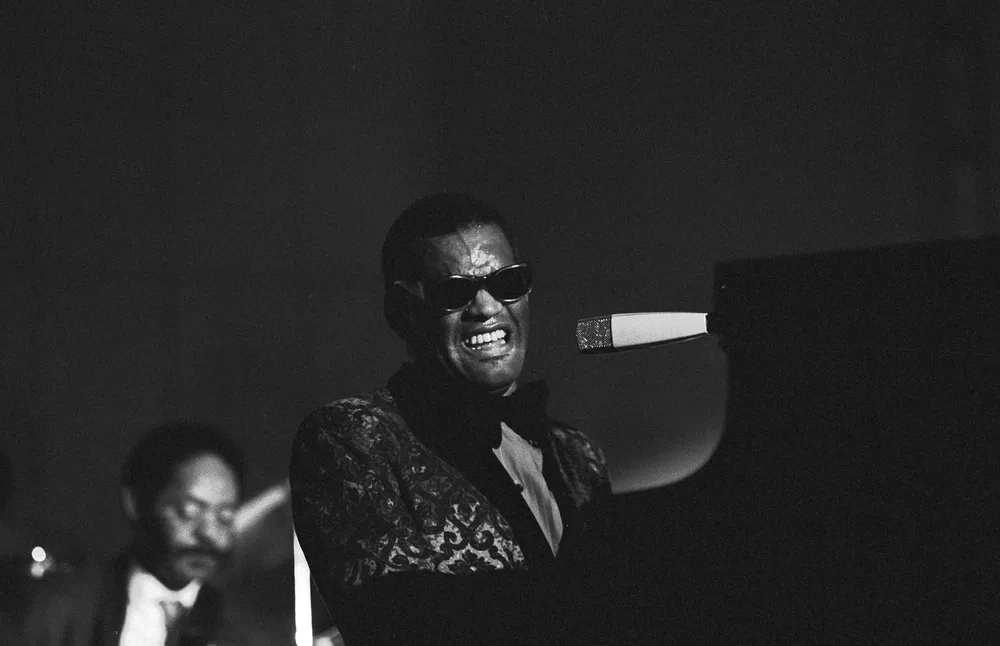
Ray Charles at the piano in the Musikhalle (now the Laeiszhalle), Hamburg, September 1971 CC BY-SA 2.0 — Wikimedia Commons - https://commons.wikimedia.org/wiki/File:Ray_Charles_260971neu000.jpg

Ray Charles Robinson was one of the defining American musicians of the twentieth century, and only part of what he did belongs on a jazz reference site. He was an R&B singer, the architect of soul, and a country-pop hitmaker, and he was also a working jazz pianist, organist and bandleader who cut instrumental albums for Atlantic, Impulse! and his own labels. This profile covers the jazz career and says so plainly: the Atlantic small-group instrumental dates, the two albums with Milt Jackson, Genius + Soul = Jazz, the big band he ran from 1961, and the Tangerine and Crossover instrumental series of the 1970s. The R&B, soul, country and pop catalog, which is by any measure the larger and more famous half of his output, is deliberately left out rather than half-covered. The discography in this folder is scoped the same way.
Charles was born September 23, 1930, in Albany, Georgia, and raised in Greenville, Florida, by his mother Aretha Robinson. He was picking out boogie-woogie on the upright piano at Wylie Pitman's Red Wing Cafe at about three. His sight began to fail at four or five and was gone by seven, usually attributed to glaucoma although the diagnosis was never firmly established at the time. His younger brother George drowned in their mother's laundry tub at four, an event the 2004 film Ray rearranged for effect: the film has Charles frozen in shock, while the sourced accounts have him trying to pull his brother out. From 1937 to 1945 he attended the Florida School for the Deaf and the Blind in St. Augustine, where he was formally trained in braille notation, ensemble playing, and piano, clarinet, alto saxophone, trumpet and organ. Aretha Robinson died in the spring of 1945, when he was fourteen, and he left the school for good.
The next three years were spent working Florida for money. He played the Ritz Theatre in Jacksonville's LaVilla district for four dollars a night for more than a year, moved on to Orlando, and by 1947 was in Tampa holding several jobs at once, including a stretch as pianist for Charlie Brantley's Honey Dippers. Somewhere in this window he crossed paths with the Adderley brothers around Tallahassee's Frenchtown district, playing alongside a teenaged Julian "Cannonball" Adderley and his younger brother Nat while their parents taught at Florida A&M. The connection is well attested and both Adderleys spoke of it; the dating that usually travels with it is not reliable, and the notes file for this profile sets out why. In March 1948 Charles left for Seattle, about as far from Florida as he could get without leaving the country, and formed the McSon Trio, whose piano, guitar and bass format and smooth vocal delivery were a deliberate, close copy of Nat King Cole and Charles Brown. Recording for Jack Lauderdale's Down Beat/Swing Time label, the trio cut "Confession Blues" in late 1948; released in 1949, it reached number two on the Billboard R&B chart.
Atlantic bought his contract for $2,500 in June 1952, and the label's owners, jazz people first, gave him room to record instrumentally alongside the singles that were making his name. The Great Ray Charles, cut across 1956 and 1957 and released in August 1957, is an all-instrumental septet and trio album with Oscar Pettiford on bass, David "Fathead" Newman on saxophones and arrangements by Quincy Jones, whom Charles had met in Seattle when Jones was fifteen. Instrumentals held back from the same run of sessions became The Genius After Hours in 1961. Atlantic then put him in a studio with Milt Jackson of the Modern Jazz Quartet, and the two dates that resulted, September 12, 1957 and April 10, 1958, produced Soul Brothers (1958) and Soul Meeting (1961), with Charles playing piano and, on several tracks, alto saxophone, and Jackson occasionally moving off vibes to piano and guitar. Kenny Burrell, Billy Mitchell, Connie Kay, Percy Heath and Art Taylor appear across the two records. In July 1958 Charles played the Newport Jazz Festival with his own small band, which Atlantic released that November as Ray Charles at Newport, and that November he produced and played piano on his saxophonist's first leader date, issued as Fathead: Ray Charles Presents David Newman. The Genius of Ray Charles (1959) split its two sides between a big band drawn from the Count Basie and Duke Ellington ranks, arranged by Quincy Jones and Ernie Wilkins, and six ballads with strings.
ABC-Paramount signed him away from Atlantic in late 1959 with an advance, higher royalties and eventual ownership of his masters. The jazz consequence came fast: on December 26 and 27, 1960, at Rudy Van Gelder's studio, with Creed Taylor producing and arrangements by Quincy Jones and Ralph Burns, Charles cut Genius + Soul = Jazz for ABC's new Impulse! imprint, released February 1961 as catalog A-2. He plays Hammond B3 organ throughout and sings on only two tracks, backed by a band built largely from Count Basie's orchestra: Thad Jones, Joe Newman, Clark Terry and Snooky Young on trumpets, Billy Mitchell and Frank Foster on tenors, Frank Wess on alto per the session credits, Freddie Green on guitar, Roy Haynes and Sonny Payne on drums. It reached number four on the Billboard album chart across a forty-eight-week run and entered the Grammy Hall of Fame in 2011. The vocal-jazz duet album Ray Charles and Betty Carter, recorded between August 1960 and June 1961 with Marty Paich arranging and Sid Feller producing, followed in August 1961. That same year Charles expanded his road band into a full big band under alto saxophonist Hank Crawford as musical director, a unit captured live at the Kongresshaus in Zurich on October 18, 1961 and eventually issued by TCB in 2016 as Swiss Radio Days Vol. 41.
Charles founded Tangerine Records in 1962 and, later, Crossover Records, and used both to make jazz records nobody was asking him for. My Kind of Jazz, recorded January 1 to 10, 1970 at his own RPM Studios in Los Angeles and released that April, was the first: ten instrumentals for big band, including Horace Silver's "Señor Blues," Toots Thielemans's "Bluesette" and Benny Golson's "I Remember Clifford." Jazz Number II followed in 1973 and My Kind of Jazz Part 3 in 1975, the last of them reaching number 55 on the R&B chart. He kept a working big band on the road for the rest of his life, recorded George Gershwin's Porgy and Bess with Cleo Laine for RCA in 1976, and was inducted into the Rock and Roll Hall of Fame's first class in 1986. Ray Charles passed away on June 10, 2004, at his home in Beverly Hills, at 73, from complications of liver disease found after hip-replacement surgery the previous year. Two posthumous releases bracket the two halves of his career: Genius Loves Company (August 2004), a pop duets album that won eight Grammys, and Ray Sings, Basie Swings (2006), which lifted his isolated live vocals off 1973 soundboard tapes and set them against newly recorded Count Basie Orchestra charts.
Charles arrived as a note-perfect imitator ("you could close your eyes and you'd swear Nat King Cole was singing," the singer Ernestine Anderson said of his Seattle years) and spent the rest of his career being impossible to imitate back. As a jazz pianist he was a blues player first, spare and percussive, with a church sense of where the beat sits and a preference for saying one thing hard over four things quickly; the trio and septet sides of The Great Ray Charles and The Genius After Hours are the cleanest evidence, since there is no singing on them to distract from the playing. On Hammond B3 he sounded like nobody else in that instrument's jazz lineage, using almost none of the Leslie-speaker warmth other organists relied on and getting a dry, cutting, nearly electric-guitar attack out of the machine on "One Mint Julep" and "Moanin'." Critics split on it at the time, some hearing a real jazz musician reinventing himself on a new instrument, others calling the tone shrill. His larger effect on jazz was structural rather than pianistic: the gospel cadences, blues form and church rhythm he pushed into the mainstream with "I've Got a Woman" in 1954 supplied much of the vocabulary soul jazz was built from, and his small-group records with David "Fathead" Newman and Hank Crawford are cited as a direct influence on Horace Silver, Art Blakey and Cannonball Adderley. He also played creditable alto saxophone, audible on the Milt Jackson dates and photographed on the bandstand in Amsterdam in 1963, though he never claimed it as more than a second horn.
- Genius + Soul = Jazz (1961, Impulse!) - His most important jazz record, cut in two December 1960 days with a Count Basie-stocked big band, arrangements by Quincy Jones and Ralph Burns, and Charles on Hammond organ rather than piano; Grammy Hall of Fame, 2011. Spotify - Genius + Soul = Jazz (Deluxe 50th Anniversary Expanded Edition) Listen
- Soul Brothers (1958, Atlantic) - The first of two summit meetings with Milt Jackson, loose blues-based small-group jazz with Charles on piano and alto and Jackson on vibes, piano and guitar. Spotify - Soul Brothers/Soul Meeting Listen
- Soul Meeting (1961, Atlantic) - The second Jackson album, drawn from the same April 1958 session, adding Kenny Burrell, Percy Heath and Art Taylor. Spotify - Soul Brothers/Soul Meeting Listen
- The Great Ray Charles (1957, Atlantic) - His first all-instrumental album and the one that proved he could carry a jazz date without singing a note, with Oscar Pettiford on bass. Spotify - The Great Ray Charles Listen
- The Genius After Hours (1961, Atlantic) - Instrumental trio and septet material held back from the 1956 and 1957 sessions and issued four years later; peaked at number 49 on the Billboard album chart. Spotify - The Genius After Hours Listen
- Ray Charles at Newport (1958, Atlantic) - His first live album, recorded July 5, 1958 at the Newport Jazz Festival with Marcus Belgrave, David "Fathead" Newman and Bennie Crawford in the band. Spotify - Ray Charles At Newport Listen
- My Kind of Jazz (1970, Tangerine) - Ten big-band instrumentals cut in ten days at his own studio for his own label, with no commercial rationale beyond wanting to make them. Spotify - My Kind Of Jazz Listen
- Fathead: Ray Charles Presents David Newman (1959, Atlantic) - As sideman and producer: Charles plays piano on his own saxophonist's debut as a leader, recorded November 5, 1958. Spotify - Ray Charles Presents David Newman - Fathead Listen
Ray Charles: Jazz Discography
This profile is scoped to Ray Charles's jazz-idiom recordings only. His actual recorded output runs into the hundreds of singles and albums across Atlantic, ABC-Paramount, Tangerine and Crossover, the overwhelming majority of it R&B, soul, country and pop. That catalog is deliberately out of scope for this site and is not itemized here or anywhere else in this profile; see the notes file for the scope decision. Identity confirmed via the live Discogs API, artist ID 30552 (Discogs credits him on 11,055 releases total across every genre, which is itself a measure of how much of his career sits outside this table).
The table below covers every release that is genuinely jazz-idiom: his instrumental Atlantic albums, the two co-billed dates with Milt Jackson, Genius + Soul = Jazz, the vocal-jazz duet album with Betty Carter, and the three self-funded big-band jazz albums he cut on his own Tangerine and Crossover labels in the 1970s. Catalog numbers, labels and personnel are taken from the release-level Discogs credits for each album, not the artist-level summary, since Discogs files some of these under the general "Appearance"/"Main" split without always surfacing full session personnel on the artist page.
As Leader / Co-Leader
| Album Title | Recording Date(s) | Release Date | Label | Catalog Number | Format(s) | Personnel | Role | Reissue History | Spotify | Buy | Notes |
|---|---|---|---|---|---|---|---|---|---|---|---|
| The Great Ray Charles | Recorded 1956-1957, New York (exact dates not itemized in Discogs data) | August 1957 | Atlantic | 1259 | Vinyl, LP, Album, Mono | Ray Charles (piano, celesta), David "Fathead" Newman (alto/tenor sax), Emmet Dennis (baritone sax), Joe Bridgewater, John Hunt (trumpet), Oscar Pettiford / Roosevelt Sheffield (bass), Joe Harris (3) / William Peeples (drums) | Leader | Reissued as part of several Atlantic compilations; no dedicated standalone CD reissue confirmed | Spotify - The Great Ray Charles | — | His first all-instrumental album; proved he could carry a jazz date without singing |
| Soul Brothers | Recorded September 12, 1957, New York | 1958 | Atlantic | 1279 | Vinyl, LP, Album, Mono | Ray Charles (piano, alto sax), Milt Jackson (vibraphone, piano, guitar), Oscar Pettiford (bass), Connie Kay (drums), Skeeter Best (guitar), Billy Mitchell (tenor sax) | Co-leader (with Milt Jackson) | Reissued paired with Soul Meeting on CD (Rhino/Atlantic) | Spotify - Soul Brothers/Soul Meeting | — | First of the two Jackson summit sessions |
| Ray Charles at Newport | Recorded live July 5, 1958, Newport Jazz Festival, RI | November 1958 | Atlantic | 1289 | Vinyl, LP, Album, Mono | Ray Charles (vocals, piano, alto sax), David "Fathead" Newman (tenor sax), Bennie Crawford (baritone sax), Marcus Belgrave, Lee Harper (trumpet), Edgar Willis (bass), Richie Goldberg (drums), the Raelettes (vocals) | Leader | Reissued on CD; also appears on various Atlantic Newport box sets | Spotify - Ray Charles At Newport | — | His first live album; mixes instrumental jazz and vocal material, kept here for the instrumental sides |
| Fathead: Ray Charles Presents David Newman | Recorded November 5, 1958 | June 1959 | Atlantic | 1304 | Vinyl, LP, Album, Mono | David "Fathead" Newman (alto/tenor sax, leader), Ray Charles (piano), Marcus Belgrave (trumpet), Bennie Crawford (baritone sax), Edgar Willis (bass), Milt Turner (drums) | Producer, sideman (piano) | Reissued on CD paired with Straight Ahead and other Newman titles | Spotify - Ray Charles Presents David Newman - Fathead | — | Billed to Newman, not Charles; included because Charles produced it and plays piano throughout, and it grew directly out of the working Atlantic band |
| The Genius After Hours | Recorded 1956-1957, same sessions as The Great Ray Charles, held back at the time | 1961 | Atlantic | 1369 | Vinyl, LP, Album, Mono | Ray Charles (piano), David "Fathead" Newman (tenor sax), Emmet Dennis (baritone sax), Joe Bridgewater, John Hunt (trumpet), Oscar Pettiford / Roosevelt Sheffield (bass), Joe Harris (3) / William Peeples (drums) | Leader | Reissued on Atlantic compilations; peaked at number 49 on the Billboard album chart | Spotify - The Genius After Hours | — | Instrumental material from the same sessions as The Great Ray Charles, issued four years later |
| Soul Meeting | Recorded April 10, 1958, New York | 1962 per the Discogs release record (Atlantic SD 1360); Wikipedia and most secondary sources give 1961 | Atlantic | SD 1360 / 1360 | Vinyl, LP, Album, Stereo/Mono | Ray Charles (piano, electric piano, alto sax), Milt Jackson (vibraphone), Kenny Burrell (guitar), Percy Heath (bass), Art Taylor (drums) | Co-leader (with Milt Jackson) | Reissued paired with Soul Brothers on CD (Rhino/Atlantic) | Spotify - Soul Brothers/Soul Meeting | — | Second Jackson summit, drawn from the same overall pair of sessions as Soul Brothers; the release-year conflict is unresolved and stated rather than picked |
| Genius + Soul = Jazz | Recorded December 26-27, 1960, Rudy Van Gelder Studio, Englewood Cliffs, NJ | February 1961 | Impulse! | A-2 (mono); also issued in stereo as AS-2 | Vinyl, LP, Album, Mono | Ray Charles (Hammond organ; vocals on 2 tracks), Quincy Jones and Ralph Burns (arrangers), Creed Taylor (producer), Thad Jones, Joe Newman, Clark Terry, Snooky Young, Jimmy Nottingham, John Frosk, Phillip Guilbeau (trumpets), Billy Mitchell, Frank Foster, Budd Johnson, Seldon Powell (tenor sax), Frank Wess, Earle Warren, George Dorsey, Marshall Royal (alto sax), Charlie Fowlkes, Haywood Henry (baritone sax), Freddie Green, Sam Herman (guitar), Eddie Jones, Joe Benjamin (bass), Roy Haynes, Sonny Payne (drums) | Leader | Reissued repeatedly on LP and CD, incl. a 2011 deluxe 50th-anniversary edition; entered the Grammy Hall of Fame, 2011 | Spotify - Genius + Soul = Jazz (Deluxe 50th Anniversary Expanded Edition) | — | His single most important jazz record; the Discogs release credits list Frank Wess on alto rather than tenor for this session, correcting an earlier draft of this profile |
| Ray Charles and Betty Carter | Recorded August 1960-June 1961 | 1961 | ABC-Paramount | ABC-385 | Vinyl, LP, Album, Mono | Ray Charles (vocals, piano), Betty Carter (vocals), Marty Paich (arranger, conductor), the Jack Halloran Singers (backing vocals), Sid Feller (producer) | Co-billed (vocal duet album) | Reissued on CD paired with Dedicated to You | not confirmed on Spotify | — | Vocal-jazz duet album rather than an instrumental jazz date; included on the strength of its big-band-and-strings jazz arrangements and Carter's presence as co-lead |
| My Kind of Jazz | Recorded January 1-10, 1970, RPM International Studios, Los Angeles | April 1970 | Tangerine Records / ABC Records | TRCS 1512 | Vinyl, LP, Album | Big band personnel not itemized in the Discogs release credits | Leader | None found | Spotify - My Kind Of Jazz | — | First of his self-funded big-band jazz albums for his own label; includes readings of Horace Silver's "Señor Blues," Toots Thielemans's "Bluesette" and Benny Golson's "I Remember Clifford" |
| Jazz Number II | Not specified in Discogs data | 1972 | Tangerine Records | TRCS 1516 / TRC-1516 | Vinyl, LP, Album | Big band personnel not itemized in the Discogs release credits | Leader | None found | not confirmed on Spotify | — | Second of the Tangerine big-band jazz albums |
| My Kind of Jazz Part 3 | Not specified in Discogs data | October 1975 | Crossover Records | CR 9007 | Vinyl, LP, Album | Big band personnel not itemized in the Discogs release credits | Leader | None found | not confirmed on Spotify | — | Reached number 55 on the Billboard R&B album chart |
Out of scope
Everything else in the Discogs artist record for ID 30552, which is to say nearly all of it: the R&B and soul singles and albums for Swing Time and Atlantic from 1949 on, the ABC-Paramount and Tangerine pop and country crossover records including Modern Sounds in Country and Western Music (1962) and its sequel, the string of hit singles ("Georgia on My Mind," "Hit the Road Jack," "I Can't Stop Loving You," "What'd I Say"), the 1970s-1990s pop and adult-contemporary albums, and the posthumous 2004-2006 releases Genius Loves Company and Ray Sings, Basie Swings (a pop duets album and a vocals-over-new-charts project respectively, neither a jazz recording in the sense used here). None of it is itemized in this file; it is acknowledged here only so a reader does not mistake the omission for an oversight.
- Milt Jackson - co-billed partner on two Atlantic dates, September 12, 1957 and April 10, 1958, released as Soul Brothers (1958) and Soul Meeting (1961).
- David "Fathead" Newman - his most important instrumental foil, saxophonist in the band from 1954 into the mid-1960s, present on nearly every Atlantic jazz session, and the leader of a 1958 date Charles produced and played on.
- Quincy Jones - met Charles in Seattle in 1948 when Jones was fifteen; arranged The Great Ray Charles, The Genius After Hours, part of The Genius of Ray Charles and, with Ralph Burns, Genius + Soul = Jazz.
- Hank Crawford - alto saxophonist from 1958 and musical director of the big band from 1961 to 1963; wrote much of the band's book.
- Count Basie Orchestra - its players staffed the big-band side of The Genius of Ray Charles (1959) and much of Genius + Soul = Jazz (1961), including Thad Jones, Joe Newman, Frank Wess, Freddie Green and Sonny Payne; the present-day orchestra recorded the 2006 posthumous album Ray Sings, Basie Swings.
- Oscar Pettiford - bassist on The Great Ray Charles (1957) and on the September 1957 Milt Jackson session.
- Betty Carter - duet partner on the 1961 vocal-jazz album Ray Charles and Betty Carter, arranged by Marty Paich.
- Creed Taylor - produced Genius + Soul = Jazz as the founding producer of Impulse!, for which it was catalog number A-2.
- Kenny Burrell - guitarist on Soul Meeting.
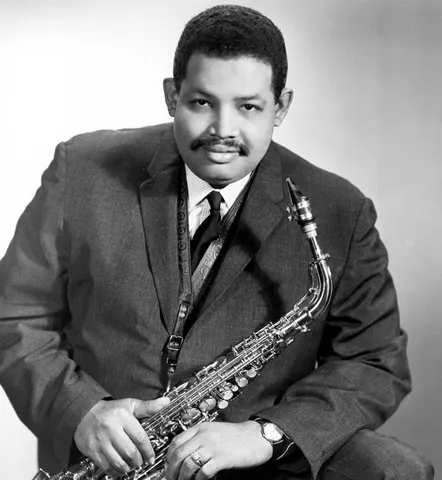
- Cannonball Adderley and Nat Adderley - Florida contemporaries who played with Charles around Tallahassee in the 1940s, before any of the three had recorded.
More Soul Jazz Artists
See all 123 Soul Jazz artists →More American Jazz Artists
See all 567 American artists →- Wikipedia: Ray Charles
- Wikipedia: Ray Charles discography
- Wikipedia: The Great Ray Charles
- Wikipedia: Soul Brothers
- Wikipedia: Soul Meeting
- Wikipedia: The Genius After Hours
- Wikipedia: The Genius of Ray Charles
- Wikipedia: Genius + Soul = Jazz
- Wikipedia: Ray Charles at Newport
- Wikipedia: Ray Charles and Betty Carter
- Wikipedia: My Kind of Jazz
- Wikipedia: Jazz Number II
- Wikipedia: My Kind of Jazz Part 3
- Wikipedia: Fathead (album)
- Wikipedia: Ray Sings, Basie Swings
- Wikipedia: Nat Adderley
- Wikidata: Ray Charles (Q544387)
- Discogs: Ray Charles (artist 30552)
- HistoryLink.org: Charles, Ray (1930-2004)
- DownBeat: Swiss Radio Days Vol. 41, Zurich 1961
- KNKX Public Radio: Organs, gospel music and a steady groove established soul jazz