 JAZZPROFILES lives in the music 1,572 Jazz Artists fully Profiled!
 George Mraz
Last updated September 7, 2026
Listen on Spotify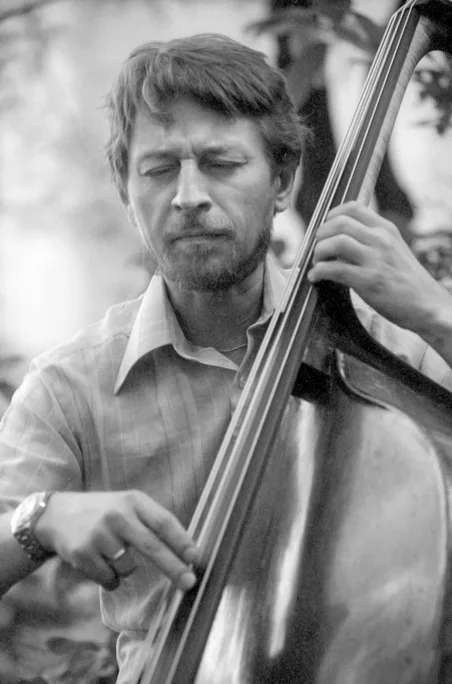
George Mraz playing double bass with the Tommy Flanagan Trio at Exxon Park, New York City, July 7, 1983, on a bill that also had Vernell Fournier on drums CC BY-SA 4.0 (Creative Commons Attribution-ShareAlike 4.0 International, released by the photographer under the {{self}} template on the file page). Attribution required: Brian McMillen. — Wikimedia Commons — https://commons.wikimedia.org/wiki/File:George_Mraz.jpg (file itself: https://upload.wikimedia.org/wikipedia/commons/a/a4/George_Mraz.jpg)


Jiří Mráz was born September 9, 1944, in Písek, a small town in southern Bohemia, and started on violin at seven. At twelve he heard Louis Armstrong on a Voice of America broadcast, the standard route into jazz for a Czech teenager under a government that treated the music as suspect, and he began playing jazz in high school, first on alto saxophone. He switched to double bass a few years later and studied the instrument at the Prague Conservatory under Professor František Hertl from 1961 to 1966, a conservatory grounding in orchestral bass technique that stayed audible in his playing for the next fifty years. His first professional work came in guitarist Rudolf Dašek's trio and then in Karel Velebný's SHQ, the leading modern-jazz group in Czechoslovakia, with whom he made his earliest records: SHQ a přátelé (1965), Jak hrál S+HQ (1966), and tracks on the state label's Československý jazz 1965 and 1966 surveys, all credited to Jiří Mráz. In 1966 he took part in the international competition for modern jazz that pianist Friedrich Gulda staged in Vienna, judged by a panel that included Ron Carter, Mel Lewis, Cannonball Adderley, Art Farmer, J.J. Johnson, and Joe Zawinul. He placed in the bass category, and the prize carried a scholarship to the Berklee School of Music in Boston.
He left Czechoslovakia in 1968, the year Warsaw Pact troops ended the Prague Spring, and did not go back to live there. He spent several months in West Germany, mostly in Munich, where he worked alongside the American expatriates Mal Waldron, Leo Wright, and Benny Bailey, and turned up at the Domicile club in a quartet with saxophonist Pony Poindexter and his fellow Czech émigré Jan Hammer, a night that survives on record as New Orleans Fire (Live 1969). He took up the Berklee scholarship in the autumn of 1968, adopted the Americanised spelling "George Mraz" there, and is listed by the school as class of 1970. Boston work started immediately: pianist Ray Santisi hired him for a regular gig on his first day. In 1969 Dizzy Gillespie called him to New York, and he became a U.S. citizen in 1973.
The first job that made his name internationally was the Oscar Peterson trio, which he held from 1970 to 1972 and which put him on the MPS albums Another Day, Walking the Line, In Tune (with the Singers Unlimited), and the retrospective The History of an Artist. Settling in New York, he joined the Thad Jones/Mel Lewis Orchestra and held the bass chair from 1973 to 1976, the Monday-night Village Vanguard band's most heavily recorded stretch, taking in Potpourri, Live in Tokyo, Suite for Pops, New Life, and the Meets Manuel De Sica project. He also became the bassist in Roland Hanna's New York Jazz Quartet when the group reorganised in 1974 around Hanna, Frank Wess, Mraz, and a rotating drum chair of Ben Riley, Richard Pratt, and Grady Tate, staying through Surge (1977), Song of the Black Knight (1978), Blues for Sarka (1978), Oasis (1981), and The New York Jazz Quartet in Chicago.
Through the second half of the 1970s he became one of the most requested bassists in New York, and no leader used him more consistently than Pepper Adams. Mraz played on six Adams leader dates across eight years: Ephemera (recorded September 10, 1973, at EMI Studios in London with Roland Hanna and Mel Lewis), the two albums drawn from a single live night at the Domicile in Munich on August 13, 1975, Julian and Twelfth & Pingree, both with Walter Norris and Makaya Ntshoko, and then three studio dates, Reflectory (1978, with Hanna and Billy Hart), The Master (1980, with Tommy Flanagan and Leroy Williams), and Urban Dreams (1981, with Jimmy Rowles and Hart). Reflectory and The Master both brought Adams Grammy nominations. The same years produced the three nights Art Pepper recorded at the Village Vanguard on July 28, 29, and 30, 1977, with George Cables on piano and Elvin Jones on drums, issued by Contemporary as Thursday Night, Friday Night, and Saturday Night at the Village Vanguard, plus steady work with Zoot Sims on Zoot Sims and the Gershwin Brothers (1975) and Warm Tenor (1979). He recorded three albums with Charles Mingus late in the bassist-composer's life, Three or Four Shades of Blues (1977), Me Myself an Eye (1979), and Something Like a Bird (1980), and was the original bassist in Quest, the group Dave Liebman and Richie Beirach formed at the end of 1981 with Al Foster on drums, playing on its self-titled first album before the rhythm section changed in 1984.
The partnership that came to define him lasted more than two decades. Mraz first recorded with pianist Tommy Flanagan on Eclypso, cut for Enja on February 4, 1977, with Elvin Jones, and stayed in Flanagan's trio through Ballads & Blues (1978), Plays the Music of Harold Arlen (1979), The Magnificent (1981), Confirmation (1982), Giant Steps (1982), Thelonica (1983), Nights at the Vanguard (1987), Jazz Poet (1989), Beyond the Bluebird (1991) with Kenny Burrell, and Elusive (1998). Alongside it he kept an unusually wide sideman book: Studio Trieste (1982) with Chet Baker and Jim Hall, Warne Marsh's Star Highs (1982) with Hank Jones and Mel Lewis, Stan Getz's Voyage (1986) and The Stockholm Concert (1989), Lee Konitz's Live at the Village Vanguard (1985), Carmen McRae's Carmen Sings Monk (1990), Gillespie's The Winter in Lisbon (1990), the Beirach-led Chet Baker tribute Some Other Time (1990) with Michael Brecker and John Scofield, Barry Harris trio dates from 1997 to 2000, Joe Henderson live sets across the 1990s, and the Herbie Hancock, Brecker, and Roy Hargrove Directions in Music tour of the early 2000s.
He waited an unusually long time to lead. Apart from a run of co-billed duo and trio records made for Japanese labels in the 1970s, the first album under his name alone was My Foolish Heart, cut June 11 and 12, 1995, for Milestone, and it opened a five-album run for the label: Jazz (1996), Bottom Lines (1997), Duke's Place (1999), and Morava (2001). The last of those turned him back toward home. Morava set Moravian folk songs for a quartet of Mraz, pianist Emil Viklický, singer and cimbalom player Zuzana Lapčíková, and drummer Billy Hart, and he pursued the idea for the rest of his life on Moravian Gems (2007) with Iva Bittová and Together Again (2014) with Viklický. He had already recorded Catching Up in Prague in October 1991, within two years of the Velvet Revolution, and he returned regularly for the Jazz at Prague Castle series, where a 2004 concert reunited him with Rudolf Dašek, the guitarist who had given him his first professional job nearly forty years earlier. The Czech Republic gave him a lifetime achievement award in 2009. He was treated for pancreatic cancer in 2016 and kept performing, latterly in a trio with his wife, pianist Camilla Mraz, and drummer Anthony Pinciotti. George Mraz passed away in Prague on September 16, 2021, one week after his seventy-seventh birthday.
Mraz built his reputation on things that are hard to show off with: intonation, time, and note choice. The conservatory years under František Hertl gave him a classical player's centred, singing tone and a bow technique few American jazz bassists could match, and he used arco for melody statements rather than as an effect, most audibly on the Moravian folk material he recorded with Emil Viklický. What leaders actually hired him for was the walking line. Jimmy Rowles nicknamed him "Bounce" for the lift he put under a rhythm section, and producer Todd Barkan described his note choices as so exact that each chorus works like a small piece of storytelling. That combination made him the house bassist for a particular kind of exacting pianist: Oscar Peterson, Roland Hanna, Hank Jones, Barry Harris, and above all Tommy Flanagan, all of whom kept him for years at a time. He was a sideman by temperament as much as by circumstance, taking twenty-seven years from his American debut to his first album under his own name, and the shape of his catalogue reflects it: of the 704 releases Discogs credits him on, only about 90 carry a leader or co-leader billing.
- Jazz (1996, Milestone) - His second Milestone leader date and the fullest statement of his own band concept, recorded in New York in September and October 1995 with Richie Beirach and Larry Willis on pianos, Rich Perry on tenor, and Billy Hart on drums. Spotify - Jazz Listen
- Morava (2001, Milestone) - Moravian folk songs arranged for jazz quartet with pianist Emil Viklický and cimbalom player Zuzana Lapčíková, the record that opened the last phase of his career. Not located on Spotify.
- Together Again (2014, ACT) - A piano and bass duo with Viklický built from the same Moravian repertoire, recorded January 2013 and the most exposed showcase for his bowing. Spotify - Together Again Listen
- Jazz Poet (1989, Timeless) - As a sideman: the most acclaimed album of his long trio with Tommy Flanagan and drummer Kenny Washington. Spotify - Jazz Poet
- Thursday Night at the Village Vanguard (1979, Contemporary) - As a sideman: the first of three albums drawn from Art Pepper's July 1977 Vanguard run, with George Cables and Elvin Jones, a set that pushed Mraz harder than almost anything else on record. Not located on Spotify.
- Star Highs (1982, Criss Cross) - As a sideman: Warne Marsh with Hank Jones and Mel Lewis, recorded August 14, 1982, and the first release on the Criss Cross label. Spotify - Star Highs Listen
- Urban Dreams (1981, Palo Alto) - As a sideman: the last of six Pepper Adams leader dates Mraz played on, with Jimmy Rowles and Billy Hart. Spotify - Urban Dreams
- Grand Slam (2000, Telarc) - As a sideman: Jim Hall and Joe Lovano live at the Regattabar in Boston, with Lewis Nash. Spotify - Grand Slam
George Mraz: Full Discography
Identity confirmed through the live Discogs API: artist ID 257423, realname "Jiří Mráz," born September 9, 1944 in Písek and died September 16, 2021 in Prague, with 20 registered name variations including "Jiri Mraz," "Jiří Mráz," "George (Jiří) Mraz," and "ジョージ・ムラーツ." Discogs credits Mraz on 704 releases in total: 90 in a "Main" (leader or co-billed) role, 542 sideman "Appearance" credits, 29 track-level "TrackAppearance" credits, 42 unofficial releases, and 1 production credit.
Mraz was a sideman first and last. He led no session under his own name alone until My Foolish Heart in 1995, twenty-seven years after arriving in the United States, and most of the 90 "Main" credits are co-billed duo or trio records rather than true leader dates. The first table below covers his leader and co-leader catalogue in reasonable depth. The second is a curated set of his most significant sideman credits and does not attempt to itemise all 542 of them.
As Leader / Co-Leader
| Album Title | Recording Date(s) | Release Date | Label | Catalog Number | Format(s) | Personnel | Role | Reissue History | Spotify | Buy | Notes |
|---|---|---|---|---|---|---|---|---|---|---|---|
| 1 X 1 | Recorded March 9 and 11, 1974, Tokyo | 1974 | Toho Records | YX-8020 | Vinyl, LP, Album, Stereo | Roland Hanna (piano), George Mraz (bass) | Co-leader (Roland Hanna & George Mraz) | None found on Discogs | Not located | — | First of four co-billed duo records with Roland Hanna |
| Drifting | Recorded August 18, 1974, TRIXI-Studio, Munich | 1974 | Enja Records | enja 2044 | Vinyl, LP | Walter Norris (piano), George Mraz (bass) | Co-leader (Walter Norris & George Mraz) | None found on Discogs | Not located | — | Piano and bass duo; Norris and Mraz would meet again a year later on Pepper Adams's Munich sessions |
| Hill Country Suite | Not specified in Discogs data | 1974 | Enja Records | Not confirmed | Vinyl, LP | Bobby Jones (reeds), George Mraz (bass), Freddie Waits (drums) | Co-leader (billed to Jones / Mraz / Waits) | None found on Discogs | Not located | — | Catalogue number not confirmed from the API response |
| Stephane Grappelli Meets the Rhythm Section | Not specified in Discogs data | 1975 | Not confirmed | Not confirmed | Vinyl, LP | Stéphane Grappelli (violin), Roland Hanna (piano), Jiří Mráz (bass), Mel Lewis (drums) | Co-billed | None found on Discogs | Not located | — | One of the few American-era releases that bills him under the Czech spelling "Jiri Mraz" |
| Porgy & Bess | Recorded June 28, 1976, Mouri Studios, Tokyo | 1976 | Trio Records | PAP 9058 | Vinyl, LP, Album | George Mraz (bass), Roland Hanna (piano); all compositions by George Gershwin | Co-leader (George Mraz in duet with Roland Hanna) | None found on Discogs | Not located | — | Recorded on a Japanese tour; an all-Gershwin duo programme |
| Music's the Only Thing That's On My Mind | Not specified in Discogs data | 1977 | Progressive | Not confirmed | Vinyl, LP | Jimmy Rowles (piano), George Mraz (bass) | Co-leader (Jimmy Rowles and George Mraz) | None found on Discogs | Not located | — | Duo date with the pianist who nicknamed Mraz "Bounce"; catalogue number not confirmed from the API response |
| Alone Together | Recorded October 24, 1977, Onkyo House, Tokyo | 1977 | Three Blind Mice | TBM-5003 | Vinyl, LP, Album, Stereo | Masaru Imada (piano), George Mraz (bass) | Co-leader (Masaru Imada and George Mraz) | None found on Discogs | Not located | — | Six-track duo date for the audiophile Japanese label |
| Play for Monk | Not specified in Discogs data | 1978 | Not confirmed | Not confirmed | Vinyl, LP | Roland Hanna (piano), George Mraz (bass) | Co-leader (Roland Hanna and George Mraz) | None found on Discogs | Not located | — | All-Monk duo programme |
| Rendezvous | Not specified in Discogs data | 1981 | International Phonograph Inc. | iPi 1001 | Vinyl, LP | Richard Beirach (piano), George Mraz (bass) | Co-leader (Richard Beirach, George Mraz) | None found on Discogs | Not located | — | Dedicated to the memory of Bill Evans, who had died the previous September |
| Elegy for Bill Evans | Recorded May 12, 1981, Sound Ideas Studios, New York | 1981 | Trio Records | PAP-25005 | Vinyl, LP, Album | Richard Beirach (piano), George Mraz (bass), Al Foster (drums) | Co-leader / featured (Beirach + Mraz + Foster) | Also issued under Beirach's name alone | Not located | — | Second Bill Evans memorial project from the same partnership inside a year |
| Classic Jazz Duets | Not specified in Discogs data | 1982 | Stash Records | ST-216 | Vinyl, LP, Album | Adam Makowicz (Baldwin piano), George Mraz (bass) | Co-leader (Adam Makowicz & George Mraz) | None found on Discogs | Not located | — | Start of a long duo association with the Polish émigré pianist |
| Romanesque | Not specified in Discogs data | 1982 | Not confirmed | Not confirmed | Vinyl, LP | Roland Hanna (piano), George Mraz (bass) | Co-leader (Roland Hanna, George Mraz) | None found on Discogs | Not located | — | Fourth Hanna duo record |
| Star Highs | Recorded August 14, 1982, Studio 44, Monster, Netherlands | 1982 | Criss Cross Jazz | Criss 1002 | Vinyl, LP, Album | Warne Marsh (tenor sax), Hank Jones (piano), George Mraz (bass), Mel Lewis (drums) | Co-billed (Warne Marsh with Hank Jones, George Mraz and Mel Lewis) | Reissued on CD | Spotify - Star Highs | — | The first release on Criss Cross Jazz, a label that went on to become a mainstream-jazz institution |
| Quest | Recorded December 28 and 29, 1981 | 1982 | Not confirmed | Not confirmed | Vinyl, LP, Album | Dave Liebman (soprano sax, alto flute), Richie Beirach (piano), George Mraz (bass), Al Foster (drums) | Co-leader (member of Quest) | Reissued on CD | Not located | — | The only Quest album with Mraz; the rhythm section changed to Ron McClure and Billy Hart in 1984 |
| Catching Up | Recorded October 24, 1991, Supraphon studio, Prague | 1992 | Arta Records | F1 0025-2511 | CD, Album | George Mraz (acoustic bass), Richard Beirach (piano), Peter Donald (drums) | Leader (George Mraz Trio) | Reissued 1993 in Japan (Alfa Jazz ALCR-254) | Not located | — | His first record made in Prague after the Velvet Revolution, two decades after he left |
| My Foolish Heart | Recorded June 11 and 12, 1995, Clinton Studio, New York | 1995 | Milestone | MCD-9262-2 | CD, Album | George Mraz (bass), Richard Beirach (piano), Billy Hart (drums) | Leader | Also issued 1995 in Japan on Alfa Jazz (ALCB-3089) | Not located | — | The first album under his own name alone; liner notes by Ron Carter, produced by Todd Barkan and Satoshi Hirano |
| Jazz | Recorded September and October 1995, Clinton Recording Studios, New York | 1996 | Milestone | MCD 9248-2 | CD, Album | George Mraz (bass), Richard Beirach and Larry Willis (piano), Rich Perry (tenor sax), Billy Hart (drums) | Leader | US, European and Japanese (VICJ-231) pressings all 1996 | Spotify - Jazz | — | 11 tracks; the widest instrumentation of his Milestone run |
| Bottom Lines | Recorded April 1 and 2, 1997, Clinton Recording Studio, New York | 1997 | Milestone | MCD-9272-2 | CD, Album | George Mraz (bass), Cyrus Chestnut (piano), Rich Perry (tenor sax), Al Foster (drums) | Leader | None found on Discogs | Not located | — | 9 tracks, 68:45 total |
| Duke's Place | Recorded November 24 and 25, 1998 | 1999 | Milestone | Not confirmed | CD, Album | George Mraz (bass), Cyrus Chestnut and Renee Rosnes (piano), Billy Drummond (drums) | Leader | Reissued 2009 in Japan by Videoarts Music (VACZ-1404) retitled Tribute to Duke Ellington, limited edition | Not located | — | An all-Ellington programme; the Discogs main release is the 2009 Japanese reissue, so the original Milestone catalogue number is unconfirmed |
| Morava | Recorded June 9-11, 2000, The Studio, New York | 2001 | Milestone | MCD-9309-2 | CD, Album | George Mraz (bass), Emil Viklický (piano), Zuzana Lapčíková (vocals, cimbalom), Billy Hart (drums) | Leader | None found on Discogs | Not located | — | 12 tracks of Moravian folk material; the project he returned to for the rest of his life |
| George Mraz & Friends | Not specified in Discogs data | 2003 | Not confirmed | Not confirmed | CD, Album | Not confirmed from the API response | Leader | None found on Discogs | Not located | — | Details not confirmed |
| George Mraz (Jazz at Prague Castle 2004) | Recorded live September 19, 2004, Prague Castle | 2005 | Multisonic | 31 0648-2 | CD, Album | George Mraz (double bass), Emil Viklický and Karel Růžička (piano), Rudolf Dašek (guitar), Ivan Smažík (drums) | Leader | None found on Discogs | Not located | — | 9 tracks; reunited him with Rudolf Dašek, in whose trio he had started out in the mid-1960s |
| Moravian Gems | Recorded February 17-19, 2007, Prague | 2007 | Cube-Metier | MJCD2736 | CD, Album | George Mraz (bass), Iva Bittová (vocals, violin), Emil Viklický (piano), Laco Tropp (drums) | Leader / co-billed | None found on Discogs | Spotify - Moravian Gems | — | 14 tracks; the second instalment of the Moravian folk-song project |
| George Mraz Quartet (Jazz at Prague Castle 2012) | Recorded live 2012, Prague Castle | 2012 | Multisonic | Not confirmed | CD, Album | George Mraz (bass), David Hazeltine (piano), Rich Perry (tenor sax), Joey Baron (drums) | Leader (George Mraz Quartet) | None found on Discogs | Spotify - Jazz Na Hradě (Live) | — | Issued on Spotify as Jazz Na Hradě (Live), 11 tracks |
| Unison | Not specified in Discogs data | 2013 | Cube-Metier | Not confirmed | CD, Album | George Mraz (bass), Zoe Rahman (piano) | Co-leader (George Mraz & Zoe Rahman) | None found on Discogs | Not located | — | Duo record with the British pianist |
| Together Again | Recorded January 16 and 18, 2013, Realistic Sound Studio | 2014-03-14 | ACT | ACT 9622-2 | CD, Album | George Mraz (bass), Emil Viklický (piano) | Co-leader (Mraz & Viklický) | None found on Discogs | Spotify - Together Again | — | 11 tracks; the Moravian repertoire stripped back to piano and bass, and the clearest document of his arco playing |
As Sideman (selected major credits)
| Year | Project (Leader) | Title | Label | Catalog | Role | Notes |
|---|---|---|---|---|---|---|
| 1965 | SHQ (Karel Velebný) | SHQ a přátelé | Supraphon | Double Bass | Credited as Jiří Mráz; his first records, made in Czechoslovakia | |
| 1966 | S+HQ (Karel Velebný) | Jak hrál S+HQ | Supraphon | Double Bass | Credited as Jiří Mráz | |
| 1966 | Eurojazz-Orchester, dir. Friedrich Gulda | Internationaler Wettbewerb für modernen Jazz, Wien 1966 | Amadeo | Double Bass | Prizewinners' closing concert of the Vienna competition that won him his Berklee scholarship | |
| 1969 | Jan Hammer Trio | Maliny Maliny | Supraphon | Double Bass | With his fellow Czech émigré, recorded around the time both men left | |
| 1970 | Pony Poindexter | The Happy Life of Pony (Live at the Domicile, Munich) | Double Bass | Documents his Munich period; later reissued as New Orleans Fire (Live 1969) | ||
| 1971 | The Oscar Peterson Trio | Another Day | MPS | Double Bass | From his 1970-1972 tenure with Peterson | |
| 1971 | The Oscar Peterson Trio | Walking the Line | MPS | Double Bass | ||
| 1972 | Charlie Mariano | Mirror | Atlantic | Double Bass | ||
| 1973 | The Oscar Peterson Trio + The Singers Unlimited | In Tune | MPS | Double Bass | ||
| 1974 | Thad Jones & Mel Lewis | Potpourri | Philadelphia International | Double Bass | From his 1973-1976 tenure in the orchestra | |
| 1974 | Thad Jones / Mel Lewis & The Jazz Orchestra | Live in Tokyo | Denon | Double Bass | ||
| 1974 | Dee Dee Bridgewater | Afro Blue | Trio | Double Bass | Bridgewater's debut as a leader | |
| 1974 | Pepper Adams Quartet | Ephemera | Spotlite (ZLS-2000) | Double Bass | Recorded September 10, 1973, EMI Studios London, with Roland Hanna and Mel Lewis; first of six Adams leader dates | |
| 1975 | Thad Jones & Mel Lewis | Suite for Pops | A&M/Horizon | Double Bass | ||
| 1975 | Zoot Sims | Zoot Sims and the Gershwin Brothers | Pablo | Double Bass | ||
| 1976 | Pepper Adams | Julian | Enja (2060) | Double Bass | Recorded live August 13, 1975, Domicile Munich, with Walter Norris and Makaya Ntshoko | |
| 1976 | Pepper Adams | Twelfth & Pingree | Enja (2074) | Double Bass | Same Munich date as Julian, different tracklist | |
| 1976 | Thad Jones / Mel Lewis | New Life (Dedicated to Max Gordon) | A&M/Horizon | Double Bass | ||
| 1977 | Charles Mingus | Three or Four Shades of Blues | Atlantic | Double Bass | ||
| 1977 | Tommy Flanagan Trio | Eclypso | Enja (2088) | Double Bass | Recorded February 4, 1977, with Elvin Jones; the start of the Flanagan partnership | |
| 1977 | New York Jazz Quartet | Surge | Enja | Double Bass | With Roland Hanna, Frank Wess, Richard Pratt | |
| 1978 | New York Jazz Quartet | Blues for Sarka | Enja | Double Bass | With Roland Hanna, Frank Wess, Grady Tate | |
| 1978 | New York Jazz Quartet | Song of the Black Knight | Sonet | Double Bass | ||
| 1978 | Pepper Adams | Reflectory | Muse (MR 5182) | Double Bass | Recorded June 14, 1978, with Roland Hanna and Billy Hart; Grammy-nominated for Adams | |
| 1979 | Art Pepper | Thursday / Friday / Saturday Night at the Village Vanguard | Contemporary (7642, 7643, 7644) | Double Bass | All three recorded July 28, 29 and 30, 1977, with George Cables and Elvin Jones | |
| 1979 | Zoot Sims and Jimmy Rowles | Warm Tenor | Pablo (2310 831) | Double Bass | Recorded September 18 and 19, 1978, RCA Studios New York, with Mousey Alexander | |
| 1979 | John Abercrombie Quartet | Arcade | ECM | Double Bass | ||
| 1979 | Charles Mingus | Me Myself an Eye | Atlantic | Double Bass | ||
| 1980 | Charles Mingus | Something Like a Bird | Atlantic | Double Bass | ||
| 1980 | Pepper Adams | The Master | Muse (MR 5213) | Double Bass | Recorded March 11, 1980, with Tommy Flanagan and Leroy Williams; Grammy-nominated for Adams | |
| 1981 | New York Jazz Quartet | Oasis | Enja | Double Bass | ||
| 1981 | Pepper Adams | Urban Dreams | Palo Alto (PA 8009) | Double Bass | Recorded September 30, 1981, Van Gelder Studios, with Jimmy Rowles and Billy Hart | |
| 1981 | Mal Waldron Trio | Mal 81 | Double Bass | |||
| 1982 | Chet Baker / Jim Hall / Hubert Laws | Studio Trieste | CTI | Double Bass | ||
| 1982 | Tommy Flanagan | Confirmation | Enja (4014) | Double Bass | Recorded February 4, 1977 and November 15, 1978, with Elvin Jones | |
| 1982 | Elvin Jones | Earth Jones | Palo Alto | Double Bass | ||
| 1983 | Tommy Flanagan | Thelonica | Enja | Double Bass | ||
| 1983 | Roland Hanna | The New York Jazz Quartet in Chicago | Bee Hive | Double Bass | ||
| 1985 | Lee Konitz | Live at the Village Vanguard | Double Bass | |||
| 1986 | Stan Getz | Voyage | BlackHawk (BKH 51101) | Double Bass | ||
| 1987 | Tommy Flanagan | Nights at the Vanguard | Uptown | Double Bass | ||
| 1988 | Nick Brignola | Raincheck | Reservoir | Double Bass | ||
| 1989 | Tommy Flanagan | Jazz Poet | Timeless | Double Bass | With Kenny Washington; widely rated the best of the Flanagan trio albums | |
| 1989 | Stan Getz Quartet | The Stockholm Concert | Double Bass | |||
| 1990 | Carmen McRae | Carmen Sings Monk | Novus/RCA | Double Bass | ||
| 1990 | Dizzy Gillespie | The Winter in Lisbon | Milan | Double Bass | Soundtrack to the film of the same name | |
| 1990 | Richie Beirach | Some Other Time (A Tribute to Chet Baker) | Triloka | Double Bass | With Michael Brecker, Randy Brecker, John Scofield, Adam Nussbaum | |
| 1991 | Tommy Flanagan Trio featuring Kenny Burrell | Beyond the Bluebird | Timeless | Double Bass | ||
| 1992 | Elvin Jones | Youngblood | Enja | Double Bass | ||
| 1993 | Hank Jones with Elvin Jones and George Mraz | Upon Reflection: The Music of Thad Jones | Verve | Double Bass | Co-billed trio tribute to his former employer | |
| 1996 | Great Jazz Trio (Hank Jones) | Flowers for Lady Day | Double Bass | With Roy Haynes | ||
| 1996 | Stéphane Grappelli, Michel Petrucciani | Flamingo | Dreyfus Jazz | Double Bass | With Roy Haynes | |
| 1997 | Joe Lovano | Celebrating Sinatra | Blue Note | Double Bass | ||
| 1997 | Barry Harris Trio | First Time Ever | Double Bass | First of three Barry Harris trio records through 2000 | ||
| 1998 | Tommy Flanagan | Elusive | Musica Jazz / High Tide | Double Bass | Last of the documented Flanagan sessions | |
| 2000 | Jim Hall | Grand Slam (Live at the Regattabar, Boston) | Telarc | Double Bass | With Joe Lovano and Lewis Nash | |
| 2004 | Joe Lovano | I'm All for You | Blue Note | Double Bass | With Hank Jones and Paul Motian | |
| 2009 | Emil Viklický Trio | Sinfonietta: The Janáček of Jazz | Double Bass | |||
| 2010 | Hank Jones Trio | Jazz at Prague Castle 2009 | Multisonic | Double Bass |
Beyond this selection, Mraz's Discogs log (542 "Appearance" credits plus 29 track-level credits, running from 1965 to posthumous compilations) also takes in further Oscar Peterson, Thad Jones/Mel Lewis, Tommy Flanagan, Zoot Sims, Stan Getz, Chet Baker, Joe Henderson, John Abercrombie, John Scofield, McCoy Tyner, Lionel Hampton, Woody Herman, Frank Wess, Michel Petrucciani, David Hazeltine, Adam Makowicz, Slide Hampton, Kenny Burrell, and Emil Viklický sessions, plus the Herbie Hancock, Michael Brecker and Roy Hargrove Directions in Music live recordings of the early 2000s. It is not itemised exhaustively here.
- Tommy Flanagan - trio bassist from Eclypso (recorded February 4, 1977) through Elusive (1998), the longest and most closely identified partnership of Mraz's career.
- Pepper Adams - bassist on six Adams leader dates between 1973 and 1981: Ephemera, Julian, Twelfth & Pingree, Reflectory, The Master, and Urban Dreams. No other bassist appears on more Adams leader sessions.
- Thad Jones and Mel Lewis - bass chair in the Thad Jones/Mel Lewis Orchestra, 1973-1976, including Suite for Pops, Potpourri, Live in Tokyo, and New Life. Lewis also sat on the 1966 Vienna jury that sent Mraz to Berklee, and recorded with him again on Warne Marsh's Star Highs (1982).
- Oscar Peterson - trio bassist 1970-1972, documented on the MPS albums Another Day, Walking the Line, and In Tune.
- Roland Hanna - co-billed duo partner on 1 X 1 (1974), Porgy & Bess (1976), Play for Monk (1978), and Romanesque (1982), and his bassist in the New York Jazz Quartet from 1974 into the early 1980s.
- Richie Beirach - duo and trio partner from Rendezvous and Elegy for Bill Evans (both 1981) through Elm (1991), and the pianist on both of Mraz's first two Milestone leader dates.
- Emil Viklický - pianist and co-architect of the Moravian folk-song project that produced Morava (2001), Moravian Gems (2007), and Together Again (2014).
- Elvin Jones - drummer on the Flanagan trio's Eclypso and Confirmation, on Art Pepper's 1977 Village Vanguard nights, and on Jones's own Earth Jones (1982) and Youngblood (1992).
- Zoot Sims, Charles Mingus, Stan Getz, Chet Baker, Jim Hall, Carmen McRae, Dizzy Gillespie, Joe Henderson, Barry Harris, Nick Brignola - among the leaders who called on him repeatedly across the 704 releases Discogs credits him on.
More Straight-Ahead Jazz Artists
See all 158 Straight-Ahead Jazz artists →- Wikipedia: George Mraz
- Wikipedie: Jiří Mráz (Czech)
- Discogs: George Mraz (artist 257423), queried through the authenticated Discogs API for release counts, catalogue numbers, personnel, and recording dates
- Jazz Journal: Obituary, George Mraz (September 28, 2021)
- WBGO: George Mraz, Inventively Swinging Bassist, Dies at 77
- Berklee College of Music: George Mraz
- Wikipedia: New York Jazz Quartet
- Wikipedia: Quest (band)