 JAZZPROFILES lives in the music 1,572 Jazz Artists fully Profiled!
 Bobby Timmons
Last updated September 6, 2026
Listen on Spotify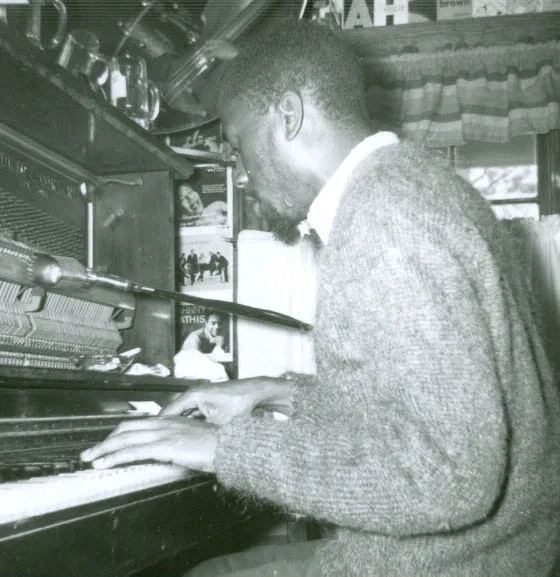
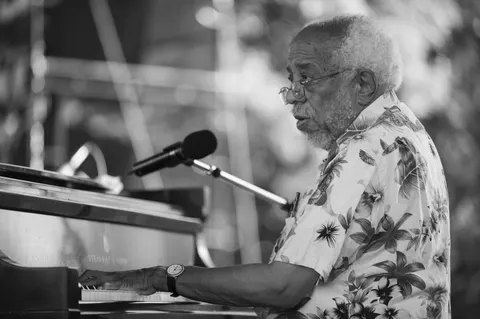
Bobby Timmons at Lennie's on the Turnpike, Route 1, Peabody, Massachusetts, December 1963 CC BY 4.0 — Wikimedia Commons — https://commons.wikimedia.org/wiki/File:Bobby_Timmons,_1963.jpg (Lennie's on the Turnpike Collection, Salem State University Archives and Special Collections, Salem, Massachusetts; uploaded to Flickr by Salem State Archives)

Robert Henry Timmons was born in Philadelphia on December 19, 1935, the son of a minister. Both parents and several aunts and uncles played piano, and his first public performances were at his grandfather's church. His formal teacher was his uncle, Robert Habershaw, who also taught McCoy Tyner. He grew up in the same North Philadelphia circle as the Heath brothers and Lee Morgan, and after high school won a scholarship to the Philadelphia Musical Academy. He moved to New York in 1954, and his recording debut came on May 31, 1956, when Kenny Dorham took a sextet into the Café Bohemia for 'Round About Midnight at the Café Bohemia (Blue Note BLP 1524) with Kenny Burrell on guitar and Sam Jones on bass. Work with Chet Baker followed in 1956 and 1957, then Sonny Stitt in 1957 and Maynard Ferguson in 1957 and 1958. Blue Note began calling: he is the pianist on Curtis Fuller's The Opener, cut June 16, 1957, and on Lee Morgan's The Cooker, recorded September 29, 1957 with Pepper Adams on baritone saxophone.
Benny Golson recruited Timmons into Art Blakey's Jazz Messengers in July 1958, and he stayed until September 1959. On October 30, 1958, at Rudy Van Gelder's studio in Hackensack, the quintet of Blakey, Lee Morgan, Golson, Timmons and bassist Jymie Merritt recorded the album that made him. It was issued as Art Blakey and the Jazz Messengers (Blue Note BLP 4003) and only later retitled Moanin' after its opening track, Timmons's own. Golson's account of the tune's origin is the one that has stuck: Timmons had been playing the eight-bar call-and-response figure between numbers, and Golson pushed him to write a bridge and finish it. Timmons was 22. The recording entered the Grammy Hall of Fame in 1998 and the album followed in 2001. The same band, with Hank Mobley in Golson's chair, was taped live at Birdland on April 15, 1959 for At the Jazz Corner of the World Vols. 1 and 2.
In October 1959 Timmons left for the Cannonball Adderley Quintet. On October 18 and 20 he was at the Jazz Workshop in San Francisco for The Cannonball Adderley Quintet in San Francisco, with Nat Adderley, Sam Jones and Louis Hayes. The album opens with a 12-minute reading of Timmons's "This Here," and it sold roughly 50,000 copies by May 1960, a figure Time called extraordinary for a jazz record. The February 1, 1960 New York session for Them Dirty Blues introduced a second Timmons original, "Dat Dere," to which Oscar Brown Jr. added lyrics later that year. In between, Riverside gave Timmons his own contract: This Here Is Bobby Timmons was recorded January 13 and 14, 1960 at Reeves Sound Studios with Sam Jones and Jimmy Cobb, and its nine tracks include his own readings of "This Here," "Moanin'" and "Dat Dere."
Dissatisfied with what "This Here" was actually earning him, Timmons went back to Blakey in February 1960 for better money and stayed until June 1961. That second stint produced the front line of Lee Morgan and Wayne Shorter: The Big Beat (recorded March 6, 1960), A Night in Tunisia (August 7 and 14, 1960), Meet You at the Jazz Corner of the World Vols. 1 and 2 (live at Birdland, September 14, 1960), The Witch Doctor (March 14, 1961, shelved until 1967) and The Freedom Rider (February 18 and May 27, 1961, issued in 1964).
He left the Messengers in June 1961 to lead his own trio, first with Ron Carter and drummer Albert "Tootie" Heath, the group documented live at the Village Vanguard on October 1, 1961 for In Person. He worked mainly around New York for the rest of his life. Riverside kept him through Born to Be Blue! in 1963; Prestige took him from 1964 to 1966 for seven albums including a Christmas record, and Milestone issued the ambitious Tom McIntosh-arranged nonet date Got to Get It! in 1968. He picked up the vibraphone in the mid-1960s and played it on Chicken & Dumplin's, and on the 1964 session issued as From the Bottom he is credited on piano, organ and vibraharp. Heroin addiction dating from the late 1950s and, later, heavy drinking narrowed his career, as did being typecast as the funky-tune writer. In early 1974 he joined Clark Terry's big band for a European tour, drank heavily on the flight to Sweden and collapsed at a bar before the first Malmö concert. He was flown home and spent a month in hospital. Bobby Timmons passed away at St. Vincent's Hospital in New York on March 1, 1974, of cirrhosis, at 38. He was buried in Philadelphia, survived by his wife Estelle and son Bobby Jr.
Timmons built his sound on block chords, the right hand carrying the melody while the left moves in the same rhythm without reharmonizing, and he attacked them harder and with less decoration than Red Garland, whose trios along with Ahmad Jamal's shaped his own group concept. Underneath sat Bud Powell, whom Ron Carter named as the primary influence, and above it the church: the gospel cadences he had grown up playing turned a bebop pianist into the definitive soul jazz stylist almost by accident. Timmons himself was dismissive of his composing, calling himself a dilettante who never sat down deliberately to write a song, yet "Moanin'," "This Here" and "Dat Dere" between them did as much as any three tunes to establish the gospel-inflected soul jazz of 1959 to 1962, and his playing fed directly into Les McCann, Ramsey Lewis and, a generation later, Benny Green. The Penguin Guide to Jazz characterizes his style as rolling gospel funk with more energy than harmonic subtlety, a fair description of the hits and an unfair one of the ballads: Gary Giddins singled out his Powell-derived long lines and his refusal to sentimentalize slow tempos. Marc Myers wrote in 2008 that his contribution as accompanist, writer and bandleader remains badly undervalued, and the imbalance is visible in the numbers, since Discogs lists 1,379 releases carrying his name and only 52 of them are his own.
- Moanin' (1959, Blue Note) - As a sideman with Art Blakey's Jazz Messengers, recorded October 30, 1958 with Lee Morgan, Benny Golson and Jymie Merritt; the title track is Timmons's, and both the single and the album are in the Grammy Hall of Fame. Spotify - Moanin' (Expanded Edition)
- This Here Is Bobby Timmons (1960, Riverside) - His debut as sole leader, cut January 13 and 14, 1960 with Sam Jones and Jimmy Cobb, and the album where all three of his famous themes sit on one record. Spotify - This Here Is Bobby Timmons Listen
- The Cannonball Adderley Quintet in San Francisco (1959, Riverside) - Recorded live at the Jazz Workshop on October 18 and 20, 1959; Timmons's "This Here" opens it and turned the record into one of the best-selling jazz albums of its era. Spotify - In San Francisco (Keepnews Collection) Listen
- In Person (1961, Riverside) - His own trio with Ron Carter and Albert "Tootie" Heath, taped at the Village Vanguard on October 1, 1961, and the best surviving document of Timmons as a working trio leader. Spotify - In Person (Mono Version) Listen
- A Night in Tunisia (1961, Blue Note) - The second-stint Messengers of August 1960 with Lee Morgan and Wayne Shorter out front, one of the hardest-swinging editions of the band Timmons ever sat in. Spotify - A Night In Tunisia (Remaster)
- Soul Time (1960, Riverside) - A quartet date with Blue Mitchell on trumpet, Sam Jones on bass and Art Blakey on drums, released August 1960. Spotify - Soul Time Listen
- Easy Does It (1961, Riverside) - Trio session of March 13, 1961 with Sam Jones and Jimmy Cobb, mixing four Timmons originals with standards including "Groovin' High." Spotify - Easy Does It Listen
- Born to Be Blue! (1963, Riverside) - Recorded across August and September 1963 with Ron Carter and Sam Jones splitting the bass chair and Connie Kay on drums, his last Riverside album and the strongest evidence for the ballad player behind the funk. Spotify - Born To Be Blue Listen
Bobby Timmons: Full Discography
Identity confirmed via the live Discogs API, artist ID 262127 ("Bobby Timmons," realname Robert Henry Timmons, born December 19, 1935 in Philadelphia, died March 1, 1974 in New York City). Paging the full result set returns 1,379 credited releases: 52 in a "Main" leader/co-leader role, 1,181 sideman "Appearance" credits, 109 track-level "TrackAppearance" credits and 37 unofficial releases. Three further Discogs artist entries carry group billings for the same musician: The Bobby Timmons Trio (553769, 26 releases), Bobby Timmons Quartet (6980030) and Bobby Timmons Quintet (7595830); several Riverside trio albums are filed under the Trio entry rather than under his personal name.
The table below itemizes his complete leader and co-leader album catalog. The sideman table that follows is a curated selection of his most significant credits, not an attempt to itemize 1,181 appearances, a large share of which are compilations and other artists' recordings of "Moanin'," "This Here" and "Dat Dere."
As Leader / Co-Leader
| Album Title | Recording Date(s) | Release Date | Label | Catalog Number | Format(s) | Personnel | Role | Reissue History | Spotify | Buy | Notes |
|---|---|---|---|---|---|---|---|---|---|---|---|
| Jenkins, Jordan and Timmons | July 26, 1957, Van Gelder Studio, Hackensack NJ (date not confirmed on the Discogs release) | 1960 | New Jazz | NJLP 8232 | Vinyl, LP, Album, Mono | John Jenkins (alto sax), Clifford Jordan (tenor sax), Bobby Timmons (piano), Wilbur Ware (bass), Dannie Richmond (drums) | Co-leader (three-way billing) | Reissued on Original Jazz Classics; HD remaster 2018 | Spotify - Jenkins, Jordan & Timmons | — | Recorded before his Jazz Messengers years but held back until 1960; engineered by Rudy Van Gelder, liner notes by Ira Gitler |
| This Here Is Bobby Timmons | January 13 and 14, 1960, Reeves Sound Studios, NYC | 1960 | Riverside Records | RLP 12-317 | Vinyl, LP, Album, Mono | Bobby Timmons (piano), Sam Jones (bass), Jimmy Cobb (drums) | Leader | Reissued on Original Jazz Classics; paired with Soul Time (2011) and with Easy Does It (2012, Fresh Sound); 2026 remaster | Spotify - This Here Is Bobby Timmons | — | His debut as sole leader; 9 tracks, including his own "This Here," "Moanin'," "Dat Dere" and "Joy Ride" |
| Soul Time | Recording date not confirmed (1960) | August 12, 1960 | Riverside Records | RLP 12-334 / RLP 334 | Vinyl, LP, Album, Mono | Bobby Timmons (piano), Blue Mitchell (trumpet), Sam Jones (bass), Art Blakey (drums) | Leader | Reissued on Original Jazz Classics; paired with This Here Is Bobby Timmons in 2011 | Spotify - Soul Time | — | 7 tracks; produced by Orrin Keepnews, recorded by Ray Fowler |
| Easy Does It | March 13, 1961, New York City | 1961 | Riverside Records | RLP 9363 / RLP 363 | Vinyl, LP, Album, Stereo | Bobby Timmons (piano), Sam Jones (bass), Jimmy Cobb (drums) | Leader (billed as The Bobby Timmons Trio) | Original Jazz Classics; Fresh Sound twofer with This Here Is Bobby Timmons (2012) | Spotify - Easy Does It | — | 8 tracks, four of them Timmons originals |
| In Person | Live, October 1, 1961, Village Vanguard, NYC | 1961 (RM 391 repress 1963) | Riverside Records | RLP 391 / RM 391 | Vinyl, LP, Album, Mono | Bobby Timmons (piano), Ron Carter (bass), Albert "Tootie" Heath (drums) | Leader (The Bobby Timmons Trio) | Riverside jukebox EP 1962; CD reissues 1989 and 2013; reissued in 2025 under the misleading title The Soul Man | Spotify - In Person (Mono Version) | — | 8 tracks; "Dat Dere" bookends the set as the trio's theme |
| A Jazz Version of Kean | October 31 and November 1, 1961, New York City | 1961 | Riverside Records | RLP 9397 | Vinyl, LP, Album, Stereo | The Riverside Jazz Stars: Blue Mitchell, Ernie Royal, Clark Terry (trumpets), Jimmy Heath (tenor sax, arranger), George Dorsey (alto sax), Arthur Clarke (baritone sax), Julius Watkins (French horn), Bobby Timmons (piano), Ron Carter (bass), Albert Heath (drums); arrangements Melba Liston, Ernie Wilkins, Jimmy Heath | Co-billed (Blue Mitchell / Jimmy Heath / The Bobby Timmons Trio) | None found | Not located on Spotify | — | Jazz treatment of the Wright and Forrest Broadway score for Kean; produced by Orrin Keepnews |
| Sweet and Soulful Sounds | June 19, 1962, New York City | 1962 | Riverside Records | RLP 422 | Vinyl, LP, Album, Mono | Bobby Timmons (piano), Sam Jones (bass), Roy McCurdy (drums) | Leader | Original Jazz Classics; twofer with Born to Be Blue! (2012, 2013) | Spotify - Sweet And Soulful Sounds | — | 8 tracks; two are unaccompanied piano solos; liner notes by Ira Gitler |
| Born to Be Blue! | August and September 1963, New York City | 1963 | Riverside Records | RS 9468 / RLP 468 | Vinyl, LP, Album, Stereo | Bobby Timmons (piano), Ron Carter and Sam Jones (bass), Connie Kay (drums) | Leader (The Bobby Timmons Trio) | Original Jazz Classics; twofer with Sweet and Soulful Sounds | Spotify - Born To Be Blue | — | 7 tracks; his last Riverside studio album |
| Little Barefoot Soul | September 1964 (Van Gelder Studio; exact date not confirmed) | 1964 | Prestige | PR 7335 | Vinyl, LP, Album, Mono | Bobby Timmons (piano), Sam Jones (bass), Ray Lucas (drums) | Leader | CD reissues on Prestige/OJC | Spotify - Little Barefoot Soul | — | 6 tracks; first album of his Prestige contract, produced by Joel Dorn with Ozzie Cadena supervising |
| Workin' Out! | October 21, 1964, Van Gelder Studio | October 1965 | Prestige | PR 7387 | Vinyl, LP, Album, Mono | Bobby Timmons (piano), Johnny Lytle (vibraphone), Keter Betts (bass), William "Peppy" Hinnant (drums) | Co-leader ("Bobby Timmons with Johnny Lytle") | CD compilation reissue 1994 (Prestige) | Not located on Spotify | — | 5 tracks; includes Milt Jackson's "Bags' Groove" |
| Chun-King | Recording date not confirmed (1964) | 1965 | Prestige | PR 7351 | Vinyl, LP, Album, Mono | Bobby Timmons (piano), Keter Betts (bass), Albert Heath (drums) | Leader | None found | Not located on Spotify | — | 6 tracks; engineered by Rudy Van Gelder, liner notes by Chris Albertson |
| Holiday Soul | Recording date not confirmed (1965) | October 1965 | Prestige | PR 7414 | Vinyl, LP, Album, Mono | Bobby Timmons (piano), Butch Warren (bass), Walter Perkins (drums) | Leader | CD reissues | Spotify - Holiday Soul | — | 8 tracks; a Christmas trio album, recorded by Rudy Van Gelder |
| Chicken & Dumplin's | Recording date not confirmed (1965) | 1965 | Prestige | PR 7429 / PRST 7429 | Vinyl, LP, Album, Stereo | Bobby Timmons (piano, vibraphone), Mickey Bass (bass), Billy Saunders (drums) | Leader | Prestige 7" single issued from the title track | Not located on Spotify | — | 5 tracks; the first of his leader dates to feature his own vibraphone playing |
| The Soul Man! | Recording date not confirmed (1965) | 1966 | Prestige | PR 7465 / PRST 7465 | Vinyl, LP, Album, Stereo | Bobby Timmons (piano), Wayne Shorter (tenor sax), Ron Carter (bass), Jimmy Cobb (drums) | Leader | CD twofer with Soul Food (1998, Prestige) | Not located on Spotify | — | 6 tracks; Shorter appears courtesy of Blue Note. Note: a 2025 digital release titled The Soul Man by "The Bobby Timmons Trio" is actually the 1961 In Person material, not this album |
| Soul Food | Recording date not confirmed (1966) | 1966 | Prestige | PR 7483 / PRST 7483 | Vinyl, LP, Album, Stereo | Bobby Timmons (piano), Mickey Bass (bass), Billy Higgins (drums) | Leader | CD twofer with The Soul Man! (1998, Prestige) | Not located on Spotify | — | 7 tracks; recorded by Rudy Van Gelder, produced by Cal Lampley |
| Got to Get It! | November 20 and 21 and December 4, 1967 | 1968 | Milestone | MSP 9011 | Vinyl, LP, Album, Stereo | Bobby Timmons (piano) with orchestra arranged and conducted by Tom McIntosh: Jimmy Owens (trumpet, flugelhorn), Hubert Laws, James Moody, Joe Farrell, George Barrow (flutes, saxophones), Eric Gale, Howard Collins, Joe Beck (guitars), Ron Carter (bass), Jimmy Cobb and Billy Higgins (drums), plus voices | Leader | None found | Not located on Spotify | — | 9 tracks; five orchestra numbers with horns and voices, four quartet numbers. Includes Monk's "Straight, No Chaser" and Jimmy Webb's "Up, Up and Away" |
| Do You Know the Way? | Recording date not confirmed (1968) | 1968 | Milestone | MSP 9020 | Vinyl, LP, Album, Stereo | Bobby Timmons (piano), Joe Beck (guitar), Bob Cranshaw (electric bass), Jack DeJohnette (drums) | Leader | None found | Not located on Spotify | — | 8 tracks; his last album as a leader, produced by Orrin Keepnews, leaning on contemporary pop material including "Come Together" and the Bacharach title track |
| From the Bottom | 1964 (exact dates not confirmed) | 1970 | Riverside Records | RS 3053 | Vinyl, LP, Album, Stereo | Bobby Timmons (piano, organ, vibraharp), Sam Jones (bass), Jimmy Cobb (drums) | Leader (The Bobby Timmons Trio) | None found | Spotify - From The Bottom | — | 7 tracks; recorded in 1964 and shelved for six years. His only recorded organ performance is the version of "Moanin'" here |
| Live at the Connecticut Jazz Party | 1964 per the Discogs release note (date not independently confirmed) | 1981 | Chiaroscuro Records | CR-2030 | Vinyl, LP, Album | Bobby Timmons (piano), Sonny Red (saxophone), Sam Jones (bass), Mickey Roker (drums) | Leader ("featuring Sonny Red") | CD promo reissue 1988 (Century Records) | Not located on Spotify | — | 5 tracks; released seven years after Timmons's death. The sleeve credits Sonny Red on alto, but the Discogs release note states he plays tenor |
Leader-billed compilations
| Title | Release Date | Label | Catalog Number | Notes |
|---|---|---|---|---|
| The Compositions of Bobby Timmons | 1962 | Riverside Records | RLP 93512 | Seven of his own tunes drawn from Riverside dates: "This Here," "Moanin'," "Pretty Memory," "Soul Time," "Dat Dere," "So Tired," "Popsy" |
| The Best of Bobby Timmons & His Soul Piano | 1970 | Prestige | — | Compiled from the 1964 to 1966 Prestige albums |
| Moanin' | 1975 | Milestone | — | 2xLP remastered anthology issued after his death |
| The Prestige Trio Sessions | 2003 | Prestige | — | CD collection of the Prestige trio material |
| The Riverside Albums Collection | 2018 | Enlightenment | — | 4xCD box of the Riverside leader catalog |
As Sideman (selected major credits)
| Year | Project (Leader) | Title | Label | Catalog | Role | Notes |
|---|---|---|---|---|---|---|
| 1956 | Kenny Dorham | 'Round About Midnight at the Café Bohemia | Blue Note | BLP 1524 | Piano | Recorded live May 31, 1956; Timmons's recording debut, with J.R. Monterose, Kenny Burrell, Sam Jones and Arthur Edgehill |
| 1956 | Chet Baker | Chet Baker & Crew | Pacific Jazz | PJ-1224 | Piano | Recorded July 1956 with Phil Urso, Jimmy Bond and Peter Littman |
| 1957 | Curtis Fuller | The Opener | Blue Note | BLP 1567 | Piano | Recorded June 16, 1957 with Hank Mobley, Paul Chambers and Art Taylor |
| 1957 | Lee Morgan | The Cooker | Blue Note | BLP 1578 | Piano | Recorded September 29, 1957 with Pepper Adams, Paul Chambers and Philly Joe Jones |
| 1957 | Maynard Ferguson | Boy with Lots of Brass | EmArcy | Piano | From his 1957 to 1958 stint in the Ferguson band | |
| 1957 | Sonny Stitt | Personal Appearance | Verve | Piano | ||
| 1958 | Art Blakey and the Jazz Messengers | Moanin' (originally issued as Art Blakey and the Jazz Messengers) | Blue Note | BLP 4003 | Piano, composer of the title track | Recorded October 30, 1958 at Van Gelder Studio, Hackensack, with Lee Morgan, Benny Golson and Jymie Merritt. Grammy Hall of Fame: single 1998, album 2001 |
| 1958 | Pepper Adams Quintet | 10 to 4 at the 5-Spot | Riverside Records | RLP 12-265 | Piano | Recorded live at the Five Spot Café, NYC, April 15, 1958, with Donald Byrd, Doug Watkins and Elvin Jones |
| 1958 | Kenny Burrell | Blue Lights, Vol. 2 | Blue Note | BLP 1597 | Piano | Recorded May 14, 1958 at Manhattan Towers; Duke Jordan takes the piano chair on Vol. 1 |
| 1959 | Art Blakey and the Jazz Messengers | At the Jazz Corner of the World, Vols. 1 and 2 | Blue Note | BLP 4015 / BLP 4016 | Piano | Recorded live at Birdland, April 15, 1959, with Lee Morgan and Hank Mobley |
| 1959 | Art Blakey's Jazz Messengers | Les Liaisons Dangereuses 1960 | Fontana | 680.203 ML | Piano | Soundtrack to the Roger Vadim film, with Barney Wilen; Duke Jordan also plays on the session |
| 1959 | Art Blakey and the Jazz Messengers | Au Club St. Germain, Vols. 1 to 3 | RCA | Piano | Paris club recordings from the band's European tour | |
| 1959 | Kenny Burrell with Art Blakey | On View at the Five Spot Cafe | Blue Note | BLP 4021 | Piano | Recorded August 25, 1959; Roland Hanna shares the piano chair |
| 1959 | The Cannonball Adderley Quintet | The Cannonball Adderley Quintet in San Francisco | Riverside Records | RLP 12-311 | Piano, composer of "This Here" | Recorded live at the Jazz Workshop, October 18 and 20, 1959, with Nat Adderley, Sam Jones and Louis Hayes; roughly 50,000 copies sold by May 1960 |
| 1960 | Nat Adderley | Work Song | Riverside Records | RLP 12-318 | Piano | Recorded January 25 and 27, 1960 with Wes Montgomery, Sam Jones, Keter Betts, Percy Heath and Louis Hayes |
| 1960 | The Cannonball Adderley Quintet | Them Dirty Blues | Riverside Records | RLP 12-322 | Piano, composer of "Dat Dere" | Timmons plays the February 1, 1960 Reeves Sound Studio session in New York; Barry Harris plays the March 29, 1960 Chicago session |
| 1960 | Art Blakey and the Jazz Messengers | The Big Beat | Blue Note | BLP 4029 | Piano | Recorded March 6, 1960; first album of the Lee Morgan / Wayne Shorter front line |
| 1960 | Sam Jones | The Soul Society | Riverside Records | RLP 12-324 | Piano | Recorded March 8 and 10, 1960 with Nat Adderley, Blue Mitchell, Jimmy Heath, Charles Davis, Keter Betts and Louis Hayes |
| 1960 | Johnny Griffin | The Big Soul-Band | Riverside Records | RLP 331 | Piano, celeste | Recorded May 24 and 31 and June 3, 1960 at Plaza Sound Studios; Harold Mabern shares the piano chair |
| 1961 | Art Blakey and the Jazz Messengers | A Night in Tunisia | Blue Note | BLP 4049 / BST 84049 | Piano | Recorded August 7 and 14, 1960 with Lee Morgan, Wayne Shorter and Jymie Merritt |
| 1961 | Art Blakey and the Jazz Messengers | Meet You at the Jazz Corner of the World, Vols. 1 and 2 | Blue Note | BLP 4054 / BLP 4055 | Piano | Recorded live at Birdland, September 14, 1960; Vol. 1 issued July 1961, Vol. 2 May 1962 |
| 1963 | Kenny Dorham | Matador | United Artists Jazz | UAJ 14007 | Piano | Recorded 1962 with Jackie McLean, Teddy Smith and J.C. Moses |
| 1964 | Art Blakey and the Jazz Messengers | The Freedom Rider | Blue Note | BLP 4156 | Piano | Recorded February 18 and May 27, 1961; held back three years |
| 1967 | Art Blakey and the Jazz Messengers | The Witch Doctor | Blue Note | BST 84258 | Piano | Recorded March 14, 1961 with Lee Morgan, Wayne Shorter and Jymie Merritt; shelved for six years |
Spotify links for the sideman dates: Moanin' (Expanded Edition), At the Jazz Corner of the World, The Big Beat (RVG Edition), A Night in Tunisia (Remaster), The Freedom Rider, The Cannonball Adderley Quintet in San Francisco, Work Song, The Soul Society, The Opener, The Cooker, 10 to 4 at the 5-Spot, Chet Baker & Crew (Expanded), The Complete 'Round About Midnight at the Cafe Bohemia, Matador, Les Liaisons Dangereuses 1960.
- Art Blakey - two stints in the Jazz Messengers, July 1958 to September 1959 and February 1960 to June 1961, spanning Moanin', At the Jazz Corner of the World, The Big Beat, A Night in Tunisia, Meet You at the Jazz Corner of the World, The Witch Doctor and The Freedom Rider; Blakey also played drums on Timmons's own 1960 Riverside album Soul Time.
- Cannonball Adderley and Nat Adderley - the quintet's pianist from October 1959 to February 1960, on The Cannonball Adderley Quintet in San Francisco and the New York half of Them Dirty Blues; Timmons also played on Nat Adderley's Work Song (January 1960), alongside Wes Montgomery on guitar.
- Benny Golson - brought Timmons into the Messengers in 1958 and, by his own account, is the reason "Moanin'" has a bridge.
- Lee Morgan - a Philadelphia neighbor before either of them recorded, then bandmate on Morgan's The Cooker (1957) and through both Messengers stints; the two shared an East Sixth Street apartment in late 1958 and bought a piano together.
- Wayne Shorter - Messengers front line from 1960, and later the tenor saxophonist on Timmons's own quartet album The Soul Man! (Prestige, 1966).
- Sam Jones - the bassist most often at his side, from the 1956 Kenny Dorham date through the Adderley quintet and on to This Here Is Bobby Timmons, Soul Time, Easy Does It, Sweet and Soulful Sounds, Born to Be Blue!, From the Bottom and Little Barefoot Soul; Timmons in turn played on Jones's leader date The Soul Society (March 1960).
- Jimmy Cobb - drummer on four Timmons leader dates: This Here Is Bobby Timmons, Easy Does It, From the Bottom and The Soul Man!, plus part of Got to Get It!
- Ron Carter - bassist in Timmons's first working trio from 1961 with Albert "Tootie" Heath, on In Person, A Jazz Version of Kean, Born to Be Blue!, The Soul Man! and Got to Get It!
- Orrin Keepnews - produced nearly all of Timmons's Riverside output from 1960 to 1964 and returned for the 1968 Milestone album Do You Know the Way?
- Pepper Adams - shared the front line of Lee Morgan's The Cooker in 1957 and the Pepper Adams Quintet's live 10 to 4 at the 5-Spot, recorded at the Five Spot Café on April 15, 1958 with Donald Byrd, Doug Watkins and Elvin Jones.
- Kenny Burrell - together on Kenny Dorham's 1956 Café Bohemia date, then on Burrell's Blue Lights, Vol. 2 (May 14, 1958) and the Blakey-powered live album On View at the Five Spot Cafe (August 25, 1959).
- Chet Baker - Timmons's employer in 1956 and 1957, including the Pacific Jazz album Chet Baker & Crew.
More Hard Bop Artists
See all 304 Hard Bop artists →More American Jazz Artists
See all 567 American artists →- Wikipedia: Bobby Timmons
- Discogs: Bobby Timmons (artist 262127)
- AllMusic: Bobby Timmons
- jazzleadsheets.com: Bobby Timmons
- Blue Note Records: Bobby Timmons
- Wikipedia: Moanin' (song)
- Wikipedia: Dat Dere
- Wikipedia: This Here Is Bobby Timmons
- Wikipedia: The Cannonball Adderley Quintet in San Francisco
- Wikipedia: Them Dirty Blues
- Wikipedia: 'Round About Midnight at the Cafe Bohemia
- Wikipedia: At the Jazz Corner of the World
- Wikipedia: Meet You at the Jazz Corner of the World
- Wikipedia: A Night in Tunisia (1961 album)
- Wikipedia: Blue Lights, Vols. 1 & 2
- Wikipedia: On View at the Five Spot Cafe