 JAZZPROFILES lives in the music 1,572 Jazz Artists fully Profiled!
 Lewis Nash
Last updated September 28, 2026
Listen on Spotify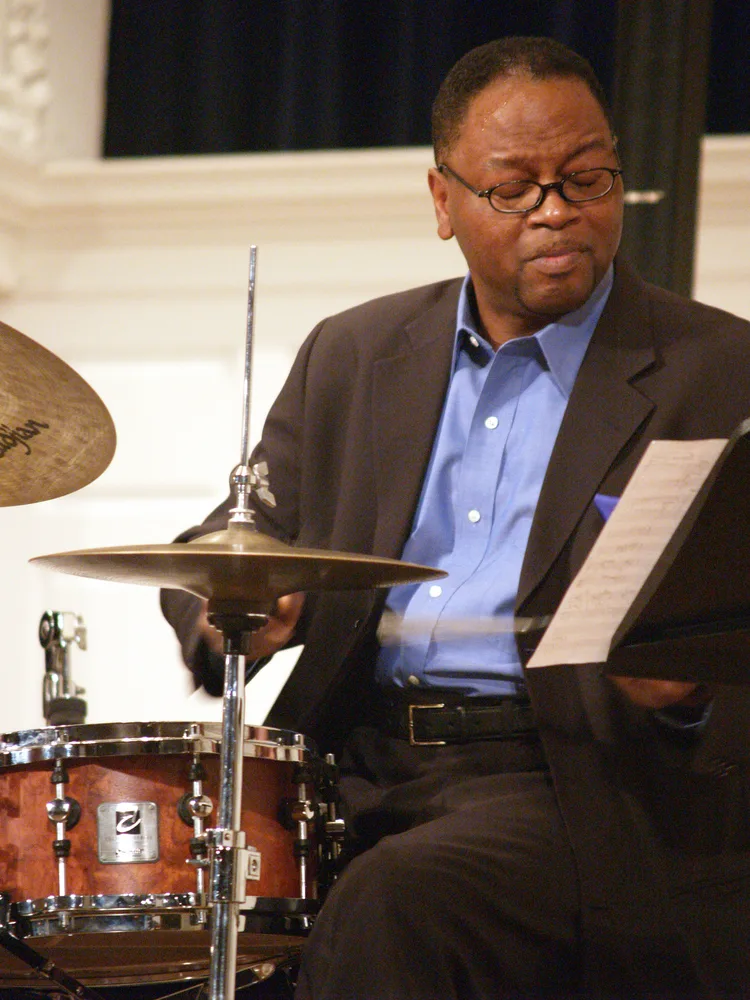
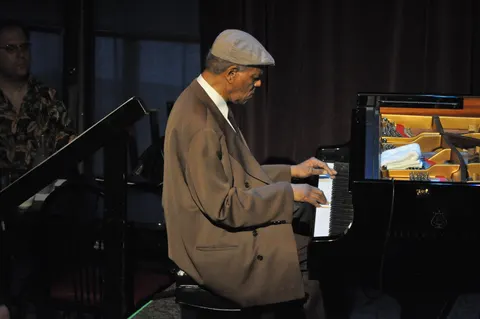
Jazz drummer Lewis Nash performing in concert at Sprague Hall, New Haven, Connecticut, September 14, 2007. CC BY 2.0 — Wikimedia Commons - https://commons.wikimedia.org/wiki/File:Lewis_Nash.jpg

Lewis Nash was born December 30, 1958, in Phoenix, Arizona, and started on drums at ten. He came to jazz by way of R&B and funk. James Brown's records, Stax singles, and Earth, Wind & Fire were his first rhythmic education, and he only worked backward into the jazz vocabulary of Philly Joe Jones, Max Roach, Art Blakey, Jimmy Cobb, Roy Haynes, Kenny Clarke, Billy Higgins, and Ed Blackwell once he was already playing. He studied broadcast journalism, then marketing, at Arizona State University while working the local scene under the guidance of Phoenix mentors including pianist Charles Lewis, arranger Prince Shell, and guitarist Jerry Byrd. By eighteen he was gigging with local jazz groups; by twenty-one he had become Phoenix's first-call drummer, backing touring names such as Sonny Stitt, Art Pepper, Red Garland, Lee Konitz, Barney Kessel, and Slide Hampton whenever they came through town, and sitting in on double bills opposite visiting groups like Old and New Dreams, Sun Ra, and the Art Ensemble of Chicago.
A chance meeting with Freddie Waits, then drumming for pianist Billy Taylor, pushed Nash toward New York. Waits recommended him to singer Betty Carter in 1980, and in 1981, at twenty-two, Nash relocated to New York and joined Carter's trio, touring internationally with her for close to four years. He is featured on three of her albums from that period, including 1988's Look What I Got (Verve), which won Carter a Grammy for Best Jazz Vocal Performance, Female. The Carter trio functioned as the era's de facto finishing school for young rhythm sections, and it put Nash's name in front of the entire New York scene almost immediately.
Through the rest of the 1980s and into the 1990s Nash became one of the most called-upon drummers in mainstream jazz. He worked steadily in Ron Carter's two-bass quintet and larger nonet (documented on 1990's Eight Plus), with Branford Marsalis, and with the Don Pullen/George Adams quartet, while building a decade-long tenure, alongside bassist Peter Washington, in the Tommy Flanagan Trio that ran from around 1990 through the end of the decade (Beyond the Bluebird, 1991; Sea Changes, 1996; and other Flanagan dates cut across the 1990s). He also became a fixture in Dizzy Gillespie's late working groups, recording To Bird with Love (1992) and, later, the posthumously released Triple Play (1998, Telarc). Most notably, Nash was one of two drummers, alongside Kenny Washington, on Gillespie's last public performances: three January 1992 nights at New York's Blue Note, cut with a rotating cast of guest saxophonists and issued in 1997, after Gillespie's 1993 death, as Bird Songs: The Final Recordings (Telarc), with George Mraz on bass. It was also in this period that Nash entered pianist Toshiko Akiyoshi's orbit, appearing on her 1990 and 1992 recordings Four Seasons and Remembering Bud . Cleopatra's Dream before joining her, Lew Tabackin, and George Mraz in 1997 for the quartet reunion album Toshiko Plays Toshiko: Time Stream (Nippon Crown), revisiting Akiyoshi's own compositions, including "Kogun" and "Farewell to Mingus," as a working unit rather than a nostalgia date.
Nash began stepping out as a leader in the late 1990s without ever slowing his sideman calendar. His debut, Rhythm Is My Business, was recorded October 5, 1989, at A&R Studios in New York with Mulgrew Miller, Steve Nelson, Peter Washington, and Ron Carter, but did not see release until 1993, on Evidence. Two more leader dates followed for the Japanese M&I Jazz label, both recorded live-in-studio in New York with Washington and vibraphonist Steve Nelson: It Don't Mean a Thing (2004) and Stompin' at the Savoy (recorded August 2004, released January 2005). His sideman work in the 2000s reached some of the format's biggest rooms: he is the drummer on McCoy Tyner's Illuminations (2004, Telarc, with Gary Bartz, Terence Blanchard, and Christian McBride), which won the 2005 Grammy for Best Instrumental Jazz Album, and on James Moody's 4B (2010, IPO Recordings), which won the Grammy for Best Jazz Instrumental Album at the 2011 ceremony. In between, he joined the Blue Note 7, the septet Blue Note Records assembled for its 2008-2009 70th-anniversary tour and the album Mosaic: A Celebration of Blue Note.
Nash has continued leading and recording steadily since. He formed a long-running duo with saxophonist Steve Wilson, documented on Duologue (recorded 2013, released 2014, MCG Jazz) and a live Umbria Jazz Winter set from the same winter, and led a quintet of Renee Rosnes, Jeremy Pelt, Jimmy Greene, and Peter Washington on The Highest Mountain (recorded live at Cory Weeds's Cellar Jazz Club, Vancouver, September 2011; released 2012, Cellar Live). Recent sideman work includes Jimmy Heath's posthumous Love Letter (2020) and Ron Carter's Grand Company (2023, with pianist Ray Gallon). Alongside performing, Nash joined Juilliard's inaugural jazz faculty in 2001, has taught at the Vail Jazz Workshop for more than two decades, and in 2017 became the Bob and Gretchen Ravenscroft Professor of Practice in Jazz at Arizona State University, his alma mater; a scholarship in his name was endowed there in 2021. The Nash, a Phoenix jazz club and education center opened in 2012 by the nonprofit Jazz in AZ, is named in his honor. Modern Drummer named him "Jazz's Most Valuable Player" in its May 2009 issue, citing an appearance count then already past 400 records; Discogs alone now credits him on more than 500 releases.
Nash's reputation rests substantially on brushwork: he is widely called one of the instrument's great brush players, working with the snares engaged for a fatter, more assertive sound than the technique's reputation for delicacy suggests, and developing a single idea patiently across a chorus rather than cycling through effects. That control extends to how he tunes his kit, setting the drums at wider melodic intervals so that a phrase moves the way a line of music would rather than reading as undifferentiated rhythm. Critics and peers describe the same quality from different angles: drummer Andrew Cyrille credited him with "dotting all the i's" in the lineage of Kenny Clarke, Ed Thigpen, and Philly Joe Jones; saxophonist Joe Lovano called his time "lyrical" in a way that makes an audience want to jump out of its seat while staying refined; saxophonist Steve Wilson, his longtime duo partner, compared his listening instincts to Billy Higgins's. Underneath the polish sits the R&B and funk vocabulary he absorbed before he ever heard bebop, which is part of why his groove reads as contemporary rather than as a period recreation of 1950s and '60s hard bop, the idiom in which he has spent most of his career.
- Rhythm Is My Business (rec. 1989, rel. 1993, Evidence) - Nash's belated leader debut, cut at A&R Studios in New York with Mulgrew Miller, Steve Nelson, Peter Washington, and Ron Carter on piccolo bass.
- Betty Carter, Look What I Got (1988, Verve) - A Grammy-winning date from Betty Carter's trio, the group whose international touring schedule first established Nash in New York.
- Dizzy Gillespie, Bird Songs: The Final Recordings (rec. Jan. 1992, rel. 1997, Telarc) - Live at the Blue Note, New York, cut across Gillespie's last three public engagements before his cancer diagnosis; Nash shares the drum chair with Kenny Washington, with George Mraz on bass. Not confirmed on Spotify under this exact title.
- Toshiko Akiyoshi, Toshiko Plays Toshiko: Time Stream (1997, Nippon Crown) - A quartet reunion with Akiyoshi, Lew Tabackin, and George Mraz revisiting Akiyoshi's own compositions across four decades. Spotify - Time Stream
- McCoy Tyner, Illuminations (2004, Telarc) - With Gary Bartz, Terence Blanchard, and Christian McBride; won the 2005 Grammy for Best Instrumental Jazz Album. Spotify - Illuminations
- James Moody, 4B (2010, IPO Recordings) - With Kenny Barron and Todd Coolman; won the Grammy for Best Jazz Instrumental Album at the 2011 ceremony. Spotify - Moody 4B
- The Highest Mountain (rec. 2011, rel. 2012, Cellar Live) - A leader quintet date with Renee Rosnes, Jeremy Pelt, Jimmy Greene, and Peter Washington, recorded live at Cory Weeds's Cellar Jazz Club, Vancouver. Spotify - The Highest Mountain Listen
Lewis Nash: Full Discography
Identity confirmed via the live Discogs API - artist ID 253345 ("Lewis Nash," born December 30, 1958, matching Wikipedia). No collision with the unrelated Discogs entities "Mike Lewis (7)" or "Darryl Lewis (2)" that surface in a loose name search. Discogs credits Nash on 517 releases total (34 in a "Main"/leader-or-co-billed role, 442 sideman "Appearance" credits, 9 track-level "TrackAppearance" credits, and 32 unofficial/bootleg pressings), consistent with the widely cited figure of "over 500 recordings." Nash is overwhelmingly a sideman: only a handful of those 34 Main credits are genuine leader or co-leader dates under his own billing, the rest being group sessions (trios, all-star packages) where Discogs lists every named participant as "Main." A second Discogs entity, Steve Wilson / Lewis Nash Duo (artist 4093485), holds two further co-led albums not visible on his personal artist page - the standard group-billing gap this sweep has flagged repeatedly. The table below covers his full confirmed leader/co-leader catalog (a short list against 500+ total credits) plus a curated set of his most significant sideman dates; it does not attempt to itemize all ~450 sideman credits.
As Leader / Co-Leader
| Album Title | Recording Date(s) | Release Date | Label | Catalog Number | Format(s) | Personnel | Role | Reissue History | Spotify | Buy | Notes |
|---|---|---|---|---|---|---|---|---|---|---|---|
| Rhythm Is My Business | Recorded October 5, 1989, A&R Studios, New York | 1993 | Evidence Music | ECD 22041-2 | CD, Album | Lewis Nash (drums, producer), Mulgrew Miller (piano), Steve Nelson (vibraphone), Peter Washington (bass), Ron Carter (piccolo bass), Steve Kroon (percussion), Teresa Nash (vocals) | Leader | None found | Not confirmed on Spotify | — | Nash's belated leader debut; recorded nearly four years before release |
| It Don't Mean a Thing | Not specified in Discogs data | January 21, 2004 | M&I Jazz | MYCJ-30250 | CD, Album | Lewis Nash (drums), Jeb Patton (piano), Steve Nelson (vibraphone), Peter Washington (bass) | Leader | None found | Not confirmed on Spotify | — | Produced by Todd Barkan (credited "Todd Barton" on the back cover in error), for the Japanese M&I Jazz label |
| Stompin' at the Savoy | Recorded August 1-2, 2004, New York | January 19, 2005 | M&I Jazz | MYCJ-30318 | CD, Album | Lewis Nash (drums), Steve Nelson (vibraphone), Peter Washington (bass) | Leader | None found | Not confirmed on Spotify | — | Dedicated to James Williams and Illinois Jacquet; same drums/vibes/bass trio format as the M&I label's other Nash date |
| The Highest Mountain | Recorded live September 16-18, 2011, Cory Weeds's Cellar Jazz Club, Vancouver BC | 2012 | Cellar Live | CL091811 | CD | Lewis Nash (drums), Renee Rosnes (piano), Jeremy Pelt (trumpet, flugelhorn), Jimmy Greene (tenor, soprano sax), Peter Washington (bass) | Leader (Lewis Nash Quintet) | None found | Spotify - The Highest Mountain | — | Live club recording |
| Duologue | Recorded March 16-17, 2013, Manchester Craftsmen's Guild, Pittsburgh | 2014 | MCG Jazz | MCGJ1038 | CD, Album | Lewis Nash (drums, co-arranger), Steve Wilson (saxophone, co-arranger) | Co-leader (Steve Wilson / Lewis Nash Duo) | None found | Not confirmed on Spotify | — | Filed under the separate Discogs group entity Steve Wilson / Lewis Nash Duo (artist 4093485), not Nash's personal artist page |
| Live at Umbria Jazz | Recorded live December 30, 2013 & January 1, 2014, Museo Emilio Greco, Orvieto, Italy (Umbria Jazz Winter) | 2015 (Italy); reissued 2023, Red Record | Red Record | RR 123336-2 (2023 reissue) | CD, Album, Reissue | Lewis Nash (drums, uncredited scat vocal on one track), Steve Wilson (saxophone) | Co-leader (Steve Wilson / Lewis Nash Duo) | Reissued 2023 on Red Record | Not confirmed on Spotify | — | Also filed under the Steve Wilson / Lewis Nash Duo entity |
| Jazz Museum: Tribute to Great Artists | Recording date given by Discogs as October 2, 1978, Pioneer Studio, Tokyo, with a live audience - almost certainly a data-entry error, since sidemen Jesse Davis and Terell Stafford did not begin recording until the late 1980s/1990s | Originally released, undated, by All Art Promotion (Japan); reissued March 29, 2023, Solid Records | Solid Records / All Art Promotion | CDSOL 6285 (2023 reissue); AAP-0082 (original) | CD, Album (2023 reissue) | Lewis Nash (drums), Frank Wess (tenor sax, flute), Jesse Davis (alto sax), Terell Stafford (trumpet), Mulgrew Miller (piano), Peter Washington (bass) | Leader (Lewis Nash & Be-Bop All-Stars featuring Frank Wess) | Reissued 2023 | Not confirmed on Spotify | — | Possibly the same recording Wikipedia lists as "Lewis Nash and the Bebop All-Stars featuring Frank Wess (2008)" under a different title, but this is not confirmed - the two sources disagree on both the year and the title, and no independent match was found |
As Sideman (selected major credits)
Nash's Discogs sideman log runs to 442 "Appearance" credits alone, spanning 1986 to the present, so this table is a curated selection of his most historically significant dates rather than an exhaustive list.
| Year | Project (Leader) | Title | Label | Catalog | Role | Notes |
|---|---|---|---|---|---|---|
| 1988 | Betty Carter | Look What I Got | Verve Records | 835 661-1 | Drums | Won the Grammy for Best Jazz Vocal Performance, Female; one of three Betty Carter albums featuring Nash |
| 1990 | Ron Carter Nonet | Eight Plus | Not specified in Discogs data | Drums | Nash's entry into Ron Carter's regular working groups | |
| 1991 | Tommy Flanagan Trio featuring Kenny Burrell | Beyond the Bluebird | Not specified in Discogs data | Drums | Early date in Nash's decade-long tenure with the Flanagan trio | |
| 1992 | Dizzy Gillespie | To Bird with Love | Not specified in Discogs data | Drums | ||
| 1992 | Jimmy Raney Trio featuring George Mraz and Lewis Nash | But Beautiful | Not specified in Discogs data | Drums | Co-billed on the sleeve | |
| 1992 | Toshiko Akiyoshi, George Mraz, Ray Drummond, Al Harewood | Remembering Bud . Cleopatra's Dream | Not specified in Discogs data | Drums | ||
| 1998 | Wynton Marsalis | The Midnight Blues (Standard Time Vol. 5) | Columbia | Drums | Discogs' artist-page credit lists 1996, but the confirmed release date is 1998; not resolved further | |
| 1996 | Joe Henderson | Big Band | Verve | Drums | ||
| 1996 | Tommy Flanagan Trio | Sea Changes | Not specified in Discogs data | Drums | ||
| 1997 | Toshiko Akiyoshi, Lew Tabackin, George Mraz | Toshiko Plays Toshiko: Time Stream | Nippon Crown | Drums | Quartet reunion revisiting Akiyoshi's own compositions; see final-profile.md | |
| 1997 | Dizzy Gillespie | Bird Songs (The Final Recordings) | Telarc | Drums (with Kenny Washington) | Recorded live January 23-25, 1992, at the Blue Note, NYC; Gillespie's last public performances before his cancer diagnosis; released posthumously | |
| 1997 | Kenny Drew, George Mraz | The First & The Last | Not specified in Discogs data | Drums | ||
| 1997 | Oscar Peterson (with Ray Brown, Herb Ellis, Benny Green, Roy Hargrove, Shirley Horn, Milt Jackson, the Manhattan Transfer, and others) | A Tribute to Oscar Peterson (Live at the Town Hall) | Not specified in Discogs data | Drums | ||
| 1998 | Dizzy Gillespie | Triple Play | Telarc Jazz | Drums | ||
| 2004 | McCoy Tyner | Illuminations | Telarc | Drums | With Gary Bartz, Terence Blanchard, Christian McBride; won the Grammy for Best Instrumental Jazz Album, 2005 | |
| 2004 | Nancy Wilson | R.S.V.P. (Rare Songs, Very Personal) | MCG Jazz | Drums | Won the Grammy for Best Jazz Vocal Album, 2005 | |
| 2006 | Jimmy Heath Big Band | Turn Up the Heath | Planet Arts Recordings | Drums | ||
| 2007 | McCoy Tyner | Afro Blue | Not specified in Discogs data | Drums | ||
| 2008 | Blue Note 7 | Mosaic: A Celebration of Blue Note | Blue Note | Drums | Septet assembled for Blue Note Records' 70th-anniversary tour, 2008-2009 | |
| 2009 | James Moody | 4A | IPO Recordings | Drums | With Kenny Barron, Todd Coolman | |
| 2010 | James Moody | 4B | IPO Recordings | Drums | With Kenny Barron, Todd Coolman; won the Grammy for Best Jazz Instrumental Album at the 2011 ceremony | |
| 2010 | Dee Dee Bridgewater | Eleanora Fagan (1915-1959): To Billie with Love from Dee Dee Bridgewater | Not specified in Discogs data | Drums | ||
| 2013 | Jimmy Heath Big Band | Togetherness (Live at the Blue Note) | Jazz Legacy Productions | Drums | ||
| 2020 | Jimmy Heath | Love Letter | Not specified in Discogs data | Drums | Posthumous release | |
| 2023 | Ray Gallon, Ron Carter | Grand Company | Not specified in Discogs data | Drums |
Further credits not itemized here include recurring work with Jimmy Heath (Little Man Big Band, 1992), Manhattan Trinity, Mikio Masuda, Takeshi Yamaguchi, Laura Taylor, Wayne Escoffery, Mike Longo, Paul Kogut, Chantale Gagne, Chuck Redd, Mike Allen, and Jeremy Monteiro, among many others, spanning both major-label dates and smaller independent and Japanese-market sessions.
- Betty Carter - trio drummer, 1981-c.1984; featured on three of her albums including the Grammy-winning Look What I Got (1988).
- Tommy Flanagan - trio drummer for roughly the entire 1990s, alongside bassist Peter Washington, documented on Beyond the Bluebird (1991), Sea Changes (1996), and other Flanagan dates.
- Ron Carter - two-bass quintet and nonet member from the late 1980s (Eight Plus, 1990) through decades of further recordings, most recently Grand Company (2023).
- Dizzy Gillespie - recorded To Bird with Love (1992) and Triple Play (1998), and was one of two drummers on Gillespie's final public performances, issued as Bird Songs: The Final Recordings (1997).
- Toshiko Akiyoshi, Lew Tabackin, and George Mraz - joined this trio's working quartet for Toshiko Plays Toshiko: Time Stream (1997), after appearing on Akiyoshi's Four Seasons (1990) and Remembering Bud . Cleopatra's Dream (1992).
- McCoy Tyner - recorded the Grammy-winning Illuminations (2004) and Afro Blue (2007), among other dates.
- James Moody - drummer on 4A (2009) and the Grammy-winning 4B (2010), both for IPO Recordings.
- Jimmy Heath - recurring collaborator from Little Man Big Band (1992) through the posthumous Love Letter (2020) and several Jimmy Heath Big Band releases in between.
- Steve Wilson - working duo partner since the early 2000s, documented on Duologue (2014, MCG Jazz) and a live Umbria Jazz Winter recording.
- Peter Washington and Steve Nelson - Nash's regular working rhythm-section and vibraphone partners across his own leader dates, from Rhythm Is My Business through Stompin' at the Savoy.
- Federico Pierantoni (trombone) - fellow personnel on Ethan Iverson's Bud Powell in the 21st Century (Sunnyside, 2021), a live Umbria Jazz Orchestra recording on which Nash plays drums; Discogs-verified.
- Francesco Lento (trumpet, flugelhorn) - trumpeter in the Umbria Jazz Orchestra alongside Nash (drums) on Ethan Iverson's Bud Powell in the 21st Century (Sunnyside, 2021); Discogs-confirmed.
- Francesco Fratini (trumpet) - trumpeter in the Umbria Jazz Orchestra on Ethan Iverson's Bud Powell in the 21st Century (2021), alongside Lewis Nash; Discogs-confirmed.
- Marco Panascia (bass) - fellow trio member, with pianist Tamir Hendelman, on Destinations (2010, Resonance Records), which reached No. 1 on the JazzWeek Jazz Charts. Already profiled separately on the sibling ItalianJazz project.
- Mirco Rubegni (trumpet) - fellow performer on Ethan Iverson's Bud Powell in the 21st Century (2021), with Rubegni in the Umbria Jazz Orchestra's trumpet section; Discogs-confirmed.
More Bebop Artists
See all 166 Bebop artists →More American Jazz Artists
See all 567 American artists →- Wikipedia: Lewis Nash
- Discogs: Lewis Nash (artist 253345)
- The Nash Jazz Club: Meet Lewis Nash
- Kennedy Center: Lewis Nash
- Ted Panken, "Lewis Nash: A DownBeat Feature From 2006..."
- Wikipedia: Illuminations (McCoy Tyner album)
- Wikipedia: Moody 4B
- Wikipedia: Bird Songs: The Final Recordings
07-toshiko-akiyoshi-spotlight/final-profile.md, JapaneseJazz vault