 JAZZPROFILES lives in the music 1,002 Jazz Artists fully Profiled!
 Coleman Hawkins
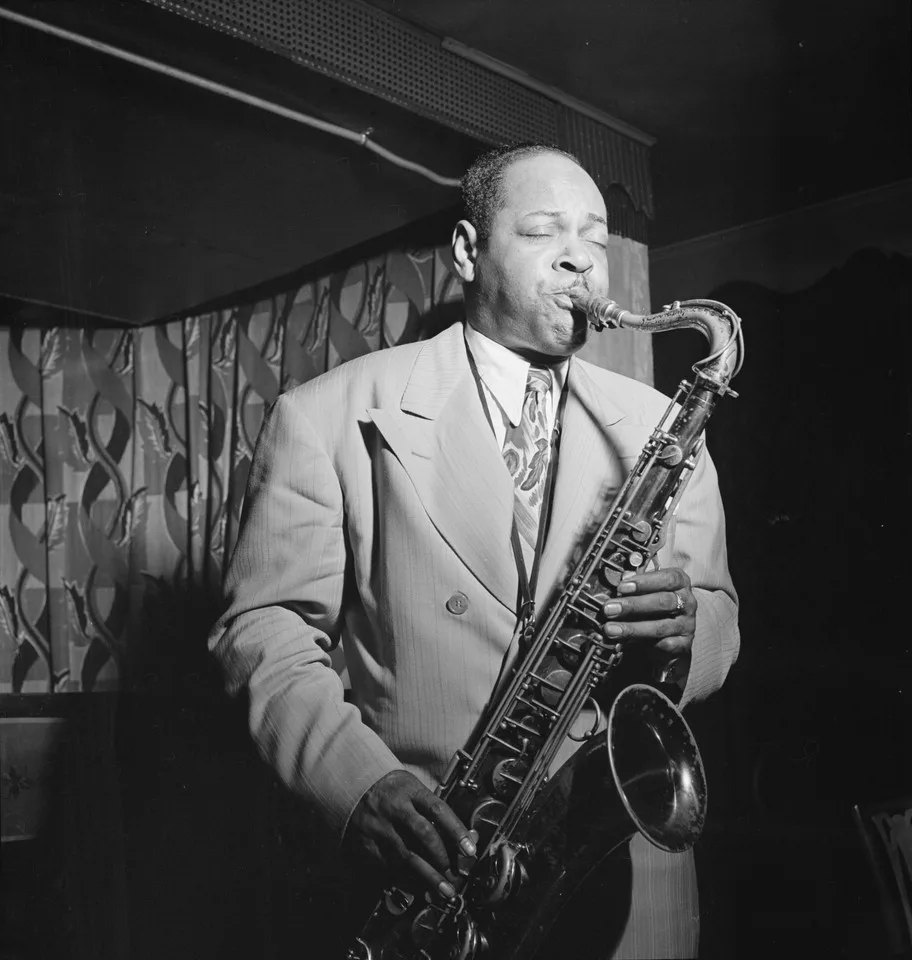
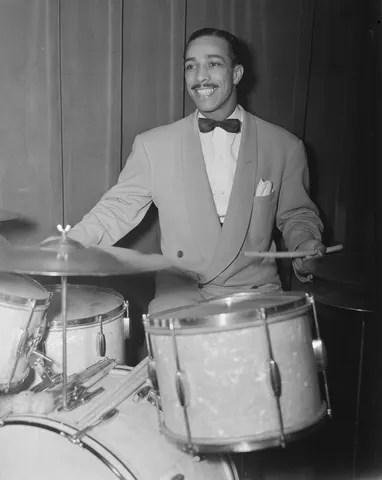
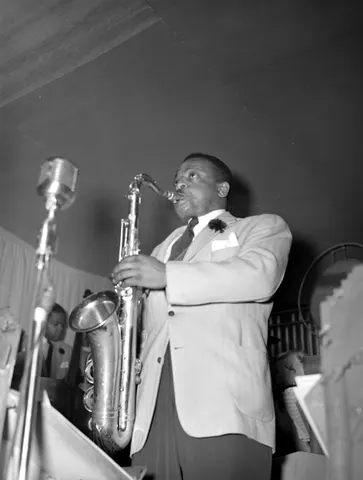
Coleman Hawkins photographed at the Spotlite club on West 52nd Street, New York City, circa September 1946, by William P. Gottlieb. Public Domain (PD-Gottlieb: the William P. Gottlieb collection was placed in the public domain by the photographer, effective February 16, 2010) — Wikimedia Commons — https://commons.wikimedia.org/wiki/File:Coleman_Hawkins_(Gottlieb_03991).jpg (original: Library of Congress Music Division, William P. Gottlieb Collection, digital ID gottlieb.03991)
.jpg)
Coleman Randolph Hawkins was born November 21, 1904, in St. Joseph, Missouri, and took his first name from his mother Cordelia's maiden name. He started piano at four, added cello at seven, and had moved to the saxophone by nine; by fourteen he was working dates around eastern Kansas. He went to high school in Chicago and then at Topeka High School in Kansas, and later said he had studied harmony and composition for two years at Washburn College in Topeka while still a schoolboy. In 1921 the blues singer Mamie Smith heard him in a Kansas City theater pit band and hired him for her Jazz Hounds, the band he joined full time in 1922 and left in 1923, by which point he had settled in New York City. His nickname "Bean" attached itself in these years and nobody has ever satisfactorily explained it: the competing theories point to the shape of his head, a habit of pleading poverty, and the size of his harmonic vocabulary.
Hawkins made his first records with Fletcher Henderson in August 1923, and when Henderson turned the group into a permanent orchestra in January 1924 he was its star tenor, a chair he held until 1934, doubling on clarinet and bass saxophone. What changed him was the arrival of Louis Armstrong in the band in 1924. Hawkins abandoned the clipped, slap-tongued attack of his earliest solos for Armstrong's relaxed legato phrasing, and by 1925 he was a major soloist; his 1926 solo on "The Stampede" became the model younger tenor players copied off the record. Alongside the Henderson book he cut sides with McKinney's Cotton Pickers, backed blues singers, recorded a series of small-group dates with Henry "Red" Allen for the American Record Corporation's Perfect, Melotone, Romeo and Oriole labels, and in November 1929 joined the Mound City Blue Blowers for "Hello Lola" and "One Hour," among the earliest racially integrated sessions on record and the first place his ballad playing is fully formed. He was also featured on a Benny Goodman session for Columbia on February 2, 1934.
In late 1934 Hawkins accepted an invitation from Jack Hylton to come to London, and he stayed in Europe for five years, freelancing across the continent as a visiting star. The most famous product of those years is a Paris date in April 1937 with Benny Carter, Django Reinhardt, Stephane Grappelli, Alix Combelle and Andre Ekyan that produced "Crazy Rhythm" and "Honeysuckle Rose." He came home in 1939 to a scene that had moved on without him, with Lester Young, Ben Webster and Chu Berry established and a lighter conception of the tenor in fashion. On October 11, 1939, at his only session for Bluebird, he answered with two choruses of "Body and Soul," recorded almost as an afterthought with a nine-piece band including Gene Rodgers on piano. He states the melody recognisably for four bars and then leaves it alone, improvising on the chords and their upper intervals for the rest of the record. Coupled with "Fine Dinner" as Bluebird B-10523, it became the biggest hit of his life, an unlikely one for an instrumental with no tune in it, and has been described ever since as one of the first tremors of bebop.
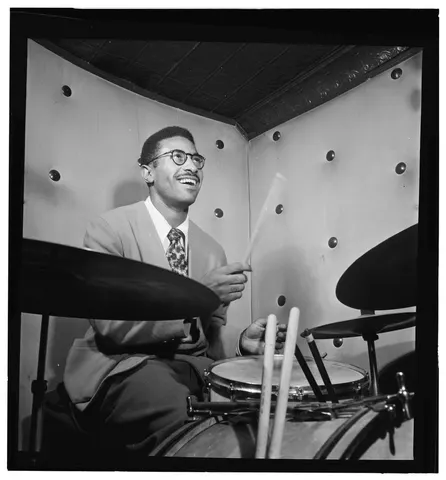
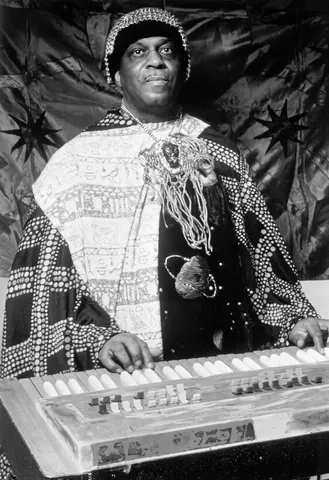
The 1940s made that description literal. After a short-lived big band in 1940 Hawkins settled into the clubs of 52nd Street, and on December 23, 1943, he cut "The Man I Love" and "Sweet Lorraine" for Signature with a quartet including Oscar Pettiford. On February 16, 1944, he led the Apollo session that produced "Woody 'n' You," widely cited as the first bebop record ever made, with Dizzy Gillespie, Don Byas, Clyde Hart, Pettiford and Max Roach. That October he led another date with Thelonious Monk at the piano, Edward Robinson on bass and Denzil Best on drums, Monk's first appearance on record. Nothing in Hawkins's own harmonic method needed adjusting to play this music, and he spent the decade hiring the musicians who were inventing it: a young Miles Davis in his working band, a 1945 Hollywood sextet with Howard McGhee, Sir Charles Thompson, Vic Dickenson and Best that Capitol issued as Hollywood Stampede, and 1946 dates with J.J. Johnson and Fats Navarro. He toured with Norman Granz's Jazz at the Philharmonic through 1946 to 1950, worked a short-lived 1948 Chicago trio with the violinist Stuff Smith and the pianist then still known as Herman Blount, later Sun Ra, and in 1948 recorded "Picasso," the first unaccompanied saxophone solo committed to record, issued the following year in Granz's boxed anthology The Jazz Scene.
By the early 1950s the lighter Lester Young line had won the argument among young tenor players and Hawkins was widely written off as a period figure. He kept working, and the middle of the decade brought a full-scale renaissance. He formed a hard-swinging quintet with the trumpeter Roy Eldridge, appearing with him at the 1957 Newport Jazz Festival, and in a single extraordinary run of months in 1957 recorded The Hawk Flies High for Riverside with a modernist sextet of Idrees Sulieman, J.J. Johnson, Hank Jones, Barry Galbraith, Pettiford and Jo Jones; met Ben Webster over an Oscar Peterson rhythm section in Hollywood on October 16 for Coleman Hawkins Encounters Ben Webster; and on June 26 joined Monk's septet date Monk's Music, sharing the tenor chair with John Coltrane and taking "Ruby, My Dear" as a feature with the rhythm section alone. On December 8 that year he appeared on the CBS television broadcast The Sound of Jazz alongside Lester Young, Webster, Eldridge and Billie Holiday.
The 1960s kept him in circulation, mostly at the Village Vanguard with a quartet of Tommy Flanagan, Major Holley and Eddie Locke. He played the opening movement of Max Roach's We Insist! Max Roach's Freedom Now Suite in 1960, one of the first records to tie jazz explicitly to the civil rights movement, and returned to Roach's circle for Abbey Lincoln's Straight Ahead in February 1961. At Bob Thiele's suggestion Impulse! finally put him in a studio with Duke Ellington on August 18, 1962, for Duke Ellington Meets Coleman Hawkins, with Johnny Hodges, Lawrence Brown, Ray Nance and Harry Carney in support; the same label produced the quartet album Today and Now three weeks later and the bossa nova set Desafinado. In July 1963 he and Sonny Rollins, who had grown up on his records, made Sonny Meets Hawk! for RCA Victor, an abrasive and much-argued-over session in which the older man is frequently the more adventurous of the two. Wrapped Tight, recorded in February and March 1965 with Barry Harris on piano, is the last leader album released in his lifetime.
After 1965 Hawkins declined quickly. He drank heavily, stopped eating properly and largely stopped recording, cutting his final leader date in December 1966 for Norman Granz, issued after his death as Sirius, and making a last effective appearance with Jazz at the Philharmonic in early 1969. He passed away of liver disease on May 19, 1969, at Wickersham Hospital in Manhattan, aged 64, and is buried in the Yew Plot at Woodlawn Cemetery in the Bronx. He was survived by his wife Dolores and three children, Rene, Colette and Mimi. John Chilton's biography The Song of the Hawk followed in 1990.
Hawkins did not simply play the tenor saxophone better than his predecessors: he decided what the instrument was for. Before him it was a vaudeville novelty and a cheap substitute for the trombone in marching bands, and the critic Joachim Berendt's summary is the one everybody quotes, that there were tenor players before Hawkins but the instrument was not an acknowledged jazz horn. What he brought was a huge vibrato-laden tone, an arpeggiated method of improvising built on a complete command of chord substitution and passing harmony, and a refusal to imitate clarinet phrasing, which is what every other saxophonist of the early 1920s was doing. That approach produced the swing-era tenor sound almost single-handedly, running directly through Chu Berry, Ben Webster, Herschel Evans, Buddy Tate and Don Byas and from them to Illinois Jacquet, Paul Gonsalves, Lucky Thompson and Arnett Cobb, and it also produced the harmonic vocabulary the boppers needed, which is why the first bebop record was made under his name and not theirs. Lester Young, whose lighter tone was the only real alternative anyone offered, told The Jazz Review in 1959 that Hawkins was the president of the tenor saxophone and that he was only the second; Miles Davis said that hearing Hawkins taught him to play ballads. The line reaches well past the swing era: Sonny Rollins named him his main influence, Archie Shepp and David Murray built free-jazz tenor sounds on his big swing-era tone, and Harry Allen and Grant Stewart have made careers out of the vocabulary he left. By 1965 the traffic was running both ways, with critics hearing John Coltrane's influence in the last records of the man who had recorded with him eight years earlier.
- "Body and Soul" / "Fine Dinner" (1939, Bluebird) - Two choruses recorded October 11, 1939 that abandon the melody for the chord changes, the biggest hit of his career and the most imitated tenor solo in jazz. Spotify - Body & Soul (Bluebird collection) Listen
- The Hawk Flies High (1957, Riverside) - A sextet of bebop players assembled around him by Orrin Keepnews, and the clearest evidence that his harmonic thinking never dated. Spotify - The Hawk Flies High Listen
- Coleman Hawkins Encounters Ben Webster (rec. 1957, Verve) - The two great tenor tones of the swing era side by side over the Oscar Peterson trio, recorded in Hollywood on October 16, 1957. Spotify - Coleman Hawkins Encounters Ben Webster
- Monk's Music (1957, Riverside) - As a sideman: Thelonious Monk's septet date of June 26, 1957, where Hawkins shares the tenor chair with John Coltrane and takes "Ruby, My Dear" alone with the rhythm section.
- Soul (1958, Prestige) - A relaxed blues-centred quintet with Kenny Burrell and Ray Bryant, cut at Van Gelder's Hackensack studio on November 7, 1958. Spotify - Soul Listen
- Duke Ellington Meets Coleman Hawkins (1963, Impulse!) - The only studio meeting between the two, recorded August 18, 1962, and called by The New York Times one of the great albums of the 1960s. Spotify - Duke Ellington Meets Coleman Hawkins Listen
- Sonny Meets Hawk! (1963, RCA Victor) - A famously combative July 1963 encounter with Sonny Rollins, with Paul Bley on piano and the fifty-eight-year-old Hawkins often the freer player. Spotify - Sonny Meets Hawk! Listen
- Wrapped Tight (1965, Impulse!) - The last leader album issued in his lifetime, a quartet-plus-brass date with Barry Harris, still playing at full strength. Spotify - Wrapped Tight Listen
Coleman Hawkins: Full Discography
Identity confirmed via the live Discogs API: artist ID 251769. Coleman Hawkins recorded continuously from 1922 to 1967, and once reissues, anthologies and posthumous compilations are counted his Discogs credits run into the thousands, so this file does not attempt exhaustive coverage. It curates the leader and co-led albums that mark each phase of the career, from the 1939 Bluebird 78 that made his name to the last Pablo session of December 1966, plus the sideman and guest dates with the most bearing on his story. Every row was checked against an individual Discogs release rather than the coarser artist-level listing, and where a master had to be resolved the title and track list that came back were confirmed to be the ones asked for.
Not covered here: the enormous body of Fletcher Henderson orchestra sides from 1923 to 1934 on which Hawkins is the featured tenor (collected on A Study in Frustration: The Fletcher Henderson Story, Columbia, 1961); the European small-group recordings of 1934 to 1939 outside the single Paris date listed below; the Keynote, Savoy, Apollo and Signature 78s of the 1940s beyond the two landmark sessions listed; the many live Jazz at the Philharmonic recordings; and the very large secondary market of compilations drawn from every one of these periods.
As Leader / Co-Leader
| Album Title | Recording Date(s) | Release Date | Label | Catalog Number | Format(s) | Personnel | Role | Reissue History | Spotify | Buy | Notes |
|---|---|---|---|---|---|---|---|---|---|---|---|
| "Body and Soul" / "Fine Dinner" | October 11, 1939, New York City | 1939 | Bluebird | B-10523 | Shellac, 10", 78 RPM | Coleman Hawkins (tenor saxophone), Tommy Lindsay and Joe Guy (trumpet), Earl Hardy (trombone), Jackie Fields and Eustis Moore (alto saxophone), Gene Rodgers (piano), William Oscar Smith (bass), Arthur Herbert (drums) | Leader | Reissued as RCA Victor 20-2539 (1948) and on many RCA and Bluebird collections since | Spotify - Body & Soul (Bluebird collection) | — | His only Bluebird session and the biggest-selling record of his career; the credits on the original pressing name nobody but the band leader |
| Hollywood Stampede | 1945, Hollywood | 1963 (UK LP) | Capitol | T-20435 | Vinyl, LP | Coleman Hawkins (tenor saxophone), Howard McGhee (trumpet), Vic Dickenson (trombone, four tracks), Sir Charles Thompson (piano), Allan Reuss (guitar), Oscar Pettiford and John Simmons (bass), Denzil Best (drums) | Leader | US LP as Capitol M-11030 (1972); CD as Capitol Jazz CDP 7 92596 2 (1989) | Spotify - Hollywood Stampede | — | The California sextet Hawkins ran in 1945, gathered onto an LP long after the fact; exact session dates are not carried on the release |
| The Hawk in Hi-Fi | January 17, 18 and 20, 1956, Webster Hall, New York City | 1956 | RCA Victor | LPM 1281 | Vinyl, LP, Album | Coleman Hawkins (tenor saxophone) with Billy Byers and his orchestra, arranged by Byers; strings, woodwinds and, on four tracks, a saxophone section of Zoot Sims, Al Cohn, Hal McKusick, Sam Marowitz and Sol Schlinger, with Hank Jones (piano), Milt Hinton and Jack Lesberg (bass), Osie Johnson (drums) | Leader | CD on Bluebird 09026-63842-2 (2001) | Spotify - The Hawk In Hi-Fi | — | A with-strings project cut across three January dates, each with a different instrumentation |
| The Hawk Flies High | March 1957 | July 1957 | Riverside | RLP 12-233 | Vinyl, LP, Album | Coleman Hawkins (tenor saxophone), Idrees Sulieman (trumpet), J.J. Johnson (trombone), Hank Jones (piano), Barry Galbraith (guitar), Oscar Pettiford (bass), Jo Jones (drums) | Leader | Original Jazz Classics OJC-027; Mobile Fidelity MFSL 1-290 (2007); Riverside/Vinyl Me, Please CR00342 (2020) | Spotify - The Hawk Flies High | — | Produced by Bill Grauer and Orrin Keepnews; the band is deliberately stocked with bebop players |
| The Genius of Coleman Hawkins | October 24, 1957 | 1958 | Verve (Clef Series) | MG V-8261 | Vinyl, LP, Album | Coleman Hawkins (tenor saxophone), Oscar Peterson (piano), Herb Ellis (guitar), Ray Brown (bass), Alvin Stoller (drums) | Leader | Verve 825 673-1 (1986); Verve Master Edition 314 539 065-2 (1997) | Spotify - The Genius Of Coleman Hawkins | — | Recorded under Norman Granz's personal supervision, eight days after the Ben Webster date with the same rhythm section |
| Coleman Hawkins Encounters Ben Webster | October 16, 1957, Hollywood | 1959 | Verve | MG V-8327 | Vinyl, LP, Album | Coleman Hawkins and Ben Webster (tenor saxophone), Oscar Peterson (piano), Herb Ellis (guitar), Ray Brown (bass), Alvin Stoller (drums) | Co-leader | Issued in the UK as Blue Saxophones; Verve MG VS-6066 stereo; Analogue Productions AP-6066 (2013) | Spotify - Coleman Hawkins Encounters Ben Webster | — | Recorded by Norman Granz; the two dominant tenor sounds of the swing era in one room |
| Coleman Hawkins and Roy Eldridge At The Opera House | 1957, Chicago | 1958 | Verve | MG V-8266 | Vinyl, LP, Album | Coleman Hawkins (tenor saxophone), Roy Eldridge (trumpet), with a Jazz at the Philharmonic rhythm section | Co-leader | Verve V6-8266 stereo; CD as Verve 314 521 641-2 (1994) | Spotify - At The Opera House | — | Live Jazz at the Philharmonic material, the pressing's own note giving only "recorded in Chicago in 1957." Published discographies date the issue to 1958; the Discogs record for the MG V-8266 pressing is dated 1961 |
| The High and Mighty Hawk | February 18 and 19, 1958, New York City | 1959 | Felsted | FAJ 7005 | Vinyl, LP, Album | Coleman Hawkins (tenor saxophone), Buck Clayton (trumpet), Hank Jones (piano), Ray Brown (bass), Mickey Sheen (drums) | Leader | Master Jazz Recordings MJR 8115 (1972); Affinity AFF 163 (1986); London 820 600-2 CD (1988) | Spotify - The High and Mighty Hawk | — | Produced by Stanley Dance, who also wrote the sleeve notes. Both original Felsted pressings, UK FAJ 7005 and US SJA 2005, are dated 1959; some published discographies give 1958 |
| Bean Bags | 1958 | 1959 | Atlantic | 1316 | Vinyl, LP, Album | Coleman Hawkins (tenor saxophone), Milt Jackson (vibraphone), Kenny Burrell (guitar), Tommy Flanagan (piano), Eddie Jones (bass), Connie Kay (drums) | Co-leader | Atlantic SD 1316 stereo; Atlantic Jazzlore 90465-1-Y (1985); Koch Jazz KOC-CD-8530 (1998) | Spotify - Bean Bags | — | Supervised by Nesuhi Ertegun, engineered by Tom Dowd and Phil Iehle |
| Soul | November 7, 1958, Van Gelder Studio, Hackensack | 1958 | Prestige | PRLP 7149 | Vinyl, LP, Album | Coleman Hawkins (tenor saxophone), Kenny Burrell (guitar), Ray Bryant (piano), Wendell Marshall (bass), Osie Johnson (drums) | Leader | Prestige Swingville SV 2038 (1962); Original Jazz Classics OJC-096 (1984) and OJCCD-096-2 (1989) | Spotify - Soul | — | Recorded by Rudy Van Gelder; sleeve notes by Ira Gitler |
| Hawk Eyes | April 3, 1959, Van Gelder Studio, Hackensack | 1959 | Prestige | PRLP 7156 | Vinyl, LP, Album | Coleman Hawkins (tenor saxophone), Charlie Shavers (trumpet), Tiny Grimes (guitar), Ray Bryant (piano), George Duvivier (bass), Osie Johnson (drums) | Leader | Reissued as Hawk Eyes! on Prestige PR 7857 and Original Jazz Classics OJC-294 (1987) | Spotify - Hawk Eyes | — | Billed on the original sleeve to Hawkins, Shavers and Grimes jointly |
| Coleman Hawkins with the Red Garland Trio | August 12, 1959, Van Gelder Studio, Englewood Cliffs | 1960 | Prestige Swingville | SVLP 2001 | Vinyl, LP, Album | Coleman Hawkins (tenor saxophone), Red Garland (piano), Doug Watkins (bass), Specs Wright (drums) | Leader | Original Jazz Classics OJC-418 (1989) and OJCCD-418-2 | Spotify - With The Red Garland Trio | — | The first release in Prestige's Swingville series |
| Night Hawk | December 30, 1960, Van Gelder Studio, Englewood Cliffs | 1961 | Prestige Swingville | SVLP 2016 | Vinyl, LP, Album | Coleman Hawkins and Eddie "Lockjaw" Davis (tenor saxophone), Tommy Flanagan (piano), Ron Carter (bass), Gus Johnson (drums) | Co-leader | Prestige PR 7671 (1972); Original Jazz Classics OJC-420 (1990) | Spotify - Night Hawk | — | A two-tenor cutting date recorded by Rudy Van Gelder, sleeve notes by Joe Goldberg |
| The Hawk Relaxes | February 28, 1961, Van Gelder Studio, Englewood Cliffs | 1961 | Moodsville | MV 15 | Vinyl, LP, Album | Coleman Hawkins (tenor saxophone), Kenny Burrell (guitar), Ronnell Bright (piano), Ron Carter (bass), Andrew Cyrille (drums) | Leader | Original Jazz Classics OJC-709 (2014); Analogue Productions 45 RPM edition (2005) | Spotify - The Hawk Relaxes | — | A ballad programme supervised by Esmond Edwards, with a very young Andrew Cyrille in the drum chair |
| Jazz Reunion | 1961 | 1961 | Candid | CJM 8020 | Vinyl, LP, Album | Pee Wee Russell (clarinet), Coleman Hawkins (tenor saxophone), Bob Brookmeyer (valve trombone), Emmett Berry (trumpet), Nat Pierce (piano), Milt Hinton (bass), Jo Jones (drums) | Co-leader | Barnaby BR-5018 (1978); Candid 30201 (2022) | Spotify - Jazz Reunion | — | Supervised by Nat Hentoff; Hawkins, Brookmeyer and Berry are credited on five of the six titles |
| Desafinado | September 12 and 17, 1962 | October 1962 | Impulse! | A-28 | Vinyl, LP, Album | Coleman Hawkins (tenor saxophone), Tommy Flanagan (piano), Barry Galbraith and Howard Collins (guitar), Major Holley (bass), Eddie Locke and Willie Rodriguez (percussion) | Leader | Impulse! AS-28 stereo; CD as Impulse! IMPD-227 (1997) | Spotify - Desafinado | — | Subtitled Bossa Nova & Jazz Samba; mastered by Rudy Van Gelder, produced by Bob Thiele |
| Duke Ellington Meets Coleman Hawkins | August 18, 1962, Van Gelder Studio, Englewood Cliffs | January 1963 | Impulse! | A-26 | Vinyl, LP, Album | Coleman Hawkins (tenor saxophone), Duke Ellington (piano), Johnny Hodges (alto saxophone), Harry Carney (baritone saxophone, bass clarinet), Lawrence Brown (trombone), Ray Nance (cornet, violin), Aaron Bell (bass), Sam Woodyard (drums) | Co-leader | Impulse! AS-26 stereo; MCA Impulse! MCA-5650 (1986); Impulse!/Verve B0033795-01 (2022) | Spotify - Duke Ellington Meets Coleman Hawkins | — | Produced by Bob Thiele, engineered by Rudy Van Gelder; the only studio meeting of the two |
| Today and Now | September 9 and 11, 1962 | 1963 | Impulse! | A-34 | Vinyl, LP, Album | Coleman Hawkins (tenor saxophone), Tommy Flanagan (piano), Major Holley (bass), Eddie Locke (drums) | Leader | Impulse! AS-34 stereo; CD as Impulse! IMP 11842 (1996); Analogue Productions AIPJ-34 (2010) | Spotify - Today And Now | — | His regular working quartet of the period, produced by Bob Thiele with sleeve notes by Stanley Dance |
| Back in Bean's Bag | December 1962 | 1963 | Columbia | CL 1991 | Vinyl, LP, Album | Coleman Hawkins (tenor saxophone), Clark Terry (trumpet), Tommy Flanagan (piano), Major Holley (bass), Dave Bailey (drums) | Co-leader | Columbia CS 8791 stereo; Classic Records reissue (1998) | — | — | Co-billed to Hawkins and Terry; the December 1962 session date comes from published discographies rather than from the release itself |
| Sonny Meets Hawk! | July 15 and 18, 1963, RCA Victor Studio B, New York City | 1963 | RCA Victor | LPM-2712 (mono) / LSP-2712 (stereo) | Vinyl, LP, Album | Sonny Rollins and Coleman Hawkins (tenor saxophone), Paul Bley (piano), Bob Cranshaw (bass, three tracks) and Henry Grimes (bass, three tracks), Roy McCurdy (drums) | Co-leader | CD as RCA Victor 09026 63479-2 (1999) | Spotify - Sonny Meets Hawk! | — | Produced by George Avakian; the first time the two saxophonists entered a studio together |
| Wrapped Tight | February 22 and March 1, 1965 | 1965 | Impulse! | A-87 | Vinyl, LP, Album | Coleman Hawkins (tenor saxophone), Barry Harris (piano), Buddy Catlett (bass), Eddie Locke (drums), with Urbie Green (trombone), Bill Berry and Snooky Young (trumpet) on selected tracks | Leader | Impulse! AS-87 stereo; Analogue Productions AIPJ-87 (2011) | Spotify - Wrapped Tight | — | The last leader album issued in his lifetime; the original back cover misprints Barry Harris as the bassist and omits Buddy Catlett entirely, an error corrected on the labels |
| Sirius | December 1966 | 1975 | Pablo | 2310 707 | Vinyl, LP, Album | Coleman Hawkins (tenor saxophone), Barry Harris (piano), Bob Cranshaw (bass), Eddie Locke (drums) | Leader | Pablo PN 4009 (Spain, 1981) and later CD editions | Spotify - Sirius | — | Produced by Norman Granz and released six years after Hawkins's death; the December 1966 session date comes from published discographies rather than from the release itself |
As Sideman (selected major credits)
| Year | Project (Leader) | Title | Label | Catalog | Role | Notes |
|---|---|---|---|---|---|---|
| 1921-1923 | Mamie Smith and Her Jazz Hounds | Various sides | Okeh | — | Tenor saxophone | His first professional job and first records, largely in a background role |
| 1923-1934 | Fletcher Henderson | Various orchestra sides, collected on A Study in Frustration: The Fletcher Henderson Story | Columbia | C4L 19 (1961 box) | Tenor saxophone, clarinet, bass saxophone | Eleven years as the orchestra's star tenor; his 1926 solo on "The Stampede" was the model an entire generation copied |
| 1929 | Mound City Blue Blowers (Red McKenzie) | "One Hour" / "Hello Lola" | Victor | V-38100 | Tenor saxophone, credited leader | Recorded November 14, 1929, with Pee Wee Russell (clarinet), Glenn Miller (trombone), Eddie Condon (banjo), Jack Bland (guitar), Pops Foster (bass) and Gene Krupa (drums); among the earliest racially integrated sessions on record |
| 1937 | Coleman Hawkins and His All-Star "Jam" Band | "Honeysuckle Rose" / "Crazy Rhythm" | Swing | SW. 1 | Tenor saxophone | Recorded in Paris on April 28, 1937, with Benny Carter and Andre Ekyan (alto saxophone), Alix Combelle (tenor saxophone), Django Reinhardt (guitar), Stephane Grappelli (piano), Eugene d'Hellemmes (bass) and Tommy Benford (drums) |
| 1943 | Coleman Hawkins Swing Four | "The Man I Love" / "Sweet Lorraine" | Signature | 90001 | Tenor saxophone | Recorded December 23, 1943 at WOR Studios with Eddie Heywood (piano), Oscar Pettiford (bass) and Shelly Manne (drums); among the earliest commercial records to carry bebop's harmonic language |
| 1944 | Coleman Hawkins and His Orchestra | "Woodyn' You" / "Rainbow Mist" | Apollo | 751 | Tenor saxophone, leader | Recorded February 16, 1944; the 78's credits name Dizzy Gillespie (trumpet), Budd Johnson (baritone saxophone), Clyde Hart (piano), Pettiford (bass) and Max Roach (drums), drawn from a larger band that also included Don Byas. The date is widely cited as the first bebop recording session, and Apollo issued three further couplings from it, 752 and 753 among them |
| 1948 | Norman Granz (compiler) | "Picasso," on The Jazz Scene | Mercury, later Clef | — | Solo tenor saxophone | The first unaccompanied saxophone solo committed to record, made in 1948 and issued in Granz's limited-edition 78 box set the following year |
| 1957 | Cootie Williams and Rex Stewart | The Big Challenge (issued in the US as Cootie & Rex in The Big Challenge) | Jazztone | J-1268 | Tenor saxophone | Recorded April 30 and May 7, 1957 at Webster Hall with Bud Freeman (tenor saxophone), Lawrence Brown and J.C. Higginbotham (trombone), Hank Jones (piano), Billy Bauer (guitar), Milt Hinton (bass) and Gus Johnson (drums) |
| 1957 | Thelonious Monk | Monk's Music | Riverside | RLP 12-242 | Tenor saxophone | Recorded June 26, 1957; a septet with John Coltrane in the other tenor chair, Ray Copeland (trumpet), Gigi Gryce (alto saxophone), Wilbur Ware (bass) and Art Blakey (drums). "Ruby, My Dear" is Hawkins alone with the rhythm section |
| 1957 | Stan Getz, Dizzy Gillespie, Paul Gonsalves | Sittin' In | Verve | MG V-8225 | Tenor saxophone | An all-star jam recorded at WOR in June 1957 with Wynton Kelly (piano), Wendell Marshall (bass) and J.C. Heard (drums), produced from Norman Granz's original recordings |
| 1958 | The Basie saxophone section | The Saxophone Section with Coleman Hawkins | World Wide | MGS-20001 | Tenor saxophone | Hawkins added to the Count Basie Orchestra reeds: Frank Wess and Marshall Royal (alto), Frank Foster (tenor), Charlie Fowlkes (baritone), with Nat Pierce, Freddie Green, Eddie Jones and Bobby Donaldson. Reissued by Savoy as Coleman Hawkins Meets the Big Sax Section |
| 1959 | Eddie "Lockjaw" Davis, Buddy Tate, Arnett Cobb | Very Saxy | Prestige | PRLP 7167 | Tenor saxophone | Four tenors over an organ rhythm section of Shirley Scott, George Duvivier and Arthur Edgehill, recorded April 29, 1959 at Van Gelder Studio |
| 1959 | Randy Weston | Live at the Five Spot | United Artists | UAL 4066 | Tenor saxophone | Recorded at the Five Spot Cafe on October 26, 1959, with Kenny Dorham (trumpet), Wilbur Little (bass) and Roy Haynes (drums) |
| 1959 | Ben Webster | Ben Webster and Associates | Verve | MGV-8318 | Tenor saxophone | A multi-tenor Verve session on which Hawkins is one of the guests |
| 1960 | Bud Powell | The Essen Jazz Festival All Stars | Debut | DEB-131 | Tenor saxophone | Recorded live April 2, 1960 at the Grugahalle, Essen, with Oscar Pettiford and Kenny Clarke; Hawkins plays on three of the concert's titles, not the whole programme |
| 1960 | Max Roach | We Insist! Max Roach's Freedom Now Suite | Candid | CJM 8002 | Tenor saxophone | Hawkins plays on the opening movement "Driva' Man" only; supervised by Nat Hentoff, with Abbey Lincoln (vocals), Booker Little, Julian Priester and Walter Benton |
| 1961 | Abbey Lincoln | Straight Ahead | Candid | CJM 8015 | Tenor saxophone | Recorded February 22, 1961 at Nola Penthouse Sound Studios with Eric Dolphy (reeds), Booker Little (trumpet), Mal Waldron (piano), Art Davis (bass) and Max Roach (drums) |
| 1961 | Benny Carter | Further Definitions | Impulse! | A-12 | Tenor saxophone | Recorded November 13 and 15, 1961; a reeds-and-rhythm date with Carter and Phil Woods (alto), Charlie Rouse (tenor), Dick Katz (piano), John Collins (guitar), Jimmy Garrison (bass) and Jo Jones (drums), revisiting the 1937 Paris repertoire |
| 1962 | Shelly Manne | 2-3-4 | Impulse! | A-20 | Tenor saxophone, piano | Recorded February 5 and 8, 1962; Hawkins plays tenor on four of the six titles and, uncredited on the original pressing, piano on one. With George Duvivier (bass), Hank Jones and Eddie Costa (piano, vibraphone) |
| 1962 | Kenny Burrell | Bluesy Burrell | Moodsville | MV 29 | Tenor saxophone | Hawkins guests on four of the album's titles, with Tommy Flanagan (piano), Major Holley (bass), Eddie Locke (drums) and Ray Barretto (congas); recorded by Rudy Van Gelder |
| 1963 | Lambert, Hendricks and Bavan | At Newport '63 | RCA Victor | LPM-2747 / LSP-2747 | Tenor saxophone | Festival recordings on which Hawkins appears as a guest soloist |
Notes on this table
Recording dates are given where the original pressing, its sleeve or a verified reissue carries one; where only a release year could be confirmed, that year stands alone, and where a date rests on published discographies rather than on the record itself, the cell says so. No catalogue number in either table was written without being read off a specific Discogs release record. The Buy column is uniformly —, and where no correctly matched Spotify album could be confirmed the Spotify cell reads — as well.
- Fletcher Henderson - his employer and the making of him, from the first sessions in August 1923 through eleven years as the orchestra's star tenor, ending in 1934.
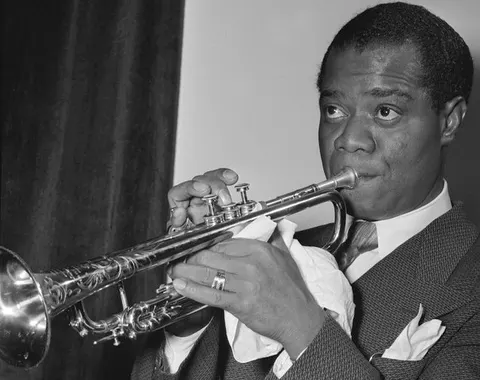
- Louis Armstrong - bandmate in the Henderson orchestra from 1924, and the direct cause of the change from a slap-tongued attack to legato phrasing.
- Henry "Red" Allen - partner on a run of small-group sides for the American Record Corporation's labels in the early 1930s, and again on club and record dates in the 1950s.
- Benny Carter and Django Reinhardt - his companions on the April 1937 Paris session that produced "Crazy Rhythm" and "Honeysuckle Rose"; Hawkins returned the favour on Carter's Further Definitions in November 1961.
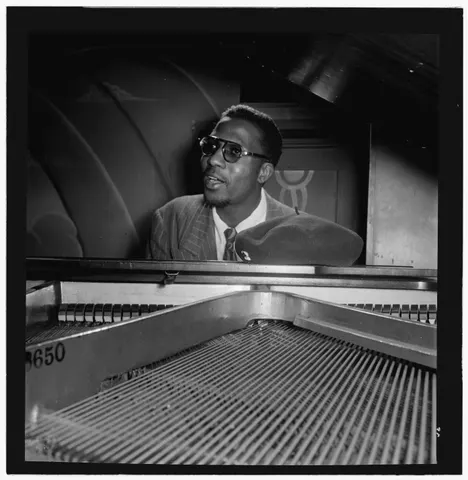
- Thelonious Monk - hired for Hawkins's October 1944 quartet, the pianist's first recordings, and reunited thirteen years later as a guest on Monk's Music.
- Dizzy Gillespie, Don Byas, Clyde Hart, Oscar Pettiford, Max Roach - the band on the February 16, 1944 Apollo date usually named as the first bebop recording session.
- Roy Eldridge - his co-star in a working quintet through the second half of the 1950s, on record at Newport in 1957 and on At the Opera House.
- Ben Webster - his most direct stylistic descendant, and his partner on Coleman Hawkins Encounters Ben Webster (1957) and Webster's own Ben Webster and Associates (1959).
- Tommy Flanagan, Major Holley, Eddie Locke - the working quartet of his 1960s Village Vanguard residencies and of Today and Now, Desafinado and Back in Bean's Bag.
- Sonny Rollins - the younger tenor who had learned from his records, first shared a stage with him at Newport in 1963 and then a studio for Sonny Meets Hawk! that July.
- Abbey Lincoln - the singer whose Straight Ahead (February 1961) he guested on, in the same Candid circle as We Insist!.
- George Duvivier - bassist from early-1940s work through Coleman Hawkins and Confreres (1958), Hawk Eyes (1959), Very Saxy (1959) and the Shelly Manne date 2-3-4 (1962).
- Barry Harris - pianist on his final two leader albums, Wrapped Tight (1965) and Sirius (1966).
- Wikipedia: Coleman Hawkins
- Britannica: Coleman Hawkins
- AllMusic: Coleman Hawkins (biography by Scott Yanow)
- Discogs: Coleman Hawkins (artist 251769)
- Wikipedia: Body and Soul (1930 song)
- Wikipedia: The Jazz Scene
- Wikimedia Commons: Coleman Hawkins photographed by William P. Gottlieb, Library of Congress digital ID gottlieb.03991
- Release-level personnel, catalogue numbers and session dates verified one by one against the live Discogs API.
- Album identities confirmed against the Spotify catalogue: every Spotify link above was matched to a specific album record rather than to a search result.