 JAZZPROFILES lives in the music 1,572 Jazz Artists fully Profiled!
 Archie Shepp
Last updated September 26, 2026
Listen on Spotify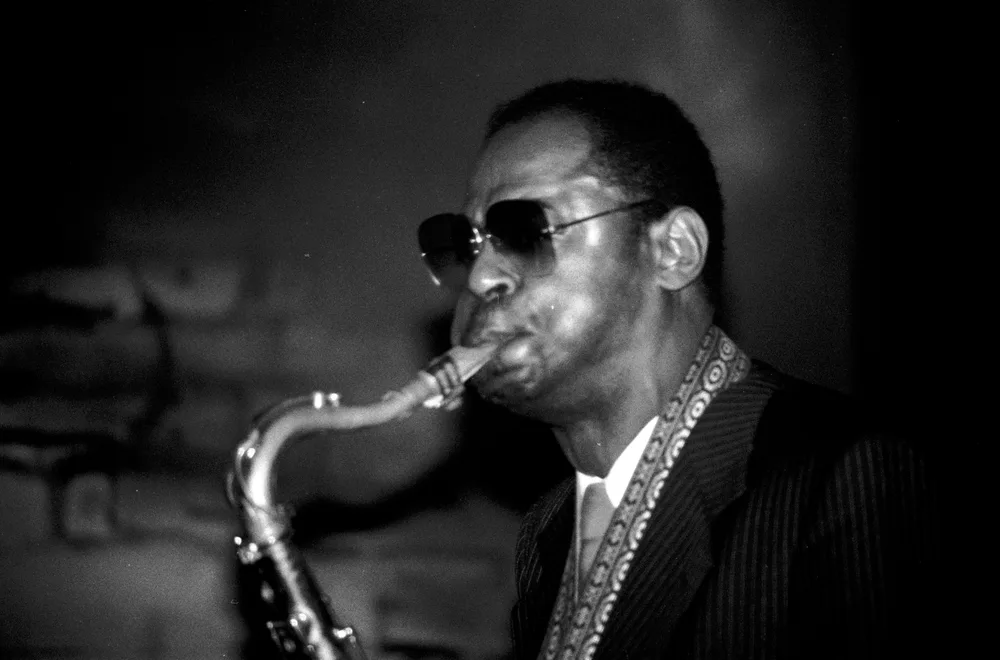
Archie Shepp performing in concert at Plougonven, Brittany, France, 1982. CC BY-SA 2.5 — Wikimedia Commons, https://commons.wikimedia.org/wiki/File:Archie_Shepp022.JPG (photograph by Roland Godefroy)

Archie Vernon Shepp was born May 24, 1937, in Fort Lauderdale, Florida, and raised in Philadelphia, Pennsylvania. He started on banjo, taught by his father, then moved to piano and saxophone while at Germantown High School. From 1955 to 1959 he studied drama at Goddard College in Vermont, a choice that shaped his later double career as a playwright as much as a saxophonist. After graduating he worked in a Latin jazz band before moving toward the emerging New York avant-garde.
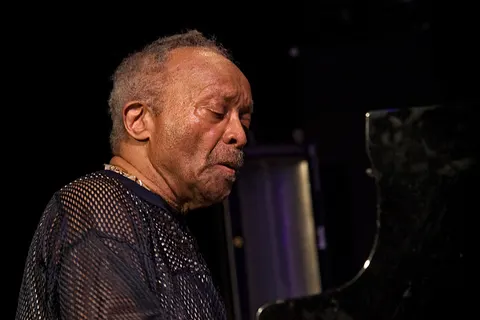
He joined pianist Cecil Taylor's group in the early 1960s, appearing on the October 1960 session issued as The World of Cecil Taylor (Candid, 1961). In 1962 he began performing with trumpeter Bill Dixon, including an appearance together at the 8th World Festival of Youth and Students in Helsinki, and the two co-led his first record under his own name, the Archie Shepp-Bill Dixon Quartet (Savoy, recorded 1962). The following year he co-founded the New York Contemporary Five with alto saxophonist John Tchicai and trumpeter Don Cherry, filled out by bassist Don Moore and drummer J.C. Moses; the group played a celebrated residency at Copenhagen's Jazzhus Montmartre that November before dissolving in the spring of 1964.
John Coltrane's public admiration opened the door to a contract with Impulse! Records, where Shepp recorded through the rest of the 1960s. Four for Trane (recorded August 10, 1964, released January 1965, Impulse! A-71) reworked four Coltrane compositions in arrangements co-written with trombonist Roswell Rudd, alongside Tchicai, Alan Shorter, Reggie Workman, and Charles Moffett. Shepp himself joined John Coltrane's eleven-piece band for the Ascension session on June 28, 1965, alongside saxophonist Pharoah Sanders, and that July Shepp and Coltrane shared the LP New Thing at Newport, each leading one side of the album from the Newport Jazz Festival stage. Fire Music (1965) included "Malcolm, Malcolm - Semper Malcolm," an elegy for Malcolm X written days after his assassination, and marked the sharpening of the political consciousness that would define the rest of the decade. That August 12, drummer Rashied Ali sat in on three tracks of the session that became On This Night (Impulse!, 1965), the record that gave Ali his first significant recording date before Coltrane brought him into his own band later that year.
Shepp's late-1960s records leaned further into Afrocentric material and ensemble color: Mama Too Tight (recorded August 1966, Impulse!) and The Magic of Ju-Ju (recorded April 26, 1967, Impulse!) built extended pieces over African percussion, with Beaver Harris, Norman Connors, and multiple hand-drummers alongside a conventional rhythm section. He was writing for the stage in parallel: his play The Communist was produced in 1965, and Lady Day: A Musical Tragedy, about Billie Holiday, followed in 1972, both staged by Robert Kalfin at the Chelsea Theater Center in Brooklyn. He also began an academic career in the late 1960s, teaching African-American studies at SUNY Buffalo before Randolph Bromery recruited him to the University of Massachusetts Amherst in 1971, where he taught for three decades, starting with courses titled "Revolutionary Concepts in African-American Music" and "The Black Musician in the Theater."
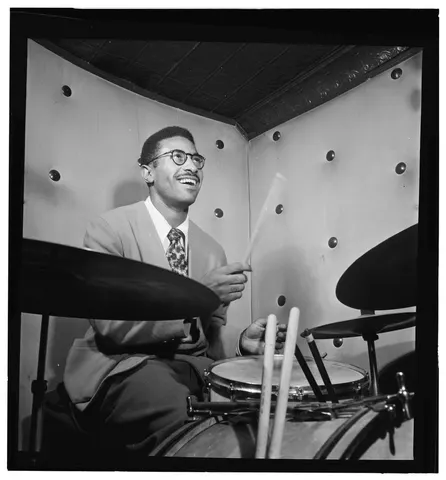
The early 1970s brought Shepp's most ambitious studio project, Attica Blues (recorded January 24-26, 1972, Impulse! AS-9222), a big-band and vocal response to the 1971 Attica Prison uprising built largely on compositions co-written with trumpeter and longtime collaborator Cal Massey. A period recording in Paris for the BYG Actuel label (Yasmina, A Black Woman, Blasé, Poem for Malcolm, all 1969) and further Impulse! dates (The Cry of My People, 1973; Kwanza, 1974) rounded out his most overtly political decade. In 1977 he turned toward the American songbook of spirituals and blues on Goin' Home (recorded April 25, 1977, Copenhagen, SteepleChase), a duo record with pianist Horace Parlan that became one of his best-reviewed albums and the first of several duo collaborations. Two years later he recorded The Long March (live, Willisau Jazz Festival, August 30, 1979) with drummer Max Roach, following an earlier duo encounter documented on Force - Sweet Mao - Suid Afrika 76 (1976); Roach and Shepp, a generation apart, found common ground in their shared political convictions as much as their music.
Shepp spent much of the 1980s and 1990s dividing his time between the United States and Europe, recording tribute records to Charlie Parker and Sidney Bechet, further duo and ballad albums, and continuing to tour internationally while teaching at UMass Amherst until his retirement in the early 2000s. In 2004 he founded his own label, Archieball, in Paris with Monette Berthomier, through which he has continued to release new recordings. He received honorary doctorates from the University of Liège (2009) and Paris 8 University (2014), and in 2016 was named an NEA Jazz Master alongside Pharoah Sanders, Gary Burton, and Wendy Oxenhorn. Shepp continues to compose, perform, and record into his late eighties.
Shepp's tenor sound carries the huge, breathy tone of the swing-era tenor tradition, Ben Webster and Coleman Hawkins by way of Sonny Rollins, pushed into the harmonic and textural extremes of free jazz; critics have long noted the tension in his playing between that rooted, vocalized tone and the "energy music" abrasiveness he helped pioneer alongside John Coltrane and Albert Ayler. His drama training shows directly in the music: extended suites built around spoken word, poetry recitation, and theatrical pacing, most explicitly on Fire Music and Attica Blues, made him one of the most overtly political voices to emerge from the 1960s avant-garde and a central figure of the Black Arts Movement. That combination of tradition and confrontation drew mixed contemporary criticism, some listeners hearing it as a betrayal of "pure" free jazz and others as its natural extension, but it proved widely influential on the generation of politically engaged improvisers, loft-jazz musicians, and saxophonists such as David Murray and Frank Lowe who followed him. His parallel career as a playwright and, later, a three-decade tenure as a professor of African-American studies at the University of Massachusetts Amherst reinforced a reputation as jazz's most explicitly intellectual and pedagogical voice of his generation, one recognized in 2016 with an NEA Jazz Masters fellowship.
- Four for Trane (1964, recorded Aug. 10, 1964; released Jan. 1965, Impulse! A-71) - Shepp's Impulse! debut, reworking four John Coltrane compositions in arrangements co-written with trombonist Roswell Rudd. Spotify - Four For Trane Listen
- Fire Music (1965, Impulse! A-86) - Includes "Malcolm, Malcolm - Semper Malcolm," his elegy for Malcolm X, and the record most associated with his political turn. Spotify - Fire Music Listen
- On This Night (1965, recorded Mar. 9 & Aug. 12, 1965, Impulse! A-97) - The August 12 session gave drummer Rashied Ali his first significant recording date, months before Coltrane hired him. Spotify - On This Night Listen
- The Magic of Ju-Ju (recorded Apr. 26, 1967; released 1968, Impulse! AS-9154) - A single extended title track built over African hand drums and log drums, the high-water mark of his Afrocentric percussion records. Spotify - The Magic Of Ju-Ju Listen
- Mama Too Tight (recorded Aug. 1966; released 1967, Impulse! AS-9134) - AllMusic singles it out as Shepp "at his level best" compositionally. Spotify - Mama Too Tight Listen
- Attica Blues (recorded Jan. 24-26, 1972, Impulse! AS-9222) - A big-band and vocal response to the Attica Prison uprising, co-written largely with trumpeter Cal Massey. Spotify - Attica Blues Listen
- Goin' Home (recorded Apr. 25, 1977, SteepleChase) - A duo record of spirituals and blues with pianist Horace Parlan, one of his most acclaimed later albums. Spotify - Goin' Home Listen
- The Long March (recorded live Aug. 30, 1979, Willisau Jazz Festival, hat Hut) - A duo concert with drummer Max Roach; AllMusic calls it one of the important duet records of the post-bop era. Not currently confirmed on Spotify.
Archie Shepp: Full Discography
Archie Shepp is one of the most prolific bandleaders in this catalog: the live Discogs API lists 172 releases with a "Main" (leader/co-leader) role under his artist ID (10514), spanning six decades, plus 255 further "Appearance" credits and 208 track-level appearances. This file does not attempt exhaustive coverage. It curates the 22 most significant/acclaimed/historically important leader and co-leader releases, plus a representative set of major sideman credits, drawn from Wikipedia, AllMusic, and the Discogs API. The Buy column is always "—" (no affiliate program is set up on this site).
As Leader / Co-Leader
| Album Title | Recording Date(s) | Release Date | Label | Catalog Number | Format(s) | Personnel | Role | Reissue History | Spotify | Buy | Notes |
|---|---|---|---|---|---|---|---|---|---|---|---|
| Archie Shepp-Bill Dixon Quartet | 1962 | 1963 | Savoy | MG-12178 | LP | Bill Dixon (trumpet), Shepp (tenor sax), Don Moore or Reggie Workman (bass), Paul Cohen or Howard McRae (drums, per Discogs, not fully confirmed) | Co-leader | Reissued on CD (Savoy Jazz) | Not confirmed on Spotify | — | Personnel varies by track and is not consistently confirmed across sources. |
| Bill Dixon 7-Tette / Archie Shepp And The New York Contemporary 5 | 1964 | 1964 | Savoy | MG-12184 | LP | Side A: Bill Dixon septet; Side B: Shepp, John Tchicai, Don Cherry, Don Moore, J.C. Moses | Co-leader (split LP) | Not confirmed | Not confirmed on Spotify | — | Split billing; Shepp leads only the New York Contemporary Five side. |
| Four for Trane | Aug. 10, 1964 | Jan. 1965 | Impulse! | A-71 | LP | Shepp (tenor sax), John Tchicai (alto sax), Roswell Rudd (trombone), Alan Shorter (flugelhorn), Reggie Workman (bass), Charles Moffett (drums) | Leader | Reissued on CD/streaming multiple times; revisited on the 2023 ezz-thetics compilation Four For Trane To Live Newport 1965 Revisited | Spotify | — | Four of five tracks are Coltrane compositions, rearranged by Shepp and Rudd. |
| Fire Music | Feb. 16 & Mar. 9, 1965 | Sept. 1965 | Impulse! | A-86 | LP | Shepp, Ted Curson (trumpet), Joseph Orange (trombone), Reggie Johnson / Henry Grimes (bass), Joe Chambers (drums) | Leader | Reissued on CD/streaming; revisited on the 2022 ezz-thetics set with Mama Too Tight | Spotify | — | Includes "Malcolm, Malcolm - Semper Malcolm," an elegy for Malcolm X. |
| New Thing at Newport | Jul. 2, 1965 (live) | 1966 | Impulse! | A-94 | LP | Coltrane side: John Coltrane quartet; Shepp side: Shepp, Barre Phillips, others | Co-billed (split LP with John Coltrane) | Reissued on CD | Not confirmed on Spotify | — | Recorded live at the Newport Jazz Festival; each leader takes one side. |
| On This Night | Mar. 9 & Aug. 12, 1965 | 1965 | Impulse! | A-97 | LP | Shepp; Mar. 9 date with David Izenzon (bass), J.C. Moses (drums); Aug. 12 date adds Bobby Hutcherson (vibraphone), Henry Grimes (bass), Rashied Ali, Joe Chambers, and Ed Blackwell (drums/percussion) | Leader | Reissued on CD | Spotify | — | The Aug. 12 session is Rashied Ali's first significant recording date. |
| Live in San Francisco | 1966 (live) | 1966 | Impulse! | AS-9118 | LP | Shepp quintet, live at Both/And club | Leader | Reissued on CD | Not confirmed on Spotify | — | — |
| Mama Too Tight | Aug. 19, 1966 | Jul. 1967 | Impulse! | AS-9134 | LP | Shepp, Roswell Rudd, Grachan Moncur III (trombones), Charles Davis, Perry Robinson, others | Leader | Reissued on CD; revisited on the 2022 ezz-thetics set with Fire Music | Spotify | — | AllMusic singles this out as a compositional peak. |
| The Magic of Ju-Ju | Apr. 26, 1967 | May 1968 | Impulse! | AS-9154 | LP | Shepp, Martin Banks (trumpet/flugelhorn), Michael Zwerin (trumpet/trombone), Reggie Workman (bass), Beaver Harris and Norman Connors (drums), Frank Charles and Dennis Charles (percussion) | Leader | Reissued on CD; revisited on the 2022 ezz-thetics set with The Way Ahead and Kwanza | Spotify | — | Built around one extended title track over African hand and log drums. |
| Poem for Malcolm | 1969 | 1969 | BYG Actuel | 12 | LP | Shepp and a Paris studio ensemble | Leader | Reissued on CD | Not confirmed on Spotify | — | Recorded during Shepp's 1969 Paris sessions for BYG. |
| Yasmina, A Black Woman | Aug. 1969 | 1969 | BYG Actuel | 6 | LP | Shepp, Alan Shorter, Grachan Moncur III, Sunny Murray, and others | Leader | Reissued on CD; revisited on the 2021 ezz-thetics set Blasé and Yasmina, Revisited | Not confirmed on Spotify | — | — |
| Blasé | Aug. 1969 | 1969 | BYG Actuel | 12 | LP | Shepp, Chicago Beau (vocals/harmonica), others | Leader | Reissued; revisited on the 2021 ezz-thetics set | Not confirmed on Spotify | — | — |
| Attica Blues | Jan. 24-26, 1972 | 1972 | Impulse! | AS-9222 | LP | Big band and vocal ensemble; compositions largely co-written with Cal Massey | Leader | Reissued on CD/streaming multiple times | Spotify | — | A response to the 1971 Attica Prison uprising. |
| The Cry of My People | 1972 | 1973 | Impulse! | Not confirmed | LP | Big band, similar personnel pool to Attica Blues | Leader | Reissued on CD | Not confirmed on Spotify | — | Catalog number not confirmed against Discogs. |
| Kwanza | 1969 & 1972-74 (compiled) | 1974 | Impulse! | Not confirmed | LP | Compiled from multiple sessions | Leader | Revisited on the 2022 ezz-thetics set with The Way Ahead | Not confirmed on Spotify | — | Assembled from earlier unreleased Impulse! sessions. |
| A Sea of Faces | 1975 | 1975 | Black Saint / Freedom | Not confirmed | LP | Shepp quartet | Leader | Reissued 2000 (Mo'Smog Records) | Not confirmed on Spotify | — | — |
| There's a Trumpet in My Soul | Jan. 1975 | 1975 | Arista/Freedom | AL 1023 | LP | Shepp big band, Charles Greenlee (trombone), others | Leader | Reissued on CD | Not confirmed on Spotify | — | — |
| Steam | 1976 | 1976 | Enja | Not confirmed | LP | Shepp quartet | Leader | Reissued on CD | Not confirmed on Spotify | — | — |
| Force - Sweet Mao - Suid Afrika 76 | 1976 | 1976 | Not confirmed | Not confirmed | LP | Shepp and Max Roach (duo) | Co-leader | Not confirmed | Not confirmed on Spotify | — | Duo encounter preceding The Long March. |
| Goin' Home | Apr. 25, 1977 | 1977 | SteepleChase | SCS-1079 | LP | Shepp (tenor sax), Horace Parlan (piano) | Co-leader (duo) | Reissued on CD/streaming | Spotify | — | A program of spirituals and blues; one of Shepp's most acclaimed later records. |
| The Long March | Aug. 30, 1979 (live, Willisau Jazz Festival) | 1980 | hat Hut | Not confirmed | 2LP | Shepp (tenor/soprano sax, piano), Max Roach (drums) | Co-leader (duo) | Reissued 1985 as The Long March (hat ART) | Not confirmed on Spotify | — | AllMusic calls it one of the important duet records of the post-bop era. |
| Duet - Eagle's Flight | c. 1984-85 | 1985 | Not confirmed | Not confirmed | LP | Shepp and a duo partner (not confirmed) | Co-leader (duo) | Not confirmed | Not confirmed on Spotify | — | Personnel and precise date not confirmed. |
| Down Home New York | 1984 | 1984 | Not confirmed | Not confirmed | LP | Shepp quartet | Leader | Not confirmed | Not confirmed on Spotify | — | — |
As Sideman (selected major credits)
| Year | Project (Leader) | Title | Label | Catalog | Role | Notes |
|---|---|---|---|---|---|---|
| 1961 | Cecil Taylor | The World of Cecil Taylor | Candid | 8006 | Tenor saxophone | Recorded October 1960; Shepp's earliest issued recording, joining Taylor's working group. |
| 1961 | Cecil Taylor / Gil Evans | Into the Hot | Impulse! | A-9 | Tenor saxophone, composer | Credited to Gil Evans as a production/contractual arrangement; the material is by Cecil Taylor's and Johnny Carisi's bands, with Shepp appearing (and contributing compositions) on the Taylor side. |
| 1965 | John Coltrane | Ascension | Impulse! | A-95 | Tenor saxophone | Recorded June 28, 1965, in an eleven-piece band that also included Pharoah Sanders; one of two takes issued (Edition I and Edition II). |
| 1965 | Various (live at the Village Gate) | The New Wave in Jazz | Impulse! | A-90 | Tenor saxophone, leader of one track | A various-artists live compilation recorded Mar. 28, 1965, also featuring John Coltrane, Albert Ayler, and Grachan Moncur III. |
| 1976 | Max Roach | Force - Sweet Mao - Suid Afrika 76 | Not confirmed | Not confirmed | Tenor saxophone (duo) | Also listed above as a co-leader credit; Discogs carries it under both artists' Main lists. |
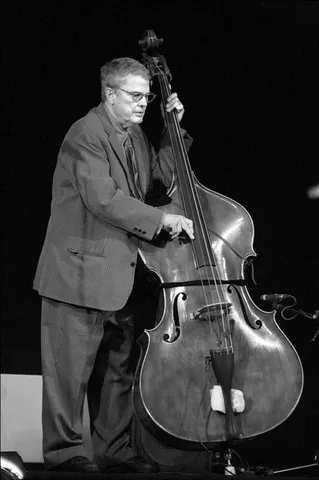
| 1977 | Charlie Haden | The Golden Number | Horizon | SP-727 | Tenor saxophone (duet, "Shepp's Way") | Recorded Dec. 20, 1976; one of four duets on the album, the others pairing Haden with Don Cherry, Hampton Hawes, and Ornette Coleman. |
| 1979 | Max Roach | The Long March | hat Hut | Not confirmed | Tenor/soprano saxophone, piano | Also listed above as a co-leader credit. |
Sources
- Discogs: Archie Shepp (artist 10514)
- Wikipedia: Archie Shepp discography
- AllMusic: Archie Shepp
- Individual album Wikipedia pages cited in
final-profile.md's Sources & References.
- Cecil Taylor - bandleader in the early 1960s; Shepp appears on the October 1960 session issued as The World of Cecil Taylor (1961).
- John Tchicai and Don Cherry - co-founders of the New York Contemporary Five (1963-64).
- Pharoah Sanders - fellow saxophonist in the eleven-piece band for John Coltrane's Ascension session (June 28, 1965).
- Albert Ayler - contemporary and Impulse! labelmate; both appeared on the live various-artists album The New Wave in Jazz (recorded Mar. 28, 1965, at a Village Gate benefit for the Black Arts Repertory Theatre/School).
- Roswell Rudd - co-arranger and trombonist on Four for Trane (1964); a frequent collaborator through the New York avant-garde scene of the mid-1960s.
- John Coltrane - patron who secured Shepp's Impulse! contract; Shepp played on Coltrane's Ascension (1965) and split the LP New Thing at Newport (1965) with him.
- Rashied Ali - drummer on three tracks of On This Night (Aug. 12, 1965), his first significant recording date, months before Ali joined Coltrane's band.
- Cal Massey - trumpeter and composer who co-wrote most of Attica Blues (1972), including "Goodbye Sweet Pops" and "Quiet Dawn."
- Horace Parlan - pianist and duo partner on Goin' Home (1977) and other 1970s-80s duo and small-group dates.
- Max Roach - duo partner on Force - Sweet Mao - Suid Afrika 76 (1976) and the live album The Long March (1979).
- Charlie Haden - duet partner on "Shepp's Way," recorded Dec. 20, 1976, for Charlie Haden's own album The Golden Number (1977).
- Giancarlo Barigozzi (recording engineer) - credited as recording engineer on Little Red Moon (Soul Note SN 1112, 1986), per Discogs.
More Free Jazz Artists
See all 269 Free Jazz artists →More American Jazz Artists
See all 567 American artists →- Wikipedia: Archie Shepp
- Discogs: Archie Shepp
- NEA: Archie Shepp
- Wikipedia: Four for Trane
- Wikipedia: Fire Music (Archie Shepp album)
- Wikipedia: On This Night
- Wikipedia: The Magic of Ju-Ju
- Wikipedia: Mama Too Tight
- Wikipedia: Attica Blues (album)
- Wikipedia: Goin' Home (Archie Shepp and Horace Parlan album)
- Wikipedia: The Long March (album)
- Wikipedia: New York Contemporary Five
- Wikipedia: The Golden Number
- AllMusic: Archie Shepp