 JAZZPROFILES lives in the music 1,572 Jazz Artists fully Profiled!
 Fletcher Henderson
Last updated September 7, 2026
Listen on Spotify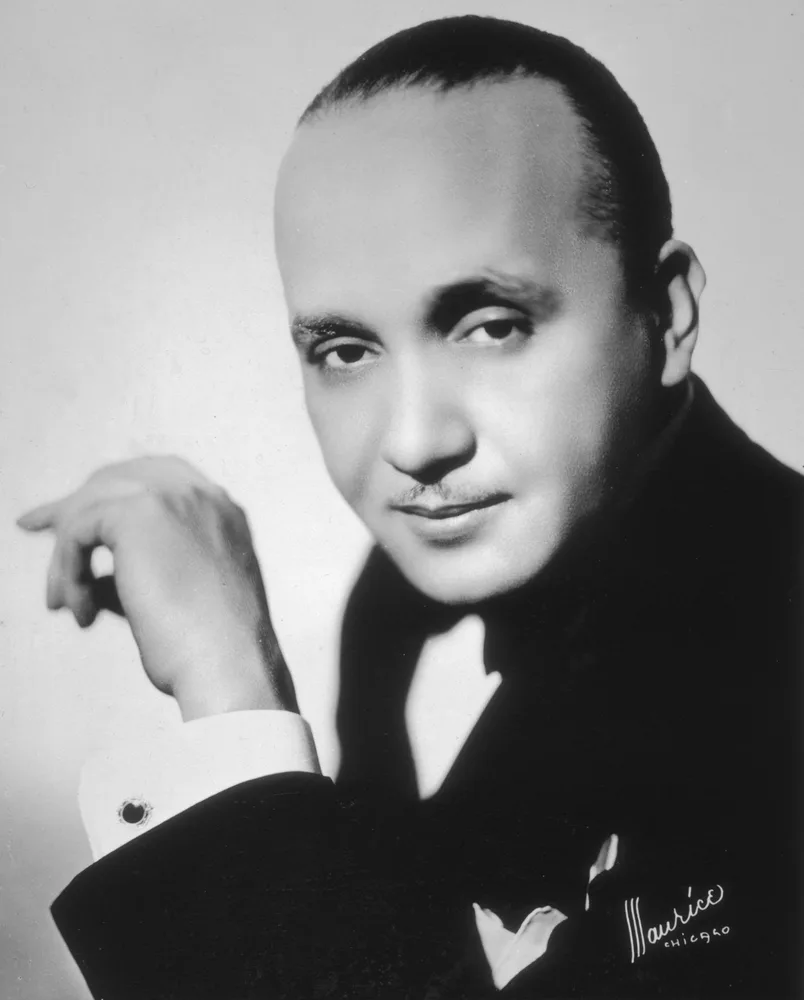
Fletcher Henderson, publicity photo, 1943, by the Maurice Seymour studio (Chicago) Public Domain (published in the United States 1931-1977 without a copyright notice) — Wikimedia Commons — https://commons.wikimedia.org/wiki/File:Fletcher_Henderson_(1943_publicity_photo).jpg
.jpg)
James Fletcher Hamilton Henderson Jr. was born December 18, 1897, in Cuthbert, Georgia, to a school principal father and a piano-teacher mother who started both Fletcher and his younger brother Horace on the instrument by age six. He studied mathematics and chemistry rather than music, earning a bachelor's degree in the two subjects from Atlanta University in 1920. He moved to New York City that year intending to pursue graduate chemistry work at Columbia University, but found only a year of work as a laboratory assistant before taking a job as a song demonstrator for the Pace and Handy Music Company. When Harry Pace spun off Black Swan Records, the first record label owned and operated by African Americans, he made Henderson its musical director from 1921 to 1923, a job that had Henderson accompanying blues singers in the studio and touring with the Black Swan Troubadours behind Ethel Waters from October 1921 to July 1922. In April 1922, while touring through New Orleans, Henderson heard the young Louis Armstrong and tried to hire him; Armstrong turned him down unless Henderson would also take on drummer Zutty Singleton.
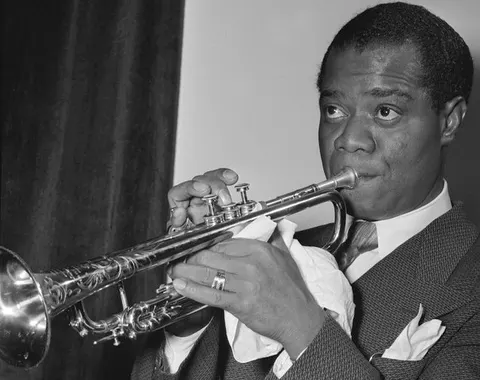
Henderson organized his own recording group in 1923, and in January 1924 it became the house band at the Club Alabam on West 44th Street, his first steady working band. A booking at the Roseland Ballroom that July led him to make Armstrong a second offer, and this time Armstrong accepted, joining the Roseland band on October 13, 1924, and helping turn it into what critics of the day called the best African American dance band in New York. Henderson's musical director and chief arranger through this period was saxophonist Don Redman, who reworked King Oliver's "Dippermouth Blues" into "Sugar Foot Stomp," recorded May 29, 1925, in New York with Armstrong, Joe Smith, and Elmer Chambers on trumpets, Charlie Green on trombone, Buster Bailey and Redman on reeds, Coleman Hawkins on tenor saxophone, and Kaiser Marshall on drums. Armstrong stayed only about a year, chafing at the band's written arrangements and its more genteel New York manners, and left in November 1925 to return to Chicago.
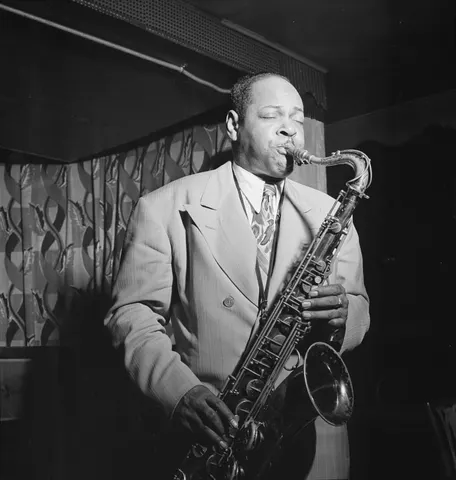
Through the second half of the 1920s Henderson's orchestra recorded prolifically, sometimes under his own name and sometimes under aliases such as the Dixie Stompers or Connie's Inn Orchestra to satisfy competing record labels; Discogs credits the Fletcher Henderson artist entry across more than 2,000 releases issued under upward of two dozen different billing names. Coleman Hawkins anchored the tenor chair from 1923 until 1934, the longest tenure of any Henderson sideman, while cornetist Rex Stewart, trumpeter Tommy Ladnier, trombonist Jimmy Harrison, and drummer Kaiser Marshall passed through the band across these years, and Redman's 1926 arrangement of "The Stampede" became one of the orchestra's most celebrated instrumentals. A 1928 car accident injured Henderson's shoulder, an event his wife Leora later blamed for a slackening of his business discipline, and after Redman left in 1927 Henderson took on more of the arranging himself, sharing the load from 1930 to 1931 with saxophonist Benny Carter and buying additional charts from freelance arrangers including John Nesbitt. The Depression hit the band hard: despite popularity at Harlem's Roseland and Savoy ballrooms, Henderson struggled with money and management and repeatedly lost sidemen to better-paying rivals.
Henderson's own arranging matured fully in the early 1930s, built on the sectional call-and-response he and Redman had pioneered, dividing the band into brass and reed choirs that traded riffs behind soloists such as Hawkins, Red Allen, Roy Eldridge, Chu Berry, and Ben Webster. "Down South Camp Meetin'" and "Wrappin' It Up," both recorded for Decca on September 11, 1934, and "Christopher Columbus," recorded March 27, 1936, in Chicago from a Chu Berry riff arranged by Horace Henderson, all rank among the finest documents of this mature style. By 1934, with his own band in financial trouble, Henderson began selling arrangements to clarinetist Benny Goodman at the urging of Goodman's brother-in-law and talent scout John Hammond, who needed fresh charts for Goodman's spot on NBC's "Let's Dance" broadcast. Henderson often transcribed the charts from his own band's recordings, sometimes with Horace's help meeting Goodman's demand for new material every week; Goodman's August 21, 1935, engagement at the Palomar Ballroom in Los Angeles, built substantially on Henderson arrangements including "King Porter Stomp," is commonly cited as the moment the Swing Era began in the popular imagination, and Goodman himself always credited Henderson for the material.
Henderson disbanded his own orchestra in 1939 and joined Goodman's organization directly as staff pianist and arranger, a role he held into the early 1940s even as he continued periodically reassembling bands of his own in New York, Chicago, and Los Angeles. During a mid-1940s engagement at Chicago's Club DeLisa, Henderson employed a young Sun Ra as an arranger. He toured with Ethel Waters again in 1948 and 1949, and his last working unit was a sextet that played New York's Cafe Society. A stroke in December 1950 paralyzed him partially and ended his performing career for good. Fletcher Henderson died in New York City on December 29, 1952, eleven days after his fifty-fifth birthday.
Working first alongside Don Redman and then largely on his own, Henderson built the basic architecture of big-band swing: a rhythm section of piano, bass, guitar, and drums supporting brass and reed sections that answered each other in call-and-response riffs behind soloists, rather than the collectively improvised front line of New Orleans jazz. Trumpeter Louis Metcalf recalled that "the sight of Fletcher Henderson's men playing behind music stands brought on a learning-to-read-music kick in Harlem which hadn't cared before it," crediting the band with spreading music literacy through the scene. Henderson's orchestra also functioned as a finishing school for major soloists, passing Louis Armstrong, Coleman Hawkins, Benny Carter, Roy Eldridge, and Chu Berry through its ranks over three decades. His arrangements, sold to and performed by Benny Goodman from 1934 onward, supplied much of the musical DNA of the swing era's commercial breakthrough, and historians rank Henderson alongside Duke Ellington as one of the two most consequential bandleader-arrangers of the pre-swing and swing periods, even though Henderson's own band never achieved comparable commercial success.
- "Sugar Foot Stomp" (1925, Columbia) - Don Redman's reworking of King Oliver's "Dippermouth Blues," recorded May 29, 1925, with Louis Armstrong on trumpet; a landmark early transition from collective New Orleans polyphony toward solo-driven big-band swing.
- "The Stampede" (1926, Columbia) - A Redman-arranged showcase for Rex Stewart and Coleman Hawkins, widely cited as one of the era's most exciting big-band instrumentals.
- "King Porter Stomp" (1933, Brunswick) - Henderson's own recording of the Jelly Roll Morton standard, the arrangement he later sold to Benny Goodman for the version that helped ignite the swing era in 1935.
- "Down South Camp Meetin'" / "Wrappin' It Up" (1934, Decca) - Twin September 11, 1934, sides representing Henderson's mature arranging style at its peak; both became hits again a year later in Goodman's hands.
- "Christopher Columbus" (1936, Vocalion) - A Chu Berry riff arranged by Horace Henderson, later interpolated into Goodman's "Sing, Sing, Sing."
- The Fletcher Henderson Story: A Study in Frustration (1961, Columbia; expanded 1994 reissue) - The essential 64-track (74 on the expanded CD) retrospective assembled by John Hammond and Frank Driggs from Henderson's 1923-1938 studio work, the release most responsible for restoring his reputation after his death. Spotify - The Fletcher Henderson Story Listen
Fletcher Henderson: Full Discography
Identity confirmed via the live Discogs API: artist ID 307323, "Fletcher Henderson," realname Fletcher Hamilton Henderson Jr., born/died dates matching, brother-of-Horace-Henderson relationship confirmed. Henderson's recording career (1921-1941) predates the LP album format entirely: Discogs credits over 2,050 individual release entries against the Fletcher Henderson name and its many recording aliases (Henderson's Dance Orchestra, Henderson's Dance Players, Fletcher Henderson and His Orchestra, the Dixie Stompers, Connie's Inn Orchestra, the Louisiana Stompers, and more, used interchangeably across competing 1920s-30s labels for contractual reasons). It is neither possible nor useful to itemize that catalog exhaustively here. The table below curates his most historically significant original 78rpm sides (as leader) plus the essential compilation reissues that document his work, and a representative set of his significant "sideman" appearances (mainly his 1939-1942 tenure inside Benny Goodman's organization and his early-1920s work accompanying blues singers). Recording/session data for the individual 1920s-30s sides is drawn from Discogs, Wikipedia, and the Discography of American Historical Recordings (DAHR) project; where a specific detail could not be independently confirmed, that is noted rather than guessed.
As Leader / Co-Leader
| Album Title | Recording Date(s) | Release Date | Label | Catalog Number | Format(s) | Personnel | Role | Reissue History | Spotify | Buy | Notes |
|---|---|---|---|---|---|---|---|---|---|---|---|
| Sugar Foot Stomp / What-Cha-Call-'Em Blues | Recorded May 29, 1925, New York City | 1925 | Columbia | 395-D | Shellac, 10", 78 RPM | Fletcher Henderson (piano, arr.), Louis Armstrong, Elmer Chambers, Joe Smith (trumpet), Charlie Green (trombone), Buster Bailey, Don Redman (clarinet/alto sax), Coleman Hawkins (tenor sax/clarinet), Charlie Dixon (banjo), Ralph Escudero (bass), Kaiser Marshall (drums) | Leader | Reissued on numerous compilations including A Study in Frustration | Spotify - Sugar Foot Stomp | — | Don Redman's arrangement of King Oliver's "Dippermouth Blues"; a landmark early solo-driven big-band side |
| The Stampede | Recorded May 14, 1926, New York City | 1926 | Columbia | 654-D | Shellac, 10", 78 RPM | Fletcher Henderson and His Orchestra, featuring Rex Stewart (cornet) and Coleman Hawkins (tenor sax) | Leader | Reissued on A Study in Frustration and Classics Chronological series | Not confirmed as an individually findable Spotify track | — | Don Redman arrangement; one of the most acclaimed instrumentals of the mid-1920s edition of the band |
| King Porter Stomp | Recorded August 18, 1933, New York City | 1933 | Brunswick | A-9771 | Shellac, 10", 78 RPM | Fletcher Henderson and His Orchestra | Leader | Reissued on A Study in Frustration and Classics Chronological series | Not confirmed as an individually findable Spotify track | — | Henderson also recorded this Jelly Roll Morton standard in 1928 (Columbia) and 1932 (Okeh); this 1933 version is the arrangement he later sold to Benny Goodman |
| Down South Camp Meetin' / Wrappin' It Up | Recorded September 11, 1934, New York City | 1934 | Decca | 157 | Shellac, 10", 78 RPM | Fletcher Henderson and His Orchestra, featuring Hilton Jefferson and Henry "Red" Allen | Leader | Reissued on A Study in Frustration, later Decca "Swing's the Thing" compilations, and Classics Chronological series | Not confirmed as an individually findable Spotify track | — | Both sides became hits again in 1935-1936 in Benny Goodman's recordings of the same Henderson arrangements |
| Christopher Columbus / Blue Lou | Recorded March 27, 1936, Chicago | 1936 | Vocalion | 3211 | Shellac, 10", 78 RPM | Fletcher Henderson and His Orchestra: Dick Vance, Joe Thomas, Roy Eldridge (trumpet), Ed Cuffee, Fernando Arbello (trombone), Elmer Williams, Leon "Chu" Berry (tenor sax), Horace Henderson (piano, arr.), Bob Lessey (guitar), John Kirby (bass), Sidney Catlett (drums) | Leader | Reissued on Classics Chronological series | Not confirmed as an individually findable Spotify track | — | Theme by Chu Berry, arranged by Horace Henderson; later interpolated into Benny Goodman's "Sing, Sing, Sing" |
| Fletcher Henderson and His Orchestra: The Chronological Classics (multi-volume series covering 1924-1938) | Various sessions, 1924-1938 | Reissued 1990s | Classics Records (France) | Multiple volumes; individual catalog numbers not independently confirmed | CD, Compilation | Full working personnel of each period edition of the orchestra | Leader | Original 1990s Classics CD issues; label ceased operations 2008 | Not confirmed on Spotify | — | Scholarly, session-by-session chronological reissue series covering nearly Henderson's entire studio output; the standard reference discography for specialists, though not itemized volume-by-volume here |
| The Fletcher Henderson Story: A Study in Frustration | Recorded August 9, 1923 - May 28, 1938, various New York/Chicago studios | 1961 (LP box); expanded 1994 (CD box) | Columbia | CXK 85470 (1961); CD reissue adds 10 bonus tracks (64 to 74 total) | Vinyl, 4xLP box (1961); CD, 3xCD box (1994) | Various editions of the Henderson orchestra across the full period; produced by Frank Driggs, compiled and annotated by John Hammond | Leader (compilation) | 1994 Columbia/Legacy 3-CD expanded reissue | Spotify - The Fletcher Henderson Story | — | The essential retrospective; assembled after Henderson's death to restore his reputation, and still the standard single-set introduction to his catalog |
| Ken Burns Jazz: Fletcher Henderson | Recorded 1924-1940, various sessions | 2000 | Sony/Legacy / Verve | Part of the Ken Burns Jazz reissue series | CD, Compilation | Various editions of the orchestra | Leader (compilation) | None found | Not confirmed on Spotify as a distinct album | — | 25-track single-disc career overview tied to Ken Burns's 2001 "Jazz" documentary series |
As Sideman (selected major credits)
| Year | Project (Leader) | Title | Label | Catalog | Role | Notes |
|---|---|---|---|---|---|---|
| 1921-1923 | Black Swan Records house sessions (various blues singers, including Ethel Waters) | Various Black Swan sides | Black Swan Records | Various | Piano, musical director | Henderson served as Black Swan's staff musical director and studio pianist; exact session-by-session credits not itemized here |
| 1923-1925 | Bessie Smith | Various early Columbia sides | Columbia | Various | Piano | Henderson accompanied Bessie Smith on a number of her earliest Columbia recordings; billed on some issues as "Bessie Smith and Her Band" or "Bessie Smith and Her Blue Boys" |
| 1939-1942 | Benny Goodman and His Orchestra | Various Columbia/OKeh sides and broadcasts | Columbia / OKeh | Various | Piano, staff arranger | Henderson disbanded his own orchestra in 1939 and worked directly inside Goodman's band as pianist and arranger into the early 1940s |
| 1948-1949 | Ethel Waters | Tour dates (not a studio album) | — | — | Piano, musical director | Henderson toured as Waters's accompanist/musical director, a reunion of their 1921-1922 Black Swan Troubadours partnership |
Henderson's Discogs catalog under his own name and roughly two dozen recording aliases spans 1921 to the early 1950s and includes hundreds of further 1920s-1930s sides not itemized here, along with the extensive alternate-take and broadcast-transcription material collected on specialist labels (Hep, Retrieval, Jazz Oracle) since his death.
- Don Redman - chief arranger and saxophonist, 1923-1927; co-architect with Henderson of the sectional, call-and-response big-band style that defined swing.
- Louis Armstrong - trumpet soloist, October 1924 to November 1925; his hiring transformed the band from a dance orchestra into a hot jazz ensemble and helped shift jazz's center of gravity from Chicago to New York.
- Coleman Hawkins - tenor saxophonist, 1923-1934, Henderson's longest-serving sideman and the player most responsible for establishing the tenor saxophone as a solo voice in jazz.
- Benny Carter - saxophonist and co-arranger, 1930-1931, Redman's successor in shaping the band's book.
- Benny Goodman - purchased and performed dozens of Henderson's arrangements from 1934 onward, including "King Porter Stomp," "Down South Camp Meetin'," and "Wrappin' It Up"; Henderson joined Goodman's organization directly as staff pianist and arranger from 1939 into the early 1940s.
- Ethel Waters - Henderson served as musical director and accompanist for her Black Swan Troubadours tour, 1921-1922, and toured with her again in 1948-1949.
- Horace Henderson - younger brother, pianist and arranger who assisted with Henderson's charts during the Goodman "Let's Dance" period and arranged "Christopher Columbus" from a Chu Berry theme.
- Rex Stewart, Red Allen, Roy Eldridge, Chu Berry, Ben Webster, Jimmy Harrison - among the significant soloists who passed through the Henderson orchestra across its various editions from the mid-1920s through the 1930s.