 JAZZPROFILES lives in the music 1,572 Jazz Artists fully Profiled!
 Sun Ra
Last updated September 26, 2026
Listen on Spotify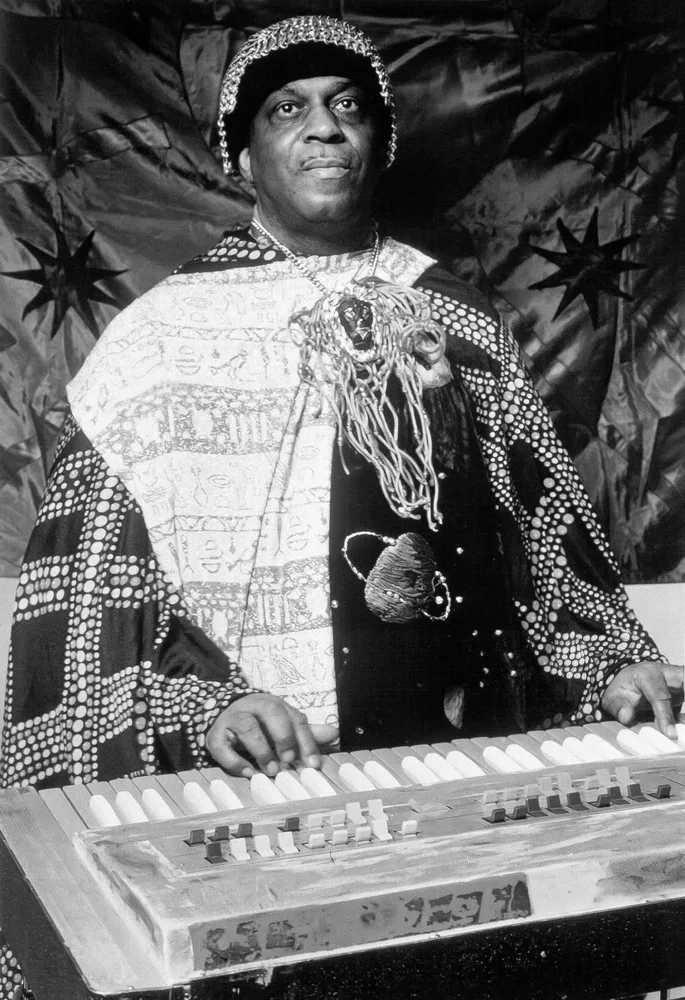
Sun Ra seated at a Farfisa Professional 222 combo organ, 1973. Distributed by Impulse! Records and ABC/Dunhill Records as a publicity photo in the press kit for that year's Impulse! reissue of *The Magic City*. An alternate color portrait from the same session was used for the cover of *Astro Black* (Impulse!, 1973). Public Domain (published in the United States between 1931 and 1977 without a copyright notice; see the Commons file page for the full rationale) — Wikimedia Commons - https://commons.wikimedia.org/wiki/File:Sun_Ra_(1973_publicity_photo_-_Impulse_ABC_Dunhill).jpg
.jpg)
He was born Herman Poole Blount in Birmingham, Alabama, on May 22, 1914, and named after the touring stage magician Black Herman. His family called him Sonny. He could sight-read and compose by age eleven, absorbed the touring bands of Fletcher Henderson, Duke Ellington, and Fats Waller when they came through town, and taught himself to transcribe entire big-band arrangements from memory. At Birmingham's segregated Industrial High School he studied under John T. "Fess" Whatley, the music teacher who trained a generation of Alabama players. In 1934 his former biology teacher, the singer Ethel Harper, put him to work in her band; when she left for New York he took it over and renamed it the Sonny Blount Orchestra. A scholarship took him to Alabama Agricultural and Mechanical University in 1936, but he left after one year. He later described the reason as a visionary experience in which he was transported to Saturn and instructed to abandon college and speak to the world through music. He recounted that account consistently for the rest of his life and treated Saturn, not Alabama, as his origin.
Drafted in October 1942, Blount declared himself a conscientious objector on religious grounds and because he was supporting his great-aunt Ida. He failed to report to the Civilian Public Service camp assigned to him in Pennsylvania, was arrested in Alabama that December, and spent time in the Walker County jail before his objector status was reaffirmed in February 1943. He was reclassified 4-F in March 1943 on account of a hernia and returned to Birmingham. After his great-aunt's death he joined the Second Great Migration and moved to Chicago in 1945. His recording debut came the following year backing the blues shouter Wynonie Harris on "Dig This Boogie." In August 1946 he began a long engagement at the Club DeLisa as pianist and arranger for Fletcher Henderson, the man whose records he had studied as a boy, and in 1948 he worked briefly in a trio with Coleman Hawkins and the violinist Stuff Smith. Away from the bandstand he joined a study circle that printed and handed out broadsheets on Black history, biblical etymology, and Egyptology in Washington Park. On October 20, 1952, he legally changed his name to Le Sony'r Ra, shortened in practice to Sun Ra, after the Egyptian sun god. He rejected Herman Blount as a slave name and refused for the rest of his life to answer to it.
The band that became the Arkestra assembled in Chicago over the next few years. Tenor saxophonist John Gilmore joined in 1954 and stayed, apart from one break, for four decades. Alto saxophonist Marshall Allen arrived in 1957 and has led the band since 1995. Baritone saxophonist Pat Patrick, bassist Ronnie Boykins, drummer and tape engineer Tommy "Bugs" Hunter, trombonist Julian Priester, and saxophonist Pharoah Sanders all passed through. In the mid-1950s Ra founded the independent El Saturn label with Alton Abraham, a young Chicagoan who became his de facto business manager, booking agent, and archivist. Saturn pressed records in runs as small as seventy-five copies, sold them at gigs and by mail order, and often left off dates, personnel, and even song titles. The first commercially distributed album, Jazz by Sun Ra (later retitled Sun Song), was cut for Tom Wilson's Transition Records on a date the first pressing's label gives as 07-12-56. Super-Sonic Jazz followed in 1957 as Saturn's first LP, and Jazz in Silhouette, recorded in a single Chicago session on March 6, 1959, remains the most admired record of the Chicago years. Around the same time the band adopted the Egyptian robes, sequins, and headdresses that would become inseparable from the music.
Ra moved the Arkestra to New York in the fall of 1961, where the members lived communally so that rehearsals could start at any hour. The Futuristic Sounds of Sun Ra, recorded October 10, 1961 and supervised again by Tom Wilson, came out on Savoy in 1962. In October 1964 he took part in the October Revolution in Jazz, the four-day series at the Cellar Café organized by Bill Dixon that announced the New York avant-garde, and he became a founding member of the Jazz Composers Guild alongside Cecil Taylor, Archie Shepp, Roswell Rudd, and Paul Bley. ESP-Disk issued The Heliocentric Worlds of Sun Ra, Volume One in 1965 and Volume Two the following year, and Saturn released The Magic City, named for Birmingham's own nickname, in 1966. In March 1966 the Arkestra took a Monday-night residency at Slug's Saloon on East 3rd Street that ran regularly for roughly eighteen months and intermittently for five more years, drawing an audience of beat and psychedelic-era listeners along with a share of hecklers. Dizzy Gillespie told him to keep going. Thelonious Monk, hearing the complaint that Ra was too far out, answered that it swung anyway.
When the New York building the band rented was sold in 1968, Ra relocated to a rowhouse on Morton Street in the Germantown section of Philadelphia. It served as the Arkestra's home, rehearsal room, and archive until his death, and was added to the Philadelphia Register of Historic Places in 2022. The band's public profile grew fast: a first West Coast tour in late 1968 with a stage show of twenty to thirty musicians, dancers, singers, and fire-eaters; the cover of Rolling Stone on April 19, 1969; and from 1970 onward near-annual European touring, including the Fondation Maeght nights at Saint-Paul-de-Vence in August 1970 and the Donaueschingen and Berlin festivals that produced It's After the End of the World. In 1971 he served as artist-in-residence at the University of California, Berkeley, teaching a course titled "The Black Man in the Cosmos" whose reading list ran from Egyptian hieroglyphics to the Book of Oahspe, and travelled through Egypt with the Arkestra at the invitation of the drummer Salah Ragab. A distribution deal with Impulse! put a run of Saturn titles into national record stores between 1973 and 1975, among them Jazz in Silhouette, The Magic City, Atlantis, and Fate in a Pleasant Mood, and added two new albums, Astro Black and Pathways to Unknown Worlds. The Afrofuturist feature film Space Is the Place, written by Ra with Joshua Smith and directed by John Coney, was shot in the Bay Area in 1972 and released in 1974.
The last fifteen years brought wider recognition without much softening of the music. The Arkestra played the avant-garde Squat Theatre on West 23rd Street as a house band from the fall of 1979, appeared on Saturday Night Live on May 20, 1978, and worked steadily on European festival stages while Ra kept issuing Saturn LPs in hand-decorated sleeves out of the back of the club. The National Endowment for the Arts named him an NEA Jazz Master in 1982. Late in the decade he recorded a run of well-distributed studio albums: Reflections in Blue and Hours After for Italy's Black Saint, Blue Delight and Purple Night for A&M's Modern Masters Jazz Series, and Mayan Temples for Black Saint again, several of them featuring Don Cherry on pocket trumpet and the singer and violinist June Tyson. He also built a repertoire of Walt Disney songs into the show and recorded "Pink Elephants on Parade" for Hal Willner's 1988 tribute album Stay Awake. A stroke in 1990 slowed but did not stop him, and he handed leadership to John Gilmore when he was too ill to travel. In late 1992 he returned to Birmingham to live with his sister Mary Jenkins, entered Princeton Baptist Medical Center in January 1993 with congestive heart failure, and passed away there on May 30, 1993, at 79. He is buried at Elmwood Cemetery in Birmingham under a footstone reading "Herman Sonny Blount aka Le Sony'r Ra." Gilmore led the Arkestra until his own death in 1995, after which Marshall Allen took over; the band has toured and recorded continuously ever since and earned its first Grammy nomination, for the 2020 album Swirling, more than sixty years after its founding.
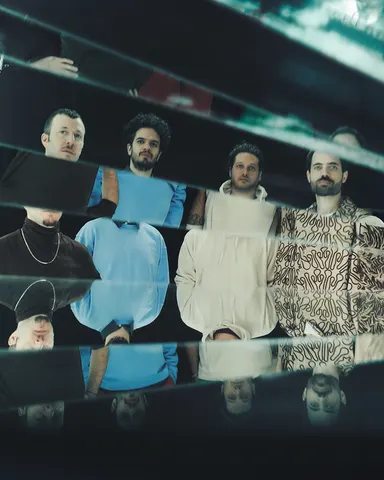
Sun Ra spent his entire career refusing the choice between tradition and rupture. He wrote and voiced for a large ensemble the way a swing-era arranger would, keeping Fletcher Henderson's section writing and Duke Ellington's ear for individual tone colors audible inside music that also included collectively improvised noise, tape delay, hand-built percussion, and some of the earliest jazz use of electronic keyboards. He was recording on Wurlitzer electric piano, Hohner Clavinet, and Moog synthesizer years before those instruments became commonplace, and he treated the recording studio itself as an instrument: Art Forms of Dimensions Tomorrow was built around a feedback-and-reverb technique the Arkestra's drummer Tommy Hunter stumbled on while testing a tape machine. His writing ranged from straight blues and standards to the twenty-seven-minute title improvisation on The Magic City, and he insisted on both being the same body of work. He kept his musicians on a communal discipline of daily rehearsal and no drugs, which is why an ensemble of that size could play material this loose without falling apart. The cosmology, the robes, the Saturn origin story, and the endless printed aphorisms were not a costume laid over the music but the frame he built it in, and they made him the founding figure of what later got called Afrofuturism. The spiritual-jazz strain that runs through John Coltrane's final years, Alice Coltrane, and Pharoah Sanders drew on his example, as did the free-jazz circle around Albert Ayler and Cecil Taylor, the artist-run label economics of the 1960s loft scene, and successive waves of experimental musicians from Chicago's AACM to contemporary bands like Apifera in Tel Aviv.
- Jazz in Silhouette (rec. March 6, 1959, rel. 1959, El Saturn) - The peak of the Chicago Arkestra, cut in one session with Hobart Dotson, Julian Priester, John Gilmore, Marshall Allen, Pat Patrick, and Ronnie Boykins, and the record most often named as the best entry point to Sun Ra. Spotify - Jazz in Silhouette Listen
- The Heliocentric Worlds of Sun Ra, Volume One (1965, ESP-Disk) - The album that broke openly with conventional melody and harmony, twelve players moving through short abstract pieces without a continuous beat. Spotify - The Heliocentric Worlds of Sun Ra, vols. 1-3 Listen
- The Magic City (rec. 1965, rel. 1966, Saturn Research) - Named for Birmingham's civic nickname; the title track is a twenty-seven-minute collective improvisation widely regarded as his single most ambitious statement. Spotify - The Magic City Listen
- Jazz by Sun Ra / Sun Song (rec. 1956, rel. 1957, Transition) - The debut, produced by Tom Wilson, showing the early Arkestra as a hard-swinging Chicago big band with unusual instrumentation and Ra's writing already unmistakable. Spotify - Jazz by Sun Ra Listen
- Atlantis (rec. 1967-1969, rel. 1969, Saturn Research) - Built around the Hohner Clavinet Ra called the Solar Sound Instrument; the side-long title piece, taped at the Olatunji Center of African Culture, became the template for the Arkestra's 1970s concerts. Spotify - Atlantis Listen
- Space Is the Place (rec. 1972, rel. 1973, Blue Thumb) - The most widely heard Arkestra album, a full-scale twenty-plus-piece production with June Tyson's vocals and Ra on Moog, sharing its title with the 1974 Afrofuturist film. Spotify - Space Is the Place Listen
- Lanquidity (1978, Philly Jazz) - The most groove-oriented record in the catalog, cut in New York with electric bass, two guitars, and Michael Ray and Eddie Gale on trumpets, and the one most often picked up outside the jazz audience. Spotify - Lanquidity (Definitive Edition) Listen
- Blue Delight (rec. December 5, 1988, rel. 1989, A&M) - A nineteen-piece late-career date for a major label, the first record of a short deal with A&M's Modern Masters Jazz Series, drawing together current Arkestra members and veterans. Spotify - Blue Delight Listen
Sun Ra: Full Discography
Scope of this document (read first)
Sun Ra's discography is one of the largest in recorded music and one of the least tractable. Discogs credits him on 1,221 releases (197 in a "Main" leader role, 695 sideman "Appearance" credits, 172 track-level credits, 102 unofficial releases, and 53 producer credits) under artist ID 35328, and that figure keeps growing as archival tapes surface. An exhaustive release-by-release listing is not attainable here and would not be honest to attempt.
What this file covers: the canonically important albums released under Sun Ra's own name, from the 1956 Transition debut through the posthumously issued Rounder and Enja titles, plus a selected set of sideman, collaborative, and non-Arkestra credits. Roughly fifty leader titles are itemized below, chosen because they recur across every serious survey of his work: the Transition and Delmark Chicago sides, the core El Saturn LPs, the ESP-Disk and Impulse! titles, the European festival documents, the Horo, Philly Jazz, hat Hut, Black Saint, A&M, Rounder, Leo, and Enja dates, and the two 12-inch singles that reached a rock audience.
What this file does not cover: the full El Saturn catalog (well over a hundred LPs and dozens of 7-inch singles, many issued in runs of seventy-five copies or fewer); the Saturn-backed doo-wop and R&B singles the Arkestra cut as a hire band in Chicago; the hundreds of posthumous archival releases on Evidence, Art Yard, Atavistic, Corbett vs. Dempsey, Strut, Modern Harmonic, Transparency, and the Sun Ra LLC / Enterplanetary Koncepts digital reissue program; bootlegs; or compilations.
The El Saturn cataloguing problem. El Saturn Records, founded in the mid-1950s by Sun Ra with Alton Abraham, is the reason a definitive Sun Ra discography is so hard to build. Saturn LPs were pressed in tiny runs, frequently sold hand-decorated at concerts or by mail order, and typically carried little or no information about performers, recording dates, or sometimes even the titles of the songs. Catalog numbers were assigned unsystematically and occasionally reused. It was common for one side of an LP to come from one decade and the other side from another, and titles and sleeve art were changed between pressings of the same record (Interstellar Low Ways began life as Rocket Number Nine; The Nubians of Plutonia began as The Lady with the Golden Stockings; Super-Sonic Jazz was retitled Super-Sonic Sounds for its 1974 Impulse! reissue). Discogs's own year field reflects this: it dates the Jazz in Silhouette "master" to 2011 and Live at Montreux to no year at all. Where this file gives a date, it comes from the album's own documentation or from Wikipedia's Sun Ra discography; where sources conflict, the Notes column says so.
Standard references: Robert L. Campbell and Christopher Trent, The Earthly Recordings of Sun Ra, 2nd edition (Cadence Jazz Books, 2000), is the authoritative discography and the source everything else derives from. For release-level detail, the Discogs artist page is the most complete public listing.
Personnel column: verified against Discogs release credits where a credited pressing exists. Many original Saturn sleeves listed no personnel at all; those rows say so rather than guessing.
Buy column: always a dash. No affiliate program is set up for this site.
As Leader / Co-Leader (curated)
| Album Title | Recording Date(s) | Release Date | Label | Catalog Number | Format(s) | Personnel | Role | Reissue History | Spotify | Buy | Notes |
|---|---|---|---|---|---|---|---|---|---|---|---|
| Jazz by Sun Ra (later Sun Song) | July 12, 1956 (per first-pressing label, "07-12-56"), Chicago | 1957 | Transition Records | TRLP 10 (commonly cited as TRLP J-10) | Vinyl, LP, Album, Mono | Sun Ra (piano, Hammond organ), Art Hoyle and David Young (trumpet, bells), Julian Priester (trombone, cathedral chimes), James Scales (alto sax), John Gilmore (tenor sax, wood block), Pat Patrick (baritone sax, Indian bells), Richard Evans (bass), Wilburn Green (electric bass, tambourine), Robert Barry (drums, bells), Jim Herndon (timpani, timbales, bells) | Leader | Transition catalog bought by Delmark; reissued 1967 as Sun Song; Evidence CD; 2014 Enterplanetary Koncepts digital remaster | Spotify - Jazz by Sun Ra | — | The commercial debut. Produced by Tom Wilson. Original issue came with an extensive booklet of Sun Ra's words and photos |
| Sound of Joy | Late 1956, Chicago | 1968 | Delmark Records | DS-414 | Vinyl, LP, Album | Sun Ra (piano, electric piano), Art Hoyle and David Young (trumpet), Pat Patrick (alto and baritone sax), Charles Davis (baritone sax), John Gilmore (tenor sax), Victor Sproles (bass), William Cochran (drums), Jim Herndon (timpani, timbales); supervised by Tom Wilson | Leader | BYG (France) LP; Delmark CD and digital | Spotify - Sound of Joy | — | Intended as the Transition follow-up but shelved when the label folded; not issued until Delmark released it twelve years later. Documents the lineup after Julian Priester left for Lionel Hampton |
| Super-Sonic Jazz | 1956, RCA Studios, Chicago | 1957 | El Saturn Records | SR-LP-0216 | Vinyl, LP, Album | Core Chicago Arkestra; no personnel printed on the original Saturn sleeve | Leader | Reissued 1974 by Impulse! as Super-Sonic Sounds; original title restored on Evidence CD, 1992; many later reissues (Not Now, WaxTime) | Spotify - Super-Sonic Jazz | — | The first LP on Saturn and one of only three Sun Ra albums available anywhere in the 1950s |
| Jazz in Silhouette | March 6, 1959, Chicago | May 1959 | El Saturn Records | K7OP-3590 | Vinyl, LP, Album | Sun Ra (piano), Hobart Dotson (trumpet), Julian Priester (trombone), James Spaulding and Marshall Allen (alto sax, flute), John Gilmore (tenor sax), Pat Patrick (tenor sax, flute), Charles Davis (baritone sax), Ronnie Boykins (bass), William Cochran (drums) | Leader | Evidence CD 1992; Poppydisc, Real Gone, DOL and WaxTime vinyl reissues; 2023 expanded edition | Spotify - Jazz in Silhouette | — | The most acclaimed record of the Chicago period. The same session produced all of Sound Sun Pleasure!! and the title track of Interstellar Low Ways |
| Sound Sun Pleasure!! | March 6, 1959, Chicago | 1970 | El Saturn Records | #512 | Vinyl, LP, Album | Same personnel as Jazz in Silhouette | Leader | Evidence CD, paired with seven tracks from the 1973 Saturn LP Deep Purple (recorded 1953-1957) | Spotify - Sound Sun Pleasure!! | — | Unusual among early Sun Ra albums for consisting largely of standards. Held back eleven years before Saturn issued it |
| Angels and Demons at Play | Side one c. June 17, 1960; side two c. February 1956, RCA Studios, Chicago | 1967 | El Saturn Records | 407 | Vinyl, LP, Album | Chicago Arkestra, two different lineups across the two sides; not itemized on the sleeve | Leader | Evidence CD 1993, paired with The Nubians of Plutonia | Spotify - Angels and Demons at Play | — | A textbook case of the Saturn practice of pressing sides from two different eras onto one LP. Three of the songs had appeared earlier as Saturn 7-inch singles; per Campbell, "Medicine for a Nightmare" b/w "Urnack" was probably the first Saturn release of any kind |
| The Nubians of Plutonia | c. 1958-1959, Chicago | c. 1966 | El Saturn Records | 406 | Vinyl, LP, Album | Chicago Arkestra; not itemized on the sleeve | Leader | Impulse! reissue 1974; Evidence CD 1993 | Spotify - The Nubians of Plutonia | — | Originally issued in a blank sleeve as The Lady with the Golden Stockings; retitled with a Richard Pedreguera cover by 1969. Wikipedia's discography table lists 1969 as the release year, the album article c. 1966: an unresolved Saturn dating conflict |
| Interstellar Low Ways | Mostly 1960, Chicago | 1967 | El Saturn Records | LP-203 | Vinyl, LP, Album | Chicago Arkestra; not itemized on the sleeve | Leader | Evidence CD; multiple later vinyl reissues | Spotify - Interstellar Low Ways | — | Originally titled Rocket Number Nine; the red-on-white Claude Dangerfield sleeve and present title were in place by 1969. "Interplanetary Music" and "Rocket Number Nine Take Off for the Planet Venus" stayed in the book for decades |
| Fate in a Pleasant Mood | Mid-1960, Chicago | 1965 | Saturn Research | LP-9956-2 | Vinyl, LP, Album | Myth Science Arkestra; not itemized on the sleeve | Leader | Impulse! reissue 1974; Evidence CD 1993, paired with When Sun Comes Out | Spotify - Fate in a Pleasant Mood | — | From the mammoth RCA Chicago session of c. June 17, 1960 that yielded over thirty recordings spread across five different albums |
| Holiday for Soul Dance | Mid-1960, Chicago | 1970 | Saturn Research | ESR-508 | Vinyl, LP, Album | Astro-Infinity Arkestra; not itemized on the sleeve | Leader | Evidence CD 1992 | Spotify - Holiday for Soul Dance | — | Another album drawn from the June 1960 session; a set of standards, held ten years before release |
| We Travel the Space Ways | Mostly 1960; earliest track April 13, 1956, Balkan Studio, Chicago | 1967 | El Saturn Records | LP #409 | Vinyl, LP, Album | Myth Science Arkestra across several lineups; probably taped by Sun Ra himself at rehearsals | Leader | Evidence CD | Spotify - We Travel the Space Ways | — | Assembled from tape spanning four years and several band configurations, which is typical of Saturn practice |
| Sun Ra Visits Planet Earth | 1958 (with 1956 material) | 1966 | Saturn Records | LP No. 9956-11 | Vinyl, LP, Album | Solar Arkestra; not itemized on the sleeve | Leader | Evidence CD 1992, paired with Interstellar Low Ways | Spotify - Sun Ra Visits Planet Earth | — | Four of its tracks come from the shelved 1956 Sound of Joy session |
| The Futuristic Sounds of Sun Ra | October 10, 1961, New York | 1962 | Savoy Records | MG-12169 | Vinyl, LP, Album, Mono | Sun Ra (piano), Bernard McKinney (euphonium, trombone), Marshall Allen (alto sax, flute, morrow), John Gilmore (tenor sax, bass clarinet), Pat Patrick (baritone sax), Ronnie Boykins (bass), Willie Jones (drums), Leah Ananda (congas) | Leader | Savoy Italy 1979; Musica Jazz CD 2013; Craft Recordings CD 2022 | Spotify - The Futuristic Sounds of Sun Ra | — | The first album cut after the move to New York, and the second Sun Ra record supervised by Tom Wilson |
| Bad and Beautiful | 1961, New York | 1972 | El Saturn Records | 532 | Vinyl, LP, Album | Small-group Arkestra; not itemized on the sleeve | Leader | Evidence CD 1992 | Spotify - Bad and Beautiful | — | Held eleven years before Saturn issued it |
| Secrets of the Sun | 1962, New York | 1965 | El Saturn Records | 9954 (some pressings FG 9954) | Vinyl, LP, Album | Solar Arkestra; not itemized on the sleeve | Leader | Atavistic CD 2008 | Spotify - Secrets of the Sun | — | Often described as the most approachable record of the "Solar" period |
| Art Forms of Dimensions Tomorrow | 1961-1962, New York | 1965 | El Saturn Records | LP No. 9956 | Vinyl, LP, Album | Solar Arkestra, with Tommy Hunter engineering; not itemized on the sleeve | Leader | Evidence CD 1994 | Spotify - Art Forms of Dimensions Tomorrow | — | Widely called the first of Sun Ra's "outside" records. "Cluster of Galaxies" and "Solar Drums" use the tape-delay and reverb effect Tommy Hunter discovered by accident while testing a recorder |
| When Angels Speak of Love | 1963, New York | 1966 | El Saturn Records | LP 1966 | Vinyl, LP, Album | Myth Science Arkestra; not itemized on the sleeve | Leader | Evidence CD 2000; 2019 remaster | Spotify - When Angels Speak of Love (Remastered 2019) | — | One of the rarest of all Saturn LPs; sold only by mail order and at concerts |
| Cosmic Tones for Mental Therapy | 1963, New York | 1967 | El Saturn Records | 408 (also SR-408) | Vinyl, LP, Album | Myth Science Arkestra; not itemized on the sleeve | Leader | Evidence CD 2000 | Spotify - Cosmic Tones for Mental Therapy | — | Originally sleeved with a Sun Ra doodle; the better-known Richard Pedreguera cover was in place by 1969 |
| Other Planes of There | 1964, New York | by 1966 | El Saturn Records | KH-98766 | Vinyl, LP, Album | Sun Ra, Walter Miller (trumpet), Teddy Nance, Ali Hassan, Bernard Pettaway (trombones), Marshall Allen (alto sax, oboe, flute), Danny Davis (alto flute), John Gilmore (tenor sax), Pat Patrick (baritone sax), Robert Cummings (bass clarinet), Ronnie Boykins (bass), Lex Humphries and Roger Blank (percussion) | Leader | Evidence CD 1992; 2014 Enterplanetary Koncepts digital remaster | Spotify - Other Planes of There | — | The side-long title piece is one of the earliest long-form Arkestra improvisations on record |
| The Heliocentric Worlds of Sun Ra, Volume One | April 20, 1965, New York | 1965 | ESP-Disk | 1014 | Vinyl, LP, Album | Sun Ra (piano, electronic celesta, bass marimba, timpani), Chris Capers (trumpet), Teddy Nance (trombone), Bernard Pettaway (bass trombone), Marshall Allen (alto sax, piccolo, bells, spiral cymbal), Danny Davis (alto sax, flute), John Gilmore (tenor sax, timpani), Pat Patrick (baritone sax, percussion), Robert Cummings (bass clarinet, wood block), Ronnie Boykins (bass), Jimhmi Johnson (percussion, timpani) | Leader | ESP-Disk CD and vinyl reissues; 2010 combined Vols. 1-3 CD; widely bootlegged | Spotify - The Heliocentric Worlds of Sun Ra, vols. 1-3 | — | The record that made the break with conventional melody and harmony explicit. Original sleeve was a black-and-white design by Sun Ra himself. No standalone Volume One found on Spotify; the linked release combines Volumes 1-3 |
| The Heliocentric Worlds of Sun Ra, Volume Two | November 16, 1965, New York | 1966 | ESP-Disk | 1017 | Vinyl, LP, Album | A smaller group drawn from the Volume One personnel | Leader | ZYX-Music CD (ESP 1017-2), 1990s; bootlegged under the title The Sun Myth | Spotify - The Heliocentric Worlds of Sun Ra, vol. 2 | — | Longer pieces, smaller band, closer in spirit to The Magic City. One 1966 ESP pressing shares the disc with the Marion Brown Quartet |
| The Magic City | Two sessions, 1965, New York | 1966 | Saturn Research | LPB-711 | Vinyl, LP, Album | Sun Ra (piano, bass marimba, timpani, electronic celesta, sun harp, dragon drum), Chris Capers (trumpet), Teddy Nance and Bernard Pettaway (trombone), Marshall Allen (alto sax, flute, piccolo, oboe), Danny Davis (alto flute), John Gilmore (tenor sax), Pat Patrick (baritone sax, flute), Robert Cummings (bass clarinet), Ronnie Boykins (bass), Jimhmi Johnson (percussion) | Leader | Impulse! reissue 1973 (AS-9243); Evidence CD 1993; Modern Harmonic stereo remaster 2017 | Spotify - The Magic City (Stereo, Remastered) | — | Named for Birmingham's civic nickname. The twenty-seven-minute title improvisation is the record most often cited as his masterpiece |
| Strange Strings | 1965 or 1966, New York | 1967 | Saturn Research | KH-5472 | Vinyl, LP, Album | Astro Infinity Arkestra, playing string instruments none of them had used before | Leader | Atavistic CD 2007; expanded edition 2024 | Spotify - Strange Strings | — | Ra handed his horn players unfamiliar stringed instruments and recorded the result. Sources give the recording year as both 1965 and 1966 |
| Nothing Is... | Spring 1966, live on a US college tour | 1970 | ESP-Disk | 1045 | Vinyl, LP, Album | Sun Ra (piano, poems), Marshall Allen (alto sax), John Gilmore (tenor sax), Pat Patrick (baritone sax), Robert Cummings (baritone clarinet), Teddy Nance and Ali Hassan (trombone), Carl Nimrod (sun horn, gong), James Jacson (log drum, flute), Clifford Jarvis (drums), Ronnie Boykins (bass, tuba) | Leader | ESP-Disk CD; 2010 expanded 2-CD College Tour Volume One: The Complete Nothing Is... | Spotify - Nothing Is... | — | Discogs dates the ESP pressing 1966 while Wikipedia gives the release as 1970; the recording date is not disputed |
| Atlantis | 1967-1969; title track live at the Olatunji Center of African Culture, New York, 1967 | 1969 | Saturn Research | ESR-507 | Vinyl, LP, Album | Astro-Infinity Arkestra; original Saturn sleeve lists no personnel | Leader | Impulse! reissue 1973 (AS-9239), with one side-one track replaced; Evidence CD restores both versions | Spotify - Atlantis | — | Built around the Hohner Clavinet Ra called the "Solar Sound Instrument." The side-long title track became the template for the Arkestra's 1970s concert sets |
| My Brother the Wind, Vol. II | 1969-1970, New York | 1971 | El Saturn Records | SR-523 / SRA 2000 | Vinyl, LP, Album | Astro Infinity Arkestra | Leader | Evidence CD 1992 (ECD 22040-2) | Spotify - My Brother the Wind, Vol. 2 | — | One of the earliest sustained uses of the Moog synthesizer on a jazz record |
| The Night of the Purple Moon | 1970 | 1970 | El Saturn Records | 522 | Vinyl, LP, Album | Small group: Sun Ra on Rocksichord and Moog with rhythm | Leader | Atavistic CD 2007 | Spotify - The Night of the Purple Moon | — | An electronic-keyboard trio/quartet record, unlike the big-band sound around it |
| It's After the End of the World | Donaueschingen, October 17, 1970; Berlin, November 7, 1970 | 1971 | MPS Records / BASF | CRM 748 (also 21 20748) | Vinyl, LP, Album | Full touring Arkestra | Leader (live) | Complete concerts issued 1998 as the 2-CD Black Myth / Out in Space; MPS CD reissues | Spotify - It's After the End of the World | — | The first European tour, documented at two German festivals |
| Nuits de la Fondation Maeght, Vols. 1 and 2 | Live, August 3-5, 1970, Saint-Paul-de-Vence, France | 1971 | Shandar | SR 10.001 (Vol. 1) / SR 10.003 (Vol. 2) | Vinyl, 2 x LP, Album | Full touring Arkestra | Leader (live) | Reissued on CD; complete recordings issued 2025 | Spotify - Nuits de la Fondation Maeght | — | Part of the same Shandar concert series that documented Albert Ayler and Cecil Taylor at the Fondation Maeght |
| The Solar-Myth Approach, Vols. 1 and 2 | 1970-1971 | Vol. 1 1971, Vol. 2 1972 | BYG Records / Actuel | 529.340 (Vol. 1) / 529.341 (Vol. 2) | Vinyl, 2 x LP, Album | Solar-Myth Arkestra | Leader | Affinity LP 1981; Charly/BYG CD 2023 | Spotify - The Solar-Myth Approach, Vol. 2 | — | Recorded for the French Actuel imprint at the height of BYG's free-jazz program. Volume 1 not confirmed as a standalone Spotify release |
| Space Is the Place | 1972 | 1973 | Blue Thumb Records | BTS 41 | Vinyl, LP, Album, Quadraphonic | Sun Ra (piano, space organ, Moog synthesizer), Akh Tal Ebah (trumpet, flugelhorn, vocals), Lamont McClamb (trumpet, percussion), Marshall Allen, Danny Davis, Larry Northington (alto sax, flute), John Gilmore (tenor sax, drums, vocals), Pat Patrick and Danny Ray Thompson (baritone sax, flute, bass), Eloe Omoe (bass clarinet), Alzo Wright, Harry Richards, Robert Underwood (drums), Lex Humphries, Russell Branch, Stanley Morgan (percussion), June Tyson, Cheryl Banks, Judith Holton, Ruth Wright (voices) | Leader | Impulse! CD reissue 1998; Verve/Impulse digital | Spotify - Space Is the Place | — | The widest-circulating Arkestra album. Shares its title, but not its contents, with the 1974 Afrofuturist film; the film music was issued separately on Evidence in 1993 |
| Astro Black | 1972 | 1973 | Impulse! / ABC Records | AS-9255 | Vinyl, LP, Album | Sun Ra, Akh Tal Ebah and Lamont McClamb (trumpet), Charles Stephens (trombone), Marshall Allen and Danny Davis (alto sax), John Gilmore (tenor sax, percussion), Danny Ray Thompson (baritone sax), Pat Patrick (clarinet), Eloe Omoe (bass clarinet), Ronnie Boykins (bass), Alzo Wright (violin, viola), Atakatune, Chiea, Odun (congas), Tommy Hunter (percussion), June Tyson (word-melody vocals), Ruth Wright (voice) | Leader | Impulse!/Verve CD and digital reissues; Saturn Research co-credit on some pressings | Spotify - Astro Black | — | One of two new albums produced under the Impulse! deal, alongside Pathways to Unknown Worlds. Cover photography by Francis Ing, from the same session as the 1973 publicity portrait used on this profile |
| Discipline 27-II | 1972 | 1973 | El Saturn Records (Discipline Series) | 538 | Vinyl, LP, Album | Astro Intergalactic Infinity Arkestra | Leader | Corbett vs. Dempsey CD 2017 (CvsD CD039) | Spotify - Discipline 27-II | — | The centerpiece of Ra's "Discipline" series of composed pieces |
| Pathways to Unknown Worlds | 1973, Chicago | Saturn 1974; ABC/Impulse! 1975 | El Saturn Records; ABC/Impulse! | ASD-9298 (Impulse!) | Vinyl, LP, Album | Arkestra; personnel not itemized on the original sleeve | Leader | Evidence CD 2000 as Pathways to Unknown Worlds + Friendly Love, adding the previously unreleased Friendly Love album | Spotify - Pathways to Unknown Worlds | — | The second and last new album issued under the Impulse! agreement |
| Live at Montreux | Live, summer 1976, Montreux Jazz Festival | Saturn 1977; Inner City 1978 | El Saturn Records; Inner City Records | IC 1039 (Inner City) | Vinyl, 2 x LP, Album | Intergalactic Cosmo Arkestra | Leader (live) | P-Vine and Solid CD reissues (Japan) | Not confirmed on Spotify | — | The original Saturn issue had hand-drawn covers and credited neither song titles nor musicians; the 1978 Inner City reissue added both. An early CD issue on Universe (Italy) has poor sound and truncates one track |
| Cosmos | 1976, France | 1976 | Cobra (Europe); Inner City (US) | B 60005 | Vinyl, LP, Album | Sun Ra (keyboards), Ahmed Abdullah (trumpet), Craig Harris (trombone), Vincent Chancey (French horn), Marshall Allen and Danny Davis (alto sax, flute), John Gilmore (tenor sax), Danny Ray Thompson (baritone sax, flute), Eloe Omoe (bass clarinet, flute), James Jacson (bassoon, flute), R. Anthony Bunn (electric bass), Larry Bright (drums) | Leader | P-Vine CD 2003; Spalax and Let Them Eat Vinyl reissues | Spotify - Cosmos | — | A tightly arranged mid-1970s date, better recorded than most Saturn product of the period |
| Solo Piano, Volume One | 1977 | 1977 | Improvising Artists Inc. | IAI 37.38.50 | Vinyl, LP, Album | Sun Ra, solo piano | Leader | CD reissue | Spotify - Sun Ra Solo Piano | — | The first of several solo keyboard records; shows the stride and Ellington vocabulary underneath everything else |
| Some Blues But Not the Kind That's Blue | 1977 | 1977 | El Saturn Records | 1014077 | Vinyl, LP, Album | Arkestra | Leader | Atavistic Unheard Music Series CD 2008 | Spotify - Some Blues But Not the Kind That's Blue | — | A straight blues and standards program, issued in the same year as the far more abstract Montreux set |
| Unity | Live, October 1977, Storyville, New York | 1978 | Horo Records | HDP 19-20 | Vinyl, 2 x LP, Album | Arkestra | Leader (live) | CD reissue 2020 | Spotify - Unity (Live at Storyville NYC Oct 1977) | — | One of three Horo double albums cut in and around 1977-1978 |
| New Steps | 1978, Italy | 1978 | Horo Records | HDP 25-26 | Vinyl, 2 x LP, Album | Sun Ra Quartet | Leader | CD reissue | Spotify - New Steps | — | Quartet, not Arkestra: recorded in Rome on the same visit as Other Voices, Other Blues |
| Other Voices, Other Blues | 1978, Italy | 1978 | Horo Records | HDP 23-24 | Vinyl, 2 x LP, Album | Sun Ra Quartet | Leader | CD reissue | Spotify - Other Voices, Other Blues | — | Companion to New Steps from the same Rome sessions |
| Lanquidity | 1978, Blank Tapes, New York | 1978 | Philly Jazz | PJ666 | Vinyl, LP, Album | Sun Ra, Michael Ray (trumpet, flugelhorn), Eddie Gale (trumpet), Marshall Allen (alto sax, oboe, flute), John Gilmore (tenor sax), Danny Ray Thompson and Julian Pressley (baritone sax, flute), Eloe Omoe (bass clarinet, flute), James Jacson (bassoon, flute, oboe), Disco Kid and Dale Williams (guitar), Richard Williams (bass), Atakatune (congas, timpani), Luqman Ali and Michael Anderson (percussion), June Tyson and others (voices) | Leader | Art Yard CD 2000s; Strut Definitive Edition 2021 and 2024 vinyl | Spotify - Lanquidity (Definitive Edition) | — | The most groove-driven and most crossed-over record in the catalog |
| Disco 3000 | Live, January 23, 1978, Teatro Ciak, Milan | 1978 | El Saturn Records | CMIJ 78 | Vinyl, LP, Album | Sun Ra (piano, organ, synthesizer, rhythm machine), John Gilmore (tenor sax, drums, vocals), Michael Ray (trumpet, vocals), Luqman Ali (drums, vocals); all uncredited on the original sleeve | Leader (quartet) | Art Yard LP 2005 and CD; Kindred Spirits 2009; expanded edition 2022 | Spotify - Disco 3000 (Expanded) | — | A quartet date with Ra driving a drum machine, decades ahead of its reception. The original Saturn LP credited nobody at all |
| Media Dreams | 1978, Italy | 1978 | El Saturn Records | 1978 | Vinyl, 2 x LP, Album | Same quartet as Disco 3000 | Leader (quartet) | Art Yard CD; expanded edition 2022 | Spotify - Media Dreams (Expanded) | — | Companion release to Disco 3000 from the same Italian trip |
| The Other Side of the Sun | 1978-1979 | 1979 | Sweet Earth Records | SER 1003 | Vinyl, LP, Album | Arkestra | Leader | CD reissues | Spotify - The Other Side of the Sun | — | Produced outside the Saturn system, with better fidelity than the contemporaneous Saturn LPs |
| On Jupiter | 1979, Variety Recording Studio, New York | 1979 | El Saturn Records | 101679 | Vinyl, LP, Album | Solar Arkestra | Leader | Art Yard CD 2005; P-Vine CD 2015; Strut LP 2025 | Spotify - On Jupiter | — | Includes "UFO," the closest the Arkestra came to a disco/funk single |
| Omniverse | 1979 | 1979 | El Saturn Records | 91379 | Vinyl, LP, Album | Arkestra | Leader | CD and digital reissues | Spotify - Omniverse | — | |
| Sleeping Beauty | 1979, Variety Recording Studio, New York | 1979 | El Saturn Records | 79 (also 11-1-79) | Vinyl, LP, Album | Intergalactic Myth Science Solar Arkestra | Leader | Art Yard CD 2008; Strut LP 2025 | Spotify - Sleeping Beauty | — | The slowest, most floating record of the late-1970s New York group of albums |
| Strange Celestial Road | 1979, New York | Rounder 1980; Y Records (UK) 1982 | Rounder Records; Y Records | 3035 (Rounder) / Y 19 | Vinyl, LP, Album | Sun Ra (all keyboards), Michael Ray, Walter Miller, Curt Pulliam (trumpet), Craig Harris and Tony Bethel (trombone), Vincent Chancey (French horn), Marshall Allen, John Gilmore, Danny Ray Thompson, James Jacson, Eloe Omoe, Noel Scott, Kenny Williams, Hutch Jones, Sylvester Baton (reeds), Skeeter McFarland and Taylor Richardson (guitar), Richard Williams and Steve Clarke (bass), Luqman Ali and Reg McDonald (drums), Atakatune (percussion), Damon Choice and Harry Wilson (vibes), June Tyson and Rhoda Blount (vocals) | Leader | Rounder cassette 1987; multiple CD reissues | Spotify - Strange Celestial Road | — | The first Sun Ra album for a mainstream American independent with real distribution |
| Sunrise in Different Dimensions | Live, February 24, 1980, Gasthof Mohren, Willisau, Switzerland | 1981 | Hat Hut Records | hat ART 2017 (also hat Hut SEVENTEEN / 2R17) | Vinyl, 2 x LP, Album | Sun Ra (piano), Michael Ray (trumpet, flugelhorn), Marshall Allen (alto sax, oboe, flute), John Gilmore (tenor sax, clarinet, flute), Danny Ray Thompson and Noel Scott (baritone sax, flute), Kenny Williams (tenor and baritone sax), Chris Henderson and Eric Walker (drums) | Leader (live) | hat ART CD 1991; hatOLOGY CD 2001; DIW LP (Japan) | Spotify - Sunrise in Different Dimensions | — | Mixes Sun Ra originals with Ellington, Monk and standards material, and is often recommended as the best single live document of the band |
| Nuclear War | 1982 | 1982 (12-inch single); album 1984 | Y Records | RA 1 | Vinyl, 12", 45 RPM | Arkestra with chorus | Leader | Atavistic and Modern Harmonic reissues (10-inch, 2016); Spotify EP 2017 | Spotify - Nuclear War | — | Sun Ra's most direct protest record; the vocal is unprintable and the piece got him a post-punk audience in Britain. Discogs dates the Y Records 12-inch to 1982 while Wikipedia's discography lists the album at 1984 |
| A Fireside Chat with Lucifer | 1982 | 1983 | Saturn Research | 1984SG-9 | Vinyl, LP, Album | Outer Space Arkestra | Leader | Enterplanetary Koncepts digital 2014; Modern Harmonic LP 2020 | Spotify - A Fireside Chat With Lucifer | — | A late Saturn LP built around a long synthesizer feature |
| Reflections in Blue | December 1986, Milan | 1987 | Black Saint | BSR 0101 | Vinyl, LP, Album | Sun Ra (piano, synthesizer), Randall Murray (trumpet), Tyrone Hill (trombone), Marshall Allen (alto sax, flute, oboe, piccolo), Pat Patrick (alto sax, clarinet), Danny Ray Thompson (alto and baritone sax, flute, bongos), Leroy Taylor (alto sax, alto and bass clarinet), John Gilmore (tenor sax, clarinet, timbales), Ronald Wilson (tenor sax), James Jacson (bassoon, African drums), Carl LeBlanc (guitar), Tyler Mitchell (bass), Earl "Buster" Smith and Tommy Hunter (drums) | Leader | Enterplanetary Koncepts digital 2019; Black Saint/Soul Note box set 2014 | Spotify - Reflections in Blue | — | A swing and standards program cut for an Italian label with international distribution |
| Hours After | December 1986, Milan | 1989 | Black Saint | 120 111-1 | Vinyl, LP, Album | Same personnel as Reflections in Blue | Leader | Enterplanetary Koncepts digital 2019; Black Saint/Soul Note box set 2014 | Spotify - Hours After | — | From the same Milan sessions as Reflections in Blue. Wikipedia's discography table lists 1987 while the album article and Discogs give 1989 |
| Cosmo Omnibus Imagiable Illusion (Live at Pit Inn, Tokyo) | Live, August 8, 1988, Pit Inn, Tokyo | 1989 | DIW | Not confirmed | CD, Album | Arkestra | Leader (live) | Japanese CD only | Not confirmed on Spotify | — | The Arkestra's Japanese tour document |
| Blue Delight | December 5, 1988, Variety Recording Studios, New York | 1989 | A&M Records (Modern Masters Jazz Series) | SP 5260 | Vinyl, LP, Album; CD; Cassette | A nineteen-piece group of current Arkestra members and veterans; A&M's sleeve does not itemize credits on all pressings | Leader | A&M digital reissue 2013 | Spotify - Blue Delight | — | The first album of a short major-label deal. Further material from the same session was issued three years later as Somewhere Else |
| Purple Night | November 1989, New York | 1990 | A&M Records (Modern Masters Jazz Series) | 75021 5324 2 | CD, Album; Vinyl; Cassette | Sun Ra (piano, synthesizer, vocals), Don Cherry (pocket trumpet), Michael Ray, Ahmed Abdullah, Fred Adams, Jothan Callins, Al Evans (trumpet), Julian Priester and Tyrone Hill (trombone), Marshall Allen and James Spaulding (alto sax, flute), John Gilmore (tenor sax, percussion, vocals), Reynold Scott (baritone sax, flute), James Jacson (bassoon, African drum), John Ore (acoustic bass), Rollo Radford (electric bass), Earl "Buster" Smith, Eric Walker, Thomas "Bugs" Henderson (drums), Elson Nascimento and Jorge Silva (percussion), June Tyson (vocals, violin) | Leader | A&M digital reissue; CD reissue 2015 | Spotify - Purple Night | — | The largest and best-documented late-career ensemble, with Julian Priester back in the band more than thirty years after his first stint |
| Mayan Temples | 1990 | 1992 | Black Saint | 120121-2 | CD, Album | Sun Ra (piano, synthesizer), Ahmed Abdullah and Michael Ray (trumpet, vocals), Tyrone Hill (trombone), Marshall Allen (alto sax, flute), Noel Scott (alto sax), John Gilmore (tenor sax, timbales), James Jacson (bassoon, African drums), Jothan Callins (bass, electric bass), Clifford Barbaro and Earl "Buster" Smith (drums), Ron McBee (congas, percussion), Elson Nascimento and Jorge Silva (percussion), June Tyson (vocals) | Leader | Black Saint/Soul Note box set 2014 | Spotify - Mayan Temples | — | One of the last studio albums recorded before Ra's 1990 stroke. Wikipedia's discography table gives 1990 as the release year; Discogs pressings are dated 1992 |
| Destination Unknown | 1992 | 1993 | Enja Records | ENJA CD 7071-2 | CD, Album | Omniverse Arkestra | Leader | Solid Records CD (Japan) 2020 | Spotify - Destination Unknown | — | Recorded in the last year Ra was able to work |
| Somewhere Else | Late 1988-1989, New York (Blue Delight / Purple Night sessions) | 1993 | Rounder Records | CD 3036 | CD, Album | As Blue Delight | Leader | Zensor CD (Germany) 1993 | Spotify - Somewhere Else | — | Released weeks before Ra's death. Sources disagree on whether the tapes date from December 1988 (per the Blue Delight article) or late 1989 (per the Somewhere Else article) |
| Second Star to the Right (Salute to Walt Disney) | Live, Ulrichsberg, Austria, late 1980s (date not confirmed) | 1995 | Leo Records / Jazzatelier Ulrichsberg | CD LR 230 | CD, Album | Intergalactic Arkestra | Leader (live) | None found | Not confirmed on Spotify | — | The Disney repertoire Ra folded into the live show in his last years. Recording date not confirmed from a primary source; Discogs gives the release as 1995 |
As Sideman, Co-Leader, and Non-Arkestra Credits (selected)
| Year | Project (Leader) | Title | Label | Catalog | Role | Notes |
|---|---|---|---|---|---|---|
| 1946 | Wynonie Harris | "Dig This Boogie" / "Lightnin' Struck the Poor House" | Aristocrat | Piano | Sun Ra's recording debut, made shortly after his arrival in Chicago and billed to nobody in particular. Reissued 2017 under his own name | |
| 1946-1947 | Fletcher Henderson | Club DeLisa residency, Chicago | (no commercial recordings) | Piano, arranging | Ra's formative professional job. No known commercial recordings from this engagement | |
| 1948 | Coleman Hawkins / Stuff Smith trio | (no commercial recordings) | Piano | A short-lived Chicago trio; home recordings surfaced only decades later | ||
| 1950s | The Cosmic Rays, Yochanan, and other Chicago vocalists | Various 7-inch singles | El Saturn | Piano, arranging, band-for-hire | The Arkestra backed doo-wop and R&B singers on Saturn 45s throughout the Chicago years. Compiled on The Singles (Evidence, 1996) and later 45s collections | |
| 1965 | Walt Dickerson | Impressions of "A Patch of Blue" | MGM | E-4358 / SE-4358 | Piano | A rare Sun Ra appearance as a straight sideman in someone else's group |
| 1966 | The Sensational Guitars of Dan and Dale | Batman and Robin | Tifton | S-78002 | Organ, keyboards | A studio-hire cash-in album cut with Arkestra members alongside Al Kooper's Blues Project. Not confirmed on Spotify |
| 1968 | Amiri Baraka (LeRoi Jones) | A Black Mass | Jihad Productions | Not confirmed (Discogs lists only later reissues) | Score, performed by the Myth-Science Orchestra | A recording of Baraka's 1966 play with the Arkestra providing the music. Not confirmed on Spotify |
| 1979 | Walt Dickerson with Sun Ra | Visions | SteepleChase | SCS-1126 | Piano (duo) | Vibraphone and piano duets; later CD pressings reverse the billing to Sun Ra and Walt Dickerson. Not confirmed on Spotify |
| 1983 | Salah Ragab and the Cairo Jazz Band / Sun Ra Arkestra | The Sun Ra Arkestra Meets Salah Ragab Plus the Cairo Jazz Band: In Egypt | Praxis | CM 106 | Co-leader | Recorded in Cairo; a product of the Arkestra's repeated Egyptian visits. Reissued on Strut/Art Yard |
| 1986 (rec.) / 1987 (rel.) | John Cage and Sun Ra | John Cage Meets Sun Ra | Meltdown Records | MPA-1 | Co-performer | A single joint concert at Coney Island, June 8, 1986. Reissued by Modern Harmonic in 2019. Not confirmed on Spotify |
| 1988 | Various artists (produced by Hal Willner) | Stay Awake: Various Interpretations of Music from Vintage Disney Films | A&M | SP 3918 | Arkestra performance of "Pink Elephants on Parade" | The Disney connection that fed into the Arkestra's late live repertoire |
Discogs additionally logs 695 "Appearance" credits, 172 track-level credits, and 102 unofficial releases under Sun Ra's artist page, the overwhelming majority of them archival releases, compilations, and reissues of Arkestra material rather than genuine sideman dates. They are not itemized here.
Verification notes
- Leader-table personnel, labels, catalog numbers and formats were checked against live Discogs release data where a credited pressing exists (release IDs fetched via the Discogs API on 2026-08-30). Rows whose original Saturn sleeves carried no credits say so instead of inventing a lineup.
- Spotify links were confirmed by API search against artist and album name on 2026-08-30. Titles marked "Not confirmed on Spotify" returned no matching album and were left unlinked rather than pointed at a compilation or a same-titled record by another artist.
- Recording and release dates come from the album's Wikipedia article where one exists, otherwise from Wikipedia's Sun Ra discography or from the Discogs pressing. Every case where those sources disagree is flagged in the Notes column.
- John Gilmore - tenor saxophone and bass clarinet in the Arkestra from 1954 until Ra's death, with one break in 1964-1965; led the band from 1993 to his own death in 1995. The most-recorded voice in the catalog after Ra himself.
- Marshall Allen - alto saxophone, flute, oboe, and later EWI from 1957 onward; leader of the Sun Ra Arkestra since 1995, past his hundredth birthday.
- Pat Patrick - baritone and alto saxophone, clarinet, flute; in and out of the band from the early 1950s Space Trio through the late 1980s, and a co-founder of the Chicago group.
- June Tyson - singer and violinist from 1968 until her death in 1992; the voice on "Space Is the Place" and most of the chanted material of the Philadelphia era.
- Ronnie Boykins - bass, 1957-1974, anchoring the Chicago and New York recordings from Jazz in Silhouette through The Magic City.
- Alton Abraham - not a musician but essential to the story: co-founder of El Saturn Records, business manager, and the person who got the records pressed, sleeved, and sold.
- Tommy "Bugs" Hunter - drummer and the Arkestra's tape engineer, whose accidental discovery of a tape-delay effect shaped Art Forms of Dimensions Tomorrow and much of the mid-1960s Saturn sound.
- Pharoah Sanders - played in the Arkestra in 1964-1965, immediately before joining John Coltrane's group.
- Don Cherry - pocket trumpet with the Arkestra on and off from 1983 to 1990, credited on the 1990 A&M album Purple Night.
- Fletcher Henderson - employer and model: Ra was Henderson's pianist and staff arranger at Chicago's Club DeLisa beginning in August 1946.
- Amiri Baraka - the poet and playwright recorded his play A Black Mass in 1968 with Ra's Myth-Science Orchestra providing the score.
- Walt Dickerson - vibraphonist; Ra played piano on Dickerson's 1965 MGM album Impressions of "A Patch of Blue" and the two recorded the duo album Visions for SteepleChase in 1978.
- Salah Ragab - Egyptian drummer and bandleader who hosted the Arkestra's 1971 Egyptian visit and co-led the album The Sun Ra Arkestra Meets Salah Ragab in Egypt.
- Giancarlo Barigozzi (recording engineer) - credited as recording engineer on Reflections In Blue (Black Saint BSR 0101, 1987), per Discogs.
More Avant-Garde Jazz Artists
See all 343 Avant-Garde Jazz artists →More American Jazz Artists
See all 567 American artists →- Wikipedia: Sun Ra
- Wikipedia: Sun Ra discography
- Wikipedia: The Sun Ra Arkestra
- Wikipedia: October Revolution in Jazz
- Wikipedia: Jazz by Sun Ra
- Wikipedia: Jazz in Silhouette
- Wikipedia: The Heliocentric Worlds of Sun Ra, Volume One
- Wikipedia: The Magic City (Sun Ra album)
- Wikipedia: Atlantis (Sun Ra album)
- Wikipedia: Art Forms of Dimensions Tomorrow
- Wikipedia: Blue Delight
- Wikipedia: Space Is the Place (film)
- Wikipedia: Marshall Allen
- Wikipedia: John Gilmore (musician)
- National Endowment for the Arts: Sun Ra, 1982 NEA Jazz Master
- Discogs: Sun Ra (artist 35328)
- Stones Throw Records: Apifera
- Robert L. Campbell and Christopher Trent, The Earthly Recordings of Sun Ra, 2nd edition (Cadence Jazz Books, 2000) - the standard discographic reference, used indirectly via the sources above.