 JAZZPROFILES lives in the music 1,572 Jazz Artists fully Profiled!
 Henry Grimes
Last updated September 7, 2026
Listen on Spotify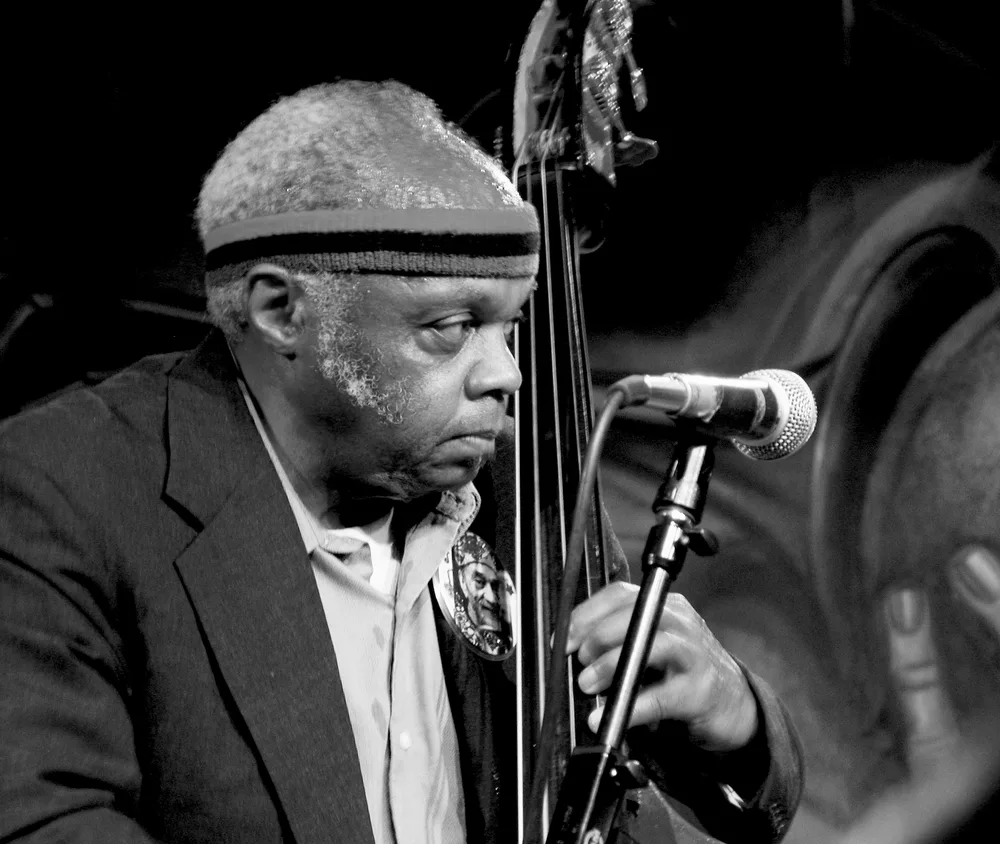
Henry Grimes performing with his quartet at HotHouse, Chicago, March 12, 2005 — during the first years of his comeback after the 2002 rediscovery. CC BY-SA 2.0 — Wikimedia Commons — https://commons.wikimedia.org/wiki/File:Henry_grimes_01.jpg (photo by Seth Tisue)

Henry Alonzo Grimes was born November 3, 1935, in Philadelphia, Pennsylvania, into a musical household: his father, Leon James Grimes Sr., played trumpet, his mother Georgia Elzie Grimes played piano, and his twin brother Leon Grimes became a clarinetist and tenor saxophonist. Grimes started on violin at twelve, then moved through tuba, English horn, and percussion before settling on double bass at Mastbaum Technical High School. He went on to study at Juilliard, arriving in New York with a grounding broad enough to work in almost any jazz idiom.
By the mid-1950s Grimes was one of the city's most in-demand young bassists, working with pianist Lennie Tristano and saxophonists Lee Konitz and Gerry Mulligan (documented on Mulligan's 1957-58 Reunion with Chet Baker sessions), and with Sonny Rollins, appearing on 1958's big-band date Sonny Rollins and the Big Brass alongside Clark Terry and Roy Haynes. He also passed through the bands of Thelonious Monk and clarinetist Benny Goodman. At twenty-two he turned up in the 1958 Newport Jazz Festival documentary Jazz on a Summer's Day, performing that single weekend with six different groups, a versatility a New York Times critic singled out as "remarkable." Charles Mingus, always partial to unconventional bass textures, picked Grimes for stretches when he wanted a second bassist alongside him in the Jazz Workshop.
The early 1960s pulled Grimes toward the emerging avant-garde. He is the bassist on McCoy Tyner's Reaching Fourth (recorded November 1962, Impulse!, with Roy Haynes on drums) and on Roy Haynes's own Out of the Afternoon (1962, Impulse!, with Roland Kirk), and on Sonny Rollins's 1963 RCA date Sonny Meets Hawk!, a summit with Coleman Hawkins that also featured pianist Paul Bley. From there he moved fully into free jazz, becoming one of the music's most sought-after bassists specifically because he could hold his own in the era's dual-bass frontlines: he shares the bass chair with Earle Henderson on Albert Ayler's Spirits (1964), with Gary Peacock on Ayler's Spirits Rejoice (1965, ESP-Disk), and with Lewis Worrell on drummer Sunny Murray's Sonny's Time Now (1966, ESP-Disk, featuring both Ayler and Don Cherry). He appears on Archie Shepp's On This Night (1965, Impulse!); on Cherry's Complete Communion (recorded 1965), Symphony for Improvisers (1966, with Pharoah Sanders), and Where Is Brooklyn? (recorded 1966, also with Sanders), all on Blue Note; and, alongside a second bassist, Alan Silva, on both of Cecil Taylor's landmark Blue Note albums, Unit Structures (recorded May 19, 1966) and Conquistador! (recorded that October). The same year he cut sideman dates for two ESP-Disk leaders, the Frank Wright Trio and the Charles Tyler Ensemble, and made his sole record as a leader before his disappearance: The Call (ESP-Disk, 1966), a trio with clarinetist Perry Robinson and drummer Tom Price.
Then, in the late 1960s, Grimes vanished. He had relocated to Los Angeles for work and, unable to find enough of it, sold his bass and drifted out of contact with the jazz world entirely. Musicians and reference books alike came to assume he had died; in fact he spent more than three decades in a small Los Angeles apartment, writing poetry and taking odd jobs to get by, unaware even that Albert Ayler had died in 1970.
In 2002, social worker and jazz fan Marshall Marrotte tracked Grimes down, alive, still in that Los Angeles apartment. Bassist William Parker donated an instrument, a green-tinted bass Grimes nicknamed "Olive Oil," which luthier David Gage helped ship east; Grimes returned to New York in 2003 to national press coverage, including pieces in the New York Times and on NPR, and immediately went back to work, playing more than two dozen festivals that year alone. He resumed his old partnership with Cecil Taylor in October 2006, forty years after Unit Structures, and recorded steadily with a new generation of players: Marc Ribot, trumpeter Roy Campbell, and drummer Chad Taylor on Spiritual Unity (2005, Pi Recordings, a tribute to Ayler); a duo with Rashied Ali that yielded Going to the Ritual (2008) and, after Ali's 2009 passing, the posthumously released Spirits Aloft (2010), both on Porter Records; a working trio with saxophonist Roberto Pettinato and drummer Tyshawn Sorey that became a quartet with pianist Dave Burrell (My Head Is My Only House Unless It Rains, 2011; Purity, 2012; Same Egg, 2013); and the trio Us Free with tenor saxophonist Bill McHenry and drummer Andrew Cyrille (Fish Stories, 2014). He also took up the violin again, making his professional debut on the instrument at seventy alongside Cecil Taylor at Lincoln Center, published a poetry collection, Signs Along the Road (2007), and taught at City College of New York, Berklee College of Music, and the University of Michigan. Between 2003 and 2016 he played more than 640 concerts in some thirty countries.
Henry Grimes passed away on April 15, 2020, at the Northern Manhattan Rehabilitation and Nursing Center in Harlem, of complications from COVID-19. He was 84. His wife, Margaret Davis Grimes, confirmed the details to the Jazz Foundation of America, which had been assisting with his care.
Grimes came up as a supple, harmonically fluent mainstream bassist, capable enough to satisfy Gerry Mulligan and Sonny Rollins in the same years he was working with Thelonious Monk; it was that same adaptability that made him one of the most trusted bassists in the mid-1960s New York loft scene, where he was repeatedly paired with a second bassist rather than left to hold time alone, as on Albert Ayler's Spirits Rejoice (alongside Gary Peacock) and Cecil Taylor's Unit Structures and Conquistador! (alongside Alan Silva). His comeback-era playing, after more than three decades away from an instrument, was in some ways a second, self-taught vocabulary: dense arco textures, an increasingly prominent use of the violin he had first studied as a child, and a physical, percussive attack that critics and collaborators alike distinguished from a simple repetition of his pre-1968 style. His thirty-five-year disappearance and return, culminating in a resumed partnership with Taylor and duo records with Rashied Ali, became one of the most widely told stories of resilience in jazz.
- The Call (1966, ESP-Disk) - Grimes's only album as a leader before his disappearance, a trio with clarinetist Perry Robinson and drummer Tom Price. Spotify - The Call Listen
- Unit Structures (recorded May 19, 1966, Cecil Taylor, Blue Note) - A landmark of Taylor's mature style, with Grimes and Alan Silva both on bass. Spotify - Unit Structures
- Spirits Rejoice (1965, Albert Ayler Quintet, ESP-Disk) - Another dual-bass session, with Gary Peacock alongside Grimes. Spotify - Spirits Rejoice
- On This Night (1965, Archie Shepp, Impulse!) - Shepp's second Impulse! leader date. Spotify - On This Night
- Complete Communion (recorded 1965, Don Cherry, Blue Note) - Cherry's debut as a leader, an early template for continuous, suite-form free jazz. Spotify - Complete Communion
- Reaching Fourth (recorded Nov. 1962, McCoy Tyner Trio, Impulse!) - A trio date with Roy Haynes, cut in Tyner's brief run outside John Coltrane's band. Spotify - Reaching Fourth
- Spiritual Unity (2005, Marc Ribot / Roy Campbell / Henry Grimes / Chad Taylor, Pi Recordings) - Grimes's first major studio recording after his 2002 rediscovery, a tribute to Albert Ayler. Spotify - Spiritual Unity
- Going to the Ritual (2008, Henry Grimes / Rashied Ali, Porter Records) - A duo record with the drummer who had also come up through Coltrane's late-1960s circle. Spotify - Going to the Ritual
Henry Grimes: Full Discography
Identity confirmed via the live Discogs API — artist ID 258130 ("Henry Grimes," profile text matching Discogs's own birth/death dates of November 3, 1935 and April 15, 2020, plus the documented Marshall Marrotte rediscovery and William Parker bass donation). Discogs credits Grimes on 308 releases in total. He led or co-led only a handful of albums himself — one studio date before his disappearance (The Call, 1966) and a run of duo/trio/quartet records after his 2002-2003 comeback — so the table below itemizes that full leader/co-leader catalog, plus a representative set of his most significant sideman dates from both the pre-disappearance and comeback periods. It does not attempt to itemize all 308 credited releases, many of which are compilations, reissues, and box sets reusing the same recordings.
As Leader / Co-Leader
| Album Title | Recording Date(s) | Release Date | Label | Catalog Number | Format(s) | Personnel | Role | Reissue History | Spotify | Buy | Notes |
|---|---|---|---|---|---|---|---|---|---|---|---|
| The Call | Recorded December 1965, NYC | 1966 | ESP-Disk' | ESP 1026 | Vinyl, LP, Album, Stereo | Henry Grimes (bass), Perry Robinson (clarinet), Tom Price (drums) | Leader (Henry Grimes Trio) | Reissued on CD; included in The Complete ESP-Disk' Recordings box sets | Spotify - The Call | — | Grimes's only studio date as a leader before his late-1960s disappearance |
| More Call | Not specified in Discogs data | 2004 | Not On Label (Henry Grimes, self-released) | none | CDr | Henry Grimes (acoustic bass, solo) | Leader | None found | Not confirmed on Spotify | — | Self-released solo recording, among the first documents of his 2002-2003 return to playing |
| The Power of Light | Not specified in Discogs data | 2007 | Not Two Records | MW 787-2 | CD, Album | Oluyemi Thomas (bass clarinet, soprano sax, musette, gong, flute, percussion), Henry Grimes (bass); both credited as composers and producers | Co-leader (Oluyemi Thomas & Henry Grimes) | None found | Not confirmed on Spotify | — | |
| Going to the Ritual | Recorded 2007 | 2008 | Porter Records | PRCD-4005 | CD, Album | Henry Grimes (acoustic bass, violin, voice), Rashied Ali (drums) | Co-leader (Henry Grimes / Rashied Ali) | None found | Spotify - Going to the Ritual | — | Duo with Rashied Ali, recorded at WKCR studios |
| Henry Grimes Solo | Not specified in Discogs data | 2009-01-19 | Ilk Music | ILK151CD | CD, Album | Henry Grimes (double bass, violin) | Leader | None found | Not confirmed on Spotify | — | Danish label; unaccompanied bass and violin |
| Spirits Aloft | Recorded February 2009, Rutgers University, Camden NJ | 2010-09-21 | Porter Records | PRCD-4049 | CD, Album | Henry Grimes (bass, violin, voice), Rashied Ali (drums) | Co-leader (Henry Grimes / Rashied Ali) | None found | Spotify - Spirits Aloft | — | Released posthumously for Ali, who died in August 2009 |
| My Head Is My Only House Unless It Rains | Not specified in Discogs data | 2011 | Columbia / Sony Music (Argentina) | 88697931842 | CD, Album | Henry Grimes (double bass, violin), Tyshawn Sorey (drums, piano), Roberto Pettinato (tenor sax) | Co-leader trio | Later expanded as Purity with Dave Burrell added | Not confirmed on Spotify | — | |
| Purity | Not specified in Discogs data | 2012-07-04 | Sony Music (Argentina) | 8872 542082 2 | CD, Album | Henry Grimes (acoustic bass, violin), Roberto Pettinato (tenor/baritone/soprano sax), Tyshawn Sorey (drums, percussion), Dave Burrell (piano) | Co-leader quartet | None found | Not confirmed on Spotify | — | |
| Same Egg | Not specified in Discogs data | 2013-10 | Sony Music (Argentina) | 3782002 | 2xCD, Album | Henry Grimes (acoustic bass, violin), Dave Burrell (piano), Roberto Pettinato (tenor/alto sax), Tyshawn Sorey (drums, percussion) | Co-leader quartet | None found | Not confirmed on Spotify | — | Same working quartet as Purity |
| Fish Stories | Not specified in Discogs data | 2014 | Fresh Sound New Talent | FSNT 453 | CD, Album | Bill McHenry (tenor sax), Henry Grimes (bass, violin), Andrew Cyrille (drums) | Co-leader trio (billed "Us Free") | None found | Not confirmed on Spotify | — | |
| The Tone of Wonder | Not specified in Discogs data | 2014 | Uncool Edition | #2 | CD, Album, Ltd | Henry Grimes (acoustic bass, violin, solo) | Leader | Limited edition | Not confirmed on Spotify | — | |
| Duology with Henry Grimes | Not specified in Discogs data | 2019 | Ujamaa Records | UJAMAA 1005 | Vinyl, LP, Ltd | Ted Daniel (trumpet, French hunting horn), Michael Marcus (clarinet), Henry Grimes (contrabass, violin) | Featured / co-billed | None found | Not confirmed on Spotify | — | Grimes's final released recording during his lifetime |
As Sideman (selected major credits)
| Year | Project (Leader) | Title | Label | Catalog | Role | Notes |
|---|---|---|---|---|---|---|
| 1957/58 | Gerry Mulligan Quartet | Reunion with Chet Baker | World Pacific Records | — | Bass | |
| 1958 | Sonny Rollins | Sonny Rollins and the Big Brass | MetroJazz | — | Bass | Big-band date with Nat Adderley, Clark Terry, and Roy Haynes |
| 1962 | McCoy Tyner Trio | Reaching Fourth | Impulse! | A-33 | Bass | Recorded with Roy Haynes on drums during Tyner's brief run outside John Coltrane's band |
| 1962 | Roy Haynes Quartet | Out of the Afternoon | Impulse! | A-23 | Bass | With Roland Kirk (tenor sax, manzello, stritch, flute) and Tommy Flanagan (piano) |
| 1963 | Sonny Rollins / Coleman Hawkins | Sonny Meets Hawk! | RCA Victor | — | Bass | Grimes and Bob Cranshaw both credited on bass across the July 1963 sessions; Paul Bley on piano |
| 1964 | Albert Ayler | Spirits | Debut Records (Denmark) | DEB 146 | Bass | Dual-bass session with Earle Henderson |
| 1965 | Albert Ayler Quintet | Spirits Rejoice | ESP-Disk' | ESP 1020 | Bass | Dual-bass session with Gary Peacock |
| 1965 | Archie Shepp | On This Night | Impulse! | A-97 | Bass | With Bobby Hutcherson on vibraphone |
| 1965/66 | Don Cherry | Complete Communion | Blue Note | BLP 4226 | Bass | Cherry's debut as a leader, with Gato Barbieri and Ed Blackwell |
| 1966 | Sunny Murray | Sonny's Time Now | ESP-Disk' / Jihad | ESP 1032 | Bass | Dual-bass session with Lewis Worrell, featuring Albert Ayler (tenor sax) and Don Cherry (trumpet) |
| 1966/67 | Don Cherry | Symphony for Improvisers | Blue Note | BLP 4247 | Bass | Dual-bass session with J.-F. Jenny-Clark; also features Pharoah Sanders |
| 1966 | Cecil Taylor | Unit Structures | Blue Note | BLP 4237 | Bass | Recorded May 19, 1966; dual-bass session with Alan Silva |
| 1966/68 | Cecil Taylor | Conquistador! | Blue Note | BST 84260 | Bass | Recorded October 6, 1966; dual-bass session with Alan Silva, plus Bill Dixon on trumpet |
| 1966 | Frank Wright | Frank Wright Trio | ESP-Disk' | ESP 1023 | Bass | With Tom Price on drums |
| 1966 | Charles Tyler | Charles Tyler Ensemble | ESP-Disk' | ESP 1029 | Bass | With Ronald Shannon Jackson on drums |
| 1966/69 | Don Cherry | Where Is Brooklyn? | Blue Note | BST 84311 | Bass | Recorded 1966, released 1969; with Ed Blackwell and Pharoah Sanders |
| 2004 | Dennis González's Inspiration Band | Nile River Suite | Daagnim Records | — | Bass (featured) | One of Grimes's first studio dates after his comeback |
| 2005 | Marc Ribot / Roy Campbell / Henry Grimes / Chad Taylor | Spiritual Unity | Pi Recordings | PI15 | Bass | Tribute to Albert Ayler; Grimes's first major post-comeback studio recording |
| 2014 | Scott Robinson Spacetette (feat. Marshall Allen and Henry Grimes) | Mission in Space | ScienSonic | — | Bass (featured) |
Grimes's Discogs credit log also includes numerous 1958-1960 sideman dates with the Billy Taylor Trio, Lee Konitz, and Gerry Mulligan's various small groups and songbook sessions, plus post-comeback studio and live appearances with Marilyn Crispell, Hamid Drake, David Murray, and the Profound Sound Trio (with Andrew Cyrille and Sabir Mateen) — not itemized exhaustively here.
- Rashied Ali - late-career duo partner, recording Going to the Ritual (2008) and, after Ali's 2009 death, the posthumous Spirits Aloft (2010).
- Cecil Taylor - sideman on Unit Structures and Conquistador! (1966); resumed playing together in October 2006, forty years later, after Grimes's comeback.
- William Parker - donated the bass, nicknamed "Olive Oil," that let Grimes resume performing after his 2002 rediscovery.
- Albert Ayler - sideman on Spirits (1964) and Spirits Rejoice (1965), and on Sunny Murray's Sonny's Time Now (1966), which also featured Ayler.
- Don Cherry - sideman across three Cherry-led Blue Note dates: Complete Communion, Symphony for Improvisers, and Where Is Brooklyn? (1965-66).
- Archie Shepp - sideman on On This Night (1965).
- Pharoah Sanders - fellow sideman alongside Grimes on Don Cherry's Symphony for Improvisers and Where Is Brooklyn? (1966).
- Charles Mingus - occasionally used Grimes as a second bassist in his Jazz Workshop band during the early 1960s.
- Gerry Mulligan and Lee Konitz - mid-1950s New York bandleaders Grimes worked with before turning toward the avant-garde.
- Thelonious Monk - another mid-1950s/early-1960s bandleader in Grimes's mainstream period.
- Marc Ribot, Roy Campbell, and Chad Taylor - bandmates on the comeback recording Spiritual Unity (2005), a tribute to Albert Ayler.
- Roberto Pettinato, Tyshawn Sorey, and Dave Burrell - working group in Grimes's final decade, recording My Head Is My Only House Unless It Rains (2011), Purity (2012), and Same Egg (2013).
- Bill McHenry and Andrew Cyrille - fellow members of the trio Us Free, which recorded Fish Stories (2014).
More Hard Bop Artists
See all 304 Hard Bop artists →More American Jazz Artists
See all 567 American artists →- Wikipedia: Henry Grimes
- Discogs: Henry Grimes (artist 258130)
- AllMusic: Henry Grimes biography
- Legacy.com: Henry Grimes obituary
- DownBeat: Bassist Henry Grimes Dies at 84
- WBGO: Henry Grimes, Bassist of Avant-Garde Pedigree and a Storied Return, Dies of COVID-19 at 84
- Wikipedia: The Call (Henry Grimes album)
- Wikipedia: Going to the Ritual
- Wikipedia: Spirits Aloft
- Wikipedia: Spiritual Unity (Marc Ribot album)