 JAZZPROFILES lives in the music 1,765 Jazz Artists fully Profiled!
George Kawaguchi
Last updated October 21, 2026
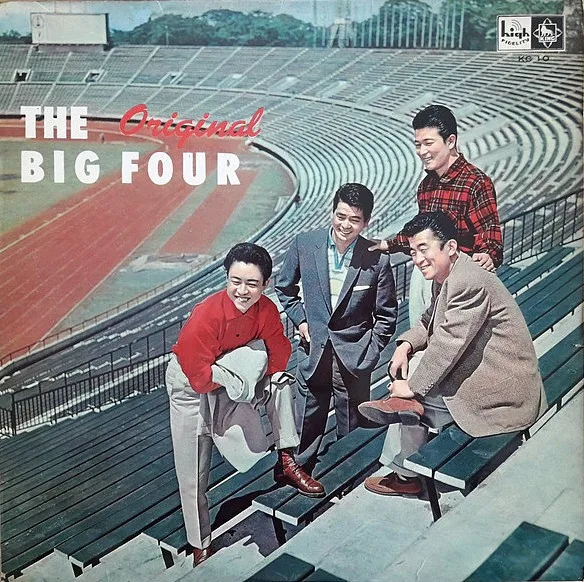
Cover of The Original Big Four (King, 1959), the quartet led by George Kawaguchi. Standard copyright, all rights reserved, held by King Record Co., Ltd.. This is not a Creative Commons or public-domain image; it is an album cover shown as an honestly disclosed editorial identification image. — https://coverartarchive.org/release/41ae6f86-a6f0-43cf-b4d9-da221ed49be6/front-1200 (image attached to the MusicBrainz release page https://musicbrainz.org/release/41ae6f86-a6f0-43cf-b4d9-da221ed49be6; the sleeve shown is the King KC 10 cover)
George Kawaguchi (ジョージ川口, born Joji Kawaguchi) was the drummer who put a postwar Japanese audience in front of a jazz band for the first time and kept it there for half a century. He was born in Kyoto on 15 June 1927, the second son of the saxophonist Yonosuke Kawaguchi, and at six he was taken with the family to Dalian in Manchuria. It was there, watching Gene Krupa in the American film Hollywood Hotel, that he decided he would be a drummer. He was still a teenager in the last months of the war, training as an army air cadet, and by 1945 he was a professional, playing in an international band that worked clubs for Soviet troops in Dalian.
He came back to Japan in 1947 and joined Torirō Mitsuki's band that May, then worked the American military clubs that were the real jazz schools of the Occupation. In 1949 he moved into Raymond Conde's Gay Septet, which brought him his first notice as a young drummer to watch. In 1953 he formed the group that made his name, the Big Four, with tenor saxophonist Hidehiko "Sleepy" Matsumoto, the pianist Hachidai Nakamura, who would go on to become one of Japan's best-known popular composers, and the bassist Mitsuru Ono. The quartet set off a Japanese jazz boom. It recorded as a working band for more than twenty years and played intermittently into the 1980s.
The records show how quickly it became an institution. Jazz at the Torys (King, 1957) was taken from the radio programme "Torys Jazz Game" and recorded between 17 June and 22 July 1957 at Tokyo's Video Hall, and its closing track, "Drum Boogie," became his signature. On 15 June 1958, his thirty-first birthday, the band recorded On Stage! Big 4 Plus 1 at the same hall, with the 25 year old Sadao Watanabe added on alto saxophone and flute. The Original Big Four followed on King in 1959. Japanese biographical references name Watanabe, Yosuke Yamashita and Terumasa Hino among the young players he brought on, and Masahiko Satoh, Hiromasa Suzuki and Jiro Inagaki each worked in a Kawaguchi group early in their careers.
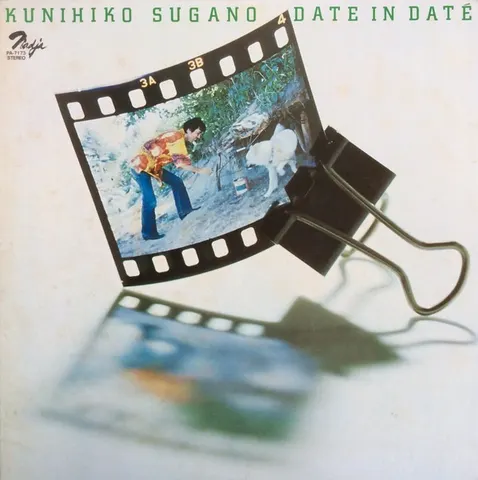
The Big Four kept changing its shape without losing its name. On Caravan (Takt, 1967) the pianist Yuzuru Sera guested with a quartet built around Takatoshi Oya on tenor, Masaaki Fujita on guitar and Tetsuji Kimura on bass, and the same musicians cut The Life for Royal that year under the billing Big Four Plus One. George and Sleepy (Victor, 1969) was recorded on 30 September 1969 with Isao Suzuki on bass and Kunihiko Sugano on piano. Blow! Blow! Big 4 (Columbia) arrived in May 1974, with Akira Miyazawa sharing the tenor chair with Matsumoto. And in April 1976, on 12 and 19 April at Epicurus Studio in Tokyo, he and Matsumoto made The Big 4 for Three Blind Mice, with Hideo Ichikawa on piano and electric piano and Takashi Mizuhashi on bass, a record that leans into the fusion sound of the day with titles like "Invader 7" and "Sleepy's Funk." The group's Original Big Four Live (Philips) followed in 1977.
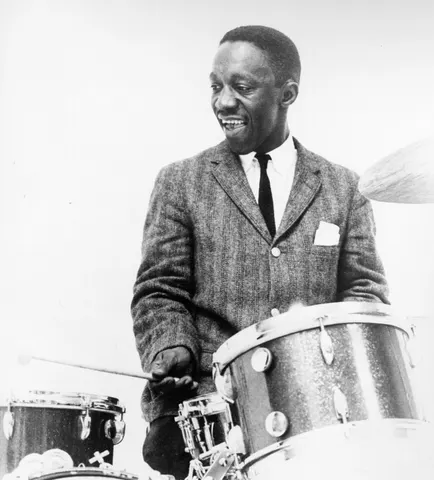
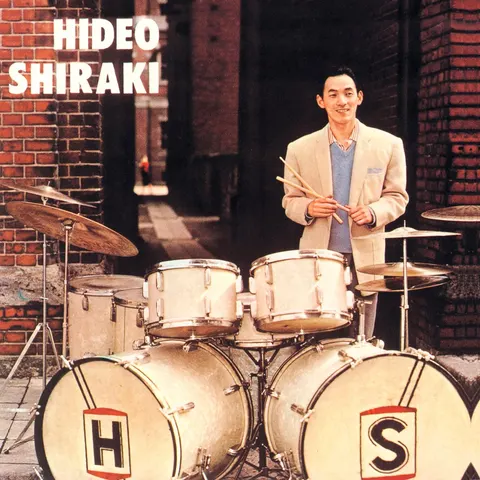
Alongside the band he built a second career as Japan's drum-battle man. Drum-Scope (King, 1957) put him against Hideo Shiraki, Jimmy Takeuchi and Nobuo Hara. In 1970 he made Drum & Drum with Akira Ishikawa and in 1971 Four Jazz Drums for Warner with Takeshi Inomata, Isamu Harada and Motohiko Hino, arranged by Norio Maeda. A 1975 RCA drum-battle album gave his Big 4 one side of a four-way contest with Ishikawa's Count Buffaloes, the George Otsuka Trio and Inomata's Sound Limited, and Otsuka, Ishikawa and Inomata were back with him on The Exciting Drum in 1980. In 1976 he faced Motohiko Hino directly on G. Kawaguchi vs. M. Hino and traded "Drum Boogie" with the actor and drummer Frankie Sakai on a Victor album of its own.
In July 1966 the John Coltrane quintet toured Japan. A chronology of that tour places Kawaguchi at the late-night jam session held at Tokyo's Video Hall after the band's concert at Koseinenkin Hall on 22 July, on drums alongside Hideo Shiraki, with Sadao Watanabe, Hidehiko Matsumoto, Jiro Inagaki and a group of other Japanese players, and again at the pre-arranged jam that closed the tour in the small hours of 24 July. Which members of the visiting band joined in is not recorded there. What the listing does show is the place Kawaguchi held in the Tokyo scene: when Coltrane's group came to town, he was one of the two drummers named at the welcome jam.
From the late 1970s the drum records got bigger and the band got larger. Super George & The Super Band (Paddle Wheel, 1979), recorded on 25 and 26 June 1979, put a saxophone and brass section around him that included Matsumoto and Yasuaki Shimizu on tenor, with Isao Suzuki on bass, playing funk and fusion material such as "Superstition" and "Isn't She Lovely." African Hot Dance (Electric Bird, 1980), cut on 17 to 19 June 1980 with an expanded Super Fusion Band that also included Takeru Muraoka and Shimizu, is a fusion and jazz-funk album with arrangements by Chikara Ueda. Super Drums 2: Tribute to Gene Krupa (Paddle Wheel, 1983), recorded at Urayasu Bunka Kaikan on 15 and 16 February 1983, was the return to the swing-era drummer who had set him on the path in Dalian.
The 1980s took him to America and into the company of the players he had grown up listening to. On 16 March 1982 he recorded Big 2 with the vibraphonist Lionel Hampton, with Arnett Cobb on tenor, Kenny Barron on piano and Milt Hinton on bass. That year Union Jazz issued Killer Joe, a two-drummer date produced by Teo Macero in which Art Blakey is panned to the left channel and Kawaguchi to the right, with Slide Hampton, Wallace Roney and Branford Marsalis in the horn section and his son Raiji Kawaguchi on percussion. He made a laserdisc, Collaboration, with the American drummer Shelly Manne in 1982, and in 1986 produced the promotional DHL Presents George Kawaguchi Super Big Band, with Hiromasa Suzuki and Norio Maeda among the arrangers. His tribute record George Kawaguchi Plays Herbie Hancock was cut at King Studio on 31 July 1987 with Donald Harrison and Terence Blanchard in the front line and Cyrus Chestnut on piano.
The honours piled up as the catalogue did. He received the 6th Nanri Fumio Prize, named for the pioneering trumpeter Fumio Nanri, and the 31st Arts Encouragement Prize of the Minister of Education, the first time that prize went to a jazz musician, both around 1981. He was awarded the Medal with Purple Ribbon in 1988 and the Order of the Rising Sun, Fourth Class, in 1997. On 2 November 1990, at Pamir in Tokyo, he led an all-star live date, released the next year as Jazz Battle, whose cast ranged from Matsumoto and Terumasa Hino to Freddie Hubbard, Elvin Jones, Ron Carter, George Duke, Benny Green and Rufus Reid. Away from music he was a keen shooter and served as an international clay-pigeon referee at the 1964 Tokyo Olympics.
George Kawaguchi passed away in Tokyo on 1 November 2003, aged 76, of a cerebral hemorrhage, only days after he had last performed in concert. That year the Japan Record Awards gave him a Special Achievement Award at their 45th ceremony. His son Raiji continued the group as the New Big Four, and a tribute album by the New Big 4+1 was released in 2008.
Kawaguchi's playing was big, bright and built for a room. Japanese critics described it as bold and powerful, with flamboyant showmanship and fast, forceful drum solos, and his mustache and warm personality made him a familiar face beyond jazz, with film, television and commercial appearances and a turn as a judge on NHK's Kohaku Uta Gassen in 1995. Gene Krupa was the model he never stopped acknowledging, from the Dalian cinema where he first saw him to the Tribute to Gene Krupa album decades later, and "Drum Boogie," the Krupa showpiece, was the number the Big Four built its encores around from the 1957 Jazz at the Torys radio recording onward.
His real contribution was structural rather than technical. The Big Four gave Japanese postwar jazz a repertoire of standards, a band to play them and a stage that was not a military club, and then he kept re-forming around new players so that the music never settled into a museum piece. The sidemen on his sleeves tell the story: Matsumoto and Nakamura in the 1950s, Sera and Fujita in the late 1960s, Ichikawa and Mizuhashi in the 1970s, then a rotating cast of American guests in the 1980s.
He worked across the swing, mainstream and big band idioms rather than in one school. The Three Blind Mice album and the Super Band records show him adapting to jazz-funk and fusion without abandoning the swing feel underneath, and the drum-battle records show the showman side the public loved. He also played repeated sessions with the taiko drummer Daihachi Oguchi, a measure of how far he was willing to take a rhythm section away from the jazz club.
- Jazz at the Torys (1957, King LKB-7, The Big Four) - The group's first LP, taken from a radio programme recorded live at Tokyo's Video Hall with Matsumoto, Nakamura and Goh Ueda. Closes with "Drum Boogie." YouTube - Drum Boogie Listen
- On Stage! Big 4 Plus 1 (1958, Victor LV-23) - Recorded at Video Hall on 15 June 1958 with a young Sadao Watanabe added on alto saxophone and flute. YouTube - full album Listen · Buy
- The Original Big Four (1959, King KC 10) - The classic quartet of Kawaguchi, Matsumoto, Nakamura and Mitsuru Ono playing standards. YouTube - full album Listen
- George and Sleepy (1969, Victor SMJX-10073) - Kawaguchi and Matsumoto with Isao Suzuki and Kunihiko Sugano, recorded on 30 September 1969. YouTube - full album Listen · Buy
- The Big 4 (1976, Three Blind Mice TBM-66) - The audiophile label's version of the band, with Hideo Ichikawa and Takashi Mizuhashi. YouTube - full album Listen · Buy
- African Hot Dance (1980, Electric Bird K28P-6030) - The Super Fusion Band date, with Takeru Muraoka and Yasuaki Shimizu in the saxophone section. YouTube - full album Listen
- Killer Joe (1982, Union Jazz ULP-5001, with Art Blakey) - Two drummers, one in each channel, with a horn section of Slide Hampton, Wallace Roney and Branford Marsalis. YouTube - full album Listen · Buy
- George Kawaguchi Plays Herbie Hancock (1987, Paddle Wheel K28P-6469) - Recorded in Tokyo with Donald Harrison and Terence Blanchard. YouTube - Maiden Voyage Listen · Buy
George Kawaguchi (ジョージ川口): Full Discography
Japanese jazz drummer and bandleader. Born 15 June 1927, Kyoto; passed away 1 November 2003, Tokyo. Discogs artist 1803197.
Name variations on record: G. Kawaguchi, ジョージ・川口, ジョージ川口, 川口ジョージ, 川口譲二.
Group affiliations: George Kawaguchi's The Big 4 (also billed as the Big Four, Big 4 Plus 1, New Big 4+1), George Kawaguchi & The Super Band, Kawaguchi Big Band, George Kawaguchi & All Stars.
Leader
Albums issued under his own name or under the name of his groups, chronological. The Big Four albums are credited on Discogs to George Kawaguchi's The Big 4 (artist 1059167), the group he founded in 1953.
| Album | Year | Label | Personnel | Notes | Listen | Buy |
|---|---|---|---|---|---|---|
| Jazz at the Torys (credited to The Big Four) | 1957 | King, LKB-7 | George Kawaguchi (drums), Hidehiko Matsumoto (tenor saxophone), Hachidai Nakamura (piano), Goh Ueda (bass) | Live recordings made between 17 June and 22 July 1957 at Tokyo Video Hall for the radio programme "Torys Jazz Game." Twelve tracks including "Cotton Tail," "Harlem Nocturne," "How High the Moon," "Tenderly," "Summertime" and the closing "Drum Boogie." | Drum Boogie | Amazon |
| On Stage! Big 4 Plus 1 | 1958 | Victor, LV-23 (10 inch) | George Kawaguchi (drums), Hidehiko Matsumoto (tenor saxophone), Sadao Watanabe (alto saxophone, flute), Masao Yagi (piano), Shinya Kimura (bass) | Recorded at Tokyo Video Hall on 15 June 1958. Six tracks: "Big Four Plus One Theme (Lover)," "Big Four Mob," "Jam Session Blues," "Seven Come Eleven," "Ballade Medley," "Drum Boogie." Mono. | Full album | Amazon |
| The Original Big Four (credited to George Kawaguchi's The Big 4) | 1959 | King, KC 10 | George Kawaguchi (drums), Hidehiko Matsumoto (tenor saxophone), Hachidai Nakamura (piano), Mitsuru Ono (bass) | Eleven standards including "Lullaby of Birdland," "Stardust," "Stompin' at the Savoy," "Flamingo" and "Take the 'A' Train." Supervised by Jiro Kubota. | Full album | Amazon |
| Caravan (George Kawaguchi and Big Four, guest Yuzuru Sera) | 1967 | Takt, JAZZ-8 | George Kawaguchi (drums), Takatoshi Oya (tenor saxophone), Masaaki Fujita (guitar), Tetsuji Kimura (bass), Yuzuru Sera (piano, guest) | Twelve tracks including "Caravan," "Goldfinger," "The Girl from Ipanema" and "Corcovado." Stereo LP. | Full album | Amazon |
| The Life (credited to George Kawaguchi and Big Four Plus One; Japanese title Inochi) | 1967 | Royal, RS-102 | George Kawaguchi (drums), Takatoshi Oya (tenor saxophone), Masaaki Fujita (guitar, arranger), Tetsuji Kimura (bass), Yuzuru Sera (piano) | Golden Jazz Series. Twelve tracks including "Inochi," "G Rock," "The Shadow of Your Smile" and "Gold Finger." | not found | Amazon |
| George and Sleepy | 1969 | Victor World Group, SMJX-10073 | George Kawaguchi (drums), Hidehiko Matsumoto (tenor saxophone), Kunihiko Sugano (piano), Isao Suzuki (bass) | Recorded on 30 September 1969. Eight tracks including "The Breeze and I," "On Green Dolphin Street," "Tuesday Samba," "Vietnam," "Lover" and "G.S. Blues." Sleeve notes by Yozo Iwanami. | Full album | Amazon |
| Blow! Blow! Big 4 | 1974 | Columbia, KS-7012 | George Kawaguchi (drums), Hidehiko Matsumoto and Akira Miyazawa (tenor saxophones), Hachidai Nakamura and Kunihiko Sugano (piano), Goh Ueda (bass) | Released May 1974. Eight tracks including "Lover," "Autumn Leaves," "Flying Home," "Perdido," "Take Five" and "Moritat." | Title track | Amazon |
| The Big 4 | 1976 | Three Blind Mice, TBM-66 | George Kawaguchi (drums), Hidehiko Matsumoto (tenor saxophone, flute), Hideo Ichikawa (piano, electric piano), Takashi Mizuhashi (bass) | Recorded 12 and 19 April 1976 at Epicurus Studio, Tokyo. Six tracks: "Invader 7," "Blues for Big-Talk George," "Monday Samba," "Albatros," "Sleepy's Funk," "Love for Sale." Produced by Takeshi Fujii, engineered by Yoshihiko Kannari. Reissued on SHM-CD in 2018. | Full album | Amazon |
| Original Big Four Live (credited to The Big Four and Mitsuru Ono and the Swing Beavers) | 1977 | Philips, FS-7021 | George Kawaguchi (drums), Hidehiko Matsumoto (tenor saxophone), Hachidai Nakamura (piano), Mitsuru Ono (bass) | Twelve tracks including "Flamingo," "Cotton Tail," "Tenderly," "Blow Blow Big Four," "Drum Boogie," "Harlem Nocturne" and "Blues in the Closet." | LP, full | Amazon |
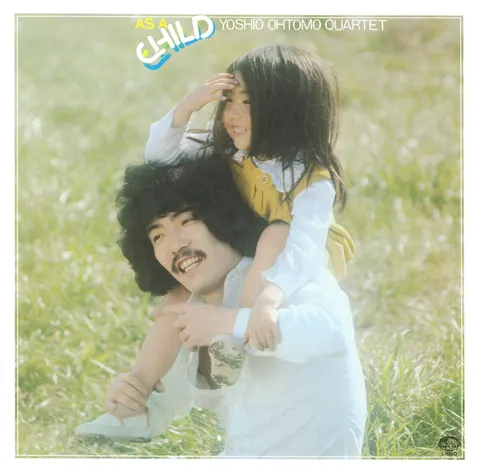
| Super George & The Super Band | 1979 | Paddle Wheel, GP 3201 | George Kawaguchi (drums), Hidehiko Matsumoto and Yasuaki Shimizu (tenor saxophones), Genji Sawai and Yoshio Otomo (alto saxophones), Osamu Shiomura and Yoshio Oikawa (trombones), Hitoshi Okano and Kenji Nakazawa (trumpets, flugelhorns), Hideo Ichikawa (piano, electric piano), Isao Suzuki (bass) | Recorded 25 and 26 June 1979. Eight tracks: "Tappan Zee," "Feels So Good," "I Can't Get Started," "Isn't She Lovely," "Fantasy," "Superstition," "How Deep Is Your Love," "Friends." Produced by Motohiko Takawa. | Friends | Amazon |
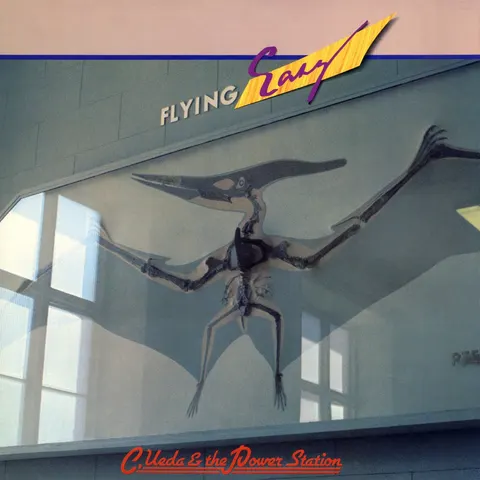
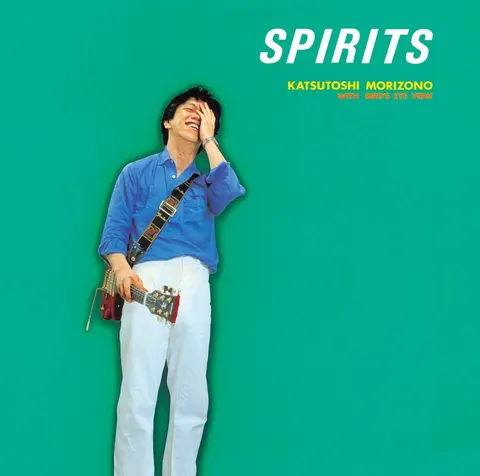
| African Hot Dance (credited to George Kawaguchi and Super Fusion Band) | 1980 | Electric Bird, K28P-6030 | George Kawaguchi (drums), Toshiyuki Honda, Genji Sawai and Takeshi Itoh (alto saxophones), Takeru Muraoka and Yasuaki Shimizu (tenor saxophones), Chikara Ueda (keyboards, synthesizers, arranger), Katsutoshi Morizono and Kiyoshi Sugimoto (guitars), Kazuya Sugimoto (electric bass), Antonio Ishida and Yoshinori Nohmi (percussion), plus four trombones and four trumpets | Recorded 17, 18 and 19 June 1980. Eight tracks: "Summer Secret," "Remember," "African Hot Dance," "Angel You," "Captain Caribe," "South from East," "Wondering Cat," "I Hear a Symphony." | Full album | Amazon |
| Super Drums 2: Tribute to Gene Krupa (credited to George Kawaguchi & The Super Band) | 1983 | Paddle Wheel, K28P-6225 | George Kawaguchi (drums), Yoshio Otomo and Yoshi Maruta (alto and soprano saxophones), Seiichi Nakamura and Syuya Sato (tenor and soprano saxophones), Osamu Matsumoto and Yoshio Oikawa (trombones), Gary Wofsey and Hitoshi Okano (trumpets), Toshihiko Ogawa (piano), Mitsuaki Furuno (bass) | Recorded at Urayasu Bunka Kaikan, Chiba, on 15 and 16 February 1983. Eight tracks: "Dark Eyes," "One O'Clock Jump," "Drum Boogie," "Opus One," "Sing, Sing, Sing," "After You've Gone," "Stompin' at the Savoy," "I Got Rhythm." Arranged by Chikara Ueda and Yoshi Maruta. | not found | Amazon |
| Super George | 1985 | Paddle Wheel, K28P 6348 | George Kawaguchi (drums) with the Super Band | Ten tracks including "Tappan Zee," "Fantasy," "Air Mail Special," "Superstition," "Dark Eyes," "Wondering Cat," "Star Dust" and "Sing Sing Sing." | not found | Amazon |
| Super Drums 1+2 (compilation CD) | 1985 | Paddle Wheel, K32Y 6023 | George Kawaguchi & The Super Band | Released 5 June 1985. Combines the 1979 Super Band album with the 1983 Krupa tribute, fourteen tracks in all; tracks 9 to 16 digitally mixed down. | not found | Amazon |
| DHL Presents George Kawaguchi Super Big Band (promotional) | 1986 | DHL World Wide, NAS-1337 | George Kawaguchi (drums, producer), Tatsuya Takahashi (tenor saxophone, clarinet, leader), Hidehiko Matsumoto (tenor saxophone), Yoshio Otomo (alto saxophone), Osamu Matsumoto (trombone), Hitoshi Okano (trumpet), Hideo Ichikawa (piano, electric piano), Akira Okubo (guitar), Takashi Mizuhashi (bass) | Recorded 16, 17 and 18 January 1986; not for sale, issued by King Custom Records. Nine tracks: "Take the A Train," "Moritat," "Misty," "Caravan," "Don't Be That Way," "Drum Boogie," "Stardust," "Moonlight Serenade," "Take Five." Arranged by Hiromasa Suzuki and Norio Maeda. | not found | Amazon |
| George Kawaguchi Plays Herbie Hancock | 1987 | Paddle Wheel, K28P-6469 | George Kawaguchi (drums), Donald Harrison (alto, tenor and baritone saxophones), Terence Blanchard (trumpet), Cyrus Chestnut and Hideo Ichikawa (piano), Takashi Mizuhashi (double bass) | Recorded at King Studio, Tokyo, on 31 July 1987; released 21 October 1987. Seven tracks: "Cantaloupe Island," "Dolphin Dance," "Watermelon Man," "Speak Like a Child," "The Eye of the Hurricane," "Funky H. H.," "Maiden Voyage." Arranged by Hideo Ichikawa. | Maiden Voyage | Amazon |
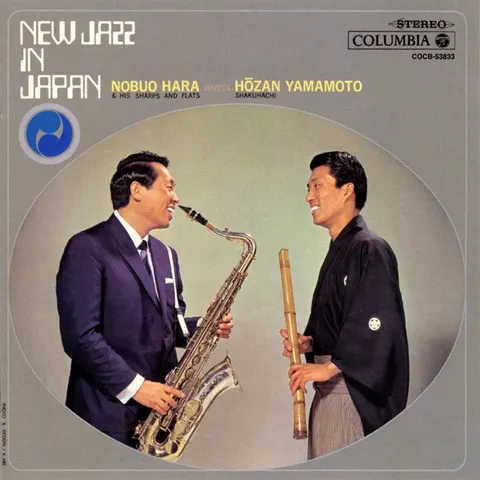
| Jazz Battle (credited to George Kawaguchi & All Stars) | 1991 | Paddle Wheel, KICJ 40 | George Kawaguchi, Elvin Jones and Carl Allen (drums); Hidehiko Matsumoto, Billy Pierce and Seiichi Nakamura (tenor saxophones); Sonny Fortune (alto saxophone, flute); Freddie Hubbard and Terumasa Hino (trumpets); Benny Green, George Duke and Hideo Ichikawa (piano); Ron Carter, Rufus Reid and Takashi Mizuhashi (bass); Salena Jones (vocals); Nobuo Hara and His Sharps & Flats | Recorded live at Pamir, Tokyo, on 2 November 1990; released 21 February 1991. Five tracks: "EJ Blues," "The Third Plane," "Moanin'," "The Man I Love," "George's Boogie (from Drum Boogie)." | not found | Amazon |
| Best: 50 Years Anniversary (compilation) | 1995 | Paddle Wheel, KICJ 249 | George Kawaguchi | Ten tracks drawn from his Paddle Wheel years, including "EJ Blues," "Watermelon Man," "Maiden Voyage" and "Summer Secret." Released 21 September 1995. | not found | Amazon |
| The Legendary Japanese Jazz Scene (compilation, George Kawaguchi & The Big 4) | 1995 | Paddle Wheel, KICJ 232 | George Kawaguchi (drums), Hidehiko Matsumoto (tenor saxophone), Hachidai Nakamura (piano), Mitsuru Ono (bass) | Mono compilation of the earliest Big Four sides, recorded 1953 to 1954: four parts of "Flying Home," "'S Wonderful," "How High the Moon," "Tenderly," "Sleepy's Idea," "Jealousy." Released 24 March 1995. | not found | Amazon |
| Big Apple (credited to George Kawaguchi New Big 4+1) | 2000 | Nippon Crown, CRCI-20485 | George Kawaguchi and Seiichi Nakamura (drums), Hideo Ichikawa (piano), Takashi Mizuhashi (bass), Hitoshi Okano (trumpet) | Released 9 May 2000. Twelve tracks including "Lover," "Big Apple Jump," "Felicidade," "Misty," "Caravan," "Song for My Father," "Take Five," "Watermelon Man" and "Drum Boogie." | not found | Amazon |
Co-Leader
Duets, drum battles and shared-billing records, chronological.
| Album | Year | Label | Co-billed with | Personnel | Notes | Listen | Buy |
|---|---|---|---|---|---|---|---|
| Drum-Scope | 1957 | King, LKB-8 | Hideo Shiraki, Jimmy Takeuchi, Nobuo Hara and His Sharps & Flats | Hideo Shiraki, George Kawaguchi, Jimmy Takeuchi (drums) with Nobuo Hara and His Sharps & Flats | Seven tracks including "Indian Love Call," "The Peanut Vendor," "Besame Mucho" and "Three Drum Musketeers." | Besame Mucho | Amazon |
| Midnight Jazz Session - Jazz Beat | 1959 | Victor, JV-5006 | Jimmy Araki and Mitsuru Ono | Jimmy Araki (alto saxophone, piano), Mitsuru Ono (bass), George Kawaguchi (drums) | Thirteen tracks including "North Coast," "Harlem Nocturne" and "Take the 'A' Train." | not found | Amazon |
| Drum & Drum | 1970 | Teichiku, SL-1313 | Akira Ishikawa | George Kawaguchi and Akira Ishikawa (drums); arranged by Takeshi Shibuya | Twelve tracks, mostly rock and pop material of the day: "Come Together," "Whole Lotta Love," "Sealed with a Kiss," "Drummer Man." | Full album | Amazon |
| Four Jazz Drums (Drummer Man Drums) | 1971 | Warner Bros., QL-8004W | Takeshi Inomata, Isamu Harada and Motohiko Hino | George Kawaguchi, Takeshi Inomata, Isamu Harada, Motohiko Hino (drums); arranged by Norio Maeda | Quadraphonic gatefold LP. Ten tracks: two parts of "Drum Battle," "Caravan," "A Taste of Honey," "Scarborough Fair," "Summertime" and others. | Full album | Amazon |
| Blues March - Drum Battle | 1975 | RCA, RGP-1157 | Akira Ishikawa & Count Buffaloes, George Otsuka Trio, Takeshi Inomata & Sound Limited | Four acts, one side each of the contest: Akira Ishikawa & Count Buffaloes, George Kawaguchi and Big 4, the George Otsuka Trio, Takeshi Inomata & Sound Limited | Eight tracks including "Drum Boogie," "When the Saints Go Marching In," "Blues March," "Take Five" and "Work Song." | not found | Amazon |
| G. Kawaguchi vs. M. Hino | 1976 | Teichiku, GM-5005 | Motohiko Hino | George Kawaguchi and Motohiko Hino (drums), Yoshio Otomo (alto saxophone), Tetsuo Fushimi (trumpet), Hideo Ichikawa (piano), Takashi Mizuhashi (bass) | Six tracks: "Caravan," "Impingement," "A Night in Tunisia," "Haruspex," "Cherry Brandy," "The Night Has a Thousand Eyes." | not found | Amazon |
| Hakunetsu no Drum Gassen (白熱のドラム合戦) | 1976 | Victor, SPX-1035 | Frankie Sakai | George Kawaguchi and Frankie Sakai (drums), Hidehiko Matsumoto (tenor saxophone), Akira Fukuhara (trumpet), Toshio Osawa (piano), Masaaki Fujita (guitar), Hachiro Kurita, Kunimitsu Inaba and Shinya Kimura (bass) | Eight tracks including "Drum Boogie," "Viva America," "Caravan," "Dark Eyes," "Samba de Orfeu," "Moanin'." | not found | Amazon |
| The Drum Battle | 1979 | Toshiba, LF-95025 | Jimmy Takeuchi, Donald Bailey and Shingo Okudaira | George Kawaguchi, Jimmy Takeuchi, Donald Bailey, Shingo Okudaira (drums), Tetsuo Fushimi (trumpet), Konosuke Saijo (tenor saxophone), Toshihiko Ogawa (piano), Yoshio Ikeda (bass) | Recorded at Toshiba EMI Studio on 5 December 1978. Three long tracks: "Jumping at the Woodside," "Bernie's Strut," "Drum Boogie." | not found | Amazon |
| The Exciting Drum | 1980 | Yupiteru, YL-8037 | Takeshi Inomata, George Otsuka, Sadakazu Tabata and Akira Ishikawa | George Kawaguchi, Takeshi Inomata, George Otsuka, Sadakazu Tabata, Akira Ishikawa (drums) | Fourteen tracks including "Drum Boogie," "Take Five," "Work Song," "Summertime," "Blues March" and "Michelle." | not found | Amazon |
| Collaboration: George Kawaguchi Meets Shelly Manne (laserdisc) | 1982 | Pioneer, MJ041-22LD | Shelly Manne | George Kawaguchi and Shelly Manne (drums), Hideo Ichikawa and Keitaro Miho (keyboards), Kiyoshi Hagiya (guitar), Shigeru Okazawa (electric bass), Kiyoshi Saito (flute), Jake H. Concepcion (saxophone), Larry Sunaga and Yoshinori Nohmi (percussion), plus trombone and two trumpets | Released 21 January 1982. Eight pieces including "Old Man," "Sand Storm," "Marina del Rey" and "Festa del Sol." | Video | Amazon |
| Killer Joe | 1982 | Union Jazz, ULP-5001 | Art Blakey | Art Blakey (drums, left channel), George Kawaguchi (drums, right channel), Branford Marsalis (alto and tenor saxophones), Wallace Roney (trumpet), Slide Hampton (trombone), Donald Brown (piano), Charles Fambrough (bass), Raiji Kawaguchi (percussion) | Produced by Teo Macero. Five tracks: "Killer Joe," "A Night in Tunisia," "Well You Needn't," "Tin Tin Teo," "Big Apple Jump." | Full album | Amazon |
| Big 2 (Lionel Hampton Swings with George Kawaguchi) | 1982 | Paddle Wheel, K28P 6170 | Lionel Hampton | Lionel Hampton (vibraphone, vocals), George Kawaguchi (drums), Arnett Cobb (tenor saxophone), Kenny Barron (piano), Milt Hinton (bass), Sam Turner (percussion) | Digital recording made 16 March 1982. Six tracks: "How High the Moon," "Secret Love," "Star Dust," "Air Mail Special," "Sweet Georgia Brown," "Hamp Meets George." | How High the Moon | Amazon |
| Drum Deluxe (ドラム・デラックス) | n.d. | Philips | Takeshi Inomata, Akira Ishikawa and 海老沢博一 | Takeshi Inomata, George Kawaguchi, Akira Ishikawa, 海老沢博一 (drums) | Gatefold LP; no year given on the Discogs listing. | not found | Amazon |
Guest, sideman and compilation appearances
Chronological. These are releases led by other artists or assembled from various sources on which Kawaguchi or his Big Four appears.
| Year | Release | Actual leader | Label | Listen | Buy |
|---|---|---|---|---|---|
| 1956 | The Swing Journal All Star Bands | Various | not found | Amazon | |
| 1959 | Jazz Festival of Japan (1) and (2) | Swing Journal All-Stars 1958 | Toshiba | not found | Amazon |
| 1963 | Modern Jazz (1) | Various | not found | Amazon | |
| 1968 | Koshiji in Bel Ami | Fubuki Koshiji | not found | Amazon | |
| 1969 | Long Recital | Fubuki Koshiji | Toshiba | not found | Amazon |
| 1970 | Jazz Adventure in Drums | Various | Victor World Group | not found | Amazon |
| 1970 | Jazz in Tokyo '69 | Various | not found | Amazon | |
| 1971 | All Star Swing Jam Sessions | SJ Jazz Workshop | not found | Amazon | |
| 1972 | Kaerazaru Seishun: Yakeato | Takuya Fujioka | Toho | not found | Amazon |
| 1973 | Jazz in Quadraphonic | Warner Beatniks, New Jazz Sextet | not found | Amazon | |
| 1977 | Long Recital '76 | Fubuki Koshiji | not found | Amazon | |
| 1980 | Suzukake no Michi | Happy Swingin' | Philips | not found | Amazon |
| 1981 | All of Me: Frank Nagai Sings Standards | Frank Nagai | Victor | not found | Amazon |
| 1986 | Anniversary Album | Shoji Suzuki and His Rhythm Aces | not found | Amazon | |
| 1987 | 40 Years Anniversary | Hidehiko Matsumoto | not found | Amazon | |
| 1998 | What a Wonderful World | Martha Miyake | Eastworld | not found | Amazon |
| 1998 | Live in Quest | Aki Yashiro | not found | Amazon | |
| 2005 | The Japanese Jazz Field Theory (Nihon Jazz Genron) | Various (George Kawaguchi & Big 4, Nitto Jazz Band, Shochiku Jazz Band, Martha Miyake) | Jazzbank | not found | Amazon |
| 2008 | Tribute to George Kawaguchi | The New Big 4+1 | Hiyo Records | not found | Amazon |
| 2010 | Showa Jazz Taizen: Maboroshi no Meiban, Hizoban | Various | Columbia | not found | Amazon |
| 2018 | Nippon Jazz | Various | Three Blind Mice | not found | Amazon |
| 2019 | J Jazz: Deep Modern Jazz from Japan 1969-1983, Volume 2 | Various | not found | Amazon |
Sources
- Discogs: George Kawaguchi, artist 1803197
- Discogs: George Kawaguchi's The Big 4, artist 1059167
- Discogs: George Kawaguchi & The Super Band, artist 5549996
- Discogs: Jazz At The Torys, King LKB-7
- Discogs: On Stage! Big 4 Plus 1, Victor LV-23
- Discogs: The Big 4, Three Blind Mice TBM-66
- Discogs: Killer Joe, Union Jazz ULP-5001
- Discogs: George Kawaguchi Plays Herbie Hancock, Paddle Wheel K28P-6469
- Wikipedia: George Kawaguchi
- Wikipedia (Japanese): ジョージ川口
- Hidehiko "Sleepy" Matsumoto - tenor saxophonist and co-founder of the Big Four; credited on Jazz at the Torys (1957), On Stage! Big 4 Plus 1 (1958), The Original Big Four (1959), George and Sleepy (1969), Blow! Blow! Big 4 (1974), The Big 4 (1976), Original Big Four Live (1977), Super George & The Super Band (1979), the Victor drum-battle album with Frankie Sakai (1976), the DHL big band (1986) and Jazz Battle (1991).
- Hachidai Nakamura and Mitsuru Ono - pianist and bassist of the original Big Four quartet on Jazz at the Torys, The Original Big Four and Original Big Four Live.
- Sadao Watanabe - alto saxophone and flute on On Stage! Big 4 Plus 1, recorded at Tokyo Video Hall on 15 June 1958.
- Isao Suzuki - bass on George and Sleepy (1969) and Super George & The Super Band (1979).
- Yasuaki Shimizu - tenor saxophone on Super George & The Super Band (1979) and African Hot Dance (1980).
- Takeru Muraoka - soprano and tenor saxophones on African Hot Dance (1980).
- Akira Ishikawa - co-leader of Drum & Drum (1970), one of the four billed acts on the 1975 RCA drum-battle album, and a co-billed drummer on The Exciting Drum (1980).
- Motohiko Hino - one of four drummers on Four Jazz Drums (1971) and Kawaguchi's opponent on G. Kawaguchi vs. M. Hino (1976).
- Takeshi Inomata - one of four drummers on Four Jazz Drums (1971), leader of Sound Limited on the 1975 RCA drum-battle album and a co-billed drummer on The Exciting Drum (1980).
- Akira Miyazawa - tenor saxophone on Blow! Blow! Big 4 (1974), alongside Matsumoto.
- George Otsuka - billed on the 1975 RCA drum-battle album with his trio and on The Exciting Drum (1980).
- Terumasa Hino - trumpet on the live Jazz Battle (1991).
- Hiromasa Suzuki - arranger on the DHL Presents George Kawaguchi Super Big Band (1986).
- Art Blakey - the other drummer on Killer Joe (1982).
- Lionel Hampton and Kenny Barron - vibraphone and piano on Big 2 (recorded 16 March 1982).
- Slide Hampton and Wallace Roney - trombone and trumpet on Killer Joe (1982).
- Donald Harrison - saxophones on George Kawaguchi Plays Herbie Hancock (1987), with Terence Blanchard on trumpet.
- Freddie Hubbard, Elvin Jones, Ron Carter, George Duke, Benny Green and Rufus Reid - guests on the live Jazz Battle (recorded at Pamir, Tokyo, 2 November 1990).
- Frankie Sakai, Isamu Harada, Jimmy Takeuchi, Hideo Shiraki, Nobuo Hara, Donald Bailey, Shingo Okudaira, Shelly Manne - the other drummers on his battle and duet records.
- Fubuki Koshiji - the singer on whose 1967 single, 1968 Koshiji in Bel Ami and Long Recital albums (1969 and 1977) Kawaguchi and the Big Four are credited.
- Kunihiko Sugano (piano) - on George and Sleepy (1969), with Hidehiko Matsumoto and Isao Suzuki, and on Blow! Blow! Big 4 (1974), where he shares the piano chair with Hachidai Nakamura.
- Toshiyuki Honda - alto and soprano saxophonist and flutist; credited on African Hot Dance (Electric Bird, K28P-6030, recorded June 17 to 19, 1980).
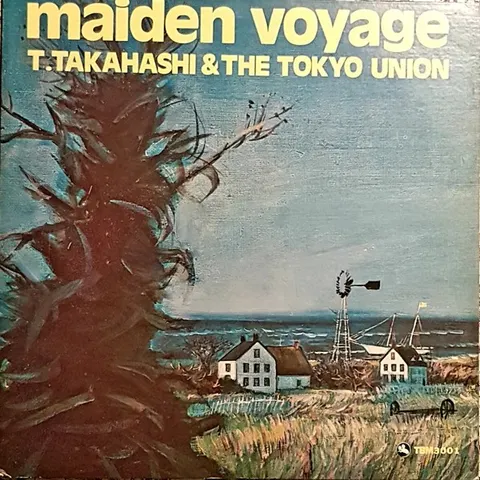
- Tatsuya Takahashi - tenor saxophonist and leader of the big band Tokyo Union; credited as leader, tenor saxophonist and clarinetist on DHL Presents George Kawaguchi Super Big Band (1986), alongside Hidehiko Matsumoto.
- Kiyoshi Sugimoto - one of two guitarists on Kawaguchi's African Hot Dance (Electric Bird, 1980, recorded 17 to 19 June 1980).
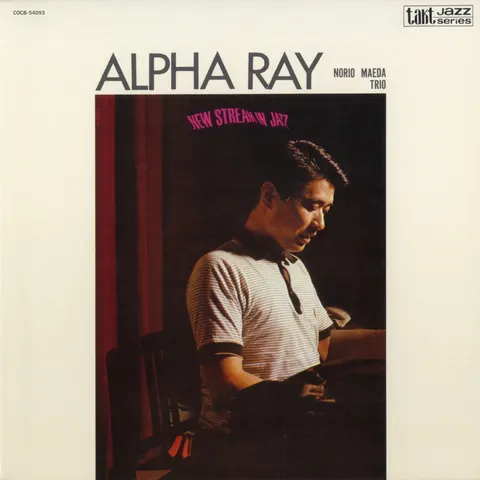
- Norio Maeda - arranger of Four Jazz Drums (Warner Bros., 1971), on which Kawaguchi is one of four drummers, and of DHL Presents George Kawaguchi Super Big Band (1986).
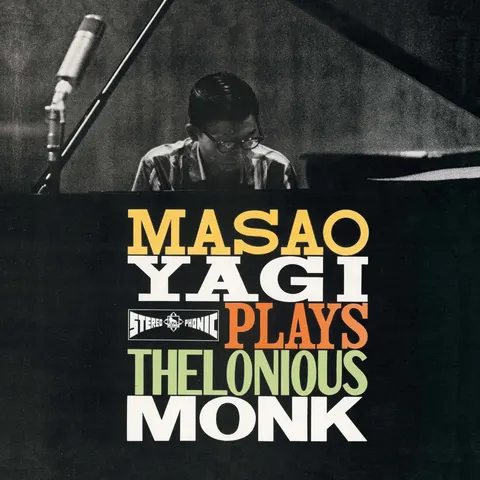
- Masao Yagi - pianist on On Stage! Big 4 Plus 1 (Victor LV-23), recorded at Tokyo Video Hall on June 15, 1958.
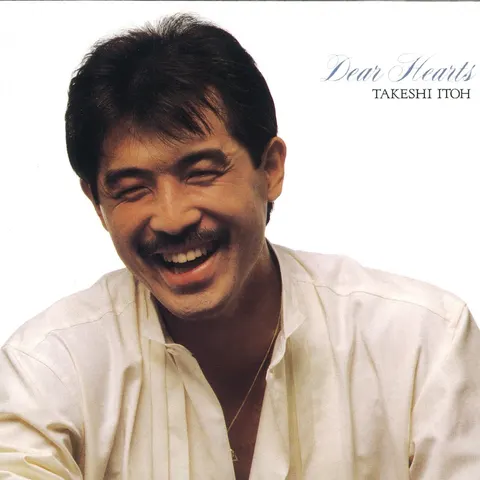
- Takeshi Itoh - alto saxophone on African Hot Dance (Electric Bird, 1980), credited to George Kawaguchi and Super Fusion Band. The T-Square saxophonist, credited on Discogs.
- Nobuo Hara - tenor saxophonist and leader of Sharps & Flats, the band on the drum-battle record Drum-Scope (King, 1957).
- Chikara Ueda - arranger, electric pianist and synthesizer player on African Hot Dance (Electric Bird, 1980), and arranger of four tracks on Super Drums 2: Tribute to Gene Krupa (Paddle Wheel, 1983).
- Yoshio Otomo - alto saxophonist on four Kawaguchi records: G. Kawaguchi Vs. M. Hino (Teichiku, 1976), Super George & The Super Band (1979), Super Drums 2 (1983) and DHL Presents George Kawaguchi Super Big Band (1986).
- Konosuke Saijo - tenor saxophonist on The Drum Battle (Toshiba, recorded December 5, 1978), one of two horns, with the trumpeter Tetsuo Fushimi, on the four-drummer record.
- Katsutoshi Morizono - guitar on African Hot Dance (Electric Bird, 1980), the George Kawaguchi & Super Fusion Band album on which Kawaguchi plays drums.
- MALTA - saxophonist credited as assistant director on Big 2 (Paddle Wheel, recorded March 16, 1982), Kawaguchi's album with Lionel Hampton; he does not play on it.
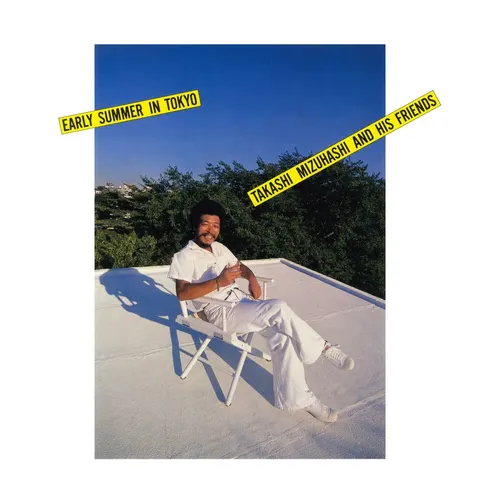
- Takashi Mizuhashi - bassist on The Big 4 (Three Blind Mice, 1976), George Kawaguchi Plays Herbie Hancock (1987), Big Apple (2000) and the 2008 tribute album; his official site describes a partnership with Kawaguchi of more than twenty-five years, from the Big 4 to the Big 4 + 1.
More Big Band Artists
See all 219 Big Band artists →More Japanese Jazz Artists
See all 262 Japanese artists →- Discogs: George Kawaguchi
- YouTube: George Kawaguchi (Topic channel)
- Wikipedia: George Kawaguchi
- Wikipedia (Japanese): ジョージ川口
- George Kawaguchi on JazzProfiles.com
- r/JapaneseJazz
- Wikipedia: George Kawaguchi
- Wikipedia (Japanese): ジョージ川口
- Wikidata: Q11310886
- Kotobank: ジョージ川口
- Discogs: George Kawaguchi, artist 1803197
- Discogs: George Kawaguchi's The Big 4, artist 1059167
- Discogs: Jazz At The Torys, King LKB-7, 1957
- Discogs: On Stage! Big 4 Plus 1, Victor LV-23, 1958
- Discogs: Killer Joe, Union Jazz ULP-5001, 1982
- Point of Departure: Tracing a Giant Step, John Coltrane in Japan