 JAZZPROFILES lives in the music 1,572 Jazz Artists fully Profiled!
 Hidehiko Matsumoto
Last updated August 30, 2026
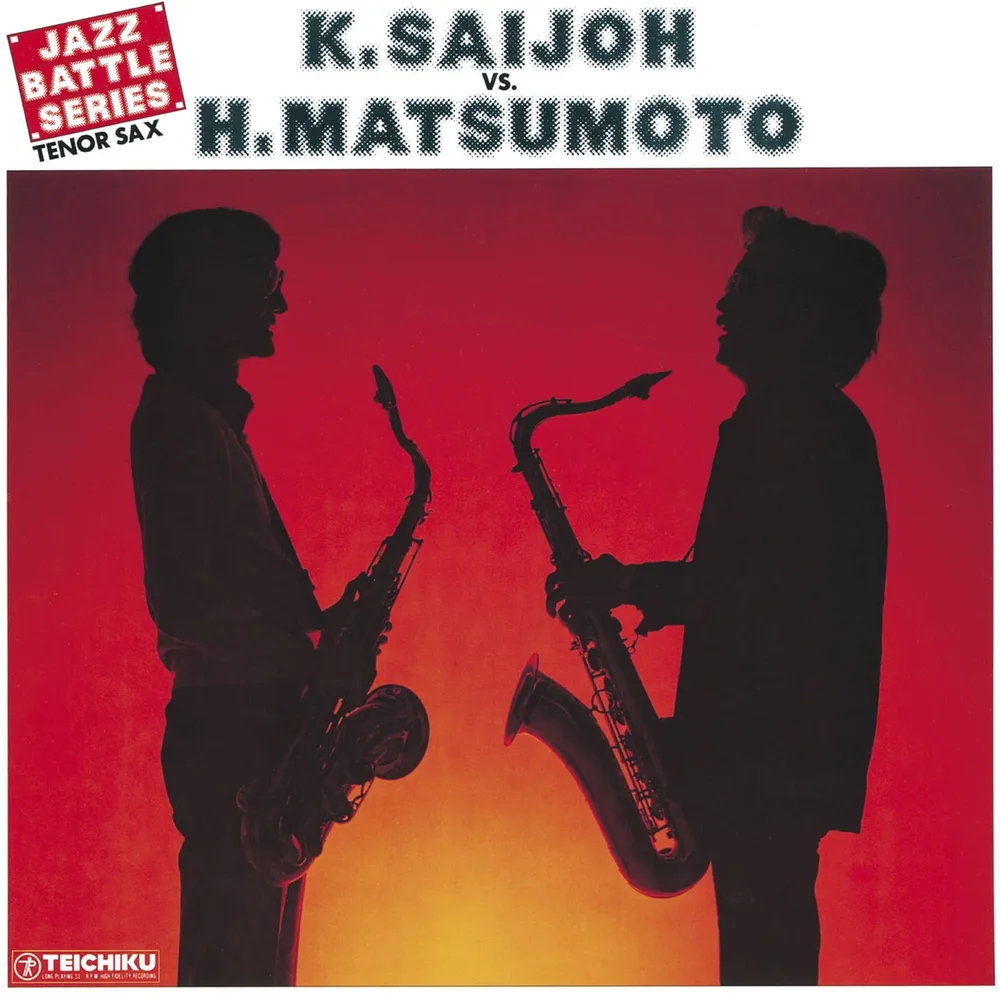
Cover art for "Jazz Battle Series: K. Saijoh vs. H. Matsumoto" (Teichiku Records), a genuine backlit photograph of Hidehiko "Sleepy" Matsumoto (right) performing on tenor sax — used as a stand-in, no free-licensed photo of Matsumoto could be located after a genuine search. Standard copyright, all rights reserved — held by Teichiku Records. This is not a Creative Commons–licensed image; it is used here as an honestly-disclosed editorial stand-in for a real photo. — Downloaded directly from the Apple Music/iTunes artwork CDN (https://music.apple.com), full-resolution cover scan. Saved locally as portrait.jpg in this folder.
Hidehiko Matsumoto — known throughout his career as "Sleepy," a nickname given to him by an American soldier while he was playing at a US military camp in the years right after the war — was born in Okayama Prefecture on October 12, 1926, and raised in Fuchū, Hiroshima. He became a bebop saxophonist in the late 1940s, part of the pioneer generation that built Japan's postwar jazz scene largely inside occupation-era military clubs before it had anywhere else to exist. He played in early bands including CB Nine and The Six Josés, and in The Big Four alongside drummer George Kawaguchi and composer Hachidai Nakamura — two other figures foundational to how Japanese jazz got its start.
By 1959 he had joined Hideo Shiraki's small ensemble, and his international profile grew on its own merit rather than as novelty: a 1963 appearance with Gerald Wilson at the Monterey Jazz Festival, and a 1964 collaboration with Toshiko Akiyoshi that also produced a session billed to "Toshiko Mariano and Her Big Band," putting him in a Tokyo rhythm section with Paul Chambers and Jimmy Cobb — Miles Davis's own bassist and drummer. He began leading his own ensembles the same year.
The single most striking fact of his career: on July 22 and 24, 1966, during John Coltrane's final tour of Japan — the tour that produced the Live in Japan album — Matsumoto played with Coltrane's quintet onstage in Tokyo. No commercial recording of his specific participation survives, but the dates themselves are documented against a well-known, thoroughly chronicled tour.
His own catalog as a leader runs deep, over fifty credited dates on Discogs spanning nearly four decades: Sleepy Matsumoto and Latin Carnival (both 1958, King Records) through a run of "Jazz Battle" tenor-showdown records in the 1970s (K. Saijo vs. H. Matsumoto, 1976; Opus de Four Tenors, 1977) and The Session / Sleepy Meets the Great Jazz Trio (1980), pairing him with Japan's premier modern-mainstream rhythm section. He remained active into his own late sixties and seventies, releasing Eternal Dreams on Meldac Jazz in 1997. Sidemen across his groups over the decades included Takeshi Inomata, Akira Miyazawa, George Otsuka, and Isao Suzuki.
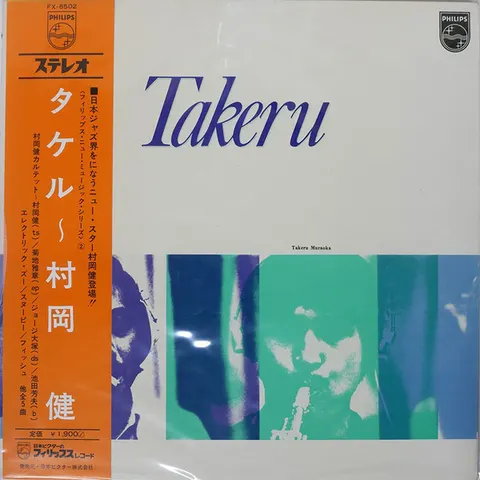
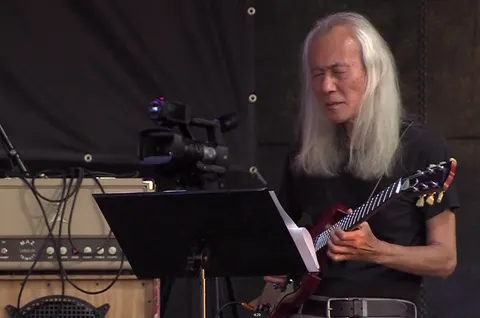
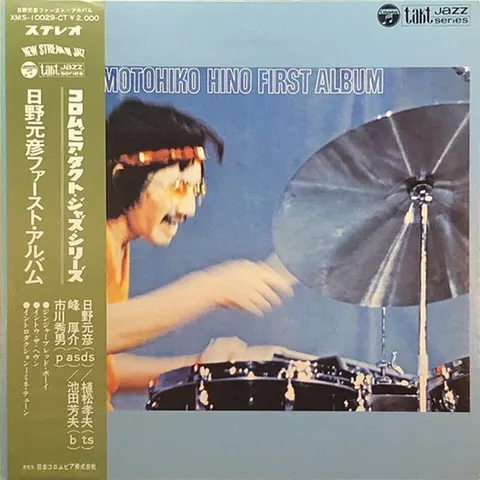
He stayed connected to later generations of Japanese musicians throughout his career — a saxophonist who'd learned the music playing for occupying American forces in the late 1940s still recording alongside players two generations behind him, including Takeru Muraoka, Ryo Kawasaki, Motohiko Hino, and Masahiko Togashi. He died in Tokyo on February 29, 2000, at 73.
Matsumoto's catalog spans real stylistic range across his four-decade recording career: hard bebop in the 1940s-50s, Latin-flavored sax records in the same period, straight-ahead swing collaborations with visiting American musicians (Gerald Wilson, and — however briefly — Coltrane), and, from the mid-1970s on, a run of tenor-battle "Jazz Battle Series" records pitting him against other Japanese saxophonists of his generation.
- Sleepy Matsumoto (1958, King Records) - His debut as a leader. Buy
- The Session / Sleepy Meets the Great Jazz Trio (1980) - Paired with Japan's celebrated modern-mainstream rhythm section. Buy
- Four Wings (1980, with Isao Suzuki, Kunihiko Sugano, George Otsuka) - A late-career quartet date.
- K. Saijo vs. H. Matsumoto (1976, Teichiku Records) - Jazz Battle Series entry; source of this profile's stand-in photo. Buy
- The July 1966 John Coltrane quintet dates in Tokyo - No commercial release exists, but this is the fact worth knowing before anything else about him.
Hidehiko Matsumoto: Full Discography
Discogs artist ID 1263586 (松本英彦). Identity confirmed by two fully independent, mutually corroborating sources: the Discogs profile (matching birth/death dates, the "Sleepy" nickname) and a directly-fetched Wikipedia article (early bands, the 1959 Hideo Shiraki connection, 1963 Monterey Jazz Festival, 1964 Toshiko Akiyoshi collaboration, and the July 1966 Coltrane dates). 195 credits total: 51 Main, 49 Appearance.
As Leader
No Spotify matches were found for any of his leader titles on this pass — search results were dominated by unrelated tracks using "sleepy" as a keyword — so Listen cells are blank throughout rather than filled with a guessed or mismatched link.
| Album | Year | Label | Billed as | Notes | Buy |
|---|---|---|---|---|---|
| Sleepy Matsumoto | 1958 | King Records | 松本英彦 | Debut as a leader | Amazon |
| Latin Carnival | 1958 | King Records | Hidehiko Matsumoto, Akira Fukuhara, Seiji Hiraoka, Hideo Shiraki, Akitoshi Igarashi and the Tokyo Cuban Boys | Amazon | |
| Smoke Gets in Your Eyes | 1959 | King Records | 松本英彦 | Amazon | |
| サックス・ファンタジー (Sax Fantasy) | 1962 | Kodama Press | Hidehiko Matsumoto, Akira Miyazawa, Jiro Inagaki | Amazon | |
| Night Must Fall — Latin Flute Highlights | 1963/1964 | Columbia | H. Matsumoto, J. Masubuchi & His Afroamigos | Two releases of the same title | Amazon |
| Jazz Inter-session | 1964 | — | Charlie Mariano, Masao Yagi, Hidehiko Matsumoto, Akira Fukuhara, Masanaga Harada, Hideo Shiraki | Amazon | |
| 恍惚のテナー・サックス (Fascinating Tenor-Sax) | 1966 | — | Yasunobu Matsuura, Hidehiko Matsumoto, Akira Miyazawa | Amazon | |
| Operation Sam Taylor | 1967 | — | Hidehiko Matsumoto, Akira Miyazawa | Amazon | |
| クリスマス・テナー・ムード (Christmas Tenor Mood) | 1968 | Victor / Perfect Sound | Hachidai Nakamura Quintet, Hidehiko Matsumoto | Amazon | |
| Tenor Sax Passion & Mood | 1968 | — | Hidehiko Matsumoto, Yasunobu Matsuura | Amazon | |
| Sax! Sax! Sax! | 1969 | Philips | Keiichiro Ebihara, Hidehiko Matsumoto | Amazon | |
| 魅惑のテナー・サックス〜ムード演歌のすべて〜 | 1970 | My Pack | Hidehiko Matsumoto and his group | Amazon | |
| テナー・サックス / 懐かしのヒット・メロディー | 1970 | Toshiba Records | Hidehiko Matsumoto, Tatsuya Takahashi | Amazon | |
| 三大テナーの競演 (Battle of Three Great Tenors) | 1971 | Canyon | Sam Taylor, Yasunobu Matsuura, Hidehiko Matsumoto | Amazon | |
| Golden Jam Session at Junk | 1973 | JVC | Hidehiko Matsumoto / Eiji Kitamura / Akio Mitsui and others | Amazon | |
| Let's Swing Now | 1976 | — | Hidehiko Matsumoto, Seiichi Nakamura, Kazuo Yashiro, Masanaga Harada, Shoji Nakayama | Amazon | |
| K. Saijo vs. H. Matsumoto | 1976 | Teichiku Records | K. Saijo vs. H. Matsumoto | Jazz Battle Series entry; the stub image on this profile is drawn from this release's cover | Amazon |
| Opus de Four Tenors | 1977 | RCA | Hidehiko Matsumoto, Konosuke Saijo, Teruo Yoda, Jun Sugihara | Amazon | |
| Pioneering Sounds in Jazz | 1977 | Pioneer | Jun Watanabe, Hidehiko Matsumoto, Keiichiro Ebihara, Hiroshi Matsumoto, Kiyoshi Onodera, Kenji Sato | Amazon | |
| The First by Sleepy | 1977 | — | Hidehiko Matsumoto | Amazon | |
| When You're Smiling | 1978 | JVC | Swing Beavers + Matsumoto Hidehiko | Amazon | |
| I Wish You Love | 1979 | — | Junko & Sleepy | Amazon | |
| Prediction | 1980 | Kitty Jazz | Hidehiko "Sleepy" Matsumoto | Amazon | |
| The Blues | 1980 | Next Wave | "Sleepy" Matsumoto, Ichiro Masuda | Amazon | |
| Hidehiko Matsumoto and Super Tenors | 1980 | RCA | Hidehiko Matsumoto | Amazon | |
| Four Wings | 1980 | — | Hidehiko Matsumoto, Kunihiko Sugano, Isao Suzuki, George Otsuka | Amazon | |
| The Session / Sleepy Meets the Great Jazz Trio | 1980 | — | Hidehiko Matsumoto / The Great Jazz Trio | Paired with Japan's celebrated modern-mainstream rhythm section | Amazon |
| Rio Manhattan | 1981 | Seven Seas | Sleepy Matsumoto with Manhattan Friends | Amazon | |
| Hot Jazz | 1983 | — | Hidehiko Matsumoto | Amazon | |
| Swingin' Standard Jazz | 1985 | CBS/Sony | Eiji Kitamura / Hidehiko Matsumoto / Hideo Ichikawa | Amazon | |
| My Friends | 1986 | CBS/Sony | Kazuo Yashiro Trio + Hidehiko Matsumoto and others | Amazon | |
| 40 Years Anniversary | 1987 | — | Hidehiko Matsumoto | Amazon | |
| 思い出の浜辺 | 1989 | — | Keiko Matsumoto, Hidehiko Matsumoto | Amazon | |
| 二人は大人 | 1990 | — | Hidehiko Matsumoto & Family Business | Amazon | |
| Papillon | 1992 | — | Sleepy Matsumoto with N.Y. 1st Calls | Amazon | |
| 恋のパピヨン | 1992 | — | Hidehiko Matsumoto & Family Business | Amazon | |
| Eternal Dreams | 1997 | Meldac Jazz | Sleepy Matsumoto & N.Y. All Stars | Amazon |
Additional undated (n.d.) leader/co-billed titles on Discogs, mostly Japanese-market enka/mood-tenor crossover releases: 夜のヒット・スタジオ (RCA, with 木村好夫とブルー・ベルベット), 長崎は今日も雨だった (Toshiba Records), 松本英彦 ラテン・アルバム (Polydor), Top Star in Tenor Sax Vol. 2 (Toshiba Records).
The Coltrane dates — no commercial release
July 22 and 24, 1966: Matsumoto played with John Coltrane's quintet in Tokyo during Coltrane's final Japan tour, per Wikipedia. No commercial recording of Matsumoto's specific participation was located on Discogs; the tour's official document, Live in Japan, is credited to Coltrane's own working quintet. This is treated as a real, dated biographical fact rather than a discography entry.
Sideman — the pioneer generation (selection)
| Album | Year | Leader / Billing | Notes |
|---|---|---|---|
| Jazz in Japan Recorded in Tokyo | 1964 | Toshiko Mariano and Her Big Band, featuring Paul Chambers and Jimmy Cobb | Billed as "Sleepy Matsumoto"; a Tokyo session with Miles Davis's own bassist and drummer |
Sideman — this project's other artists (verified via shared Discogs credits)
| Album | Year | Co-credited with |
|---|---|---|
| Exciting Jazz Spirit | 1968 | Masahiko Togashi, Norio Maeda, Shungo Sawada |
| Jam in Yokota | 1973 | Takeru Muraoka, Ryo Kawasaki, Motohiko Hino |
| Four Wings | 1980 | Isao Suzuki, Kunihiko Sugano, George Otsuka |
Scale note
The tables above cover his leader/co-leader dates and the sideman credits most relevant to his documented career milestones and this project's other artists. His 49 Appearance credits include a large volume of Japanese-market enka and mood-tenor session work not individually catalogued here.
- George Kawaguchi and Hachidai Nakamura - Bandmates in The Big Four, one of his earliest groups.
- Hideo Shiraki - He joined Shiraki's small ensemble in 1959.
- Toshiko Akiyoshi - Collaborated in 1964, the same year he began leading his own ensembles.
- John Coltrane - Played with Coltrane's quintet in Tokyo, July 22 and 24, 1966.
- Isao Suzuki - A sideman in his own groups over the years; co-credited on Four Wings (1980).
- Masahiko Togashi - Co-credited on Exciting Jazz Spirit (1968).
- Takeru Muraoka, Ryo Kawasaki, and Motohiko Hino - Co-credited on the 1973 Jam in Yokota session.
More Bebop Artists
See all 166 Bebop artists →More Japanese Jazz Artists
See all 70 Japanese artists →- Hidehiko Matsumoto — Wikipedia (fetched directly and successfully)
- Hidehiko Matsumoto — Discogs artist 1263586 (profile and full paginated release list retrieved via the Discogs API)
- WebSearch synthesis of fromthevaults-boppinbob.blogspot.com and other sources for the "Sleepy" nickname origin story