 JAZZPROFILES lives in the music 1,572 Jazz Artists fully Profiled!
 George Otsuka
Last updated September 5, 2026
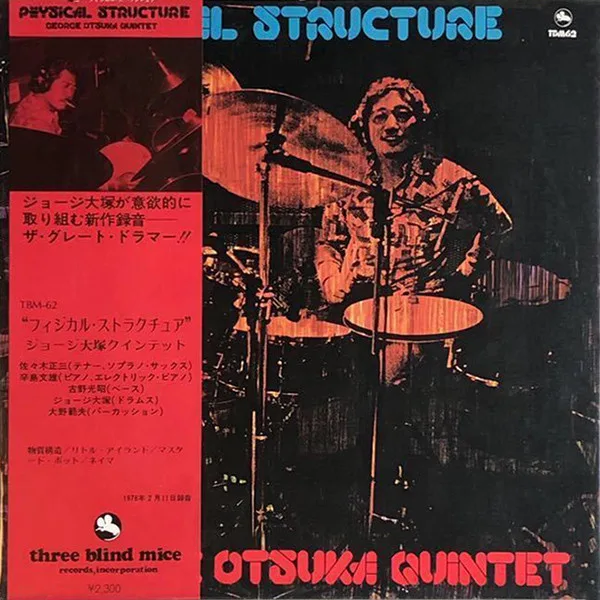
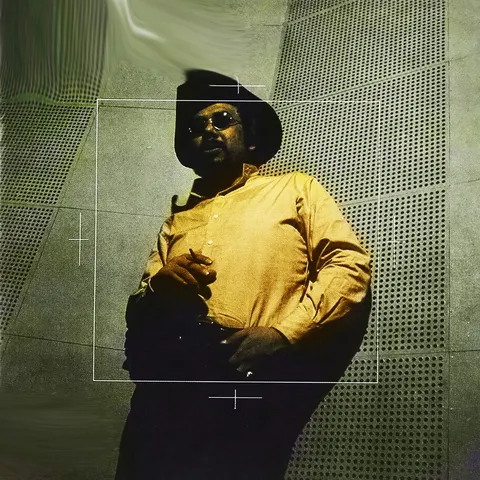
George Otsuka at the kit on the front cover of *Physical Structure*, his 1976 quintet album for Three Blind Mice. Standard copyright, all rights reserved, held by Three Blind Mice. This is not a Creative Commons or public-domain image, and it is not presented as one. It is an album cover whose front photograph shows the artist himself playing, used here as an honestly disclosed editorial stand-in for a portrait. Art direction on the sleeve is credited to Ben Nishizawa (Discogs release 6524874). — Discogs release 6524874 (Physical Structure, Three Blind Mice TBM-62, 1976), primary image, 600 x 600, downloaded via the Discogs API (126,958 bytes, verified under the 20MB ceiling via an HTTP HEAD request returning Content-Length: 126958). Saved locally as portrait.jpg in this folder, not hotlinked. Note for the site build: the i.discogs.com URL used in final-blog.md's embed is a signed CDN path and may not be stable long-term, so the local portrait.jpg is the authoritative asset for jazzprofiles.com.
George Otsuka was born Keiji Otsuka (大塚敬治) in Tokyo on April 6, 1937. He began playing professionally toward the end of the 1950s in Sadao Watanabe's quartet, and his earliest documented recording credit is from 1959, on a record by Danny Iida and His Paradise Kings. Through the 1960s he worked for several years with Hidehiko "Sleepy" Matsumoto, and appeared on sessions with Masao Yagi, Akira Miyazawa and the Swing Journal All Stars, establishing himself as a first-call drummer in Tokyo before he turned 30.
By 1967 he was leading his own trio, with Hideo Ichikawa on piano and Masaoki Terakawa on bass. That group recorded three albums in three years, titled in sequence. Page 1 was cut in public at seven in the evening on October 14, 1967 at Teichiku Kaikan Studio and released on Takt. Page 2 followed on July 22, 1968 on Columbia's Takt Jazz Series. Last Summer 〈Page 3〉 completed the set in 1969, with Ichikawa adding organ and Terakawa electric bass.
Between the second and third of those came the record that best explains his standing. On December 9, 1968, at Hikohan Studio in Tokyo, Otsuka recorded Groovin' With My Soul Brother with Roy Haynes, released on Victor World Group and credited to Roy Haynes & the George Otsuka Trio. Both men played drums, with Ichikawa on piano and Yoshio Suzuki on bass, and the sleeve instructs the listener where to find each drummer: Haynes on the right channel, Otsuka on the left. The opening track is "Ode to Roy." In 1970 Otsuka was one of four drummers in the Four Drums ensemble that toured Japan, alongside Jack DeJohnette, Roy Haynes and Mel Lewis.
He expanded to a quintet in 1971 with Sea Breeze on Union, bringing in Shunzo Ohno on trumpet and flugelhorn, Takao Uematsu on saxophones, Ichikawa on electric piano and Takashi Mizuhashi on bass. The record moves between originals and a reading of "Fool on the Hill," and it became one of the entry points for later listeners working backward into Japanese jazz.
A run on Three Blind Mice followed, which is a large part of why his catalog was rediscovered. Go On was recorded at Aoi Studio on November 28 and 29, 1972, with Mabumi Yamaguchi joining on saxophones and Toshiyuki Daitoku on piano and Rhodes. In Concert! was recorded live at Kosei Nenkin Hall on October 11, 1973. You Are My Sunshine returned to a trio format on October 31, 1974, with Ichikawa back on piano and Naosuke Miyamoto on bass.
Two months before that trio date, on August 6, 1973, Otsuka had appeared at Iino Hall in Tokyo for a live recording released as Jackeyboard on Trio Records, co-billed with Jack DeJohnette and bassist Mitsuaki Furuno. DeJohnette, one of the most celebrated drummers of his generation, played piano and melodica on the date. Otsuka played the drums.
Loving You George was recorded on July 19, 1975 at Nemu no Sato and remixed that October, with Fumio Karashima on keyboards, Shozo Sasaki on saxophones, Furuno on bass and Norio Ohno on percussion. The same group recorded Physical Structure for Three Blind Mice at Epicurus Studio on February 11, 1976, with Karashima adding synthesizer. Both albums close on Coltrane compositions, "Miles Mode" and "Naima" respectively.
In May 1978 he reversed the usual direction of travel and recorded in New York. Maracaibo Cornpone was cut at Sound Ideas Studio on May 25, 26 and 29, 1978, mixed there on June 1 and remixed at Onkio Haus in Tokyo on July 16, with Miroslav Vitous on bass, John Abercrombie and Yoshiaki Masuo on guitars, Masabumi Kikuchi on keyboards and Naná Vasconcelos on percussion. That November, back in Tokyo, he recorded Guardian Angels over three days at Onkio Haus with Vitous directing, John Scofield on guitar, Mabumi Yamaguchi on saxophone and a 23-year-old Kenny Kirkland on keyboards, three years before Kirkland joined Wynton Marsalis. Four Wings, recorded in October 1979 with Hidehiko Matsumoto, Kunihiko Sugano and Isao Suzuki, closed out the decade.
Across his career he was the drummer visiting musicians worked with in Japan, a list that includes Roy Haynes, Hampton Hawes, Chris Connor, Jack DeJohnette, Phil Woods, Miroslav Vitous, John Scofield, Kenny Kirkland, Elvin Jones, Richie Beirach, Nana Vasconcelos and Reggie Workman. He also played on records that became landmarks for other leaders, among them Isao Suzuki's Blow Up on Three Blind Mice in 1973 and Terumasa Hino's Hip Seagull in 1978, and on three Fumio Karashima albums between 1977 and 1981.
Decades later his seventies catalog found a second audience through the Japanese jazz reissue wave. He appears on J Jazz: Deep Modern Jazz From Japan 1969-1984 (2018), the Wax Poetics Japan compilations (2011), The Three Blind Mice 45 Box (2012) and both 2022 volumes of Japanese Jazz Spectacle.
George Otsuka passed away on March 10, 2020 at a hospital in Suginami, Tokyo. He was 82, and had been recording for more than sixty years.
Otsuka came up in the hard-bop idiom and never entirely left it, even as his own records moved through jazz-funk and fusion in the 1970s. His playing is characterised by a light, propulsive ride cymbal and an unusually conversational relationship with the piano, which is the quality that made the long partnership with Hideo Ichikawa work across three trio albums and the Roy Haynes date.
The Haynes record is the most direct evidence of his sensibility, because the stereo separation makes his choices audible next to one of the acknowledged masters of the instrument. Otsuka plays with less of Haynes's snap and more sustain, filling space rather than punctuating it, and the contrast is the point of the record.
As a bandleader his instinct ran toward front lines with two horns and a keyboard player willing to use electric instruments, which is how the quintet records of the early 1970s ended up in jazz-funk territory without ever fully committing to a groove-first approach. The Three Blind Mice albums keep an audiophile clarity and long solos alongside the funk rhythms, which is precisely the combination that later crate-diggers responded to. His habit of closing albums with Coltrane compositions, "Miles Mode" on Loving You George and "Naima" on Physical Structure, points to where his loyalties stayed.
| Album | Year | Why it matters | Listen |
|---|---|---|---|
| Page 1 | 1967 | The trio with Ichikawa and Terakawa, recorded live in a studio in front of an audience | Spotify |
| Groovin' With My Soul Brother | 1968 | Two drummers, one per stereo channel, with Roy Haynes; the clearest statement of his standing | YouTube search |
| Last Summer 〈Page 3〉 | 1969 | Where the trilogy lands, with Ichikawa moving to organ | Spotify |
| Sea Breeze | 1971 | First quintet record, Shunzo Ohno on trumpet, the reissue crowd's usual way in | Spotify |
| Jackeyboard | 1973 | Live at Iino Hall with Jack DeJohnette on piano and melodica | Spotify |
| Loving You George | 1975 | The seventies quintet at full strength, closing on "Miles Mode" | Spotify |
| Physical Structure | 1976 | The Three Blind Mice record, and the source of the only widely available photograph of him | YouTube search |
| Maracaibo Cornpone | 1978 | Recorded in New York with Vitous, Abercrombie, Kikuchi and Vasconcelos | Spotify |
George Otsuka: Full Discography
Discogs main artist ID 1145517, listed there as "George Ohtsuka," real name 大塚敬治 (Keiji Otsuka), born April 6, 1937 in Tokyo, passed away March 10, 2020 in Suginami, Tokyo.
Discogs splits his catalog across five separate artist entities, and a search on any one of them alone undercounts him badly. All five were pulled for this discography: George Ohtsuka (1145517, 77 releases), George Otsuka Quintet (3361733, 15), George Otsuka Trio (1154469, 19), The New George Otsuka Trio (3261502, 1) and ジョージ・大塚カルテット (6784838, 2). Combined total 114 credited releases: 29 Main, 63 Appearance, 19 TrackAppearance, 2 UnofficialRelease, 1 Producer. Registered name variations include G. Ohtsuka, G. Otsuka, G. Ōtsuka, George Ohtsuke, George Otsuka, George Otuka, George Ōtsuka, ジョージ大塚 and 大塚敬治.
As Leader and Co-Leader
| Album | Year | Label | Billing, personnel and recording detail | Listen | Buy |
|---|---|---|---|---|---|
| Page 1 (ページ・ワン) | 1967 | Takt | George Otsuka Trio: Otsuka (drums), Hideo Ichikawa (piano), Masaoki Terakawa (bass). Recorded in public at 7:00 p.m. on October 14, 1967 at Teichiku Kaikan Studio. Liner notes by Yozo Iwanami | Spotify | Amazon |
| Page 2 (ページ2) | 1968 | Columbia (Takt Jazz Series) | Same trio. Recorded July 22, 1968. Opens with "Hot Cha"; also "On Green Dolphin Street," "Blues by Five," "Lament" | Spotify | Amazon |
| Groovin' With My Soul Brother | 1968 | Victor World Group | Billed to Roy Haynes & the George Otsuka Trio. Roy Haynes and George Otsuka both on drums, Hideo Ichikawa (piano), Yoshio Suzuki (bass). Recorded at Hikohan Studio, Tokyo, December 9, 1968. The sleeve places Haynes on the right channel and Otsuka on the left. Opens with "Ode to Roy" | YouTube search | Amazon |
| Last Summer 〈Page 3〉 (ラスト・サマー) | 1969 | Columbia | Same trio, with Ichikawa adding organ and Terakawa adding electric bass. Gatefold sleeve. Liner notes by Masahisa Segawa | Spotify | Amazon |
| Sea Breeze (シー・ブリーズ) | 1971 | Union | First album under the George Otsuka Quintet name. Shunzo Ohno (trumpet, flugelhorn), Takao Uematsu (tenor and soprano saxophone), Hideo Ichikawa (electric piano), Takashi Mizuhashi (bass), Otsuka (drums). Tracks include "Sea Breeze," "Fool on the Hill," "Cannibal," "Potato Chips," "Jumping Cats" | Spotify | Amazon |
| Go On | 1972 | Three Blind Mice | Billed to The George Otsuka 5. Shunzo Ohno (trumpet, flugelhorn), Mabumi Yamaguchi (tenor and soprano saxophone), Toshiyuki Daitoku (piano, Rhodes), Takashi Mizuhashi (bass), Otsuka (drums). Recorded at Aoi Studio, November 28 and 29, 1972. Liner notes by Masahisa Segawa | YouTube search | Amazon |
| In Concert! | 1973 | Three Blind Mice | George Otsuka Quintet. Shunzo Ohno, Mabumi Yamaguchi, Toshiyuki Daitoku, Mitsuaki Furuno (bass), Otsuka. Recorded live at Kosei Nenkin Hall, Tokyo, October 11, 1973. Produced by Takeshi Fujii | YouTube search | Amazon |
| Jackeyboard | 1973 | Trio Records | Co-billed Jack DeJohnette, Mitsuaki Furuno, George Ohtsuka. DeJohnette plays piano and melodica, not drums; Otsuka plays drums. Recorded live at Iino Hall, Tokyo, August 6, 1973. Tracks: "McCoy's Tune," "Fun Calypso," "Minority Blues," "Jack's Blues" | Spotify | Amazon |
| You Are My Sunshine | 1974 | Three Blind Mice | Billed to The New George Otsuka Trio. Hideo Ichikawa (piano), Naosuke Miyamoto (bass), Otsuka (drums). Recorded October 31, 1974 at Aoi Studio, Tokyo | YouTube search | Amazon |
| Loving You George | 1975 | Bellwood | George Ohtsuka Quintet. Fumio Karashima (keyboards), Shozo Sasaki (tenor and soprano saxophone), Mitsuaki Furuno (bass), Norio Ohno (percussion), Otsuka (drums). Recorded July 19, 1975 at Nemu no Sato, remixed October 10, 1975 at Sunrise Studio. Tracks: "Little Island," "Something Everywhere," "Miles Mode," "Loving You" | Spotify | Amazon |
| Physical Structure (フィジカル・ストラクチュア) | 1976 | Three Blind Mice (TBM-62) | George Otsuka Quintet. Shozo Sasaki (tenor and soprano saxophone), Fumio Karashima (piano, electric piano, synthesizer), Mitsuaki Furuno (bass), Norio Ohno (percussion), Otsuka (drums). Recorded February 11, 1976 at Epicurus Studio, Tokyo. Produced by Takeshi Fujii, art direction by Ben Nishizawa. Tracks: "Physical Structure," "Little Island," "Mustard Pot," "Naima" | YouTube search | Amazon |
| Maracaibo Cornpone (マラカイボ・コーンポーン) | 1978 | Trio Records | Recorded in New York at Sound Ideas Studio, May 25, 26 and 29, 1978, mixed there June 1, remixed at Onkio Haus, Tokyo, July 16. Miroslav Vitous (bass), John Abercrombie and Yoshiaki Masuo (guitars), Masabumi Kikuchi (keyboards, synthesizer, drums), Naná Vasconcelos (percussion), Otsuka (drums). Cover by Shiroh Kuramata | Spotify | Amazon |
| Guardian Angels | 1979 | Trio Records | Co-billed Miroslav Vitous, George Ohtsuka, John Scofield, Kenny Kirkland, Mabumi Yamaguchi. Vitous also credited as music director. Recorded November 9, 10 and 11, 1978 at Onkio Haus, Tokyo, mixed November 12 | YouTube search | Amazon |
| Four Wings | 1980 | Trio Records / Full House | Co-billed Hidehiko Matsumoto, Kunihiko Sugano, Isao Suzuki, George Otsuka. Matsumoto on tenor saxophone and flute, Sugano piano, Suzuki bass, Otsuka drums. Recorded October 23, 1979 at Onkio Haus, Tokyo, mixed October 26 at Hitokuchi-zaka Studio | YouTube search | Amazon |
Split, Various-Artist and Drum-Battle Releases Under His Own Billing
| Title | Year | Label | Notes | Listen | Buy |
|---|---|---|---|---|---|
| Swingin' Electone! (スインギン・エレクトーン!) | 1967 | Takt | Multi-artist session including Otsuka and Akira Ishikawa | YouTube search | Amazon |
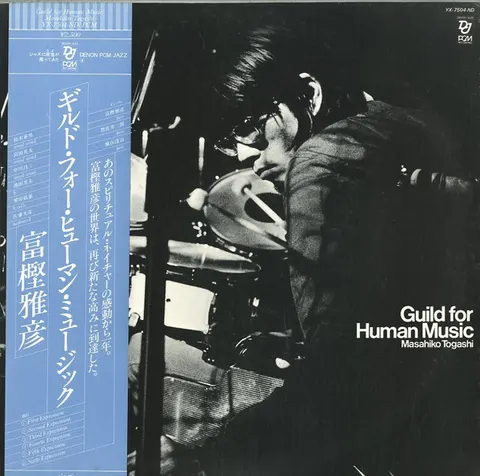
| Exciting Jazz Spirit | 1968 | With Norio Maeda, Hidehiko Matsumoto, Shungo Sawada, Masanaga Harada, Masahiko Togashi | YouTube search | Amazon | |
| Softly and Swingin' | 1969 | Chris Connor & the George Otsuka Trio, with Shungo Sawada | YouTube search | Amazon | |
| Last Summer 〈Page 3〉 / Hi-Nology | 1969 | Columbia | Promo split with the Terumasa Hino Quintet | YouTube search | Amazon |
| Now's the Time | 1973 | Split with Akira Miyazawa and His Group | YouTube search | Amazon | |
| Now's the Time | 1974 | With Isao Suzuki, Sunao Wada, the Tsuyoshi Yamamoto Trio and the George Otsuka Quintet | YouTube search | Amazon | |
| Blues March: Drum Battle | 1975 | RCA | Four-way drum record with Akira Ishikawa & Count Buffaloes, George Kawaguchi and Big 4, the George Otsuka Trio, and Takeshi Inomata & Sound Limited | YouTube search | Amazon |
| The Exciting Drum | 1980 | With George Kawaguchi, Takeshi Inomata, Sadakazu Tabata and Akira Ishikawa | YouTube search | Amazon | |
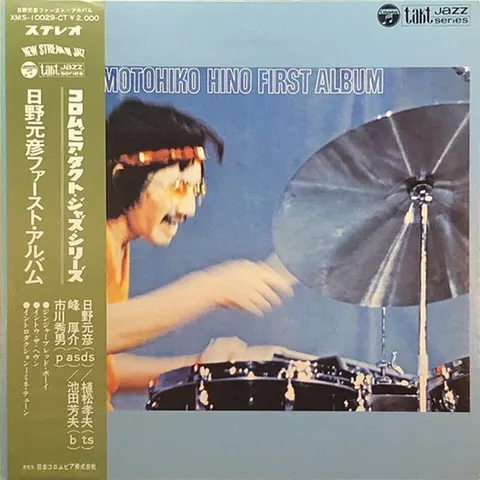
| 10大ドラマーベストセレクション | Union | Ten-drummer compilation including Otsuka, Motohiko Hino, Masahiko Togashi, Takeshi Inomata and Akira Ishikawa | YouTube search | Amazon |
Selected Appearances and Session Credits, Chronological
Discogs lists 63 Appearance and 19 TrackAppearance credits across his five entities. The most significant are below; the full catalog is at discogs.com/artist/1145517-George-Ohtsuka.
| Year | Album | Artist | Notes | Listen | Buy |
|---|---|---|---|---|---|
| 1959 | Juke Box For You | Danny Iida & His Paradise Kings | Earliest credited appearance, at 22 | YouTube search | Amazon |
| 1965 | Modern Jazz Blue Mood | Masao Yagi & His Group | YouTube search | Amazon | |
| 1967 | Now's the Time (ナウズ・ザ・タイム) | Akira Miyazawa (宮沢昭) | YouTube search | Amazon | |
| 1967 | Swing Journal All Stars '67 | Swing Journal All Stars | YouTube search | Amazon | |
| 1968 | Jam Session | Hampton Hawes | YouTube search | Amazon | |
| 1968 | Muraiki / Oiwake (ムライキ / 追分) | Minoru Muraoka with New Jazz Players | Denon | YouTube search | Amazon |
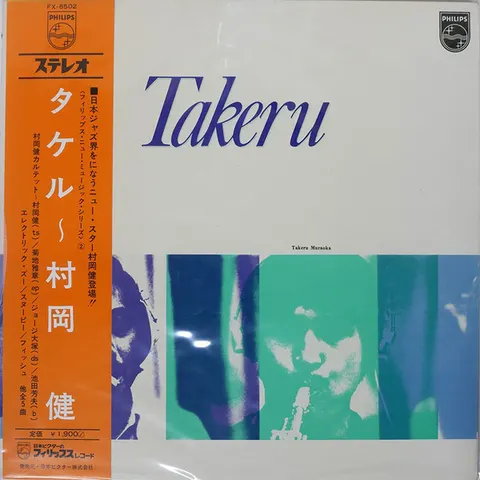
| 1970 | Takeru (タケル) | Takeru Muraoka (村岡建) | YouTube search | Amazon | |
| 1970 | Debut | Takao Uematsu Quartet/Quintet | YouTube search | Amazon | |
| 1971 | Departure / Introducing Kosuke Ichihara | Kosuke Ichihara (市原宏祐) | YouTube search | Amazon | |
| 1973 | Blow Up (ブロー・アップ) | Isao Suzuki Trio / Quartet | Three Blind Mice. One of the label's defining records | YouTube search | Amazon |
| 1975 | Modern Jazz in Japan | NHK Transcription Programme No. 137 | YouTube search | Amazon | |
| 1976 | After the Rain | Mabumi Yamaguchi Quartet | YouTube search | Amazon | |
| 1976 | Phil Woods & The Japanese Rhythm Machine | Phil Woods | YouTube search | Amazon | |
| 1977 | Gathering | Fumio Karashima Trio | YouTube search | Amazon | |
| 1977 | Only Trust Your Heart | Takashi Mizuhashi | YouTube search | Amazon | |
| 1978 | Hip Seagull (ヒップ・シーガル) | Terumasa Hino | Spotify | Amazon | |
| 1979 | Hot Islands | Fumio Karashima | YouTube search | Amazon | |
| 1980 | Sho (翔) | Fumio Karashima (辛島文雄) | YouTube search | Amazon | |
| 1981 | A Child in the Wind | Fumio Karashima | YouTube search | Amazon | |
| 1983 | Hot Jazz | Hidehiko Matsumoto | YouTube search | Amazon | |
| 1992 | Deep in Autumn | Sakurako Ogyu | Vaaan Media | YouTube search | Amazon |
| 2003 | Blow Up 2 | Isao Suzuki | YouTube search | Amazon |
Reissue-Era Compilation Appearances
These are the releases that carried his catalog to a new audience decades after the fact, and they are the reason his name circulates outside Japan today.
| Year | Compilation | Label | Notes |
|---|---|---|---|
| 2009 | Groovy Indeed! | Universounds / P-Vine | |
| 2011 | Wax Poetics Japan JP Jazz Re-Works: 陰 | King Records | |
| 2011 | Wax Poetics Japan Compiled Series: Soul Bamboo, King of JP Jazz 70's | King Records | |
| 2012 | The Three Blind Mice 45 Box | Alongside the Isao Suzuki and Tsuyoshi Yamamoto sides | |
| 2018 | J Jazz: Deep Modern Jazz From Japan 1969-1984 | The compilation most responsible for the current wave of interest | |
| 2022 | Japanese Jazz Spectacle Vol. I (Deep, Heavy & Beautiful Jazz From Japan 1968-1984) | ||
| 2022 | Japanese Jazz Spectacle (1962-1985), The King Records Masters | King Records |
Recurring Collaborators
| Musician | Instrument | Where |
|---|---|---|
| Hideo Ichikawa | Piano, organ, electric piano | The Page trilogy (1967-69), Groovin' With My Soul Brother (1968), Sea Breeze (1971), You Are My Sunshine (1974) |
| Mitsuaki Furuno | Bass | In Concert! (1973), Jackeyboard (1973), Loving You George (1975), Physical Structure (1976) |
| Fumio Karashima | Piano, electric piano, synthesizer | Loving You George (1975), Physical Structure (1976), and three Karashima-led albums 1977-1981 |
| Shunzo Ohno | Trumpet, flugelhorn | Sea Breeze (1971), Go On (1972), In Concert! (1973) |
| Mabumi Yamaguchi | Tenor and soprano saxophone | Go On (1972), In Concert! (1973), Guardian Angels (1979), After the Rain (1976) |
| Shozo Sasaki | Tenor and soprano saxophone | Loving You George (1975), Physical Structure (1976) |
| Takashi Mizuhashi | Bass | Sea Breeze (1971), Go On (1972), Only Trust Your Heart (1977) |
| Masaoki Terakawa | Bass | The Page trilogy (1967-69) |
| Miroslav Vitous | Bass | Maracaibo Cornpone (1978), Guardian Angels (1979) |
| Norio Ohno | Percussion | Loving You George (1975), Physical Structure (1976) |
The George Otsuka Trio (1967 to 1969). Otsuka (drums), Hideo Ichikawa (piano, later organ), Masaoki Terakawa (bass). The Page trilogy plus the Roy Haynes date, where Yoshio Suzuki took the bass chair.
The George Otsuka Quintet (1971 onward). The 1971 Sea Breeze lineup was Shunzo Ohno (trumpet, flugelhorn), Takao Uematsu (saxophones), Hideo Ichikawa (electric piano), Takashi Mizuhashi (bass). By Go On in 1972 Mabumi Yamaguchi had taken the saxophone chair and Toshiyuki Daitoku the keyboard chair. From 1975 the group settled as Shozo Sasaki (saxophones), Fumio Karashima (keyboards), Mitsuaki Furuno (bass) and Norio Ohno (percussion).
International collaborators. Roy Haynes (1968), Hampton Hawes (1968), Chris Connor (1969), Jack DeJohnette (the 1970 Four Drums tour and the 1973 Jackeyboard date), Phil Woods (1976), Miroslav Vitous (1978 and 1979), John Abercrombie and Naná Vasconcelos (1978), John Scofield and Kenny Kirkland (1978). He also worked with Elvin Jones, Richie Beirach and Reggie Workman.
As a sideman on other leaders' records. Isao Suzuki's Blow Up (1973), Terumasa Hino's Hip Seagull (1978), Mabumi Yamaguchi's After the Rain (1976), Takashi Mizuhashi's Only Trust Your Heart (1977), and Fumio Karashima's Gathering (1977), Hot Islands (1979), Sho (1980) and A Child in the Wind (1981).
More Hard Bop Artists
See all 304 Hard Bop artists →More Japanese Jazz Artists
See all 70 Japanese artists →- Discogs artists 1145517, 3361733, 1154469, 3261502 and 6784838, full release lists and individual release credits, accessed August 24, 2026
- English Wikipedia, "George Otsuka"; Japanese Wikipedia, "ジョージ大塚"
- Discogs release notes for Page 1 (10692408), Page 2 (3903503), Groovin' With My Soul Brother (10582896), Sea Breeze (9667563), Go On (16384242), In Concert! (6651887), Jackeyboard (2226724), You Are My Sunshine (4358997), Loving You George (9655021), Physical Structure (6524874), Maracaibo Cornpone (3910487), Guardian Angels (6141351) and Four Wings (14591114), which supplied the recording dates, studios and personnel throughout
- Spotify catalogue metadata for the albums linked above