 JAZZPROFILES lives in the music 1,765 Jazz Artists fully Profiled!
Nobuo Hara
Last updated October 21, 2026
Listen on Spotify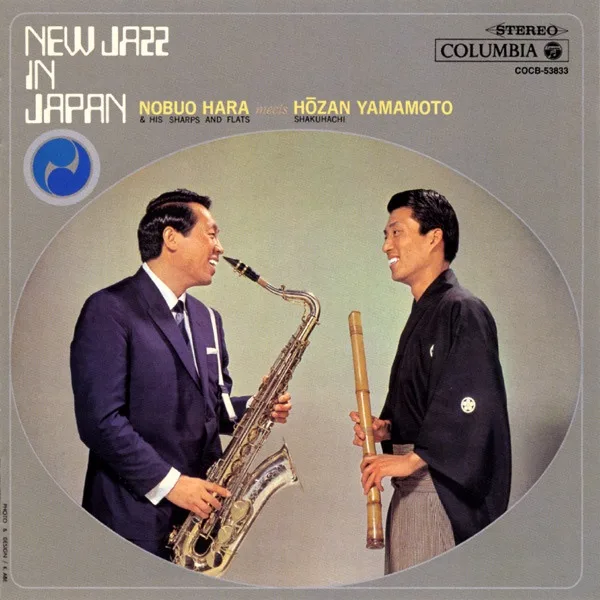
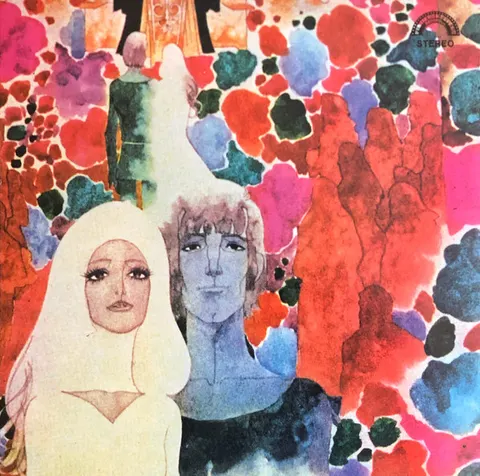
Nobuo Hara (left, holding his tenor saxophone) with the shakuhachi player Hozan Yamamoto on the cover of *New Jazz in Japan* (Columbia, 1968). Standard copyright, all rights reserved, held by Nippon Columbia. This is not a Creative Commons or public-domain image; it is an album cover shown as an honestly disclosed editorial identification image. — https://music.apple.com/jp/album/351332879
On 20 July 1982 Nobuo Hara (原信夫) took his 17-piece big band, Sharps & Flats, onto the stage of the Montreux Jazz Festival and drew the biggest ovation of that day's bill of big bands from around the world. He carried the master tape of the set home to Japan and spent decades looking for it after it went missing. It turned up in perfect condition in 2022, the year after he passed away, and Nippon Columbia released it in October 2024 as Sharps & Flats in Montreux 1982.
He was born Nobuo Tsukahara on 19 November 1926 in Karafuto, the Japanese-ruled southern half of Sakhalin, where his father worked as a cook. Many reference works give Toyama as his birthplace, because the family moved there soon afterwards. His mother died shortly after the move and he was adopted by the Tsukaharas, who ran a fishing business at Higashi-Iwase on the Toyama coast. He took up the cornet at elementary school on a music teacher's advice, and found the tenor saxophone in the brass band of a machine-industry youth school in Toyama. In 1943 he joined the Imperial Japanese Navy band and served with its Yokohama unit until the war ended.
He auditioned for a symphony orchestra after the war, but a former navy bandmate talked him into jazz instead, and he played tenor in clubs for the occupation forces. In 1950 he joined a band called Moonlight at a cabaret in Yokohama and became its leader. The band moved to a US military club, the Villa Club in Shinagawa, Tokyo, and was renamed Sharps & Flats (written ♯&♭), while he took the stage name Hara, reportedly because the American patrons could not manage "Tsukahara." Nippon Columbia dates the start of Sharps & Flats to September 1951, with ten players, and says it soon grew into the 17-piece band it stayed: five saxophones, four trumpets, four trombones and a rhythm section of guitar, piano, bass and drums.
The band's first recital, in 1958, was a success from the start. It was recorded on 18 October 1958 at Hibiya Public Hall in Tokyo and issued by King Records the following year as The Sharps and Flats Recital, with Hara on tenor, Hiroshi Suzuki in the trombone section, Kunitoshi Shinohara and Shuzo Morikawa among the trumpets and Kiyoshi Yamaya on baritone saxophone. Three days earlier several of the same players had been part of the Swing Journal All Stars 1958, recorded at Kyoritsu Hall for Radio Tokyo. Over the next few years King and Columbia kept the band busy with themed albums: Soul (Columbia, 1960), with tracks dedicated to Rollins, Davis, Monk and Clifford; Operation Glenn Miller, recorded on 17 and 18 September 1962; and Operation Benny Goodman with the clarinettist Eiji Kitamura in 1963. From 1965 the Big Band Scope records set Sharps & Flats against Tadaaki Misago's Tokyo Cuban Boys, with one band in the left channel and the other in the right.
Television and popular song gave the band a far wider audience than most Japanese jazz groups ever had, and the jazz catalogue has to be read against that. From the 14th contest in 1963 through the 20th in 1969 the band played for the red team on NHK's year-end Kohaku Uta Gassen, and again in 1971 and 1974. It backed Hibari Misora and Chiemi Eri in concert and on record, and Hara wrote for Misora: "Egao to Namida no Toi Michi" (1964), "Hibari Ondo" (1965) and the 1967 hit "Makka na Taiyo." In 1974 he conducted the band behind Shirley Bassey on her Live in Japan double album.
In 1967 Sharps & Flats became the first Japanese band to play the Newport Jazz Festival. According to the Jazz.com encyclopedia, the set consisted entirely of Japanese folk material arranged for big band, and it was well received. CBS issued the programme in Japan that year as Sharps & Flats in Newport, with the shakuhachi player Hozan Yamamoto as soloist and pieces including "Sakura Sakura," "Etenraku," "Sohran-Bushi" and Hara's own "Koto." The collaboration continued with the studio album New Jazz in Japan (Columbia, 1968), arranged by Norio Maeda, then New Dimension of Bamboo Flute (1969), which put "Hey Jude" and "Sounds of Silence" in front of the shakuhachi, and Beautiful Bamboo-Flute (Philips), recorded on 11 and 14 January 1971 from folk songs arranged by Masahiko Satoh. Encore!! Jazz & Bossa (Takt, 1968), recorded on 5 and 6 December 1967 at Bunkyo Kokaido, was a co-billed record with Sadao Watanabe, who arranged it.
The end of the 1960s and the start of the 1970s is where the band sounds most like a modern-jazz orchestra. Oliver Nelson arranged and conducted 3-2-1-0 (Columbia, 1969), with Masabumi Kikuchi at the piano, and he conducted the band again on Oliver Nelson in Tokyo, recorded on 4 and 7 September 1970. On 3 and 4 March 1970 the band recorded Double Exposure for Liberty, with four arrangements by Toshiko Akiyoshi. The 1970 album Electronics put Takehiro Honda on organ and electric piano and took the band toward jazz-rock. On 3 December 1971 the band recorded The 20th Anniversary Concert (CBS/Sony), a two-LP quadraphonic set arranged by Frank Foster with Watanabe, Terumasa Hino and Kikuchi as guests, and the band accompanied Kimiko Kasai and Nelson at Yubin Chokin Hall on 24 September 1973 for her live album In Person.
Later highlights include Active Volcano (Three Blind Mice, recorded 25 to 27 June 1979 at Yamaha Epicurus Studio, Tokyo) and Giant Steps (King, 1978), on which Foster arranged and conducted and Elvin Jones played drums. The band also backed Quincy Jones at the Budokan in 1981 (the horns are credited on his Live at Budokan), and in 1982 took in a US trip that included the Cool Jazz festival, New York club dates and the Knoxville World's Fair before Montreux. Eiji Kitamura, Anli Sugano and Yasuko Agawa were guests on Jazz Unlimited Live '80, and in 2010 the band was the accompanist on Chie Ayado's My Way, a record that followed the band's appearance on her 2001 concert DVD Live! II.
Honours followed. At the end of 1981 he received the Nanri Fumio Prize, named for the trumpeter Fumio Nanri and given for the first time to a big-band leader. He received the Medal with Purple Ribbon in 1988, a Special Achievement Award at the 38th Japan Record Awards in 1996 and the Order of the Rising Sun, 4th class, in 1998. From about 1990 he and members of the band also went into schools around the country to coach brass bands, and the band's arrangements are still requested by school bands.
In 2008, at 81, he announced his retirement and began a farewell tour. In September 2009 he reassembled the band to play for Emperor Akihito and Empress Michiko, which he later called the best memory of his career, and his final concert was on 11 February 2010 at Act City Hamamatsu. He passed away of pneumonia at a Tokyo hospital on 21 June 2021, aged 94. In 2023 his grandson, the guitarist Yuma Hara, founded a company, HARA Music Japan, to bring the band back.
Sharps & Flats was a repertory big band in the swing tradition. Its early records are programmed around the Glenn Miller and Benny Goodman book, with Ellington and Basie repertoire on later albums such as Take the "A" Train (1982). Its sound came from the standard 17-piece layout rather than from any one soloist. Hara is credited as leader and tenor saxophonist on most of the records, and the discography documents his work as a programmer and as a chooser of arrangers more than it documents him as a soloist.
The idea that tied the band's best-known records together was Japanese folk material arranged for a jazz orchestra. It is the whole of the Newport programme in 1967, the New Jazz in Japan sessions with Hozan Yamamoto, the folk songs of Beautiful Bamboo-Flute, and the "Awa Odori" and "Soran Bushi" in the Montreux set fifteen years later. Alongside it ran a steady stream of contemporary American arranging, drawn from Oliver Nelson, Frank Foster and, on an album of its own, Toshiko Akiyoshi, and a taste for the electric sounds of 1970 that produced Electronics, which Discogs files under jazz-funk and jazz-rock.
A large part of the catalogue is not jazz proper. There are Latin dance albums, film and television themes (Screen Mood '62, Western Dynamics), kayokyoku accompaniment for Hibari Misora, Chiemi Eri and the enka singer Shinichi Mori, and pop programmes for Japanese labels. Those records sit beside the big-band albums, which are what keep him in a jazz book, and they account for the television presence that made the band better known to the general public than most Japanese jazz groups.
- The Sharps and Flats Recital (1959, King KC-6) - The band's first recital, recorded on 18 October 1958 at Hibiya Public Hall, Tokyo. Hara plays tenor, with Hiroshi Suzuki in the trombone section. Buy
- Sharps & Flats in Newport (1967, CBS YS-10013-JC, with Hozan Yamamoto) - The programme of Japanese folk material the band took to Newport. Spotify - ニューポートのシャープス・アンド・フラッツ Listen · Buy
- New Jazz in Japan (1968, Columbia YS-10022-J, with Hozan Yamamoto) - The first studio album by the two, ten folk songs arranged by Norio Maeda. Spotify - 日本のニュー・ジャズ Listen
- 3-2-1-0 (1969, Columbia XMS-10022-J, with Oliver Nelson) - Nelson arranged and conducted, with Masabumi Kikuchi on piano. Spotify - 3-2-1-0 Listen · Buy
- Little Giant (1969, Victor SMJX-10082) - Recorded in December 1969, with Takao Naoi on guitar and Hiroshi Suzuki on trombone. Spotify - リトル・ジャイアント
- Oliver Nelson in Tokyo (1970, Columbia NCB-7002) - Recorded on 4 and 7 September 1970, with Nelson conducting and playing soprano and tenor saxophone. Spotify - Oliver Nelson in Tokyo Listen · Buy
- Giant Steps (1978, King SKA 3016, with Elvin Jones and Frank Foster) - Foster's arrangements and Jones's drums with the band. Spotify - ジャイアント・ステップス Listen · Buy
- Sharps & Flats in Montreux 1982 (released 2024, Columbia COCB-54373) - The July 1982 Montreux set, with "Awa Odori," "Soran Bushi" and "Take the A Train." Spotify - シャープス & フラッツ イン モントルー 1982 Listen
Nobuo Hara (原信夫) - Full Discography
Japanese tenor saxophonist and bandleader, born Nobuo Tsukahara (塚原信夫) on 19 November 1926 in Karafuto and raised in Toyama; passed away on 21 June 2021 in Tokyo. Discogs artist 1319014 (Nobuo Hara). His orchestra, Nobuo Hara and His Sharps & Flats, is Discogs artist 1085559, and almost all of the leader credits below are filed under it.
Name variations on record: Hara Nobuo, N. Hara, N.Hara, Nabuo Hara, 原信夫, 原 信夫, 原伸夫.
Band billings: Nobuo Hara and His Sharps & Flats, Nobuo Hara & His Orchestra, Sharps & Flats, N. Hara's Sharps & Flats, ♯ & ♭, 原信夫とシャープス・アンド・フラッツ, 原信夫とシャープス&フラッツ.
Scope: this is a selected discography. It lists the principal albums and CDs credited to the band or to Hara, the albums co-billed with other leaders, and the main guest credits. Singles, EPs, flexi discs, promotional copies and later reissues of the same recordings are folded into the entry for the album they come from.
Leader (albums under the band's or his own name)
| Album | Year | Label | Personnel | Notes | Listen | Buy |
|---|---|---|---|---|---|---|
| The Sharps And Flats Recital | 1959 | King Records, KC-6 | Nobuo Hara (tenor saxophone, leader), Takeyasu Mori (tenor saxophone), Hajime Maekawa and Masato Kudo (alto saxophones), Kiyoshi Yamaya (baritone saxophone), Akio Mitsui, Kunitoshi Shinohara, Shuzo Morikawa and 河本豊弘 (trumpets), Akira Tanaka, Hiroshi Suzuki, Tadao Taniyama and 浜水俊朗 (trombones), Noriyasu Matsumoto (piano), Takashi Yamashita (bass), Toshifumi Mutoh (drums) | Recorded 18 October 1958 at Hibiya Public Hall, Tokyo. Ten tracks including "Theme (Blue Flame)," "Typhoon," "Caravan" and "One O'Clock Jump." Sleeve notes by Jiro Kubota. | not found | Amazon |
| Soul | 1960 | Columbia, ALS-5001 | Nobuo Hara and His Sharps & Flats | Nine tracks, among them "Blue Monk" and "Straight No Chaser" and pieces dedicated to Rollins, Davis, Clifford and Monk. | not found | Amazon |
| Marching | 1961 | King Records, KC-16 | Nobuo Hara and His Sharps & Flats | Thirteen marches and march-time tunes, from "Colonel Bogey" and "Kangun March" to "When the Saints Go Marching In." | not found | not found |
| Big Band Operation (with the All-Stars) | 1961 | King Records, SDS 2 | Nobuo Hara and His Sharps & Flats with the All-Stars | Ten tracks including "Apple Honey," "A Night in Tunisia" and "Manteca." | Spotify | Amazon |
| わが思い出のスケッチ | 1961 | Columbia, AL-329 (10-inch) | Nobuo Hara and His Sharps & Flats | Ten Japanese songs and nursery-song medleys, including "Wakare no Blues" and "Soshu Yakyoku." Sleeve notes by Shoichi Yui. | not found | not found |
| Screen Mood '62 | 1962 | Columbia, YS 3707 | Nobuo Hara With The Sharps & Flats Orch. | Film and television themes, among them "(The Man Who Shot) Liberty Valance," "Moon River" and "Theme from El Cid." | not found | not found |
| Sharps & Flats Highlights | 1962 | Columbia | Nobuo Hara and His Sharps & Flats; Akitoshi Igarashi and Hajime Maekawa (alto saxophones), Nobuyuki Morikawa (baritone saxophone), Hiroshi Takeuchi (bass) | Nine tracks, among them "One O'Clock Jump," "Moonlight Serenade," "Take the A Train" and "Round Midnight," with Kiyoshi Yamaya's arrangement of "Summertime." Reissued on CD by Columbia in 2009 (COCB-53796). | Spotify | Amazon |
| Operation Glenn Miller (with the All-Stars) | 1963 | King Records, SDS 6 | Nobuo Hara and His Sharps & Flats with the All-Stars | Recorded 17 and 18 September 1962. Twelve Glenn Miller tunes from "A String of Pearls" to "American Patrol." Reissued in 1967 as a 45 rpm LP (45SDS-3). | Spotify | Amazon |
| Operation Benny Goodman (featuring Eiji Kitamura) | 1963 | King Records | Nobuo Hara (conductor), Eiji Kitamura (clarinet) | Eleven Benny Goodman numbers, from "Let's Dance" to "Sing, Sing, Sing." Discogs also lists a 1971 Spanish pressing (TKS 4014). | not found | Amazon |
| Dancing With The Sharps And Flats = シャープと踊ろう | 1963 | King Records, SKJ 1027 | Nobuo Hara and His Sharps & Flats; arrangements by Kiyoshi Yamaya, Kosuke Onozaki and 大西修 | Twelve rock-and-roll-era and dance tunes, from "Be-Bop-A-Lula" to "Love Me Tender." Liner notes by Teruo Isono. | not found | not found |
| Western Dynamics (with guest stars) | 1964 | King Records, SKJ 7015 | Nobuo Hara and His Sharps & Flats with guest stars; directed by Jiro Kubota | Twelve western-film themes including "The Big Country," "Stagecoach" and "The River of No Return." | Spotify | Amazon |
| Sharps & Flats Screen Music | 1964 | Columbia, JPS-5014 | Nobuo Hara and His Sharps & Flats | Twelve film themes. A four-track EP followed in 1965 (JSS-20). | not found | not found |
| Dancing With The Greatest Bands | 1965 | Columbia, JPS-5043 | Nobuo Hara and His Sharps & Flats | Twelve tracks from the swing-band book, from "Let's Dance" to "Blue Flame." | not found | not found |
| Sharps & Flats '66: G. Gershwin's Album | 1966 | Columbia, JPS-5076 | Nobuo Hara and His Sharps & Flats; arranged by Norio Maeda | Ten Gershwin songs from "Love Walked In" to "Summertime." Liner notes by 大橋巨泉. | Spotify | Amazon |
| Sharps & Flats '67 | 1967 | Columbia, JPS-5116 | Nobuo Hara and His Sharps & Flats; arranged by Norio Maeda | Ten Richard Rodgers songs, among them "My Funny Valentine" and "The Lady Is a Tramp." | not found | not found |
| 銀座ブルース / 鈴木道明作品集 = Ginza Blues / Domei Suzuki Album | 1967 | Columbia, JPS-5091 | Nobuo Hara and His Sharps & Flats; arranged by Norio Maeda | Twelve compositions by Domei Suzuki. | not found | not found |
| Big Band Dynamics | 1968 | King Records, 45SDS-4 | Nobuo Hara and His Sharps & Flats | Recorded 13 and 14 May 1968 at Bunkyo Kokaido, Tokyo. Twelve standards from "One O'Clock Jump" to "When the Saints Go Marching In," issued as a 45 rpm LP. | Spotify | Amazon |
| Forest Flower (Sharps & Flats '68) | 1968 | Columbia, YS-10038-J | Nobuo Hara and His Sharps & Flats; Hiroshi Suzuki (trombone), Yoshiaki Masuo (guitar); arranged by Norio Maeda | Ten tracks including "Forest Flower," "Watermelon Man" and "Mercy, Mercy, Mercy." | Spotify | Amazon |
| The Glenn Miller Story | 1969 | Columbia, JDX 20 | Nobuo Hara and His Sharps & Flats | Twelve Glenn Miller tunes, including Kiyoshi Yamaya's arrangement of "Moonlight Serenade." Discogs lists the pressing as a promotional sampler. | Spotify | not found |
| Dynamic Brass | 1969 | Columbia, JDX-26 | Nobuo Hara and His Sharps & Flats; arranged by Kiyoshi Yamaya | Twelve pop and soul hits for brass, from "Gumba Gumba" to "Hey Jude." Reissued on CD in 2012 (COCB-54027) with Hiroshi Suzuki on trombone. | Spotify | Amazon |
| Little Giant = リトル・ジャイアント | 1969 | Victor, SMJX-10082 | Nobuo Hara (leader, tenor saxophone), Takao Naoi (guitar), Toshihiko Ogawa (piano), Hiroshi Suzuki (trombone) | Eight tracks, among them "Dark Horse" and "Flute Salad." Recorded in December 1969, with sleeve notes by Yozo Iwanami. | Spotify | Amazon |
| Double Exposure = ダブル・エキスポージャー | 1970 | Liberty, LPC-8019 | Nobuo Hara (leader, tenor saxophone), Hiroshi Suzuki (trombone); four tracks arranged by Toshiko Akiyoshi | Recorded 3 and 4 March 1970. Includes "Let's Roll in Sake" and "Sumie." | not found | Amazon |
| Electronics | 1970 | Columbia (CD reissue COCB-54009, 2012) | Nobuo Hara (tenor saxophone), Takehiro Honda (electric piano, organ), Toshihiko Ogawa (piano), Takao Naoi (guitar), Hiroshi Suzuki (trombone), Hisahide Kato and Kazunori Taniguchi (tenor saxophones), Hajime Maekawa and Koji Suzuki (alto saxophones), Nobuyuki Morikawa (baritone saxophone), K. Ebizawa (drums), Hiroshi Takeuchi (bass) | Ten tracks including "Bouree," "Tumblin' Tambourine," "Nervous Breakdown" and "Spinning Wheel." Discogs lists it under big band, jazz-funk and jazz-rock. | not found | Amazon |
| Big Band Congress | 1970 | Columbia, JDX-34 | Nobuo Hara and His Sharps & Flats | Ten tracks from "Midnight Sun" to "3 2 1 0." Reissued as 栄光のビッグ・バンド. | Spotify | not found |
| #&B Plays Latin Rock | 1970 | CBS/Sony, SOND-66036 | N. Hara's Sharps & Flats; arranged by Norio Maeda and Toshihiko Ogawa | Twelve Latin-rock arrangements. | not found | not found |
| Modern Jazz Juke Box | 1970 | Philips, FS-8116 | Nobuo Hara and Sharps & Flats; Hajime Maekawa, Koji Suzuki (alto saxophones), Nobuyuki Morikawa (baritone saxophone), Hiroshi Takeuchi (bass) | Fourteen tracks. | not found | not found |
| Dynamic Big Band | 1970 | Toshiba Records, TW-6040 | Nobuo Hara and His Sharps & Flats | Ten tracks. | not found | not found |
| Dynamic Swing | 1971 | King Records, SKM 1101-2 | Nobuo Hara and His Sharps & Flats | Double LP, twenty-three tracks. | not found | not found |
| Jazz Tradition = ジャズの伝統 | 1971 | CBS/Sony, SOND-66068-69 | N. Hara's Sharps & Flats | Double LP, recorded in 1971 at CBS/Sony Studio 1. | not found | not found |
| All Of New Hits! | 1971 | Columbia, JDX-50 | N. Hara and His Sharps and Flats; arranged by Toshihiko Ogawa | Twelve pop hits of the day. | not found | not found |
| Young Generation Popular Big Hit | 1971 | Toho Records, PL-1001 | Nobuo Hara and His Sharps & Flats | Twelve tracks. | not found | not found |
| The 20th Anniversary Concert | 1972 | CBS/Sony, SOLJ 3-4 | Nobuo Hara (leader, tenor saxophone, clarinet); guests Sadao Watanabe (alto and sopranino saxophones), Terumasa Hino (trumpet), Masabumi Kikuchi (piano, electric piano); arranged by Frank Foster | Double LP in quadraphonic sound, recorded 3 December 1971. Tracks include "Thruway Traffic," "Kavin's Theme" and "Shiny Stockings." The gatefold carries a band timeline and discography. | not found | not found |
| Glorious Big Band | 1973 | Canyon, C-1084-5 | Nobuo Hara and His Sharps & Flats; arranged by Norio Maeda and Toshihiko Ogawa | Double LP, twenty-six tracks. | not found | not found |
| Prelude to the Afternoon of a Faun = 牧神の午后 | 1974 | Columbia (CD reissue COCB-54080, 2013) | Nobuo Hara (leader, tenor saxophone), Kazumi Watanabe and Kazuhiko Kawakami (guitars), Sadayasu Fujii (piano), Yuji Imamura (percussion), Makoto Hirotsu (tenor saxophone), Harumi Mita, Hideo Kawaguchi, Masahiro Nakajima and Tomoaki Hashizume (trombones), Hitoshi Okano, Kazuhiko Takekiyo, Masanori Ueno and Shuzo Morikawa (trumpets) | Eight tracks recorded in October 1973 at Columbia Studio, from the Debussy title piece to "Manteca." | Spotify | Amazon |
| Optonica - Full Extended Tone Disk Vol. 1 | 1975 | Sharp Corporation Audio System Div., SOR-5001 | Nobuo Hara and His Sharps & Flats; Eiji Kitamura; Kazuo Yashiro Trio | Promotional record for Sharp's Optonica audio line. | not found | not found |
| The 25th Anniversary Concert = 結成25周年記念リサイタル | 1976 | Nadja, PA-3111-12 | Nobuo Hara and His Sharps & Flats | Double LP, seventeen tracks, among them "Hakone Hachi-Ri," "Sohran Bushi" and "3-2-1-0." | not found | not found |
| Smashing | 1978 | Toshiba Records, LF-95017 | Nobuo Hara and His Sharps & Flats; Hajime Maekawa and Kazuo Suzuki (alto saxophones); arrangements credited to Norio Maeda and Oliver Nelson | Eight tracks recorded 1 and 2 April 1978 at Toshiba EMI Studio 1, Tokyo. | not found | not found |
| Humpty Dumpty | 1978 | Lob, LDC-1013 | Nobuo Hara and His Sharps & Flats | Seven tracks, issued by Lobster as a direct-cut record. | not found | not found |
| Modern Jazz Super Hit's | 1978 | Yupiteru Records, YJ25-7004 | Nobuo Hara and His Sharps & Flats | Twelve tracks. | not found | not found |
| All In Love Is Fair | 1978 | King Records | Sharps & Flats | Eight tracks, among them a two-part "Masquerade." | Spotify | not found |
| Active Volcano = 活火山 | 1979 | Three Blind Mice, TBM(P)-5017 | Nobuo Hara (leader, conductor, tenor saxophone), Hajime Maekawa, Koji Suzuki (alto saxophones), Yosuke Tonoki (tenor saxophone), Nobuyuki Morikawa (baritone saxophone), Takeshi Kamachi (piano, electric piano), Kazuhiko Kawakami (guitar), Junichi Kobayashi (bass), Yoshiyuki Nakamura (drums); arranged by Takashi Shikata; produced by Takeshi Fujii | Five tracks recorded 25 to 27 June 1979 at Yamaha Epicurus Studio, Tokyo, among them "White Heron" and "Ondo." | not found | Amazon |
| ビッグバンドで歌うポップスの世界 | 1979 | Toshiba Records, TP-40097 | Nobuo Hara and His Sharps & Flats; arranged by Toshihiko Ogawa | A karaoke record of pop songs with a big band. | not found | not found |
| Jazz Unlimited Live '80 | 1980 | Atlantic, M-11007A | Nobuo Hara and His Sharps & Flats; guests Eiji Kitamura, Anli Sugano, Yasuko Agawa, Koji Fujika, Mieko Hirota and Shoji Suzuki | Ten tracks including "Flying Home," "Here's That Rainy Day" and "Take the A Train." | not found | not found |
| Swing Jazz Swing Life | 1981 | Atlantic, M-12010A | Nobuo Hara and His Sharps & Flats; Koji Fujika (clarinet), Norio Maeda (piano) | Twelve tracks recorded on 8 and 13 August and 3, 10 and 12 September 1980. | not found | not found |
| Take The "A" Train | 1982 | SMS Records, SE25-5001 | Nobuo Hara and His Sharps & Flats | Recorded 17 and 19 November 1981 in Tokyo. Mostly Ellington, including "Caravan," "In a Sentimental Mood" and "Things Ain't What They Used to Be," with "One O'Clock Jump" and "Swanee." | not found | not found |
| Misty | 1984 | Lob, LVD-502 | Nobuo Hara and His Sharps & Flats | Laserdisc release. | not found | not found |
| Big Band Big Boss | 1985 | Atlantic, WLL-11 | Nobuo Hara and His Sharps & Flats | Swing-era standards from "Let's Dance" to "Artistry in Rhythm." | not found | not found |
| Shall We Dance? | 1986 | Lob, LFA-2011 | Nobuo Hara and His Sharps & Flats | CD opening with a modern section and including Latin standards such as "The Peanut Vendor" and "Cielito Lindo." | not found | not found |
| That's Big Band | 2001 | Jazzbank, JBCD 2001 | Nobuo Hara and His Sharps & Flats | Thirteen tracks released in January 2001, the band's 50th-anniversary year. | Spotify | Amazon |
| Sharps & Flats in Montreux 1982 = シャープス & フラッツ イン モントルー 1982 | 2024 | Columbia, COCB-54373 | Nobuo Hara and His Sharps & Flats; organ guest Yuri Tashiro | Live set from the Montreux Jazz Festival, 20 July 1982, found in 2022 and released on 23 October 2024. Nine tracks including "Awa Odori," "Soran Bushi" and "Take the A Train." | Spotify | Amazon |
Co-billed albums
| Album | Year | Label | Co-billed with | Notes | Listen | Buy |
|---|---|---|---|---|---|---|
| Drum-Scope | 1957 | King Records, LKB-8 | Hideo Shiraki, George Kawaguchi, Jimmy Takeuchi (drums) | A drum-battle record with Nobuo Hara and His Sharps & Flats as the band. Seven tracks, among them "Indian Love Call" and "Three Drum Musketeers." | not found | not found |
| Hawaiian War Chant / T.D.'s Boogie Woogie | 1961 | King Records, SEB-9 | Hideo Shiraki; Nobuo Hara and His Sharps & Flats | Seven-inch single advertised as inserts from a 1959 film. | not found | not found |
| シャープとドドンパ | 1961 | Columbia, AL-253 | Joya Masubuchi (bongos) | Ten Latin tracks including "Besame Mucho" and "Take the A Train." | not found | not found |
| Chiemi Show Time - My Fair Lady / Chiemi at the Koma | 1964 | King Records, SKJ 1044 | Chiemi Eri (vocals) | Hara's band is credited on one track (B3). | not found | not found |
| Big Band Scope | 1965 | King Records, SKJ 7017 | The Tokyo Cuban Boys (cond. Tadaaki Misago) | Recorded 9 to 11 February 1965. Sharps & Flats in the left channel, the Tokyo Cuban Boys in the right. Eleven tracks. | Spotify | Amazon |
| Big Band Scope Volume 2 | 1966 | King Records, SKJ 7020 | The Tokyo Cuban Boys (cond. Tadaaki Misago) | Recorded 6, 16 and 18 December 1965. | Spotify | not found |
| Miko In Concert = ミコ・イン・コンサート | 1966 | Columbia, JPS-5093 | Mieko Hirota (vocals) | Hara's band accompanies the singer. | not found | not found |
| Big Band Scope Volume 3: Go-Go vs Mambo | 1967 | King Records, 45SDS-2 | The Tokyo Cuban Boys | Twelve tracks, from "Night Train" to "Mas Que Nada." | not found | not found |
| Sharps & Flats in Newport | 1967 | CBS, YS-10013-JC | Hozan Yamamoto (shakuhachi), Kiyoshi Yamaya (arranger), Toshihiko Ogawa (piano), Hiroshi Suzuki, Haruo Ochi and Tadao Taniyama (trombones), Hiroshi Sanami, Kunitoshi Shinohara, Shuzo Morikawa and Teruyuki Fukushima (trumpets) | Nine tracks, among them "Sakura Sakura," "Etenraku," "Sohran-Bushi," "Koto" and "Awa Dance." Released in Japan in 1967 after the Newport Jazz Festival appearance. | Spotify | Amazon |
| Encore!! Jazz & Bossa | 1968 | Takt Jazz Series, JAZZ-3001 | Sadao Watanabe (co-billed; arranger) | Recorded 5 and 6 December 1967 at Bunkyo Kokaido, Tokyo. | not found | Amazon |
| New Jazz In Japan = 日本のニュー・ジャズ | 1968 | Columbia, YS-10022-J | Hozan Yamamoto (shakuhachi), Norio Maeda (arranger), Toshihiko Ogawa (piano), Hiroshi Takeuchi (bass), Yoshio Nakamura (drums), Takao Naoi (guitar) | Ten Japanese folk songs including "Sakura Sakura," "Kuroda-Bushi" and "Tabaruzaka." The first studio album by the two. | Spotify | Amazon |
| Big Hits, Big Sound | 1968 | Columbia, JPS-5149 | Kenny Wood Orchestra | Twelve tracks. | not found | not found |
| New Dimension Of Bamboo Flute | 1969 | CBS/Sony, SONP 50075-J | Hozan Yamamoto (bamboo flute); arranged by Masahiko Satoh and Norio Maeda; Hiroshi Suzuki (trombone) | Pop songs for shakuhachi and big band, from "Hey Jude" to "Scarborough Fair." | not found | Amazon |
| Golden Hit Parade / Big Band Scope Volume 4 | 1969 | King Records, SDS-4 | The Tokyo Cuban Boys; arranged by Kiyoshi Yamaya, Masahiko Satoh, Masao Yagi and Norio Maeda | Twelve pop and film hits. | not found | not found |
| 3-2-1-0 | 1969 | Columbia, XMS-10022-J | Oliver Nelson (arranger, composer), Masabumi Kikuchi (piano), Takao Naoi (guitar), Koji Suzuki (alto saxophone) | Ten tracks; side B is Nelson's own writing, including "3-2-1-0" and "Mission Accomplished." | Spotify | Amazon |
| Oliver Nelson In Tokyo | 1970 | Columbia, NCB-7002 | Oliver Nelson (conductor, soprano and tenor saxophones), Hajime Maekawa and Koji Suzuki (alto saxophones), Nobuyuki Morikawa (baritone saxophone), Sadayasu Fujii (piano), Takao Naoi (guitar), Hiroshi Takeuchi (bass), Yoshio Nakamura (drums) | Recorded 4 and 7 September 1970. Ten tracks including "Round Midnight," "Charade" and "Sermonette." Subtitled Oliver Meets Sharps & Flats. | Spotify | Amazon |
| Beautiful Bamboo-Flute | 1971 | Philips, FX-8510 | Hozan Yamamoto (shakuhachi); arranged by Masahiko Satoh; Sadayasu Fujii (piano), Takao Naoi (guitar) | Eleven Japanese folk songs, including "Kokiriko Bushi" and "Sado Okesa." Recorded 11 and 14 January 1971 at Victor Studio, Tokyo. | not found | Amazon |
| Goldfinger | 1972 | King Records | The Tokyo Cuban Boys | A second pairing with the Tokyo Cuban Boys; a cassette reissue also exists. | not found | not found |
| Nemu Swing Session = ネム・スイング・セッション | 1975 | Columbia, YQ-7510-N | Eiji Kitamura (clarinet), Kazuo Yashiro (piano), Masanaga Harada (bass), Hiroshi Sunaga (drums), Ichiro Masuda (vibraphone) | Recorded live on 19 July 1975, shared with Eiji Kitamura All Stars. Nine tracks. | not found | not found |
| Giant Steps | 1978 | King Records, SKA 3016 | Elvin Jones (drums), Frank Foster (arranger, conductor, soprano and tenor saxophones) | Four tracks on the Discogs listing: "Simone," "Like Someone in Love," "Giant Steps" and "Shi-Tsu-Mon." | Spotify | Amazon |
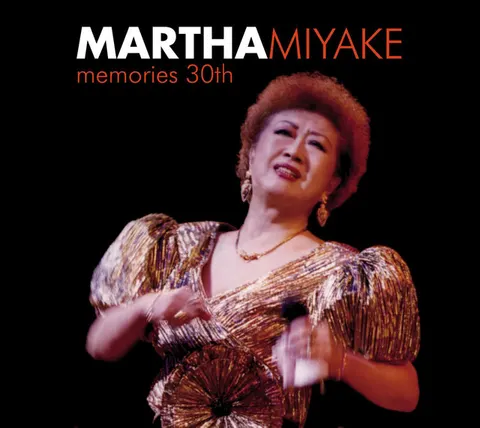
| Satin Doll (Martha Miyake meets Sharps and Flats) | 1981 | Philips, S-7111 | Martha Miyake (vocals); Nobuo Hara (leader, tenor saxophone, flute); Toshihiko Ogawa (arranger); Takeshi Kamachi (piano) | Twelve big-band standards including "Satin Doll" and "Summertime." | not found | Amazon |
| The World Is Waiting For Sunrise / Dixie Kings Meets Sharps & Flats | 1981 | Express, ETJ-85012 | Ken-ichi Sonoda and His Dixie Kings; arranged by Norio Maeda (A3), Toshihiko Ogawa and others | Digital recording pairing a Dixieland band with the big band. | not found | not found |
| Chiemi Eri & Count Basie vs J. Witherspoon & Sharps & Flats | 1984 | King Records, K28A-469 | Chiemi Eri (vocals), Jimmy Witherspoon (vocals), the Count Basie Orchestra with Count Basie, Frank Foster and Frank Wess | Recorded 1963. Nine tracks, split between the Basie band and Sharps & Flats. | not found | not found |
| Mr. Soul Man | 1987 | Cat Records, K28P-6463 | Kankawa; Kiyoshi Sugimoto (guitar), Shunji Sato (trombone); arranged by Norio Maeda | Six tracks. | not found | not found |
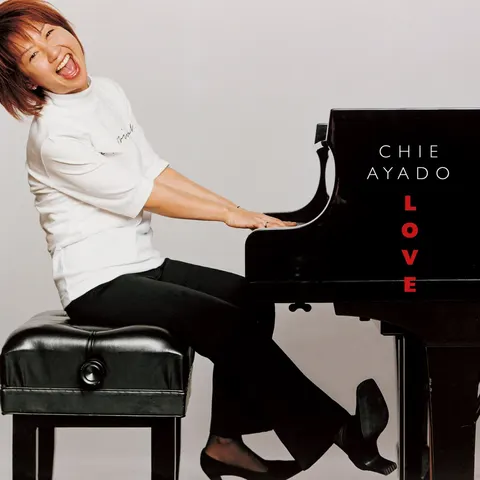
| My Way | 2010 | East House Records, EHSA-1005 | Chie Ayado (vocals, piano); arranged by Norio Maeda and Kiyoshi Yamaya | Thirteen tracks including "Work Song," "Just in Time" and "For Once in My Life." Also issued as an XRCD by Master Music. | not found | Amazon |
Guest, accompanist and compilation appearances
Chronological list of the principal sideman, accompanist and guest credits, separate from the albums above: The Swing Journal All Star Bands (King, 1956, recorded 27 October 1956 at Yamano Hall, Tokyo); Jazz Festival of Japan (2) by the Swing Journal All-Stars 1958 (Toshiba, 1959, recorded 15 October 1958 at Kyoritsu Hall, Tokyo, with Hara on tenor saxophone and Hiroshi Suzuki on trombone in the Sharps & Flats section); Hibari Sings Jazz Songs: Memories of Nat King Cole by Hibari Misora (Columbia, 1965); Swing Journal All Stars '67 (Takt, 1967), on which Hara leads the band on "Dead Heat" and "Satin Doll" arranged by Norio Maeda; the single "Makka na Taiyo" by Hibari Misora with Jacky Yoshikawa and His Blue Comets (Columbia, 1967); Summer Jazz in Tokyo (Canyon, recorded live 28 and 29 August 1970 at Hibiya Park, with Hara's band performing "Dark Horse"); '70 Jazz Festival in Nemu (Toshiba, 1970), shared with the Terumasa Hino Quintet, the Yosuke Yamashita Trio, Toshiyuki Miyama and the New Herd, the Sadao Watanabe Quartet and the Masahiko Sato Trio; Jazz Festival with '71 Poll Winners (Philips, recorded 29 May 1971); In Person by Kimiko Kasai with Oliver Nelson (CBS/Sony, 1974, recorded live 24 September 1973 at Yubin Chokin Hall, Tokyo); Live in Japan by Shirley Bassey (United Artists, 1974), with Hara conducting; Live at Budokan by Quincy Jones (A&M, 1981), with the Sharps & Flats horns; the Shinichi Mori concert album recorded 26 November 1979 at the Nippon Budokan (Victor, 1980); Moonlight Serenade Shakuhachi (Bamboo) Miller with the Shakuhachi Soloists (Toshiba, 1982); Live! II by Chie Ayado (EWE, DVD, 2001); and the 2010 split seven-inch with Takehiro Honda, "Too High / What's Going On" (Art Union). Hara also composed and arranged for Hibari Misora, including "Egao to Namida no Toi Michi" (1964), "Hibari Ondo" (1965) and "Makka na Taiyo" (1967).
Sources
- Discogs: Nobuo Hara, artist 1319014
- Discogs: Nobuo Hara and His Sharps & Flats, artist 1085559
- Discogs: Sharps & Flats In Newport, release 7940408
- Discogs: The Sharps And Flats Recital, release 18790786
- Discogs: The 20th Anniversary Concert, release 6826418
- Discogs: Oliver Nelson In Tokyo, release 13725942
- Nippon Columbia: Nobuo Hara & Sharps & Flats profile
- Mikiki: 原信夫が探し続けたロストテープ、ついに見つかる
- Hiroshi Suzuki - trombone in the band on The Sharps and Flats Recital (recorded October 1958), Sharps & Flats in Newport (1967), Forest Flower (1968), New Dimension of Bamboo Flute (1969), Little Giant (1969), Double Exposure (March 1970) and Electronics (1970).
- Hozan Yamamoto - shakuhachi soloist on Sharps & Flats in Newport (1967), New Jazz in Japan (1968), New Dimension of Bamboo Flute (1969) and Beautiful Bamboo-Flute (1971); a 2016 seven-inch on Deep Jazz Reality pairs "Kokiriko Bushi" with "Yasuki Bushi" from the partnership.
- Norio Maeda - arranger on New Jazz in Japan (1968), Forest Flower (1968), New Dimension of Bamboo Flute (1969), Glorious Big Band (1973), Mr. Soul Man (1987) and Chie Ayado's Live! II (2001) and My Way (2010), and pianist on Swing Jazz Swing Life (1981).
- Eiji Kitamura - clarinet on Operation Benny Goodman (1963) and Nemu Swing Session (recorded live on 19 July 1975), and a guest on Jazz Unlimited Live '80.
- Masabumi Kikuchi - piano on 3-2-1-0 (1969) and a guest on The 20th Anniversary Concert (recorded 3 December 1971).
- Sadao Watanabe - arranger on the co-billed Encore!! Jazz & Bossa (Takt, 1968) and a guest on The 20th Anniversary Concert.
- Terumasa Hino - trumpet guest on The 20th Anniversary Concert (1971).
- Frank Foster - arranged The 20th Anniversary Concert and arranged and conducted Giant Steps (1978); he is also in the Count Basie Orchestra saxophone section on the 1984 LP that pairs that orchestra with Sharps & Flats.
- Elvin Jones - drums on Giant Steps (King, 1978).
- Toshiko Akiyoshi - arranged four tracks of Double Exposure (Liberty, recorded 3 and 4 March 1970).
- Takehiro Honda - electric piano and organ on Electronics (1970), and the other side of the 2010 split single (Art Union) "Too High / What's Going On."
- Masahiko Satoh - arranger on New Dimension of Bamboo Flute (1969), Beautiful Bamboo-Flute (1971) and two tracks of Big Band Scope Volume 4 (1969).
- Masao Yagi - arranger of three tracks on Big Band Scope Volume 4 (1969).
- Kazumi Watanabe - guitar on Prelude to the Afternoon of a Faun, recorded in October 1973 at Columbia Studio.
- Kiyoshi Sugimoto - guitar on Mr. Soul Man (1987), the album the band made with Kankawa and with Norio Maeda arranging.
- Kimiko Kasai - vocalist on In Person (CBS/Sony, 1974), recorded live at Yubin Chokin Hall on 24 September 1973 with Oliver Nelson conducting and Hara and the band in the orchestra.
- Chie Ayado - vocalist on My Way (East House, 2010), accompanied by the band, and the band appears on her concert DVD Live! II (EWE, 2001), on which Hara arranged two tracks.
- Martha Miyake - vocalist on Satin Doll (Philips, 1981), on which Hara is credited as leader on tenor saxophone and flute.
- Anli Sugano and Yasuko Agawa - guest vocalists on Jazz Unlimited Live '80 (Atlantic).
- Hideo Shiraki and George Kawaguchi - co-billed with the drummer Jimmy Takeuchi and the band on the drum-battle record Drum-Scope (King, 1957).
- Toshiyuki Miyama - billed alongside Hara on the cassette Dance Dance Dance and on the double LP 4 Big Bands' Session (Teichiku), which also features the Tokyo Cuban Boys, and on the same 1970 festival release.
- Quincy Jones - the band's horns are credited on his Live at Budokan (A&M, 1981).
- Count Basie Orchestra - shares the 1984 King LP Chiemi Eri & Count Basie vs J. Witherspoon & Sharps & Flats, a set recorded in 1963.
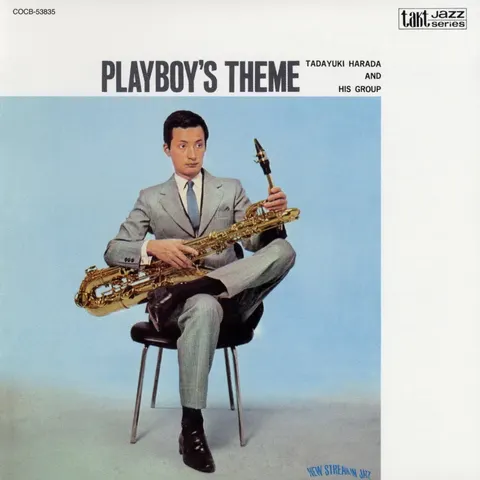
- Tadayuki Harada - the baritone saxophonist says he joined the band in 1955 at 19, when Hara asked him to play baritone, an instrument the band had not carried before.
- Oliver Nelson - arranger and conductor of 3-2-1-0, Oliver Nelson in Tokyo and the Kimiko Kasai album In Person.
- Hibari Misora, Chiemi Eri, Shirley Bassey and Shinichi Mori - the singers the band accompanied on record: Misora (credits from 1964 to 1978), Eri (from the early 1960s), Bassey (Live in Japan, 1974) and Mori (his Budokan concert album, recorded 26 November 1979).
- Tokyo Cuban Boys - the Latin dance band led by Tadaaki Misago that Sharps & Flats faced on the Big Band Scope series (1965 to 1980).
- Kiyoshi Yamaya and Toshihiko Ogawa - the band's own arranger-members; Yamaya arranged Dynamic Brass (1969), and Ogawa played piano on the Newport and Little Giant sessions.
- Masato Honda, Shotaro Moriyasu and Akitoshi Igarashi - saxophonists named as Sharps & Flats sidemen in English-language reference biographies. Igarashi is also credited on alto saxophone on Sharps & Flats Highlights (Columbia, reissued 2009), and his own account puts him in the band from 1960 for about ten years.
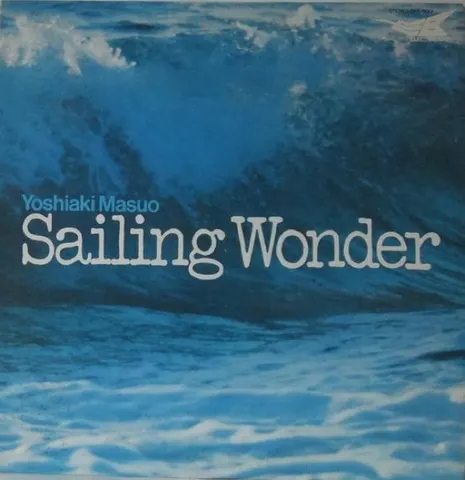
- Yoshiaki Masuo - credited on the 1971 Jazz Festival with '71 Poll Winners record, which includes Hara's Sharps & Flats, and on the Sharps & Flats '68 album Forest Flower (1968).
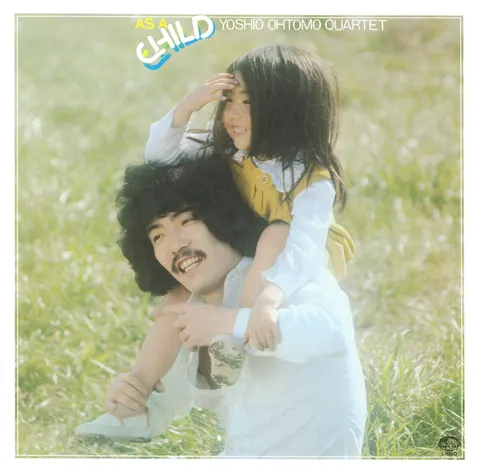
- Yoshio Otomo - alto saxophonist in the sax section of Mr. Soul Man (Cat Records, 1987), the record led by Hara with Toshihiko Kankawa.
- Takao Naoi - guitarist in the Sharps & Flats on Little Giant (1969), where he takes the guitar solo on "Dark Horse," and on New Dimension Of Bamboo Flute (1969), 3-2-1-0 (1969), Oliver Nelson In Tokyo, Double Exposure and Modern Jazz Juke Box (all 1970); he went on to lead his own albums, from What's Happening? (1970) to HEARTMADE (2008).
- Yuji Imamura - credited on percussion in the notes of the 2013 Columbia reissue (COCB-54080) of Prelude to the Afternoon of a Faun (Denon, 1974), by Nobuo Hara and His Sharps & Flats.
- Tsutomu Okada - bassist on Mr. Soul Man (1987), the organist Toshihiko Kankawa's album with Hara's Sharps & Flats.
More Big Band Artists
See all 219 Big Band artists →More Japanese Jazz Artists
See all 262 Japanese artists →- Nippon Columbia: Nobuo Hara & Sharps & Flats profile
- Jazz.com Encyclopedia: Nobuo Hara
- Spotify: Nobuo Hara and His Sharps & Flats
- Discogs: Nobuo Hara
- Discogs: Nobuo Hara and His Sharps & Flats
- Nobuo Hara on JazzProfiles.com
- r/JapaneseJazz
- Wikipedia (Japanese): 原信夫
- Wikipedia (English): Nobuo Hara
- Jazz.com Encyclopedia: Nobuo Hara, by E. Taylor Atkins
- Nippon Columbia: Nobuo Hara & Sharps & Flats profile
- Mikiki: 原信夫が探し続けたロストテープ、ついに見つかる (23 October 2024)
- J-CAST News: 最高の思い出は天皇ご夫妻の前で演奏したスウィング、原信夫さん死去 (22 June 2021)
- Discogs: Nobuo Hara, artist 1319014
- Discogs: Nobuo Hara and His Sharps & Flats, artist 1085559
- Discogs: Sharps & Flats In Newport, release 7940408
- Discogs: The Sharps And Flats Recital, release 18790786