 JAZZPROFILES lives in the music 1,572 Jazz Artists fully Profiled!
 Takeru Muraoka
Last updated August 30, 2026
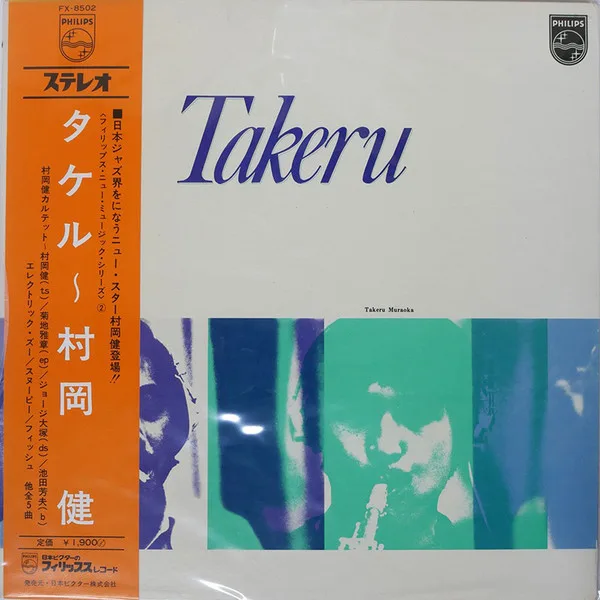
Cover art for the Takeru Muraoka Quartet's "Takeru" (1970), used as a stand-in — no free-licensed photo of Muraoka could be located after a genuine search. The cover is a duotone-processed photograph of Muraoka playing saxophone (not an illustration). Standard copyright, all rights reserved — held by Philips/Nippon Victor. This is not a Creative Commons–licensed image; it is used here as an honestly-disclosed editorial stand-in for a real photo. — Downloaded directly from the release's Discogs listing (https://www.discogs.com/release/12094617-Takeru-Muraoka-Quartet-Takeru), full-resolution cover scan hosted at i.discogs.com. Saved locally as portrait.jpg in this folder.
Takeru Muraoka, born January 12, 1941, built a career as one of the connective threads of the 1960s-70s Tokyo jazz scene rather than as a prolific leader. He was the saxophonist and flutist in the Hideo Shiraki Quintet when the group recorded Sakura Sakura at the Berlin Jazz Festival on November 1, 1965 — a deliberate merging of a straight-ahead jazz quintet with three koto players, praised at the time for putting traditional Japanese instrumentation on a jazz festival stage. Terumasa Hino played trumpet in the same quintet.
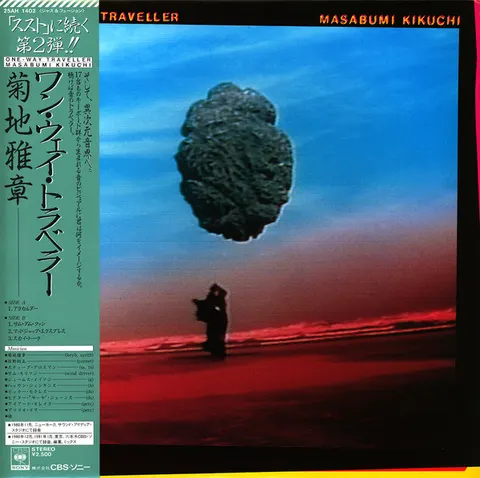
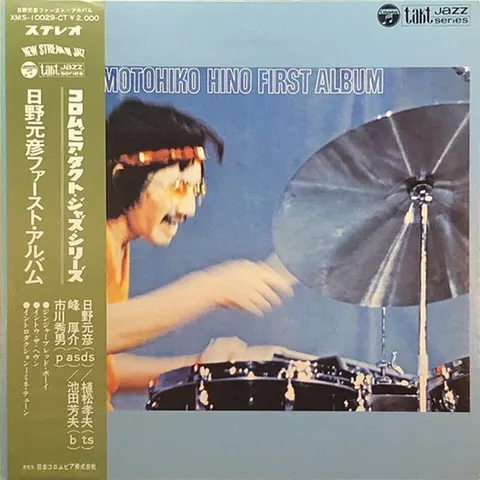
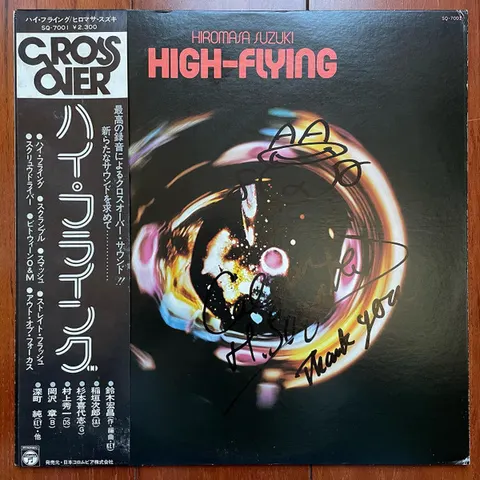
Through the rest of the 1960s and into the 1970s, Muraoka turns up across the Hino orbit and its adjacent circles: the Hino=Kikuchi Quintet, Terumasa Hino's Hi-Nology (1969) and Into the Heaven (1970), and the 1968 All Japan Jazz Festival recording that also credits Masabumi Kikuchi, Hiroshi Suzuki, and Motohiko Hino on a single document. In 1971, Hiromasa Suzuki arranged his single "It Don't Come Easy," and the same year he appeared on the Jam in Yokota session with Hidehiko Matsumoto, Ryo Kawasaki, and Motohiko Hino.
A less-documented but real stylistic detour: from 1969 to 1972 he was a recurring member of Akira Ishikawa's Count Buffalos, a jazz-funk and Afro-rock outfit whose records — Electrum, Bakishinba: Memories of Africa, African Rock — bear little resemblance to the straighter post-bop circles he ran in with the Hino crowd, demonstrating a stylistic range his sparse leader catalog doesn't capture on its own.
His own leader dates are few but distinct: the Takeru Muraoka Quartet's debut Takeru (1970, Philips), Rock Joy in Sax (1971, part of a shared "Rock Joy" series with pianist Hideo Ichikawa and guitarist Kiyoshi Sugimoto), and Soft Landing (1978, credited to Takeru Muraoka & His New Group) — the record the reissue market has kept returning to, appearing on Wax Poetics Japan compilations from 2011 and again on 2022's Japanese Jazz Spectacle and 2025's Crossover City. He shifted register once more with Stardust: Takeru Muraoka Plays Standards (1985, CBS/Sony), a straight ballads record.
No death date or English-language biographical source beyond Discogs and scattered reissue-label coverage was found for him on this pass; his current status is not asserted either way.
Muraoka's catalog covers real stylistic distance for a single career: the traditional-instrumentation experiment of the Shiraki Quintet's Sakura Sakura, straight post-bop sideman work through the Hino/Kikuchi circle, jazz-funk and Afro-rock with Count Buffalos, and a late turn to standards balladry. His own leader records lean toward the fusion and jazz-funk side, which is likely why Soft Landing in particular has found a second life among reissue collectors working that lane.
- Sakura Sakura (1965, Hideo Shiraki Quintet + 3 Koto Girls) - The Berlin Jazz Festival session. Spotify Listen
- Soft Landing (1978) - His reissue-era touchstone. Spotify Listen
- Takeru (1970, Takeru Muraoka Quartet) - His debut as a leader. Spotify Listen
- Hi-Nology (1969, Terumasa Hino Quintet) - Not his date, but a record his playing is heard on.
- Rock Joy in Sax (1971) - Spotify Listen · Buy
Takeru Muraoka: Full Discography
Discogs artist ID 552922. Identity confidence rests on the groups list (19 entities, including Akira Ishikawa & Count Buffaloes, Hideo Shiraki Quintet, Terumasa Hino Quintet, Hino=Kikuchi Quintet, Takeru Muraoka Quartet, Takeru Muraoka & His New Group) cross-checked against a WebSearch synthesis independently corroborating the Hideo Shiraki Quintet and Terumasa Hino connections, and dating the Sakura Sakura session to the November 1, 1965 Berlin Jazz Festival. No English-language Wikipedia article was found for him; the Discogs profile itself carries only his birth date and instrument. 414 credits total: 17 Main, spread across 5 pages of results but with all Main credits concentrated in page 1 — confirming the project's known role-clustering pattern (see M-memory/decisions.md, 2026-07-27) rather than reflecting an under-fetched leader catalog.
As Leader
| Album | Year | Label | Billed as | Notes | Listen | Buy |
|---|---|---|---|---|---|---|
| Takeru (タケル) | 1970 | Philips | Takeru Muraoka Quartet | Debut as a leader | Spotify | Amazon |
| Rock Joy in Sax | 1971 | — | Takeru Muraoka | Part of a "Rock Joy" series shared with Kiyoshi Sugimoto (guitar) and Hideo Ichikawa (piano) | Spotify | Amazon |
| Soft Landing (ソフト・ランディング) | 1978 | — | Takeru Muraoka & His New Group | The reissue-era favorite; repeatedly compiled on Wax Poetics Japan collections since 2011 | Spotify | Amazon |
| Stardust: Takeru Muraoka Plays Standards | 1985 | CBS/Sony | Takeru Muraoka | Straight-ahead standards record | Amazon |
Selected co-billed and single releases
| Release | Year | Label | Billed as | Notes |
|---|---|---|---|---|
| Golden Tenor Sax | n.d. | Denon | Takeru Muraoka, The Black Panthers | |
| Francis Lai in Sax Mood | n.d. | Liberty | Takeru Muraoka, Kiyoshi Yamaya | |
| 挑発 (テナーとペットのビート・デラックス) | 1970 | King Records | 村岡健, 尾田悟, 与田輝雄, 荒尾正伸 | |
| 恋人の讃歌 / テナー・サックス・ヒット作戦 Vol. 2 | 1972 | King Records | 村岡建, ポップ・アンド・ポップス | |
| It Don't Come Easy | 1971 | — | Takeru Muraoka, arranged by Hiromasa Suzuki | Direct arranger credit linking him to build 15 |
| Ride and Tie | 1971 | — | Takeru Muraoka / Takao Uematsu | |
| Something | 1971 | — | Freedom Unity featuring Takeru Muraoka | |
| ロック・ジョイ・ベスト・アルバム (Rock Joy Best Album) | 1971 | — | Kiyoshi Sugimoto, Takeshi Inomata, Hideo Ichikawa, Takeru Muraoka | Compilation drawing on the "Rock Joy" series |
Sideman — the Hideo Shiraki / Terumasa Hino circle
| Album | Year | Leader | Notes |
|---|---|---|---|
| Sakura Sakura | 1965 | Hideo Shiraki Quintet + 3 Koto Girls | Recorded at the Berlin Jazz Festival, November 1, 1965, with Terumasa Hino on trumpet (Spotify) |
| Japan Meets Jazz, Hideo Shiraki Quintet in Berlin | 1970 | Hideo Shiraki Quintet featuring Terumasa Hino & Takeru Muraoka | Companion release from the same Berlin engagement |
| Feelin' Good | 1968 | Terumasa Hino and His Group | |
| Hino=Kikuchi Quintet | 1969 | Hino=Kikuchi Quintet | Co-led by Terumasa Hino and Masabumi Kikuchi |
| Swing Journal Jazz Workshop 1 — Terumasa Hino Concert | 1969 | Terumasa Hino | |
| Hi-Nology | 1969 | Terumasa Hino Quintet | The landmark; listen on Spotify |
| Into the Heaven | 1970 | Terumasa Hino Quintet | |
| Hino Story | 1971 | Terumasa Hino | |
| All Japan Jazz Festival '68 | 1968 | Various | Credits M. Kikuchi, T. Hino, Hiroshi Suzuki, T. Muraoka, K. Inaba, and Motohiko Hino together on one document |
| All About Dancing Mist | 1971 | Masabumi Kikuchi | On Philips |
| All Japan Jazz Festival '71 | 1971 | Various | |
| Jam in Yokota | 1973 | Ushio Sakai, Tetsuo Fushimi, Teddy Adams, Takeru Muraoka, Hidehiko Matsumoto, Ryo Kawasaki, Motohiko Hino | |
| Jazz Festival With '71 Poll Winners | 1971 | Various | Also credits Sadao Watanabe, Kohsuke Mine, Kimiko Kasai |
Sideman — Akira Ishikawa & Count Buffalos (jazz-funk / Afro-rock)
A genuine stylistic detour from his straighter jazz sideman work, running 1969-1972.
| Album | Year | Notes |
|---|---|---|
| Exciting Drums African Rock Party | 1969 | As Count Buffalo & His Rock Band |
| Soul & Rock / Prayer with Faith and Love | 1969 | As Count Buffalo & The Jazz Rock Band |
| Electrum | 1970 | As Akira Ishikawa & Count Buffalos |
| Bakishinba: Memories of Africa | 1970 | As Akira Ishikawa Count Buffalo Jazz and Rock Band |
| Dynamic Big Band Plays Bacharach | 1970 | As Count Buffalo and His Big Band |
| Drums Concerto | 1971 | As Akira Ishikawa And Count Buffaloes |
| African Rock | 1971 / 1972 | As Akira Ishikawa & His Count Buffalos; two related releases |
Sideman — bossa nova and other leaders (selection)
| Album | Year | Leader | Notes |
|---|---|---|---|
| This Is Bossa Nova / Mood in Bossa Nova | 1968 | S. Sawada & The Modern Jazz All-Stars / Shungo Sawada Quintet | |
| Lyrics of Japan in Jazz | 1968 | S. Sawada & The Modern Jazz All-Stars | |
| Hit and Hit in Bossa Nova | 1968 | Shungo Sawada = Takeru Muraoka All-Stars | |
| 心 | 1968 | Takeru Muraoka and the Bossa Nova Group | |
| Shakuhachi & Bossa Nova / Vol. 2 | 1969 / 1971 | Hozan Yamamoto, Shungo Sawada Quintet | |
| Rock Joy in Piano | 1971 | Hideo Ichikawa | |
| Rock Joy in Guitar | 1971 | Kiyoshi Sugimoto | |
| My Sweet Lord | 1971 | Kiyoshi Sugimoto Sextet |
Reissue-era compilations
| Compilation | Year | Notes |
|---|---|---|
| Wax Poetics Japan JP Jazz Re-Works — 弍 / 陽 | 2011 | Draws on Soft Landing |
| Wax Poetics Japan Compiled Series: Mixed Roots — King of JP Jazz 70's | 2011 | |
| Japanese Jazz Spectacle Vol. II | 2022 | King Records Masters series |
| Crossover City — Bon Voyage | 2025 | King Records |
Scale note
Discogs lists 414 total credits for this artist across 5 pages, but all 17 Main (leader) credits fall within the first 100-item page — the remaining ~397 entries are Appearance, TrackAppearance, and UnofficialRelease credits. The tables above select named-leader albums and the sideman work most relevant to this project's other covered/queued artists; the bulk of the remaining sideman volume (bossa nova session work, hearing-test and audio-demonstration discs, various-artist compilations) was not individually catalogued.
- Hideo Shiraki - Bandleader of the quintet that recorded Sakura Sakura (1965) at the Berlin Jazz Festival.
- Terumasa Hino - Fellow member of the Shiraki Quintet; extensive further work together through Hi-Nology (1969), Into the Heaven (1970), and Hino Story (1971).
- Masabumi Kikuchi - Hino=Kikuchi Quintet member; co-credited on the 1968 All Japan Jazz Festival document.
- Hiromasa Suzuki - Arranged Muraoka's 1971 single "It Don't Come Easy."
- Akira Ishikawa - Bandleader of Count Buffalos, the jazz-funk/Afro-rock outfit Muraoka recorded with from 1969 to 1972.
- Ryo Kawasaki - Co-credited on the 1973 Jam in Yokota session.
- Hideo Ichikawa and Kiyoshi Sugimoto - Shared the "Rock Joy" leader-album series with him, 1971.
More Jazz-Funk Artists
See all 148 Jazz-Funk artists →More Japanese Jazz Artists
See all 70 Japanese artists →- Takeru Muraoka's full profile on JazzProfiles.com
- r/JapaneseJazz
- Discogs artist page
- Spotify — Soft Landing
- Takeru Muraoka — Discogs artist 552922 (profile and full paginated release list retrieved via the Discogs API)
- WebSearch synthesis of Discogs release pages, whitenoiserecords.org, dustygroove.com, ifmusic.co.uk, and the English Wikipedia article on Hideo Shiraki
- Spotify Web API catalog lookups
- No dedicated English-language Wikipedia article for Takeru Muraoka was found