 JAZZPROFILES lives in the music 1,765 Jazz Artists fully Profiled!
Chikara Ueda
Last updated October 21, 2026
Listen on Spotify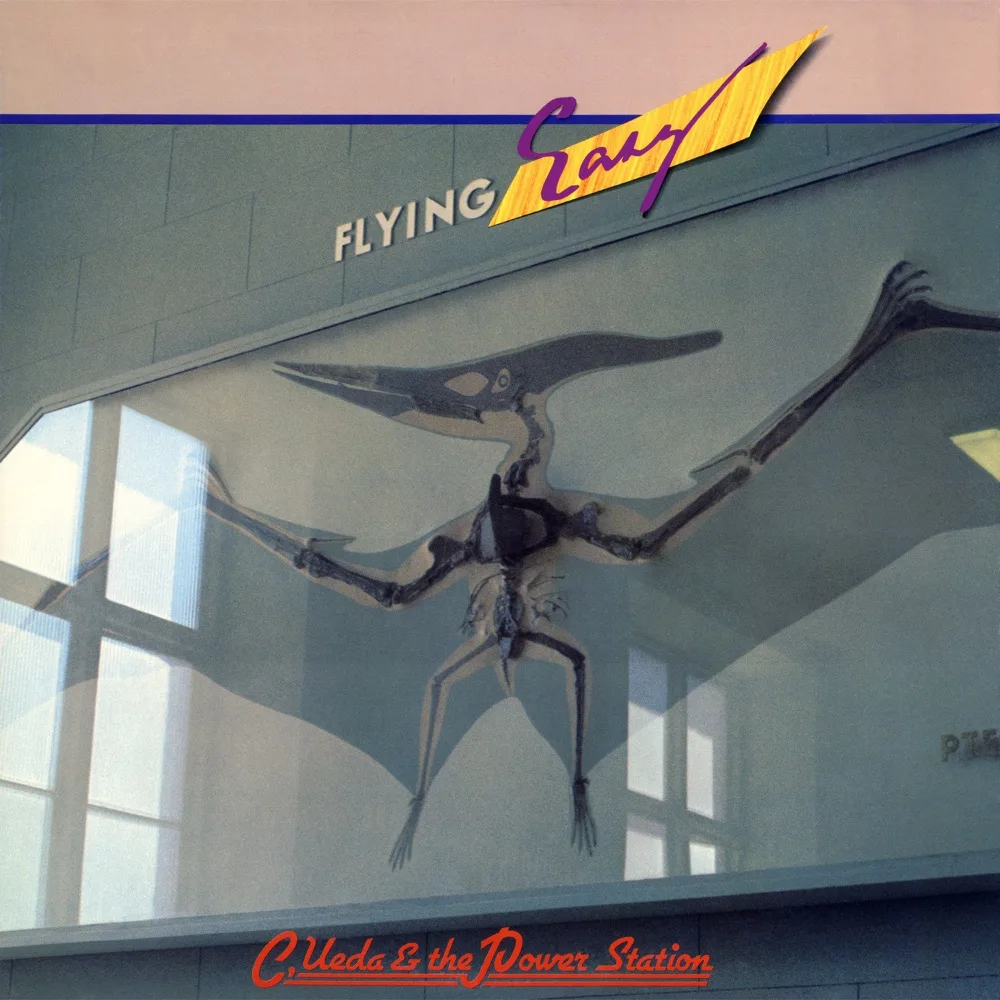
Cover of Flying Easy (Columbia, 1980), by Chikara Ueda and the Power Station. Standard copyright, all rights reserved, held by Nippon Columbia. This is not a Creative Commons or public-domain image; it is an album cover shown as an honestly disclosed editorial identification image. — https://music.apple.com/jp/album/flying-easy/1731787994
Chikara Ueda (上田力, Ueda Chikara in Japanese order) was a pianist, keyboardist, arranger and producer who spent the 1970s and early 1980s turning Tokyo studio players into some of the most polished fusion records the country made. He was born in Tokyo on November 5, 1925. His own biography, kept online by his staff, says he began drawing attention in the early 1960s for arrangements that blended jazz and popular music without friction, and that the fusion boom of the late 1970s then put him at the front of it.
The first records under his name were not subtle. Between 1972 and 1974 King Records issued a run of albums called Rock Impulse! under the name Chikara Ueda & The Caravan, large-band jazz-rock readings of whatever was on the radio: "Zarathustra," Stevie Wonder's "Superstition," "You're So Vain," "Midnight Train to Georgia," "Goodbye Yellow Brick Road." The first double album was split with another King act, Godzilla & Yellow Gypsy, and one 1973 volume was cut for quadraphonic playback. Funk Over Beethoven (King, 1975) kept the format but gave the writing more room: four long pieces, two of them past eleven minutes, for a brass and reeds band of more than twenty with four vocalists, with Ueda arranging and playing keyboards.
In 1976 CBS/Sony issued Mellow Wonder (The World of Stevie Wonder), recorded on August 27, 1975 with a group billed as the New Sonic Ensemble. Ueda played electric piano and an ARP Odyssey and wrote the arrangements, Takeru Muraoka was among the reed players, and the opener "Too High" ran past ten minutes. A 1977 CBS/Sony album, Joe Roth Never Give Up, was a seven-part program with movements named for the quarters of a football game.
1978 was the year the work became steady. He arranged and conducted two albums for Warner Bros. with Tatsuya Takahashi's big band Tokyo Union: Soul Porter, a set of Cole Porter songs with two Ueda originals, and Funpico, for which he wrote all the music. The same year he made a disco album for King as Ueda Chikara & Soul Basket and arranged and conducted Toshiyuki Honda's Burnin' Waves (Electric Bird), then played keyboards on Honda's Opa Com Deus in 1979.
That was also when The Power Station began. For Denon he recorded Burt Fusion (June 1979), a program of Burt Bacharach songs, and Bos & Boz (September 1979), a Boz Scaggs program on which Toots Thielemans played harmonica on two tracks, Sadanori Nakamure played acoustic guitar and Shuichi Ponta Murakami played drums. Flying Easy (Columbia, September 1980) put Harvey Mason on drums, Honda on flute and saxophones, Takao Naoi on guitar and a six-man trombone section, with Shigeharu Mukai among the trombonists on two tracks; Ueda is credited on electric piano, Prophet 5 and Oberheim OB-X. "Cloudy" from that record has since turned up on Japanese jazz-funk compilations. Sunlight Whisper followed in April 1981, and Head Wind (Sound Design, 1985) brought Mason back, with the bassist Louis Johnson.
Around the band records he was working constantly as an arranger and producer. In 1980 he wrote and arranged the music for Toshiyuki Miyama's New Herd on Big Stuff, with Yasuaki Shimizu guesting on tenor saxophone and Natsuki Tamura in the trumpet section. Recorded at King Studio on October 12 to 14, 1980, Herdland put him in the producer's chair and on the baton with the same band. Two months earlier, on August 3 to 5, 1980, the Cuban band Irakere recorded Cuba Libre at Sound Inn Studio in Tokyo for JVC, an album on which Ueda is credited with writing, composing, arranging and producing. He arranged George Kawaguchi's African Hot Dance (June 1980) with Kawaguchi's Super Fusion Band, and four tracks of Kawaguchi's Super Drums 2 (1983).
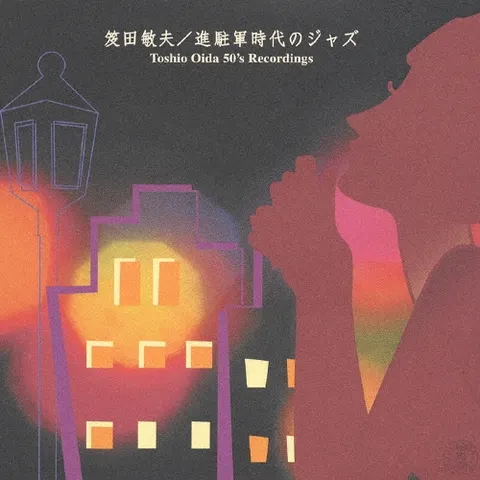
Singers got the same treatment. He produced and arranged Toshio Oida's Longest Dream (Express, 1981), Keiko Amae's Smokin' Prelude (Columbia, 1981) and Dancing Gold (1982), Michiko Akao's Kazamai (Toshiba, 1981) and Yoko Maeno's Twilight (Columbia, 1982), and he produced and arranged one track on Eri Ohno's Feeling Your Love (1979). Television gave him a second audience: he arranged the theme and wrote background music for the police drama Keishicho Satsujinka (1981), and recorded the soundtrack Cara de Piedra (Starchild, 1982) for the drama Ai no Kiseki: Doctor Norman Monogatari.
Away from the studio he wrote about music. He interviewed visiting artists including Quincy Jones, Bob James, Joe Sample and Michel Camilo, wrote liner notes, and contributed to music magazines; essays and sleeve notes from his archive, among them pieces on Steve Gadd and Seawind's Window of a Child, are republished on a blog run by his staff. From 1996 he started a series of concerts aimed at playing the whole of Antonio Carlos Jobim's songbook, which reached 52 shows by 2011 and produced albums credited jointly to Ueda and Nanda Nova, including Chega de Saudade / Jobim My Love (Omagatoki, 2007).
Chikara Ueda passed away on October 11, 2017.
Ueda was an arranger first and a soloist second. On Flying Easy, Sunlight Whisper and the Tokyo Union albums the picture is the same: a tight rhythm section, a big trombone or saxophone section voiced like a studio horn band, and his electric piano and Prophet 5 or Oberheim lines running between them. The repertoire points to American and Brazilian studio jazz of the 1970s as his reference. He built whole albums around Stevie Wonder, Burt Bacharach, Boz Scaggs and Cole Porter material, and later around Jobim.
The groove-first side of the work is the better known one, partly because DJs and compilers have kept finding it. A good deal of it sits at the pop end of fusion, and some of it is plainly pop or disco; he also worked on television themes and is credited on pop singles of the 1970s. The jazz identity shows most clearly in the Tokyo Union and New Herd albums, the Honda and Kawaguchi sessions, and the Jobim concerts of his later years.
- Flying Easy (1980, Columbia YX-7276, with The Power Station) - The record that carries his name abroad: Harvey Mason on drums, Toshiyuki Honda on reeds, six trombones, and Ueda on Prophet 5, Oberheim OB-X and electric piano. Spotify - Flying Easy · YouTube - full album Listen · Buy
- Funk Over Beethoven (1975, King SKK-3030, with The Caravan) - His strongest early statement, four long pieces for a brass and reeds band. YouTube - full album Listen · Buy
- Funpico (1978, Warner Bros. M-8004W, with Tatsuya Takahashi & Tokyo Union) - All the music is his; the big band plays it. YouTube - full album Listen · Buy
- Burt Fusion (1979, Denon SX-7033, with The Power Station) - Bacharach songs, rewritten for a studio fusion band. Spotify - Burt Fusion · YouTube - full album Listen · Buy
- Bos & Boz (1979, Denon SX-7034, with The Power Station) - The Boz Scaggs program, with Toots Thielemans on harmonica. Spotify - Bos & Boz Listen · Buy
- Big Stuff (1980, Electric Bird SKS-8015, Toshiyuki Miyama & New Herd Plays Chikara Ueda) - His writing for a full jazz orchestra. YouTube - full album Listen · Buy
- Herdland (1981, Electric Bird K28P-6057, with New Herd) - Recorded at King Studio in October 1980 with Ueda as composer, arranger, conductor and producer. Spotify - Herdland Listen
- Mellow Wonder (The World of Stevie Wonder) (1976, CBS/Sony SOLL-186, with New Sonic Ensemble) - Stevie Wonder songs in long arrangements, with "Too High" running ten minutes. YouTube - full album Listen
Chikara Ueda (上田力) - Full Discography
Japanese pianist, keyboardist, arranger and producer. Born November 5, 1925, Tokyo; passed away October 11, 2017. Discogs artist 1527934.
Name variations on record: C. Ueda, C.Ueda, Ueda Chikara, 上田 力, 上田力.
Group and project billings: Chikara Ueda & The Caravan (上田力とザ・キャラバン), The Power Station (上田力とパワー・ステーション), Ueda Chikara & Soul Basket (上田力&ソウル・バスケット), Chikara Ueda & New Sonic Ensemble, Brasscada, Tropico.
Leader
Releases under his own name or his own groups (Caravan, Power Station, Soul Basket, New Sonic Ensemble). Year and catalog data are from Discogs.
| Album | Year | Label | Personnel | Notes | Listen | Buy |
|---|---|---|---|---|---|---|
| Rock Impulse! (quadraphonic LP) | 1973 | King Records, 4K-41 | Chikara Ueda & The Caravan; Ueda credited as arranger | Nine tracks including "Zarathustra", "Superstition", "You're So Vain", "Rocks Off" and "The Impossible Dream". Discogs release 14470501; a 2xLP version also exists (release 21467434). | "Zarathustra" on YouTube | Amazon |
| Rock Impulse! Imagination | 1974 | King Records, SKM-1281 / SKM-1282 | Chikara Ueda & The Caravan | Double LP, twenty tracks including "Midnight Train to Georgia", "Living for the City", "Goodbye Yellow Brick Road" and "I Can See Clearly Now". Discogs release 13771398. | Spotify | Amazon |
| Rock Impulse! Exorcist | 1974 | King Records | Chikara Ueda & The Caravan | Double LP in the same series. Discogs master 1714912 (main release 14470998). | Spotify | Amazon |
| Funk Over Beethoven | 1975 | King Records, SKK-3030 | Chikara Ueda (arranger, keyboards); Mikio Shimizu, Kosuke Ichihara (reeds); Shunzo Sunahara (baritone saxophone); Eiji Arai, Seiichi Tokura, Sumio Okada, Yasuo Hirauchi (trombones); Hiroshi Ikeda, Kenichi Sano, Koji Hatori, Mamoru Ohtake, Mitsuru Honda (trumpets); Kenichi Araya (guitar); Yoshitetsu Asamoto (bass); Jiro Suzuki, Shoji Nagashiba (drums); Larry Sunaga, Mariano Katsumoto (percussion); Hiroko Suzuki, Kayoko Ishu, Kayoko Ohumi, Tadashi Inoue (vocals) | Four tracks: "Funky Doodle" (13:17), "Feel Like Moonlight" (6:54), "Pastoral" (9:30), "Come On and Groove" (11:35). Part of the Rock Impulse series. Discogs release 4915981. | Full album on YouTube | Amazon |
| Mellow Wonder (The World of Stevie Wonder) (メロウ・ワンダー) | 1976 | CBS/Sony, SOLL-186 | Chikara Ueda (electric piano, ARP Odyssey synthesizer, arranger); Shiro Michi (Hammond organ, producer); Takeru Muraoka (flute, sopranino and tenor saxophone); Makio Shimizu (flutes, soprano saxophone, bass clarinet); Eiji Arai (trombone); Yoshitetsu Asamoto (bass); Shoji Nagashiba (drums); Larry Sunaga, Tadaomi Anai (percussion); Kayoko Ishu (solo vocal); Hiroko Suzuki (chorus) | Billed as 上田力とニュー・ソニック・アンサンブル (Chikara Ueda & New Sonic Ensemble). Recorded August 27, 1975. Seven Stevie Wonder songs: "Too High" (10:02), "Please Don't Go", "Heaven Is 10 Zillion Light Years Away", "You Are the Sunshine of My Life", "Jesus Children of America", "Boogie On Reggae Woman", "Superstition". Discogs master 3759051 (release 33206013). | Full album on YouTube | Amazon |
| Joe Roth Never Give Up | 1977 | CBS/Sony, 25AG 227 | Chikara Ueda | Seven movements: a prologue, four quarters, a half-time show and an epilogue, in the form of a football game. Discogs release 11236596. | not found | Amazon |
| Disco Operation (ディスコ・オペレーション) | 1978 | King Records, SKD-481 | Ueda Chikara & Soul Basket: Chikara Ueda (Fender Rhodes, Steinway grand, synthesizer, Solina), Takeru Muraoka (saxophones, Lyricon, harmonica, flute), Yasuhiko Tsumura (guitar), Shogo Kindaichi (electric bass), Yasushi Ichihara (drums), Naomi Kawahara (percussion); Hiroko Suzuki, Kayoko Ishu, Kayoko Wada (chorus) | A disco set of twelve tracks including "Star Wars Theme", "Dancing Queen" and "Never Give Up". Discogs genre: Funk / Soul, Disco. Discogs artist 7257576. | Full album on YouTube | Amazon |
| Burt Fusion | 1979 | Denon, SX-7033 | Chikara Ueda & The Power Station; Ueda credited as arranger | Six tracks of Burt Bacharach songs, including the "I Say a Little Prayer / Do You Know the Way to San Jose / I'll Never Fall in Love Again" medley and "This Guy's in Love with You". Released June 25, 1979. Discogs release 31206754. | Spotify · YouTube | Amazon |
| Bos & Boz | 1979 | Denon, SX-7034 | Chikara Ueda (keyboards, arranger); Takao Naoi (electric guitar); Sadanori Nakamure (acoustic guitar); Kazuya Sugimoto (electric bass); Shuichi Murakami (drums); Yonosuke Segami, Yuji Yoshikawa (percussion); Toots Thielemans (harmonica on A2, B2); Singers Three (chorus) | Six Boz Scaggs songs: "A Clue", "My Time", "Hollywood", "Island Cuckoo", "Precious Talk", "Persuasion". Released September 1979 on a 45 RPM 12-inch. Liner notes by Hiraku Aoki. Discogs master 1526494 (release 12197343). | Spotify | Amazon |
| Flying Easy | 1980 | Columbia, YX-7276 | Chikara Ueda (electric piano, Prophet 5, Oberheim OB-X, arranger); Harvey Mason (drums); Toshiyuki Honda (flute, alto and soprano saxophone); Takao Naoi, Masahiro Ikumi, Yoshiyasu Hachiya (electric guitars); Kazuya Sugimoto (electric bass); Yoshinori Nohmi (Latin percussion); trombones: Shigeharu Mukai (A1, A2), Teruo Fukushima and Yoshio Oikawa (bass trombones), Hideo Iguchi, Tadanori Konakawa, Tadataka Nakazawa, Takaaki Hayakawa, Toshitsugu Satoh, Yoshiaki Kawasaki (tenor trombones); Teruaki Kuroda (director) | Eight tracks: "Flying Easy", "Cloudy", "Do Like You Do in New York", "Jojo", "Breakdown Dead Ahead", "Simone", "Mind Flower", "Home Work". "Cloudy" has been anthologised on Japanese jazz-funk compilations. Discogs master 2224135 (release 6039785). | Spotify · YouTube | Amazon |
| Super Fusion For Super Boy | 1980 | Denon, ST-6009 (promo 12-inch) | Chikara Ueda & The Power Station | One-sided promotional 12-inch with "Secret Beauty", "One" and "Send One Your Love". Discogs release 6901851. | not found | Amazon |
| Sunlight Whisper | 1981 | Columbia, YF-7021 | Chikara Ueda & The Power Station; Teruaki Kuroda (director) | Eight tracks: "Rag Delight", "Twisty", "Sunlight Whisper", "Twilight Shadows", "Silly Talk", "No Cry, No End", "El Rico", "Soul Madness". Released April 1981. Discogs master 2224129 (release 11903386). | Spotify | Amazon |
| 警視庁殺人課 Original Soundtrack "Mr." and theme single | 1981 | Columbia (LP; single AH-65) | Chikara Ueda & The Power Station; the theme single was composed by Asei Kobayashi and arranged by Ueda | Music for the television police drama Keishicho Satsujinka. The 7-inch single carries "眠れ都会よ" and "Urban Sunrise". Discogs releases 10567894 (LP) and 11093734 (single). | not found | Amazon |
| Cara de Piedra (soundtrack to Ai no Kiseki: Doctor Norman Monogatari) | 1982 | Starchild, K25G-7106 | Chikara Ueda & The Power Station | Eight tracks including "Cara de Piedra", "Santa Vida", "Hot to Trot" and "Solace". Discogs release 13589992. | "Solace" on YouTube | Amazon |
| Head Wind | 1985 | Sound Design Records, 1342-48 (28SD) | The Power Station: Chikara Ueda (keyboards), Harvey Mason (drums), Louis Johnson (electric bass), Kohjl Miyatake (electric guitar), Kazuhiro Mishima (percussion), Genji Sawai and Kosei Kikuchi (tenor saxophone, flute), Takaaki Hayakawa (trombone), Toshio Araki (trumpet), Funky Igarashi and Suzanne Kim (vocals) | Eight tracks including "Power Flight", "Funky Message" and "Head Wind". Discogs master 1735151 (release 8619689); Discogs dates it 1985. | Full album on YouTube | Amazon |
Co-Leader
| Album | Year | Label | Co-billed with | Personnel | Notes | Listen | Buy |
|---|---|---|---|---|---|---|---|
| Rock Impulse! ゴーゴー大パーティー | 1972 | King Records (2xLP) | Godzilla & Yellow Gypsy | Chikara Ueda & The Caravan, with Godzilla & Yellow Gypsy | The first double album in the Rock Impulse series, split between the two bands. Discogs release 14483081. | Full album on YouTube | Amazon |
| Rock Impulse! Vol.3 ゴーゴー大パーティー第3回 | 1973 | King Records (2xLP) | Godzilla & Yellow Gypsy | Chikara Ueda & The Caravan, with Godzilla & Yellow Gypsy | Discogs release 9829357. | Spotify · YouTube | Amazon |
| Funpico | 1978 | Warner Bros. Records, M-8004W | Tatsuya Takahashi & Tokyo Union Orchestra | Chikara Ueda (arranger, conductor, synthesizer, electric piano on B2); Takao Naoi (guitar); Hajime (bass on A2, A4, B2, B4); Shigemitsu Katayama (percussion); Tadashi Inoue (vocals on A3, B2); Hiroko Suzuki, Kayoko Ishu, Kayoko Wada (backing vocals); producer Yukio Seto | Eight tracks, with music by Ueda on A1 to A4, B1 and B2: "Funpico", "Burning Island", "Along the Seaside", "Sidewalk Boogie", "Strange Dreamer", "Jazzed Up (On Your Razz-A-Ma-Tazz)", "I'm Singing", "Black Man". Discogs release 2923205. | Full album on YouTube | Amazon |
| Big Stuff | 1980 | Electric Bird, SKS-8015 | Toshiyuki Miyama & The New Herd | Chikara Ueda (composer, arranger, conductor); Toshiyuki Miyama (supervisor); New Herd reeds, trombones and trumpets including Natsuki Tamura (trumpet, flugelhorn); guests Yasuaki Shimizu (tenor saxophone), Takao Naoi (guitars), Hideo Yamaki (drums), Yoshinori Nohmi (percussion), Hideo Kamimura (cornet); Kiyoshi Takano (electric piano) | Seven tracks: "Samboogie", "Big Stuff", "Sunset Valley", "Mystery Cat", "Walking Stone", "Mas Quero Dançar (But Dancing)", "So Fine". Billed on Discogs as Toshiyuki Miyama & New Herd Plays Chikara Ueda. Discogs master 2775785 (release 6980775). | Full album on YouTube | Amazon |
| Herdland (ハードランド) | 1981 | Electric Bird, K28P-6057 | Toshiyuki Miyama & The New Herd | Chikara Ueda (composer, arranger, conductor, producer); Toshiyuki Miyama (supervisor); Kiyoshi Takano (piano, electric piano); Katsutoshi Morizono (guitar); Kazuya Sugimoto and Yoshiaki Akagi (electric bass); Yoshio Nakamura (drums); Masato Kawase, Yoshinori Nohmi (percussion); New Herd saxophones, trombones and trumpets | Recorded at King Studio, October 12 to 14, 1980. Tracks listed on Discogs include "Herdland", "Soul Market", "Qué Lastima" and "Don't Stop the Funk". Discogs master 3648453 (release 9622060). | Spotify | Amazon |
| Chega de Saudade / Jobim My Love | 2007 | Omagatoki, OMCA-1080 | Nanda Nova | Chikara Ueda (keyboards, arranger, producer); Eietsu Furuya (bass); Kazuo Yoshida (drums, recording and mixing); Aya Kurosawa (voice); trombones: Kan Nishida, Hitomi Uchida, Masaaki Ikeda, Mitsuaki Uchida; Junko Kudo (bassoon) | Ten Jobim songs recorded between October 2006 and September 2007, including "Desafinado", "Garota de Ipanema" and "Águas de Março". Discogs release 27517962. | "Chega de Saudade" on YouTube | Amazon |
Arranger, producer and sideman credits
Chronological. Albums led by other artists on which Discogs credits Ueda at release level.
| Year | Release | Actual leader | Label | Ueda's credit | Listen | Buy |
|---|---|---|---|---|---|---|
| 1978 | Burnin' Waves | Toshiyuki Honda | Electric Bird, SKS 8002 | Arranger, conductor | not found | Amazon |
| 1978 | Soul Porter | Tatsuya Takahashi & Tokyo Union Orchestra | Warner Bros. Records, M-8002W | Arranger, conductor, keyboards; composer of A4 and B1; Cole Porter songs otherwise | Full album on YouTube | Amazon |
| 1979 | Opa Com Deus | Toshiyuki Honda | Electric Bird, SKS-8006 | Keyboards | not found | Amazon |
| 1979 | Feeling Your Love | Eri Ohno | Better Days, YX-7251-ND | Producer and arranger (horns, synthesizers) on track A5 | not found | Amazon |
| 1980 | African Hot Dance | George Kawaguchi & Super Fusion Band | Electric Bird, K28P-6030 | Arranger; electric piano, synthesizers (OB-X, Prophet 5, Syn-Drum). Recorded June 17 to 19, 1980; Toshiyuki Honda, Takeru Muraoka, Yasuaki Shimizu, Takeshi Itoh and Kiyoshi Sugimoto among the players | Title track on YouTube | Amazon |
| 1980 | Cuba Libre | Irakere | JVC, VIJ-28005 | Writer, composer, arranger, producer. Recorded at Sound Inn Studio, Tokyo, August 3 to 5, 1980 | Title track on YouTube | Amazon |
| 1981 | Longest Dream | Toshio Oida | Express, ETJ-85020 | Arranger, keyboards, producer. Recorded July 1981 | Full album on YouTube | Amazon |
| 1981 | Smokin' Prelude | Keiko Amae | Columbia, YF-7030 | Arranger, piano, electric piano, synthesizers, producer; music on B1, B3, B4 | Full album on YouTube | Amazon |
| 1981 | 風舞 Kazamai (Wind Dance) | Michiko Akao | Toshiba Records, TP-80148 | Arranger, keyboards, composer, producer. Recorded October 6 to November 2, 1981 | not found | Amazon |
| 1982 | Twilight | Yoko Maeno | Columbia, AF-7142 | Keyboards, arranger, sound producer | Full album on YouTube | Amazon |
| 1982 | Dancing Gold | Keiko Amae | Better Days, YF-7050-BD | Arranger, piano, producer | not found | Amazon |
| 1983 | Moving Target | Brasscada | Sound Design Records, 1342-30 | Keyboards. Recorded in Tokyo and Los Angeles; Harvey Mason (drums) and James Pankow (trombone) among the players | Full album on YouTube | Amazon |
| 1983 | Super Drums 2: Tribute to Gene Krupa | George Kawaguchi & The Super Band | Paddle Wheel, K28P-6225 | Arranger of four tracks (A1, A3, A4, B2). Recorded February 15 and 16, 1983 | not found | Amazon |
Compilation appearances
| Year | Release | Compiler | Label | Listen | Buy |
|---|---|---|---|---|---|
| 1996 | Classic Jazz-Funk Mastercuts Volume 6 (The Definitive Jap-Jazz Mastercuts) | Various | Mastercuts | not found | Amazon |
| 2011 | Mixed Roots King of JP Jazz 70's (Wax Poetics Japan Compiled Series) | Various | King Records | not found | Amazon |
| 2026 | DJ Notoya Presents Tokyo Pulse (Japanese Funk, Modern Soul and City Pop from the Tokyo Scene 1974-1988) | DJ Notoya | Spotify | Amazon |
Sources
- Discogs API: artist 1527934 (full paginated release list), artists 3465715 (The Caravan) and 7257576 (Soul Basket), and the individual release and master pages cited in the notes above.
- Japanese Wikipedia: 上田力.
- Spotify and YouTube links were each checked against the album or video title before inclusion.
- Tatsuya Takahashi & Tokyo Union - the big band on Funpico and Soul Porter (Warner Bros., 1978), both arranged and conducted by Ueda.
- Toshiyuki Miyama & The New Herd - played his music on Big Stuff (1980) and Herdland (1981); Miyama is credited as supervisor on both.
- Yasuaki Shimizu - guest tenor saxophone on Big Stuff (1980), and tenor saxophone on African Hot Dance (1980).
- Natsuki Tamura - trumpet and flugelhorn in the New Herd section on Big Stuff (1980).
- Toshiyuki Honda - flute and saxophones on Flying Easy and African Hot Dance; Ueda arranged and conducted his Burnin' Waves (1978) and played keyboards on Opa Com Deus (1979).
- Harvey Mason - drums on Flying Easy (1980), Head Wind and Brasscada's Moving Target (1983).
- Shigeharu Mukai - trombone on two tracks of Flying Easy (1980).
- George Kawaguchi - the drummer-leader on African Hot Dance (1980) and Super Drums 2 (1983), for which Ueda arranged four tracks.
- Takeru Muraoka - reeds on Mellow Wonder (1976), on the Soul Basket album Disco Operation (1978) and on African Hot Dance (1980).
- Takeshi Ito - alto saxophone on African Hot Dance (1980).
- Kiyoshi Sugimoto - guitar on African Hot Dance (1980) and Moving Target (1983).
- Sadanori Nakamure and Shuichi Ponta Murakami - acoustic guitar and drums on Bos & Boz (1979).
- Toshio Oida - the singer on Longest Dream (1981), which Ueda produced and arranged.
- Toots Thielemans - harmonica on two tracks of Bos & Boz (1979).
- Irakere - the Cuban band that recorded Cuba Libre in Tokyo in August 1980 with Ueda credited as composer, arranger and producer.
- Takao Naoi and Kazuya Sugimoto - guitar and electric bass, repeat sidemen across Flying Easy, Bos & Boz and African Hot Dance (not to be confused with the guitarist Kiyoshi Sugimoto above).
- Keiko Amae, Michiko Akao, Yoko Maeno, Eri Ohno - artists whose 1979 to 1982 albums he produced or arranged.
- Nanda Nova - his co-billed partner on the Jobim albums of the 2000s.
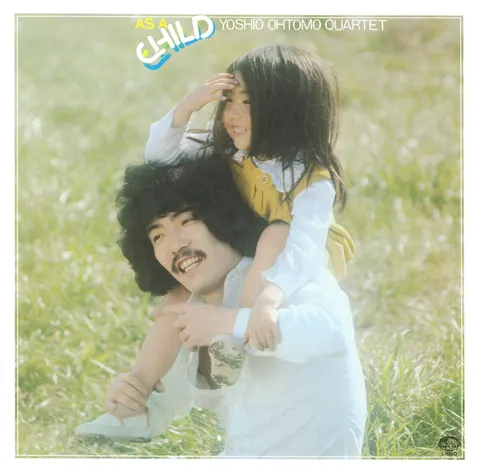
- Yoshio Otomo - alto and soprano saxophonist on Super Drums 2: Tribute to Gene Krupa (Paddle Wheel, 1983), four tracks of which Ueda arranged.
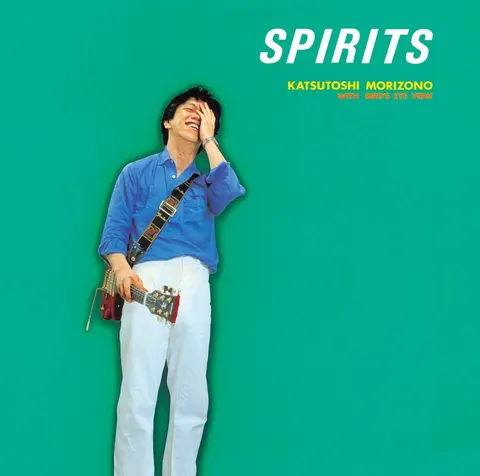
- Katsutoshi Morizono - electric guitar on Ueda's Herdland (Electric Bird, 1981), recorded with Toshiyuki Miyama and the New Herd; Morizono also plays guitar on African Hot Dance (Electric Bird, 1980), which Ueda arranged and played keyboards on.
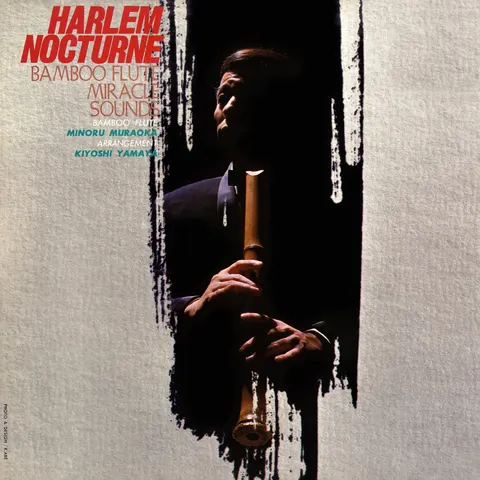
- Minoru Muraoka - shakuhachi player; Ueda plays piano and synthesizer on Memories of Chi Yo (King, 1978), billed as Minoru Muraoka And His Group with Joe.
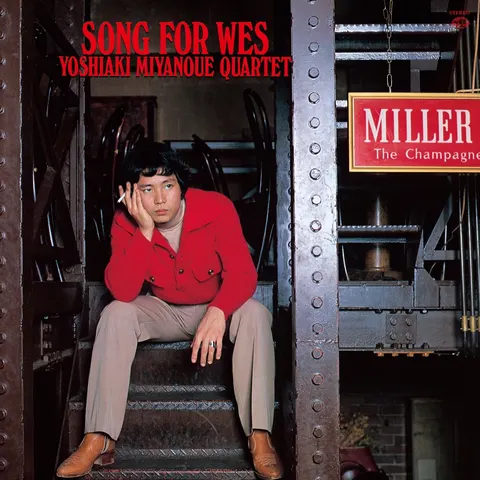
- Yoshiaki Miyanoue - guitarist; Ueda arranged and conducted the string ensemble on Miyanoue's Mellow Around (King Records, 1980).
More Jazz Fusion Artists
See all 351 Jazz Fusion artists →More Japanese Jazz Artists
See all 262 Japanese artists →- Spotify: 上田力とパワー・ステーション
- Spotify: 上田力&ザ・キャラバン
- Discogs: Chikara Ueda
- 上田力 What Next (articles by Ueda, run by his staff)
- Chikara Ueda on JazzProfiles.com
- r/JapaneseJazz
- Wikipedia (Japanese): 上田力
- Wikidata: Q24874358
- Ameba profile: 上田力 (biography, 1925 to 2017)
- Discogs: Chikara Ueda, artist 1527934
- Discogs: Flying Easy, Columbia YX-7276, 1980
- Discogs: Bos & Boz, Denon SX-7034, 1979
- Discogs: Funpico, Warner Bros. M-8004W, 1978
- Discogs: Big Stuff, Electric Bird SKS-8015, 1980
- Discogs: Cuba Libre, Irakere, JVC VIJ-28005, 1980
- Discogs: Herdland, Electric Bird K28P-6057, 1981