 JAZZPROFILES lives in the music 1,572 Jazz Artists fully Profiled!
 Masahiko Satoh
Last updated August 30, 2026
Listen on Spotify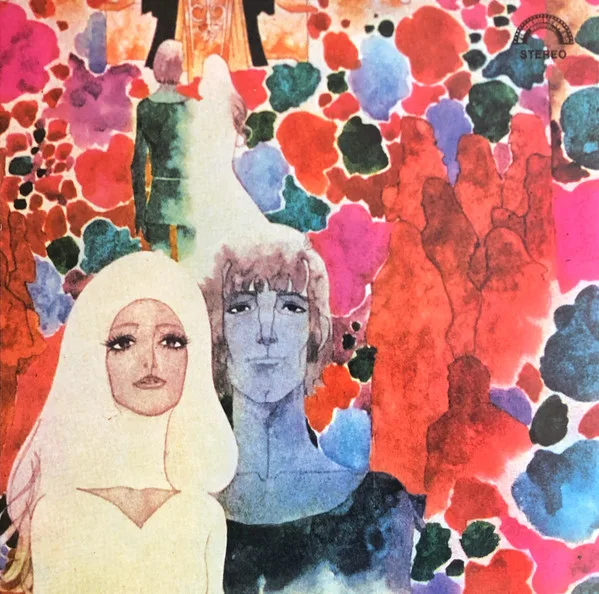
Cover art for the "Belladonna of Sadness" soundtrack LP (Finders Keepers Records, FKR079LP, 2020 reissue) - this is album cover art, not a photograph of Masahiko Satoh. Not applicable - album cover art used as a one-off substitute, no photo of the artist available. No Creative Commons license is claimed. — Discogs (release 15338326), used editorially as an honest cover-art substitute per this project's standing image-sourcing exception for artists with no locatable rights-clear photo.
Masahiko Satoh started on piano at five, not long after his family moved into a house in Tokyo's Sumida-ku that happened to have one. By 17 he was already working, accompanying singers and variety acts in Ginza cabarets, the kind of night-club apprenticeship that trained a generation of Japanese jazz musicians before conservatories caught up with the music. In 1959, at 18, he joined drummer George Kawaguchi's band alongside a young alto saxophonist named Sadao Watanabe, years before either man led a record under his own name. After Keio University, Satoh spent 1966 to 1968 studying composition and arranging at Berklee College of Music in Boston on a Downbeat Magazine scholarship, then came home and formed his own trio.
That trio's debut, "Palladium" (1969, Express), won Swing Journal magazine's Japan Jazz Award and set the template for the next several years: a free, percussive piano style pushed as far as it would go. 1971 was his breakout year for reasons that still define his reputation in reissue circles. "Amalgamation," credited to Masahiko Sato & the Soundbreakers, is a free-jazz and psychedelic-rock collision engineered by Rudy Van Gelder and produced by Creed Taylor, the same two names behind some of the most recognizable American jazz records of the era; it later placed at number seven on writer Julian Cope's "Japrocksampler" list of essential Japanese rock albums. That same year he performed at the Berlin Jazz Festival running a ring modulator through his piano, an unusual and early use of electronics for a jazz pianist in 1971, and he co-led "Metempsychosis" with percussionist Stomu Yamash'ta.
In 1973 Satoh wrote the psychedelic, free-jazz-and-funk score for the anime film "Belladonna of Sadness" (Kanashimi no Belladonna), directed by Eiichi Yamamoto, with vocals from his then-wife, actress Chinatsu Nakayama. Original pressings became scarce and expensive enough to be a running joke among collectors before Finders Keepers Records gave the album its first official reissue in 2020, a remastered LP that keeps the record "strictly Satoh" by dropping the one orchestral cue he didn't write, followed a year later by a limited 7" single. It remains one of the most-traded Satoh artifacts in reissue culture.
Satoh didn't treat electronics or genre-crossing as a phase. From 1981 to 2020, 39 years, he was head instructor of music theory, composition, and piano at Mesa House Music College, and in 2009 he created the chair of Non-idiomatic Improvisation at Tokyo University of the Arts. In between, he formed the world-folk-inflected ensemble Rantooga (1990) and co-led "Lunar Cruise" (1990) with percussionist Midori Takada, featuring Yellow Magic Orchestra's Haruomi Hosono on bass. He founded his own label, BAJ Records, in 1997, and has spent much of the 2000s recording a multi-album tribute series to percussionist Masahiko Togashi, the same drummer who played on "Palladium" back in 1969.
His most enduring recent collaboration has been with free-jazz saxophonist Peter Brötzmann and drummer Takeo Moriyama, a trio that first recorded together on 2012's "Yatagarasu" (Not Two Records) and reunited on stage at Cafe OTO in London during a 2019 Brötzmann festival. A separate set that same week, with Moriyama joined by bassist Leon Brichard and saxophonist Idris Rahman of Ill Considered rather than Brötzmann, surfaced five years later as "Live At Café OTO" (BBE Music, 2024). Satoh remains an active recording artist at 84: 2025 alone brought three new releases, "Thousand Leaves" (Trost Records), "Open Cluster" (on his own BAJ Records), and "AOI."
Satoh's earliest signature is a free, percussive piano attack developed in the late 1960s and pushed into genuinely experimental territory by 1971, the year he combined it with a ring modulator on stage in Berlin. That willingness to run his instrument through electronics, well before it was common practice for a jazz pianist, runs through his catalog from the Moog- and synthesizer-inflected records of the early 1970s to his 1990 ambient/fusion work with Midori Takada. His later work folds in traditional Japanese and world instrumentation and a spatial, unhurried sense of composition that critics have compared to composer Toru Takemitsu. He moves comfortably between structured composition (film scoring, big-band arranging, classical-adjacent pieces like "Based on Bach") and completely open improvisation, a range reflected directly in the chair of Non-idiomatic Improvisation he founded at Tokyo University of the Arts in 2009.
- Palladium (1969, Express) - His debut as a trio leader, with Yasuo Arakawa and Masahiko Togashi. Won Swing Journal's Japan Jazz Award. YouTube - Palladium Listen · Buy
- Amalgamation (1971, Liberty, as Masahiko Sato & the Soundbreakers) - Free-jazz/psych-rock landmark engineered by Rudy Van Gelder and produced by Creed Taylor; #7 on Julian Cope's "Japrocksampler." YouTube - Amalgamation Listen · Buy
- Belladonna of Sadness (1973 score; 2020 Finders Keepers LP reissue) - His most widely known work outside jazz circles, a psychedelic anime soundtrack turned reissue-culture cult classic. YouTube - Belladonna of Sadness Listen · Buy
- Lunar Cruise (1990, Epic, with Midori Takada) - Ambient/fusion co-led album featuring Yellow Magic Orchestra's Haruomi Hosono. Bandcamp - Lunar Cruise Listen · Buy
- Yatagarasu (2012, Not Two Records) - Trio session with free-jazz saxophonist Peter Brötzmann and drummer Takeo Moriyama. YouTube - Yatagarasu Listen · Buy
Masahiko Satoh: Full Discography
As Leader - Masahiko Sato Trio
His main working trio identity on Discogs, distinct from his personal artist page. 16 Main-role releases, 1966-2023.
| Album | Year | Label / Catalog | Personnel | Notes | Listen | Buy |
|---|---|---|---|---|---|---|
| Palladium | 1969 | Express, EP-8004 | Masahiko Satoh (piano); Yasuo Arakawa (bass); Masahiko Togashi (drums) | Debut leader album; won Swing Journal magazine's Japan Jazz Award (Nihon Jazz Sho). Five originals plus a cover of the Beatles' "Michelle." | YouTube (full album) | Amazon search |
| Deformation | 1969 | Same trio lineup as Palladium (Arakawa, Togashi) per Discogs group listing | Second trio album the same year. | YouTube (full album) | Amazon search | |
| 夜明けのうた (魅惑のピアノ歌謡ヒット・メロディー) | 1966 | Predates Palladium by three years; earliest confirmed Trio-credited release on Discogs. | not found | Amazon search | ||
| '70 Jazz Festival In Nemu | 1970 | Various-artists live festival release | Live recording, Nemu no Sato jazz festival. | not found | Amazon search | |
| Transformation '69/'71 | 1971 | YouTube (full album) | Amazon search | |||
| Swinging Poem (A Child's Garden Of Verses) | 1971 | YouTube (full album) | Amazon search | |||
| Discover→War (自衛隊讃歌) | 1972 | not found | Amazon search | |||
| Penetration - Masahiko Sato Trio In Berlin | 1972 | YouTube (full album) | Amazon search | |||
| Misty | 1981 | not found | Amazon search | |||
| Pop Color | 1983 | not found | Amazon search | |||
| Brink | 1984 | YouTube (full album) | Amazon search | |||
| Based on Bach | 2009 | not found | Amazon search | |||
| Edo Gigaku | 2011 | YouTube (full album) | Amazon search | |||
| Doushin Gigaku (童心戯楽) | 2014 | Spotify | Amazon search | |||
| Hyōjun Gigaku (標準伎楽) | 2016 | not found | Amazon search | |||
| Nouvelle Cuisine (Live At "Studio F") | 2023 | Same title also appears on his personal artist page's Main list the same year. | Spotify | Amazon search |
As Leader - Masahiko Sato & Sound Breakers
A one-shot (later revisited) project identity distinct from the Trio. 2 Main-role releases, both 1971.
| Album | Year | Label / Catalog | Personnel | Notes | Listen | Buy |
|---|---|---|---|---|---|---|
| Amalgamation | 1971 | Liberty, LTP-9018 | Masahiko Satoh (composed by, conductor, arranger); Rudy Van Gelder (engineer); Creed Taylor (producer); Sabu Toyozumi (drums, percussion, one track); Hideaki Sakurai (Latin percussion, taiko, voice, one track); Kayoko Ishu (scat, one track); Mototeru Takagi (tenor/soprano sax, bass clarinet, woodwind, one track); an uncredited string/brass ensemble on another track | Free-jazz/psychedelic-rock crossover; ranked #7 on Julian Cope's "Japrocksampler" Top 50 Japanese rock albums. Two side-long suites. (Discogs' own extraartist data misspells the engineer and producer names as "Rudy Van Gedler" and "Cried Taylor" - corrected here to the real Rudy Van Gelder and Creed Taylor.) | YouTube (full album) | Amazon search |
| Metempsychosis (ものみな壇ノ浦へ) | 1971 | Columbia, NCB-7009 | Masahiko Satoh (composed by, piano); Stomu Yamash'ta (percussion); Toshiyuki Miyama & The New Herd (ensemble: 4 trumpets, 4 trombones, 2 alto sax, baritone sax, 2 tenor sax); Isao Yomoda (drums); Masaaki Ito (electric bass) | Recorded January 27, 1971, Nippon Columbia Studio, Tokyo. Two side-long pieces; a three-way credit split between Satoh, percussionist Stomu Yamash'ta, and this Sound Breakers group identity. | YouTube (full album) | Amazon search |
As Leader - Personal Artist Page (Main)
119 Main-role releases on his own artist page, 1969-2025. Full personnel/notes pulled for the most historically significant titles below; the remaining releases are listed chronologically with title, year, and label, consistent with the scale-note approach used on this project's other high-volume discography builds (Sadao Watanabe, Toshiko Akiyoshi).
Fully detailed
| Album | Year | Label / Catalog | Personnel | Notes | Listen | Buy |
|---|---|---|---|---|---|---|
| Holography | 1970 | Columbia, JDX-42 | Masahiko Satoh (composed by, piano) | Solo piano, two side-long free-improvisation pieces. | YouTube (full album) | Amazon search |
| Astrorama | 1970 | Liberty, LPC-8039 | Jean-Luc Ponty (electric violin); Masahiko Satoh (electric piano); Niels-Henning Ørsted Pedersen (bass); Yoshiaki Masuo (electric guitar); Motohiko Hino (drums) | Recorded live in Tokyo, August 29, 1970. Co-led with French violinist Jean-Luc Ponty; three of Ponty's compositions and one of Satoh's. | YouTube (full album) | Amazon search |
| Belladonna (Colonna Sonora Originale Del Film) | 1975 | Cinevox Record, MDF 33/90 | Masahiko Satoh (composed by); Asei Kobayashi and Yu Aku (lyrics); Chinatsu Nakayama (vocals, uncredited on Discogs but confirmed via Wikipedia/press sources as his then-wife and the featured vocalist) | Original 10-track Italian-market pressing of the 1973 anime "Belladonna of Sadness" score. Same master group as the 2020 official reissue below. | not found (see 2020 reissue) | Amazon search |
| Belladonna | 2020 | Finders Keepers Records, FKR079LP | Masahiko Satoh (composed by) | Official first-ever full-album reissue of the "Belladonna of Sadness" score, remastered; drops the one orchestral cue Satoh didn't write (the Kobayashi/Nakayama love theme), keeping the album "strictly Satoh." 9 tracks. | YouTube (full soundtrack) | Amazon search |
| Belladonna Of Sadness | 2021 | Finders Keepers Records, FKSP021 | Masahiko Satoh (written by) | Limited-edition 7" single, two tracks ("The Plague Reins" / "The Witch Hunt"), separate from the 2020 full-LP reissue above. | not found | Amazon search |
| Lunar Cruise | 1990 | Epic, ESCA 5093 | Midori Takada (marimba, gong, bells, drums, co-composer); Masahiko Satoh (synthesizer, piano, composer, producer); Haruomi Hosono (bass, one track co-write); Kazutoki Umezu (soprano sax, bass clarinet) | Co-led ambient/fusion album with percussionist Midori Takada, featuring Yellow Magic Orchestra's Haruomi Hosono. Reissued by WRWTFWW Records. | Bandcamp (WRWTFWW reissue) | Amazon search |
| Yatagarasu | 2012 | Not Two Records, MW 894-2 | Peter Brötzmann (alto/tenor sax, tárogató, clarinet); Masahiko Satoh (piano); Takeo Moriyama (drums) | Trio studio session with free-jazz saxophonist Peter Brötzmann; the trio's first joint recording, later reunited for a 2019 Cafe OTO, London performance during a Brötzmann festival. | YouTube (full album) | Amazon search |
| Live At Café Oto | 2024 | BBE, BBE737 | Masahiko Satoh (piano); Takeo Moriyama (drums); Leon Brichard (bass); Idris Rahman (reeds) | Recorded live September 8, 2019, at Cafe OTO, London (a separate date from the Brötzmann trio performance two days earlier during the same festival); released five years later. No Brötzmann on this specific release. | Bandcamp | Amazon search |
Remaining Personal-Page Main Releases (chronological)
Listed with title, year, and label where known.
| Year | Title | Label |
|---|---|---|
| 1969 | Four Units (フォー・ユニッツ) | (compilation feat. Satoh, Akira Miyazawa, Masahiko Togashi, Yasuo Arakawa) |
| 1970 | Nijimasu (にじます) | Columbia |
| 1970 | 佐藤允彦女を奏う - 火曜日の女 | |
| 1970 | Canto Of Libra (天秤座の詩) | |
| 1970 | Piano Deluxe Album | |
| 1971 | Trinity | |
| 1971 | Bridge Over Troubled Water (明日にかける橋) | |
| 1971 | デュオローグ (Duologue) | |
| 1971 | Switched On East | |
| 1971 | Pianology | |
| 1972 | A Path Through Haze | |
| 1972 | さすらいのギター/驚異のモーグ・サウンド | |
| 1972 | Samādhi | |
| 1972 | 邪馬台賦 (Yamataifu) | |
| 1972 | Superstar | |
| 1972 | Spontaneous | |
| 1973 | 双晶 (Sohsyoh) | |
| 1973 | デマ (Rumour) | |
| 1973 | ふたりのひとりごと まさか夫妻の作品集 | |
| 1974 | Straight Ahead | Columbia |
| 1974 | 変身ギター エレキ ギターという楽器 | HEm |
| 1974 | With Silence | |
| 1974 | Piano Duo (ピアノ・デュオ) | |
| 1974 | Y. Takahashi + M. Sato | |
| 1976 | Stephen Foster Fostered Us | Columbia |
| 1976 | Yǔn (允) - Solo Piano 2 | Denon Jazz |
| 1976 | 那由陀現成 | |
| 1976 | Kwan-Ji-Zai (観自在) - Solo Piano | |
| 1977 | マグノリアの木 | |
| 1977 | Multi-Spheroid - Solo Piano 3 | |
| 1977 | Four Compositions (1973) | |
| 1977 | Pianic Pianism | |
| 1978 | Pavane Lachrymae | |
| 1979 | イメージテーマ メテオ | CBS/Sony |
| 1979 | Le Poème De L'Extase | Denon |
| 1979 | All-In All-Out | |
| 1980 | 虹をかける子どもたち | Victor |
| 1980 | Chagall Blue | |
| 1980 | MSB | |
| 1981 | MSB Two | |
| 1982 | パンダ・コパンダ | Starchild |
| 1982 | 火曜サスペンス劇場 (Tuesday Suspense Theater) | |
| 1984 | Twilight Monologues | Lunatic Records |
| 1985 | YaKsa (OST) | |
| 1985 | As If ... | |
| 1986 | Amorphism | Portrait |
| 1986 | Silky Adventure | |
| 1987 | Wave | East Wind |
| 1987 | 火垂るの墓 イメージ・アルバム集 | |
| 1988 | Play! Gershwin By Triple Piano | CBS/Sony |
| 1988 | Double Exposure | |
| 1988 | Wave III | |
| 1988 | Wave II | |
| 1988 | Song Of The Birds | |
| 1990 | Randooga (Select Live Under The Sky '90) | |
| 1991 | Impression Of Hikone | Victor |
| 1992 | Randooga - Kam-Nabi | Ninety-One |
| 1992 | Autumn in Paris | |
| 1993 | Randooga - Ma Ho Ro Ba (まほろば) | |
| 1993 | Apostrophe - Live At Moers International New Jazz Festival 1982 | |
| 1994 | Final Fantasy: Legend of the Crystals - Kaze no Shou, Hono'o no Shou | Columbia |
| 1994 | Final Fantasy - The Dragon Chapter / The Star Chapter | Columbia |
| 1995 | Naorai (直会) | Ninety-One |
| 1996 | Asian Spirits | AD.forte |
| 1997 | Reflections | BAJ Records |
| 1997 | Prelude To A Kiss | BAJ Records |
| 1998 | Plateau Song | BAJ Records |
| 1999 | Sonatina | BAJ Records |
| 1999 | Liberissimo | BAJ Records |
| 2001 | Duet | Nagel Heyer Records |
| 2002 | Signature: Live At The Egg Farm | Red Toucan Records |
| 2002 | Contrast | EWE Records |
| 2003 | Plays Masahiko Togashi | EWE Records |
| 2004 | Decisive Action | BAJ Records |
| 2004 | Satoh Masahiko plays Togashi Masahiko #2 | EWE Records |
| 2005 | Live At Moers (Tribute to Masahiko Togashi) | BAJ Records |
| 2006 | Distant Voices / Yuji Takahashi + Masahiko Sato | Denon |
| 2006 | Voyages | BAJ Records |
| 2006 | 豹は走った (The Creature Called Man) | 原*Jazz/Protoジャズ |
| 2006 | Live! In Northland | Roving Spirits |
| 2006 | Origin (Satoh Masahiko Plays Togashi Masahiko) | EWE Records |
| 2007 | 如是我聞 (Nyozegamon) | Ohrai Records |
| 2008 | パンダコパンダ~サウンドトラック完全版~ | Tokyo Movie Records |
| 2009 | Inductions (with Masahiko Togashi) | |
| 2009 | My Wonderful Life - Togashi Masahiko Ballad Collection | |
| 2010 | Summer Night (Solo Piano Live At New Combo) | Studio Songs |
| 2012 | Yatagarasu (see full detail above) | Not Two Records |
| 2012 | Afterimages | BAJ Records |
| 2012 | Emerge (Live At Egg Farm 2001) | Studio Songs |
| 2012 | Live At Pit-Inn '98 | |
| 2013 | Apices | |
| 2014 | Spring Snow | PNL |
| 2014 | Skip the Blues | Mobys Record |
| 2015 | Live At Hall Egg Farm | Doubtmusic |
| 2017 | An Evening At Lezard | |
| 2017 | 初音ミク Sings 手塚治虫と冨田勲の音楽を生演奏で | |
| 2018 | Proton Pump | |
| 2019 | Sea | Relative Pitch Records |
| 2019 | Coda Tronca | Lezard by F.S.L. |
| 2019 | The Aiki (合気) | |
| 2020 | ふたりのひとりごと まさか夫妻の作品集 | Solid Records |
| 2021 | Itaru Oki Last Message With Masahiko Satoh | Super Fuji Discs |
| 2021 | Suwa Ikazuchi | Via Parigi |
| 2021 | ふたりのひとりごと: 鳩/こげな町には…… | Solid Records |
| 2023 | Nouvelle Cuisine (Live At "Studio F") | Studio Songs |
| 2023 | Specially Tailored | Lezard by F.S.L. |
| 2025 | Thousand Leaves | Trost Records |
| 2025 | Open Cluster | BAJ Records |
| 2025 | AOI (葵) | Chap Chap Records |
His ongoing "Satoh Masahiko Plays Togashi Masahiko" project (2003-2009, spanning at least four releases: "Plays Masahiko Togashi," "Satoh Masahiko plays Togashi Masahiko #2," "Live At Moers (Tribute to Masahiko Togashi)," and "Origin") is a tribute/collaboration series honoring percussionist Masahiko Togashi, who also played drums on Satoh's own 1969 debut "Palladium" - a five-decade artistic relationship between the two.
As Guest / Sideman / Producer / Compilation Appearance (scale note)
Discogs lists 309 "Appearance"-role, 36 "TrackAppearance"-role, 19 "Producer"-role, 3 "Mixed By"-role, and 8 "UnofficialRelease"-flagged credits on Satoh's personal artist page, spanning 1971-2025. Notable group affiliations from Satoh's own Discogs artist profile:
- Gary Peacock Trio
- The Steve Lacy Sextet
- Stomu Yamash'ta & The Horizon - related to the Metempsychosis collaboration above.
- Akira Ishikawa & Count Buffaloes - a well-known Japanese jazz-fusion big band.
- Several further Masahiko Togashi-affiliated group entities (Masahiko Togashi Quartet, Masahiko Togashi & J.J.Spirits, Masahiko Togashi & Improvisation Jazz Orchestra) reinforce the decades-long Satoh/Togashi working relationship noted above.
- Masahiko Sato Trio (1966-present) - his primary working trio identity; Yasuo Arakawa (bass) and Masahiko Togashi (drums) on the 1969 debut.
- Masahiko Sato & the Soundbreakers - one-shot 1971 project for "Amalgamation" and "Metempsychosis."
- George Kawaguchi Band (1959) - early sideman work alongside a young Sadao Watanabe.
- Jean-Luc Ponty - co-led "Astrorama" (1970), recorded live in Tokyo, with Niels-Henning Ørsted Pedersen on bass.
- Stomu Yamash'ta - co-led "Metempsychosis" (1971).
- Masahiko Togashi - decades-long collaborator, from drumming on "Palladium" (1969) through Satoh's own multi-album tribute series to Togashi in the 2000s.
- Midori Takada - co-led "Lunar Cruise" (1990), featuring Haruomi Hosono.
- Peter Brötzmann and Takeo Moriyama - ongoing trio partnership since 2012's "Yatagarasu," including a 2019 Cafe OTO, London reunion performance.
- Leon Brichard and Idris Rahman (of Ill Considered) - joined Satoh and Moriyama for a separate 2019 Cafe OTO set, released in 2024 as "Live At Café OTO."