 JAZZPROFILES lives in the music 1,573 Jazz Artists fully Profiled!
 Motohiko Hino
Last updated September 7, 2026
Listen on Spotify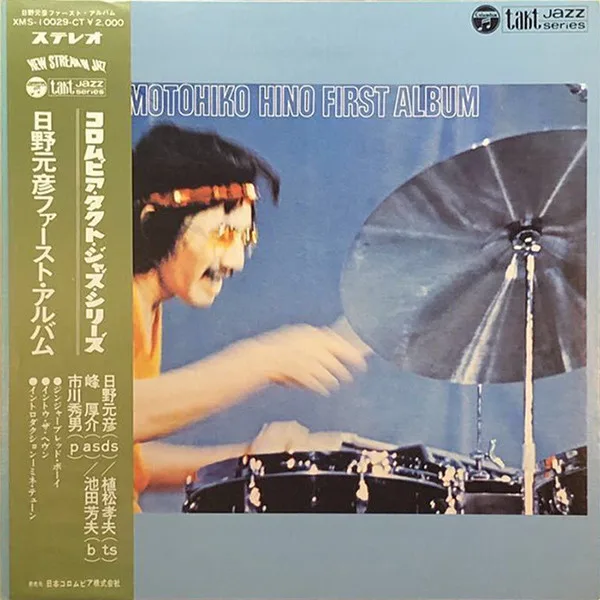
Cover art for Motohiko Hino's "First Album" (1971), used as a stand-in — no free-licensed photo of Hino could be located after a genuine search. Standard copyright, all rights reserved — held by Tact Jazz Series/Nippon Columbia. This is not a Creative Commons–licensed image; it is used here as an honestly-disclosed editorial stand-in for a real photo. — Downloaded directly from the release's Discogs listing (https://www.discogs.com/master/924750-Motohiko-Hino-First-Album), full-resolution cover scan hosted at i.discogs.com. Saved locally as portrait.jpg in this folder.
Motohiko Hino — known throughout his career by the nickname "Toko" — was born in Tokyo on January 3, 1946, the younger brother of trumpeter Terumasa Hino. Their father was a dancer and musician who taught both sons tap dancing as small children, so rhythm arrived as a physical discipline before it arrived as an instrument. He took up drums at ten and was working professionally by seventeen.
He became the house drummer of the Tokyo modern-jazz scene almost immediately. By 1967 he was recording with his brother's quartet; by 1969 he was on Hi-Nology, the Terumasa Hino Quintet album that remains the standard entry point to Japanese jazz of the period. Through the 1970s he appeared on a remarkable share of the records that the reissue market later canonised: Masabumi Kikuchi's Poo-Sun (1970) and All About Dancing Mist (1971), Kohsuke Mine's Out of Chaos (1974), Sadao Watanabe's Mbali Africa (1974), Hiromasa Suzuki's Colgen World (1976), and Kazumi Watanabe's Infinite (1971) among them. Readers of Swing Journal voted him Japan's best jazz drummer fifteen years running.
His own leader dates run in parallel from the start. First Album appeared on Columbia's Tact Jazz Series in 1971, the same year he cut two volumes of Beat Drums as Motohiko Hino & His Friends. The 1975 live album Toko — Motohiko Hino Quartet at Nemu Jazz Inn and 1976's "Ryūhyō" 〜Sailing Ice〜 on Three Blind Mice are the two most sought after by collectors. Also in 1976 he recorded a released drum battle opposite the older George Kawaguchi, a format that Japanese labels used to stage generational hand-offs in public.
In 1978 he relocated to New York. He worked in JoAnne Brackeen's trio and recorded or performed with Joe Henderson, Sonny Rollins, Jean-Luc Ponty, Hugh Masekela and John Scofield, appearing on Scofield's 1978 self-titled album. He never fully left the Japanese scene, remaining a first-call presence on Isao Suzuki, Masahiko Satoh and Fumio Karashima dates through the 1980s.
The last decade of his life produced his most personal records. Sailing Stone (Gramavision, recorded 1991) and It's There (1993, with John Scofield and Mike Stern) set his own compositions against reworked Rolling Stones and Led Zeppelin material, approached as rhythmic problems rather than as crossover bait. Hip Bone followed in 1994. In 1998 he was part of pianist Junko Onishi's group on Fragile and Self Portrait, and in 1999 he released two further albums of his own, Double Chant and Tac Tic, on EWE Records. He died of cancer on May 13, 1999, aged fifty-three.
Recordings have continued to surface. A previously unreleased 1976 concert from Yamaha Hall was issued as Flying Clouds in 2022, and live trio dates with Masahiko Satoh from 1996 and 1997 appeared in 2015 and 2021.
Hino's playing sits at the junction of American post-bop technique and the harder, more elastic pulse Japanese groups were developing in the late 1960s. He was equally credible driving a modal quintet, sitting inside Masayuki Takayanagi's more abrasive settings, or holding a jazz-funk groove — the reason he turns up across such stylistically scattered sessions.
The tap-dance background is audible in his phrasing: a preoccupation with footwork and with placing accents against the beat rather than on it. His late rock-repertoire albums make the same instinct explicit, treating Led Zeppelin and Rolling Stones tunes as rhythmic structures to be dismantled rather than as melodies to be swung.
- Toko — Motohiko Hino Quartet at Nemu Jazz Inn (1975) - Live leader date, the one collectors chase hardest. Spotify Listen · Buy
- "Ryūhyō" 〜Sailing Ice〜 (1976, Three Blind Mice) - Billed to the Motohiko Hino Quartet + 1; his entry in the Three Blind Mice catalog that drove the international reissue wave.
- Flying Clouds (Live at Yamaha Hall, Tokyo, 1976; released 2022) - Unreleased for forty-six years. Spotify Listen
- It's There (1993, Fun House) - With John Scofield and Mike Stern; the clearest statement of his rock-repertoire approach. Spotify Listen · Buy
- Hi-Nology (1969, Terumasa Hino Quintet) - Not his date, but the record his playing is most often heard on. Spotify Listen
- G. Kawaguchi vs. M. Hino (1976, Teichiku) - The released drum battle with George Kawaguchi. Spotify Listen
Motohiko Hino: Full Discography
Discogs artist ID 322166 (日野 元彦). Identity confirmed by cross-check rather than name alone: the entity's own Discogs profile gives the correct birth and death dates (January 3, 1946 – May 13, 1999) and names him as the younger brother of Terumasa Hino, and its groups list (Terumasa Hino Quintet, Hino=Kikuchi Quintet, Masabumi Kikuchi Sextet, Toshiko Akiyoshi Trio, The Joanne Brackeen Trio, Isao Suzuki Quintet, Gary Peacock Trio, Masayuki Takayanagi Quintet) matches his documented career. 207 credits total: 20 Main, 178 Appearance, 7 TrackAppearance, 2 UnofficialRelease.
Discogs splits his leader dates across several billing entities — Motohiko Hino, Motohiko Hino Quartet (3815100), Motohiko Hino Quartet + 1 (1311524), Motohiko Hino & His Friends (6692570), Motohiko Hino Quintet (9325090), and Motohiko Hino Sextet (10624522). All are his own billed projects and are folded into "As Leader" below, which is why several albums Discogs files under "Appearance" appear here as leader dates.
As Leader
| Album | Year | Label | Billed as | Notes | Listen | Buy |
|---|---|---|---|---|---|---|
| Beat Drums (ビート・ドラム) | 1971 | Denon | Motohiko Hino & His Friends | Drum-feature date, first of two volumes | Spotify | Amazon |
| Beat Drums Vol. 2 (ビートドラム Vol.2) | 1971 | Denon | Motohiko Hino & His Friends | Second volume, issued June 1971 | Spotify | Amazon |
| First Album (ファースト・アルバム) | 1971 | Columbia (Tact Jazz Series) | Motohiko Hino | His debut as a leader; Discogs master 924750 | Amazon | |
| Toko — Motohiko Hino Quartet at Nemu Jazz Inn | 1975 | — | Motohiko Hino Quartet | Live at the Nemu Jazz Inn; the leader date that circulates hardest among collectors | Spotify | Amazon |
| "Ryūhyō" 〜Sailing Ice〜 (流氷) | 1976 | Three Blind Mice | Motohiko Hino Quartet + 1 | His Three Blind Mice leader date | Amazon | |
| G. Kawaguchi vs. M. Hino (ジョージ川口 vs. 日野元彦) | 1976 | Teichiku | George Kawaguchi vs. Motohiko Hino | Released drum battle against the veteran George Kawaguchi; reissued 2011 in the Jazz Battle series | Spotify | Amazon |
| Toko Flash (フラッシュ) | 1977 | — | Motohiko Hino | Discogs master 906043 dates the original to 1977; the Spotify edition carries a 1985-11-05 date, a later issue of the same title. A 2017 remaster also exists (Spotify) | Spotify | Amazon |
| Foo Fou Fool | 1981 | Atlantic | Isao Suzuki / Kunihiko Sugano / Motohiko Hino | Co-billed trio date with Isao Suzuki and Kunihiko Sugano | Amazon | |
| Zoomin' | 1982 | — | Motohiko Hino | With Nobuyoshi Ino, Kazumasa Akiyama, Naoki Kitajima, Kenji Nishiyama; Discogs master 1802897 | Amazon | |
| Wild Talk | 1990 | Meldac | Motohiko Hino & Urbanightrops | Working-band date under the Urbanightrops name | Amazon | |
| Sailing Stone | 1992 | Gramavision | Motohiko Hino | Recorded 1991; mixes his own writing with reworked Rolling Stones and Led Zeppelin material | Amazon | |
| It's There | 1993 | Fun House | Motohiko Hino | With John Scofield and Mike Stern; continues the rock-repertoire approach of Sailing Stone. The Spotify edition is dated 1995 | Spotify | Amazon |
| Hip Bone | 1994 | Fun House | Motohiko Hino | Amazon | ||
| Double Chant | 1999 | EWE Records | Motohiko Hino Quintet | Released the year of his death | Amazon | |
| Tac Tic | 1999 | EWE Records | Motohiko Hino Sextet | Released the year of his death | Amazon | |
| Live at Pit-Inn '98 | 2012 | — | Masahiko Satoh, Motohiko Hino, Benisuke Sakai | Posthumous release of a 1998 trio concert; Discogs master 3094653 | Amazon | |
| Flying Clouds (Live at Yamaha Hall, Tokyo, 1976) | 2022 | — | Motohiko Hino Quartet + 2 | Previously unreleased 1976 concert, issued 2022-11-24 | Spotify | Amazon |
Drum-anthology and multi-drummer releases
Union Records, Columbia, and Warner issued a run of Japanese drum-feature records that bill Hino alongside the other leading drummers of his generation — several of whom are themselves profiled or queued on this project.
| Release | Year | Label | Co-billed drummers | Buy |
|---|---|---|---|---|
| Drumming Beat Pops Vol. 2 (ドラミング・ビート・ポップス第二集) | 1968 | Union | Motohiko Hino (solo billing) | Amazon |
| Four Jazz Drums (四つのジャズドラム) | 1971 | Warner Bros. | George Kawaguchi, Takeshi Inomata, Isamu Harada, Motohiko Hino | Amazon |
| Young Drums! Now Sounds For Young! | 1972 | Columbia | Motohiko Hino, Akira Ishikawa, Takeshi Inomata | Amazon |
| 10大ドラマーベストセレクション | n.d. | Union | Jimmy Takeuchi, Kiyoshi Tanaka, Hajime Ishimatsu, Kazuyoshi Okayama, Sadakazu Tabata, Akira Ishikawa, Motohiko Hino, George Ohtsuka, Masahiko Togashi, Takeshi Inomata | Amazon |
| Drum New Standard Deluxe 24 / Best of Drum Sounds | n.d. | Union | Same six-drummer roster (Tabata, Ishikawa, Hino, Tanaka, Ishimatsu, Takeuchi) | Amazon |
Sideman — Terumasa Hino
The single largest body of his recorded work is with his brother's groups, spanning 1967 to 2003.
| Album | Year | Billed act | Notes |
|---|---|---|---|
| Alone, Alone and Alone | 1967 | Terumasa Hino Quartet | |
| Feelin' Good | 1968 | Terumasa Hino and His Group | |
| Hi-Nology (ハイノロジー) | 1969 | Terumasa Hino Quintet | The landmark; listen on Spotify |
| Swing Journal Jazz Workshop 1 — Terumasa Hino Concert | 1969 | Terumasa Hino | |
| Alone Together / Into the Heaven (イントゥ・ザ・ヘヴン) | 1970 | Terumasa Hino / Terumasa Hino Quintet | |
| Peace and Love / A Part (with Reggie Workman) / Hino Story / Hino at Berlin Jazz Festival '71 | 1971 | Terumasa Hino Quintet / Terumasa Hino | The Berlin date documents the quintet at a major European festival |
| Fuji (藤) | 1972 | Terumasa Hino Sextet | |
| Live! (ライブ!) | 1973 | Terumasa Hino Quintet | On Three Blind Mice |
| Taro's Mood | 1973 | Terumasa Hino | |
| Hartman Meets Hino | 1973 | Johnny Hartman / Terumasa Hino | |
| Reminicent Suite | 1973 | Mal Waldron – Terumasa Hino | |
| Journey Into My Mind / Into Eternity | 1974 | Terumasa Hino | |
| Live in Concert / Speak to Loneliness | 1975 | Terumasa Hino | |
| Hogiuta (寿歌) | 1976 | Terumasa Hino | |
| Hip Seagull | 1978 | Terumasa Hino | |
| Horizon / Wheel Stone – Live in Nemuro | 1979 | Terumasa Hino | Horizon on CBS/Sony |
| Sadao Watanabe vs Terumasa Hino | 1980 | Sadao Watanabe / Terumasa Hino | |
| Wheel Stone – Live in Nemuro Vol. 2 | 1981 | Terumasa Hino | |
| Nabesada, Hinoteru Plays Favorite Songs | 1983 | Sadao Watanabe / Terumasa Hino | On JVC |
| Spark | 1994 | Terumasa Hino | |
| Off the Road | 1997 | Terumasa Hino | On Sweet Basil |
| D.N.A | 2001 | Terumasa Hino | Released after Hino's death |
| Here We Go Again | 2003 | Terumasa Hino | Released after Hino's death |
Sideman — other leaders (chronological selection)
| Album | Year | Leader | Notes |
|---|---|---|---|
| This Is New | 1968 | Eddie Daniels | |
| All Japan Jazz Festival '68 (全日本ジャズ・フェスティバル'68) | 1968 | Various | Columbia; the same release credits M. Kikuchi, T. Hino, H. Suzuki, T. Muraoka, K. Inaba and M. Hino — one document of the Tokyo scene's core personnel |
| Hino=Kikuchi Quintet | 1969 | Hino=Kikuchi Quintet | Co-led by Terumasa Hino and Masabumi Kikuchi |
| Flower Girl | 1969 | Masayuki Takayanagi Quintet | |
| Shakuhachi & Bossa Nova (尺八とボサ・ノヴァ) | 1969 | Hozan Yamamoto, Shungo Sawada Quintet | |
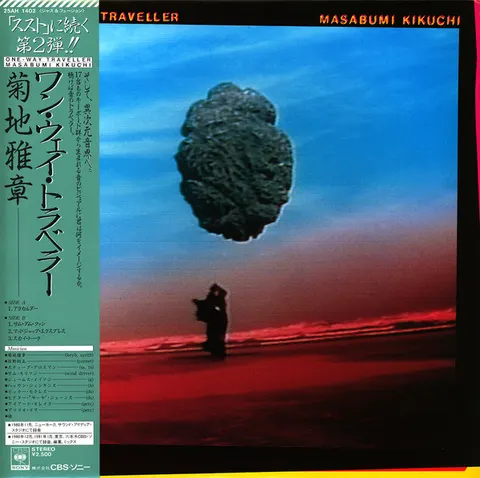
| Poo-Sun | 1970 | Masabumi Kikuchi | |
| Astrorama | 1970 | Jean-Luc Ponty & Masahiko Satoh | |
| Jōdo (浄土) | 1970 | Takehiko Honda | |
| 24 | 1970 | Yoshiaki Masuo | |
| Country Dream | 1970 | Kiyoshi Sugimoto Quartet | |
| All About Dancing Mist | 1971 | Masabumi Kikuchi | On Philips |
| Sposin' | 1971 | Helen Merrill with Gary Peacock Trio | |
| Henderson's Habiliment | 1971 | Joe Henderson | |
| Ride and Tie | 1971 | Takeru Muraoka / Takao Uematsu | |
| Encounter | 1971 | Allan Praskin Quartet | |
| Infinite | 1971 | Kazumi Watanabe | |
| Samādhi (三昧) | 1972 | Masahiko Satoh & Gary Peacock | |
| Hairpin Circus / A Short Story for Image | 1972 | Masabumi Kikuchi Sextet | Soundtrack |
| Babylonia Wind | 1972 | Kiyoshi Sugimoto Quintet | |
| Jam in Yokota | 1973 | Ushio Sakai, Tetsuo Fushimi, Teddy Adams, Takeru Muraoka, Hidehiko Matsumoto, Ryo Kawasaki, Motohiko Hino | Discogs master 1282401 |
| Hartman Sings Trane's Favorites | 1973 | Johnny Hartman | |
| Afro Blue | 1974 | Dee Dee Bridgewater | |
| Mbali Africa | 1974 | Sadao Watanabe | |
| Out of Chaos | 1974 | Kohsuke Mine | |
| Jon & Billy | 1974 | Jon Faddis & Billy Harper | |
| Trace | 1974 | Mikio Masuda | |
| Day Dream | 1976 | Lew Tabackin | On RCA |
| Milky Shade | 1976 | Kazumi Watanabe Quartet | |
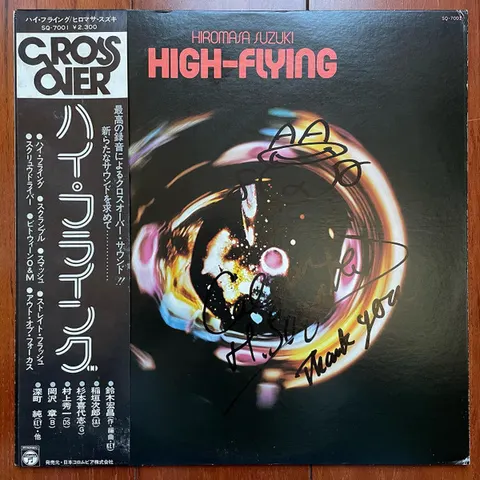
| Colgen World | 1976 | Hiromasa Suzuki | Hiromasa, not Hiroshi — see the Suzuki name-collision note in motohiko-hino_notes.md |
| Sleepy | 1976 | Hidehiko Matsumoto Quartet | |
| Landscape | 1977 | Fumio Karashima Trio | |
| Love in Song | 1977 | Helen Merrill | |
| Glove | 1977 | Roland Hanna | |
| John Scofield | 1978 | John Scofield | Scofield's self-titled album |
| My Spare Time | 1978 | Isao Suzuki | |
| Echo | 1979 | Sadao Watanabe | |
| Three Cushion (スリー・クッション) | 1981 | Isao Suzuki | |
| Minerva's Owl | 1981 | Aki Takase | |
| Cool "C" | 1981 | Richie Cole | |
| My Piccolo: Live at Nagoya Yamaha Jazz Club | 1981 | Akira Miyazawa | |
| Pop Color | 1983 | Masahiko Satoh Trio | |
| Round Midnight | 1983 | Fumio Karashima Trio with Larry Coryell | |
| Dark Eyes | 1983 | Isao Suzuki Quintet feat. Kosei Uchida | |
| Brink | 1984 | Masahiko Satoh Trio | |
| The Super Quartet | 1986 | Toshiyuki Honda | |
| More Than You Know / Globetrotting | 1987 / 1988 | Hiroko Kokubu | |
| Back on My Fingers / Earthian Air | 1990 / 1991 | Takehiro Honda | |
| In a Sentimental Mood | 1992 | Hidefumi Toki | |
| For Trane | 1995 | Johnny Hartman | |
| Standards My Way | 1996 | Kimiko Itoh | |
| Trip | 1997 | Benisuke Sakai | |
| Welcome to My Life | 1998 | Shuichi "Ponta" Murakami | |
| Fragile / Self Portrait | 1998 | Junko Onishi | Discogs also carries a "Junko Onishi-Motohiko Hino Trio" billing entity |
| For All We Know / Your Songs | 1998 | Chie Ayado | |
| Live at Blue Note Tokyo '97 | 2001 | Toshiko Akiyoshi Trio | Release of a 1997 date, issued after Hino's death |
| Ignition Point. Live '96 / Universal Joint Live 1997 | 2015 / 2021 | Masahiko Satoh Toko-Beni Trio | Issued after his death; the "Toko" in the band name is Hino |
Reissue-era compilations
His playing is a recurring presence on the compilations that drove the international rediscovery of this scene.
| Compilation | Year | Notes |
|---|---|---|
| Shibuya Jazz Classics (Sleep Walker, Gilles Peterson, and Nobukazu Takemura collections) | 2003–2005 | Curated selections drawn from the Columbia, Trio, and Three Blind Mice catalogs |
| Spiritual Jazz 8 – Japan: Part Two | 2018 | Esoteric, modal and progressive jazz from Japan, 1961–1983 |
| J Jazz: Deep Modern Jazz From Japan 1969–1984 | 2018 | |
| J Jazz: Deep Modern Jazz From Japan 1969–1983 (Volume 2) | 2019 | |
| Led Zeppelin in Jazz – A Jazz Tribute to Led Zeppelin | 2021 | Draws on his rock-repertoire recordings |
| Alpha Ray / Hakuchu No Shugeki – Theme | 2024 | Norio Maeda Trio / Terumasa Hino Quintet, on Jazz Room Records |
Scale note
The tables above cover every leader date on Discogs plus a chronological selection of the 178 Appearance and 7 TrackAppearance credits, weighted toward named-leader albums and away from format reissues, hearing-test records, and label sampler discs.
- Terumasa Hino - His older brother; the largest single body of his recorded work, from Alone, Alone and Alone (1967) through Here We Go Again (2003, released after Hino's death).
- Masabumi Kikuchi - Member of the Hino=Kikuchi Quintet and the Masabumi Kikuchi Sextet; played on Poo-Sun (1970) and All About Dancing Mist (1971).
- Masahiko Satoh - Long trio association, from Samādhi (1972, with Gary Peacock) through the Toko-Beni Trio live recordings of 1996–1997.
- Isao Suzuki - Member of the Isao Suzuki Quintet; co-billed on Foo Fou Fool (1981, Atlantic) and present on My Spare Time (1978), Three Cushion (1981) and Dark Eyes (1983).
- JoAnne Brackeen - Her trio was his working band after the 1978 move to New York.
- John Scofield - Played on Scofield's self-titled 1978 album; Scofield later appeared on Hino's own It's There (1993).
- George Kawaguchi - The senior Japanese drummer he faced on the 1976 released drum battle.
- Junko Onishi - Her group on Fragile and Self Portrait (both 1998); Discogs carries a "Junko Onishi-Motohiko Hino Trio" billing.
- Fumio Karashima - Member of the Fumio Karashima Trio across Landscape (1977), Elegant Evening (1982), Round Midnight (1983, with Larry Coryell) and I Used To Be Alone (1984).

More Jazz Fusion Artists
See all 262 Jazz Fusion artists →More Japanese Jazz Artists
See all 70 Japanese artists →- Motohiko Hino's full profile on JazzProfiles.com
- r/JapaneseJazz
- Discogs artist page
- Spotify — Motohiko Hino
- Spotify — 日野元彦
- Motohiko Hino — Wikipedia
- Motohiko Hino — Discogs artist 322166 (profile and full paginated release list retrieved via the Discogs API)
- Motohiko Hino — AllMusic
- Spotify Web API catalog lookups for every streaming link above