 JAZZPROFILES lives in the music 1,572 Jazz Artists fully Profiled!
 Teddy Wilson
Last updated September 7, 2026
Listen on Spotify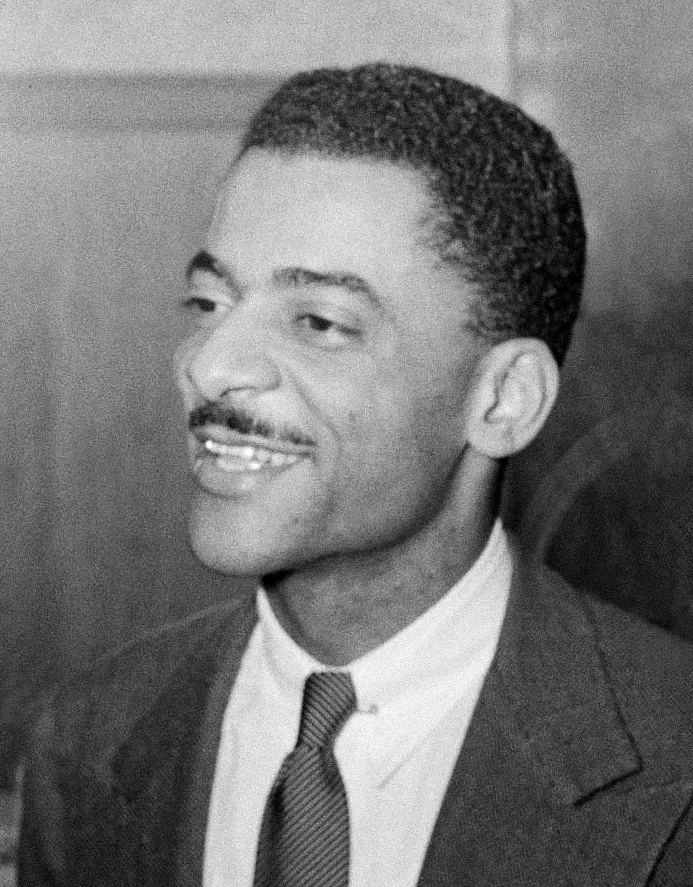
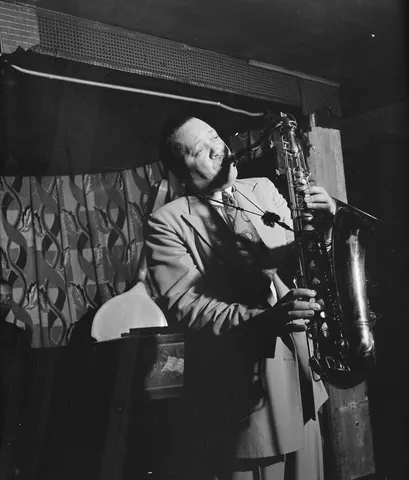
Portrait of Teddy Wilson, photographed by William P. Gottlieb, circa 1940. Public Domain (William P. Gottlieb collection; per Gottlieb's own wishes, the entire collection entered the public domain on February 16, 2010) — Wikimedia Commons, from the Library of Congress Music Division (digital ID gottlieb.09391) - https://commons.wikimedia.org/wiki/File:Teddy_Wilson_(William_P_Gottlieb).jpg
.jpg)
Theodore Shaw Wilson was born November 24, 1912, in Austin, Texas, to James Wilson, an English instructor, and Pearl Wilson, a librarian. The family moved to Tuskegee, Alabama, in 1918 when his father took a teaching post at Tuskegee Institute, and Wilson began piano lessons there at age six before adding violin, oboe, and clarinet; he also studied briefly at Talladega College. In 1929 he moved to Detroit with his brother, musician Gus Wilson, and began his professional career in Speed Webb's band. A year later he took over the piano chair in Milton Senior's band from Art Tatum, and touring brought him to Chicago, where he settled and worked through the early 1930s with Erskine Tate, clarinetist Jimmie Noone, and Louis Armstrong's orchestra (1931-1933), while also studying at close range under Earl Hines at the Grand Terrace Cafe. He relocated to New York in 1933 and joined Benny Carter's Chocolate Dandies.
Wilson's career changed permanently in the summer of 1935. Jamming with clarinetist Benny Goodman at a house party thrown by singer Mildred Bailey, he caught the attention of producer John Hammond, who arranged the sessions that became the Benny Goodman Trio, pairing Wilson and Goodman with drummer Gene Krupa; the group performed during intermissions at Goodman's dances and, when vibraphonist Lionel Hampton joined in 1936, expanded into the Benny Goodman Quartet. Wilson's presence in that integrated lineup made him one of the first Black musicians to perform prominently and regularly alongside white musicians before national audiences. That same year Hammond also secured Wilson a contract with Brunswick Records (1935-1939) to front his own studio band, billed as Teddy Wilson and His Orchestra, cutting hot swing arrangements of current pop tunes for the growing jukebox trade. The July 2, 1935, session gave singer Billie Holiday her recording debut, yielding "I Wished on the Moon," "What a Little Moonlight Can Do," "Miss Brown to You," and "A Sunbonnet Blue"; Wilson and Holiday went on to record roughly a dozen more sides together before the decade closed. The Brunswick series also featured Ella Fitzgerald, Lena Horne, Mildred Bailey, and Helen Ward as vocalists and drew on top swing-era sidemen including Lester Young, Roy Eldridge, Ben Webster, Buck Clayton, and Chu Berry; 38 of Wilson's sides are reported to have reached hit status. Among the later ones was a December 11, 1939, Columbia date, with drummer J.C. Heard in the band, that produced "Sweet Lorraine," backed with "Liza" on Columbia 35711. That specific recording is the one a teenage Toshiko Akiyoshi later credited with turning her toward jazz, playing it over and over in Japan until she had absorbed it by ear.
Wilson left Goodman's employ in 1939 to front his own fifteen-piece big band, but the venture folded within about a year for lack of a distinct musical identity. He regrouped as leader of a sextet that held a long residency at Cafe Society, New York's first racially integrated nightclub, from 1940 to 1944, presenting nightly "chamber jazz" sets with trumpeter Frankie Newton, clarinetist Ed Hall, and, again, Billie Holiday. Wilson's left-wing sympathies in these years, including benefit appearances for The New Masses and Russian War Relief and his chairmanship of an artists' committee backing a Communist Party candidate for New York City Council, earned him the nickname "the Marxist Mozart" and later drew FBI scrutiny. He rejoined the Benny Goodman Sextet in 1944, an on-and-off musical association with Goodman that continued into the early 1960s, and became a CBS radio staff musician.
From 1945 to 1952 Wilson taught piano at the Juilliard School while continuing to record and broadcast, then began touring extensively through Scandinavia, England, Scotland, Germany, Holland, and Switzerland. Signed to Norman Granz's Norgran and Verve labels through the mid-1950s, he cut a run of trio and small-group albums, among them The Creative Teddy Wilson (1955), and on consecutive days in January 1956 reunited with an ailing but still formidable Lester Young for two sessions: The Jazz Giants '56 (January 12, with Roy Eldridge, Vic Dickenson, Freddie Green, Gene Ramey, and Jo Jones) and Pres and Teddy (January 13, the same rhythm section minus Green), both now ranked among Young's finest late recordings. Wilson also appeared as himself in the 1955 film The Benny Goodman Story, and returned to Columbia at the decade's end for Mr. Wilson and Mr. Gershwin (1959) and companion songbook albums.
Wilson kept recording and touring steadily into his seventies, at times leading a trio that included his sons Theodore Wilson on bass and Steven Wilson on drums. In 1972 he paid tribute to his former singing partner on the solo piano album With Billie in Mind (Chiaroscuro), produced by Hank O'Neal with liner notes contributed by John Hammond himself. He served for a time as music director for The Dick Cavett Show and received an honorary doctorate of music from the Berklee College of Music in 1979; a 1982 Carnegie Hall reunion with Goodman ranked among his final major appearances with his old employer. Wilson passed away of stomach cancer on July 31, 1986, in New Britain, Connecticut, at age 73, and was inducted into the Big Band and Jazz Hall of Fame in 1993.
Wilson drew his harmonic and rhythmic vocabulary from Earl Hines's horn-like right hand and, especially, from Art Tatum's fleet arpeggios and full-keyboard sweep, but pared both down into something calmer: even, clean phrasing, a light touch, and diatonic, "inside" harmony in place of Tatum's chromatic density or the pounding two-handed attack of Harlem stride piano. Critic Scott Yanow called him "the definitive swing pianist," and AllMusic has described his playing as more accessible to a general audience than that of flashier contemporaries, a quality that suited both his years accompanying singers and his ease inside Benny Goodman's small groups. He held to that vocabulary even when sitting in with younger modernists, an early instance being a 1945 Red Norvo session ("Congo Blues") that placed him alongside Charlie Parker and Dizzy Gillespie without adopting their harmonic language. His touch shaped a generation of swing and mainstream pianists, among them Mary Lou Williams, Mel Powell, Billy Kyle, and Jess Stacy.
- Teddy Wilson and His Orchestra: Billie Holiday's recording debut (recorded July 2, 1935, Brunswick) - The session that produced "I Wished on the Moon," "What a Little Moonlight Can Do," "Miss Brown to You," and "A Sunbonnet Blue," launching Holiday's recording career and the long Wilson/Holiday studio partnership.
- "Sweet Lorraine" / "Liza" (recorded December 11, 1939, Columbia 35711) - The specific Wilson recording of "Sweet Lorraine," cut with J.C. Heard on drums, that a teenage Toshiko Akiyoshi later cited as the record that turned her toward jazz.
- Benny Goodman Trio and Quartet recordings (1935-1939, RCA Victor/Columbia) - As a sideman: with Goodman, Gene Krupa, and, from 1936, Lionel Hampton, among the first integrated small groups to perform and record for a mass American audience.
- The Jazz Giants '56 (1956, Norgran) - A one-off all-star date with Lester Young, Roy Eldridge, and Vic Dickenson, recorded January 12, 1956, produced by Norman Granz. Spotify - The Jazz Giants '56 Listen
- Pres and Teddy (rec. 1956, rel. 1957, Verve) - Wilson's most celebrated later reunion with Lester Young, recorded January 13, 1956, with Gene Ramey and Jo Jones. Spotify - Pres and Teddy Listen
- The Creative Teddy Wilson (1955, Norgran) - A trio date with Jo Jones and Milt Hinton, among his first sessions for producer Norman Granz.
- With Billie in Mind (1972, Chiaroscuro) - A late solo-piano tribute to Billie Holiday, produced by Hank O'Neal with liner notes by John Hammond. Spotify - With Billie in Mind Listen
Teddy Wilson: Full Discography
Identity confirmed via the live Discogs API: personal artist ID 254769 ("Teddy Wilson," realname Theodore Shaw Wilson, matching birth/death dates and profile text naming Benny Goodman, Billie Holiday, Ella Fitzgerald, Louis Armstrong, and Lena Horne as frequent collaborators). Discogs credits this ID with 2,381 total releases (347 "Main"/leader role, 1,352 sideman "Appearance" credits, 653 track-level "TrackAppearance" credits, plus 29 unofficial pressings). Per the standing sweep warning on group-billing entities, Wilson's most historically important body of work, the 1935-1939 Brunswick/Columbia studio series, is filed almost entirely under a separate group entity, "Teddy Wilson And His Orchestra" (Discogs artist ID 342361), which alone carries 657 further "Main"-role releases, nearly all individual 78 rpm sides. Six more group entities (Teddy Wilson Trio, Quartet, Sextet, Quintet, Octet, and the Lester Young-Teddy Wilson Quartet) hold additional leader and co-leader catalog not visible on the personal artist page.
Wilson is among the most prolific bandleaders in the sweep's scope: his combined Main-role credits across all entities run into the low thousands, overwhelmingly 78 rpm singles from a recording career that spanned the late 1920s to the mid-1980s. Exhaustive, session-by-session coverage is not attempted here. The table below curates roughly 20 of his most significant and most historically important leader/co-leader releases plus a representative set of major sideman credits, mirroring how this site treats other hugely prolific bandleaders (Duke Ellington, Dizzy Gillespie, etc.).
As Leader / Co-Leader
| Album Title | Recording Date(s) | Release Date | Label | Catalog Number | Format(s) | Personnel | Role | Reissue History | Spotify | Buy | Notes |
|---|---|---|---|---|---|---|---|---|---|---|---|
| "I Wished on the Moon" / "What a Little Moonlight Can Do" / "Miss Brown to You" / "A Sunbonnet Blue" | Recorded July 2, 1935, NYC | 1935 | Brunswick | 7501 / 7498 | Shellac, 10", 78 RPM (two singles) | Roy Eldridge (trumpet), Benny Goodman (clarinet, tracks 1-3), Ben Webster (tenor sax), Teddy Wilson (piano), John Trueheart (guitar), John Kirby (bass), Cozy Cole (drums), Billie Holiday (vocal) | Leader (Teddy Wilson And His Orchestra) | Reissued on numerous Brunswick/Columbia/CBS Billie Holiday compilations (Columbia CL 637, CL 6040, CL 2426, and others) | Not found as a standalone Spotify release; widely available on Billie Holiday compilation streams | — | Billie Holiday's recording debut; source: jazzdisco.org session index |
| "Sweet Lorraine" / "Liza" | Recorded December 11, 1939, NYC | 1940 | Columbia | 35711 | Shellac, 10", 78 RPM | Harold Baker, Doc Cheatham, Karl George (trumpet), Floyd Brady (trombone), Rudy Powell, Pete Clark (reeds), George Irish, Ben Webster (tenor sax), Teddy Wilson (piano), Albert Casey (guitar), Al Hall (bass), J.C. Heard (drums) | Leader (Teddy Wilson And His Orchestra) | "Sweet Lorraine" also reissued on V-Disc 456, backed with "Hallelujah" | Not confirmed on Spotify as a standalone single; appears on various Teddy Wilson compilation streams | — | The specific recording of "Sweet Lorraine" linked to Toshiko Akiyoshi's teenage introduction to jazz; source: jazzdisco.org session index |
| Columbia Presents Teddy Wilson | Recorded April 7 & 11, 1941 (Chicago) and January 21, 1942 (NYC) | 1942 | Columbia | C-93 | Shellac, 4x10", 78 RPM, boxed set | Teddy Wilson (piano), Al Hall (bass, uncredited on original issue), J.C. Heard (drums, uncredited on original issue) | Leader | None found | Not found on Spotify | — | Solo-piano-centered boxed set with light rhythm accompaniment |
| Runnin' Wild | Recorded January 15 & August 14, 1945 (as Musicraft 78s; reissued as this boxed set) | 1952 | MGM Records | K129 | Vinyl, 4x7", boxed set | Teddy Wilson (piano), Red Norvo (vibraphone), Charlie Shavers, Buck Clayton (trumpet), Ben Webster (tenor sax), Al Casey (guitar), Al Hall (bass), J.C. Heard, Specs Powell (drums) | Leader (Teddy Wilson and the All Stars) | Reissued from original Musicraft singles (318, 319, 336, and one more) | Not found on Spotify | — | Compiles four small-group Musicraft sides from 1945 |
| The Creative Teddy Wilson | Recorded February 1, 1955, NYC | 1955 | Norgran Records | MGN-1019 | Vinyl, LP, Album, Mono | Teddy Wilson (piano), Milt Hinton (bass), Jo Jones (drums) | Leader | Also released as For Quiet Lovers (Verve) | Not confirmed on Spotify under this title | — | Produced by Norman Granz; one of Wilson's first sessions for Granz's labels |
| The Jazz Giants '56 | Recorded January 12, 1956, Fine Sound Studios, NYC | 1956 | Norgran Records | MG N-1056 | Vinyl, LP, Album, Mono | Roy Eldridge (trumpet), Vic Dickenson (trombone), Lester Young (tenor sax), Teddy Wilson (piano), Freddie Green (guitar), Gene Ramey (bass), Jo Jones (drums) | Co-leader (all-star billing) | Reissued 1957 with alternate cover art | Spotify - The Jazz Giants '56 | — | Produced by Norman Granz; recorded the day before Pres and Teddy with an overlapping rhythm section |
| Pres and Teddy | Recorded January 13, 1956, NYC | 1957 (Verve MG V-8205, per Discogs); Wikipedia states 1959 | Verve Records | MG V-8205 | Vinyl, LP, Album, Mono | Lester Young (tenor sax), Teddy Wilson (piano), Gene Ramey (bass), Jo Jones (drums) | Co-leader (The Lester Young-Teddy Wilson Quartet) | Multiple CD reissues (Verve, Universal Japan, Lonehill Jazz) | Spotify - Pres and Teddy | — | Original release year is disputed between Discogs (1957) and Wikipedia (1959); not resolved here |
| Mr. Wilson and Mr. Gershwin | Not specified in Discogs data | 1959 | Columbia | CL 1318 | Vinyl, LP, Album, Mono | Teddy Wilson (piano), Arvell Shaw (bass), Nils-Bertil Dahlander (drums) | Leader | None found | Not confirmed on Spotify under this title | — | An all-Gershwin trio songbook album |
| With Billie in Mind | Recorded 1972, NYC | 1972 | Chiaroscuro Records | CR 111 | Vinyl, LP, Album | Teddy Wilson (piano, solo) | Leader | Reissued on CD (1990) with additional tracks | Spotify - With Billie in Mind | — | Solo tribute to Billie Holiday; produced by Hank O'Neal, liner notes by John Hammond |
| Alone | Recorded 1983 per Wikipedia; Discogs CD reissue dated 1992 | 1983 (LP); 1992 (Storyville CD reissue) | Storyville | STCD 8211 | Vinyl, LP (1983); CD, Album (1992 reissue) | Teddy Wilson (piano, solo) | Leader | 1992 Storyville CD reissue | Not found on Spotify | — | Late solo-piano session; recording location not confirmed |
As Sideman (selected major credits)
| Year | Project (Leader) | Title | Label | Catalog | Role | Notes |
|---|---|---|---|---|---|---|
| 1935-1939 | Benny Goodman | The Complete RCA Victor Small Group Recordings | RCA Victor | — | Piano | Benny Goodman Trio (with Gene Krupa) and Quartet (adding Lionel Hampton from 1936); one of the first integrated small groups to record for a mass American audience |
| 1935 | Mildred Bailey | Mildred Bailey and Her Alley Cats | Columbia | — | Piano | |
| 1938 | Benny Goodman | The Famous 1938 Carnegie Hall Jazz Concert | Columbia | — | Piano | Historic concert marking swing's mainstream arrival |
| 1945 | Red Norvo and His Sextet | "Congo Blues" | Comet | — | Piano | Session also featuring Charlie Parker and Dizzy Gillespie; a rare recorded meeting of swing and bebop generations |
| 1946-1947 | Sarah Vaughan | The Chronological 1946-1947 | Classics (reissue) | — | Piano | |
| 1954 | Ben Webster | Music for Loving | Norgran | — | Piano | |
| 1973 | Eiji Kitamura | Swing Special | Various (Japan) | — | Piano | First of several later recordings with Japanese clarinetist Eiji Kitamura |
| 1974 | Phoebe Snow | Phoebe Snow | Shelter Records | — | Piano | A rare late crossover into a singer-songwriter session |
| 1975 | Eiji Kitamura | Teddy and Eiji: Live Session | Various (Japan) | — | Piano | |
| 1980 | Eiji Kitamura | Teddy Wilson Meets Eiji Kitamura | Various (Japan) | — | Piano |
Note: Wilson's roughly 1,350 Discogs "Appearance" credits and 650 "TrackAppearance" credits are overwhelmingly compilation reissues of the same relatively small number of original 1930s-1940s studio sessions (Brunswick/Columbia sides with Billie Holiday, Benny Goodman small-group sides, and Café Society-era recordings), repackaged across decades of LP, EP, and CD anthologies. The counts above should not be read as distinct recording sessions.
- Benny Goodman - Trio/Quartet/Sextet member, 1935-1944, and an on-and-off musical association that continued into the early 1960s; playing alongside Goodman made Wilson one of the first Black musicians in a prominent, racially integrated group.
- Billie Holiday - Gave Holiday her recording debut on Wilson's July 2, 1935, Brunswick session; the two recorded together extensively through 1939 and again at Cafe Society, 1940-1944.
- Lester Young - Sideman on Wilson's 1930s Brunswick sides; reunited with Wilson for two celebrated 1956 Verve/Norgran sessions, The Jazz Giants '56 and Pres and Teddy.
- Lionel Hampton - Joined the Benny Goodman Trio in 1936, expanding it into the Benny Goodman Quartet alongside Wilson.
- Ella Fitzgerald - One of several vocalists featured on Wilson's Brunswick studio sides in the mid-to-late 1930s.
- J.C. Heard - Drummer on multiple Wilson-led sessions across the 1930s-1950s, including the December 1939 "Sweet Lorraine" date and the 1941-1942 Columbia Presents Teddy Wilson solo-piano sides.
- Louis Armstrong - Wilson worked in Armstrong's Chicago-based orchestra, 1931-1933, before establishing himself as a leader in New York.
- Norman Granz - Producer for Wilson's Norgran and Verve recordings of the mid-to-late 1950s, including the two 1956 Lester Young reunion sessions.
More Swing Artists
See all 134 Swing artists →More American Jazz Artists
See all 567 American artists →- Wikipedia: Teddy Wilson
- Wikipedia: Pres and Teddy
- Wikipedia: The Jazz Giants '56
- Wikipedia: With Billie in Mind
- Discogs: Teddy Wilson (artist 254769)
- Discogs: Teddy Wilson And His Orchestra (artist 342361)
- Texas State Historical Association: Wilson, Theodore Shaw (Teddy)
- jazzdisco.org: Teddy Wilson discography
- AllMusic: Teddy Wilson