 JAZZPROFILES lives in the music 1,572 Jazz Artists fully Profiled!
 Cecil Payne
Last updated September 7, 2026
Listen on Spotify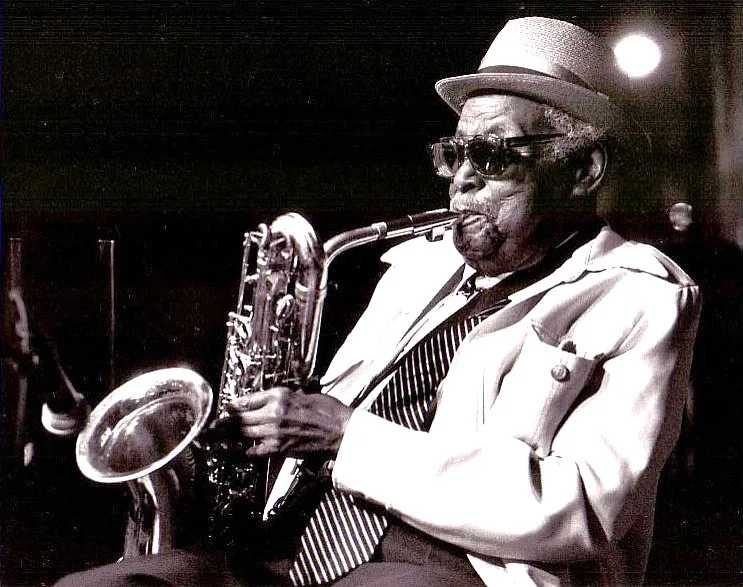
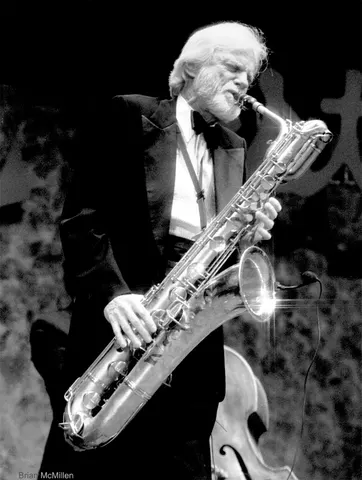
Cecil Payne playing baritone saxophone at the Kitano Hotel Jazz Club, New York City, June 11, 2005, at age 82. Photograph by Ed Berger. CC BY-SA 4.0 — Wikimedia Commons — https://commons.wikimedia.org/wiki/File:Cecil_Payne_(2005).jpg (a corrected version of https://commons.wikimedia.org/wiki/File:Cecil_Payne.jpg, the original Ed Berger photograph, released on Flickr under CC BY 2.0)
Cecil McKenzie Payne was born December 14, 1922, in Brooklyn, New York, and grew up in Bedford-Stuyvesant, where he attended Boys High School. His father played tenor saxophone and kept records in the house; hearing Count Basie's band with Lester Young soloing on "Honeysuckle Rose" convinced the thirteen-year-old Payne to ask for a horn of his own. What he got was an alto, and he studied it with the Brooklyn alto saxophonist Pete Brown. Payne was drafted during World War II and spent his service years playing clarinet in Army bands, receiving his discharge in 1946. He liked to tell interviewers that his parents had pushed him toward dentistry, an idea he dismissed on the grounds that nobody would open their mouth for a Dr. Payne.
Payne's professional recording career began in 1946 with a Savoy session for trombonist J.J. Johnson, cut on alto. He switched to baritone that same year, and through trumpeter Roy Eldridge he was introduced to Dizzy Gillespie, joining Gillespie's postwar big band and staying with it until 1949. That put him at the center of bebop's most ambitious large-ensemble project, alongside bandmates including Ray Brown, John Lewis, and, briefly, Miles Davis. Payne played baritone on the December 22, 1947, RCA Victor date that produced "Cubana Be / Cubana Bop," the two-part George Russell arrangement built around the Cuban percussionist Chano Pozo, and on the band's February 1948 Paris concerts issued as Pleyel 48. He was also on "Ow!" and "Stay On It." Very few baritone players of the period could execute bebop's tempos and intervals at all, and Payne was among the first who could.
After leaving Gillespie he led two 1949 singles for Decca, "Block Buster Boogie" backed with "Angel Child" and "Hippy Dippy" backed with "No Chops," using a band that included pianist Duke Jordan and trumpeter Kenny Dorham. The next decade was spent largely as a freelance sideman: work with Tadd Dameron, a stint with Coleman Hawkins, and two years in Illinois Jacquet's band from 1952 to 1954. From the mid-1950s he became the baritone of choice for pianist Randy Weston, recording With These Hands..., Jazz a la Bohemia, and The Modern Art of Jazz in 1956 and touring Sweden with him. He also turned up on Gigi Gryce's October 22, 1955, orchestra session for Signal, released as Nica's Tempo, in a band with Oscar Pettiford, Art Blakey, and Horace Silver. Signal gave Payne his own leader dates in 1957: the quintet LP Cecil Payne, with Kenny Dorham, Duke Jordan, Tommy Potter, and Art Taylor, reissued by Savoy as Patterns of Jazz, and the co-billed A Night at the Five Spot with Phil Woods.
On April 20, 1957, Payne went into Rudy Van Gelder's Hackensack studio for a Prestige date co-led with fellow baritone saxophonist Pepper Adams, backed by Mal Waldron, Doug Watkins, and Art Taylor, with a young John Coltrane on tenor. Prestige first issued it in 1958 as one half of the 16 2/3 rpm sampler Baritones and French Horns, then, once Coltrane became a star, repackaged the same six titles in November 1963 under his name as Dakar, the title the music still carries. Payne recorded two albums for the Charlie Parker Records label in the early 1960s: Performing Charlie Parker Music (1961), with Clark Terry, Duke Jordan, and Ron Carter, and The Connection (1962), cut at RCA Victor Studios over three days that March. The title came from Jack Gelber's off-Broadway play, in which Payne appeared onstage as one of the musicians in the cast. He was also on Randy Weston's large-scale 1960 Roulette suite Uhuru Afrika, and through the 1950s he helped run his father's Brooklyn real estate business between engagements.
The 1960s and early 1970s took Payne through a run of demanding big-band chairs: Machito's Afro-Cubans from 1963 to 1966, a 1964 European tour with Lionel Hampton, roughly two years with Woody Herman from 1967, then three years with the Count Basie Orchestra beginning in 1969, and the New York Jazz Repertory Orchestra in 1974. His own recording resumed alongside it. A November 5, 1966, quartet set at Club 43 in Manchester, England, surfaced on the British Spotlite label as Brookfield Andante. Zodiac (The Music of Cecil Payne), an all-original program with Kenny Dorham, Wynton Kelly, Wilbur Ware, and Albert Heath, appeared on the musician-owned Strata-East label in 1973, dedicated to the memory of Kelly and Dorham, both of whom had recently passed away. Two Muse albums followed: Brooklyn Brothers, co-led with Duke Jordan in 1973, and Bird Gets the Worm in 1976, both with Al Foster on drums.
Through the 1980s Payne put most of his energy into Dameronia, the repertory band drummer Philly Joe Jones and trumpeter Don Sickler founded in 1981 to play Tadd Dameron's book, with Larry Ridley on bass; Payne stayed with the group after Jones's death in 1985 and recorded three albums with it. Glaucoma then cost him most of his sight, and he withdrew from performing for roughly six years. His return produced the best-documented stretch of his leader career: four albums for Chicago's Delmark label between 1993 and 2000, Cerupa, Scotch and Milk, Payne's Window, and Chic Boom: Live at the Jazz Showcase, all built around a younger front line of Eric Alexander, Harold Mabern, and Joe Farnsworth. He worked regularly at the Upper West Side club Smoke and at the Jazz Foundation of America's "Great Night in Harlem" benefits, and kept playing free concerts at New Jersey nursing homes. Cecil Payne passed away on November 27, 2007, in Stratford, New Jersey, of prostate cancer, at 84.
Payne's model was Lester Young, audible in the way he phrased long, unhurried melodic lines instead of hammering the baritone's low register, and he came to the horn by way of the alto, which left him with an agility most baritone players of the 1940s did not have. Where Harry Carney had made the instrument an orchestral foundation and Gerry Mulligan would soon make it a cool-toned melodic voice, Payne was the player who proved the baritone could handle Charlie Parker's vocabulary at Parker's tempos, and he built whole albums on that premise, including 1961's Performing Charlie Parker Music and 1976's Bird Gets the Worm. He was a working composer as well, with "Bosco," "Cerupa," "Chic Boom," "Brookfield Andante," "Bolambo," and "Cit Sac" all in circulation as published lead sheets, and he doubled on flute from the early 1970s onward. Critics have consistently framed him as underrecognized: he led only a handful of dates before his sixties and never kept a working band of his own for long, and reviewers treated the late Delmark records as belated proof of what he had been doing since 1946. AllMusic's Michael G. Nastos gave 1995's Cerupa four and a half stars and called it perhaps his best documented work.
- Patterns of Jazz (1957, Signal; reissued 1959, Savoy) - His first LP as a leader, a quintet date with Kenny Dorham, Duke Jordan, Tommy Potter, and Art Taylor, engineered by Rudy Van Gelder and issued first as Cecil Payne on Signal. Spotify - Patterns of Jazz
- Performing Charlie Parker Music (1961, Charlie Parker Records) - Seven Parker themes taken at full tempo on baritone, with Clark Terry, Duke Jordan, Ron Carter, and Charlie Persip. Spotify - Performing Charlie Parker Music Listen
- The Connection (1962, Charlie Parker Records) - Recorded March 14 to 16, 1962, at RCA Victor Studios in New York, and named for the Jack Gelber play Payne performed in. Spotify - The Connection Listen
- Zodiac (The Music of Cecil Payne) (1973, Strata-East) - An all-original program for the musician-owned Strata-East label, with Kenny Dorham, Wynton Kelly, Wilbur Ware, and Albert Heath, dedicated to Kelly and Dorham. Spotify - Zodiac Listen
- Cerupa (1995, Delmark) - The comeback record, cut June 1 and 2, 1993, in Chicago with Eric Alexander, Harold Mabern, John Ore, Joe Farnsworth, and a guest appearance by Freddie Hubbard. Spotify - Cerupa Listen
- Chic Boom: Live at the Jazz Showcase (2001, Delmark) - Recorded August 17 to 19, 2000, in Chicago at age 77, his last album as a leader. Spotify - Chic Boom Listen
- Dakar (1963, Prestige) - The April 20, 1957, twin-baritone session Payne co-led with Pepper Adams, reissued under John Coltrane's name six years later and known by that title ever since. Spotify - Dakar
- Uhuru Afrika (1960, Roulette) - As a sideman: Randy Weston's large-ensemble suite with lyrics by Langston Hughes, one of the most ambitious African-themed jazz works of its decade. Spotify - Uhuru Afrika Listen
Cecil Payne: Full Discography
Identity confirmed via the live Discogs API, artist ID 327033 ("Cecil Payne," realname Cecil McKenzie Payne, born December 14, 1922, Brooklyn, died November 27, 2007, Stratford, New Jersey). Discogs credits Payne on 598 releases in total: 33 in a "Main" leader or co-leader role, 528 sideman "Appearance" credits, 25 track-level credits, and 12 unofficial releases. The first table below itemizes his confirmed leader and co-leader catalog, including compilations of his own sessions only where they document material not otherwise available. The second table is a representative selection of his most significant sideman dates and does not attempt to itemize all 528 credits.
The Buy column is — throughout: no affiliate program is set up for this site yet.
As Leader / Co-Leader
| Album Title | Recording Date(s) | Release Date | Label | Catalog Number | Format(s) | Personnel | Role | Reissue History | Spotify | Buy | Notes |
|---|---|---|---|---|---|---|---|---|---|---|---|
| "Block Buster Boogie" b/w "Angel Child" | 1949, exact date not confirmed | 1949 | Decca | Catalog number not confirmed | Shellac, 10" 78 rpm single | Cecil Payne (baritone sax), with a band reported to include Kenny Dorham (trumpet) and Duke Jordan (piano); full personnel not confirmed | Leader | None found | Not on Spotify | — | Listed in Wikipedia's discography; not found as a distinct Discogs entry under artist 327033 |
| "Hippy Dippy" b/w "No Chops" | 1949, exact date not confirmed | 1949 | Decca | Catalog number not confirmed | Shellac, 10" 78 rpm single | As above; full personnel not confirmed | Leader | None found | Not on Spotify | — | Second of the two 1949 Decca leader singles |
| Cecil Payne (reissued as Patterns of Jazz) | Recorded 1956, exact dates not confirmed; engineered by Rudy Van Gelder | July 1957 | Signal | S 1203 | Vinyl, LP, Album, Mono | Cecil Payne (baritone sax), Kenny Dorham (trumpet), Duke Jordan (piano), Tommy Potter (bass), Art Taylor (drums); liner notes by Ira Gitler | Leader | Reissued 1959 by Savoy as Patterns of Jazz (MG 12147); further Savoy Jazz reissues 1985 (Japan, MGJ-12147), 1986 (Patterns, SJL 1167), 1991 (SV-0135, COCY-9007), 1993 (COJY-9056); 1991 Japanese Signal reissue as The Cecil Payne Quartet (KIJJ-2053) | Spotify - Patterns of Jazz | — | His first full LP as a leader; better known under the Savoy reissue title |
| A Night at the Five Spot | Recorded 1957, exact date not confirmed; engineered by Rudy Van Gelder | 1957 | Signal | S 1204 | Vinyl, LP, Album, Mono | Cecil Payne (baritone sax), Phil Woods (alto sax), Frank Socolow (tenor sax), Duke Jordan (piano), Wendell Marshall (bass), Art Taylor (drums) | Co-leader (shared billing across six names) | None found | Not on Spotify | — | Four extended Charlie Parker themes: "Parker's Mood," "Steeplechase," "Buzzy," "Scrapple from the Apple" |
| Modern Jazz Survey 2 / Baritones & French Horns | Baritones side recorded April 20, 1957, Van Gelder Studio, Hackensack NJ | August 1958 | Prestige | PRESTIGE 6 | Vinyl, LP, 16 2/3 RPM, Mono | Baritones side: Cecil Payne and Pepper Adams (baritone sax), John Coltrane (tenor sax), Mal Waldron (piano), Doug Watkins (bass), Art Taylor (drums). French Horns side: Julius Watkins and David Amram (French horn), Sahib Shihab (alto sax), Curtis Fuller (trombone), Hampton Hawes / Teddy Charles (piano), Addison Farmer (bass), Jerry Segal (drums). Supervised by Teddy Charles, recorded by Rudy Van Gelder | Co-leader (shared billing with Pepper Adams, Julius Watkins, David Amram) | The Payne/Adams half was reissued at standard speed in November 1963 as John Coltrane's Dakar (Prestige PRLP 7280) and has been catalogued under Coltrane's name ever since | Spotify - Dakar | — | A 16 2/3 rpm various-artists survey disc; Coltrane was a sideman on the Payne/Adams session, not its leader |
| Performing Charlie Parker Music | Recorded 1961, exact dates not confirmed | 1961 | Charlie Parker Records / Egmont | AJS 7-S | Vinyl, LP, Album | Cecil Payne (baritone sax), Clark Terry (trumpet), Duke Jordan (piano), Ron Carter (bass), Charlie Persip (drums); all compositions by Charlie Parker | Leader | Collected on the 2015 compilation Three Classic Albums Plus | Spotify - Performing Charlie Parker Music | — | Seven Parker themes including "Cool Blues," "Shaw 'Nuff," and "Relaxin' at Camarillo" |
| The Connection | Recorded March 14, 15 and 16, 1962, RCA Victor Studios, New York City | 1962 | Charlie Parker Records | PLP-806 | Vinyl, LP, Album, Mono | Cecil Payne (baritone sax), Clark Terry (trumpet), Bennie Green (trombone), Duke Jordan (piano), Ron Carter (bass), Charlie Persip (drums); compositions by Payne and Kenny Drew; produced by Aubrey Mayhew, engineered by Bob Simpson | Leader | Collected on Three Classic Albums Plus (2015) and the Fresh Sound compilation Music From "The Connection" (2011) | Spotify - The Connection | — | Named for Jack Gelber's off-Broadway play, in which Payne appeared onstage as a cast musician |
| Brookfield Andante | Recorded live November 5, 1966, Club 43, Manchester, England | 1972 | Spotlite Records | CP2 | Vinyl, LP, Album | Cecil Payne (baritone sax, all compositions), Joe Palin (piano), Alan Cooper (bass), Ron Parry (drums); liner notes by Mark Gardner | Leader | None found | Not on Spotify | — | A British pickup rhythm section; the title tune became one of Payne's most-played originals |
| Brooklyn Brothers | Recorded March 16, 1973 | 1973 | Muse Records | MR 5015 / MUSE 5015 | Vinyl, LP, Album | Cecil Payne (baritone sax, flute), Duke Jordan (piano), Sam Jones (bass), Al Foster (drums); produced by Don Schlitten | Co-leader (with Duke Jordan) | None found | Not on Spotify | — | Includes Payne's "Cerupa" and Jordan's "Jordu" |
| Zodiac (The Music of Cecil Payne) | Recorded in the late 1960s; sources give both 1968 and 1969, exact date not confirmed | 1973 | Strata-East | SES-19734 | Vinyl, LP, Album, Stereo | Cecil Payne (baritone and alto sax, all compositions), Kenny Dorham (trumpet), Wynton Kelly (piano), Wilbur Ware (bass), Albert Heath (drums); produced by Clifford Jordan | Leader | Reissued on CD and on streaming services | Spotify - Zodiac | — | The third release in Strata-East's Dolphy Series; dedicated to the memory of Wynton Kelly and Kenny Dorham, who had died in 1971 and 1972 |
| Bird Gets the Worm | Recorded 1976, exact date not confirmed | 1976 | Muse Records | MR 5061 | Vinyl, LP, Album | Cecil Payne (baritone sax, flute), Tom Harrell (trumpet, flugelhorn), Duke Jordan (piano), Buster Williams (bass), Al Foster (drums); produced by Michael Cuscuna, liner notes by Bob Porter | Leader | None found | Not on Spotify | — | A second Charlie Parker program, including "Ko Ko," "Constellation," and "Bird of Paradise" |
| Bright Moments | Recorded 1979, exact date not confirmed | 1980 | Spotlite Records | SPJLP21 | Vinyl, LP, Album | Cecil Payne (baritone sax, flute), Curtis Fuller (trombone), Mick Pyne (piano), Dave Green (bass), Alan Jackson (drums) | Leader | None found | Not on Spotify | — | Second British-recorded Spotlite album; Wikipedia dates the release 1979, Discogs 1980 |
| Casbah | Recorded February 27, 1985, 39th Street Music Studio, New York City | 1985 (LP); CD reissue 1993 | Stash Records | STASH-CD 572 (1993 CD) | CD, Album, Reissue (LP catalog number not confirmed) | The Cecil Payne Quartet: Cecil Payne (baritone sax, flute), Richard Wyands (piano), Joe Carter (guitar), Stafford James (bass) | Leader | 1993 Stash CD reissue | Not on Spotify | — | Drummerless quartet; Payne's only leader date of the 1980s |
| Cerupa | Recorded June 1 and 2, 1993, Riverside Studios, Chicago | 1995 | Delmark Records | DE-478 | CD, Album | Cecil Payne (baritone sax, flute), Eric Alexander (tenor sax), Freddie Hubbard (trumpet, one track), Dr. Odies Williams III (trumpet, one track), Harold Mabern (piano), John Ore (bass), Joe Farnsworth (drums); produced by Bob Koester | Leader | Japanese P-Vine CD reissue, 2012 | Spotify - Cerupa | — | AllMusic gave it four and a half stars; the Penguin Guide to Jazz Recordings gave three |
| Scotch and Milk | Recorded September 2 and 3, 1996, Riverside Studio, Chicago | 1997 | Delmark Records | DE-494 | CD, Album | Cecil Payne (baritone sax, flute), Eric Alexander and Lin Halliday (tenor sax), Marcus Belgrave (trumpet), Harold Mabern (piano), John Ore (bass), Joe Farnsworth (drums) | Leader | None found | Not on Spotify | — | Features Payne's cousin Marcus Belgrave on trumpet |
| Payne's Window | Recorded 1998, exact dates not confirmed | 1999 (Discogs); Wikipedia gives 1998 | Delmark Records | DE-509 | CD, Album | Cecil Payne (baritone sax, flute), Eric Alexander (tenor sax), Steve Davis (trombone), Harold Mabern (piano), John Webber (bass), Joe Farnsworth (drums); liner notes by Bob Porter | Leader | None found | Spotify - Payne's Window | — | Ten tracks including "Spiritus Parkus" and a remake of "Martin Luther King Jr." from Zodiac |
| The Brooklyn Four Plus One | Recording date not confirmed | 2000 | Progressive Records | PCD-7109 | CD, Album | Cecil Payne (baritone sax, flute), Ed Stoute (piano), Leonard Gaskin (bass), Wade Barnes (drums), Tulivu-Donna Cumberbatch (vocals) | Leader | None found | Spotify - The Brooklyn Four Plus One | — | Discogs credits Payne with "bass saxophone" on this release; that appears to be a data-entry variant of baritone and is not confirmed elsewhere |
| Chic Boom: Live at the Jazz Showcase | Recorded live August 17 to 19, 2000, Jazz Showcase, Chicago | 2001 | Delmark Records | DE-529 | CD, Album | Cecil Payne (baritone sax, flute), Eric Alexander (tenor sax), Jim Rotondi (trumpet), Harold Mabern (piano), John Webber (bass), Joe Farnsworth (drums) | Leader | None found | Spotify - Chic Boom, Live at the Jazz Showcase | — | His last album as a leader, recorded at 77 |
As Sideman (selected major credits)
| Year | Project (Leader) | Title | Label | Catalog | Role | Notes |
|---|---|---|---|---|---|---|
| 1946-49 | J.J. Johnson | J.J. Johnson's Jazz Quintets | Savoy | Alto and baritone saxophone | Payne's recording debut as a professional was a 1946 Savoy date for Johnson, cut on alto | |
| 1947 | Dizzy Gillespie and His Orchestra | "Cubana Be / Cubana Bop" | RCA Victor | Baritone Saxophone | Recorded December 22, 1947, with Chano Pozo; arrangement by George Russell. Collected on The Complete RCA Victor Recordings (Bluebird, 1995) | |
| 1948 | Dizzy Gillespie | Pleyel 48 | Vogue | Baritone Saxophone | The big band's February 1948 Paris concerts | |
| 1955 | Gigi Gryce | Nica's Tempo | Signal | S 1201 | Baritone Saxophone | Payne plays on the October 22, 1955, orchestra session ("Social Call," "(You'll Always Be) The One I Love") with Oscar Pettiford, Art Blakey, Horace Silver, and Ernestine Anderson |
| 1955 | Kenny Dorham | Afro-Cuban | Blue Note | BLP 1535 | Baritone Saxophone | |
| 1955 | Kenny Clarke & Ernie Wilkins | Kenny Clarke & Ernie Wilkins | Savoy | Baritone Saxophone | Payne also appears on Ernie Wilkins's Septet (Savoy, 1955) | |
| 1955 | Duke Jordan | Duke Jordan Trio and Quintet | Signal | Baritone Saxophone | ||
| 1955 | Cannonball Adderley | Julian "Cannonball" Adderley | EmArcy | Baritone Saxophone | ||
| 1956 | Tadd Dameron | Fontainebleau | Prestige | PRLP 7037 | Baritone Saxophone | Spotify - Fontainebleau |
| 1956 | Randy Weston | With These Hands... / Jazz a la Bohemia / The Modern Art of Jazz | Riverside / Riverside / Dawn | Baritone Saxophone | Three 1956 Weston albums; the two Riverside titles are billed "Randy Weston Trio Plus Cecil Payne" and "Randy Weston Trio and Cecil Payne" | |
| 1957 | Kenny Burrell | Kenny Burrell | Prestige | Baritone Saxophone | ||
| 1957 | Idrees Sulieman / Prestige All Stars | Roots | New Jazz | Baritone Saxophone | ||
| 1959 | Kenny Dorham with Cannonball Adderley | Blue Spring | Riverside | Baritone Saxophone | ||
| 1960 | Randy Weston | Uhuru Afrika | Roulette | Baritone Saxophone | Large-ensemble suite with lyrics by Langston Hughes. Spotify - Uhuru Afrika | |
| 1964 | Quincy Jones | Golden Boy | Mercury | Baritone Saxophone | ||
| 1966 | Randy Weston | Monterey '66 | Verve (released 1994) | Baritone Saxophone | ||
| 1968 | Dizzy Gillespie | The Dizzy Gillespie Reunion Big Band | MPS | Baritone Saxophone | A reunion of the 1940s orchestra Payne had played in | |
| 1969 | Illinois Jacquet | The Soul Explosion | Prestige | Baritone Saxophone | Payne had toured in Jacquet's band from 1952 to 1954; also on Groovin' with Jacquet (Clef, 1956, recorded 1951-53) | |
| 1969 | James Moody | The Blues and Other Colors | Milestone | Baritone Saxophone | ||
| 1970 | Count Basie | High Voltage | MPS | Baritone Saxophone | Recorded during Payne's roughly three-year run in the Count Basie Orchestra | |
| 1972 | Johnny Hammond | The Prophet | Kudu | Baritone Saxophone | ||
| 1973 | Leon Thomas | Blues and the Soulful Truth | Flying Dutchman | Baritone Saxophone | Recorded 1972 | |
| 1974 | Archie Shepp | Kwanza | Impulse! | Baritone Saxophone | ||
| 1974 | Benny Golson | Stockholm Sojourn | Prestige | Baritone Saxophone | ||
| 1979 | Nick Brignola | Burn Brigade | Bee Hive | Baritone Saxophone | Released 1980; a twin-baritone date | |
| 1982 | Dameronia (Philly Joe Jones / Don Sickler) | To Tadd with Love | Uptown | Baritone Saxophone | Recorded June 28, 1982, Nola Recording Studios, NYC; Grammy-nominated for Best Jazz Instrumental Performance, Group | |
| 1983 | Dameronia | Look Stop Listen | Uptown | Baritone Saxophone | ||
| 1989 | Dameronia | Live at the Theatre Boulogne-Billancourt Paris | Soul Note (released 1994) | Baritone Saxophone | ||
| 1999 | Jimmy Smith | Six Views of the Blues | Blue Note | Baritone Saxophone | Recorded 1958, released 1999 |
Payne's remaining Discogs sideman log (528 "Appearance" credits plus 25 track-level credits, spanning 1946 through posthumous compilations) also includes dates with Gene Ammons, Jimmy Cleveland, Rolf Ericson, Matthew Gee, Al Grey, Gigi Gryce, Ernie Henry, Duke Jordan, Sonny Stitt, Clark Terry, and many others, not itemized exhaustively here.
- Dizzy Gillespie - baritone chair in the postwar big band, 1946 to 1949, including the December 22, 1947, "Cubana Be / Cubana Bop" session with Chano Pozo and the February 1948 Paris concerts issued as Pleyel 48.
- Randy Weston - Payne's most frequent employer of the 1950s: With These Hands..., Jazz a la Bohemia, and The Modern Art of Jazz (all 1956), a Swedish tour, and the 1960 suite Uhuru Afrika.
- Duke Jordan - pianist on Payne's 1949 Decca singles, the two 1957 Signal LPs, Performing Charlie Parker Music, The Connection, the co-led Brooklyn Brothers (1973), and Bird Gets the Worm (1976).
- Pepper Adams - co-leader of the April 20, 1957, Prestige twin-baritone date issued as Baritones and French Horns and reissued as John Coltrane's Dakar; the two were the leading baritone voices of their generation.
- Kenny Dorham - trumpet on Patterns of Jazz (1957) and Zodiac, and Payne's employer on Afro-Cuban (Blue Note, 1955) and Blue Spring (Riverside, 1959).
- Illinois Jacquet, Machito, Woody Herman, Lionel Hampton, and the Count Basie Orchestra - the large-ensemble employers who carried him through the 1950s and 1960s: Jacquet 1952 to 1954, Machito 1963 to 1966, Hampton's 1964 European tour, Herman from 1967, and Basie from 1969.
- Dameronia - member of Philly Joe Jones and Don Sickler's Tadd Dameron repertory band from 1981 through the 1980s, alongside Johnny Coles, Britt Woodman, Frank Wess, Walter Davis Jr., and Larry Ridley; three albums, To Tadd with Love (1982), Look Stop Listen (1983), and Live at the Theatre Boulogne-Billancourt Paris (recorded 1989).
- Eric Alexander, Harold Mabern, Joe Farnsworth - the younger front line and rhythm section on all four Delmark albums, 1993 to 2000.
- Marcus Belgrave - Payne's cousin, the Detroit trumpeter, who guested on Scotch and Milk (1997).
.jpg)

More Bebop Artists
See all 166 Bebop artists →More American Jazz Artists
See all 567 American artists →- Wikipedia: Cecil Payne
- Discogs: Cecil Payne (artist 327033)
- The Boston Globe / New York Times obituary: "Cecil Payne, at 84; master of jazz baritone saxophone" (December 10, 2007)
- DownBeat: "RIP Saxophonist Cecil Payne"
- Blue Note Records: Cecil Payne artist page
- jazzleadsheets.com: Cecil Payne compositions
- Wikipedia: Dakar (album)
- Wikipedia: Cerupa
- Wikipedia: Nica's Tempo
- Wikipedia: To Tadd with Love
- Wikipedia: Manteca (song)