 JAZZPROFILES lives in the music 1,572 Jazz Artists fully Profiled!
 Bernard McKinney (Kiane Zawadi)
Last updated September 6, 2026
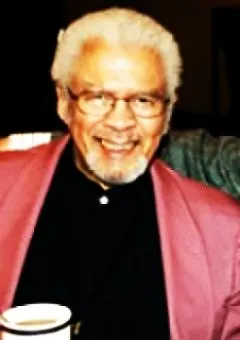
No portrait on file yet. Drop portrait.jpg and a media.md caption/license into this profile's folder.
Bernard Atwell McKinney was born in Detroit on November 26, 1932, into one of the city's most concentrated musical families. His father, Clarence Howard McKinney, taught music in the Detroit schools; his mother, Bessie Walton McKinney, was an organist. Ten children came out of that household, seven boys and three girls, and nine of them played. Pianist Harold McKinney, later a fixture of Detroit jazz education, was his brother, as were bassist Ray McKinney and drummer Earl McKinney; his sister Carol played reeds. The siblings worked as a family combo in Detroit before any of them left town. Bernard went to Northwestern High School and then to Wayne State University, where he took coursework in composition and theory until 1955 before quitting to work full time on the bandstand. He is the uncle of R&B producer and pianist Carlos "Los Da Mystro" McKinney.
His first professional jobs came in 1951, alongside Barry Harris and Sonny Stitt, and he spent much of the early 1950s in bassist Alvin Jackson's band. By the middle of the decade he had worked with Art Blakey. His recording career opens with a hometown date: on August 23, 1955, at Detroit's New World Stage Theatre, he played euphonium on Donald Byrd's Byrd Jazz for Tom Wilson's Transition label, in a band with Yusef Lateef on tenor, Barry Harris on piano, Alvin Jackson on bass, and Frank Gant on drums. Two years later, on November 19, 1957, he was at Rudy Van Gelder's Hackensack studio for Pepper Adams's The Cool Sound of Pepper Adams (Regent MG 6066), a quintet with Hank Jones on piano, George Duvivier on bass, and Elvin Jones on drums. Pairing euphonium with baritone saxophone across the front line gave that record a low, dark blend with no precedent in hard bop. He returned to Van Gelder's on June 11, 1959, for the Yusef Lateef session that Savoy split across two albums, The Dreamer and The Fabric of Jazz, and he moved to New York City with Lateef later that year.
New York put him straight into the brass sections that needed a middle voice. He joined Slide Hampton's octet for Slide Hampton and His Horn of Plenty (Strand, 1959) and Sister Salvation, cut at Bell Sound on February 11 and 15, 1960 for Atlantic, both bands stacked with young players including Freddie Hubbard, Booker Little, and George Coleman; he stayed with Hampton in New York into 1963. On June 30, 1960, he was on stage at Freebody Park with the Art Farmer and Benny Golson Jazztet at the Newport Jazz Festival, playing trombone and euphonium in a lineup that also carried Duke Pearson on piano. On August 21, 1961, at Van Gelder's Englewood Cliffs studio, he took the euphonium chair on Freddie Hubbard's Ready for Freddie (Blue Note BLP 4085) beside Wayne Shorter, McCoy Tyner, Art Davis, and Elvin Jones, an album Scott Yanow later listed among seventeen essential hard bop recordings. Seven weeks after that, on October 10, 1961, he recorded in Newark with the pared-down Arkestra that had just relocated from Chicago, playing trombone and euphonium on The Futuristic Sounds of Sun Ra for Savoy. DownBeat named him Talent Deserving Wider Recognition in 1964, and from 1963 to 1972 he worked in the Dizzy Gillespie Orchestra and with James Moody.
The name change came out of the same years. Born Bernard Atwell McKinney, he took the name Kiane Zawadi during the civil rights era as a statement of Black consciousness, and the record credits follow the shift across the mid-1960s: sessions through 1961 are billed to Bernard McKinney, while everything from the March 18, 1966 date onward carries Kiane Zawadi. That March 1966 session, at Van Gelder's, was Hank Mobley's A Slice of the Top, an unusually large Blue Note band with Lee Morgan on trumpet, Howard Johnson on tuba, James Spaulding on alto, McCoy Tyner, Bob Cranshaw, and Billy Higgins, arranged by Duke Pearson around a euphonium-and-tuba bottom. Blue Note shelved it for thirteen years and did not release it until 1979. He also appears across Freddie Hubbard's Blue Spirits (recorded February 1965 and March 1966, released 1967) with Joe Henderson and Larry Ridley on two of its tracks, and on Hubbard's Atlantic date High Blues Pressure, recorded November 13, 1967, where he is credited on both trombone and euphonium.
The 1970s were his busiest decade and his most political. He played trombone in the brass choir on Archie Shepp's Attica Blues, recorded January 24 to 26, 1972 at A&R Recording for Impulse!, a record written in direct response to the Attica prison uprising. He took the euphonium part on McCoy Tyner's Song of the New World (Milestone, recorded April 6 and 9, 1973), in a brass and reed section that included Julius Watkins and Jon Faddis, and recorded with Abdullah Ibrahim on African Space Program the same year. Strata-East, the musician-owned label, used him repeatedly: Harold Vick's Don't Look Back (recorded November 1974, with Sam Jones and Billy Hart) and Charles Tolliver's big-band Impact, recorded January 17, 1975, whose reed section included Charles McPherson. He toured and recorded with Aretha Franklin from 1973 to 1976, received a National Endowment for the Arts grant in 1977, and from 1978 played the Broadway pit orchestra for Bob Fosse's Dancin'. Session work of the period runs from Grant Green's Easy and Les McCann's Another Beginning to Ralph MacDonald's Sound of a Drum and Phyllis Hyman's debut.
He kept working steadily into his sixties and seventies. He worked repeatedly with Frank Foster's Loud Minority, from Manhattan Fever in 1968 through Bursting Out! in 1978 and the archival Well Water, and joined the Frank Foster Big Band in 1981. He held a chair in the Illinois Jacquet Big Band from 1984 to 1987, documented on Jacquet's Got It! (Atlantic, 1988) and on six volumes of Village Vanguard tapes issued much later as The Jacquet Files; he played euphonium in the Clifford Jordan Big Band, including the October 7, 1991 night at Condon's released as Down Through the Years; and he turned up on Joe Henderson's Grammy-winning Big Band in 1996 and Patience Higgins's Live in Harlem in 1998. Away from the bandstand he taught: as a performer and workshop instructor with Jazzmobile, and as an instructor at the New Muse Community Museum in Brooklyn. He co-founded the Collective Black Artists and, later, the Central Brooklyn Jazz Consortium. He married Ima Polly Vann on December 29, 1969, after meeting her in Detroit at the World Stage through trumpeter Donald Towns. Kiane Zawadi passed away on May 21, 2024, at New York Methodist Hospital in Brooklyn, aged 91, survived by his wife Ima, son Kiambu, daughter Kaia, and sister Carol Robinson.
The euphonium is the reason his name comes up at all in instrument histories: a conical-bore tenor brass instrument built for concert bands, almost never carried into a jazz rhythm section, and Zawadi is one of a handful of players ever to solo on it in a jazz context. What he offered arrangers was a voice that sits between trombone and tuba with none of the trombone's edge, and the writers who used him understood exactly that. Pepper Adams set it against baritone saxophone in 1957; Slide Hampton and Duke Pearson buried it inside octet and nonet voicings; McCoy Tyner and Charles Tolliver used it to thicken a brass choir without adding brightness. On Ready for Freddie he is a soloist rather than a texture, and the record is the strongest single argument for the instrument's viability in hard bop. He was equally employable on trombone, which is what kept him in big-band sections for forty years, from Dizzy Gillespie through Illinois Jacquet. DownBeat's 1964 Talent Deserving Wider Recognition award is the only significant critical honor his career attracted, and the description stayed accurate for the next sixty years: colleagues quoted after his death, among them Benny Golson and Bill Saxton, described a musician who taught and supported without flaunting what he knew.
- Ready for Freddie (1962, Blue Note) - Freddie Hubbard's August 21, 1961 sextet date with Wayne Shorter, McCoy Tyner, Art Davis, and Elvin Jones; the best-known record built around McKinney's euphonium as a solo voice. Spotify - Ready for Freddie
- The Cool Sound of Pepper Adams (1958, Regent) - Pepper Adams's quintet of November 19, 1957 at Van Gelder Studio, with Hank Jones, George Duvivier, and Elvin Jones; the euphonium and baritone saxophone front line is unique in the hard bop catalog. Spotify - The Cool Sound of Pepper Adams
- A Slice of the Top (1979, Blue Note) - Hank Mobley's March 18, 1966 nonet, arranged by Duke Pearson around euphonium and tuba, with Lee Morgan and Billy Higgins; recorded during Mobley's imprisonment-era backlog and withheld by Blue Note for thirteen years. Spotify - A Slice Of The Top
- The Futuristic Sounds of Sun Ra (1962, Savoy) - Recorded October 10, 1961 in Newark by the stripped-down Arkestra weeks after its move from Chicago; McKinney plays trombone and euphonium alongside Marshall Allen, John Gilmore, and Pat Patrick. Spotify - The Futuristic Sounds Of Sun Ra Listen
- Sister Salvation (1960, Atlantic) - The Slide Hampton Octet at Bell Sound, February 11 and 15, 1960, with Freddie Hubbard, George Coleman, and Bill Barber on tuba; a purpose-built brass ensemble that put the euphonium at the center of the voicings. Spotify - Sister Salvation
- Attica Blues (1972, Impulse!) - Archie Shepp's response to the Attica uprising, recorded January 24 to 26, 1972; Zawadi is one of three trombonists in a large brass, reed, and string ensemble. Spotify - Attica Blues
- Song of the New World (1973, Milestone) - McCoy Tyner's first large-ensemble album, recorded April 6 and 9, 1973, with Zawadi on euphonium and Julius Watkins on french horn in the brass writing. Spotify - Song Of The New World
- The Fabric of Jazz (1959, Savoy) - One of two albums drawn from the June 11, 1959 Yusef Lateef quintet session at Van Gelder Studio, with Terry Pollard on piano; McKinney is on euphonium throughout except one track. Spotify - The Fabric of Jazz
Bernard McKinney (Kiane Zawadi) - Full Discography
Bernard McKinney never led a recording session. Discogs carries him under two linked artist identities, Bernard McKinney (artist 264867, 45 releases) and Kiane Zawadi (artist 334142, 70 releases), and every credit on both is a sideman or ensemble appearance. There is therefore no "As Leader" table below.
The table that follows is a selected set of his significant sideman credits, roughly 40 of the 115 Discogs entries, chosen for musical importance rather than completeness. Straight reissues, anthologies, and various-artists compilations are omitted except where the compilation is the only current form of a session. Credits are given under the name that appears on the original release: sessions through 1961 are billed to Bernard McKinney, later ones to Kiane Zawadi. Recording dates, labels, and catalog numbers were verified against the Discogs API and against the corresponding album pages; anything that could not be confirmed is marked "not confirmed" rather than guessed.
As Sideman (selected major credits)
| Year | Project (Leader) | Title | Label | Catalog | Role | Notes |
|---|---|---|---|---|---|---|
| 1956 | Donald Byrd | Byrd Jazz | Transition | TRLP 5 | Euphonium | Recorded August 23, 1955 at the New World Stage Theatre, Detroit, with Yusef Lateef, Barry Harris, Alvin Jackson, Frank Gant. Reissued by Delmark as First Flight. Credited as Bernard McKinney. Not located on Spotify. |
| 1958 | Pepper Adams | The Cool Sound of Pepper Adams | Regent | MG 6066 | Euphonium | Recorded November 19, 1957, Van Gelder Studio, Hackensack, with Hank Jones, George Duvivier, Elvin Jones. Reissued on Savoy as Pure Pepper and inside Fresh Sound's The Complete Regent Sessions. Spotify · Buy: — |
| 1959 | Yusef Lateef | The Dreamer | Savoy | MG 12139 | Euphonium | Recorded June 11, 1959, Van Gelder Studio, Hackensack; Terry Pollard piano, William Austin bass, Frank Gant drums. Not located on Spotify. |
| 1959 | Yusef Lateef | The Fabric of Jazz | Savoy | MG 12140 | Euphonium (all but one track) | Second album from the same June 11, 1959 session. Spotify · Buy: — |
| 1959 | Slide Hampton | Slide Hampton and His Horn of Plenty | Strand | SL/SLS-1006 | Euphonium | Recorded at Bell Sound, New York, with Freddie Hubbard, Booker Little, George Coleman. Not located on Spotify. |
| 1960 | Slide Hampton Octet | Sister Salvation | Atlantic | LP 1339 | Euphonium | Recorded February 11 and 15, 1960 at Bell Sound; produced by Artie Shaw; Bill Barber on tuba. Spotify · Buy: — |
| 1962 | Freddie Hubbard | Ready for Freddie | Blue Note | BLP 4085 / BST 84085 | Euphonium | Recorded August 21, 1961, Van Gelder Studio, Englewood Cliffs, with Wayne Shorter, McCoy Tyner, Art Davis, Elvin Jones. His most prominent recorded solo feature. Spotify (RVG remaster) · Buy: — |
| 1962 | Sun Ra and his Arkestra | The Futuristic Sounds of Sun Ra | Savoy | Catalog not confirmed | Trombone, euphonium | Recorded October 10, 1961 in Newark, New Jersey; produced by Tom Wilson. First Arkestra record made after the move from Chicago. Spotify · Buy: — |
| 1965 | James Moody | Cookin' the Blues | Argo | Catalog not confirmed | Trombone, euphonium | Discogs dates this release 1965; other sources give 1961. Reissued by Fresh Sound coupled with Another Bag. Not located on Spotify. |
| 1965 | Yusef Lateef | Lateef Live (From the New World Stage Theatre Detroit) | Delmark | DJB 7 | Euphonium | Live in Detroit at the theatre where the 1955 Byrd session was cut. Not located on Spotify. |
| 1967 | Freddie Hubbard | Blue Spirits | Blue Note | BST 84196 | Euphonium | Recorded February 19 and 26, 1965 and March 5, 1966, Van Gelder Studio; Zawadi is on all five original-LP tracks, with Joe Henderson, Larry Ridley, Hank Mobley, McCoy Tyner across the two dates. First release to credit him as Kiane Zawadi. Spotify · Buy: — |
| 1968 | Freddie Hubbard | High Blues Pressure | Atlantic | Catalog not confirmed | Trombone, euphonium (tracks 2-6) | Recorded November 13, 1967; produced by Joel Dorn; Howard Johnson on baritone and tuba. Not located on Spotify. |
| 1968 | Frank Foster | Manhattan Fever | Blue Note | Catalog not confirmed | Trombone, euphonium | Discogs shows a 1968 first pressing and a 1970 variant. Spotify · Buy: — |
| 1968 | Freddie Roach | My People (Soul People) | Prestige | Catalog not confirmed | Trombone, euphonium | Credited as Kiane Zawadi. Not located on Spotify. |
| 1971 | The Latin Jazz Quintet, guest Pharoah Sanders | Oh! Pharoah Speak | Catalog and label not confirmed | Catalog not confirmed | Trombone | Directed by Juan Amalbért. Not located on Spotify. |
| 1972 | Archie Shepp | Attica Blues | Impulse! | AS-9222 | Trombone | Recorded January 24 to 26, 1972 at A&R Recording, New York; three trombones plus Hakim Jami on euphonium in an ensemble with strings and voices. Spotify · Buy: — |
| 1972 | Willis "Gator Tail" Jackson | Recording Session | Label not confirmed | Catalog not confirmed | Trombone | Listed on the Kiane Zawadi Discogs identity. Not located on Spotify. |
| 1973 | McCoy Tyner | Song of the New World | Milestone | MSP 9049 | Euphonium (tracks 1, 2, 4) | Recorded April 6 and 9, 1973, A&R Studios, New York; brass section with Julius Watkins, Jon Faddis, Garnett Brown, Bob Stewart. Spotify · Buy: — |
| 1973 | Dollar Brand (Abdullah Ibrahim) | African Space Program | Enja | Catalog not confirmed | Trombone, euphonium | Large-ensemble date; no English Wikipedia entry, details taken from Discogs. Not located on Spotify. |
| 1974 | Harold Vick | Don't Look Back | Strata-East | SES 7431 | Euphonium (tracks 1-3) | Recorded November 1974 at Minot Sound, White Plains, with Sam Jones and Billy Hart. Not located on Spotify. |
| 1974 | Les McCann | Another Beginning | Atlantic | Catalog not confirmed | Trombone, euphonium | Not located on Spotify. |
| 1974 | Jackie DeShannon | Your Baby Is a Lady | Atlantic | Catalog not confirmed | Trombone | One of several pop and R&B dates he played in the mid-1970s. Not located on Spotify. |
| 1975 | Carlos Garnett | Let This Melody Ring On | Muse | Catalog not confirmed | Trombone, euphonium | Not located on Spotify. |
| 1975 | The Brass Company | Colors | Strata-East | SES 19752 | Trombone, euphonium | An all-brass Strata-East project; catalog number read from the sleeve. Not located on Spotify. |
| 1975 | Charles Tolliver's Music Inc. & Orchestra | Impact | Strata-East | SES 19757 | Trombone | Recorded January 17, 1975; a seventeen-piece band including Charles McPherson, George Coleman, James Spaulding, Stanley Cowell, Cecil McBee, Reggie Workman. Currently on Spotify only as a 2025 reissue. |
| 1976 | Ralph MacDonald | Sound of a Drum | Marlin | Catalog not confirmed | Trombone | Not located on Spotify. |
| 1977 | McCoy Tyner | Divine | Milestone | Catalog not confirmed | Euphonium | Not located on Spotify. |
| 1977 | Phyllis Hyman | Phyllis Hyman | Buddah | Catalog not confirmed | Trombone | Her Buddah debut. Not located on Spotify. |
| 1977 | Howard McGhee Orchestra | Cookin' Time | Zim | Catalog not confirmed | Trombone, euphonium | Discogs dates the release 1977; the English Wikipedia article gives a 1966 recording. Not located on Spotify. |
| 1978 | Frank Foster and the Loud Minority | Bursting Out! | Denon PCM | YX-7467-ND | Trombone, euphonium | Japanese PCM 45 rpm direct-recording date; catalog number read from the sleeve. Not located on Spotify. |
| 1978 | Grant Green | Easy | Versatile | Catalog not confirmed | Trombone | Green's late-period date. Not located on Spotify. |
| 1979 | Hank Mobley | A Slice of the Top | Blue Note | LT 995 | Euphonium | Recorded March 18, 1966 at Van Gelder Studio and shelved by Blue Note until 1979; Duke Pearson arrangements, with Lee Morgan, Howard Johnson, James Spaulding, McCoy Tyner, Bob Cranshaw, Billy Higgins. Spotify · Buy: — |
| 1980 | John Stubblefield | Midnight Sun | Storyville | Catalog not confirmed | Trombone | Not located on Spotify. |
| 1982 | Mickey Bass | Sentimental Mood | Label not confirmed | Catalog not confirmed | Trombone, euphonium | Discogs lists both a 1981/1982 release and a 1991 "Mickey Bass & The Co-Operation" track appearance. Not located on Spotify. |
| 1988 | Illinois Jacquet and His Big Band | Jacquet's Got It! | Atlantic | Catalog not confirmed | Trombone | From his 1984 to 1987 tenure in the Jacquet big band. Not located on Spotify. |
| 1992 | The Clifford Jordan Big Band | Down Through the Years: Live at Condon's, New York | Milestone | MCD-9197-2 | Euphonium | Recorded October 7, 1991 at Condon's; produced by Helen Keane. Not located on Spotify. |
| 1993 | Harold McKinney & Wendell Harrison | Something for Pops | Wenha | Catalog not confirmed | Euphonium | A Detroit date led by his brother Harold McKinney; Zawadi appears on "Like, What Is This?" Not located on Spotify. |
| 1996 | Joe Henderson | Big Band | Verve | Catalog not confirmed | Trombone, euphonium | Winner of the 1997 Grammy for Best Large Jazz Ensemble Album. Not located on Spotify. |
| 1997 | The Clifford Jordan Big Band | Play What You Feel | Mapleshade | Catalog not confirmed | Euphonium | Recorded 1990 per the album entry, issued later. Not located on Spotify. |
| 1998 | Patience Higgins | Live in Harlem | Mapleshade | Catalog not confirmed | Trombone, euphonium | Zawadi is featured on "Berta's Song." Not located on Spotify. |
| 2006 | The Brooklyn Repertory Ensemble | Pragmatic Optimism | 360 Degrees Records | Catalog not confirmed | Trombone, euphonium | One of his last studio credits, from the Brooklyn scene he helped organize. Not located on Spotify. |
| 2017-2018 | Illinois Jacquet | The Jacquet Files, Volumes 1-6 | Squatty Roo Records | Catalog not confirmed | Trombone | Archival Village Vanguard broadcasts and rehearsals from 1986 and 1987, released three decades later. Not located on Spotify. |
Additional appearances not listed above include the Sun Ra Arkestra archival volumes, Bill Henderson's Vee-Jay sides, Sonny Forriest's Tuff Pickin', Emanuel K. Rahim's Total Submission, Hilton Ruiz's New York Hilton, Rodney Kendrick's Last Chance for Common Sense, Cornell Dupree's Saturday Night Fever, Kenny Vance's Vance 32, and a long tail of Blue Note, Impulse!, and Strata-East compilations that recycle the sessions above.
- Pepper Adams - euphonium on The Cool Sound of Pepper Adams, recorded November 19, 1957 at Van Gelder Studio, Hackensack, with Hank Jones, George Duvivier, and Elvin Jones.
- Yusef Lateef - Detroit bandmate from the mid-1950s; euphonium on the June 11, 1959 Savoy session issued as The Dreamer and The Fabric of Jazz, and the musician he moved to New York with in 1959. They were still recording together on the 1965 Delmark date Lateef Live from Detroit's New World Stage Theatre.
- Slide Hampton - octet and big-band trombone and euphonium, roughly 1959 to 1963, on Slide Hampton and His Horn of Plenty (Strand, 1959) and Sister Salvation (Atlantic, 1960).
- Freddie Hubbard - four albums across eight years: Ready for Freddie (1961), Blue Spirits (1965 to 1966), High Blues Pressure (1967), and the Atlantic-era compilations that draw on them.
- Dizzy Gillespie and James Moody - trombone in the Gillespie orchestra and in Moody's groups from 1963 to 1972; the Moody association is documented on Cookin' the Blues.
- Sun Ra - trombone and euphonium on The Futuristic Sounds of Sun Ra, recorded October 10, 1961, and on later archival Arkestra issues.
- Archie Shepp - brass section from the late 1960s into the 1980s, most prominently on Attica Blues (1972).
- McCoy Tyner - euphonium on Song of the New World (1973) and Divine (1977).
- Charles Tolliver and Harold Vick - Strata-East sessions in 1974 and 1975, including Tolliver's Impact with Charles McPherson and Vick's Don't Look Back with Sam Jones.
- Frank Foster - trombone and euphonium in the Loud Minority across three decades, on Manhattan Fever (1968), Bursting Out! (1978), and the later archival Well Water, plus the Frank Foster Big Band in 1981.
- Illinois Jacquet - big-band trombone, 1984 to 1987, on Jacquet's Got It! and six volumes of Village Vanguard live tapes released as The Jacquet Files.
- Clifford Jordan - euphonium in the Clifford Jordan Big Band from the mid-1980s, on Down Through the Years (recorded 1991) and Play What You Feel.
- Aretha Franklin - trombone in her touring and recording brass section, 1973 to 1976.
- Joe Henderson - a working association Marquis Who's Who dates to 1967 through 1974; on record they share Freddie Hubbard's Blue Spirits (1965) and Henderson's Big Band (1996).
More Hard Bop Artists
See all 304 Hard Bop artists →More American Jazz Artists
See all 567 American artists →- Wikipedia: Kiane Zawadi
- Ronald E. Scott, "Kiane Zawadi, consummate trombonist, dies at 91," New York Amsterdam News, May 30, 2024
- Marquis Who's Who Milestones: Kiane Zawadi
- Discogs: Bernard McKinney (artist 264867)
- Discogs: Kiane Zawadi (artist 334142)
- Grove Music Online: McKinney family
- All About Jazz: Ray McKinney
- Wikipedia: Byrd Jazz
- Wikipedia: The Cool Sound of Pepper Adams
- Wikipedia: The Dreamer (Yusef Lateef album)
- Wikipedia: The Fabric of Jazz
- Wikipedia: Slide Hampton and His Horn of Plenty
- Wikipedia: Sister Salvation
- Wikipedia: Ready for Freddie
- Wikipedia: The Futuristic Sounds of Sun Ra
- Wikipedia: A Slice of the Top
- Wikipedia: Blue Spirits
- Wikipedia: High Blues Pressure
- Wikipedia: Attica Blues (album)
- Wikipedia: Song of the New World
- Wikipedia: Impact (1975 Charles Tolliver album)
- Wikipedia: Don't Look Back (Harold Vick album)
- Wikipedia: Down Through the Years
- Past Daily: Art Farmer-Benny Golson Jazztet, Live at Newport 1960