 JAZZPROFILES lives in the music 1,572 Jazz Artists fully Profiled!
 Jimmie Lunceford
Last updated August 30, 2026
Listen on Spotify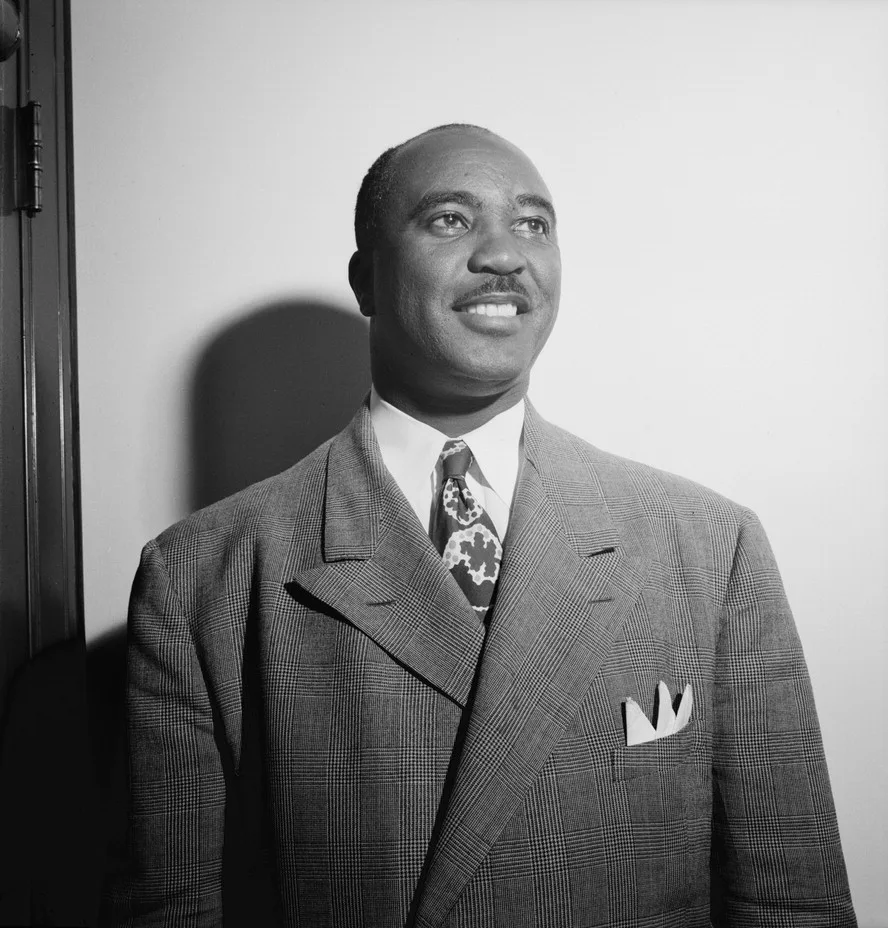
Jimmie Lunceford, photographed circa August 1946 by William P. Gottlieb Public Domain (Gottlieb dedicated his entire photography collection to the public domain on February 16, 2010) — Wikimedia Commons — https://commons.wikimedia.org/wiki/File:Jimmie_Lunceford_August_1946_(Gottlieb).jpg (original held by the Library of Congress Music Division, Gottlieb Collection, digital ID gottlieb.05681)
James Melvin Lunceford was born June 6, 1902, on a farm in the Evergreen community outside Fulton, Mississippi. His family moved to Oklahoma City within the year and later settled in Denver, where Lunceford attended high school and studied music under Wilberforce J. Whiteman, father of bandleader Paul Whiteman. He learned multiple instruments as a boy, and in 1922 he played alto saxophone in bandleader George Morrison's Denver orchestra alongside a young Andy Kirk. That year he also enrolled at Fisk University in Nashville, where he studied sociology and music, lettered in several sports, and played in a campus dance band.
In 1926 Lunceford took a job at Manassas High School in Memphis, Tennessee, as an athletic coach and language instructor, and the following year he founded, equipped, and trained the school's first band, naming it the Chickasaw Syncopators after a local neighborhood. He is often credited as the first person to teach jazz within a public school system, and his student band cut its first sides for Columbia in 1927 before the group turned fully professional around 1929. Recording as "Jimmie Lunceford and His Chickasaw Syncopators," the band waxed "In Dat Mornin'" and "Sweet Rhythm" for Victor in 1930, and Lunceford steadily rebuilt the group with Memphis-trained players as it moved toward full-time touring.
The band's defining sound took shape after trumpeter Sy Oliver joined as chief arranger in 1933. Oliver's scores, built around clipped, syncopated phrasing that became known as the "Lunceford two-beat," subordinated solo improvisation to ensemble precision, unison vocal novelty choruses, and sly humor, and the approach set a new standard for dance-band arranging. Altoist Willie Smith anchored a saxophone section prized for its blend, pianist Eddie Wilcox doubled as a second arranger, and the rest of the working core included trombonist/vocalist Trummy Young, tenor saxophonist/vocalist Joe Thomas, guitarist Al Norris, bassist Moses Allen, and drummer Jimmy Crawford. The band cut a batch of sides for Victor in early 1934, including "Jazznocracy," "White Heat," and "Sophisticated Lady," before signing with the newly formed Decca Records later that year and recording "Rhythm Is Our Business" (Decca 369), which became its signature theme song.
Decca releases through the mid-1930s built the orchestra into one of the top attractions of the swing era, on a commercial and critical footing that contemporaries rated alongside Duke Ellington's, Earl Hines's, and Count Basie's big bands. A 1934 booking into Harlem's Cotton Club for the "Cotton Club Parade" revue raised the group's national profile, and hits followed steadily: "My Blue Heaven" and "Stomp It Off" (1936), "Organ Grinder's Swing" (1936), "For Dancers Only" (1937), "Margie" (1938), and the Trummy Young vocal feature "'Tain't What You Do (It's the Way That You Do It)" (1939). The band toured Europe extensively in 1937 and had a second tour booked for 1939 that was cancelled with the outbreak of World War II. Onstage the group was as celebrated for its visual production as its music: trumpeters and saxophonists tossed and caught their horns in choreographed unison, singers stepped out for glee-club-style vocal groups (billed as the Lunceford Trio, Quartet, or Glee Club), and the whole show closed with drilled, synchronized bows. Lunceford summed up the philosophy directly: a band that looks good and enjoys its own work, he said, earns a return booking. That same combination of polish and showmanship was widely imitated by other leaders, Glenn Miller among them.
The band recorded for Vocalion, then a Columbia subsidiary, from 1938 to 1940, cutting "Uptown Blues" (1940) among other sides, before Columbia dropped the group as sales slipped; Decca picked the band back up, and it recorded "Blues in the Night" in 1942, the year the orchestra also appeared on screen performing the tune. Underneath the hits, the band was losing ground: Sy Oliver left for Tommy Dorsey's orchestra before the scrapped 1939 European tour, and Lunceford's habit of paying his sidemen modest fixed salaries, while it kept the band financially disciplined, drove a steady stream of players toward better-paying rivals through the 1940s.
On July 12, 1947, while on tour in Oregon, Lunceford collapsed during an in-store autograph session in Seaside ahead of a scheduled performance at the Bungalow dance hall and died en route to the hospital; an autopsy in nearby Astoria attributed the cause to coronary occlusion. He was 45. Unsubstantiated rumors of poisoning by a local restaurant owner circulated at the time but were never supported by evidence. He was buried at Elmwood Cemetery in Memphis. Pianist Eddie Wilcox and tenor saxophonist Joe Thomas co-led the orchestra under Lunceford's name through 1948 and 1949 before it finally disbanded.
Lunceford never soloed or sang on his own records and left the writing largely to others, but the band that carried his name was unmistakable: a disciplined ensemble machine built on Sy Oliver's arrangements, prizing blend, dynamics, and the "two-beat" rhythmic snap over improvised solos, wrapped in vaudeville-grade showmanship rare among big bands of the era. Critics and fellow musicians ranked the orchestra with Ellington's and Basie's as one of the three or four most important big bands of the swing era, and its visual routines, drilled horn tosses, dance steps, synchronized bows, were widely copied, with Glenn Miller's organization among the most direct beneficiaries of the "Lunceford sound" and stagecraft. As an educator turned bandleader, Lunceford brought a schoolteacher's insistence on precision and professionalism to a genre that, in most other hands, foregrounded the individual soloist.
- "Rhythm Is Our Business" (1934, Decca) - The band's signature theme from its first Decca session, and the title of its best-known hit. Spotify Listen
- "Jazznocracy" / "White Heat" (1934, Victor) - Early sides cut just before the move to Decca, already showing Sy Oliver's arranging stamp.
- "Organ Grinder's Swing" (1936, Decca) - One of the band's biggest commercial hits and a staple of swing-era radio and jukeboxes. Spotify Listen
- "For Dancers Only" (1937, Decca) - The instrumental that gave a later reissue compilation its title and became one of the band's most enduring instrumentals.
- "'Tain't What You Do (It's the Way That You Do It)" (1939, Vocalion) - A major hit vocal feature for trombonist Trummy Young, still a standard today. Spotify Listen
- "Uptown Blues" (1940, Vocalion) - A defining late-1930s/early-1940s instrumental from the band's Vocalion period. Spotify Listen
- "Blues in the Night" (1942, Decca) - A hit recording of the Harold Arlen/Johnny Mercer standard, cut the same year the band appeared performing it on screen.
- Stomp It Off (1992, GRP/Decca Jazz reissue) - A well-regarded CD compilation of the band's earliest (1934-1935) sides, including "Rhythm Is Our Business," "Stratosphere," and Ellington covers "Mood Indigo" and "Sophisticated Lady."
Jimmie Lunceford: Full Discography
Lunceford was a bandleader who never recorded as a sideman under anyone else's name; virtually every commercial side he made was credited to his own orchestra. Discogs lists roughly 700 commercially issued 78 rpm sides, singles, and later reissue compilations under his combined artist credits (personal artist ID 311058; group credit "Jimmie Lunceford And His Orchestra," artist ID 317906, 775 releases). Given that volume, this table does not attempt exhaustive coverage of every 78; it curates the most historically significant original sessions/singles, in recording-era chronological order, plus the major post-war LP/CD reissue compilations that collect them. There is no separate "As Sideman" table since no confirmed sideman credits for Lunceford under another leader's name were found.
As Leader (curated - original sessions and singles)
| Title | Recording/Release Date | Label | Catalog Number | Format | Personnel (confirmed core) | Role | Reissue History | Spotify | Buy | Notes |
|---|---|---|---|---|---|---|---|---|---|---|
| In Dat Mornin' / Sweet Rhythm | 1930 | Victor | V-38141 | Shellac, 10", 78 RPM | Jimmie Lunceford and His Chickasaw Syncopators (full 1930 personnel not confirmed) | Leader | Later anthologized on various pre-war jazz compilations | — | — | First commercial recordings under the "Chickasaw Syncopators" name, cut while the band was still Memphis-based |
| Jazznocracy / Chillen Get Up | Released March 28, 1934 | Victor | 24522 | Shellac, 10", 78 RPM | Jimmie Lunceford And His Orchestra: Willie Smith, Sy Oliver, Eddie Wilcox, Trummy Young, Al Norris, Moses Allen, Jimmy Crawford (full session personnel not itemized in Discogs) | Leader | Included on 1980s/1990s Decca-era compilations (e.g. Stomp It Off, 1992) | Spotify | — | Early Victor side, cut just before the band's move to Decca; shows Sy Oliver's arranging stamp taking hold |
| Rhythm Is Our Business / Star Dust | 1934 | Decca | 369 | Shellac, 10", 78 RPM | Jimmie Lunceford And His Orchestra | Leader | Anthologized on Rhythm Is Our Business (Vol. 1, 1934-1935) (Decca DL 79237, 1968) and Stomp It Off (GRP, 1992) | Spotify | — | The band's first Decca single and its signature theme song for the rest of its run |
| Sophisticated Lady / Unsophisticated Sue | 1934 | Victor / Decca (variant pressings) | Various | Shellac, 10", 78 RPM | Jimmie Lunceford And His Orchestra | Leader | Reissued on Stomp It Off (GRP, 1992) alongside other Ellington-book covers | — | — | One of several Ellington compositions the band covered in its early Decca period |
| My Blue Heaven / Stomp It Off | March 1936 | Decca | 712 | Shellac, 10", 78 RPM | Jimmie Lunceford And His Orchestra | Leader | Title track of the 1992 GRP/Decca Jazz CD compilation Stomp It Off | — | — | |
| Organ Grinder's Swing / Sleepy Time Gal | 1936 | Decca | 908 | Shellac, 10", 78 RPM | Jimmie Lunceford And His Orchestra | Leader | Anthologized on "Harlem Shout" Vol. 2 (1935-1936) (Decca DL 79238) and For Dancers Only (Decca Jazz GRD-645, 1994) | Spotify | — | One of the band's biggest commercial hits |
| Coquette / For Dancers Only | Released June 15, 1937 | Decca | 1340 | Shellac, 10", 78 RPM | Jimmie Lunceford And His Orchestra | Leader | Title track of the 1994 Decca Jazz CD reissue For Dancers Only | Spotify | — | The instrumental that gave the 1994 reissue compilation its name |
| Margie / Like a Ship at Sea | 1938 | Decca | Not specified in Discogs data | Shellac, 10", 78 RPM | Jimmie Lunceford And His Orchestra | Leader | Widely anthologized on later swing-era compilations | — | — | |
| Sophisticated Lady / Mood Indigo | 1938 | Decca | Not specified in Discogs data | Shellac, 10", 78 RPM | Jimmie Lunceford And His Orchestra | Leader | Anthologized on Stomp It Off (GRP, 1992) | — | — | Second-take studio versions of two Ellington standards |
| 'Tain't What You Do (It's the Way That You Do It) / Cheatin' on Me | 1939 | Vocalion | 4582 | Shellac, 10", 78 RPM | Jimmie Lunceford And His Orchestra, featuring Trummy Young (vocal) | Leader | Widely anthologized; among the band's most reissued sides | Spotify | — | Major hit; recorded during the band's 1938-1940 stint on Vocalion (then a Columbia subsidiary) |
| What Is This Thing Called Swing / Ain't She Sweet | 1939 | Vocalion | Not specified in Discogs data | Shellac, 10", 78 RPM | Jimmie Lunceford And His Orchestra | Leader | None found | — | — | |
| Put It Away / Uptown Blues | 1940 | Vocalion | 5362 | Shellac, 10", 78 RPM | Jimmie Lunceford And His Orchestra | Leader | Widely anthologized on later swing compilations | Spotify | — | |
| Flamingo / Siesta at the Fiesta | 1941 | Decca | Not specified in Discogs data | Shellac, 10", 78 RPM | Jimmie Lunceford And His Orchestra | Leader | None found | — | — | Recorded after the band's return to Decca |
| Blues in the Night (My Mama Done Tol' Me) | 1942 | Decca | 4125 | Shellac, 10", 78 RPM | Jimmie Lunceford And His Orchestra | Leader | Anthologized on multiple Blues in the Night-titled compilations (e.g. 1959, 1975, 1995 reissues) | — | — | Recorded the same year the band appeared on screen performing the Harold Arlen/Johnny Mercer title song |
Major Reissue Compilations (LP/CD)
| Title | Release Year | Label | Catalog Number | Format | Contents | Notes |
|---|---|---|---|---|---|---|
| Rhythm Is Our Business (Vol. 1, 1934-1935) | 1968 | Decca | DL 79237 | Vinyl LP, Compilation | 14 tracks from the band's earliest Decca sessions, including "Rhythm Is Our Business," "Mood Indigo," and "Black and Tan Fantasy" | |
| "Harlem Shout" Vol. 2 (1935-1936) | Not specified in Discogs data | Decca | DL 79238 | Vinyl LP, Compilation | 14 tracks including "Organ Grinder's Swing," "My Blue Heaven," and the title track "Harlem Shout" | Second volume in Decca's own vintage reissue series |
| Stomp It Off | 1992 | GRP / MCA Records (Decca Jazz) | GRP 16082 / GRP-6082 | CD, Compilation, Reissue, Remastered | 21 tracks from the band's 1934-1935 Decca sessions, including both takes of "Rhythm Is Our Business" and "Stomp It Off" | Well-regarded CD anthology of the band's earliest and arguably most influential period |
| For Dancers Only | 1994 | Decca Jazz | GRD-645 | CD, Compilation, Reissue, Remastered | 20 tracks spanning "For Dancers Only," "Organ Grinder's Swing," and "Harlem Shout" | The band's best-known instrumental gives the compilation its title |
| Blues in the Night, Vol. 4 (1938-1942) | Not specified in Discogs data | Not specified in Discogs data | Not specified in Discogs data | CD, Compilation | Later Vocalion/Decca-era sides including "Blues in the Night" and "Uptown Blues" | Fourth volume in a multi-volume series covering the band's late-1930s to early-1940s work |
| The Original Arrangements of Jimmie Lunceford | 1958 | Not specified in Discogs data | Not specified in Discogs data | Vinyl LP | Sy Oliver leading a studio orchestra through his own Lunceford-era charts | A tribute/re-creation album led by Sy Oliver himself rather than an original Lunceford recording; included for its direct connection to the "Lunceford style" |
Not confirmed: exact catalog numbers and session personnel for several 1938-1941 Decca and Vocalion sides ("Margie," "Sophisticated Lady"/"Mood Indigo," "What Is This Thing Called Swing," "Flamingo") were not itemized in the available Discogs release data; dates given are release years rather than confirmed studio dates unless otherwise noted.
- Sy Oliver - chief arranger, 1933 to 1939; his scores created the "Lunceford style" before he left to arrange for Tommy Dorsey's orchestra.
- Willie Smith - lead alto saxophonist and section leader for most of the band's run.
- Eddie Wilcox - pianist and co-arranger; co-directed the orchestra with Joe Thomas after Lunceford's 1947 death.
- Joe Thomas - tenor saxophonist and vocalist; co-directed the orchestra with Eddie Wilcox, 1948-1949.
- Trummy Young - trombonist and featured vocalist, including on the 1939 hit "'Tain't What You Do (It's the Way That You Do It)."
- Jimmy Crawford - drummer for most of the band's classic-period run.
- Gerald Wilson - trumpeter and arranger who joined the band in 1939, replacing Sy Oliver in the section.
.jpg)