 JAZZPROFILES lives in the music 1,572 Jazz Artists fully Profiled!
 Bobbi Humphrey
Last updated September 6, 2026
Listen on Spotify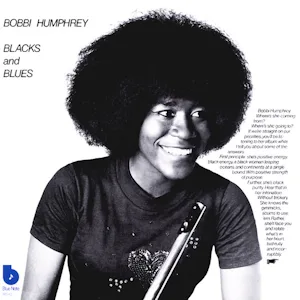
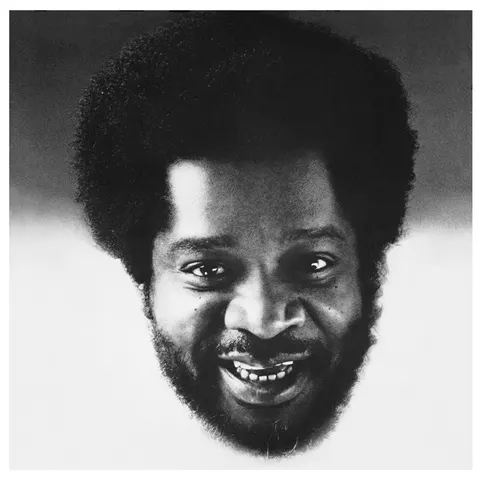
Bobbi Humphrey on the cover of "Blacks and Blues," her 1973 Blue Note album produced by Larry and Fonce Mizell. Standard copyright, all rights reserved, held by Blue Note Records / Capitol-EMI. This is not a Creative Commons-licensed image. It is an album cover featuring the artist, used here as an honestly-disclosed editorial stand-in and not presented as free-licensed art. No Creative Commons or public-domain photograph of Bobbi Humphrey could be located after a genuine search: Wikimedia Commons has no file, no category, and no insource match under her name, and her English Wikipedia article carries no infobox photograph. Photography and art direction on the original sleeve are credited to Bob Cato (Discogs release 756410). — Downloaded from Wikipedia's file for the album cover, https://upload.wikimedia.org/wikipedia/en/0/09/Blacks_and_Blues.jpg (79,320 bytes, verified under the 20MB ceiling via an HTTP HEAD request), not hotlinked. Saved locally as portrait.jpg in this folder.
Barbara Ann Humphrey grew up in Dallas and came out of Lincoln High School in 1968 with both classical and jazz training on the flute, which she continued at Texas Southern University and Southern Methodist University. Dizzy Gillespie heard her at an SMU talent contest and gave her a single piece of advice: go to New York.
She took it in June 1971. She played the Apollo Theater's Amateur Night, and within weeks producer George Butler signed her to Blue Note Records. She was 21, and she was the first female instrumentalist the label had ever put under contract.
Her debut, Flute-In, was recorded on September 30 and October 1, 1971 at Rudy Van Gelder's studio in Englewood Cliffs, New Jersey, with Van Gelder himself engineering. Butler surrounded her with players who had nothing to prove: Lee Morgan on trumpet, Billy Harper on tenor, Hank Jones on piano, George Duvivier on bass, and Idris Muhammad on drums, with Wade Marcus arranging. The program mixed Bill Withers' "Ain't No Sunshine" and "Spanish Harlem" with Morgan's own "The Sidewinder." Humphrey played in Morgan's final band that same year. Dig This! followed in 1972, a lusher record with Ron Carter on bass, Alphonse Mouzon on drums, and a string section.
The record that changed her standing arrived in 1973. Blue Note put her together with Larry and Fonce Mizell, the production team that had just built Donald Byrd's Black Byrd into one of the best-selling albums in the label's history. Larry Mizell wrote all six tracks on Blacks and Blues and set them on a rhythm section of Harvey Mason and Chuck Rainey, with Jerry Peters on Fender Rhodes, David T. Walker on guitar, and King Errisson on congas. Humphrey has described the method plainly: the band would play the track and tell her to play to it, with no written melody, so she improvised against the groove on the spot.
Commercially it worked in a way jazz records rarely did. Blacks and Blues reached No. 18 on the R&B chart and No. 84 on the Billboard 200, and it held a chart position for 21 weeks. Its opening track, "Chicago, Damn," went to No. 9 R&B in April 1974. A flute-led Blue Note album had landed on rhythm and blues radio.
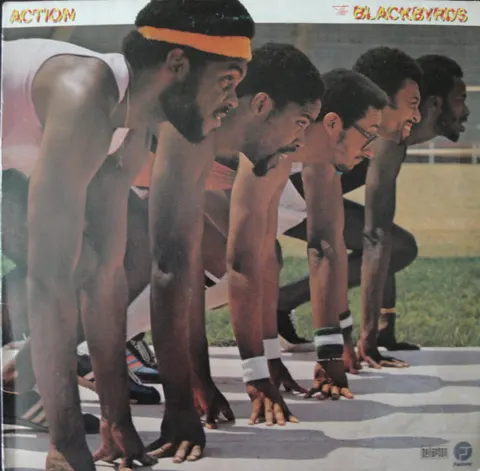
Satin Doll, released December 1, 1974 and recorded that July through September at the Sound Factory in Hollywood, went further up the pop chart at No. 30, adding Melvin "Wah Wah" Ragin on guitar and a reading of Stevie Wonder's "You Are the Sunshine of My Life" beside the Ellington title track. In between, Blue Note issued Live at Montreux (1974), where her backing band was the young group that would shortly become The Blackbyrds: Kevin Toney on Rhodes, Barney Perry on guitar, and Keith Killgo on drums. Fancy Dancer, recorded August 5 to 7, 1975, closed the Mizell trilogy and brought harpist Dorothy Ashby into the session.
Billboard named her Best Female Instrumentalist in 1976. That same year she and George Benson both appeared as guests on Stevie Wonder's Songs in the Key of Life.
She moved to Epic for Tailor Made (1977), Freestyle (1978), and The Good Life (1979), taking an executive producer credit on the first of them and singing lead as well as playing. The Tailor Made sessions included Bill Summers and a young Sheila Escovedo on percussion.
Then she stepped back from the front of the stage. In 1977 Humphrey founded Innovative Artist Management, and later The Bobbi Humphrey Music Company, which signed a production agreement with Warner Bros. in 1990. She helped launch Tevin Campbell's career. She returned to recording with City Beat on Malaco in 1989, which held a place on Billboard's Black Albums chart for 16 weeks, and in 1994 she founded her own label, Paradise Sounds Records, releasing Passion Flute on it.
While she was running companies, her seventies catalog acquired a second audience she never went looking for. DJ Jazzy Jeff and the Fresh Prince built "A Touch of Jazz" on "Harlem River Drive" in 1987. Eric B. & Rakim, Digable Planets, Mobb Deep, Ice-T, Ghostface Killah, Ludacris, Madlib, and Wiz Khalifa all worked from her records. Guru brought her onto the Jazzmatazz series, and in 2002 Common asked her to play on Electric Circus.
She is 76 and still performs, still carrying the title critics gave her decades ago: the First Lady of the Flute.
Humphrey names Hubert Laws, Herbie Mann, and James Moody as her influences, which places her in the specific lineage of players who insisted the flute could carry a jazz record rather than decorate one. Her early Blue Note work sits closer to Laws: mainstream, technically assured, arranged for a full ensemble.
What separates her is what happened when the Mizells put her over a funk rhythm section. Her tone stayed warm and vocal rather than breathy, and she phrased across the beat instead of riding it, which is why the Mizell records still read as jazz records rather than as instrumental soul. She improvised her lines against finished backing tracks with no written melody in front of her, so the accessibility on those albums lives in the arrangement and the groove, not in the flute part.
She also sings, taking lead vocals on the Epic albums and a solo vocal credit as early as Blacks and Blues, which is unusual for a horn player of her generation and part of why the crossover felt natural rather than imposed.
- Flute-In (1971, Blue Note) - Her debut, cut at Van Gelder Studio with Lee Morgan, Billy Harper, Hank Jones, and Idris Muhammad. The straight-ahead record that shows what she could do before the funk. Full album on YouTube Listen · Buy
- Blacks and Blues (1973, Blue Note) - The Mizell-produced breakthrough. No. 18 R&B, No. 84 pop, 21 weeks on the chart, and the source of most of the samples that carried her name into hip-hop. Start here. Spotify - Blacks And Blues Listen · Buy
- Satin Doll (1974, Blue Note) - Her highest pop chart placing at No. 30, with Melvin "Wah Wah" Ragin on guitar and covers of Ellington and Stevie Wonder. Spotify - Satin Doll Listen · Buy
- Fancy Dancer (1975, Blue Note) - The last of the three Mizell albums, with Dorothy Ashby on harp. Spotify - Fancy Dancer Listen · Buy
Bobbi Humphrey - Full Discography
Bobbi Humphrey, born April 25, 1950 in Marlin, Texas. Flute and vocals. Recording career begins 1971.
LEADER
Twelve albums under her own name across Blue Note (1971-1975), Epic (1977-1979), Malaco (1988), Warner Bros. (1990), and her own Paradise Sounds Records (1994).
| Album | Year | Label | Personnel | Notes | Listen | Buy |
|---|---|---|---|---|---|---|
| Flute-In | 1971 | Blue Note BST 84379 | Bobbi Humphrey (flute); Lee Morgan (trumpet); Billy Harper (tenor saxophone); Hank Jones (piano, electric piano); Gene Bertoncini (guitar); George Duvivier (bass); Gordon Edwards (electric bass); Idris Muhammad, Jimmy Johnson (drums); Ray Armando (congas); George Devens (vibraphone, marimba, percussion); Wade Marcus (arranger); George Butler (producer); Rudy Van Gelder (engineer) | Her debut. Recorded September 30 and October 1, 1971 at Van Gelder Studio, Englewood Cliffs, NJ. Includes "Ain't No Sunshine," "Spanish Harlem," and Lee Morgan's "The Sidewinder." | Spotify | Amazon |
| Dig This! | 1972 | Blue Note BST-84421 | Bobbi Humphrey (flute); Ron Carter (bass); Wilbur Bascomb (electric bass); Alphonse Mouzon (drums, bell tree, arranger); Harry Whitaker, Paul Griffin (Fender Rhodes, clavinet); David Spinozza, William Fontaine (guitar); Gene Bianco (harp); George Marge (oboe, English horn); Warren Smith (percussion); Seymour Barab (cello); strings; Wade Marcus, Horace Ott (arrangers); George Butler (producer) | Second album, with a full string section. Includes "Smiling Faces Sometimes" and "Nubian Lady." | Spotify | Amazon |
| Blacks and Blues | 1973 | Blue Note BN-LA142-G | Bobbi Humphrey (flute, solo vocals); Fonce Mizell (clavinet, trumpet); Larry Mizell (arranger, conductor, composer of all six tracks, producer); Jerry Peters (piano, Fender Rhodes); David T. Walker, John Rowin (guitar); Chuck Rainey, Ron Brown (Fender bass); Harvey Mason (drums); King Errisson (congas); Stephanie Spruill (percussion); Freddie Perren (ARP synthesizer, vocal arrangements, backing vocals); Chuck Davis (producer); George Butler (executive producer); Bob Cato (photography, art direction) | Her breakthrough. Recorded 1973 at the Sound Factory, Hollywood. No. 18 R&B, No. 84 Billboard 200, 21 weeks charting. "Chicago, Damn" reached No. 9 R&B in April 1974. | Spotify | Amazon |
| Live at Montreux | 1974 | Blue Note BN-LA252-G | Bobbi Humphrey (flute); Kevin Toney (Fender Rhodes, piano); Barney Perry (guitar); Henry Franklin (acoustic bass); Keith Killgo (drums); George Butler (producer); Bob Cato (photography) | Recorded at the Montreux Jazz Festival. Her backing trio here (Toney, Perry, Killgo) went on to form the core of The Blackbyrds. Four tracks: "Virtue," "Sugar," "Sad Bag," "Ain't No Sunshine." | Spotify | Amazon |
| Satin Doll | 1974 | Blue Note BN-LA344-G | Bobbi Humphrey (flute, vocals); Larry Mizell (arranger, conductor, Fender Rhodes, clavinet); Fonce Mizell (Fender Rhodes, clavinet); Jerry Peters (clavinet); Melvin "Wah Wah" Ragin, John Rowin (guitar); Chuck Rainey, Wayne Tweed (bass); Harvey Mason (drums); King Errisson (congas); Freddie Perren, Chuck Davis, Samantha Harris (backing vocals); George Butler (executive producer); Dave Hassinger, Val Garay (engineers); Bob Cato (art direction) | Released December 1, 1974. Recorded July to September 1974 at the Sound Factory, Hollywood. No. 30 on the Billboard 200, her highest pop placing. Includes the Ellington title track and Stevie Wonder's "You Are the Sunshine of My Life." | Spotify | Amazon |
| Fancy Dancer | 1975 | Blue Note BN-LA550-G | Bobbi Humphrey (flute, vocals); Larry Mizell (piano, Fender Rhodes, Solina and ARP synthesizers, conductor, producer); Fonce Mizell (clavinet, Solina synthesizer, trumpet, conductor); Jerry Peters, Skip Scarborough (piano, Fender Rhodes, clavinet); Craig McMullen, John Rowin (guitar); Chuck Rainey (bass); Harvey Mason (drums); Mayuto Correa (congas); Dorothy Ashby (harp); Roger Glenn (marimba, vibraphone); Tyree Glenn Jr. (tenor saxophone); Chuck Davis (producer); George Butler (executive producer) | Recorded August 5 to 7, 1975 at the Sound Factory, Hollywood. The last of the three Mizell albums and her final Blue Note release. Later sampled by Madlib and Wiz Khalifa. | Spotify | Amazon |
| Tailor Made | 1977 | Epic PE 34704 | Bobbi Humphrey (flute, lead vocals, executive producer); Skip Scarborough (producer, backing vocals); Ernest Straughter, Mark Soskin (keyboards); Ray Obiedo (guitar); Charles Meeks, Robert Russell (bass); Billy Meeker (drums); Bill Summers, Sheila Escovedo (percussion); Sigidi (rhythm arrangements, backing vocals); David Crawford, Mark Soskin (horn and string arrangements); Denis Niles (executive producer) | Her first album for Epic, and her first with an executive producer credit of her own. Opens with "Dancin' To Keep From Cryin'." | Spotify | Amazon |
| Freestyle | 1978 | Epic JE 35338 | Bobbi Humphrey (flute, lead vocals, executive producer, handclaps); Richard Tee (keyboards); Arthur Jenkins (clavinet, arranger, conductor); Eric Gale (guitar); Anthony Jackson (bass); Steve Gadd (drums); Ralph MacDonald (congas, percussion); William Eaton (arranger, conductor); Richard Alderson (engineer); handclaps by Tom Scott, Thijs Van Leer and others | Second Epic album. A New York session band replaces the Los Angeles one. Includes "Home-Made Jam" and "Sunset Burgundy." | Spotify | Amazon |
| The Good Life | 1979 | Epic JE 35607 | Bobbi Humphrey (flute, vocals, mixing); Ray Chew (piano, electric piano); Richard Tee (electric piano, clavinet); Paul Griffin (clavinet); Eric Gale (guitar, bass); Ronnie Miller (guitar); Marcus Miller (bass); Chris Parker (drums); Ralph MacDonald (percussion, producer, mixing); William Eaton (producer, arranger); Richard Alderson (engineer, mixing) | Third and final Epic album. Marcus Miller, then in his early twenties, plays bass. Includes "Love When I'm In Your Arms." | Spotify | Amazon |
| City Beat | 1988 | Malaco Records MAL 1502 | Bobbi Humphrey (flute) | Her return to recording after nine years away, self-produced. Held a place on Billboard's Black Albums chart for 16 weeks. Nine tracks including "Loop 12," "Tropical Voyage," and a cover of Marvin Gaye's "Come Get To This." | Spotify | Amazon |
| Let's Get Started | 1990 | Warner Bros. Records 0-21716 | Bobbi Humphrey (flute) | A 12-inch maxi-single, not a full album: extended remix, radio version, and "Rainbows." Issued during her production agreement with Warner Bros. | not found | Amazon |
| Passion Flute | 1994 | Paradise Sounds Records 45214 | Bobbi Humphrey (flute); Gwen Guthrie (vocals) | The first release on her own label, Paradise Sounds Records. Eight tracks, including a re-recording of "Harlem River Drive" and a second version of "Rainbows." | YouTube | Amazon |
SINGLES AND COMPILATIONS UNDER HER OWN NAME
| Release | Year | Label | Notes | Listen | Buy |
|---|---|---|---|---|---|
| "Sad Bag" / "Ain't No Sunshine" | 1971 | Blue Note | Singles drawn from Flute-In. | Spotify | Amazon |
| "Lonely Town, Lonely Street" | 1972 | Blue Note | Single from Dig This! | Spotify | Amazon |
| "Chicago, Damn" | 1973 | Blue Note | The hit single. No. 9 US R&B, April 1974. | Spotify | Amazon |
| "Harlem River Drive" / "Blacks And Blues" | 1973 | Blue Note | The most sampled pairing in her catalog. | Spotify | Amazon |
| "Fun House" | 1974 | Blue Note | Single from Satin Doll. | Spotify | Amazon |
| "Uno Esta" | 1975 | Blue Note | Single from Fancy Dancer. | Spotify | Amazon |
| Bobbi Humphrey's Best | 1976 | Blue Note | First compilation. | not found | Amazon |
| "Dancin' To Keep From Cryin'" | 1977 | Epic | Single from Tailor Made. | Spotify | Amazon |
| "Home-Made Jam" / "Sunset Burgundy" | 1978 | Epic | Single from Freestyle. | Spotify | Amazon |
| "Love When I'm In Your Arms" | 1979 | Epic | Single from The Good Life. | Spotify | Amazon |
| The Best of Bobbi Humphrey | 1980 | Epic | Epic-era retrospective (JE 36368); includes "Home-Made Jam," "The Good Life," and "Love When I'm In Your Arms." | not found | Amazon |
| "Baby Don't You Know" | 1982 | Epic | Standalone single. | YouTube, Bandcamp | Amazon |
| "No Way" | 1986 | Malaco | Standalone single. | YouTube | Amazon |
| "Hello" / "City Beat" | 1989 | Malaco Jazz | 12-inch single from City Beat. | Spotify | Amazon |
| Blue Breakbeats | 1998 | Blue Note | Compilation gathering the tracks from her catalog that hip-hop producers sampled most. | Spotify | Amazon |
GUEST AND SIDEMAN APPEARANCES
| Release | Actual leader | Year | Notes | Listen | Buy |
|---|---|---|---|---|---|
| Lee Morgan | Lee Morgan | 1972 | Recorded with Morgan's final band. | Spotify (search) | Amazon |
| Songs in the Key of Life | Stevie Wonder | 1976 | Guest flute. George Benson also guests on the album. | Spotify (search) | Amazon |
| Montreux Summit, Volume 1 | Various | 1977 | Columbia festival recording. | Spotify | Amazon |
| Montreux Summit, Volume 2 | Various | 1978 | Companion volume. | Spotify | Amazon |
| No Longer I | Tom Browne | 1988 | Guest flute for the trumpeter. | Spotify | Amazon |
| Lifeline | Gwen Guthrie | 1988 | Guthrie later sang on Passion Flute. | YouTube | Amazon |
| Blowout Comb | Digable Planets | 1994 | Sample-based appearance. | Spotify (search) | Amazon |
| 2000 | Grand Puba | 1995 | Sample-based appearance. | Spotify | Amazon |
| Jazzmatazz (Streetsoul) | Guru | 2000 | The third Jazzmatazz volume. | Spotify (search) | Amazon |
| Reload: The Remix Collection | DJ Krush | 2001 | Remix collection. | YouTube | Amazon |
| Electric Circus | Common | 2002 | Humphrey invited to play on the album. | Spotify (search) | Amazon |
| Chicken-N-Beer | Ludacris | 2003 | Sample-based appearance. | Spotify (search) | Amazon |
| Fishscale | Ghostface Killah | 2006 | Sample-based appearance. | Spotify (search) | Amazon |
| Baba Lu Aye (Rezo) | Francisco Mora Catlett | 2009 | Afro-futurist jazz session. | YouTube | Amazon |
| In God We Trust | Brand Nubian | 1993 | Sample-based appearance. | Spotify | Amazon |
Her catalog also appears across the Blue Break Beats compilation series (Volumes One through Four, 1992-1999, plus the 2017 retrospective), Untinted: Sources for Madlib's Shades of Blue (2003), Funk Is A Four-Letter Word (1998), Uncompromising Expression (2014), and Luxury Soul 2018, on which she also holds a producer credit.
PRODUCER CREDITS
| Release | Year | Label |
|---|---|---|
| Fusion Phew 2 (various artists) | 1994 | |
| Luxury Soul 2018 (various artists) | 2018 | Expansion |
She also holds executive producer credits on her own Tailor Made (1977) and Freestyle (1978).
SAMPLING LEGACY
Her Blue Note recordings, particularly "Harlem River Drive" and "Blacks And Blues," are among the most frequently sampled in the label's catalog. Documented users include DJ Jazzy Jeff and the Fresh Prince ("A Touch of Jazz," 1987), Eric B. & Rakim, Digable Planets, Mobb Deep, Ice-T, Ghostface Killah, Ludacris, Madlib, Wiz Khalifa, and Curren$y.
- Larry Mizell and Fonce Mizell (1973-1975) - producers and arrangers, with Larry the sole composer of Blacks and Blues. Three albums together, the run that defines her commercially.
- George Butler - the Blue Note producer who signed her in 1971 and produced or executive-produced all six of her Blue Note albums.
- Lee Morgan - trumpet on Flute-In (1971). She also played in his final band that year.
- Rudy Van Gelder - engineer on Flute-In, recorded at his Englewood Cliffs studio.
- Hank Jones (piano), Billy Harper (tenor saxophone), George Duvivier (bass), Idris Muhammad (drums) - the Flute-In band.
- Ron Carter (bass) and Alphonse Mouzon (drums, arranger) - Dig This! (1972).
- Harvey Mason (drums) and Chuck Rainey (bass) - the rhythm section across Blacks and Blues, Satin Doll, and Fancy Dancer.
- Jerry Peters (keyboards), David T. Walker and John Rowin (guitar), King Errisson (congas), Freddie Perren (synthesizer, vocal arrangements) - the Mizell-era studio core.
- Melvin "Wah Wah" Ragin - guitar on Satin Doll.
- Dorothy Ashby - harp on Fancy Dancer (1975).
- The Blackbyrds - Kevin Toney, Barney Perry, and Keith Killgo backed her on Live at Montreux (1974), alongside bassist Henry Franklin.
- Stevie Wonder - she and George Benson both guested on Songs in the Key of Life (1976).
- Sheila Escovedo and Bill Summers - percussion on Tailor Made (1977).
- Guru - the Jazzmatazz series, including the 2000 Streetsoul volume.
- Common - Electric Circus (2002).
- Tom Browne - No Longer I (1988). Gwen Guthrie - Lifeline (1988).

More Crossover Jazz Artists
See all 124 Crossover Jazz artists →More American Jazz Artists
See all 567 American artists →- Blue Note Records artist page
- Spotify artist page
- X
- Discogs artist page
- r/CrossoverJazz
- Her profile on JazzProfiles.com
- Wikipedia: Bobbi Humphrey
- Wikipedia: Flute-In
- Wikipedia: Blacks and Blues
- Wikipedia: Satin Doll
- Wikipedia: Fancy Dancer
- uDiscover Music: "Blacks And Blues": Bobbi Humphrey's Jazz-Funk Classic
- AllMusic: Bobbi Humphrey
- Blue Note Records: Bobbi Humphrey
- SoulTracks: Honoring Bobbi Humphrey, the First Lady of the Flute
- Discogs: Bobbi Humphrey