 JAZZPROFILES lives in the music 1,002 Jazz Artists fully Profiled!
 Dexter Gordon
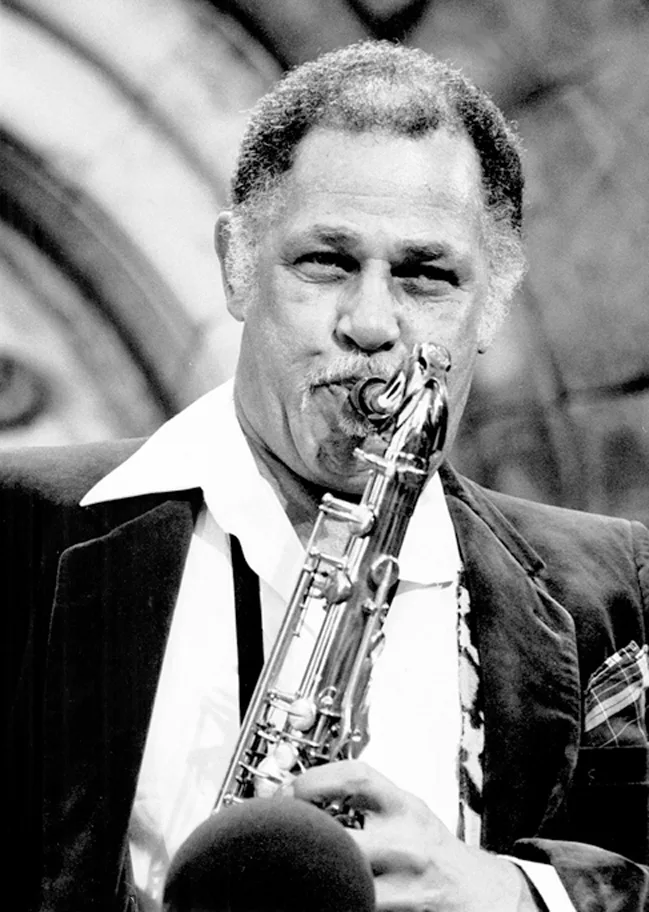
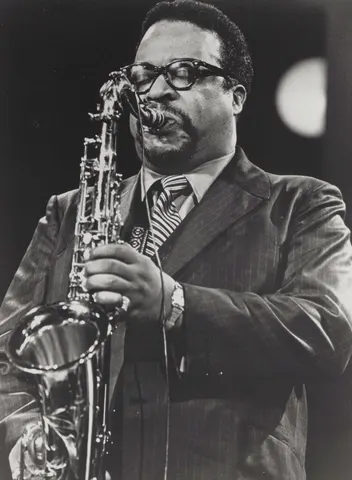
Dexter Gordon playing tenor saxophone at the Mountain Winery Jazz Festival, Saratoga, California, October 4, 1981 CC BY-SA 4.0 (photographer Brian McMillen, own work) — Wikimedia Commons, https://commons.wikimedia.org/wiki/File:Dexter_Gordon_at_Mountain_Winery_Jazz_Festival,_Saratoga_CA_1981.jpg

Dexter Keith Gordon was born on February 27, 1923, in Los Angeles. His father, Dr. Frank Gordon, was one of the first African American physicians practicing in the city, a Howard University Medical School graduate who arrived in 1918 and counted Duke Ellington and Lionel Hampton among his patients. His mother, Gwendolyn Baker, was the daughter of Captain Edward Lee Baker Jr., one of five African American Medal of Honor recipients of the Spanish American War. Gordon took up the clarinet at thirteen, moved to alto saxophone at fifteen and settled on tenor at seventeen, studying with the multi-instrumentalist Lloyd Reese while at Thomas Jefferson High School and playing in school bands alongside Chico Hamilton and Buddy Collette. He stood six feet six inches, which earned him the nickname "Long Tall Dexter" before he had made a record under his own name.
He joined Lionel Hampton's band in December 1940 and stayed roughly three years, sitting in a saxophone section with Illinois Jacquet and Marshal Royal that left him almost no solo space. He was drafted into the Army in 1942 and assigned to the Signal Corps. In 1943 he stretched out on a small-label session under Nat King Cole with trumpeter Harry "Sweets" Edison, and during 1944 he passed through the Fletcher Henderson and Louis Armstrong big bands before landing in Billy Eckstine's orchestra, where he traded choruses with Gene Ammons on "Blowin' the Blues Away." The 1942 to 1944 recording ban kept most of that work off commercial discs; what survives of it survives on V-Discs cut for overseas troops. By late 1944 Gordon was living in New York and playing the bebop jam sessions, recording with Dizzy Gillespie on "Blue 'n' Boogie" and "Groovin' High" in early 1945 and cutting his first leader dates for Savoy later that year.
Back in Los Angeles from the summer of 1946, he became a fixture of the Central Avenue scene and led sessions for Ross Russell's Dial label in 1947. The tenor duels he fought there with Wardell Gray, documented between 1947 and 1952 on "The Chase," "The Hunt," "Move" and "The Steeplechase," were a popular concert draw, and "The Hunt" picked up a second life when Jack Kerouac named it in On the Road. Younger Los Angeles players who shared bandstands with him in these years included Hampton Hawes, Joanne Brackeen, Walter Norris and Don Friedman. Then heroin took the decade away from him. He was incarcerated at Chino from 1953 to 1955, made Daddy Plays the Horn and Dexter Blows Hot and Cool on his release with Leroy Vinnegar on bass and Carl Perkins at the piano on the latter, and was in and out of custody until a final release from Folsom in 1959. He worked his way back through the Los Angeles stage production of Jack Gelber's play The Connection in 1960, taking over the saxophone chair from Jackie McLean and contributing two tunes of his own, "Ernie's Tune" and "I Want More," to the score.
Gordon signed with Blue Note in 1961 and produced, in four years, the run of records his reputation still rests on. Doin' Allright and Dexter Calling... came from three days of sessions in May 1961 with Freddie Hubbard, Horace Parlan, Kenny Drew, Paul Chambers, George Tucker, Al Harewood and Philly Joe Jones. Go! and A Swingin' Affair followed in August 1962 with the label's house rhythm section of Sonny Clark, Butch Warren and Billy Higgins; Gordon named Go! his own favorite, and in the class announced in March 2019 the Library of Congress added it to the National Recording Registry. Our Man in Paris (1963) put him in a Paris studio with Bud Powell, Kenny Clarke and the French bassist Pierre Michelot. One Flight Up (1964) added Donald Byrd and the young Danish bassist Niels-Henning Ørsted Pedersen. Gettin' Around (1965) and the shelved Clubhouse, unreleased until 1979, brought in Bobby Hutcherson and Barry Harris.
He left the United States soon after recording A Swingin' Affair and stayed away for fourteen years, living mainly in Copenhagen and Paris. Europe suited him: he said plainly that he met less racism there and found jazz musicians better respected. The Jazzhus Montmartre in Copenhagen became his home room, and SteepleChase would eventually issue dozens of tapes from those nights, including the 1966 date with the South African drummer Makaya Ntshoko released as Stella by Starlight. His standing partnership with pianist Kenny Drew ran through most of the period. He moved to Prestige from 1965 to 1973, recording The Tower of Power! and More Power! with James Moody, Barry Harris and Buster Williams; The Panther! with Tommy Flanagan, Larry Ridley and Alan Dawson; The Jumpin' Blues with Wynton Kelly, Sam Jones and Roy Brooks; and a Chicago reunion with Gene Ammons issued as The Chase! He signed an exclusive contract with the Danish label SteepleChase in 1975, which produced The Apartment, Stable Mable, the three Swiss Nights volumes and Biting the Apple, the last of them cut in New York with Barry Harris, Sam Jones and Al Foster.
Gordon came home for good in 1976. A run at the Village Vanguard that autumn with Woody Shaw, Ronnie Mathews, Stafford James and Louis Hayes was recorded and released by Columbia as Homecoming, and the reception was extraordinary. "There was so much love and elation," he said of it. "After the last set they'd turn on the lights and nobody would move." Columbia followed with the eleven-piece Sophisticated Giant in 1977, arranged by Slide Hampton with Frank Wess, Bobby Hutcherson, Victor Lewis and Woody Shaw, and with Manhattan Symphonie and Great Encounters, while Blue Note issued three volumes taped at the Keystone Korner in San Francisco with George Cables, Rufus Reid and Eddie Gladden. He was DownBeat's Musician of the Year in 1978 and 1980 and entered the magazine's Hall of Fame in 1980. In 1986 the National Endowment for the Arts named him an NEA Jazz Master and the French Ministry of Culture made him an Officier des Arts et Lettres.
His last major work was on screen. In 1986 he played Dale Turner, an expatriate saxophonist in 1950s Paris drawn loosely from Lester Young and Bud Powell, in Bertrand Tavernier's Round Midnight, and became the first jazz musician nominated for the Academy Award for Best Actor. The companion album The Other Side of Round Midnight, with Herbie Hancock, Freddie Hubbard, Ron Carter, Cedar Walton and Tony Williams, won him a Grammy Award and was the last record issued under his name. He took a non-speaking part in Awakenings, released after his death, and appeared as a sideman on Tony Bennett's 1987 album Berlin. A lifelong smoker weakened through the 1980s by emphysema, Gordon passed away in Philadelphia on April 25, 1990, of kidney failure and cancer of the larynx, at sixty-seven. His widow Maxine Gordon completed the biography Sophisticated Giant: The Life and Legacy of Dexter Gordon for the University of California Press in 2018.
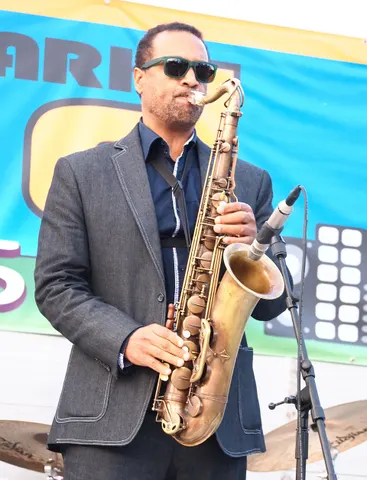
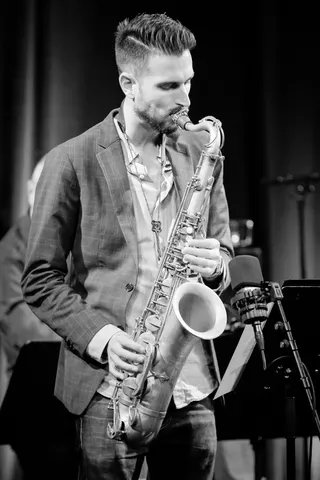
Gordon played big. His tone was wide and unhurried, he sat conspicuously behind the beat, and he built solos out of long horizontal lines rather than the vertical scramble much of bebop favored, which is what let a bop player of his generation keep sounding contemporary into the 1970s. Lester Young was the root influence, with Herschel Evans and Illinois Jacquet audible underneath; his habit of dropping quotations into a solo, anything from "Happy Birthday" to a Wagner melody, was frequent enough to count as a signature rather than a joke. He was in turn one of the first tenor players John Coltrane and Sonny Rollins took from, and the influence then ran back the other way, audibly so in the harder, more modal playing of his Blue Note records. Onstage he was warm and funny and made a point of reciting a ballad's lyric into the microphone before playing it. His reach into later generations of tenor players is direct and documented: Craig Handy has described hearing Gordon play "Body and Soul" on the radio at eleven as the thing that decided him on the saxophone, Chad Lefkowitz-Brown names Go! as the record that turned him toward jazz, and Mark Turner counts him in the small group of tenor players he listened deepest to.
- Go! (1962, Blue Note) - The quartet date with Sonny Clark, Butch Warren and Billy Higgins that Gordon named as his own favorite, and the album the Library of Congress selected for the National Recording Registry. Spotify - Go! Listen
- Our Man in Paris (1963, Blue Note) - Recorded in Paris with Bud Powell, Kenny Clarke and Pierre Michelot, a bebop repertory session made by the people who invented the repertory. Spotify - Our Man In Paris Listen
- Doin' Allright (1961, Blue Note) - His first Blue Note leader date and the opening of the New York comeback, with Freddie Hubbard, Horace Parlan, George Tucker and Al Harewood. Spotify - Doin' Allright Listen
- One Flight Up (1964, Blue Note) - Cut in Paris with Donald Byrd, Kenny Drew, Art Taylor and Niels-Henning Ørsted Pedersen, and built around Gordon's extended solo on "Tanya." Spotify - One Flight Up Listen
- Homecoming: Live at the Village Vanguard (1977, Columbia) - The recording of his 1976 return to New York, with Woody Shaw, Ronnie Mathews, Stafford James and Louis Hayes. Spotify - Homecoming Listen
- Sophisticated Giant (1977, Columbia) - An eleven-piece band arranged by Slide Hampton, with Woody Shaw, Frank Wess, Benny Bailey, Bobby Hutcherson, George Cables and Victor Lewis. Spotify - Sophisticated Giant Listen
- The Apartment (1975, SteepleChase) - The first album of the SteepleChase contract, a Copenhagen quartet date with Kenny Drew, Niels-Henning Ørsted Pedersen and Albert "Tootie" Heath. Spotify - The Apartment Listen
- The Other Side of Round Midnight (1986, Blue Note) - The companion album to the film, produced by Herbie Hancock, a Grammy winner and the last record issued under Gordon's name. Spotify - Other Side Of Round Midnight Listen
Dexter Gordon: Full Discography
Identity confirmed via the live Discogs API: artist ID 145263 (realname Dexter Keith Gordon, born February 27, 1923 in Los Angeles, matching Wikipedia and AllMusic). That single artist entry carries 1,822 releases, so this table does not attempt to itemize the full list. It covers the leader and co-leader albums that define each phase of a career running from the 1945 Savoy sessions to the 1986 Round Midnight soundtrack, plus the sideman credits with the most bearing on his story. Every row below was verified against an individual Discogs release rather than the coarser artist-level listing, and recording dates come from the original pressings' own label and sleeve notes wherever those carry one.
Not covered here: the very large secondary catalog of Copenhagen and Montmartre tapes that SteepleChase, Black Lion and Storyville have issued and reissued since the 1970s (well over forty albums drawn from club dates between 1962 and 1975), the 78rpm singles of the Savoy and Dial years, and the compilations that repackage them.
As Leader / Co-Leader
| Album Title | Recording Date(s) | Release Date | Label | Catalog Number | Format(s) | Personnel | Role | Reissue History | Spotify | Buy | Notes |
|---|---|---|---|---|---|---|---|---|---|---|---|
| The Chase and The Steeplechase | February 2, 1952 | 1952 | Decca | DL 7025 | Vinyl, 10", Album, Mono | Dexter Gordon (tenor saxophone), Wardell Gray (tenor saxophone), Conte Candoli (trumpet), Bobby Tucker (piano), Don Bagley (bass), Chico Hamilton (drums) | Co-leader (with Wardell Gray) | Reissued on Brunswick and on numerous later compilations | — | — | Recorded live at the Civic Auditorium, Pasadena; the studio version of "The Chase" dates from 1947 on Dial |
| Daddy Plays the Horn | September 1955 | 1956 | Bethlehem Records | BCP-36 | Vinyl, LP, Album, Mono | Dexter Gordon (tenor saxophone), Kenny Drew (piano), Leroy Vinnegar (bass), Lawrence Marable (drums) | Leader | Reissued on CD by Bethlehem and Fresh Sound | Spotify - Daddy Plays the Horn | — | Recorded in Hollywood, his first leader album after release from Chino |
| Dexter Blows Hot and Cool | 1955 | 1955 | Dootone Records | DL-207 | Vinyl, LP, Album | Dexter Gordon (tenor saxophone), Jimmy Robinson (trumpet), Carl Perkins (piano), Leroy Vinnegar (bass), Chuck Thompson (drums) | Leader | Reissued on CD by Boplicity and Fresh Sound | Spotify - Dexter Blows Hot & Cool | — | First pressing on red vinyl; the Discogs entry carries no session date, so only the year is asserted |
| The Resurgence of Dexter Gordon | October 13, 1960 | 1961 | Jazzland | JLP 929S | Vinyl, LP, Album, Stereo | Dexter Gordon (tenor saxophone), Martin Banks (trumpet), Richard Boone (trombone), Dolo Coker (piano), Charles Green (bass), Lawrence Marable (drums) | Leader | Reissued on CD by Original Jazz Classics | Spotify - The Resurgence of Dexter Gordon | — | Recorded in Los Angeles and produced by Cannonball Adderley |
| Doin' Allright | May 6, 1961 | October 1961 | Blue Note | BLP 4077 | Vinyl, LP, Album, Mono | Dexter Gordon (tenor saxophone), Freddie Hubbard (trumpet), Horace Parlan (piano), George Tucker (bass), Al Harewood (drums) | Leader | Reissued on CD in the Rudy Van Gelder Edition series; 2019 Blue Note Tone Poet vinyl | Spotify - Doin' Allright | — | First Blue Note leader date; produced by Alfred Lion, recorded by Rudy Van Gelder |
| Dexter Calling... | May 9, 1961 | December 1961 | Blue Note | BLP 4083 | Vinyl, LP, Album, Mono | Dexter Gordon (tenor saxophone), Kenny Drew (piano), Paul Chambers (bass), Philly Joe Jones (drums) | Leader | Reissued on CD in the Rudy Van Gelder Edition series | Spotify - Dexter Calling | — | Includes "Ernie's Tune" and "I Want More," the two pieces Gordon wrote for the Los Angeles staging of The Connection |
| Go! | August 27, 1962 | November 1962 | Blue Note | BLP 4112 | Vinyl, LP, Album, Mono | Dexter Gordon (tenor saxophone), Sonny Clark (piano), Butch Warren (bass), Billy Higgins (drums) | Leader | Reissued on CD in the Rudy Van Gelder Edition series; Blue Note Classic and Tone Poet vinyl reissues | Spotify - Go! | — | Gordon's own favorite among his records; added to the Library of Congress National Recording Registry in the class announced March 2019 |
| A Swingin' Affair | August 29, 1962 | 1962 | Blue Note | BLP 4133 | Vinyl, LP, Album, Mono | Dexter Gordon (tenor saxophone), Sonny Clark (piano), Butch Warren (bass), Billy Higgins (drums) | Leader | Reissued on CD in the Rudy Van Gelder Edition series | Spotify - A Swingin' Affair | — | Cut two days after Go! with the same quartet; the last studio album before he left for Europe |
| Our Man in Paris | May 23, 1963 | November 1963 | Blue Note | BLP 4146 | Vinyl, LP, Album, Mono | Dexter Gordon (tenor saxophone), Bud Powell (piano), Pierre Michelot (bass), Kenny Clarke (drums) | Leader | Reissued on CD in the Rudy Van Gelder Edition series; Blue Note Classic vinyl | Spotify - Our Man In Paris | — | Recorded in Paris and produced by Francis Wolff on a European visit; liner notes by Nat Hentoff |
| One Flight Up | June 2, 1964 | August 1965 | Blue Note | BLP 4176 | Vinyl, LP, Album, Mono | Dexter Gordon (tenor saxophone), Donald Byrd (trumpet), Kenny Drew (piano), Niels-Henning Ørsted Pedersen (bass), Art Taylor (drums) | Leader | Reissued on CD in the Rudy Van Gelder Edition series; 2015 remaster | Spotify - One Flight Up | — | Recorded at the Barclay Studios in Paris; the eighteen-minute "Tanya" fills the first side |
| Gettin' Around | May 28 and 29, 1965 | 1966 | Blue Note | BLP 4204 | Vinyl, LP, Album, Mono | Dexter Gordon (tenor saxophone), Bobby Hutcherson (vibraphone), Barry Harris (piano), Bob Cranshaw (bass), Billy Higgins (drums) | Leader | Reissued on CD in the Rudy Van Gelder Edition series | Spotify - Gettin' Around | — | Recorded on a visit home from Europe; his last Blue Note studio album of the 1960s |
| Clubhouse | May 27, 1965 | 1979 | Blue Note | LT-989 | Vinyl, LP, Album | Dexter Gordon (tenor saxophone), Freddie Hubbard (trumpet), Barry Harris (piano), Bob Cranshaw (bass), Billy Higgins (drums) | Leader | Reissued on CD in the Rudy Van Gelder Edition series | Spotify - Clubhouse | — | Recorded at Van Gelder's Englewood Cliffs studio the day before Gettin' Around and shelved for fourteen years |
| A Day in Copenhagen | March 10, 1969 | 1969 | MPS Records | MPS 15 230 ST | Vinyl, LP, Album | Dexter Gordon (tenor saxophone), Slide Hampton (trombone, arranger), Dizzy Reece (trumpet), Kenny Drew (piano), Niels-Henning Ørsted Pedersen (bass), Art Taylor (drums) | Co-leader (with Slide Hampton) | Also issued by Prestige in the United States | Spotify - A Day in Copenhagen | — | Recorded at Metronome Studio, Copenhagen, and produced by Joachim Ernst Berendt |
| The Tower of Power! | April 2 and 4, 1969 | 1969 | Prestige | PR 7623 | Vinyl, LP, Album | Dexter Gordon (tenor saxophone), Barry Harris (piano), Buster Williams (bass), Albert "Tootie" Heath (drums) | Leader | Reissued on CD paired with More Power! | Spotify - The Tower Of Power | — | James Moody guests on the companion album More Power!, drawn from the same two sessions |
| More Power! | April 2 and 4, 1969 | 1970 | Prestige | PRST 7680 | Vinyl, LP, Album | Dexter Gordon (tenor saxophone), James Moody (tenor saxophone, flute), Barry Harris (piano), Buster Williams (bass), Albert "Tootie" Heath (drums) | Leader | Reissued on CD paired with The Tower of Power! | Spotify - More Power! | — | The second album from the 1969 New York sessions; the Spotify edition carries an incorrect year in its metadata |
| The Panther! | July 7, 1970 | 1970 | Prestige | PR 7829 | Vinyl, LP, Album | Dexter Gordon (tenor saxophone), Tommy Flanagan (piano), Larry Ridley (bass), Alan Dawson (drums) | Leader | Reissued on CD by Original Jazz Classics | Spotify - The Panther | — | Liner notes by Ira Gitler, produced by Don Schlitten |
| The Jumpin' Blues | August 27, 1970 | 1970 | Prestige | PR 10020 | Vinyl, LP, Album, Stereo | Dexter Gordon (tenor saxophone), Wynton Kelly (piano), Sam Jones (bass), Roy Brooks (drums) | Leader | Reissued on CD by Original Jazz Classics | Spotify - The Jumpin' Blues | — | Recorded in New York; one of Wynton Kelly's last recording dates |
| The Chase! | July 26, 1970 | 1971 | Prestige | PRST 10010 | Vinyl, LP, Album | Dexter Gordon and Gene Ammons (tenor saxophones), Jodie Christian and John Young (piano), Rufus Reid and Cleveland Eaton (bass), Wilbur Campbell and Steve McCall (drums), Vi Redd (vocals) | Co-leader (with Gene Ammons) | Reissued on CD by Original Jazz Classics | Spotify - The Chase! | — | Recorded live at the North Park Hotel, Chicago; two rhythm sections alternate across the four pieces, and Gordon plays on three of them |
| Generation | July 22, 1972 | 1973 | Prestige | P-10069 | Vinyl, LP, Album | Dexter Gordon (tenor saxophone), Freddie Hubbard (trumpet, flugelhorn), Cedar Walton (piano), Buster Williams (bass), Billy Higgins (drums) | Leader | Reissued on CD by Original Jazz Classics | Spotify - Generation | — | Recorded at Van Gelder Studios during a visit home from Europe |
| Tangerine | June 22 and 28, 1972 | 1975 | Prestige | P-10091 | Vinyl, LP, Album | Dexter Gordon (tenor saxophone), Thad Jones (trumpet, flugelhorn), Hank Jones and Cedar Walton (piano), Stanley Clarke and Buster Williams (bass), Louis Hayes and Billy Higgins (drums) | Leader | Reissued on CD by Original Jazz Classics | Spotify - Tangerine | — | Held back three years; the Walton, Williams and Higgins trio appears only on the June 22 title track |
| The Apartment | May 24 and September 8, 1974 | 1975 | SteepleChase | SCS-1025 | Vinyl, LP, Album, Stereo | Dexter Gordon (tenor saxophone), Kenny Drew (piano), Niels-Henning Ørsted Pedersen (bass), Albert "Tootie" Heath (drums) | Leader | Reissued on CD by SteepleChase | Spotify - The Apartment | — | Produced by Nils Winther; the opening of the SteepleChase relationship, formalised as an exclusive contract in 1975 |
| Stable Mable | March 10, 1975 | 1975 | SteepleChase | SCS-1040 | Vinyl, LP, Stereo | Dexter Gordon (tenor and soprano saxophone), Horace Parlan (piano), Niels-Henning Ørsted Pedersen (bass), Tony Inzalaco (drums) | Leader | Reissued on CD by SteepleChase | Spotify - Stable Mable | — | Recorded at Rosenberg Studio, Copenhagen; one of the few dates on which Gordon plays soprano |
| Swiss Nights Vol. 1 | August 23, 1975 | 1976 | SteepleChase | SCS-1050 | Vinyl, LP | Dexter Gordon (tenor saxophone), Kenny Drew (piano), Niels-Henning Ørsted Pedersen (bass), Alex Riel (drums) | Leader | Reissued on CD by SteepleChase; volumes 2 and 3 followed in 1978 and 1979 | Spotify - Swiss Nights, Vol. 1 | — | Recorded live at the Zurich Jazz Festival, the first of three volumes from the same night |
| Biting the Apple | November 9, 1976 | 1977 | SteepleChase | SCS-1080 | Vinyl, LP, Album | Dexter Gordon (tenor saxophone), Barry Harris (piano), Sam Jones (bass), Al Foster (drums) | Leader | Also issued in the United States by Inner City; reissued on CD by SteepleChase | Spotify - Biting The Apple | — | Recorded in New York during the homecoming trip; awarded the Grand Prix de Jazz at Montreux in 1977 |
| Homecoming: Live at the Village Vanguard | December 11 and 12, 1976 | 1977 | Columbia | PG 34650 | Vinyl, 2xLP, Album, Stereo | Dexter Gordon (tenor saxophone), Woody Shaw (trumpet, flugelhorn), Ronnie Mathews (piano), Stafford James (bass), Louis Hayes (drums) | Leader | Reissued on CD by Columbia/Legacy | Spotify - Homecoming | — | The record of his return to New York after fourteen years abroad; the backing band is billed as the Louis Hayes and Woody Shaw Quintet |
| Sophisticated Giant | June 21 and 22, 1977 | November 1977 | Columbia | JC 34989 | Vinyl, LP, Album | Dexter Gordon (tenor and soprano saxophone), Woody Shaw and Benny Bailey (trumpet, flugelhorn), Slide Hampton and Wayne Andre (trombone), Frank Wess (alto saxophone, flute), Howard Johnson (tuba, baritone saxophone), Bobby Hutcherson (vibraphone), George Cables (piano), Rufus Reid (bass), Victor Lewis (drums) | Leader | Reissued on CD by Columbia/Legacy | Spotify - Sophisticated Giant | — | Eleven-piece band arranged by Slide Hampton; recorded at Sound Ideas, New York |
| Manhattan Symphonie | 1978 | 1978 | Columbia | JC 35608 | Vinyl, LP, Album, Stereo | Dexter Gordon (tenor saxophone), George Cables (piano), Rufus Reid (bass), Eddie Gladden (drums) | Leader | Reissued on CD by Columbia/Legacy | Spotify - Manhattan Symphonie | — | Recorded at CBS Recording Studios, New York; the pressing carries no session date, so only the year is asserted |
| Great Encounters | September 23, 1978 and 1979 | December 1979 | Columbia | JC 35978 | Vinyl, LP, Album, Stereo | Dexter Gordon (tenor saxophone), Johnny Griffin (tenor saxophone, on the live side), Woody Shaw (trumpet), Curtis Fuller (trombone), Eddie Jefferson (vocals), George Cables (piano), Rufus Reid (bass), Eddie Gladden (drums) | Leader | Reissued on CD by Columbia/Legacy | — | — | Half live at Carnegie Hall, half studio; among Eddie Jefferson's last sessions before his death in May 1979 |
| Gotham City | 1980 | 1981 | Columbia | JC 36853 | Vinyl, LP, Album, Stereo | Dexter Gordon (tenor saxophone), Cedar Walton (piano), Percy Heath (bass), Art Blakey (drums) | Leader | Reissued on CD by Columbia/Legacy | Spotify - Gotham City | — | Cover photograph by Richard Avedon. George Benson is widely listed as guesting on guitar, but the original pressing's credit block names only the quartet, so his appearance is not asserted here |
| American Classic | 1982 | 1982 | Elektra Musician | MUS K 52 392 | Vinyl, LP, Album | Dexter Gordon (tenor saxophone), Grover Washington Jr. (soprano saxophone), Kirk Lightsey (piano), Shirley Scott (organ), David Eubanks (bass), Eddie Gladden (drums) | Leader | Reissued on CD | Spotify - American Classic | — | Produced by Michael Cuscuna; the last studio album under his own name before the Round Midnight soundtrack |
| The Other Side of Round Midnight | 1985 | 1986 | Blue Note | BT 85135 | Vinyl, LP, Album, Stereo | Dexter Gordon (tenor saxophone), Freddie Hubbard and Palle Mikkelborg (trumpet), Herbie Hancock and Cedar Walton (piano), Ron Carter, Pierre Michelot and Mads Vinding (bass), Tony Williams and Billy Higgins (drums) | Leader | Reissued on CD by Blue Note | Spotify - Other Side Of Round Midnight | — | Recorded at Studio Eclair and Studio Davout in Paris alongside the film; produced by Herbie Hancock and Michael Cuscuna, and a Grammy winner. The last album released in Gordon's lifetime |
As Sideman (selected major credits)
| Year | Project (Leader) | Title | Label | Catalog | Role | Notes |
|---|---|---|---|---|---|---|
| 1940-1943 | Lionel Hampton | V-Disc and AFRS broadcasts, later collected on Steppin' Out, Vol. 1 and similar sets | Decca | DL 79244 | Tenor saxophone | His first significant professional engagement; the saxophone section also held Illinois Jacquet and Marshal Royal, and Gordon took almost no solos |
| 1943 | Nat King Cole | Sessions later issued as Nat King Cole Meets the Master Saxes | Phoenix Jazz | LP 5 | Tenor saxophone | Recorded for a small label unaffected by the 1942 to 1944 recording ban, with Harry "Sweets" Edison on trumpet |
| 1944 | Louis Armstrong | AFRS One Night Stand and Spotlight Bands broadcasts | AFRS | 240, 253, 267 | Tenor saxophone | Gordon's big-band year; the commercial recording ban means the Armstrong and Fletcher Henderson work survives only on V-Discs |
| 1944-1945 | Billy Eckstine | The Legendary Big Band and the Chronological Classics reissues | Savoy | 17125 | Tenor saxophone | Traded choruses with Gene Ammons on "Blowin' the Blues Away" |
| 1945 | Dizzy Gillespie | "Groovin' High" / "Blue 'n' Boogie" | Guild Records | 1001 | Tenor saxophone | 78rpm single; two of the founding documents of recorded bebop |
| 1956 | Stan Levey | This Time the Drum's on Me | Bethlehem Records | BCP-37 | Tenor saxophone | With Conte Candoli, Frank Rosolino, Lou Levy and Leroy Vinnegar, made between his 1955 and 1959 incarcerations |
| 1962 | Herbie Hancock | Takin' Off | Blue Note | BLP 4109 | Tenor saxophone | Hancock's debut as a leader, with Freddie Hubbard, Butch Warren and Billy Higgins; the album that introduced "Watermelon Man" |
| 1962 | Pony Poindexter | Pony's Express | Epic | LA 16035 | Tenor saxophone | A large saxophone-section date whose reed players also included Eric Dolphy, Phil Woods and Pepper Adams |
| 1966 | Booker Ervin | Setting the Pace | Prestige | PR 7455 | Tenor saxophone, composer | A two-tenor date co-billed to Ervin and Gordon, with Jaki Byard, Reggie Workman and Alan Dawson; Gordon is credited as a writer as well as a player |
| 1974 | Jackie McLean | The Meeting Vol. 1 | SteepleChase | SCS-1006 | Tenor saxophone | Recorded in Copenhagen with Kenny Drew, Niels-Henning Ørsted Pedersen and Alex Riel; McLean had preceded Gordon in The Connection fourteen years earlier |
| 1974 | Jackie McLean | The Source Vol. 2 | SteepleChase | SCS-1020 | Tenor saxophone | The companion volume from the same Copenhagen meeting, with the same quartet behind the two horns |
| 1978 | "Philly" Joe Jones | Philly Mignon | Galaxy | GXY-5112 | Tenor saxophone | Guest on two of the album's pieces, alongside Nat Adderley, George Cables and Ron Carter |
| 1986 | Herbie Hancock | Round Midnight (Original Motion Picture Soundtrack) | Columbia | SC 40464 | Tenor saxophone, actor | The film score, distinct from the Blue Note album The Other Side of Round Midnight drawn from the same sessions |
| 1987 | Tony Bennett | Bennett/Berlin | Columbia | FC 44029 | Tenor saxophone | Gordon plays on "White Christmas" alone; the release-level credit block omits him entirely and the credit is carried only at track level |
- Wardell Gray - fellow Los Angeles tenor saxophonist and Gordon's opposite number in the recorded tenor duels of 1947 to 1952, "The Chase," "The Hunt," "Move" and "The Steeplechase."
- Kenny Drew - pianist on Dexter Calling..., One Flight Up, The Apartment and the Swiss Nights volumes, and Gordon's standing musical partner across most of the Copenhagen years.
- Niels-Henning Ørsted Pedersen - Danish bassist from One Flight Up (1964) onward and through the SteepleChase catalog of the mid-1970s.
- Lionel Hampton - bandleader who hired Gordon in December 1940 for his first significant professional job, roughly three years in a saxophone section with Illinois Jacquet and Marshal Royal.
- Billy Eckstine - bandleader whose 1944 to 1945 orchestra put Gordon in the center of the emerging bebop movement, trading choruses with Gene Ammons.
- Bud Powell & Kenny Clarke - the expatriate rhythm section, with Pierre Michelot, on Our Man in Paris (1963).
- Freddie Hubbard - trumpeter on Doin' Allright (1961), Clubhouse (recorded 1965), Generation (1972) and the Round Midnight soundtrack.
- Slide Hampton - trombonist and arranger on A Day in Copenhagen (1969) and the writer of the eleven-piece charts for Sophisticated Giant (1977).
- Woody Shaw, George Cables, Rufus Reid & Eddie Gladden - the working American bands of the homecoming years, on Homecoming, Sophisticated Giant, Manhattan Symphonie, Great Encounters and the Keystone Korner tapes.
- Barry Harris - pianist on Gettin' Around and Clubhouse (both recorded 1965), The Tower of Power! (1969) and Biting the Apple (1976).
- Herbie Hancock - producer, composer and pianist for Round Midnight, and the leader on whose 1962 debut Takin' Off Gordon played tenor.
- Victor Lewis - drummer on Sophisticated Giant (1977).
- Makaya Ntshoko - South African drummer behind Gordon at the Jazzhus Montmartre, including the January 1966 night issued as Stella by Starlight.
- Leroy Vinnegar & Carl Perkins - the Los Angeles rhythm players on the 1955 comeback albums Daddy Plays the Horn and Dexter Blows Hot and Cool.

- Wikipedia: Dexter Gordon
- AllMusic: Dexter Gordon biography
- Discogs: Dexter Gordon (artist 145263)
- National Endowment for the Arts: Dexter Gordon, NEA Jazz Master 1986
- The Dexter Gordon Society: Dexter Keith Gordon
- The New York Times: Dexter Gordon Dies at 67; A Charismatic Jazz Figure (April 26, 1990)
- Los Angeles Times: Saxophonist, Oscar Nominee Dexter Gordon Dies at 67 (April 26, 1990)
- Maxine Gordon, Sophisticated Giant: The Life and Legacy of Dexter Gordon (University of California Press, 2018)
- Stan Britt, Dexter Gordon: A Musical Biography (Da Capo Press, 1989)