 JAZZPROFILES lives in the music 1,572 Jazz Artists fully Profiled!
 Makaya Ntshoko
Last updated September 7, 2026
Listen on Spotify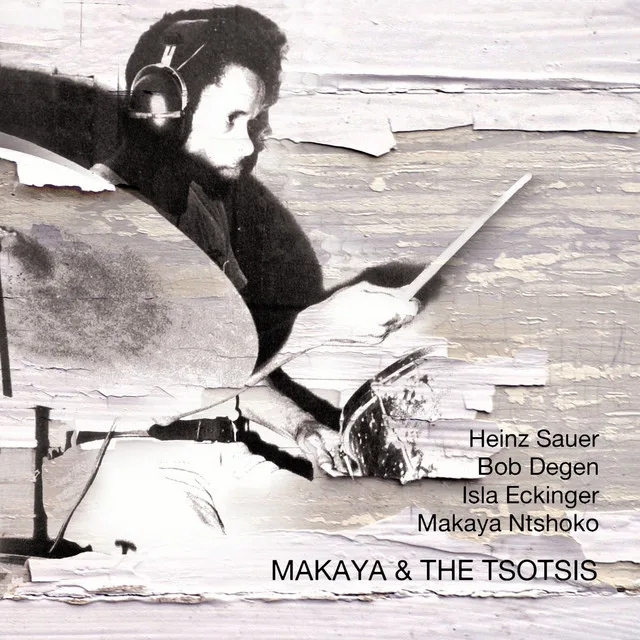
Front cover of *Makaya & The Tsotsis* (Enja 24bit Master Edition CD, ENJ 2129 2, 2009), Makaya Ntshoko's first album as a leader, recorded at SINUS-Studio in Berne on August 6, 1974. Ntshoko is the drummer pictured at the kit in headphones. The image is a cropped and heavily treated version of Andreas Raggenbass's studio photograph from the original 1974 Enja LP sleeve (Enja 2042), which credits him by name on the front cover along with Heinz Sauer, Bob Degen and Isla Eckinger. Album cover art (not a CC-licensed artist photo), used as the only available image showing the artist. No free or public-domain photograph of Makaya Ntshoko exists on Wikimedia Commons. — Cover art for the 2009 Enja reissue of Makaya & The Tsotsis (Discogs release page: https://www.discogs.com/release/4216062), retrieved at 640 x 640 from the cover-art image served with the album's digital edition (Spotify album 2zC707JuOVqFDPSouO7uT3). Saved as portrait.jpg, 640 x 640 px, 144 KB, well under the 19.9 MB cap.
Makaya Ntshoko was born on October 29, 1939 in Cape Town and grew up in Langa, the township the city built for African residents in the 1920s. His father was a church organist and a strict one, his brother played saxophone, and Ntshoko himself neither drank nor smoked, a discipline his contemporaries remembered as much as his playing. He learned drums from Columbus Phakamile "Phaks" Joya, borrowing Joya's kit until bassist Lami Zokufa talked his father into buying him one of his own, and picked up the rest from trumpeter Banzi Bangani, alto saxophonist Morris Goldberg and drummer Maurice Gawronsky. He worked around Cape Town with altoist "Dan Boy" Danayi and bassist Martin "Lilly" Mgijima and sat in with tenor player Cups Nkanuka's Peninsula Stars. He was also a promising boxer, and the Village Voice's 2017 history of the Jazz Epistles describes him as a former bantamweight prizefighter who chose the drums instead.
In 1959 he went up to Johannesburg with pianist Dollar Brand (who took the name Abdullah Ibrahim in the mid-1970s; the two names belong to one man, and his early credits appear under both) and bassist Johnny Gertze. There they joined Kippie Moeketsi on alto, Jonas Gwangwa on trombone and Hugh Masekela on trumpet to form the Jazz Epistles, a sextet that played no standards at all. Their single album, Jazz Epistle - Verse 1 (Continental CONT 14), was cut at Gallo's Johannesburg studio in a two-day session in January 1960 (some discographies date the session to Sophiatown in September 1959) and pressed in a run of five hundred copies, and it is generally described as the first LP recorded by a Black South African jazz group. Ntshoko also played the February 4, 1960 trio date issued later as Dollar Brand Plays Sphere Jazz (Continental ZB 8047, released 1962), and worked in the pit band of Todd Matshikiza's musical King Kong. After the Sharpeville massacre of March 21, 1960 and the crackdown on public gatherings that followed, the Epistles broke up.
Ntshoko stayed on in South Africa for another two years, co-founding a band called the Jazz Giants (accounts of its lineup differ: the South African critic Gwen Ansell places pianist Tete Mbambisa at its centre, while Wikipedia names Moeketsi, Dudu Pukwana, Gideon Nxumalo and Martin Mgijima) and playing on Nxumalo's Jazz Fantasia, recorded live at the Great Hall of the University of the Witwatersrand in September 1962 with Moeketsi, Pukwana and Mgijima. That concert recording is his last documented South African session. Later in 1962 he left the country, one of the wave of Black South African musicians for whom apartheid had made a working life at home impossible, and he did not live in South Africa again.
He landed in Switzerland, where the Dollar Brand Trio with Gertze took a residency at the Africana club in Zurich from 1963 to 1965 and also played the Atlantis in Basel. Duke Ellington heard the trio in Zurich in February 1963 and took the band to Paris, where on February 23, 1963 he produced two sessions: the trio date released by Reprise as Duke Ellington Presents the Dollar Brand Trio, which includes Thelonious Monk's "Brilliant Corners" (misattributed to Brand on the original sleeve), and a set of ballads with the singer Sathima Bea Benjamin that Ellington shelved and that stayed unreleased until Enja issued it in 1997 as A Morning in Paris. On January 30, 1965 the trio recorded a concert at the Montmartre Jazzhus in Copenhagen, selections from which appeared as Anatomy of a South African Village on Fontana and, from a different part of the same night, as The Dream.
When Brand moved to New York, Ntshoko built a European freelance career out of Copenhagen and then Basel, where he settled and stayed for the rest of his life. In Copenhagen he played the Montmartre behind Dexter Gordon with Kenny Drew and Niels-Henning Ørsted Pedersen (January 6, 1966, issued as Stella by Starlight; September 8, 1969, on Those Were the Days) and behind Brew Moore on February 17, 1966, and he turns up in Storyville's Danish archive series for both Stuff Smith and Ben Webster. He was a regular guest with the Jazz Live Trio in the Zurich radio studio between 1966 and 1969, played the Domicile in Munich on January 11, 1968 in a Benny Bailey sextet with Mal Waldron, Nathan Davis and Jimmy Woode (Soul Eyes), and appeared at the 1969 Ljubljana jazz festival with Dusko Gojkovic's quintet. In January 1972 he recorded Hugh Masekela's double album Home Is Where the Music Is at Island Studios in London with Dudu Pukwana, Larry Willis and Eddie Gomez.
His own band arrived in 1974. Makaya & The Tsotsis, with Heinz Sauer on saxophones, Bob Degen on piano and Isla Eckinger on bass, recorded a single album at SINUS-Studio in Berne on August 6, 1974 for Enja, three of whose five original tracks are credited to all four players jointly. From there he moved easily between the German mainstream-modern circuit and the Swiss free scene: he opened the first Willisau Jazz Festival on August 30, 1975 with John Tchicai and Irène Schweizer (Willi the Pig, pressed in 500 copies), returned to Willisau on October 11, 1975 for the trio date with Joe McPhee and John Snyder that became hat Hut's second release, and recorded with the Anglo-Austrian free group Nicra alongside Nick Evans, Radu Malfatti, Keith Tippett and Buschi Niebergall. For Enja he played Degen's Sequoia Song, Pepper Adams's August 13, 1975 Domicile concert with Walter Norris and George Mraz (released as both Julian and Twelfth & Pingree), Waldron's One-Upmanship with Steve Lacy and Manfred Schoof, Waldron's Moods with Lacy and Terumasa Hino, and Hannibal Marvin Peterson's In Antibes.
He also stayed inside the South African exile network. He recorded Johnny Dyani's Song for Biko on July 18, 1978 with Don Cherry and Dudu Pukwana, played Dyani's Grand Mother's Teaching in 1982, and joined Jazz gegen Apartheid, the band Dyani founded in 1986. Later Swiss work included dates with Johnny Griffin and singer Brigitte Bader in 1989, Stephan Kurmann's string project in 1991, and the Where's Africa Trio with Irène Schweizer and Omri Ziegele, whose Can Walk on Sand was recorded for Intakt in 2009 when Ntshoko was 69. He taught at the music academy in Basel, and in 2007 he came back to South Africa to play the National Jazz Festival at Grahamstown in a Swiss-South African quintet with trumpeter Feya Faku. That same year SteepleChase recorded his second and last album as a leader, Happy House, billed to Makaya Ntshoko & The New Tsotsis, with Andy Scherrer, Vera Kappeler and Kurmann. The Mzantsi Jazz Awards named him a Lifetime Achiever. He passed away in Basel in the early hours of August 27, 2024, at 84, after more than sixty years abroad.
Ntshoko was a busy, polyrhythmic drummer whose playing sat closer to conversation than accompaniment, and German writers have compared his dense cross-rhythms to Elvin Jones's. What made him valuable to so many bandleaders was range: the same drummer swings a Dexter Gordon standards set at the Montmartre, drives the marabi-inflected township themes of the Jazz Epistles and Hugh Masekela's Home Is Where the Music Is, and holds his own in free playing with John Tchicai, Irène Schweizer and Joe McPhee. On his own 1974 Enja album three of the five pieces are credited to the whole quartet rather than to any one writer, which is a fair description of how he worked generally. Mal Waldron, Pepper Adams, Johnny Dyani and Irène Schweizer all called him back repeatedly across two and three decades. Johnny Dyani, who was hard on his peers, singled out Ntshoko and Abdullah Ibrahim as the two who stayed true to themselves and to Africa.
- Jazz Epistle - Verse 1 (1960, Continental) - The first LP by a Black South African jazz group, pressed in 500 copies, with Ntshoko behind Kippie Moeketsi, Hugh Masekela, Jonas Gwangwa, Dollar Brand and Johnny Gertze on an all-original program. Spotify - Verse 1 Listen
- Makaya & The Tsotsis (1974, Enja) - His first album as a leader, cut in Berne on August 6, 1974 with Heinz Sauer, Bob Degen and Isla Eckinger, three of its five original tracks composed collectively by the quartet. Spotify - Makaya & the Tsotsis Listen
- Duke Ellington Presents the Dollar Brand Trio (1964, Reprise) - The Paris session of February 23, 1963 that Duke Ellington arranged after hearing the trio in Zurich, and the record that carried Ntshoko and Abdullah Ibrahim out of obscurity in Europe. Spotify - Duke Ellington Presents The Dollar Brand Trio
- Song for Biko (1979, SteepleChase) - Johnny Dyani's memorial quartet for Steve Biko, recorded July 18, 1978 with Don Cherry and Dudu Pukwana, and the clearest statement of the exile circle Ntshoko belonged to. Spotify - Song For Biko
- Home Is Where the Music Is (1972, Blue Thumb) - Hugh Masekela's double album, recorded at Island Studios in London in January 1972 with Dudu Pukwana, Larry Willis and Eddie Gomez, and Ntshoko's most widely heard sideman date. Spotify - Home Is Where The Music Is
- Happy House (rec. 2007, rel. 2008, SteepleChase) - His last leader album, billed to Makaya Ntshoko & The New Tsotsis with Andy Scherrer, Vera Kappeler and Stephan Kurmann, its title track and "Humpty Dumpty" both Ornette Coleman themes. Spotify - Happy House Listen
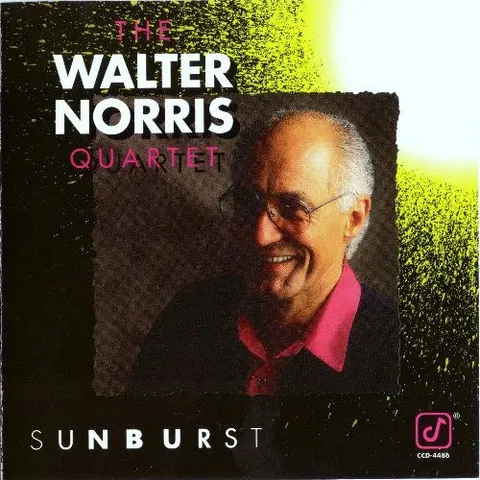
- Julian (1976, Enja) - Pepper Adams's August 13, 1975 quartet concert at the Domicile in Munich with Walter Norris and George Mraz; the same night also produced Twelfth & Pingree. Spotify - Julian
- Can Walk on Sand (2010, Intakt) - The Where's Africa Trio with Irène Schweizer and Omri Ziegele, recorded for Swiss radio in Zurich on June 30 and July 1, 2009, setting Abdullah Ibrahim's "Tintiyana" and Mal Waldron's "Soul Eyes" beside Oliver Nelson's "Butch and Butch" and "Summertime." Spotify - Can Walk on Sand
Makaya Ntshoko: Full Discography
Identity confirmed via the live Discogs API, artist ID 326367 ("Makaya Ntshoko," profile text giving birth in Cape Town on October 29, 1939 and naming the Jazz Epistles, Dollar Brand, Johnny Gertze, Kippie Moeketsi, Jonas Gwangwa and Hugh Masekela), cross-checked against Wikidata Q477025 and the English and German Wikipedia articles. Under that personal ID Discogs credits Ntshoko on exactly 76 entries: 7 in a "Main" role, 65 sideman "Appearance" credits and 4 unofficial releases (7 + 65 + 4 = 76). Because he was often billed by first name only, the ID also carries fourteen name variations, including Makaya, Ntshoko, Makhaya Ntshoko, Makaya Ntshako, Makaya Ntzhoko and Makaia Mtshoko.
Two caveats about those numbers. First, the "Main" count of 7 overstates his leader catalog: four of the seven are collective front-cover billings on other people's dates (Benny Bailey's Soul Eyes, Pepper Adams's Julian, Hannibal Marvin Peterson's Hannibal in Antibes and Brew Moore's Zonky, all of which list every player's name on the sleeve). Those are filed below as sideman work. That leaves two genuine leader albums, Makaya & The Tsotsis (1974) and Happy House (2008), plus one co-billed date, The Willisau Concert (1976). Second, the "Appearance" figure counts anthologies and reissues as separate entries, so it is well above the number of distinct sessions: the eight Ben Webster and Dexter Gordon Storyville/SteepleChase repackagings, the four various-artists Freedom and Gallo compilations and the several Dollar Brand reissues all draw on sessions already listed once here.
Group-billing entities were checked individually for leader albums filed away from the personal ID, since that is a common Discogs trap. All eight group entities linked to Ntshoko (Nicra 326366, Johnny Dyani Quartet 488731, Mal Waldron Quintet 1421173, The Jazz Epistles 1574785, Omri Ziegele Where's Africa Trio 1843591, Dollar Brand Trio 2125458, Dusko Gojkovic Quintett 2970058, John Tchicai-Irene Schweizer-Group 5170876) are bands in which he was a sideman, not vehicles for hidden leader dates. A separate search for "Tsotsis" as a release title returned only the 1974 Enja album and its reissues, so there was never a second Tsotsis LP.
As Leader / Co-Leader
| Album Title | Recording Date(s) | Release Date | Label | Catalog Number | Format(s) | Personnel | Role | Reissue History | Spotify | Buy | Notes |
|---|---|---|---|---|---|---|---|---|---|---|---|
| Makaya & The Tsotsis | Recorded August 6, 1974, SINUS-Studio, Berne, Switzerland | 1974 | Enja Records | 2042 | Vinyl, LP, Album, Stereo | Makaya Ntshoko (drums), Heinz Sauer (alto and tenor saxophone), Bob Degen (piano), Isla Eckinger (bass); produced by Horst Weber and Matthias Winckelmann, recorded by Peter MacTaggart, mastered by Djamil Mehtieff, cover photograph by Andreas Raggenbass | Leader (billed "Makaya Ntshoko / Heinz Sauer / Bob Degen / Isla Eckinger") | Enja/Bellaphon repress 1977; Japanese CD issues on Ward Records (2007) and Solid Records (2014); 2009 Enja 24bit Master Edition digipak CD (ENJ 2129 2) is the first CD issue and adds three previously unreleased tracks, "Santdec," "Heboisma" and "Makaya's Song" | Spotify - Makaya & the Tsotsis | — | Original LP holds five tracks: "Ode to Tilman" and "Neged" by Degen, "Tetralogue," "Bridges" and "Suspension" credited jointly to Degen, Eckinger, Ntshoko and Sauer. The Spotify edition is the expanded 8-track 2009 master |
| The Willisau Concert | Recorded live October 11, 1975, Hotel Mohren, Willisau, Switzerland | 1976 | Hat Hut Records | HAT-B | Vinyl, LP, Album (triple-fold toploader sleeve) | Joe McPhee (tenor and soprano saxophone), John Snyder (synthesizer, voice), Makaya Ntshoko (drums); concert organised by Niklaus Troxler, engineered by Walter Troxler | Co-leader (billed "Joe McPhee featuring John Snyder and Makaya Ntshoko") | Later hat Hut pressing under the same catalog number with a standard sleeve; CD reissue on Corbett vs. Dempsey, 2017; further issue on Catalytic Sound, 2019 | Not found on Spotify | — | The second record ever released by hat Hut. Four tracks: "Touchstone," "Voices," "Bahamian Folksong," "Harriet" |
| Happy House | Recorded 2007; exact session dates not given by Discogs or SteepleChase | Released October 19, 2007 (SteepleChase); Discogs dates the CD 2008 | SteepleChase | SCCD 31651 | CD, Album | Makaya Ntshoko (drums), Andy Scherrer (tenor saxophone), Vera Kappeler (piano), Stephan Kurmann (bass) | Leader (billed "Makaya Ntshoko & The New Tsotsis" on the sleeve and on streaming services; Discogs files it under "Makaya Ntshoko") | None found | Spotify - Happy House | — | Seven tracks; the title track and "Humpty Dumpty" are Ornette Coleman compositions. His only leader date in thirty-three years and the last record of his career |
As Sideman (selected major credits)
A representative set rather than an exhaustive list of the 65 "Appearance" credits, which include a large volume of compilations and reissues drawn from the sessions below.
| Year | Project (Leader) | Title | Label | Catalog | Role | Notes |
|---|---|---|---|---|---|---|
| 1960 | The Jazz Epistles | Jazz Epistle - Verse 1 | Continental Records | CONT 14 | Drums | With Kippie Moeketsi (alto), Hugh Masekela (trumpet), Jonas Gwangwa (trombone), Dollar Brand (piano), Johnny Gertze (bass). Pressed in 500 copies; widely described as the first LP by a Black South African jazz group. Recording date given as January 1960 at Gallo, Johannesburg by the Village Voice and Abdullah Ibrahim's own site, and as Sophiatown, September 1959 in the notes to the 1992 Kaz CD Jazz in Africa Volume One |
| 1962 | Dollar Brand Trio | Dollar Brand Plays Sphere Jazz | Continental Records | ZB 8047 | Drums | Recorded February 4, 1960 with Brand and Gertze; released two years later |
| 1962 | Gideon "Mgibe" Nxumalo | Jazz Fantasia | Renown | NLP 233 | Drums | Recorded live at the Great Hall, University of the Witwatersrand, Johannesburg, September 1962, with Kippie Moeketsi and Dudu Pukwana (altos) and Martin Mgijima (bass). His last documented South African session |
| 1964 | Dollar Brand Trio | Duke Ellington Presents the Dollar Brand Trio | Reprise Records | R 6111 / RV 6027 | Drums | Recorded in Paris, February 23, 1963, produced by Duke Ellington. Track A3, "Brilliant Corners," is a Thelonious Monk composition wrongly credited to Brand on the sleeve |
| 1997 | Sathima Bea Benjamin | A Morning in Paris | Enja Records | ENJ-9309 2 | Drums | Same February 23, 1963 Paris date; Ellington produced the session for Reprise but it was shelved and stayed unreleased for thirty-four years. With Svend Asmussen on pizzicato violin |
| 1965 | Dollar Brand Trio | Anatomy of a South African Village | Fontana | 888 314 ZY | Drums | Recorded live at the Montmartre Jazzhus, Copenhagen, January 30, 1965; produced by Alan Bates. Reissued on CD by Black Lion, 1992 |
| 1979 | Dollar Brand | The Dream | Trio Records / Freedom | PA-9736 | Drums | Different selections from the same January 30, 1965 Montmartre concert, issued fourteen years later. Not a retitle of Anatomy of a South African Village: the two albums share a night, not a tracklist |
| 2005 | Dexter Gordon | Stella by Starlight | SteepleChase | SCCD 36036 | Drums | Recorded live at the Montmartre Jazzhus, Copenhagen, January 6, 1966, with Kenny Drew, Niels-Henning Ørsted Pedersen and Pony Poindexter; Danmarks Radio tapes issued thirty-nine years later |
| 2005 | Brew Moore | Zonky | SteepleChase | SCCD 36037 | Drums | Recorded live at the Montmartre Jazzhus, Copenhagen, February 17, 1966, with Kenny Drew and Ørsted Pedersen. Sleeve billing lists all four players, which is why Discogs files it under Ntshoko's "Main" role |
| 1968 | Benny Bailey Sextett | Soul Eyes: Jazz Live at the Domicile Munich | SABA | SB 15 158 ST | Drums | Recorded live at the Domicile, Munich, January 11, 1968, with Benny Bailey (trumpet), Nathan Davis (reeds), Mal Waldron (piano), Jimmy Woode (bass), Charly Campbell (congas); liner notes by Joachim Ernst Berendt. Reissued from 1970 on MPS with collective billing crediting "Makaya Ntzhoko" |
| 1969 | Dusko Gojkovic Quintett (various artists) | Mednarodni International Jazz-Festival Ljubljana '69 | Helidon | Drums | One track, "I Remember Clifford," from the 1969 Ljubljana festival | |
| 2011 | Jazz Live Trio with guests | Jazz Live Trio with Guests | TCB Records | TCB 02272 | Drums (some tracks) | Swiss radio studio recordings, Zurich, 1966 to 1969, with guests including Stuff Smith, Phil Woods, Eddie Daniels and Leo Wright; Ntshoko is one of three drummers across the set |
| 1972 | Hugh Masekela | Home Is Where the Music Is | Blue Thumb Records | BTS 6003 | Drums | Double LP recorded at Island Studios, London, January 1972, with Dudu Pukwana (saxophone), Larry Willis (piano), Eddie Gomez (bass); remixed at Wally Heider's in Los Angeles, produced by Stewart Levine and Caiphus Semenya |
| 1980 | Hugh Masekela | The African Connection | MCA Records | ML 4471 | Drums | Selected tracks from the Home Is Where the Music Is session, repackaged for the ABC Impulse! Dedication Series |
| 1976 | John Tchicai-Irene Schweizer Group | Willi the Pig (Live at the Willisau Jazz Festival) | Willisau Live Records | WIL-1 | Drums | Recorded August 30, 1975 at the first Willisau Jazz Festival with Tchicai (reeds), Irène Schweizer (piano) and Buschi Niebergall (bass); edition of 500 copies, produced and designed by Niklaus Troxler |
| 1977 | Nicra | Listen / Hear | Ogun | OG 010 | Drums | Recorded by Österreichischer Rundfunk in Innsbruck, October 22, 1975, with Nick Evans and Radu Malfatti (trombones), Keith Tippett (piano), Buschi Niebergall (bass); all music composed collectively, liner notes by Paul Rutherford |
| 1976 | Pepper Adams | Julian | Enja Records | 2060 | Drums | Recorded live at the Domicile, Munich, August 13, 1975, with Pepper Adams (baritone saxophone), Walter Norris (piano), George Mraz (bass). Covered in full on Adams's JazzProfiles.com profile |
| 1976 | Pepper Adams | Twelfth & Pingree | Enja Records | 2074 | Drums | A different four-track selection from the same August 13, 1975 Munich concert as Julian |
| 1976 | Bob Degen | Sequoia Song | Enja Records | 2072 | Drums | Recorded February 24, 1976 with Degen (piano) and Isla Eckinger (bass); two thirds of the Tsotsis rhythm section |
| 1977 | Mal Waldron Quintet with Steve Lacy | One-Upmanship | Enja Records | enja 2092 | Drums | Recorded February 12, 1977 at Conny's Studio, Wolperath, with Waldron (piano), Steve Lacy (soprano saxophone), Manfred Schoof (trumpet), Jimmy Woode (bass), engineered by Conny Plank |
| 1978 | Hannibal Marvin Peterson | In Antibes / Hannibal in Antibes | Enja Records (Inner City in the US) | enja 3011 | Drums | Recorded live at the Antibes Jazz Festival, July 20, 1977, with Peterson (trumpet), George Adams (tenor saxophone), Diedre Murray (cello), Steve Neil (bass). Two long tracks, "Ro" and "Swing Low Sweet Chariot." The Inner City sleeve bills all five players, hence the "Main" role on Discogs |
| 1978 | Mal Waldron | Moods | Enja Records | enja 3021 | Drums | Double LP recorded at Tonstudio Bauer, Ludwigsburg. Ntshoko plays on the sextet sides recorded May 6, 1978 with Steve Lacy, Terumasa Hino, Hermann Breuer and Cameron Brown; sides C and D are Waldron solo piano from May 8 |
| 1979 | Johnny Dyani Quartet | Song for Biko | SteepleChase | SCS 1109 | Drums | Recorded July 18, 1978 with Dyani (bass, compositions), Don Cherry (cornet) and Dudu Pukwana (alto saxophone); produced by Nils Winther. Four tracks on the LP, five on the CD reissue |
| 1982 | Johnny "Mbizo" Dyani | Grand Mother's Teaching | Disques Jam | 0582/JD 030 | Drums | With Dyani (bass, vocals), Butch Morris (cornet), Doudou Gouirand (alto saxophone), Pierre Dørge (guitar) |
| 1989 | Brigitte Bader meets Johnny Griffin | Passion, No Future, But Love | B.B. Production | BBLP 00190 | Drums (shared with Alvin Queen) | Recorded in Switzerland, February 17 and 18 and September 18, 1989, with Johnny Griffin and Andy Scherrer (tenor saxophones), Dado Moroni and Władysław Sendecki (piano), Isla Eckinger (trombone) |
| 1996 | Stephan Kurmann Strings | Alive in Montreux | TCB Records | 96152 | Drums | Recorded at the Radio Studio, Zurich, May 21, 1991, with Kurmann (bass), Andy Scherrer (saxophone), Rachel Gould (vocals) and a string section |
| 2010 | Omri Ziegele Where's Africa Trio | Can Walk on Sand | Intakt Records | Intakt CD 167 | Drums | Recorded by Schweizer Radio DRS at Radiostudio Zürich, June 30 and July 1, 2009, with Irène Schweizer (piano), Omri Ziegele (alto saxophone, voice) and guest Jürg Wickihalder (alto and soprano saxophone). Liner notes by Christian Rentsch |
| 1988-2009 | Ben Webster (posthumous Storyville archive series) | Ben Webster Plays Ballads; Plays Duke Ellington; Dig Ben! (8xCD box); 100 Years: The Brute & The Beautiful | Storyville | SLP 4118 and others | Drums (some tracks) | Danish club and radio recordings from Webster's Copenhagen years. Discogs credits Ntshoko across the series but does not itemise which sessions; individual dates not confirmed here |
| 1991 | Stuff Smith with Svend Asmussen & Poul Olsen | Hot Violins | Storyville | STCD 4170 | Drums (some tracks) | Danish recordings; Ntshoko is one of three drummers credited across the CD alongside Alex Riel and Bjarne Rostvold |
| 2014 | Dexter Gordon with the Kenny Drew Trio | Those Were the Days | SSJ / Pacific Delights | XQAM-1629 | Drums (tracks 3-4) | Tracks 3 and 4 recorded September 8, 1969 at the Café Montmartre, Copenhagen, with Kenny Drew and Ørsted Pedersen; Albert Heath drums the other tracks |
Not included above: Joe McPhee's Tenor (hat Hut HAT-C, 1977). Discogs's credit list for that release names Ntshoko on drums, but Tenor is documented everywhere else, including its own Wikipedia entry and hat Hut's own description, as a solo tenor saxophone recital taped at the cellist Michael Overhage's farmhouse in Adlemsried on September 1 and 2, 1976. The Discogs credits appear to have been carried over from The Willisau Concert, which shares the label, the year and the exact personnel, so the credit is treated here as a database error rather than a session.
- Abdullah Ibrahim (Dollar Brand) - the musician who brought him from Cape Town to Johannesburg in 1959 and then to Europe in 1963; Ntshoko is the drummer on the Jazz Epistles album, on Dollar Brand Plays Sphere Jazz, on the Ellington-produced Paris session, and on the January 30, 1965 Montmartre concert. Brand recorded under that name until the mid-1970s and as Abdullah Ibrahim thereafter, and Discogs credits both names to the same artist.
- Johnny Gertze - bassist in the Cape Town circle, in the Jazz Epistles, and in the Dollar Brand Trio through the Zurich years; the two were a working rhythm section for close to a decade.
- Hugh Masekela - Jazz Epistles bandmate in 1959-1960 and again on Home Is Where the Music Is (January 1972) and The African Connection; Ansell reports a six-month coast-to-coast United States tour with Masekela in the 1980s.
- Johnny Dyani - fellow South African exile; Song for Biko (recorded July 18, 1978, SteepleChase SCS 1109), Grand Mother's Teaching (1982), and Dyani's Jazz gegen Apartheid group from 1986.
- Mal Waldron - from the Benny Bailey sextet at the Domicile in January 1968 through the Enja quintet dates One-Upmanship (February 12, 1977, with Steve Lacy and Manfred Schoof) and Moods (May 1978, with Lacy and Terumasa Hino), plus the 1977 Middelheim festival tapes.
- Irène Schweizer - the first Willisau festival with John Tchicai in August 1975, and thirty-four years later the Where's Africa Trio with Omri Ziegele.
- Joe McPhee - The Willisau Concert of October 11, 1975 with synthesizer player John Snyder, issued as hat Hut's second record.
- Bob Degen, Heinz Sauer and Isla Eckinger - the original Tsotsis quartet of 1974; Degen and Eckinger also carried him onto Sequoia Song (February 24, 1976).
- Pepper Adams, Dexter Gordon, Ben Webster, Johnny Griffin, Stuff Smith, Benny Bailey, Hannibal Marvin Peterson - the American leaders, most of them European residents or frequent visitors, who used him on record between 1966 and 1989.
- Andy Scherrer, Stephan Kurmann and Vera Kappeler - his Basel-based working partners of the 1990s and 2000s and the band on Happy House.
- Wikipedia: Makaya Ntshoko
- Wikipedia (German): Makaya Ntshoko
- Wikipedia: The Jazz Epistles
- Wikidata: Makaya Ntshoko (Q477025)
- Discogs: Makaya Ntshoko (artist 326367)
- Gwen Ansell, "Makhaya Ntshoko: the 'quiet, shy' young man who became an international drum powerhouse," sisgwenjazz, September 1, 2024
- The Village Voice: "Never Mind the Bollocks, Here's the Jazz Epistles" (April 26, 2017)
- NPR / South African History Online: "The Legacy Of The Jazz Epistles, South Africa's Short-Lived But Historic Group"
- The Citizen: "Jazz community mourns death of renowned SA drummer Makaya Ntshoko"
- Radio Swiss Jazz: Makaya Ntshoko
- African Music Library: Makaya Ntshoko