 JAZZPROFILES lives in the music 1,572 Jazz Artists fully Profiled!
 Eddie Jefferson
Last updated September 5, 2026
Listen on Spotify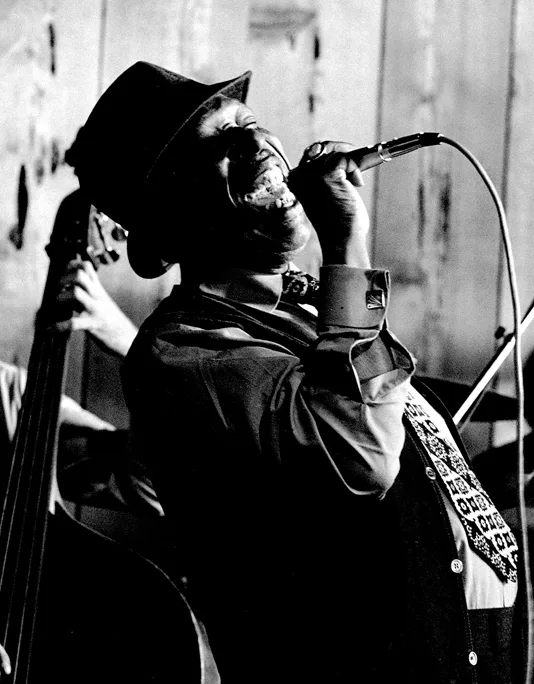
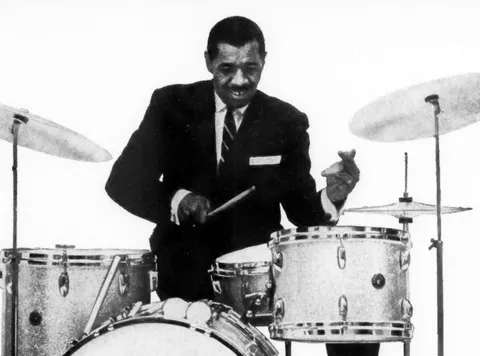
Eddie Jefferson performing at Half Moon Bay, California, October 1, 1978, about seven months before his death. CC BY-SA 3.0 — Wikimedia Commons, https://commons.wikimedia.org/wiki/File:Eddie_Jefferson.jpg (photo by Brian McMillen; file verified by SHA-1 match, 53e9bb7172be6179cc0016a4a4378573941c233f, 534x684, 212,941 bytes / 0.20 MB, well under the 19.9 MB cap)

Edgar "Eddie" Jefferson was born August 3, 1918, in Pittsburgh, Pennsylvania. His father worked in show business, and Jefferson started early as a dancer, teaming up as half of the Jefferson-Taylor duo on the Black vaudeville touring circuit of the 1930s and 1940s, sharing bills with swing and early bebop musicians including Coleman Hawkins. It was during those years on the road, listening obsessively to records backstage, that he began writing lyrics to recorded instrumental solos by Lester Young, Herschel Evans, Buddy Tate, and Chu Berry, a practice he later credited singer Leo Watson with inspiring. By the late 1940s Jefferson had shifted from dancing to singing his lyric-set solos in clubs, effectively inventing vocalese as a distinct jazz vocal style.
His best-known piece of writing began with a saxophone solo, not a song. In 1949, in Stockholm, saxophonist James Moody recorded an improvisation on "I'm in the Mood for Love" that Jefferson set new lyrics to and began performing around New York clubs. Singer King Pleasure heard him do it, won the Apollo Theater's amateur night with the same words in November 1951, and recorded it for Prestige in 1952; the record became a hit under the title "Moody's Mood for Love" and made Pleasure's name, while Jefferson, its actual lyricist, went unrecognized by the wider public for years (Moody himself did not learn who had really written the words until later). Jefferson recorded his own version in 1957, a single credited "Eddie Jefferson With James Moody and His Orchestra" on Checker, by which point he had already spent five years cutting scattered 78s and 45s of vocalese pieces for small labels, going back to 1952's "The Birdland Story" and "I Got the Blues."
Jefferson's first album under his own name, Letter From Home, did not arrive until 1962, recorded for Riverside across sessions in the winter of 1961-62 with an unusually large supporting cast arranged by Ernie Wilkins: James Moody, Johnny Griffin, Clark Terry, Wynton Kelly, Joe Zawinul, Sam Jones, and Louis Hayes among them. Two Prestige albums followed later in the decade, both produced by Don Schlitten and both leaning on Detroit pianist Barry Harris: Body and Soul (1968), with James Moody again on tenor, and Come Along With Me (1969), featuring alto saxophonist Charles McPherson. A third Prestige-era recording, cut in 1965 but not released until 1976 as The Jazz Singer, sat on the shelf for eleven years.
The mid-1970s brought Jefferson his most visible late-career partnership, with the young alto saxophonist Richie Cole. The two began recording together on 1974's Things Are Getting Better (Muse) and were soon co-leading a touring group, documented on Still on the Planet (1976) and The Main Man (1977, featuring Billy Hart and George Duvivier). Jefferson kept working outside that partnership too: in 1973 he wrote and sang lyrics on two tracks of drummer Roy Brooks's Ethnic Expressions, and in July 1976 he sang a live date at Ali's Alley, the Soho loft club drummer Rashied Ali had built and ran out of his own apartment, backed by Ali's working quintet; the tapes surfaced thirty years later as the posthumous release Eddie Jefferson At Ali's Alley (2009). In 1979, in Paris, he sang on Frank Wright's Kevin, My Dear Son alongside drummer Philly Joe Jones. That year's live album with Cole's band, The Live-Liest, brought Jefferson his first and only Grammy nomination, for Best Vocal Jazz Performance.
Jefferson did not live to learn the outcome of that nomination. On the night of May 8, 1979, he finished a set with Richie Cole's band at Baker's Keyboard Lounge in Detroit and was shot in the parking lot as he left the club with Cole around 1:35 a.m.; he passed away from his wounds early the next morning, May 9, at age 60. A man named William Perryman, reportedly a dancer Jefferson had once fired from a gig, was arrested and charged with the murder within two days but was acquitted at trial, and no one else was ever convicted. Cole's Muse album Hollywood Madness, recorded with Jefferson before his death, was released the following year with additional guest vocal spots from Tom Waits and The Manhattan Transfer added afterward, a posthumous tribute to the partnership.
Jefferson is credited as vocalese's originator: rather than scatting wordlessly or singing a tune's original lyric, he set new, narrative words directly to note-for-note transcriptions of recorded instrumental solos, turning improvisations by Charlie Parker, James Moody, Miles Davis, John Coltrane, and others into sung stories. He named singer Leo Watson as his own formative influence, and his years as half of a professional dance act before he ever sang publicly shaped a rhythmic precision that let him track a horn player's exact phrasing rather than approximate it. His authorship of "Moody's Mood for Love" was overshadowed for years by King Pleasure's hit recording of it, a slight that became one of jazz's more persistent authorship disputes, but Jefferson's own influence outlived the dispute: The Manhattan Transfer built a 1979 vocal arrangement of "Body and Soul" around the Jefferson/Coleman Hawkins pairing, and George Benson's 1980 album Give Me the Night still carried a "Moody's Mood" songwriting credit in Jefferson's name, evidence that his lyrics kept circulating commercially even after his death.
- Letter From Home (1962, Riverside) - Jefferson's debut LP as a leader, a large-ensemble session arranged by Ernie Wilkins with Wynton Kelly, Joe Zawinul, and Sam Jones rotating through the rhythm section. Spotify - Letter From Home Listen
- Body and Soul (1968, Prestige) - Vocalese readings of "So What" and "Freedom Jazz Dance" with James Moody on tenor and Barry Harris on piano. Spotify - Body And Soul Listen
- Come Along With Me (1969, Prestige) - A quintet date with Charles McPherson, including "Dexter Digs In," a lyric set to a Dexter Gordon solo. Not currently confirmed on Spotify as a full album.
- The Jazz Singer (recorded 1965; released 1976, Inner City) - Recorded with James Moody and Babs Gonzales, then shelved for over a decade before release. Spotify - The Jazz Singer Listen
- The Main Man (1977, Inner City) - A Richie Cole-era session with Billy Hart and George Duvivier, featuring "Moody's Mood for Love" and "Benny's from Heaven." Spotify - The Main Man Listen
- The Live-Liest (1979, Muse) - A live date with Richie Cole's band that earned Jefferson his sole, posthumous Grammy nomination. Not currently confirmed on Spotify.
- Eddie Jefferson At Ali's Alley (recorded July 1976; released 2009, Blue Music Group) - A live set at Rashied Ali's own Soho loft club, backed by Ali's working quintet, surfacing 30 years after it was taped. Not currently available on Spotify.
Eddie Jefferson: Full Discography
Identity confirmed via the live Discogs API, artist ID 164587 ("Eddie Jefferson," realname Edgar Jefferson, born/died dates matching Wikipedia). Discogs credits him on 308 releases total across the artist's own catalog page (28 in a "Main"/leader-or-featured role, the remainder sideman "Appearance"/"TrackAppearance" credits and compilation reissues of the same handful of studio sessions). Before his first LP as a leader, Jefferson cut a run of 78 and 45 rpm singles for small labels between 1952 and 1957 ("The Birdland Story" / "Honeysuckle Rose," Hi-Lo Records, 1952; "I Got the Blues" / "Body and Soul," 1952; "Stop Talkin' Start Walkin'" / "Strictly Instrumental," 1953; "Rockin' & Rollin' the Blues," a duo single with Babs Gonzales, 1955; "Billie's Bounce" / "I'm in the Mood for Love" with James Moody's orchestra, Checker, 1957) -- these predate his album-length work and are not itemized as separate rows below. The table itemizes his confirmed leader/co-leader catalog plus a curated set of his most significant sideman and guest-vocalist credits; it does not attempt to reproduce Discogs' full compilation and reissue sprawl (the same handful of 1960s-70s sessions have been repackaged under a dozen different titles over the decades).
As Leader / Co-Leader
| Album Title | Recording Date(s) | Release Date | Label | Catalog Number | Format(s) | Personnel | Role | Reissue History | Spotify | Buy | Notes |
|---|---|---|---|---|---|---|---|---|---|---|---|
| Letter From Home | Recorded December 1961-February 1962, NYC | 1962 | Riverside Records | RLP 9411 | Vinyl, LP, Album, Stereo | Eddie Jefferson (vocals), James Moody (alto sax, flute), Johnny Griffin (tenor sax), Clark Terry / Ernie Royal / Joe Newman (trumpet), Jimmy Cleveland (trombone), Arthur Clarke (baritone sax), Wynton Kelly / Joe Zawinul / Junior Mance (piano), Barry Galbraith (guitar), Sam Jones (bass), Louis Hayes / Osie Johnson (drums); arranged by Ernie Wilkins | Leader | Reissued on Original Jazz Classics CD | Spotify - Letter From Home | -- | Jefferson's debut LP; a big-band-scaled session split across multiple dates with rotating rhythm sections |
| Body and Soul | Recorded/released 1968 | 1968 | Prestige | PR 7619 / PRST 7619 | Vinyl, LP, Album, Stereo | Eddie Jefferson (vocals), James Moody (tenor sax, flute), Barry Harris (piano), Steve Davis (bass), Bill English (drums), Dave Burns (trumpet); produced by Don Schlitten | Leader | Later folded, alongside Come Along With Me, into the 1980 Prestige 2-LP compilation There I Go Again (P-24095, reissue-produced by Orrin Keepnews) | Spotify - Body And Soul | -- | Vocalese readings of "So What" (Miles Davis), "Freedom Jazz Dance" (Eddie Harris), "Bless My Soul"/"Parker's Mood" (Charlie Parker), and the title tune |
| Come Along With Me | Recorded/released 1969 | 1969 | Prestige | PR 7698 | Vinyl, LP, Album, Stereo | Eddie Jefferson (vocals), Charles McPherson (alto sax), Barry Harris (piano), Gene Taylor (bass), Bill English (drums), Bill Hardman (trumpet), The Eddie Jefferson Singers (backing vocals); produced by Don Schlitten | Leader | See Body and Soul above -- both combined into There I Go Again (1980) | Not confirmed on Spotify as a full album (a title-track single is streamable) | -- | Includes "Dexter Digs In," a vocalese setting of a Dexter Gordon solo |
| Things Are Getting Better | Recorded/released 1974 | 1974 | Muse Records | MR 5043 | Vinyl, LP | Eddie Jefferson (vocals), Sam Jones (bass), Eddie Gladden (drums), Mickey Tucker (piano, electric piano, organ), Billy Mitchell (tenor sax, flute, bass clarinet), Joe Newman (trumpet), Conrad Buckman / Mildred Weston (backing vocals); produced by Don Schlitten; liner notes by Gary Giddins | Leader | None found | Not confirmed on Spotify as a full album | -- | Jefferson's first recorded pairing with alto saxophonist Richie Cole (not on this session itself, but the album that opened the partnership era) |
| Still on the Planet | Recorded/released December 1976 | 1976 | Muse Records | MR 5063 | Vinyl, LP, Album | Eddie Jefferson (vocals), Richie Cole (alto sax), Waymon Reed (trumpet, flugelhorn), Mickey Tucker (keyboards), Rick Laird (bass), Eddie Gladden (drums), Harold White (percussion); produced by Bob Porter | Leader | None found | Not confirmed on Spotify | -- | First full co-billed studio outing with the Richie Cole group that toured with Jefferson through 1979 |
| The Jazz Singer (Vocal Improvisations on Famous Jazz Solos) | Recorded 1965 | 1976 (released) | Inner City Records | IC 1016 | Vinyl, LP | Eddie Jefferson (vocals), James Moody (tenor sax), Howard McGhee or Johnny Coles (trumpet, sources disagree), Matthew Gee (trombone), Musa Kaleem (tenor/baritone sax), Johnny Acea (piano), Babs Gonzales (backing vocals) | Leader | None found | Spotify - The Jazz Singer | -- | An eleven-year gap between recording (1965) and release (1976); vocalese versions of "So What," "Body and Soul," "Moody's Mood for Love," "Now's the Time," and others |
| The Main Man | Recorded/released 1977 | 1977 | Inner City Records | IC 1033 | Vinyl, LP, Album | Eddie Jefferson (vocals), Richie Cole (alto sax), Hamiet Bluiett (baritone sax), Junior Cook (tenor sax), Slide Hampton (trombone, arranger), Charles Sullivan (trumpet), Harold Mabern (piano), George Duvivier (bass), Billy Hart (drums), Janet Lawson (vocals); co-produced by Irv Kratka and vocalist Leon Thomas; liner notes by Leonard Feather | Leader | None found | Spotify - The Main Man | -- | Includes "Moody's Mood for Love" and "Benny's from Heaven," a vocalese setting of a Benny Golson solo |
| The Live-Liest | Recorded/released 1979 | 1979 | Muse Records | MR 5127 | Vinyl, LP, Album | Eddie Jefferson (vocals), Eric Kloss (alto sax), Richie Cole (alto sax), Rick Laird (bass), Eddie Gladden (drums), Mickey Tucker (electric piano); produced by Michael Cuscuna | Leader | None found | Not confirmed on Spotify | -- | Earned Jefferson his first and only Grammy nomination, Best Vocal Jazz Performance, for a recording made months before his death |
| Hollywood Madness | Recorded c. 1978-79; released 1980 (posthumous) | 1980 | Muse Records | MR 5207 | Vinyl, LP, Album, Stereo | Richie Cole (alto sax) with Eddie Jefferson (vocals); guest vocal spots from Tom Waits and The Manhattan Transfer; Bruce Forman (guitar), Bob Magnusson / Marshall Hawkins (bass), Les DeMerle (drums), Dick Hindman (piano); produced by Tim Hauser of The Manhattan Transfer | Co-leader (billed "Richie Cole With Eddie Jefferson") | None found | Not confirmed on Spotify | -- | Released the year after Jefferson's death; the guest spots from Waits and The Manhattan Transfer were recorded separately, not alongside Jefferson |
| Eddie Jefferson At Ali's Alley | Live, Ali's Alley (Rashied Ali's loft club), Soho, NYC, July 1976; released 2009 (posthumous) | 2009 | Blue Music Group | Digital only, no catalog no. | 10xFile, FLAC, Album | Eddie Jefferson (vocals), Rashied Ali (drums), James Vass and Marvin Blackman (sax), Marsha Frazier (piano), Benny Wilson (bass) | Featured vocalist (billed "Rashied Ali Quintet Featuring Eddie Jefferson") | None found | Not currently available on Spotify | -- | Recorded three years before Jefferson's death at the club Ali built and ran in his own Soho loft; released 30 years later from a preserved reel |
As Sideman / Guest Vocalist (selected credits)
| Year | Project (Leader) | Title | Label | Catalog | Role | Notes |
|---|---|---|---|---|---|---|
| 1954-1971 | James Moody | Various James Moody albums and singles (Prestige, Argo, and others) | Various | Various | Vocals (scattered tracks) | Jefferson and Moody's collaboration runs across roughly eight overlapping releases on Moody's own catalog through this period, most of them later-repackaged compilations of a small number of actual studio dates; not itemized separately here (see Discogs artist 164587's full "Appearance" list for the complete reissue history) |
| 1973 | Roy Brooks (& The Artistic Truth) | Ethnic Expressions | Im-Hotep Records | CS-030 | Vocals, Lyrics By (tracks "The Smart Set" and "Eboness") | With Reggie Workman (bass), Sonny Fortune (alto sax, flute), Hamiet Bluiett (baritone sax), John Stubblefield (tenor sax), Cecil Bridgewater (trumpet), Olu Dara (trumpet), Hilton Ruiz (electric piano), Joe Bonner (piano) |
| 1979 | Frank Wright | Kevin, My Dear Son | Sun Records (France) | SEB 004 | Voice | With Philly Joe Jones (drums), Reggie Workman (bass), Georges Arvanitas (piano), Kamal Abdul Alim (trumpet); recorded in Paris |
| 1980 | George Benson | Give Me the Night | Warner Bros. | -- | Songwriter credit only ("Moody's Mood," not a performance) | A measure of Jefferson's reach as a lyricist: his 1952-era words to James Moody's alto solo were still being recorded, and charting, the year after his death |
- James Moody - the source of "Moody's Mood for Love" and a recurring collaborator on Jefferson's own albums (Letter From Home, Body and Soul, The Jazz Singer) from the 1950s into the 1970s.
- Richie Cole - saxophonist and co-leader of Jefferson's touring group from 1974 until Jefferson's death in 1979 (Things Are Getting Better, Still on the Planet, The Main Man, The Live-Liest); present the night Jefferson was shot outside Baker's Keyboard Lounge.
- Barry Harris - pianist on both of Jefferson's Prestige albums, Body and Soul (1968) and Come Along With Me (1969).
- Rashied Ali - hosted Jefferson's July 1976 performance at Ali's Alley, his own Soho loft club, backing him on drums with his working quintet; released posthumously in 2009 as Eddie Jefferson At Ali's Alley.
- Roy Brooks - drummer for whom Jefferson wrote and sang lyrics on two tracks of Ethnic Expressions (1973).
- Frank Wright - saxophonist Jefferson recorded with in Paris on Kevin, My Dear Son (1979), alongside drummer Philly Joe Jones.
- Wynton Kelly, Joe Zawinul, Sam Jones, Louis Hayes - among the rotating rhythm-section players on Letter From Home (1962).
- Charles McPherson - alto saxophonist on Come Along With Me (1969).
- Billy Hart and George Duvivier - drummer and bassist on The Main Man (1977).
- George Benson - recorded a version of "Moody's Mood," carrying Jefferson's songwriting credit, on 1980's Give Me the Night.
More Bebop Artists
See all 166 Bebop artists →More American Jazz Artists
See all 567 American artists →- Wikipedia: Eddie Jefferson
- Wikipedia: Moody's Mood for Love
- Wikipedia: Things Are Getting Better (Eddie Jefferson album)
- Wikipedia: Still on the Planet
- Wikipedia: New York Afternoon
- Discogs: Eddie Jefferson (artist 164587)
- WBSS Media: Eddie Jefferson
- Far Out Magazine: Eddie Jefferson, the unsolved murder of a jazz genius