JAZZPROFILES lives in the music 2,303 Jazz Artists fully Profiled!
Woody Herman
Last updated November 8, 2026
Listen on Spotify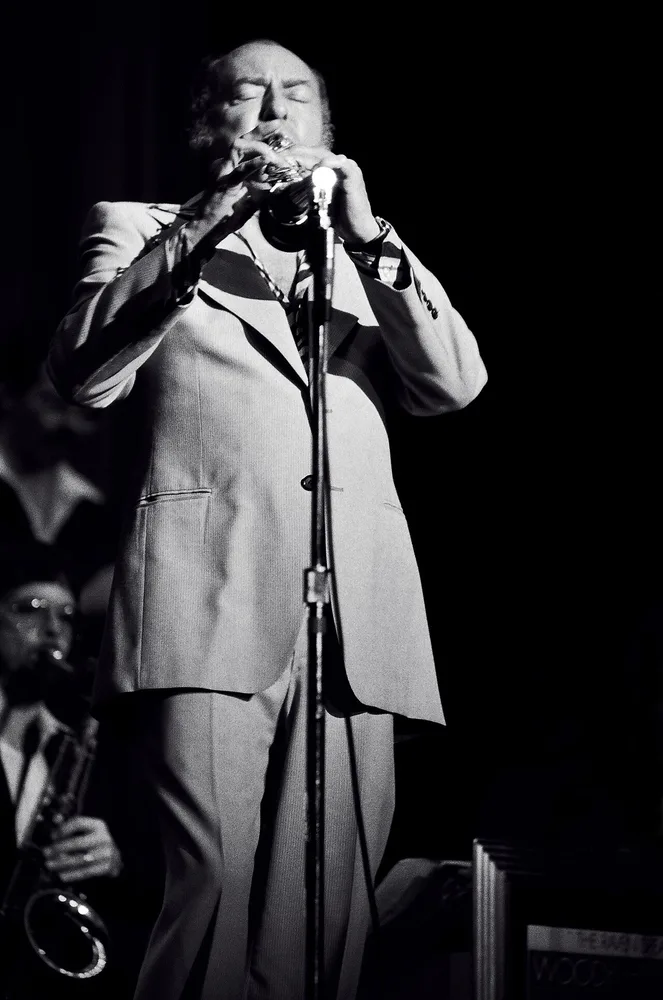
Woody Herman playing soprano saxophone with his band, Rochester, New York, 1976, photographed by Tom Marcello CC BY-SA 2.0 — Wikimedia Commons — https://commons.wikimedia.org/wiki/File:Woody_Herman.jpg (originally posted on Flickr by Tom Marcello: https://www.flickr.com/photos/11447043@N00/417120809/)

Woodrow Charles Herman was born on May 16, 1913, in Milwaukee, Wisconsin, the son of Otto and Myrtle Herrmann; his mother had been born in Poland, and he later changed the spelling of the family name. His father loved show business, and Herman worked as a child singer and tap dancer in vaudeville before he took up the clarinet and the saxophone by the age of twelve. As a young professional he played in the bands of Tom Gerun, Harry Sosnick and Gus Arnheim, and in 1934 he joined the orchestra of the songwriter and bandleader Isham Jones, with whom he recorded often. He had met the aspiring actress Charlotte Neste in 1931, and the two married on September 27, 1936.
When Jones tired of the demands of leading a band, Herman took over what was left of the orchestra. Its first Decca session, on November 6, 1936, produced "Wintertime Dreams," and the group was soon billed as the Band That Plays the Blues. Herman's ballad vocals made up much of the early catalog, but it was the instrumentals that sold: "Woodchopper's Ball," recorded in 1939 and written by Herman with Joe Bishop, became the biggest hit of his career after Decca kept re-releasing it for several years. In January 1942 his vocal on "Blues in the Night" went to number one on Billboard's chart, and a small-group offshoot billed as Woody Herman's Woodchoppers backed Bing Crosby on "The Whistler's Mother-in-Law" (1941) and "Deep in the Heart of Texas" (1942). The band was already turning toward Duke Ellington's sound, with Johnny Hodges and Ben Webster sitting in on some 1943 recordings, and Herman had commissioned Dizzy Gillespie arrangements, including "Down Under," recorded on July 24, 1942, before hiring Ralph Burns as a staff arranger.
By the end of 1944 the band was largely new, and Herman called it the First Herd. After it signed with Columbia in February 1945 (its first side, "Laura," earned a gold record), the personnel included the trumpeters Pete Candoli and Sonny Berman, the trombonist Bill Harris, the tenor saxophonist Flip Phillips, the guitarist Billy Bauer, the pianist Ralph Burns, the bassist Chubby Jackson and the drummer Dave Tough. On February 26, 1945, it recorded "Caldonia" in an arrangement by Neal Hefti and Burns; the soaring eight-bar trumpet passage near the end, often credited to Gillespie, was written by Hefti. "Apple Honey," "Northwest Passage" and "Bijou" were other staples. Igor Stravinsky wrote the Ebony Concerto for the band on a commission from Herman, finishing it on December 1, 1945; the band first played it, with Herman on the solo clarinet part, at Carnegie Hall on March 25, 1946, with Walter Hendl conducting, and Herman and Stravinsky recorded it in Hollywood on August 19, 1946. The band won the Metronome poll's band division in 1946, and then Herman broke it up in December of that year, at the height of its success, to spend more time with his family.
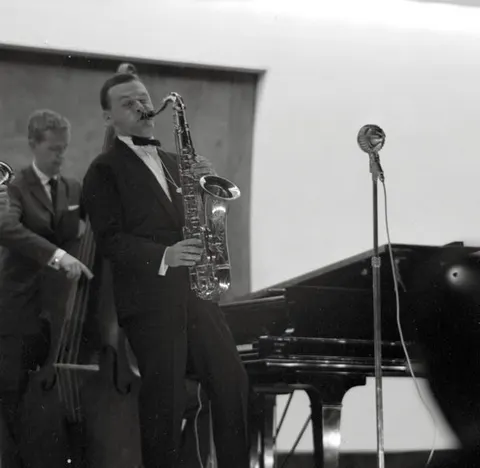
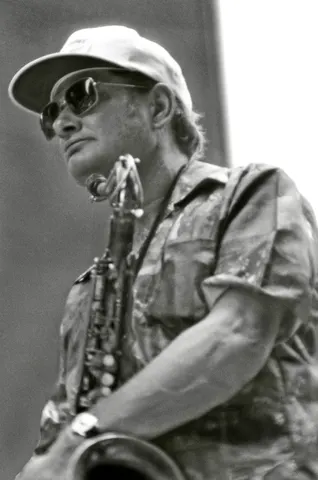
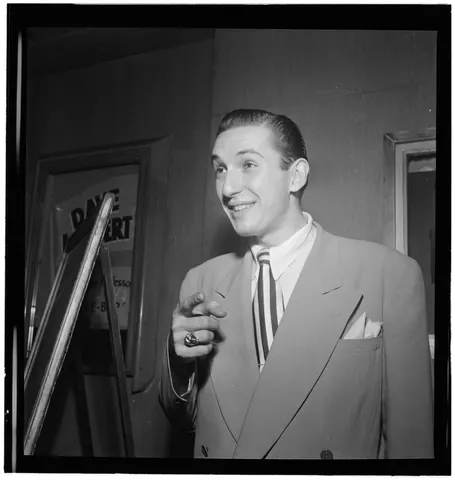
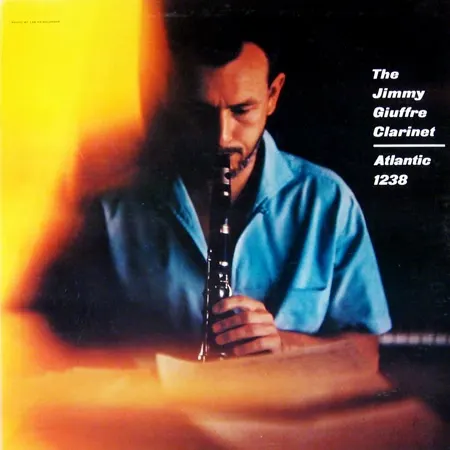
In 1947 he formed the Second Herd, also called the Four Brothers Band after the Jimmy Giuffre piece recorded for Columbia on December 27, 1947, which features the saxophone section of Zoot Sims, Serge Chaloff, Herbie Steward and Stan Getz, soloing in that order. "Early Autumn," which grew out of the fourth part of Burns's Summer Sequence and was recorded for Capitol on December 30, 1948, carried an eight-bar Getz solo that made his name. Al Cohn took over from Steward about a year later, and the band also included Gene Ammons, Lou Levy, Oscar Pettiford, Terry Gibbs and Shelly Manne before money problems ended it in 1949. Herman and his band appeared in the film New Orleans (1947) with Billie Holiday and Louis Armstrong. He then led the Third Herd from 1950 to 1956, a more danceable group that toured Europe in the 1950s and for a time recorded for his own Mars label, with sidemen who included Bill Perkins, Carl Fontana, Nat Pierce and Richie Kamuca.
After some short-lived small groups, including a sextet with Nat Adderley and Charlie Byrd, a new Herd was a hit at the 1959 Monterey Jazz Festival, and through the 1960s he fronted bands with the trumpeter Bill Chase, the trombonist Phil Wilson, the tenor saxophonist Sal Nistico and the drummer Jake Hanna. From 1968, on the album Light My Fire, the library leaned toward rock and pop arrangements written by his young players. In the early 1970s he toured frequently, took on more jazz education work and younger sidemen, and earned the nickname Road Father, with his bands known as the Young Thundering Herds; he was one of the featured halftime performers at Super Bowl VII in January 1973. The albums Giant Steps (1973) and Thundering Herd (1974) both won Grammy Awards, and the bands of those years brought in Alan Broadbent, Andy LaVerne, Joe Beck and Frank Tiberi, among others. The band played without its leader on Frank Sinatra's The Main Event at Madison Square Garden in October 1974, and on November 20, 1976, a reconstituted Herman band played Carnegie Hall to mark his fortieth anniversary as a bandleader. He recorded for Concord from about 1980, including the Rosemary Clooney album My Buddy (1983).
In his last years he kept working largely to pay back taxes that a 1960s business manager had failed to remit, celebrating his fiftieth anniversary as a bandleader in 1986 and handing most of the leadership to the reed-section leader Frank Tiberi as his health declined. Herman passed away on October 29, 1987, at the age of 74, and was honored that year with a Grammy Lifetime Achievement Award. A Catholic funeral was held on November 2 at St. Victor's in West Hollywood, and he is interred in the columbarium at Hollywood Forever Cemetery. The University of Houston established the Woody Herman Music Archives in 1974, and Berklee College of Music gave him an honorary doctorate in 1977. Tiberi continued to lead a Woody Herman Orchestra after his death.
AllMusic's Scott Yanow describes Herman as a fine swing clarinetist, an alto saxophonist influenced by Johnny Hodges, a solid soprano saxophonist and a spirited blues singer, and puts his greatest significance in his role as the leader of a long line of big bands; a 1985 New York Times review of his band remarked on the dry humor with which he shouted the blues. He kept his repertoire modern more consistently than most bandleaders of the swing era, hiring young players and using their arrangements. The First Herd was strongly influenced by Duke Ellington and the Count Basie Orchestra and combined bop themes with swing rhythm parts, the Second Herd's saxophone section took its light, nearly vibrato-free sound from the style of Lester Young, and the bands of the late 1960s and 1970s added rock-influenced material and instruments rarely heard in jazz, such as bassoon, oboe and French horn. Yanow notes that Herman played "Four Brothers" and "Early Autumn" nightly for nearly forty years even though he preferred to create new music. His bands won the DownBeat poll in 1945 and the Metronome poll in 1946 and 1953, and they collected three competitive Grammy Awards in addition to his Lifetime Achievement Award. In the 1970s his work in jazz education and his young sidemen earned him the nickname Road Father.
- Woodchopper's Ball (1939, Decca) - The Herman and Joe Bishop blues, recorded on April 12, 1939, that became the band's biggest hit and a jazz standard; the original recording received the Grammy Hall of Fame Award in 2002.
- Blues in the Night (1941, Decca) - Herman's vocal feature, recorded in Los Angeles on September 10, 1941, which reached number one on Billboard's chart in January 1942.
- Caldonia (1945, Columbia) - The First Herd's showpiece, recorded on February 26, 1945, in an arrangement by Neal Hefti and Ralph Burns that was built around a soaring trumpet passage.
- Ebony Concerto (1946, Columbia) - Igor Stravinsky's concerto for clarinet and jazz band, written for Herman and recorded by the two of them in Hollywood on August 19, 1946.
- Four Brothers (1947, Columbia) - Jimmy Giuffre's showcase for the saxophone section of Zoot Sims, Serge Chaloff, Herbie Steward and Stan Getz, recorded in Los Angeles on December 27, 1947, which gave the Second Herd its name.
- Early Autumn (1948, Capitol) - The ballad from Ralph Burns's Summer Sequence, recorded on December 30, 1948, with the Getz solo that made him a star.
- Encore: Woody Herman, 1963 (1963, Philips) - A live album by his early 1960s Herd that won the Grammy for best jazz performance by a large group.
- Giant Steps (1973, Fantasy) and Thundering Herd (1974, Fantasy) - The Young Thundering Herd's two Grammy-winning albums, cut at A&R Studios in New York in April 1973 and at Fantasy Studios in Berkeley in January 1974, with Frank Tiberi in the reed section and Jim Pugh among the trombones.
Woody Herman: Full Discography
Discogs artist ID 239399 ("Woody Herman," real name Woodrow Charles Herman, born May 16, 1913, in Milwaukee, Wisconsin, died October 29, 1987) lists more than 3,400 entries across leader, track-appearance, compilation and reissue releases, most of them reissues of the same sessions. Much of his band work is filed under separate Discogs entries for the groups he led, among them Woody Herman And His Orchestra (artist ID 284746), Woody Herman & The Young Thundering Herd (artist ID 434575), Woody Herman & The New Thundering Herd (artist ID 372489), Woody Herman & The Herd (artist ID 661482) and Woody Herman And His Woodchoppers (artist ID 743217); these were checked and are included in the selection below. Because his catalog is among the largest of any bandleader's, the leader table is a curated selection of 34 landmark releases rather than an exhaustive list: the key singles of the Decca, Columbia and Capitol years, and the principal albums from the Third Herd through the Thundering Herds and the Concord years. Catalog numbers are those of the first or best-documented pressing that Discogs describes, and a few belong to a reissue where noted. Recording dates come from Discogs release notes; where none is given the cell says so. The personnel cells list the players Discogs credits on each release, selected rather than complete.
As Leader / Co-Leader
| Album Title | Recording Date(s) | Release Date | Label | Catalog Number | Format(s) | Personnel | Role | Reissue History | Spotify | Buy | Notes |
|---|---|---|---|---|---|---|---|---|---|---|---|
| Woodchopper's Ball / Big-Wig in the Wigwam | April 12, 1939, New York | 1939 | Decca | 2440 | Shellac, 10", 78 RPM | Woody Herman (clarinet, leader), Joe Bishop (flugelhorn), Saxie Mansfield and Pete Johns (tenor saxophones), Clarence Willard, Mac MacQuordale and Steady Nelson (trumpets), Tommy Linehan (piano), Walt Yoder (bass), Frank Carlson (drums) | Leader | Reissued many times on 78, LP and CD; Discogs master 664628 | — | — | The band's first big hit and a Herman and Bishop composition; the original recording received the Grammy Hall of Fame Award in 2002. The Discogs pressing listed here is a 1942 to 1945 repress. |
| Blues in the Night / This Time the Dream's on Me | September 10, 1941, Los Angeles | October 1941 | Decca | 4030 | Shellac, 10", 78 RPM | Woody Herman (vocals, clarinet, alto saxophone, leader) and his orchestra | Leader | Reissued on compilations; Discogs master 805693 | — | — | Herman's vocal feature from the Warner Bros. film Blues in the Night; number one on Billboard's chart in January 1942. |
| Caldonia / Happiness Is a Thing Called Joe | February 26, 1945, New York | March 22, 1945 | Columbia | 36789 | Shellac, 10", 78 RPM | Woody Herman (clarinet, alto saxophone) and the First Herd | Leader | Reissued on the 1945 to 1947 Columbia compilations; Discogs master 1483303 | — | — | Arranged by Neal Hefti and Ralph Burns; the B side comes from the film Cabin in the Sky. |
| Ebony Concerto | August 19, 1946, Los Angeles | 1947 | Columbia Masterworks | 7479-M | Shellac, 12", 78 RPM | Woody Herman (clarinet) and his orchestra, conducted by Igor Stravinsky | Leader (with the composer conducting) | Reissued on compilations; Discogs master 2658371 | — | — | Stravinsky's concerto for clarinet and jazz band, written for Herman and first played by his band at Carnegie Hall on March 25, 1946. |
| No Time / Four Brothers | No Time: August 10, 1945, New York; Four Brothers: December 27, 1947, Los Angeles | October 4, 1948 | Columbia | 38304 | Shellac, 10", 78 RPM | Woody Herman and the Second Herd, with Zoot Sims, Serge Chaloff, Herbie Steward and Stan Getz on saxophones (the Four Brothers section) | Leader | Reissued on compilations; Discogs master 1980691 | — | — | Jimmy Giuffre's composition gave the Second Herd its nickname. Herman is credited for the vocal chorus on the A side. |
| Early Autumn / Keeper of the Flame | Early Autumn: December 30, 1948 | May 1949 | Capitol Records | 57-616 | Shellac, 10", 78 RPM | Woody Herman (clarinet, alto saxophone) and the Second Herd, with Stan Getz, Zoot Sims and Al Cohn (tenor saxophones), Serge Chaloff (baritone saxophone), Bill Harris (trombone), Terry Gibbs (vibraphone), Lou Levy (piano), Chubby Jackson (bass), Don Lamond (drums) | Leader | All of the band's Capitol recordings are collected on Keeper of the Flame (Capitol Jazz CDP 7 98453 2, 1992); Discogs master 1016109 | — | — | The recording date is from the 1992 Capitol compilation's notes; the Getz solo made the record a hit. |
| Woody Herman Goes Native | Not specified in Discogs data | 1953 | Mars | MRX-2 | Vinyl, LP, 10" | Woody Herman and his orchestra (no personnel is itemized on Discogs) | Leader | Discogs master 2720006 | — | — | Issued on Herman's own Mars label. |
| Music for Tired Lovers | Not specified in Discogs data | April 1955 | Columbia | CL 651 | Vinyl, LP, Album, Mono | Woody Herman (vocals), Erroll Garner (piano), Wyatt Ruther (bass), Fats Heard (drums) | Leader (vocal date with the Erroll Garner Trio) | Reissued on CD; Discogs master 545271 | — | — | Standards sung by Herman with the Erroll Garner Trio. |
| Jackpot! | December 1, 1955 | 1956 | Capitol Records | T-748 | Vinyl, LP, Album, Mono | Woody Herman (clarinet), Richie Kamuca (tenor saxophone), Dick Collins, John Coppola and Cy Touff (trumpets), Norman Pockrandt (piano), Monty Budwig (bass), Chuck Flores (drums) | Leader | Discogs master 537874 | — | — | Billed to Woody Herman and the Las Vegas Herd. |
| Blues Groove | December 1, 1955, Hollywood; May 15 and 16, 1956, Chicago | 1956 | Capitol Records | T784 | Vinyl, LP, Album | Woody Herman (vocals, clarinet), Richie Kamuca (tenor saxophone), Bill Harris (trombone), Vince Guaraldi (piano on six tracks), Victor Feldman (vibraphone, congas), Monty Budwig (bass), Chuck Flores and Gus Gustafson (drums) | Leader | Discogs master 614042 | — | — | Billed to Woody Herman and the Swingin' Herd. |
| Songs for Hip Lovers | Not specified in Discogs data | 1957 | Verve Records | MG V-2069 | Vinyl, LP, Album, Mono | Woody Herman (vocals, clarinet) | Leader | Discogs master 491231 | — | — | A vocal album. |
| Herman's Heat & Puente's Beat! | September 1958, New York | 1958 | Everest | LPBR-5010 | Vinyl, LP, Album, Mono | Woody Herman (clarinet, alto saxophone), Tito Puente (timbales), Al Cohn, Paul Quinichette and Danny Bank (reeds), Ernie Royal and Nick Travis (trumpets), Ray Barretto (percussion), Al Plank (piano) | Co-leader (billed with Tito Puente) | Discogs master 321974 | — | — | Puente plays on the six Latin-flavored tracks of the second side. |
| The Fourth Herd | Not specified in Discogs data | 1960 | Jazzland | JLP 17 | Vinyl, LP, Album, Mono | Woody Herman (clarinet), Nat Adderley (cornet), Zoot Sims (tenor saxophone), Eddie Costa (vibraphone), Nat Pierce (piano), Milt Hinton (bass), Don Lamond (drums); the full orchestra adds Al Cohn, Bob Brookmeyer, Red Rodney and others | Leader | Discogs master 416815 | — | — | Combines the full orchestra with an octet. |
| Encore: Woody Herman, 1963 | Not specified in Discogs data | 1963 | Philips | PHS 600-092 (mono PHM 200-092) | Vinyl, LP, Album | Woody Herman and the New Thundering Herd (no personnel is itemized on Discogs) | Leader | Discogs master 514549 | — | — | Won the Grammy for best jazz performance by a large group. |
| Woody Herman: 1964 | Not specified in Discogs data | February 1964 | Philips | PHM 200-118 | Vinyl, LP, Album, Mono | Woody Herman (clarinet, alto saxophone), Nick Brignola (baritone saxophone), Sal Nistico (tenor saxophone), Bill Chase and Paul Fontaine (trumpets), Phil Wilson (trombone), Nat Pierce (piano), Jake Hanna (drums) | Leader | Discogs master 418660 | — | — | A Grammy nominee. |
| Woody's Winners | June 28 to 30, 1965, Basin Street West, San Francisco | February 1966 | Columbia | CS 9236 | Vinyl, LP, Album, Stereo | Woody Herman (clarinet, alto saxophone), Bobby Shew, Bill Chase and Don Rader (trumpets), Sal Nistico (tenor saxophone), Nat Pierce (piano), Ronnie Zito (drums) | Leader | Discogs master 291045 | — | — | Recorded live; a Grammy nominee. |
| Concerto for Herd | September 1967 | 1968 | Verve Records | V6-8764 | Vinyl, LP, Album | Woody Herman (clarinet, alto and soprano saxophones), Cecil Payne (baritone saxophone), Sal Nistico (tenor saxophone on the title piece), Carl Fontana (trombone), Luis Gasca (trumpet), Albert Dailey (piano), John Von Ohlen (drums) | Leader | Discogs master 659804 | — | — | Recorded September 1967; a Grammy nominee. |
| Light My Fire | October 1968, Ter Mar Studios, Chicago | 1969 | Cadet | LPS-819 | Vinyl, LP, Album, Stereo | Woody Herman (clarinet, alto and soprano saxophones), John Hicks (piano), Sal Nistico (reeds), Henry Southall (trombone), Phil Upchurch (guitar), Arthur Harper (bass) | Leader | Discogs master 203605 | — | — | A Grammy nominee; the first Herman album of rock and pop material. |
| Brand New | March 1971, Wally Heider Recording, San Francisco | 1971 | Fantasy | 8414 | Vinyl, LP, Album | Woody Herman (vocals, clarinet, soprano and alto saxophones), Alan Broadbent (piano), Mike Bloomfield (guitar), Sal Nistico and Frank Tiberi (tenor saxophones), Tom Harrell (trumpet), Ed Soph (drums) | Leader | Discogs master 548478 | — | — | First of the Fantasy albums. |
| The Raven Speaks | August 28 to 30, 1972, A&R Studio, New York | 1972 | Fantasy | 9416 | Vinyl, LP, Album | Woody Herman (alto and soprano saxophones, clarinet), Pat Martino (guitar), Johnny Pacheco (congas), Alphonso Johnson (bass), Joe LaBarbera (drums), Harold Danko (electric piano), Frank Tiberi (reeds), Al Porcino (trumpet) | Leader | Discogs master 59842 | — | — | Pat Martino appears courtesy of Cobblestone Records. |
| Giant Steps | April 9, 11 and 12, 1973, A&R Sound Studios, New York | 1973 | Fantasy | F-9432 | Vinyl, LP, Album | Woody Herman (clarinet, alto and soprano saxophones), Frank Tiberi and Steve Lederer (tenor saxophones), Harry Kleintank (baritone saxophone), Jim Pugh (trombone), Bill Stapleton (trumpet, flugelhorn), Andy LaVerne (electric piano), Joe Beck (guitar), Ed Soph (drums), Ray Barretto (congas) | Leader | Discogs master 476646 | — | — | Won a Grammy Award; Ray Barretto appears courtesy of Fania Records. |
| Thundering Herd | January 2 to 4, 1974, Fantasy Studios, Berkeley | 1974 | Fantasy | F-9452 | Vinyl, LP, Album | Woody Herman (soprano and alto saxophones), Frank Tiberi (tenor saxophone, lead), Jim Pugh (trombone, lead), Andy LaVerne (electric piano), Chip Jackson (electric bass), Ron Davis (drums), Bill Stapleton and Dave Stahl (flugelhorns) | Leader | Discogs master 59870 | — | — | Won a Grammy Award. |
| Herd at Montreux | July 6, 1974, Montreux Jazz Festival; remixed in Los Angeles, August 1974 | 1974 | Bellaphon | BLPS 19193 | Vinyl, LP, Album | Woody Herman (soprano saxophone) and the Thundering Herd | Leader | Discogs master 238091 | — | — | Recorded live. |
| Children of Lima | October 22, 1974, Houston; January 6 and 7, 1975, Berkeley | 1975 | Fantasy | F-9477 | Vinyl, LP, Album | Woody Herman (soprano saxophone, clarinet) and the Thundering Herd with the Houston Symphony Orchestra, conducted by Lawrence Foster; Jim Pugh (trombone), Frank Tiberi (tenor saxophone, bassoon), Andy LaVerne (piano) | Leader | Discogs master 521781 | — | — | The two Houston pieces feature the symphony orchestra. |
| King Cobra | January 7 to 9, 1975 | 1976 | Fantasy | F-9499 | Vinyl, LP | Woody Herman (clarinet, alto and soprano saxophones, vocals), Frank Tiberi (tenor saxophone, lead), Jim Pugh (trombone, lead), Andy LaVerne (electric piano), Ron Paley (electric bass), Jeff Brillinger (drums) | Leader | Discogs master 481940 | — | — | Billed to Woody Herman and the Thundering Herd. |
| The 40th Anniversary, Carnegie Hall Concert | November 20, 1976, Carnegie Hall, New York | 1977 | RCA Victor | BGL2-2203 | Vinyl, LP, Album | Woody Herman and the New Thundering Herd with guests (no personnel is itemized on Discogs) | Leader | Discogs master 400292 | — | — | Recorded live; a Grammy nominee. |
| Road Father | January 3 and 4, 1978, Capitol Studio A, Hollywood | 1978 | Century Records | CRDD-1080 | Vinyl, LP, Album, Limited Edition, Stereo | Woody Herman (alto and soprano saxophones, clarinet, vocals), Joe Lovano (tenor saxophone, flute), Frank Tiberi (tenor saxophone, flute, bassoon), Marc Johnson (bass), Jeff Hamilton (drums), Pat Coil (piano), Allen Vizzutti (trumpet) | Leader | Discogs master 827432 | — | — | Recorded direct to disc. |
| Chick, Donald, Walter & Woodrow | January 1978 | 1978 | Century Records | CR-1110 | Vinyl, LP, Album | Woody Herman (alto and soprano saxophones, clarinet, vocals), Joe Lovano and Tom Scott (tenor saxophones), Frank Tiberi (tenor saxophone, lead), Marc Johnson (bass), Jeff Hamilton (drums), Pat Coil (piano), Victor Feldman (synthesizer, percussion), Allen Vizzutti (trumpet) | Leader | Discogs master 981390 | — | — | Features Chick Corea's suite and music by Donald Fagen and Walter Becker, with arrangements by Corea, Alan Broadbent, Bill Stapleton, Joe Roccisano and others. |
| Presents a Concord Jam, Volume 1 | August 1980, Concord Pavilion, Concord, California | 1981 | Concord Jazz | CJ-142 | Vinyl, LP | Woody Herman (clarinet, host) with guest soloists | Leader (host) | Discogs master 579174 | — | — | Recorded live. |
| My Buddy | August 1983, Hollywood | 1983 | Concord Jazz | CCD-4226 (1990 CD reissue) | CD, Album, Reissue, Stereo | Rosemary Clooney (vocals), Woody Herman (clarinet, alto saxophone) and his big band | Co-leader (billed with Rosemary Clooney) | Originally issued on LP in 1983; Discogs master 680285 | — | — | Recorded at United/Western Studios and Ocean Way Recording. |
| World Class | September 1982, Osaka Festival Hall and Yokohama Stadium, Japan | 1984 | Concord Jazz | CJ-240 | Vinyl, LP, Album | Woody Herman (clarinet, vocals) and his big band with special guests Al Cohn, Med Flory, Sal Nistico and Flip Phillips; Mike Brignola (baritone saxophone), John Fedchock (trombone) | Leader | Discogs master 804017 | — | — | Recorded live in Japan; a Grammy nominee. |
| 50th Anniversary Tour | March 1986, Great American Music Hall, San Francisco | 1986 | Concord Jazz | CJ-302 | Vinyl, LP, Album | Woody Herman (clarinet, soprano saxophone), Frank Tiberi (tenor saxophone, lead), John Fedchock (trombone, lead), Mike Brignola (baritone saxophone), Brad Williams (piano), Lynn Seaton (bass), James Rupp (drums) | Leader | Discogs master 530651 | — | — | Recorded live; a Grammy nominee. |
| Woody's Gold Star | March 1987, Willow Theater, Concord, California | 1987 | Concord Jazz | CCD 4330 | CD, Album | Woody Herman (clarinet, soprano saxophone), Frank Tiberi (tenor saxophone), John Fedchock (trombone), Mike Brignola (baritone saxophone), Joel Weiskopf (piano), Dave Carpenter (bass), Dave Miller (drums); Poncho Sanchez (congas) on tracks 3, 8 and 9 | Leader | Discogs master 479406 | — | — | Recorded live; a Grammy nominee. Tito Puente arranged "Mambo Rockland." |
| Ebony | May 11 and 12, 1987, RCA Studio A, New York | 1988 | RCA Victor Red Seal | 6486-1-RC | Vinyl, LP, Album | Richard Stoltzman (clarinet) with Woody Herman's Thundering Herd | Co-billed band leader (Discogs lists no Herman performance credit) | Discogs master 842907 | — | — | Recorded in May 1987 and issued in 1988, after Herman's death; includes Stravinsky's Ebony Concerto. |
As Sideman (selected major credits)
Herman worked almost entirely as a leader, so this table is short: two Buck Clayton jam-session albums on which he is a featured guest.
| Year | Project (Leader) | Title | Label | Catalog | Role | Notes |
|---|---|---|---|---|---|---|
| 1954 | Buck Clayton | How Hi the Fi | Columbia | CL 567 | Clarinet (tracks A1 and A2) | An informal jam session billed as Buck Clayton featuring Woody Herman; Al Cohn plays tenor saxophone on the same two tracks. Discogs master 671633. |
| 1955 | Buck Clayton | Jumpin' at the Woodside | Columbia | CL 701 | Clarinet (track-level credits not given) | Subtitled as a Buck Clayton jam session on Count Basie favorites; recorded March 31 and August 13, 1954, and March 15, 1955, with Coleman Hawkins among the saxophonists. Discogs master 500037. |
- Isham Jones - bandleader and songwriter whose orchestra Herman joined in 1934; Herman took over its remaining musicians when Jones retired from leading a band in 1936.
- Ralph Burns, Neal Hefti - arrangers of the First Herd's book, including "Caldonia"; Burns also wrote the Summer Sequence, whose fourth part became "Early Autumn."
- Dizzy Gillespie - wrote three arrangements for Herman in 1942, among them "Down Under," an early sign of the band's turn toward modern jazz.
- Bill Harris, Flip Phillips, Pete Candoli, Conte Candoli, Sonny Berman, Chubby Jackson, Dave Tough, Billy Bauer - First Herd soloists and rhythm players of 1944 to 1946.
- Igor Stravinsky - composer of the Ebony Concerto, which he wrote for Herman's band and recorded with it in 1946.
- Stan Getz, Zoot Sims, Serge Chaloff - the tenor, tenor and baritone saxophonists of the Four Brothers section in the Second Herd, with Herbie Steward on the fourth chair and Al Cohn later replacing him.
- Jimmy Giuffre - composer of "Four Brothers" (1947) for the Second Herd's saxophone section, and according to his own profile a saxophonist in the band as well.
- Gene Ammons - tenor saxophonist who replaced Getz in the Second Herd in 1949, per his profile.
- Oscar Pettiford - bassist who joined the band in 1949, per his profile; a broken arm suffered playing baseball with the band led him to take up the cello.
- Shelly Manne - drummer of the Second Herd, whose national reputation grew during his years with Herman and with Stan Kenton, per his profile.
- Red Mitchell - bassist who toured with Herman from 1949 to 1951, per his profile.
- Jimmy Rowles - pianist who recorded and played with Herman in 1946 and 1947, per his profile.
- Bill Perkins - tenor saxophonist who joined the Third Herd in May 1951, per his profile.
- Stu Williamson - trumpeter in the Third Herd in 1952 and 1953, per his profile.
- Vince Guaraldi - pianist who toured with the Third Herd and is credited on six tracks of the Capitol album Blues Groove (1956), per his profile.
- Charlie Byrd, Nat Adderley - members of the band on a three-week State Department tour of Europe in 1959, together with Guaraldi and the trombonist Bill Harris, per Byrd's profile; AllMusic also lists a short-lived Herman sextet with Adderley and Byrd.
- Nick Brignola - joined the orchestra in 1963, per his profile.
- Bill Chase, Sal Nistico, Phil Wilson, Nat Pierce, Jake Hanna - trumpeter, tenor saxophonist, trombonist, pianist and drummer of the 1960s Herds.
- Bobby Shew - lead trumpeter heard on the 1966 album Woody's Winners, per his profile.
- Cecil Payne, Slide Hampton, John Hicks - baritone saxophonist (about two years from 1967), trombonist (a 1968 tour that took him to Europe) and pianist (1968 to 1970), per their profiles.
- Tom Harrell - trumpeter in the Thundering Herd from 1970 to 1971, per his profile.
- Jim Pugh - trombonist in the Young Thundering Herd from 1972 to 1976, on the Grammy-winning Giant Steps and Thundering Herd, per his profile.
- Alan Broadbent, Andy LaVerne, Joe Beck, Frank Tiberi - pianists, guitarist and reed section leader of the 1970s Young Thundering Herds, with Tiberi becoming Herman's musical deputy and later leader of the orchestra.
- Jeff Hamilton, Joe Lovano, Gary Smulyan, Marc Johnson, Jay Anderson, Lyle Mays - young players who passed through the 1970s bands, per their own profiles, including the 1978 edition with Lovano, Smulyan and Johnson.
- Chick Corea - composer and arranger of the suite that opens Chick, Donald, Walter and Woodrow (1978), an album that also takes up music by Donald Fagen and Walter Becker.
- Greg Gisbert - trumpeter in the orchestra under Tiberi's direction from 1987 to 1989, per his profile.
- Tito Puente - guest on Herman's Heat & Puente's Beat! (1958) and arranger of "Mambo Rockland" for Woody's Gold Star (1987), per his profile.
- Poncho Sanchez - conga player on three tracks of Woody's Gold Star, recorded live at Concord in March 1987, per his profile.
- Rosemary Clooney - singer on My Buddy (1983), recorded with Herman's orchestra.
- Frank Sinatra - the Young Thundering Herd backed him at Madison Square Garden in October 1974 and on a European tour that month, per his profile.
- Billie Holiday, Louis Armstrong - co-stars with Herman and his band in the film New Orleans (1947).
- Buck Clayton - trumpeter who led the Columbia jam-session albums How Hi the Fi (1954), on which Herman plays clarinet on the title track and "Blue Moon," and Jumpin' at the Woodside (1955), on which he also appears.
- Scott Hamilton - saxophonist who took part in Herman's Concord jam sessions of the early 1980s, per his profile.