 JAZZPROFILES lives in the music 1,572 Jazz Artists fully Profiled!
 Serge Chaloff
Last updated September 7, 2026
Listen on Spotify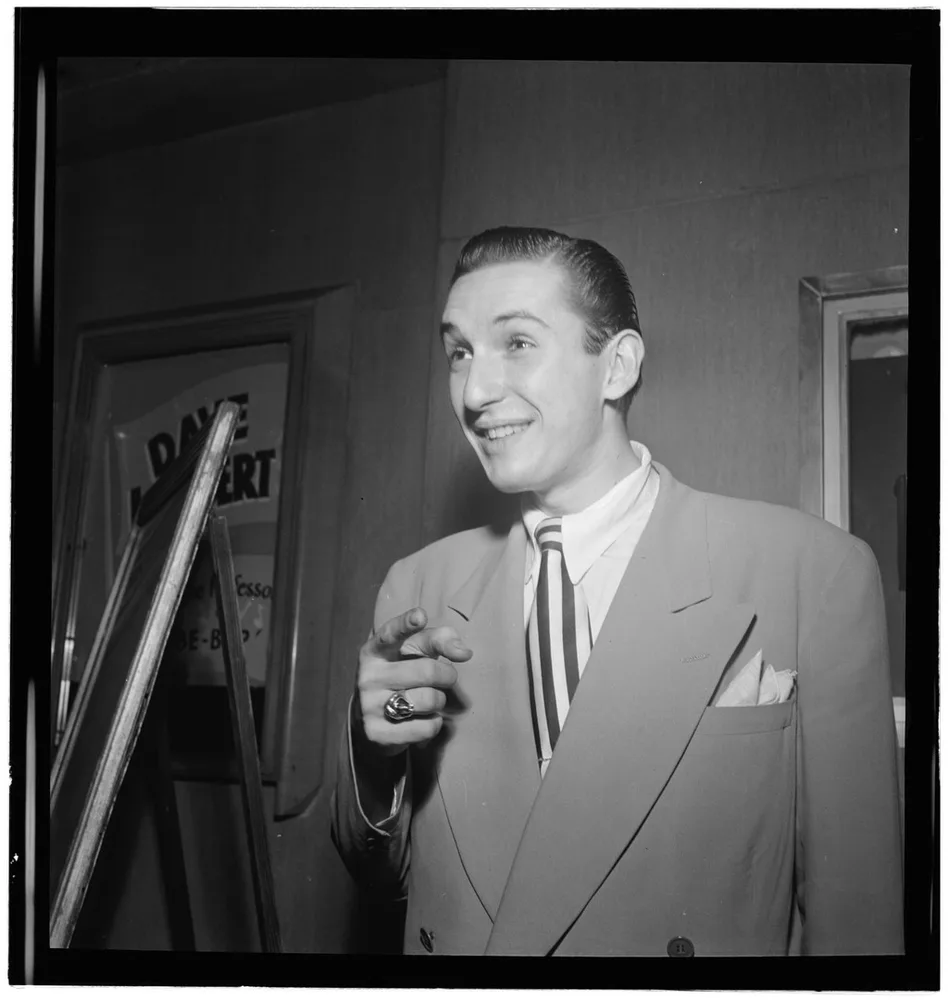
Serge Chaloff photographed by William P. Gottlieb, believed to be at the Club Troubadour, New York, circa September 1947, during his first year in Woody Herman's Second Herd Public domain (PD-Gottlieb: the photographer donated the rights in his jazz photographs to the public, effective January 1, 2010; the negatives are held in the Library of Congress Music Division, William P. Gottlieb Collection, digital ID gottlieb.01211) — Wikimedia Commons — https://commons.wikimedia.org/wiki/File:Serge_Chaloff_1947_(Gottlieb_01211).jpg (file itself: https://upload.wikimedia.org/wikipedia/commons/0/0a/Serge_Chaloff_1947_%28Gottlieb_01211%29.jpg)
.jpg)

Serge Chaloff was born November 24, 1923, in Boston into a household where music was the family trade. His father, Julius Chaloff, was a pianist and composer; his mother, Margaret Chaloff, taught piano in Boston under the professional name Madame Chaloff and became one of the city's most sought-after teachers. Chaloff started on piano at six and studied clarinet with Manuel Valerio of the Boston Symphony Orchestra. At twelve he heard Harry Carney, the baritone saxophonist who anchored Duke Ellington's reed section for four decades, and taught himself the horn without a teacher. He later explained the decision to Leonard Feather in blunt terms: "Who could teach me? I couldn't chase [Harry] Carney around the country." From the age of fourteen he was working nights at Izzy Ort's Bar & Grille on Essex Street, underage and without a work permit.
The apprenticeship ran through the big bands. Chaloff played tenor with Tommy Reynolds in 1939, then took the baritone chair with Boyd Raeburn's orchestra in 1944 and 1945, a band that also carried Dizzy Gillespie and Al Cohn, and moved on to Georgie Auld and Jimmy Dorsey through 1945 and 1946. Auld's 52nd Street engagements put him in the middle of the new bebop vocabulary, and by 1946 he was recording small-group dates constantly: Sonny Berman's Big Eight, Bill Harris's Big Eight, the Ralph Burns Quintet, and Red Rodney's Be-Boppers. His first sessions under his own name came fast. On September 21, 1946, he cut a quintet date in Hollywood for Ross Russell's Dial label, and on March 5, 1947, he led a sextet in New York for Savoy with Red Rodney on trumpet, Earl Swope on trombone, George Wallington on piano, Curly Russell on bass, and Tiny Kahn on drums, producing "Pumpernickel," "Serge's Urge," "A Bar A Second," and Kahn's "Gabardine and Serge."
Later in 1947 Chaloff joined Woody Herman's Second Herd and became the bottom voice in the saxophone section that gave the band its name in jazz history. Jimmy Giuffre's chart "Four Brothers," recorded for Columbia on December 27, 1947, set three tenors against one baritone and handed the solos in sequence to Zoot Sims, Chaloff, Herbie Steward, and Stan Getz. The same section carried "Keen and Peachy," "The Goof and I," and "Man, Don't Be Ridiculous." Feather singled him out in Inside Be-Bop in 1949: "Great conception and execution, good taste, clean tone and Bird-like style have made him the No.1 bop exponent of the baritone." Down Beat's readers voted him the year's best baritone saxophonist three times and Metronome's readers five times across the years 1949 to 1953. The band years came at a cost. Chaloff was using heroin by 1947, and Gene Lees described him as the Herd's supplier as well as its heaviest user, dispensing to bandmates behind a blanket hung across the back of the bus. Herman confronted him publicly in Washington, D.C., and Chaloff was widely blamed inside the band for the drug-related death of trumpeter Sonny Berman in January 1947, at twenty-one.
Chaloff went home to Boston in 1950 and spent the next four years there, working the Hi Hat, the Red Fox Cafe, and the Petty Lounge, and traveling for club dates as far as Rock Island, Illinois, where a February 1953 quartet engagement at the Buvette Club was taped and eventually issued. A September 3, 1950, set at the Celebrity Club in Providence, Rhode Island, was broadcast and later released as Boston 1950. He stopped performing almost entirely through 1952 and 1953. Late in 1953 the Boston disc jockey Bob "The Robin" Martin took over as his manager, and in October 1954 Chaloff committed himself to drug rehabilitation at Bridgewater State Hospital, leaving three and a half months later, in February 1955, clean. The Boston musicians who carried him through the comeback were Charlie Mariano and Boots Mussulli on alto, Herb Pomeroy on trumpet, and Dick Twardzik on piano. Mussulli, from Milford, Massachusetts, had held the jazz alto chair in Stan Kenton's orchestra from 1944 to 1947. Two records for George Wein's local Storyville label came out of that circle: a June 1954 quintet date with Mussulli and Russ Freeman, and a nine-piece September 1954 session built around Twardzik's title composition, The Fable of Mabel.
Martin's connections got Chaloff a Capitol contract, and the two albums that resulted are the reason he is still argued about. Boston Blow-Up! was recorded at Capitol's New York studios on April 4 and 5, 1955, with the Boston sextet of Mussulli, Pomeroy, pianist Ray Santisi, bassist Everett Evans, and drummer Jimmy Zitano, most of the writing by Mussulli. Jack Tracy gave it five stars in Down Beat: "Chaloff offers the best display of his talents ever to be put on wax." Eleven months later, on March 14 and 16, 1956, Chaloff walked into Capitol's Los Angeles studio with a rhythm section he had never worked with and no plan. Pianist Sonny Clark was recording for Blue Note, bassist Leroy Vinnegar was the busiest bassist on the Los Angeles session scene, and drummer Philly Joe Jones was holding the chair in Miles Davis's quintet. Chaloff's own account: "this time I was feeling a little more easy-going, and I decided to make a record just to blow. I picked out what I felt was the best rhythm section around and told them just to show up...no rehearsals...no tunes set...and trust to luck and musicianship." The seven quartet performances issued as Blue Serge are called "Chaloff's masterpiece" in Richard Cook and Brian Morton's Penguin Guide to Jazz.
Two months after that session, playing golf in May 1956, Chaloff was hit by back and abdominal pain that left his legs paralyzed. Exploratory surgery at Massachusetts General Hospital found lesions on his spine, and a course of X-ray treatment followed. He kept recording. On June 18, 1956, at Fine Sound in New York, he played baritone on a twenty-minute reading of Charlie Parker's "Billie's Bounce" for Metronome All-Stars 1956, in a band that included Lee Konitz, Al Cohn, Thad Jones, Charles Mingus, and Art Blakey. His last studio date came February 11, 1957, at Webster Hall in New York, reuniting the Four Brothers front line with Sims, Cohn, and Steward for the Vik album The Four Brothers... Together Again!; Charlie O'Kane covered the written baritone section parts so Chaloff could save his strength for the solos. His brother Richard remembered him going to the session in a wheelchair: "when he stood up and played, you never knew he was a sick fellow." Don Gold's Down Beat review called it "a kind of significant farewell in the language he knew best." Chaloff played his final club dates from a wheelchair at the Stable on Huntington Avenue in Boston in May 1957. He was admitted to Massachusetts General on July 15 and passed away the following day, July 16, 1957, at thirty-three. He is buried at Forest Hills Cemetery in Jamaica Plain.
Chaloff took the baritone saxophone, an instrument most players used as a section anchor, and made it move at bebop speed while keeping the full weight of its bottom register in reserve. His starting points were Harry Carney with Duke Ellington and Jack Washington with Count Basie, but what he built on top of them came from Charlie Parker, and Stuart Nicholson has argued that Chaloff absorbed the emotional logic of Parker's playing rather than copying its phrases. His brother Richard described the technical effect from close range: "he could play (baritone) like a tenor sax. The only time you knew it was a baritone was when he took it down low. He played it high....He had finger dexterity, I used to watch him, you couldn't believe the speed he played." The other half of the style was a vibrato and a dynamic range wider than anything the horn had carried before, running from a near-inaudible whisper to a full shout, which is why he is still described as the most openly emotive baritone player in the music's history. That expressive, ballad-centered conception, alongside Gerry Mulligan's lighter and more contrapuntal approach, defined what the baritone was understood to be until Pepper Adams drove the instrument through hard bop's fastest tempos with a rougher tone a decade later.
- Blue Serge (1956, Capitol) - Recorded in Los Angeles on March 14 and 16, 1956, with no rehearsal and no set repertoire, backed by Sonny Clark, Leroy Vinnegar, and Philly Joe Jones; the Penguin Guide to Jazz calls it his masterpiece and singles out "Thanks for the Memory." Spotify - Blue Serge Listen
- Boston Blow-Up! (1955, Capitol) - The comeback record, cut in New York in April 1955 with his Boston sextet of Boots Mussulli, Herb Pomeroy, Ray Santisi, Everett Evans, and Jimmy Zitano; five stars in Down Beat. Spotify - Boston Blow-Up! Listen
- Serge Chaloff Plays The Fable of Mabel (1955, Storyville) - A nine-piece Boston date from September 1954 with Charlie Mariano, Herb Pomeroy, and Dick Twardzik, whose three-part title composition is the most ambitious writing on any Chaloff record. Spotify - The Fable Of Mabel Listen
- The Four Brothers... Together Again! (1957, Vik) - His last studio session, February 11, 1957, reassembling the Woody Herman saxophone section with Zoot Sims, Al Cohn, and Herb Steward under Elliot Lawrence's direction. Spotify - Together Again! Listen
- George Wein Presents Serge Chaloff and Boots Mussulli featuring Russ Freeman (1955, Storyville) - The 10-inch LP that announced his return to playing, six tunes chosen and arranged by Chaloff, with Jimmy Woode on bass and Buzzy Drootin on drums. Spotify - The Fable Of Mabel (the CD edition of The Fable of Mabel opens with all six of these tracks) Listen
- Four Brothers (1947, Columbia) - As a sideman: Jimmy Giuffre's chart for Woody Herman's Second Herd, recorded December 27, 1947, with Chaloff taking the second solo behind Zoot Sims. Not confirmed as a standalone album on Spotify.
- Metronome All-Stars 1956 (1956, Clef) - As a sideman: a twenty-minute "Billie's Bounce" recorded June 18, 1956, weeks after his paralysis, alongside Lee Konitz, Thad Jones, Charles Mingus, and Art Blakey.
Serge Chaloff: Full Discography
Identity confirmed via the live Discogs API, artist ID 309987 ("Serge Chaloff," born November 24, 1923 in Boston, died July 16, 1957 in Boston, listed as the son of pianist Julius Chaloff and piano teacher Margaret "Madame" Chaloff). Discogs credits Chaloff on 299 releases under that artist ID: 34 in a "Main"/leader role, 208 sideman "Appearance" credits, 55 track-level "TrackAppearance" credits, and 2 unofficial releases. Four additional Discogs artist entries carry his group billings, and their leader releases are folded in below: The Serge Chaloff Sextet (2907510, Boston Blow-Up!), Serge Chaloff And The Herdsmen (4583010), Serge Chaloff's All Stars (5286870), and Serge Chaloff Quintet (6561278).
He died at thirty-three after four years away from music, and the leader catalog is correspondingly small: five original albums, a handful of 78 and 10-inch sessions, and a set of posthumous archival releases. The tables below are complete for the leader/co-leader catalog as Discogs documents it, and selective for the sideman work.
Session dates below marked "(Mosaic)" come from the session log published with the Mosaic Records box The Complete Serge Chaloff Sessions (MD4-147, 1993), which is the most detailed primary listing of his leader dates.
As Leader / Co-Leader
| Album Title | Recording Date(s) | Release Date | Label | Catalog Number | Format(s) | Personnel | Role | Reissue History | Spotify | Buy | Notes |
|---|---|---|---|---|---|---|---|---|---|---|---|
| Blue Serge | Capitol Studios, Los Angeles, March 14 and 16, 1956 (Mosaic) | 1956 | Capitol Records | T 742 (cover/spine), T-742 (labels) | Vinyl, LP, Album, Mono | Serge Chaloff (baritone sax), Sonny Clark (piano), Leroy Vinnegar (bass), "Philly" Joe Jones (drums) | Leader | Split across three Capitol 7-inch EPs (Blue Serge Parts 1, 2 and 3), 1956; LP reissue on Affinity, 1986; paired with Boston Blow-Up! on Definitive, 2004 and Essential Jazz Classics, 2012; complete session (8 masters incl. "How About You") in the Mosaic box, 1993 | Spotify - Blue Serge | — | The album sleeve says only "recorded in Hollywood, March, 1956"; the Mosaic log splits it into March 14 (5 masters) and March 16 (3 masters). Richard Vacca's Boston Jazz Chronicles gives March 14-15 instead, so the second date is not settled. Unrehearsed, no repertoire agreed in advance |
| Boston Blow-Up! | Capitol Studios, New York City, April 4 and 5, 1955 (Mosaic; confirmed on the LP sleeve) | 1955 | Capitol Records | T-6510 | Vinyl, LP, Album, Mono | Serge Chaloff (baritone sax), Boots Mussulli (alto sax), Herb Pomeroy (trumpet), Ray Santisi (piano), Everett Evans (bass), Jimmy Zitano (drums); sleeve notes by Will MacFarland | Leader (billed The Serge Chaloff Sextet) | Split across three Capitol 7-inch EPs (Parts 1, 2 and 3), 1955; paired with Blue Serge on Definitive, 2004 and Essential Jazz Classics, 2012; complete session in the Mosaic box, 1993 | Spotify - Boston Blow-Up! | — | Recorded in New York despite the title; the band is Chaloff's Boston working group. Mussulli wrote or arranged most of the originals and Pomeroy arranged the standards; the opening track "Bob, the Robin" is named for Chaloff's manager, the Boston DJ Bob Martin |
| Serge Chaloff Plays The Fable Of Mabel | Ace Recording, Boston, September 3, 1954 (Mosaic) | 1955 | Storyville | LP 317 | Vinyl, 10", LP, Album, Mono | Serge Chaloff (baritone sax), Charlie Mariano (alto sax), Varty Haroutunian (tenor sax), Herb Pomeroy and Nick Capazutto (trumpet), Gene DiStachio (trombone), Dick Twardzik (piano), Ray Oliveri (bass), Jimmy Zitano (drums); cover design and photography by Burt Goldblatt | Leader | Reissued with the Storyville 310 material and alternate takes on the Black Lion CD The Fable of Mabel, 1986 and 1995; sessions also in the Mosaic box, 1993 | Spotify - The Fable Of Mabel | — | The linked 17-track CD combines this LP, Storyville LP 310, and alternate takes; the original 10-inch holds six titles. Twardzik's title piece is the most ambitious composition in the Chaloff catalog |
| George Wein Presents Serge Chaloff and Boots Mussulli featuring Russ Freeman (commonly listed as Serge and Boots) | Boston; the Discogs release states June 9, 1954, the Mosaic log states Ace Recording, Boston, late March 1954. Conflict unresolved | 1955 | Storyville | STLP 310 | Vinyl, 10", LP, Mono | Serge Chaloff (baritone sax), Boots Mussulli (alto sax), Russ Freeman (piano), Jimmy Woode (bass), Buzzy Drootin (drums) | Co-leader (with Boots Mussulli) | Six titles reissued as the opening tracks of the Black Lion CD The Fable of Mabel, 1986 and 1995; also in the Mosaic box, 1993 | Spotify - The Fable Of Mabel | — | Chaloff's first record after Bridgewater; George Wein's liner note calls it a return. All six selections were chosen and arranged by Chaloff |
| The Four Brothers... Together Again! | Webster Hall, New York City, February 11, 1957 | 1957 | Vik (RCA Victor) | LX-1096 | Vinyl, LP, Album, Mono | Serge Chaloff (baritone sax), Zoot Sims, Al Cohn and Herb Steward (tenor sax), Elliot Lawrence (piano, conductor), Burgher "Buddy" Jones (bass), Don Lamond (drums); produced by Bob Rolontz | Co-leader (billed to the four saxophonists) | Also issued as a Vik 7-inch EP, 1957; remastered CD reissue, 1995 | Spotify - Together Again! | — | Chaloff's last studio session, made from a wheelchair; Charlie O'Kane played the written baritone section parts so Chaloff could conserve his strength for solos. Sides are transposed on the original LP relative to the label and back cover |
| Blue Serge (Dial 78 side) / Relaxin' At Camarillo | C.P. MacGregor Studios, Hollywood, September 21, 1946 (Mosaic) | c. 1947 | Dial Records | — | Shellac, 10" | Serge Chaloff Quintet; full personnel not itemized in the Discogs data | Leader (one side; the other is The Charlie Parker All-Stars) | Both masters, including the long version, in the Mosaic box, 1993 and on Memorial: We The People Bop (Cool & Blue, 1992) | Not found on Spotify as a standalone release | — | Chaloff's first date under his own name, produced by Dial's Ross Russell. Shares the 78 with Parker's "Relaxin' at Camarillo" |
| Savoy sextette sides: "Pumpernickel," "Serge's Urge," "Gabardine and Serge," "A Bar A Second" | New York City, March 5, 1947 (Mosaic) | 1947 (78s); collected on Savoy MG 9026 (10") and New Sounds In Modern Music Vol. 4 EP, 1953 | Savoy Records | MG 9026 | Shellac 10"; later 7" EP and 10" LP | Serge Chaloff (baritone sax), Red Rodney (trumpet), Earl Swope (trombone), George Wallington (piano), Curly Russell (bass), Tiny Kahn (drums); produced by Teddy Reig | Leader (billed variously Serge Chaloff Sextette, Serge Chaloff's All Stars, and Serge And His Be Bop Buddies) | Collected on Lestorian Mode (Savoy MG 12105, 1957), Memorial: We The People Bop (1992), the Mosaic box (1993), The Complete Small Group Bop Sessions (1999), and Mosaic's Classic Savoy Be-Bop Sessions 1945-49 (2016) | Not found on Spotify as a standalone release | — | Three titles written and arranged by Chaloff; "Gabardine and Serge" is Tiny Kahn's. "A Bar A Second" first appeared on a Savoy 78 backed with Fats Navarro's "Fat Girl" |
| Herdsmen sides: "Chickasaw," "Bopscotch," "The Most!," "Chasin' the Bass" | New York City, March 10, 1949 (Mosaic) | 1949 (78s); collected on New Stars, New Sounds Volume 2, 1951 | Mercer Records | LP 1003 | Shellac 10"; later 10" LP | Serge Chaloff (baritone sax), Red Rodney (trumpet), Earl Swope (trombone), Al Cohn (tenor sax), Terry Gibbs (vibraphone), Barbara Carroll (piano), Oscar Pettiford (bass), Denzil Best (drums); produced by Leonard Feather | Leader (billed Serge Chaloff And The Herdsmen) | New Stars, New Sounds Volume 2 splits the record with Oscar Pettiford's cello quartet; also on the Esquire EP The Most, the Mosaic box (1993), and The Complete Small Group Bop Sessions (1999) | Not found on Spotify as a standalone release | — | An offshoot of the Woody Herman band, hence the billing |
| "King Edward the Flatted Fifth" / "Pat" | Boston, April 16, 1949 (Mosaic) | 1949 | Motif Records | — | Shellac, 10" | Serge Chaloff and Ralph Burns; Discogs carries the septet billing (artist 743213) but does not itemize the full personnel | Co-leader (billed Serge Chaloff And Ralph Burns) | On the Mosaic box (1993), Memorial: We The People Bop (1992), and The Complete Small Group Bop Sessions (1999) | Not found on Spotify as a standalone release | — | A one-off Boston date for a local label |
| Boston 1950 | Celebrity Club, Providence RI, September 3, 1950; Hi Hat, Boston, February 22, 1950 and September/October 1950; duo tracks, Boston, November 17, 1946 | 1994 | Uptown Records | UPCD 27.38 | CD, Album | Serge Chaloff (baritone sax) with, across the four sessions, Nat Pierce, Al Vega and Rollins Griffith (piano), Sonny Truitt and Milt Gold (trombone), George Jones, Jack Lawlor and Joe Shulman (bass), Joe MacDonald and Sonny Taclof (drums) | Leader | First issue of this material | Not found on Spotify | — | Broadcast and location recordings, including a Chaloff interview and versions of "Four Brothers," "The Goof and I," and "Keen and Peachy" |
| Buvette Club, Rock Island, February 1953 | Buvette Club, Rock Island, Illinois, February 1953 | 2017 | Uptown Records | UPCD 27.88 | CD, Album, Mono | Serge Chaloff (baritone sax), Jerry Murphy (piano), Al Dimino (bass), Don Sheldon (drums) | Leader | First issue; all titles previously unreleased | Not found on Spotify | — | A club date from the middle of Chaloff's withdrawal from the music business, thirteen titles including "Willow Weep for Me," "Move," and "Tea for Two" |
| The Complete Serge Chaloff Sessions | Compiles sessions of September 21, 1946 through March 16, 1956 | 1993 | Mosaic Records | MD4-147 | 4xCD, Box Set, Compilation, Limited Edition, Numbered | All Chaloff leader sessions; production for reissue by Michael Cuscuna, mastering by Joe Brescio, transfers by Malcolm Addey | Leader (compilation) | Limited to 5,000 hand-numbered copies; long out of print | Not found on Spotify | — | The authoritative collected edition of the leader catalog and the source of the session dates used throughout this file |
Later commercial compilations drawn from the same material, all listed on Discogs under artist 309987, include Memorial: We The People Bop (Cool & Blue, 1992), The Complete Small Group Bop Sessions (The Jazz Factory, 1999), A Proper Introduction to Serge Chaloff: The Baritone Sax Master (Proper, 2004), Boss Baritone (Proper 4xCD box, 2011), and Thanks for the Memory (Musica Jazz, 2013). They are not itemized here because they contain no unique recordings.
As Sideman (selected major credits)
This is a representative set, not a complete list of the 208 "Appearance" and 55 "TrackAppearance" credits on Chaloff's Discogs page.
| Year | Project (Leader) | Title | Label | Catalog | Role | Notes |
|---|---|---|---|---|---|---|
| 1945 | Boyd Raeburn And His Orchestra | "Summertime" / "March of the Boyds"; "I Didn't Know About You" / "Interlude (Night in Tunisia)" | Guild Records | Baritone saxophone | Chaloff's first prominent big-band chair; the band also carried Dizzy Gillespie and Al Cohn | |
| 1946 | Jimmy Dorsey And His Orchestra | "If I'm Lucky" / "One More Kiss"; "All That Glitters Is Not Gold" / "Doin' What Comes Natur'lly" | Decca | Baritone saxophone | ||
| 1946 | Georgie Auld And His Orchestra | "In the Middle" / "Stompin' at the Savoy"; "Route 66" | Label not specified in the Discogs entry | Baritone saxophone | The 52nd Street engagements where Chaloff absorbed bebop firsthand | |
| 1946 | Oscar Pettiford And His 18 All Stars, featuring Dizzy Gillespie and Don Byas | "Somethin' for You" / "Empty Bed Blues" | Label not specified in the Discogs entry | Baritone saxophone | ||
| 1946-1948 | Sonny Berman's Big Eight | "Curbstone Scuffle" / "Nocturne" | Dial Records | Baritone saxophone | Berman died of a drug-related heart attack in January 1947 at twenty-one | |
| 1946-1948 | Bill Harris Big Eight | "Woodchopper's Holiday" / "Somebody Loves Me" | Dial Records | Baritone saxophone | ||
| 1947 | Red Rodney's Be-Boppers | "Fine and Dandy" / "Elevation" | Keynote (per the Memorial reissue notes, which date the session January 29, 1947, New York) | Baritone saxophone | Reissue sources disagree on original label; the recording date is well attested | |
| 1947-1949 | Woody Herman And His Orchestra (the Second Herd) | "Four Brothers," "Keen and Peachy," "The Goof and I," "I Told Ya I Love Ya, Now Get Out," "Sabre Dance," "Early Autumn," "Keeper of the Flame," "Lemon Drop," "That's Right" | Columbia; Capitol | Baritone saxophone, Four Brothers section | "Four Brothers" recorded December 27, 1947 for Columbia, Jimmy Giuffre's chart, solo order Zoot Sims, Chaloff, Herbie Steward, Stan Getz. Later collected on The Three Herds (Columbia, 1955), Early Autumn (Capitol, 1960), and The Thundering Herds | |
| 1950 | Count Basie (All Star Octet) | "Bluebeard Blues" / "The Golden Bullet" | Label not specified in the Discogs entry | Baritone saxophone | Basie's short-lived small group, with Wardell Gray, Buddy DeFranco, and Clark Terry; later gathered on Blues by Basie and Count Basie compilations | |
| 1950, 1951 | Metronome All Stars | "Double Date" / "No Figs" (1950); "Early Spring" / "Local 802 Blues" (1951) | Label not specified in the Discogs entries | Baritone saxophone | The magazine's annual poll-winners' sessions, which Chaloff qualified for on the strength of his Metronome wins | |
| 1956 | Metronome All-Stars 1956 | "Billie's Bounce" (20:30) | Clef Records | MG C-743 | Baritone saxophone | Recorded at Fine Sound, New York, June 18, 1956, weeks after Chaloff's paralysis, with Lee Konitz, Al Cohn, Thad Jones, Eddie Bert, Tony Scott, Teddy Charles, Tal Farlow, Billy Taylor, Charles Mingus, and Art Blakey. Norman Granz folded Clef into Verve later in 1956, so the album is frequently cited as a Verve release |
| 1957 | Brew Moore, Stan Getz, Serge Chaloff (various artists) | Lestorian Mode | Savoy Records | MG 12105 | Baritone saxophone (four tracks) | Anthologises Chaloff's March 5, 1947 Savoy sextette sides alongside Getz and Brew Moore material; Gerry Mulligan, Kai Winding, Zoot Sims, Al Cohn, and George Wallington also appear. Lacquer cut and mastered by Rudy Van Gelder |
| 1953, 1956 | Woody Herman Woodchoppers | Swinging with the Woody Herman Woodchoppers; Woody Herman Woodchoppers | Label not specified in the Discogs entries | Baritone saxophone | Small-group offshoots of the Herman band drawing on the 1947-49 sides |
Where a label or catalog number is left blank above, the Discogs entry for that release does not carry one, and no second source was found to confirm it. Nothing in this file is asserted from memory.
- Woody Herman - baritone chair in the Second Herd, 1947 to 1949, and the low voice in the Four Brothers saxophone section on "Four Brothers," "Keen and Peachy," "The Goof and I," "Early Autumn," and "Lemon Drop."
- Zoot Sims, Al Cohn, Herb Steward, Stan Getz - the Four Brothers section itself; Sims, Cohn, and Steward rejoined Chaloff for his final studio date in February 1957.
- Boots Mussulli - alto saxophonist from Milford, Massachusetts and a Stan Kenton alumnus (1944 to 1947), Chaloff's co-leader on the 1954 Storyville quintet date and the principal writer on Boston Blow-Up!.
- Herb Pomeroy, Ray Santisi, Everett Evans, Jimmy Zitano, Charlie Mariano, Dick Twardzik - the Boston circle behind the 1954 to 1955 comeback records; Chaloff also played in Pomeroy's big band in 1956.
- Sonny Clark, Leroy Vinnegar, Philly Joe Jones - the pickup rhythm section on Blue Serge, assembled without rehearsal in Los Angeles in March 1956.
- Red Rodney, Earl Swope, George Wallington, Curly Russell, Tiny Kahn - his Savoy sextet of March 5, 1947, one of the earliest bebop dates led by a baritone player.
- Oscar Pettiford - bassist on Chaloff's 1949 Herdsmen sides for Mercer and on Pettiford's own 1946 all-star date featuring Dizzy Gillespie and Don Byas; the two also split a 1951 Mercer ten-inch, New Stars, New Sounds Volume 2.
- Lee Konitz, Thad Jones, Charles Mingus, Art Blakey, Tal Farlow, Billy Taylor, Tony Scott, Eddie Bert, Teddy Charles - the Metronome All-Stars 1956 band on "Billie's Bounce," June 18, 1956.
- Bob "The Robin" Martin - the Boston disc jockey who managed Chaloff from late 1953, steered him into rehabilitation, and negotiated the Capitol contract; Boston Blow-Up! opens with a tune named for him.
More Bebop Artists
See all 166 Bebop artists →More American Jazz Artists
See all 567 American artists →- Wikipedia: Serge Chaloff
- Discogs: Serge Chaloff (artist 309987)
- Wikipedia: Blue Serge
- Wikipedia: Boston Blow-Up!
- Wikipedia: Metronome All-Stars 1956
- Wikipedia: Four Brothers (jazz standard)
- Richard Vacca, The Boston Jazz Chronicles: Serge Chaloff, The Capitol Sessions
- New England Jazz Alliance / Jazz History Database: Serge Chaloff
- All About Jazz: Serge Chaloff, March 1947
- Jazz Journal: Boots Mussulli, the diminutive giant
- uDiscover Music: Blue Serge, Serge Chaloff's Baritone Sax Blow Out
- Mosaic Records: The Complete Serge Chaloff Sessions (MD4-147) session log, via Discogs release data