 JAZZPROFILES lives in the music 2,303 Jazz Artists fully Profiled!
Neal Hefti
Last updated November 8, 2026
Listen on Spotify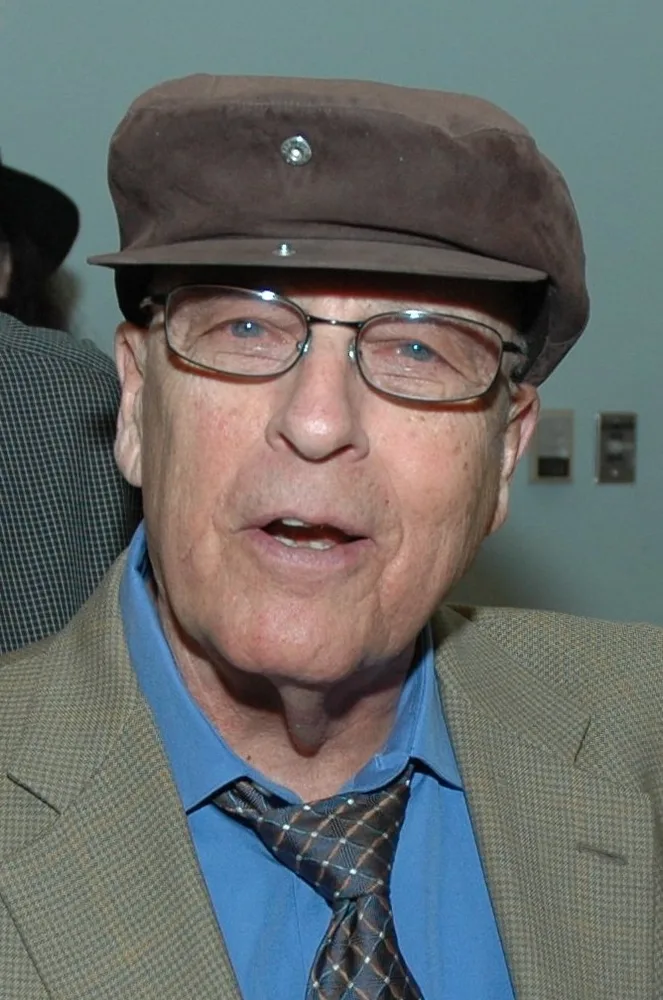
Neal Hefti, American trumpeter, arranger and composer, photographed by Wally Wingert (4-i's Production) CC BY 3.0 (credit: Wally Wingert, 4-i's Production) — Wikimedia Commons — https://commons.wikimedia.org/wiki/File:Neal_Hefti.jpg

Neal Paul Hefti was born on October 29, 1922, in Hastings, Nebraska, to a family that depended on charity when he was small. He started on trumpet in school at eleven and grew up in and around Omaha, where the Southwest territory bands and touring New York players passed through; he later named Harry Edison and Buck Clayton of Count Basie's band, and Dizzy Gillespie with Cab Calloway, as the trumpeters who struck him most. By high school he spent his summers in territory bands to help his family, and in 1939, still a junior at Omaha's North High School, he began writing arrangements of vocal ballads for local bands, among them Nat Towles's, whose book included his chart of "Anchors Aweigh." Some of the material he wrote in high school was also used by the Earl Hines band.
In 1941 he left for New Jersey with Dick Barry's band, was fired after two gigs because his sight-reading was not good enough, and ended up in Bob Astor's band, where the drummer Shelly Manne roomed with him and remembered him writing a full chart for the next night with no score. Classified 4-F during the war after a car in New York broke his pelvis, he played with Bobby Byrne in late 1942 and then with Charlie Barnet, for whom he wrote the arrangement of "Skyliner." He spent his evenings on 52nd Street, slipping into club kitchens to hear Gillespie and the young bebop players. After a stretch with Les Lieber's rhumba band in Cuba he joined Charlie Spivak in 1943, which took him to California for a band film, and he stayed there, playing a few months with Horace Heidt in 1944.
That year he joined Woody Herman's First Herd as a trumpeter, in what he later called his first real jazz band, one whose players carried Duke Ellington and Herman records on the road. The band was among the first big bands to work with bebop ideas, and Hefti, who had absorbed the music on 52nd Street, wrote much of that material; the bassist Chubby Jackson credited him with putting bop figures into the ensemble passages. He composed "Wild Root" and "The Good Earth," arranged "Blowin' Up a Storm," and with the pianist Ralph Burns arranged "Caldonia," a Louis Jordan hit that the band recorded on February 26, 1945. The eight-bar trumpet passage near the end of that record, often attributed to Gillespie, was Hefti's writing, and it is said to have been what drew Igor Stravinsky to the band, for which Stravinsky later wrote the Ebony Concerto. On November 2, 1945, Hefti married the band's vocalist, Frances Wayne. They both left Herman in late 1946 so that he could write full time.
As a freelancer he wrote for Buddy Rich's band, Billy Butterfield's, and George Auld's (including "Mo-Mo"), for Harry James's band in the late 1940s, and for Charlie Ventura's short-lived big band, in which he also played and arranged "How High the Moon." He formed his own band in 1947 with Wayne as the featured singer and led it off and on through the 1950s. In December 1947 he recorded "Repetition," a Cuban-flavored piece for big band and strings that he had written with no soloist in mind; Charlie Parker, who was in the studio, asked to play on it, and the result appeared on Norman Granz's anthology The Jazz Scene (1949).
In 1950 he began writing for Count Basie, whose band came to be called the "New Testament" ensemble. Basie recalled Hefti coming by to offer to put something in the book, returning with "Little Pony," then "Sure Thing," "Why Not?" and "Fawncy Meeting You," and the band taking to his writing from then on. The tight, carefully fitted charts gave the orchestra an ensemble identity that lasted more than twenty years. The Atomic Mr. Basie (Roulette), recorded October 21 and 22, 1957, was built from his compositions and arrangements, among them "Li'l Darlin'," "Splanky," "The Kid from Red Bank," "Flight of the Foo Birds," "Fantail" and "Teddy the Toad." It was Basie's first Roulette album and won two Grammy Awards at the first ceremony in 1959, for Best Jazz Performance, Group and Best Performance by a Dance Band. Basie, Hefti and the producer Teddy Reig made Basie Plays Hefti about six months later, with "Cute" among its eleven Hefti pieces. His arrangements also shaped Basie's sound on standards: Frank Sinatra's Sinatra-Basie (Reprise, 1962), recorded in Hollywood in October 1962, used Hefti charts written for the band's instrumentation, and Sinatra and Swingin' Brass (Reprise, 1962) was the first full Sinatra album with Hefti as arranger and conductor.
Through the 1950s Hefti recorded under his own name for Coral, Epic, RCA Victor and Vik, and he earned a Grammy nomination for his album Jazz Pops (Reprise, 1962). Miles Davis said in a 1955 interview that Basie's band would not sound as good without Hefti but that Hefti's own band could not play those arrangements nearly as well, a remark that fits the way his reputation rested on his writing more than his bandleading. He wrote the string arrangements for Clifford Brown's Clifford Brown with Strings (EmArcy), recorded January 18 to 20, 1955, and adapted and arranged twelve songs for Della Reese's Della (1960), another Grammy nominee. Later in the decade he gave up playing the trumpet altogether to concentrate on writing and conducting, working behind singers in the studio and on television programs including Arthur Godfrey's and Kate Smith's.
Hefti moved back to Los Angeles in 1960, and over the next decade much of his output went to film and television. His scores included Sex and the Single Girl (1964), How to Murder Your Wife, Boeing Boeing, Harlow and Synanon (all 1965), Lord Love a Duck and Duel at Diablo (1966), Barefoot in the Park (1967) and The Odd Couple (1968); "Girl Talk," from Harlow, drew two Grammy nominations. In 1961 he also became the chief artists and repertoire representative at Reprise Records. His theme for the Batman television series (1966), a twelve-bar blues riff on three chords, won the Grammy for Best Instrumental Theme and was a hit single for the Marketts and for Hefti himself. His Odd Couple film theme returned in the television series of the early 1970s, and his work on that show earned two more Grammy nominations. After Frances Wayne passed away in Boston on February 6, 1978, he gradually withdrew from music and in later years said he was mostly looking after his copyrights. He was named to the ASCAP Jazz Wall of Fame in 2005, and he passed away of natural causes at his home in Toluca Lake, California, on October 11, 2008, at 85.
Hefti's strength was writing cut to fit the players who would perform it. For Basie he wrote short, tightly scored pieces that matched the band's soloists and kept the result sounding like Basie, a point Barry Ulanov made in his notes for Atomic Basie; as with Duke Ellington's writing for his own orchestra, the same charts sounded less convincing when another band, including Hefti's own, played them. In the First Herd he carried the vocabulary he had picked up from Dizzy Gillespie on 52nd Street into big-band ensemble writing, and as a trumpeter he played in a bop-inflected style. Alongside Ernie Wilkins and Frank Foster, he helped build the 1950s book of the Count Basie Orchestra, and Frank Wess had a showcase in his flute-and-brushes "Cute." The proportions of the career are worth stating plainly: his standing in jazz rests on the Herman and Basie years, but from 1960 the larger share of his output was film and television scoring, and for most listeners his name is attached to Batman and The Odd Couple. The Batman theme is built on a simple, repeating, blues-based figure, and its eleven shouts of the title are sung by an eight-voice chorus rather than played by horns, as Hefti himself said. In his screen scores he could still work in echoes of his jazz background, though they were written to the demands of the picture.
- "The Good Earth" and "Wild Root" (recorded 1945, issued 1946, Columbia) - Two Hefti originals for Woody Herman's First Herd, among that band's finest instrumentals.
- "Caldonia" (recorded February 26, 1945, Columbia) - Hefti and Ralph Burns's arrangement for Herman, with the eight-bar trumpet passage Hefti wrote.
- "Repetition" (recorded December 1947; The Jazz Scene, 1949, Mercury) - Hefti's piece for big band and strings, with Charlie Parker as the added soloist.
- Clifford Brown with Strings (1955, EmArcy) - Ballad album for Clifford Brown with string arrangements and conducting by Hefti. Spotify - Clifford Brown With Strings
- The Atomic Mr. Basie (1958, Roulette) - An album of his compositions and arrangements for the Count Basie orchestra, with "Li'l Darlin'" and "Splanky"; a Grammy winner. Spotify - The Atomic Mr Basie
- Basie Plays Hefti (1958, Roulette) - A follow-up made of Hefti pieces only, among them "Cute," recorded about six months after the first.
- Sinatra-Basie: An Historic Musical First (1962, Reprise) - Hefti's arrangements of standards for Basie's instrumentation behind Frank Sinatra. Spotify - Sinatra-Basie: An Historic Musical First
- Batman Theme (1966, RCA Victor) - His own recording of the television theme he wrote, a top-40 single that year (RCA Victor 47-8755, with "Batman Chase" on the B side).
Neal Hefti: Full Discography
Discogs artist ID 154315 ("Neal Hefti," real name Neal Paul Hefti, born October 29, 1922, in Hastings, Nebraska, died October 11, 2008, in Toluca Lake, California) was read in full on Discogs: it lists more than 3,000 entries, most of them appearances on Count Basie, Woody Herman, Harry James and Frank Sinatra releases, reissues and compilations. His own groups are filed under separate Discogs entities, among them "Neal Hefti's Orchestra" (artist ID 430844), "Neal Hefti Quintet" (1234598), "Neal Hefti And His Jazz Pops Orchestra" (4186119) and "The Neal Hefti Singers" (3112065); the albums billed that way that also appear in his own listing are included below. Hefti was mainly an arranger and composer, so the first table is a curated selection of his own albums rather than an exhaustive list, the second covers his film and television scores on record, and the third lists the principal recordings of other artists for which he wrote, arranged or conducted. Catalog numbers are those of the first or best-documented US pressing on Discogs; where Discogs gives no recording date the cell says so, and where Discogs and Wikipedia differ on a year the Notes column says so. Personnel is shown only where Discogs credits it.
As Leader / Co-Leader
| Album Title | Recording Date(s) | Release Date | Label | Catalog Number | Format(s) | Personnel | Role | Reissue History | Spotify | Buy | Notes |
|---|---|---|---|---|---|---|---|---|---|---|---|
| Swingin' on Coral Reef | August 1, 1951, April 3, 1952, November 14-15, 1952, Pythian Temple, New York City | 1953 | Coral | CRL 56083 | Vinyl, LP, 10-inch | Neal Hefti (composer, arranger) and his orchestra | Leader | Also issued on 45 rpm as Coral 9-8083; later reissues exist | — | — | Eight tracks drawn from his early Coral singles sessions; Discogs master 755854. |
| Songs for My Man | Not specified in Discogs data | 1956 | Epic | LN 3222 | Vinyl, LP, Mono | Frances Wayne (vocals), Neal Hefti and his orchestra | Co-leader (billed with Frances Wayne) | Reissued on CD in 1989 (Epic/Sony ESCA 5055) | — | — | Wayne was Hefti's wife and the vocalist of his band. |
| Hefti Hot 'n Hearty | Not specified in Discogs data | 1956 | Epic | LN 3187 | Vinyl, LP, Album, Promo | Neal Hefti and his orchestra | Leader | Reissued with Pardon My Doo-Wah on a 2001 Collectables CD | — | — | Wikipedia gives 1955 for this album; Discogs gives 1956. |
| Presenting Neal Hefti & His Orchestra | Not specified in Discogs data | 1956 | "X" (RCA) | LXA 1039 | Vinyl, LP, Mono | Neal Hefti and his orchestra | Leader | Not itemized | — | — | Wikipedia dates the RCA release 1955; Discogs filed the master as 1957 and the first pressing as 1956. |
| The Band with Young Ideas | Not specified in Discogs data | 1956 | Coral | CRL 57077 | Vinyl, LP | Neal Hefti (trumpet) and his orchestra | Leader | Not itemized | — | — | Discogs credits Hefti with composing and trumpet. |
| Concert Miniatures | Not specified in Discogs data | 1957 | Vik | LX-1092 | Vinyl, LP, Album | Neal Hefti (arranger, conductor) and his orchestra | Leader | Not itemized | — | — | Guitarist Tony Mottola appears on the album, according to his own profile. |
| Pardon My Doo-Wah | Not specified in Discogs data | 1958 | Epic | BN 504 | Vinyl, LP, Album, Stereo | Neal Hefti and his orchestra, with The Neal Hefti Singers | Leader | Reissued with Hefti Hot 'n Hearty on a 2001 Collectables CD | — | — | Discogs gives no year for the master; Wikipedia gives 1958. Billed to the orchestra and the Neal Hefti Singers. |
| Music, U.S.A. | Not specified in Discogs data | 1959 | Coral | CRL 757256 | Vinyl, LP, Album, Stereo | Neal Hefti and his orchestra | Leader | Not itemized | — | — | Stereo issue; a mono pressing also exists. |
| Light and Right! (The Modern Touch of the Neal Hefti Quintet) | Not specified in Discogs data | 1960 | Columbia | CS 8316 | Vinyl, LP, Album, Stereo | Neal Hefti (trumpet, arranger) and his quintet | Leader | Not itemized | — | — | Small-group album billed to the Neal Hefti Quintet. |
| A Salute to the Instruments | Not specified in Discogs data | 1960 | Coral | CRL 57286 | Vinyl, LP, Album, Mono | Neal Hefti and The Band with a Sweet Beat | Leader | Not itemized | — | — | Billed on the label to "Neal Hefti and The Band with a Sweet Beat." |
| Jazz Pops | Not specified in Discogs data | 1962 | Reprise | RS-6039 | Vinyl, LP, Album, Stereo | Neal Hefti and his Jazz Pops Orchestra | Leader | Not itemized | — | — | Grammy-nominated; includes "Li'l Darlin'," "Cute" and "Coral Reef," per Wikipedia. |
| Themes from TV's Top 12 | Not specified in Discogs data | February 1962 | Reprise | R9-6018 | Vinyl, LP | Neal Hefti and orchestra with 40 guitars and 8 pianos | Leader | Not itemized | — | — | Described on the release as a Neal Hefti spectacular with 40 guitars and 8 pianos. |
| Li'l Darlin' | Not specified in Discogs data | 1964 | 20th Century Fox | TFS 4139 | Vinyl, LP, Album | Neal Hefti (composer) and orchestra | Leader | Not itemized | — | — | Issued under two titles; Discogs files this and The Leisurely Loveliness of Neal Hefti & His Orchestra (Movietone MTM 1006, 1965) as separate masters, while Wikipedia dates the Movietone issue 1964 and the Fox issue 1965. |
| Hefti in Gotham City | Not specified in Discogs data | 1966 | RCA Victor | LSP-3621 | Vinyl, LP, Album, Stereo | Neal Hefti, his orchestra and chorus | Leader | Also issued in mono | — | — | Batman-era album; Discogs credits Hefti as composer and conductor. |
| Batman Theme and 11 Hefti Bat Songs | Recorded at RCA Victor's studio in Hollywood | 1966 | RCA Victor | LPM 3573 | Vinyl, LP, Mono | Neal Hefti (arranger, conductor) and orchestra | Leader | Later reissues exist, including expanded editions | — | — | The label prints the title as "Batman Theme" and 11 other bat songs. |
| Definitely Hefti! | Not specified in Discogs data | 1967 | United Artists | UAS 6573 | Vinyl, LP, Stereo | Neal Hefti (composer, conductor) and orchestra | Leader | Not itemized | — | — | Discogs credits Hefti as composer and conductor. |
Film and Television Scores (soundtrack albums)
Hefti wrote the music for these pictures and conducted the recordings; Discogs credits him as composer, arranger or conductor on the releases listed, or names him as composer of the score in the release notes.
| Year | Title | Label | Catalog | Role | Notes |
|---|---|---|---|---|---|
| 1964 | Sex and the Single Girl (original motion picture score) | Warner Bros. | WS 1572 | Composer | Stereo LP. |
| 1965 | How to Murder Your Wife (original motion picture score) | United Artists | UAL 4119 | Composer, conductor | Mono LP. |
| 1965 | Harlow (music from the score of the motion picture) | Columbia Masterworks | OS 2790 | Composer, arranger, conductor | Includes "Girl Talk," which drew two Grammy nominations per Wikipedia. |
| 1966 | Boeing Boeing | RCA Victor | LOC-1121 | Composer | The film is from 1965; the LP is dated 1966 on Discogs. |
| 1966 | Lord Love a Duck (original motion picture sound track) | United Artists | UAS 5137 | Composer | Stereo LP. |
| 1966 | Duel at Diablo | United Artists | ULP 1141 | Composer, conductor | Mono LP. |
| 1967 | Barefoot in the Park (music from the score) | Dot | DLP 3803 | Composer | Mono LP. |
| 1968 | The Odd Couple (music from the original motion picture score) | Dot | DLP 25862 | Composer, arranger, conductor | The film theme was reused for the early-1970s television series. |
As Arranger, Composer and Sideman (selected major credits)
A representative set, not an exhaustive one: the Herman and Basie recordings that made his name, and his best-known arranging dates for other artists.
| Year | Project (Leader) | Title | Label | Catalog | Role | Notes |
|---|---|---|---|---|---|---|
| 1945 | Woody Herman and His Orchestra | "Caldonia" | Columbia | Not confirmed | Co-arranger (with Ralph Burns) and trumpeter | Recorded February 26, 1945; the eight-bar trumpet passage near the end is Hefti's writing. |
| 1945-46 | Woody Herman and His Orchestra | "The Good Earth" / "Surrender" | Columbia | 36985 | Composer of "The Good Earth"; trumpeter in the band | A side recorded August 20, 1945, issued June 1946. |
| 1945-46 | Woody Herman and His Orchestra | "Wild Root" / "Atlanta, G. A." | Columbia | 36949 | Composer of "Wild Root"; trumpeter (uncredited on the label) | A side recorded September 10, 1945, issued March 1946. |
| 1946 | Woody Herman and His Woodchoppers / Orchestra | "Fan It" / "Blowin' Up a Storm" | Columbia | 37059 | Arranger of "Blowin' Up a Storm" | Arranger credit per Wikipedia and the Discogs artist profile; the label itself was not checked for it. |
| 1947 (issued 1949) | Neal Hefti's Orchestra with Charlie Parker, on The Jazz Scene (Norman Granz, various artists) | "Repetition" | Mercury | No catalog number printed | Composer and leader | Recorded December 1947 in New York; issued in a limited 78 rpm album dated 1949 (Library of Congress release date 1950). |
| 1955 | Clifford Brown | Clifford Brown with Strings | EmArcy | MG 36005 | Arranger and conductor of the strings | Recorded January 18-20, 1955; Discogs credits him as conductor of the strings and Wikipedia as arranger of the string parts. |
| 1958 | Count Basie and His Orchestra | Basie (The Atomic Mr. Basie; also issued as E=MC²) | Roulette | SR-52003 (stereo first pressing) | Composer and arranger of the album | Recorded October 21-22, 1957; two Grammy Awards at the first ceremony (1959). |
| 1958 | Count Basie and His Orchestra | Basie Plays Hefti | Roulette | R 52011 | Composer and arranger of the album | Recorded in 1958, about six months after the first Roulette album; includes "Cute." |
| 1960 | Della Reese | Della | RCA Victor | LPM-2157 | Arranger and conductor | Recorded at RCA Victor's Studio A, New York City. |
| 1961 | Harry James | Harry James Plays Neal Hefti | MGM | SE3972 | Composer and arranger; wrote the liner notes | Recorded March 1961 in Hollywood per one discography (May 22-23, 1961 per another). |
| 1962 | Frank Sinatra | Sinatra and Swingin' Brass | Reprise | R-1005 | Arranger and conductor | Recorded April 10-11, 1962, Hollywood. |
| 1962 | Frank Sinatra and Count Basie | Sinatra-Basie: An Historic Musical First | Reprise | F-1008 | Arranger and conductor | Recorded in Hollywood in October 1962. |
| 1962 | Count Basie and His Orchestra | On My Way & Shoutin' Again! | Verve | V/8511 | Composer (credit on the release) | Recorded November 2, 3 and 5, 1962, New York City; Discogs does not say which pieces are his. |
- Woody Herman - bandleader of the First Herd (1944 to 1946), in which Hefti played trumpet and wrote "Wild Root," "The Good Earth" and arrangements including "Caldonia."
- Count Basie - client and collaborator from 1950, for whose orchestra Hefti wrote the music on The Atomic Mr. Basie and Basie Plays Hefti.
- Frances Wayne - vocalist in the Herman band and the Hefti orchestra, and his wife from November 2, 1945, until her death on February 6, 1978.
- Frank Sinatra - singer on Sinatra and Swingin' Brass and Sinatra-Basie (both 1962), with Hefti arranging and conducting.
- Charlie Parker - guest soloist on "Repetition," recorded in December 1947.
- Clifford Brown - soloist on Clifford Brown with Strings (January 1955), with strings arranged and conducted by Hefti.
- Charlie Barnet - bandleader for whom Hefti played in the early 1940s and wrote the arrangement of "Skyliner."
- Harry James - bandleader for whom Hefti wrote in the late 1940s; James later recorded an album of Hefti's music.
- Ralph Burns - pianist and arranger in the First Herd, co-arranger with Hefti of "Caldonia."
- Chubby Jackson - First Herd bassist who described how Hefti brought bop figures into the band's writing.
- Shelly Manne - drummer and roommate in Bob Astor's band in 1941.
- Frank Wess, Frank Foster, Thad Jones - members of the Basie band who played his arrangements; Wess is the flute soloist on "Cute," and Jones is in the trumpet section on Basie Plays Hefti.
- Tony Mottola - guitarist who appears on Hefti's Concert Miniatures (Vik, 1957), per his own profile.
- Della Reese - singer on Della (1960), for which Hefti adapted and arranged twelve songs.
- Buddy Rich, Billy Butterfield, George Auld, Charlie Ventura - leaders for whose bands Hefti wrote in the late 1940s.
- Tommy Tedesco, Carol Kaye, the Ron Hicklin Singers - studio guitarist, bassist and vocal group on the Batman theme.
More Big Band Artists
See all 272 Big Band artists →More American Jazz Artists
See all 820 American artists →- Wikipedia: Neal Hefti
- Wikipedia: The Atomic Mr. Basie
- Wikipedia: Basie Plays Hefti
- Wikipedia: Sinatra-Basie: An Historic Musical First
- Wikipedia: Sinatra and Swingin' Brass
- Wikipedia: Clifford Brown with Strings
- Wikipedia: Batman Theme
- Wikipedia: Frances Wayne
- AllMusic: Neal Hefti
- Discogs: Neal Hefti (artist 154315)
- Discogs: The Jazz Scene (1949)
- MusicBrainz: Neal Hefti
- JazzProfiles.com: Woody Herman
- JazzProfiles.com: Clifford Brown
- JazzProfiles.com: Frank Wess
- JazzProfiles.com: Tony Mottola