 JAZZPROFILES lives in the music 1,572 Jazz Artists fully Profiled!
 Nick Brignola
Last updated September 5, 2026
Listen on Spotify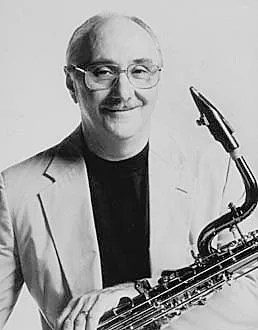
Nick Brignola, circa 2000 (per the original Flickr upload title "Nick Brignola 2000") CC BY 2.0 — Wikimedia Commons — https://commons.wikimedia.org/wiki/File:Nick_Brignola.jpg (originally posted to Flickr by user "ksmf" at https://www.flickr.com/photos/ksmf/2425776874/)

Nicholas Thomas Brignola was born July 17, 1936, in Troy, New York, into a musical family; his father played tuba and an uncle played banjo. Largely self-taught, he started on clarinet at eleven and added alto and tenor saxophone and flute over the following years. At twenty, while studying education at Ithaca College, he dropped his alto off for repair and borrowed a baritone saxophone from the shop because it was the only horn available; he never went back to the smaller horns as his main voice. The Ithaca College group he played in won a 1957 DownBeat award for best college jazz group, which led to festival dates and an appearance at Café Bohemia in Greenwich Village. He went on to study at Berklee College of Music in Boston on a Benny Goodman Scholarship.
Through the late 1950s and into the 1960s Brignola worked the upstate New York circuit around Troy, Albany, and Schenectady with bandleaders Herb Pomeroy and Reese Markewich, then moved to the West Coast to play with vibraphonist Cal Tjader and the Mastersounds. He joined Woody Herman's orchestra in 1963 and spent 1963 to 1964 with guitarist Sal Salvador before returning to his home region in 1964, where he began leading his own groups, hosted a jazz radio program, and taught at local colleges. In 1967 he began an extended association with trumpeter Ted Curson, touring Europe with him in 1967 and appearing at the Newport and Monterey jazz festivals; the partnership continued on and off for years and brought Brignola his first sustained international exposure.
On December 22, 1977, at Blue Rock Studio in New York, Brignola led the session that became his best-known record: Baritone Madness, released in 1978 as the debut LP on the new Bee Hive label. Billed to "The Nick Brignola Sextet featuring Pepper Adams," it paired Brignola with Pepper Adams, one of his acknowledged idols on the instrument, alongside Ted Curson on trumpet and flugelhorn, pianist Derek Smith, bassist Dave Holland, and drummer Roy Haynes, running through bebop standards including "Donna Lee," "Billie's Bounce," and a reworking of "Ornithology" retitled "Marmeduke." He returned to the twin-baritone format the following year: Burn Brigade, recorded June 19, 1979, and issued in 1980 on Bee Hive, put him alongside fellow baritone players Ronnie Cuber and Cecil Payne, backed by pianist Walter Davis Jr., bassist Walter Booker, and drummer Jimmy Cobb. That same period produced two more leader dates for the Los Angeles-based Interplay and Seabreeze labels: New York Bound (recorded October 1978, released 1979), on which Brignola set the baritone aside to play alto, soprano, flute, and clarinet with pianist Walter Bishop Jr., bassist Sam Jones, and drummer Roy Haynes, and L.A. Bound (1980, Seabreeze), with trombonist Bill Watrous and drummer Dick Berk, which earned Brignola a 1980 Grammy nomination.
In the mid-1970s he had also joined the fusion group Petrus, led by pianist Phil Markowitz, and he kept a busy regional performing schedule for the rest of his career, including a long-running "Many Styles of Nick Brignola" concert series and regular sets at the Ramada Inn in Schenectady. His quartet album Signals...In from Somewhere (recorded June 1983 in Utica, New York, released on Discovery) featured pianist Bill Dobbins, bassist John Lockwood, and drummer David Calarco. From 1988 onward Brignola recorded a long, well-documented series of albums for Reservoir Records, beginning with Raincheck (recorded September 1988 at Van Gelder Studio with Kenny Barron, George Mraz, and Billy Hart) and continuing through On a Different Level (1989), What It Takes (1991), It's Time (1991), Live at Sweet Basil, First Set (recorded live August 28, 1992, released 1994), Like Old Times (1994), The Flight of the Eagle (recorded June 1996 with Kenny Barron, Rufus Reid, and Victor Lewis), Poinciana (recorded April 1997 at Van Gelder Studio with Phil Markowitz, Steve LaSpina, and Billy Hart), and All Business (1999, with guitarist Chuck D'Aloia, vibraphonist Dave Pike, bassist John Patitucci, and drummer Billy Hart).
Brignola continued performing and recording even as his health declined. His final studio album, Tour de Force, was recorded in 2001 with guitarist Chuck D'Aloia, bassist Eddie Gomez, and drummer Bill Stewart, and was released on Reservoir on February 26, 2002, eighteen days after he died. Nick Brignola died of cancer on February 8, 2002, at Albany Medical Center in Albany, New York, at age 65. A second volume from the 1992 Sweet Basil engagement, Things Ain't What They Used to Be: Last Set at Sweet Basil, appeared posthumously on Reservoir in 2003.
Brignola named Harry Carney, Duke Ellington's baritone anchor for four decades, as his primary influence, but his own playing owed as much to his unusual route to the horn: because he came up first on clarinet, alto, and tenor, he brought an agility and speed to the baritone that few players of his generation matched, letting him navigate bebop's fastest tempos and most angular lines on an instrument built for weight rather than quickness. Reviewers consistently paired him with Pepper Adams and Cecil Payne as the era's three leading hard-bop baritone specialists, and the two summit-meeting albums he built around exactly that comparison, Baritone Madness with Adams and Burn Brigade with Adams's contemporaries Cuber and Payne, remain his most cited work. AllMusic's Scott Yanow described Baritone Madness as living up to its title, with "quite a few sparks" flying between the two horns, and called the Burn Brigade three-way baritone match a fight fought "to a draw." His later Reservoir recordings drew notice for a different quality: AllMusic's Mark Romano wrote that Brignola combined "muscular phrasing with a supreme sensitivity," and JazzTimes praised a sound "silky smooth and possessed of honest emotion" on ballad material.
- Baritone Madness (1977/1978, Bee Hive) - The Nick Brignola Sextet featuring Pepper Adams: a twin-baritone bebop jam session with Ted Curson, Derek Smith, Dave Holland, and Roy Haynes, and Bee Hive's inaugural release. Listen
- Burn Brigade (1979/1980, Bee Hive) - A three-baritone summit with Ronnie Cuber and Cecil Payne, backed by Walter Davis Jr., Walter Booker, and Jimmy Cobb.
- Raincheck (1988, Reservoir) - The first of Brignola's long-running Reservoir series, a quartet date with Kenny Barron, George Mraz, and Billy Hart. Listen
- The Flight of the Eagle (1996, Reservoir) - With Kenny Barron, Rufus Reid, and Victor Lewis, among the most acclaimed of his later Reservoir dates. Listen
- Poinciana (1997, Reservoir) - A quartet outing with Phil Markowitz, Steve LaSpina, and Billy Hart; AllMusic called it among "the best renderings of a true baritone sax artist." Spotify - Poinciana Listen
- L.A. Bound (1980, Seabreeze) - A Grammy-nominated leader date with Bill Watrous and Dick Berk.
- Tour de Force (2001/2002, Reservoir) - Brignola's final studio recording, with Chuck D'Aloia, Eddie Gomez, and Bill Stewart, released 18 days after his death. Spotify - Tour De Force Listen
Nick Brignola: Full Discography
Discogs lists Nick Brignola (artist ID 755695, matching name, dates, and instrument) with roughly 23 releases as a leader/co-leader. Direct Discogs page access returned an error (403) during this build, so the table below was assembled and cross-checked from Wikipedia, AllMusic, period reviews, and retailer/discography listings instead of the live API; details that could not be corroborated across at least two sources are flagged "not confirmed" rather than guessed. This is his known leader catalog, not necessarily exhaustive of every reissue or compilation.
As Leader / Co-Leader
| Album Title | Recording Date(s) | Release Date | Label | Catalog Number | Format(s) | Personnel | Role | Reissue History | Spotify | Buy | Notes |
|---|---|---|---|---|---|---|---|---|---|---|---|
| Baritone Madness | Recorded December 22, 1977, Blue Rock Studio, NYC | 1978 | Bee Hive | BH 7000 | Vinyl, LP, Album | The Nick Brignola Sextet featuring Pepper Adams: Nick Brignola & Pepper Adams (baritone sax), Ted Curson (trumpet, flugelhorn), Derek Smith (piano), Dave Holland (bass), Roy Haynes (drums) | Leader | Bee Hive's debut release; not confirmed reissued on CD | YouTube - Pepper Adams & Nick Brignola (22/12/1977) | — | Twin-baritone summit date; AllMusic gave it 4/5 stars |
| New York Bound | Recorded October 30, 1978, Master Sound Productions | 1979 | Interplay | IP-7719 | Vinyl, LP, Album, Stereo | Nick Brignola (alto sax, soprano sax, flute, clarinet), Walter Bishop Jr. (piano), Sam Jones (bass), Roy Haynes (drums) | Leader | None found | Not found on Spotify | — | Brignola sets baritone aside for alto/soprano/flute/clarinet on this date |
| Burn Brigade | Recorded June 19, 1979, Master Sound Productions, Franklin Square, NY | 1980 | Bee Hive | BH 7010 | Vinyl, LP, Album | Nick Brignola, Ronnie Cuber, Cecil Payne (baritone sax), Walter Davis Jr. (piano), Walter Booker (bass), Jimmy Cobb (drums) | Leader | Not confirmed reissued on CD | Not found on Spotify | — | Three-baritone jam session; AllMusic (3/5 stars) called it a battle fought "to a draw" |
| L.A. Bound | Not specified in sources found | 1980 | Seabreeze | Not confirmed | Vinyl, LP | Nick Brignola, Bill Watrous (trombone), Dick Berk (drums); full personnel not confirmed | Leader | Not confirmed | Not found on Spotify | — | 1980 Grammy nomination (reported as Best Jazz Instrumental Performance, Big Band or a related instrumental category; exact category not confirmed) |
| Signals...In from Somewhere | Recorded June 21, 1983, U.C.A. Recording Studios, Utica, NY | 1983 | Discovery | DS-893 | Vinyl, LP, Album | Nick Brignola Quartet: Nick Brignola (baritone sax), Bill Dobbins (piano), John Lockwood (bass), David Calarco (drums) | Leader | Also issued on cassette | Not found on Spotify | — | |
| Raincheck | Recorded September 12-13, 1988, Van Gelder Recording Studio, Englewood Cliffs, NJ | 1988 | Reservoir | RSR CD 108 | CD, Album | Nick Brignola (baritone & soprano sax), Kenny Barron (piano), George Mraz (bass), Billy Hart (drums) | Leader | None found | Spotify - Raincheck | — | First of Brignola's long-running Reservoir series |
| On a Different Level | Not confirmed | 1989 | Reservoir | RSR CD 112 | CD, Album | Not confirmed in sources found | Leader | Not confirmed | Not found on Spotify | — | Year per Reservoir Records catalog listing; full personnel not confirmed |
| What It Takes | Not confirmed | 1991 | Reservoir | RSR CD 117 | CD, Album | Not confirmed in sources found | Leader | Not confirmed | Spotify - What It Takes | — | |
| It's Time | Not confirmed | 1991 | Reservoir | RSR CD 123 | CD, Album | Not confirmed in sources found | Leader | Not confirmed | Not found on Spotify | — | Release year approximate per secondary sources; not independently confirmed |
| Live at Sweet Basil, First Set | Recorded live August 28, 1992, Sweet Basil, NYC | 1994 | Reservoir | RSR CD 125 | CD, Album | Not fully confirmed in sources found | Leader | Companion "Last Set" material issued posthumously in 2003 as Things Ain't What They Used to Be | Not found on Spotify | — | |
| Like Old Times | Not confirmed | 1994 | Not confirmed (Reservoir catalog not verified for this title) | Not confirmed | Not confirmed | Not confirmed in sources found | Leader | Not confirmed | Spotify - Like Old Times | — | Listed on Spotify; label/catalog not independently confirmed |
| The Flight of the Eagle | Recorded June 17, 1996, Clinton Recording Studios, Room A, NYC | 1996 | Reservoir | RSR CD 145 | CD, Album | Nick Brignola (baritone & soprano sax), Kenny Barron (piano), Rufus Reid (bass), Victor Lewis (drums) | Leader | None found | Spotify - Flight of the Eagle | — | |
| Poinciana | Recorded April 24, 1997, Van Gelder Recording Studio, Englewood Cliffs, NJ | 1997 | Reservoir | RSR CD 151 | CD, Album | Nick Brignola (baritone sax), Phil Markowitz (piano, Korg X5 synth), Steve LaSpina (bass), Billy Hart (drums), Café (percussion, select tracks) | Leader | None found | Spotify - Poinciana | — | AllMusic 4/5 stars; Penguin Guide 2.5/5 |
| All Business | Not confirmed | 1999 | Reservoir | RSR CD 159 | CD, Album | Nick Brignola (baritone sax), Chuck D'Aloia (guitar, 5 tracks), Dave Pike (vibraphone), John Patitucci (bass), Billy Hart (drums) | Leader | None found | Not found on Spotify | — | Brignola's ninth Reservoir recording per AllMusic |
| Tour de Force | Recorded 2001 | February 26, 2002 | Reservoir | RSR CD 168 | CD, Album | Nick Brignola (baritone sax), Chuck D'Aloia (guitar), Eddie Gomez (bass), Bill Stewart (drums), Café (percussion, select tracks) | Leader | None found | Spotify - Tour De Force | — | Released 18 days after Brignola's death; Penguin Guide 3.5/5 |
| Things Ain't What They Used to Be: Last Set at Sweet Basil | Recorded live August 28, 1992, Sweet Basil, NYC | 2003 | Reservoir | RSR CD 174 | CD, Album | Not fully confirmed; drawn from the same engagement as Live at Sweet Basil, First Set | Leader | Posthumous release, companion volume to the 1994 "First Set" issue | Not found on Spotify | — |
As Sideman (selected credits)
| Year | Project (Leader) | Title | Label | Catalog | Role | Notes |
|---|---|---|---|---|---|---|
| 1967 onward | Ted Curson | Various performances and tours | Not applicable (touring/festival dates) | Baritone saxophone | European tour and Newport/Monterey festival appearances; specific studio sideman credits with Curson not confirmed |
Brignola's sideman work outside his own leader dates is thinly documented in the sources checked for this build; the great majority of his recorded output was as a leader or co-leader of his own groups, unlike many of his hard-bop contemporaries who logged hundreds of sideman sessions. This table is not exhaustive.
- Pepper Adams - twin-baritone co-star of Baritone Madness (1977/1978, Bee Hive), a session Brignola built around one of his own baritone idols.
- Cecil Payne, Ronnie Cuber - fellow baritone saxophonists on the three-way summit date Burn Brigade (1979/1980, Bee Hive); Payne is profiled separately on JazzProfiles.com.
- Ted Curson - trumpeter and longtime performing partner from 1967 onward, including European touring and Newport/Monterey festival dates, and a member of the Baritone Madness sextet.
- Roy Haynes - drummer on both Baritone Madness (1977/1978) and New York Bound (1978/1979).
- Dave Holland - bassist on Baritone Madness (1977/1978).
- Kenny Barron - pianist on the Reservoir albums Raincheck (1988) and The Flight of the Eagle (1996).
- Billy Hart - drummer across multiple Reservoir dates, including Raincheck (1988), Poinciana (1997), and All Business (1999).
- Phil Markowitz - leader of the 1970s fusion group Petrus, in which Brignola played, and pianist/synthesist on Poinciana (1997).
More Bebop Artists
See all 166 Bebop artists →More American Jazz Artists
See all 567 American artists →- Wikipedia: Nick Brignola
- Wikipedia: Baritone Madness
- Wikipedia: Burn Brigade
- Wikipedia: Poinciana (Nick Brignola album)
- Wikipedia: Tour de Force (Nick Brignola album)
- Wikipedia: Reservoir Records
- AllAboutJazz: "Baritone Saxophonist Nick Brignola Succumbs to Cancer"
- DownBeat: "Baritone Saxophonist Nick Brignola Dies"
- Discogs: Nick Brignola (artist 755695)
- AllMusic: Nick Brignola biography