 JAZZPROFILES lives in the music 2,059 Jazz Artists fully Profiled!
Ray Barretto
Last updated October 29, 2026
Listen on Spotify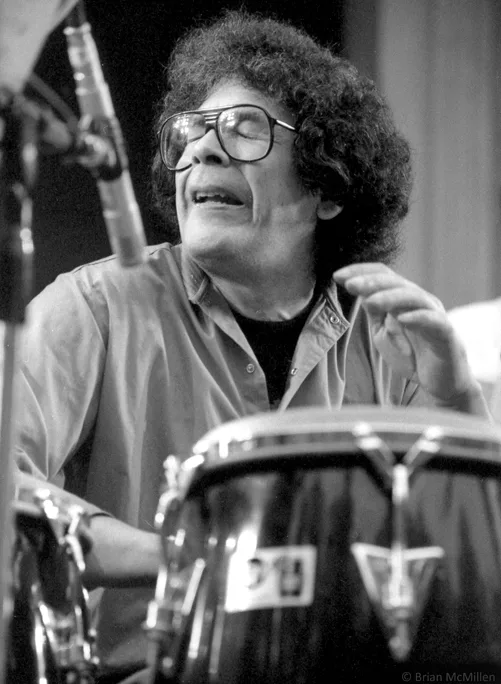
Ray Barretto at the UC Berkeley Jazz Festival, 1982 CC BY-SA 4.0 — Wikimedia Commons: https://commons.wikimedia.org/wiki/File:Ray_Barretto.jpg (Brian McMillen)

Raymundo Barretto Pagán was born in Brooklyn on April 29, 1929, to parents who had come to New York from Puerto Rico in the early 1920s. His father left the family when he was four, and his mother, Delores, moved them to Spanish Harlem and then, when he was seven, to the Bronx. Puerto Rican music filled the house, along with his mother's liking for the swing bands of Duke Ellington and Count Basie. In 1946, at seventeen, he joined the Army.
Stationed in Germany, Barretto heard Dizzy Gillespie's recording of "Manteca," made with the Cuban conga drummer Chano Pozo, and decided that music was his calling. He sat in at jam sessions at the Orlando, a G.I. jazz club in Munich, and in Germany he also met the Belgian vibraphonist Fats Sadi. Back in Harlem in 1949 he taught himself the conga drums at jam sessions, took his first regular job with Eddie Bonnemere's Latin Jazz Combo, and then spent four years with the Cuban pianist and bandleader José Curbelo. In 1957 he replaced Mongo Santamaría in Tito Puente's band, and his first recording credit, Dance Mania, dates from 1958. Accounts of the New York jam-session circuit of those years place him on the same stands as Max Roach, Art Blakey and Charlie Parker.
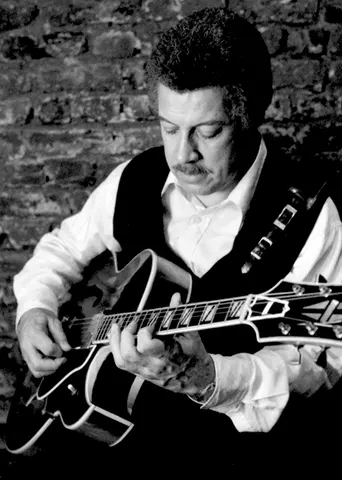
By 1960 Barretto was the house conga player for Prestige, Blue Note and Riverside, and he is often credited as the first U.S.-born percussionist to bring the conga into jazz as a regular chair. The records show it. He is on Lou Donaldson's Swing and Soul (1957) and Blues Walk, cut July 28, 1958; Red Garland's Manteca (1958); Gene Ammons's Boss Tenor, recorded June 16, 1960; Wes Montgomery's So Much Guitar! (1961), on five of its eight tracks; Dizzy Gillespie's big-band Carnegie Hall Concert (March 4, 1961); Cannonball Adderley's orchestra album African Waltz (1961); and Kenny Burrell's Midnight Blue, recorded January 8, 1963 with Stanley Turrentine, a Blue Note date that critics often rank among the finest jazz albums. Herbie Mann, Cal Tjader, Eddie Harris and Yusef Lateef also used him, and he played on Freddie Hubbard's Backlash (1967) and Sky Dive (1972).
His first job as a leader came in 1961, when the Riverside producer Orrin Keepnews, who knew his jazz work, asked him to form a charanga, the flute-and-violin dance ensemble of Cuban tradition, for a record. The result was Pachanga With Barretto, followed by Latino! in 1962. That same year he made Charanga Moderna for Tico, which contained "El Watusi." The record was a dance-craze novelty hit that reached the Billboard Top 20 in 1963 (number 17 on the pop chart) and went gold; it is called the most successful pachanga record in the United States, and Barretto disliked being typecast by it. In 1965 he moved to the Latin division of United Artists, UA Latino, for four albums that blended R&B with Latin rhythms in the boogaloo style, among them El Ray Criollo (1966), a mix of charanga and conjunto sounds that pointed toward what would later be called salsa.
He signed with Fania in 1967. His first album for the label, Acid (1968), with Adalberto Santiago singing, became one of the most durable boogaloo records, and its "A Deeper Shade of Soul" was sampled in a 1991 Hot 100 hit by the Dutch band Urban Dance Squad. Hard Hands, Together, Barretto Power (1970), The Message (1971) and Que Viva la Música (1972) followed. "Cocinando," from the last of them, opened the soundtrack of the Fania All-Stars film Our Latin Thing (1972), in which Barretto appeared, and he became a long-time member of the All-Stars and, for a stretch, its musical director. Most of his band, Santiago included, left to form Típica 73, and Indestructible (1973) was recorded with a new singer, Tito Allen. The departures left Barretto discouraged about salsa, and he turned part of his attention to jazz, most clearly on The Other Road (1973), which has Billy Cobham on drums. The 1975 album Barretto, with the new vocalists Rubén Blades and Tito Gómez, brought a Grammy nomination, and its song "Guararé" was a hit.
From 1976 to 1978 he made three albums for Atlantic. Tomorrow: Barretto Live, recorded at the Beacon Theatre in New York on May 28, 1976, was Grammy-nominated; Eye of the Beholder (1977) was produced by members of The Crusaders; and Can You Feel It (1978) kept the electric, fusion-minded concert band going. He then recorded La Cuna for CTI in August 1979 at Rudy Van Gelder's studio, with Tito Puente, Charlie Palmieri, Joe Farrell and Steve Gadd among the players, and returned to Fania for Rican/Struction (1979), a salsa record that Latin N.Y. magazine named Best Album of 1980, the year it also crowned him Conga Player of the Year. In 1985 he took part in the anti-apartheid Sun City recording. Ritmo en el Corazón (1988), made with Celia Cruz and Adalberto Santiago, won the Grammy for Best Tropical Latin Performance at the 32nd annual awards in 1990, his only win.
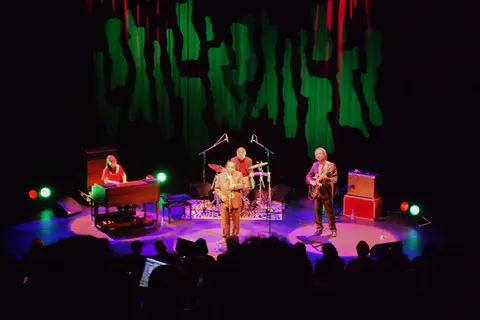
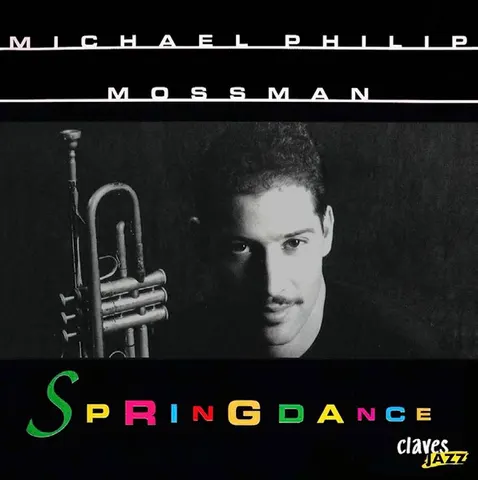
He was part of the Latin Legends of Fania, a salsa reunion package, until 1992, when he left to concentrate on a new Latin jazz sextet, New World Spirit. The band made Ancestral Messages (1993) and Taboo (1994) for Concord Picante, then My Summertime (1995) and Contact! (1998, nominated for the Grammy for Best Latin Jazz Performance) for Blue Note, and Portraits in Jazz and Clave (1999) for RCA Victor, with Kenny Burrell, Eddie Gómez, Joe Lovano and Steve Turré as guests. Satoshi Takeishi is the drummer on Ancestral Messages, Michael Philip Mossman plays trumpet, trombone and flugelhorn on My Summertime and Contact!, and James Moody joined the band on Trancedance (2001). He also made a sextet tribute, Homage to Art Blakey and the Jazz Messengers (2002), and the Grammy-nominated Time Was, Time Is (2005).
Barretto was inducted into the International Latin Music Hall of Fame in 1999, was voted jazz percussionist of 2004 by the Jazz Journalists Association, and won the DownBeat critics' poll for percussion in 2005. In 2006 he was named an NEA Jazz Master. He lived in northern New Jersey and toured the United States, Africa, Europe, Israel and Latin America with his own band. Barretto passed away at Hackensack University Medical Center on February 17, 2006, at 76, of heart failure and complications of other health problems; he was a resident of Norwood. His body was flown to Puerto Rico, where the Institute of Puerto Rican Culture gave him formal honors. His last album, Standards Rican-ditioned, appeared on the Zoho label later that year, with his son Chris Barretto on alto saxophone.
Most of Barretto's public career is not jazz in the strict sense, and it is stated plainly here. His own records on Tico, UA Latino and Fania are pachanga, boogaloo, son, charanga and salsa dance music for Latin New York, with one dance-craze novelty hit, "El Watusi," that he did not enjoy being known for; he also played congas on rock and pop sessions, among them dates for the Bee Gees and the Rolling Stones. What ties that body of work to jazz is where he started. AllMusic's Richard S. Ginell notes that he came to Latin music from jazz rather than the other way round and learned swing time before he mastered Latin grooves, and his session credits bear that out: Blue Note, Prestige, Riverside, Verve, Atlantic and CTI dates across two decades. He was a master of the descarga, the improvised Latin jam session, and his bands tended to carry a tenser, more experimental edge than conventional salsa groups, with electronics and unusual instrumental combinations.
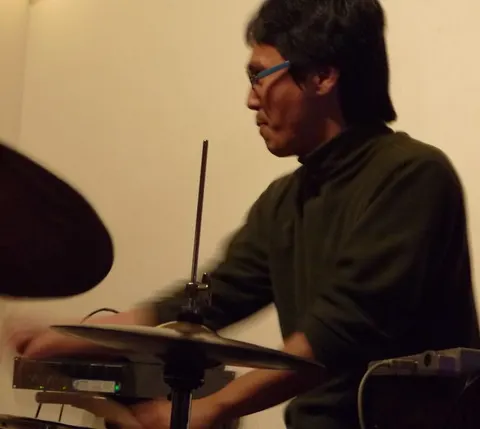
He credited Dizzy Gillespie's "Manteca," with Chano Pozo's conga, for his decision to become a musician, and he grew up on Ellington and Basie records. New World Spirit played Latin-flavored versions of standards by Ellington and others next to originals, and press reports noted that Barretto himself disliked the label "Latin jazz." The conga player Little Johnny Rivero names him among his influences, and the drummer Satoshi Takeishi spent a period in New World Spirit.
- Blues Walk (Lou Donaldson, 1958, Blue Note) - Recorded July 28, 1958 with Herman Foster, Peck Morrison and Dave Bailey, with Barretto on congas; an early example of the conga as a regular member of a soul-jazz quintet.
- Midnight Blue (Kenny Burrell, 1963, Blue Note) - Recorded January 8, 1963 with Stanley Turrentine, Major Holley and Bill English; the quiet congas are part of its late-night feel, and it is the jazz record most listeners will already know him from.
- Charanga Moderna (1962, Tico) - His first Tico album and the home of "El Watusi," the pachanga hit that reached the Billboard Top 20 and went gold.
- Acid (1968, Fania) - His first record for Fania, with Adalberto Santiago and an all-brass front line; often cited as one of the most enduring boogaloo albums.
- Barretto (1975, Fania) - With Rubén Blades and Tito Gómez on vocals and "Guararé" among its songs; a Grammy nominee and his biggest seller up to that point.
- Rican/Struction (1979, Fania) - A return to salsa with Adalberto Santiago, named Best Album of 1980 by Latin N.Y. magazine.
- Ritmo en el Corazón (1988, Fania) - A collaboration with Celia Cruz that won the Grammy for Best Tropical Latin Performance.
- Contact! (1998, Blue Note) - New World Spirit's Blue Note album, built on standards and originals, nominated for the Grammy for Best Latin Jazz Performance.
Ray Barretto: Full Discography
Discogs artist: Ray Barretto (19599) · Real name Raymundo Barretto Pagán · Born April 29, 1929, Brooklyn, New York · Group pages: Ray Barretto & New World Spirit (4079750), Ray Barretto Y Su Charanga Moderna (2023295), Ray Barretto Y Su Orquestra (2166417)
Barretto's leader catalogue is spread across several Discogs entries, and the table below combines them. It lists studio and live albums only; compilations, reissue packages and singles are summarized at the end. His sideman work runs to hundreds of credits, so the sideman tables are selective. Where a cell says "not itemized," the detail was not confirmed.
Leader: Studio and Live Albums
| Album | Year | Label (Catalog) | Personnel & Notes | Listen | Buy |
|---|---|---|---|---|---|
| Pachanga With Barretto | 1961 | Riverside (RLP 97506) | His first record as a leader, made for producer Orrin Keepnews as a charanga with flutes and violins; also issued under the title Barretto Para Bailar. Personnel not itemized | — | — |
| Latino! | 1962 | Riverside (93520) | Latin jam date with José "Chombo" Silva (tenor saxophone) and Alejandro "El Negro" Vivar (trumpet) | — | — |
| Charanga Moderna | 1962 | Tico (LP 1087) | Produced by Teddy Reig. Contains "El Watusi," a No. 17 pop hit in 1963. Personnel not itemized | — | — |
| On Fire Again (Encendido Otra Vez) | 1963 | Tico (1096) | Personnel not itemized | — | — |
| The Big Hits Latin Style | 1963 | Tico (1099) | Personnel not itemized | — | — |
| La Moderna de Siempre | 1963 | Tico (1102) | Personnel not itemized | — | — |
| Guajira y Guaguancó | 1964 | Tico (1114) | Personnel not itemized | — | — |
| Viva Watusi! | 1965 | United Artists / UA Latino (6445) | First of four UA Latino albums. Personnel not itemized | — | — |
| Señor 007 | 1965 | United Artists / UA Latino (6478) | Personnel not itemized | — | — |
| El Ray Criollo | 1966 | United Artists / UA Latino (6543) | Blends charanga and conjunto sounds; an early step toward salsa. Personnel not itemized | — | — |
| Latino con Soul | 1967 | United Artists / UA Latino (6593) | Last of the UA Latino albums. Personnel not itemized | — | — |
| Acid | 1968 | Fania (SLP 346) | His first Fania album. Louis Cruz (piano), Big Daddy (bass), Orestes Vilato (timbales), René López and Roberto Rodriguez (trumpets), Adalberto Santiago (vocals, bells), Pete Bonet (vocals, guiro); produced by Harvey Averne and Jerry Masucci. Contains "A Deeper Shade of Soul" | — | — |
| Hard Hands | 1968 | Fania (LP 362) | Louis Cruz (piano), Tony Fuentes (bongos), Orestes Vilato (timbales), Papy Roman and Roberto Rodriguez (trumpets), Adalberto Santiago (vocals); produced by Jerry Masucci | — | — |
| Together | 1969 | Fania (LP 378) | Same core band as Hard Hands with Andy Gonzalez on bass; Adalberto Santiago (vocals) | — | — |
| Barretto Power | 1970 | Fania (LP 391) | Andy Gonzalez (bass), Tony Fuentes (bongos), Louis Cruz (piano), Orestes Vilato (timbales), Papy Roman, René López and Roberto Rodriguez (trumpets), Adalberto Santiago (vocals) | — | — |
| The Message | 1971 | Fania (LP 403) | Louis Cruz (piano, arranger), Andy Gonzalez (bass), Johnny Rodriguez (bongos), Orestes Vilato (timbales), Papy Roman and Roberto Rodriguez (trumpets), Adalberto Santiago (vocals); produced by Jerry Masucci and Barretto | — | — |
| Que Viva la Música | 1972 | Fania (SLP 427) | Louis Cruz (piano, electric piano, arranger), David Perez (bass), Johnny Rodriguez (bongos, congas), Orestes Vilato (timbales), Joseph Roman, René López and Roberto Rodriguez (trumpets), Adalberto Santiago (vocals, guiro). Contains "Cocinando" | — | — |
| The Other Road | 1973 | Fania (SLP 448) | Jazz-leaning date: Billy Cobham (drums), Guillermo Edgehill (electric bass), Edy Martinez (piano, electric piano, arranger), Art Webb (flute), Tony Fuentes (bongos), Ray Romero (timbales), Joseph Roman, Manny Duran and Roberto Rodriguez (trumpets). Includes "Round About Midnight" | — | — |
| Indestructible | 1973 | Fania (SLP 456) | Tito Allen (vocals), Héctor Lavoe and Meñique (coro), Julio Romero (bass), Edy Martinez (piano), Art Webb (flute), Tony Fuentes (bongos), Ray Romero (timbales), Joseph Roman, Manny Duran and Roberto Rodriguez (trumpets) | — | — |
| Barretto | 1975 | Fania (SLP 486) | Rubén Blades and Tito Gómez (vocals), Adalberto Santiago and Tito Allen (coro), Louie Colon (bass), Gil Lopez (piano), Art Webb (flute), Tony Fuentes (bongos), Ray Romero (timbales), Papy Roman, Roberto Rodriguez and Ite Erez (trumpets). Contains "Guararé"; Grammy nominee | — | — |
| Tomorrow: Barretto Live | 1976 | Atlantic (SD 2-509) | Recorded live at the Beacon Theatre, New York, May 28, 1976. Oscar Hernandez (piano), Guillermo Edgehill (bass), Barry Finnerty (guitar), Dick Meza (tenor saxophone, flute), Wilfredo Velez (saxophones), Luis Gonzalez (bongos), Jimmy Delgado (timbales), Ray Romero (bata), Rubén Blades (vocals); Grammy nominee | — | — |
| Eye of the Beholder | 1977 | Atlantic (SD 19140) | Produced by members of The Crusaders (Joe Sample, Wilton Felder and Stix Hooper). Joe Sample and Gil Goldstein (keyboards), Jeff Berlin and Wilton Felder (bass), Steve Ferrone and Terry Bozzio (drums), Barry Finnerty and Marcus Fiorillo (guitar), Pete Christlieb and Todd Anderson (tenor saxophone) | — | — |
| Gracias | 1978 | Fania (528) | Personnel not itemized | — | — |
| Can You Feel It | 1978 | Atlantic (SD 19198) | Produced by Barretto and Raymond Silva. Todd Anderson (saxophones), Jeff Richman (guitar), Howard Schneider (keyboards), Richie Morales (drums), Carlos Cordova (timbales, percussion) | — | — |
| Rican/Struction | 1979 | Fania (JM 552) | Co-billed with Adalberto Santiago (lead vocals). Oscar Hernandez (piano), Sal Cuevas (bass), Luis Gonzalez (bongos), Ralph Irizarry (timbales), Papo Vázquez (trombone), Todd Anderson (saxophones); produced by Barretto. Latin N.Y. magazine's Best Album of 1980 | — | — |
| La Cuna | 1981 | CTI (CTI 9002) | Recorded at Van Gelder Studio in August 1979; produced by Creed Taylor. Joe Farrell (saxophones, flute), Tito Puente (timbales), Charlie Palmieri (piano, percussion), Steve Gadd and Mark Craney (drums), John Tropea (guitar), Francisco Centeno (bass), Carlos Franzetti (piano, arranger), Suzanne Ciani (synthesizer programming), Willie Torres (vocals) | — | — |
| Giant Force | 1980 | Fania (579) | Personnel not itemized | — | — |
| Rhythm of Life | 1982 | Fania (605) | Personnel not itemized | — | — |
| Tremendo Trío! | 1983 | Fania (JM 623) | With Celia Cruz and Adalberto Santiago. Oscar Hernandez (piano, arranger), Ray Martinez (bass), Carlos Soto (bongos), Ralph Irizarry (timbales), Joe De Jesus (trombone); directed and produced by Barretto | — | — |
| Todo Se Va Poder | 1984 | Fania (633) | Personnel not itemized | — | — |
| Aquí Se Puede | 1987 | Fania (642) | Personnel not itemized | — | — |
| Ritmo en el Corazón | 1988 | Fania (JM 651) | With Celia Cruz; Barretto credited on congas and as leader. Ricky Gonzalez (piano, arranger), Sal Cuevas (bass), Carlos Soto (bongos), Jimmy Delgado (timbales), Jimmy Bosch (trombone), Angel Fernandez, Hector Zarzuela and Steve Gluzband (trumpets), Adalberto Santiago (coro). Won the Grammy for Best Tropical Latin Performance at the 32nd annual awards (1990) | — | — |
| Irresistible | 1989 | Fania (658) | Personnel not itemized | — | — |
| Soy Dichoso | 1990 | Fania (666) | Personnel not itemized | — | — |
| Handprints | 1991 | Concord Picante (CCD-4473) | Produced by Barretto, with Eric Kressmann as co-producer. Personnel not itemized | — | — |
| Salsa Caliente de Nu York! | 2001 | Nascente (075) | Personnel not itemized | — | — |
| Fuerza Gigante (Live in Puerto Rico, April 27, 2001) | 2001 | Universe (UV-118) | Live recording. Personnel not itemized | — | — |
| Homage to Art Blakey and the Jazz Messengers | 2002 | Sunnyside (SSC 1105) | Sextet tribute recorded in Brooklyn, August 22 to 25, 2002. Miguel Zenón (alto saxophone), John Bailey (trumpet), Luis Perdomo (piano, arranger), Hans Glawischnig (bass, arranger), Vince Cherico (drums); Michael Philip Mossman arranged two pieces | — | — |
| Time Was, Time Is | 2005 | O+ Music (OP109) | Recorded November 28 to 30, 2004. Myron Walden (alto saxophone), Joe Magnarelli (trumpet, flugelhorn), Robert Rodriguez (piano), Sean Conly (bass), Vince Cherico (drums), Bobby Sanabria (percussion); Barretto also plays drums and timbales on single tracks. Grammy nominee | — | — |
| Standards Rican-ditioned | 2006 | Zoho (ZM 200610) | Hilton Ruiz (piano), David Sánchez (tenor saxophone), Papo Vázquez (trombone), Chris Barretto (alto saxophone, associate producer), John Benitez (bass), Adam Cruz (drums) | — | — |
Leader: Ray Barretto & New World Spirit
| Album | Year | Label (Catalog) | Personnel & Notes | Listen | Buy |
|---|---|---|---|---|---|
| Ancestral Messages | 1993 | Concord Picante (CCD-4549) | Ray Vega (trumpet, flugelhorn, percussion), Jay Rodriguez (tenor saxophone, flute), Hector Martignon (piano, synthesizer), Jairo Moreno (bass), Satoshi Takeishi (drums), Tito Gonzalez (guiro); produced by Allen Farnham and Barretto | — | — |
| Taboo | 1994 | Concord Picante (CCD-4601) | Personnel not itemized | — | — |
| My Summertime | 1995 | Owl (OWL 082), also on Blue Note | Recorded at the Power Station, July 1 to 3, 1995. Adam Kolker (tenor and soprano saxophones), Michael Philip Mossman (trumpet, trombone, flugelhorn), Hector Martignon (piano), Jairo Moreno (bass), Vince Cherico (drums), Tito Gonzalez (guiro); Barretto also sings on "Summertime (Guajira)" | — | — |
| Contact! | 1998 | Blue Note (7243 8 56974 2 5) | Recorded at Systems Two, Brooklyn, April 3 to 5, 8 and 9, 1997. Adam Kolker (tenor and soprano saxophones), Michael Philip Mossman (trumpet, trombone), John Di Martino (piano), Jairo Moreno and Hans Glawischnig (bass), Vince Cherico (drums), Ray Vega (percussion); includes versions of "Caravan," "Poinciana" and "Sister Sadie." Nominated for the Grammy for Best Latin Jazz Performance | — | — |
| Portraits in Jazz and Clave | 1999 | RCA Victor (74321 68452 2) | Recorded at Systems Two, Brooklyn, March 6 to 14, 1999. Guests Kenny Burrell (guitar), Eddie Gómez (bass), Joe Lovano (tenor saxophone) and Steve Turre (trombone, shells); John Bailey (trumpet), Adam Kolker (saxophones), John Di Martino (piano), Vince Cherico (drums) | — | — |
| Trancedance | 2001 | Circular Moves (CIM 7008) | Recorded June 2000 with James Moody (flute, alto saxophone; tracks 1, 2, 5, 6, 9) and the Cuban percussion group Los Papines (tracks 1, 2, 4). Gregg August and Johannes Weidenmueller (bass), Bobby Sanabria and Johnny Rodriguez (percussion), John Bailey, Adam Kolker, John Di Martino, Vince Cherico | — | — |
Sideman and Guest Appearances (selected, jazz and Latin jazz)
| Year | Leader | Title | Label (Catalog) | Role | Notes |
|---|---|---|---|---|---|
| 1958 | Tito Puente | Dance Mania | RCA Victor (LPM-1692) | Percussion | The NEA biography names it as the first album he recorded with Puente's band |
| 1957 | Lou Donaldson | Swing and Soul | Blue Note | Congas | Catalog not confirmed |
| 1958 | Red Garland Trio | Manteca | Prestige (PRLP 7139) | Congas | Recorded April 1958 in Hackensack, New Jersey, with Paul Chambers (bass) and Art Taylor (drums) |
| 1958 | Lou Donaldson | Blues Walk | Blue Note (BLP 1593) | Congas | Recorded July 28, 1958, with Herman Foster (piano), Peck Morrison (bass) and Dave Bailey (drums) |
| 1959 | Lou Donaldson | The Time Is Right | Blue Note | Congas | Catalog not confirmed |
| 1960 | Gene Ammons | Boss Tenor | Prestige (PRLP 7180) | Congas | Recorded June 16, 1960, with Tommy Flanagan (piano), Doug Watkins (bass) and Art Taylor (drums) |
| 1961 | Wes Montgomery | So Much Guitar! | Riverside (RLP 382) | Congas (tracks A1 to A3, B1, B2) | Recorded August 4, 1961, with Hank Jones (piano), Ron Carter (bass) and Lex Humphries (drums); produced by Orrin Keepnews |
| 1961 | Cannonball Adderley and His Orchestra | African Waltz | Riverside (RLP 377) | Congas | Large-band date recorded February 28, May 9 and May 15, 1961, with Ernie Wilkins conducting and arranging; Nat Adderley, Clark Terry, Bob Brookmeyer and others in the ensemble |
| 1961 | Dizzy Gillespie Big Band | Carnegie Hall Concert | Verve (V-8423) | Percussion | Live, March 4, 1961, with José Mangual and Julio Collazo in the percussion section and Lalo Schifrin on piano |
| 1963 | Kenny Burrell | Midnight Blue | Blue Note (BLP 4123) | Congas | Recorded January 8, 1963, at Van Gelder Studio, with Stanley Turrentine (tenor saxophone), Major Holley (bass) and Bill English (drums) |
| 1967 | Freddie Hubbard | Backlash | Atlantic (SD 1477) | Percussion (tracks A1 to A3) | Produced by Arif Mardin; with James Spaulding, Albert Dailey, Bob Cunningham and Ray Appleton |
| 1972 | Freddie Hubbard | Sky Dive | CTI (CTI 6018) | Percussion | Recorded October 1972 at Van Gelder Studio; Don Sebesky arranged and conducted; with Billy Cobham, Keith Jarrett, Hubert Laws and George Benson |
Further sideman credits listed on Wikipedia
Labels and years below follow Wikipedia's discography; catalog numbers and track-level details are not confirmed.
| Year | Leader | Title | Label | Notes |
|---|---|---|---|---|
| 1957 | Bill Doggett | Doggett Beat for Dancing Feet | King | |
| 1958 | Gene Ammons | Blue Gene | Prestige | |
| 1959 | Arnett Cobb | Party Time | Prestige | |
| 1959 | Eddie "Lockjaw" Davis | Bacalao | Prestige | With Shirley Scott |
| 1959 | Herbie Mann | Flute, Brass, Vibes and Percussion | Verve | |
| 1960 | Herbie Mann | The Common Ground | Atlantic | |
| 1960 | Eddie "Lockjaw" Davis | Afro-Jaws | Riverside | |
| 1960 | Johnny "Hammond" Smith | Talk That Talk | New Jazz | |
| 1961 | Gene Ammons | Up Tight! | Prestige | |
| 1961 | Red Garland Trio | Rojo | Prestige | |
| 1961 | Mark Murphy | Rah | Riverside | |
| 1961 | Herbie Mann | The Family of Mann | Atlantic | |
| 1962 | Slide Hampton | Jazz with a Twist | Atlantic | |
| 1962 | Frank Wess | Southern Comfort | Prestige | |
| 1962 | Julius Watkins | French Horns for My Lady | Philips | |
| 1962 | Oliver Nelson | Impressions of Phaedra | United Artists | |
| 1962 | Sonny Stitt | Stitt Meets Brother Jack | Prestige | With Jack McDuff |
| 1962 | Kenny Burrell | Bluesy Burrell | Moodsville | With Coleman Hawkins |
| 1963 | Kenny Burrell | Crash! | Prestige | With Brother Jack McDuff |
| 1963 | Art Farmer | Listen to Art Farmer and the Orchestra | Mercury | |
| 1964 | Kenny Burrell | Soul Call | Prestige | |
| 1966 | Eddie Harris | Mean Greens | Atlantic | |
| 1967 | Cal Tjader | Along Comes Cal and Hip Vibrations | Verve | |
| 1968 | Junior Mance | I Believe to My Soul | Atlantic | |
| 1969 | Yusef Lateef | Yusef Lateef's Detroit | Atlantic | |
| 1970 | George Benson | The Other Side of Abbey Road | A&M/CTI | |
| 1971 | Kenny Burrell | God Bless the Child | CTI | |
| 1972 | Eumir Deodato | Prelude | CTI | |
| 1973 | Billy Cobham | Spectrum | Atlantic | |
| 1974 | Weather Report | Mysterious Traveller | Columbia | |
| 1974 | Gene Ammons | Goodbye | Prestige | |
| 1975 | Herbie Mann | Discothèque and Waterbed | Atlantic | |
| 1979 | Yusef Lateef | In a Temple Garden | CTI | |
| 1980 | Jeremy Steig and Eddie Gómez | Rain Forest | CMP | |
| 2002 | Michel Sardaby | Michel Sardaby in New York | Sound Hills |
Barretto also appears on pop and rock records, among them Ben E. King's Spanish Harlem (Atco, 1961), the Bee Gees' Main Course (RSO, 1975), the Average White Band's Cut the Cake (Atlantic, 1975) and Crosby, Stills & Nash's CSN (Atlantic, 1977).
Compilations and Reissue Packages
Head Sounds (Fania, 1969) · From the Beginning (Fania, 1971) · Energy to Burn (Fania, 1977) · Hot Hands (Concord Picante, 2003), a two-disc set of Ancestral Messages and Taboo · The Best of Ray Barretto (Fania, 2003) · Anthology (Fania / Código Music, 2012).
Awards and Honors
| Year | Honor | Work | Result |
|---|---|---|---|
| 1975 and 1976 | Grammy nominations | Barretto and Tomorrow: Barretto Live | Nominee |
| 1980 | Latin N.Y. magazine, Best Album; Conga Player of the Year | Rican/Struction | Winner |
| 1990 | Grammy, Best Tropical Latin Performance (32nd annual awards) | Ritmo en el Corazón (with Celia Cruz) | Winner |
| 1999 | International Latin Music Hall of Fame | Inductee | |
| 1999 | Grammy, Best Latin Jazz Performance | Contact! | Nominee |
| 2004 | Jazz Journalists Association, Percussionist of the Year | Winner | |
| 2005 | DownBeat critics' poll, percussion | Winner | |
| 2005 | Grammy nomination | Time Was, Time Is | Nominee |
| 2006 | NEA Jazz Master | Honoree |
- Tito Puente - the bandleader whose orchestra he joined in 1957 after Mongo Santamaría, and the leader on Dance Mania (1958); after four years with Puente he was among the most sought-after percussionists in New York, according to the NEA biography. Puente is a guest on Barretto's La Cuna (recorded 1979).
- Lou Donaldson - congas on Swing and Soul (1957) and Blues Walk (1958), among other Blue Note dates.
- Gene Ammons - the Boss Tenor quintet of June 16, 1960 and further Prestige dates through the 1960s, and the 1974 session issued as Goodbye.
- Kenny Burrell - congas on Midnight Blue (1963), alongside Stanley Turrentine.
- Red Garland - Manteca (1958), a Prestige trio date with Paul Chambers and Art Taylor.
- Wes Montgomery - So Much Guitar! (1961), on five of its eight tracks, with Hank Jones, Ron Carter and Lex Humphries.
- Dizzy Gillespie - the 1961 Carnegie Hall Concert, where Barretto sat in the percussion section with José Mangual and Julio Collazo.
- Cannonball Adderley and Freddie Hubbard - African Waltz (1961, Riverside) and Backlash (1967) and Sky Dive (1972), respectively.
- Herbie Mann, Yusef Lateef, Cal Tjader and Eddie Harris - Verve, Atlantic and CTI dates between 1959 and 1979; Eumir Deodato (Prelude, 1972) and George Benson (The Other Side of Abbey Road, 1970) bring him into the CTI orbit.
- Billy Cobham - drums on The Other Road (1973).
- The Crusaders - Joe Sample, Wilton Felder and Stix Hooper produced Eye of the Beholder (1977); Sample and Felder also play on it, and Jeff Berlin is the bassist on most of the record.
- Adalberto Santiago, Rubén Blades, Tito Gómez, Tito Allen and Celia Cruz - the vocalists across his Fania years, from Acid (1968) to Ritmo en el Corazón (1988).
- Fania All-Stars - the salsa supergroup he belonged to for years and, for a stretch, directed musically; he appears in the 1972 film Our Latin Thing.
- Kenny Burrell, Eddie Gómez, Joe Lovano and Steve Turré - guests on Portraits in Jazz and Clave (1999).
- Michael Philip Mossman and Satoshi Takeishi - New World Spirit regulars: Mossman on trumpet, trombone and flugelhorn on My Summertime (1995) and Contact! (1998), Takeishi on drums for Ancestral Messages (1993).
- James Moody - guest on alto saxophone and flute on Trancedance (2001), with the Cuban percussion group Los Papines.
- Miguel Zenón and Myron Walden - alto saxophone on Homage to Art Blakey and the Jazz Messengers (2002) and on Time Was, Time Is (2005), respectively.
- Chris Barretto - his son, on alto saxophone and as associate producer on Standards Rican-ditioned (2006).
More Latin Jazz Artists
See all 185 Latin Jazz artists →More American Jazz Artists
See all 646 American artists →- Spotify artist page
- Discogs
- NEA Jazz Masters biography
- AllMusic
- His profile on jazzprofiles.com
- r/CrossoverJazz
- Wikipedia: Ray Barretto
- Wikipedia: Contact! (Ray Barretto album)
- Wikipedia: Midnight Blue (Kenny Burrell album)
- Wikipedia: Blues Walk
- Wikipedia: 32nd Annual Grammy Awards
- National Endowment for the Arts: Ray Barretto, 2006 NEA Jazz Master
- AllMusic: Ray Barretto biography by Richard S. Ginell
- All About Jazz: Ray Barretto
- Discogs: Ray Barretto
- MusicBrainz: Ray Barretto